-
-
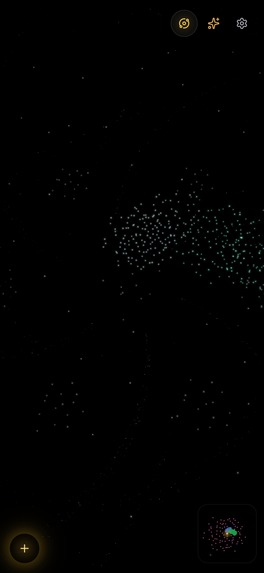
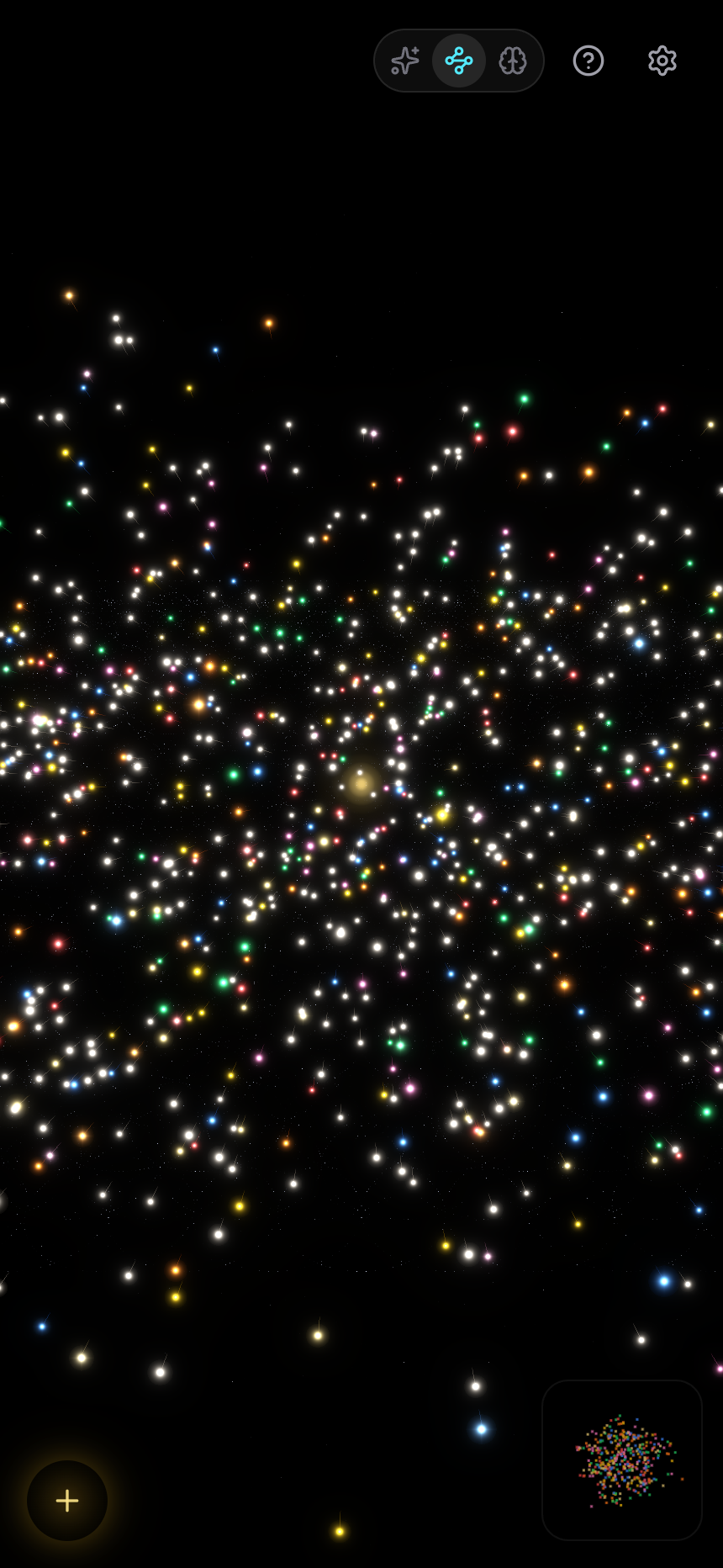
Universe
-
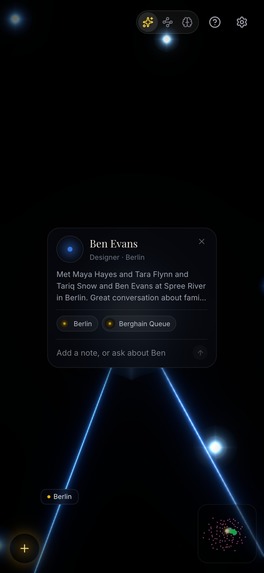
person memory connections
-
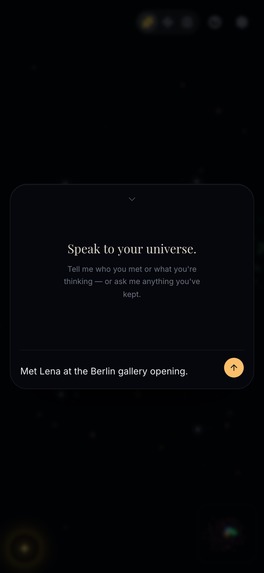
quick capture
-
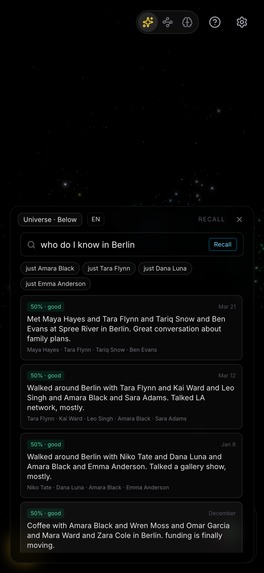
assistant retrieval
-
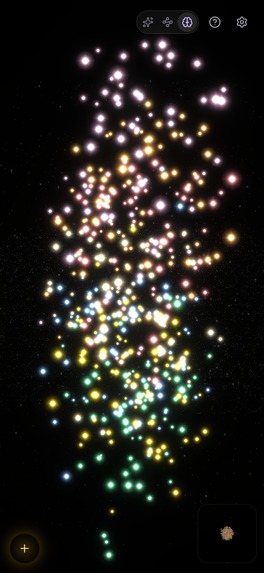
Idea Board
-
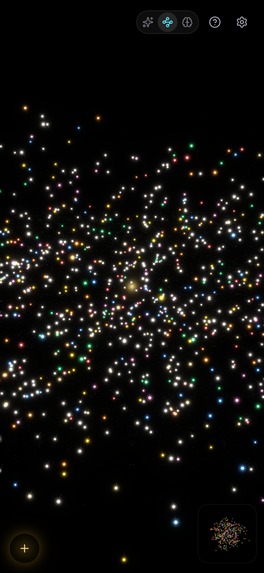
Bridge board
-
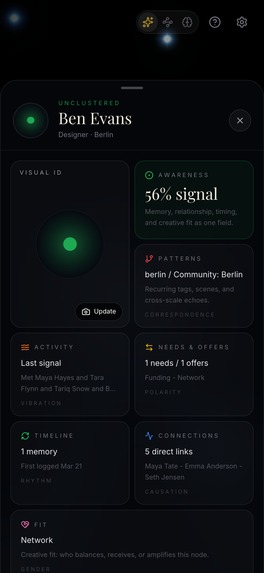
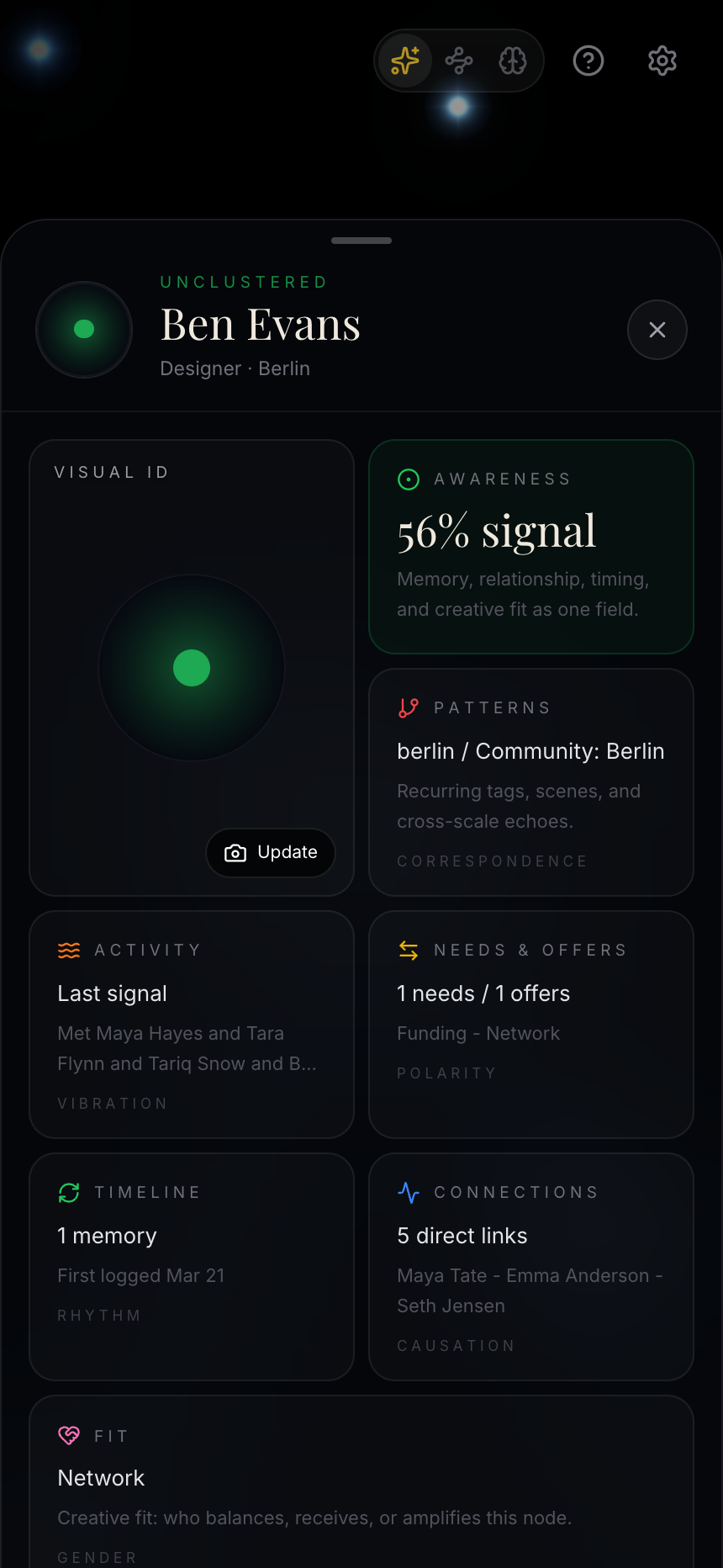
dossier signal
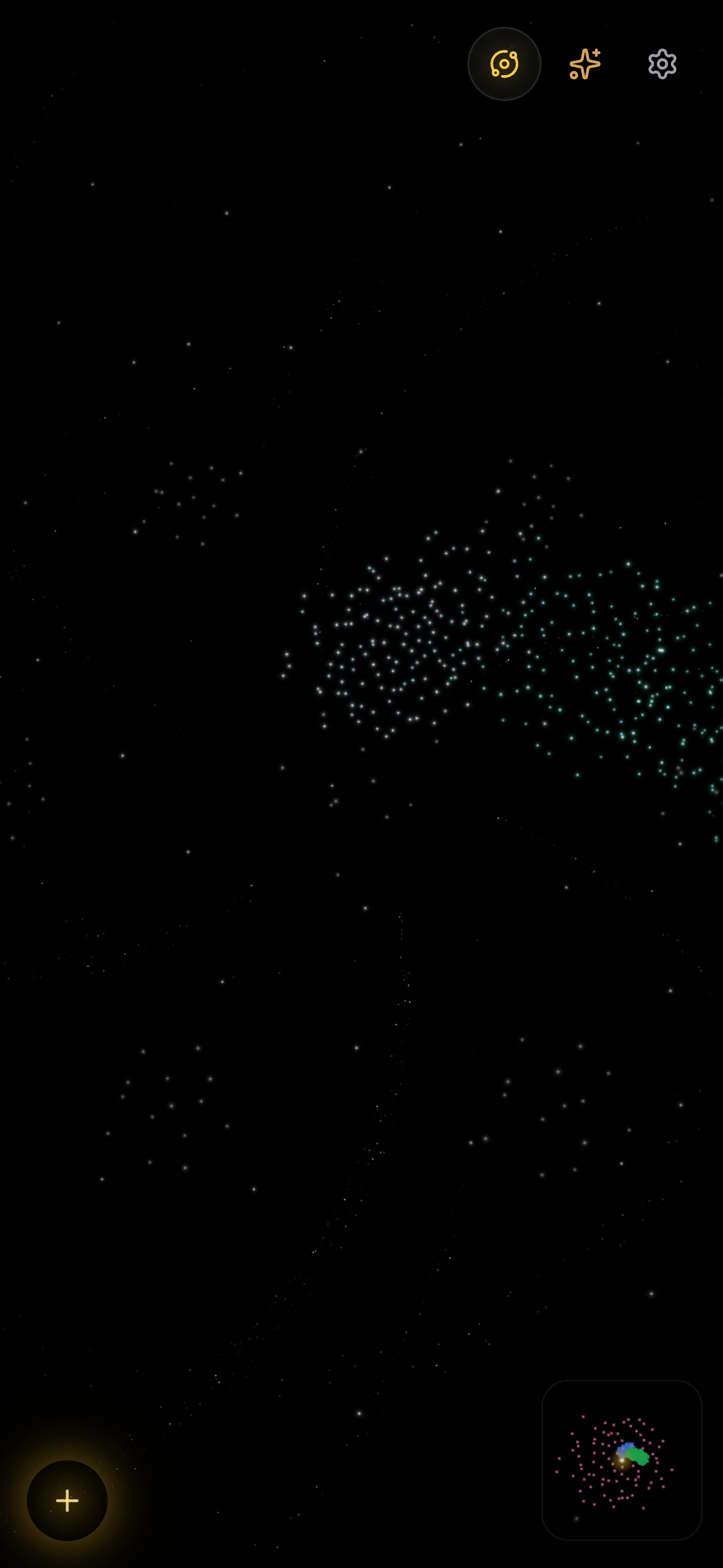
Inspiration
Inspiration
Netty started from a simple problem: my life was everywhere.
People I cared about were buried in old messages. Moments disappeared into my camera roll. Ideas lived in random notes. I could remember that something happened, but not always when, with who, why it mattered, or how it connected to everything else.
I didn't want another notes app. I wanted something that understood the structure of a life.
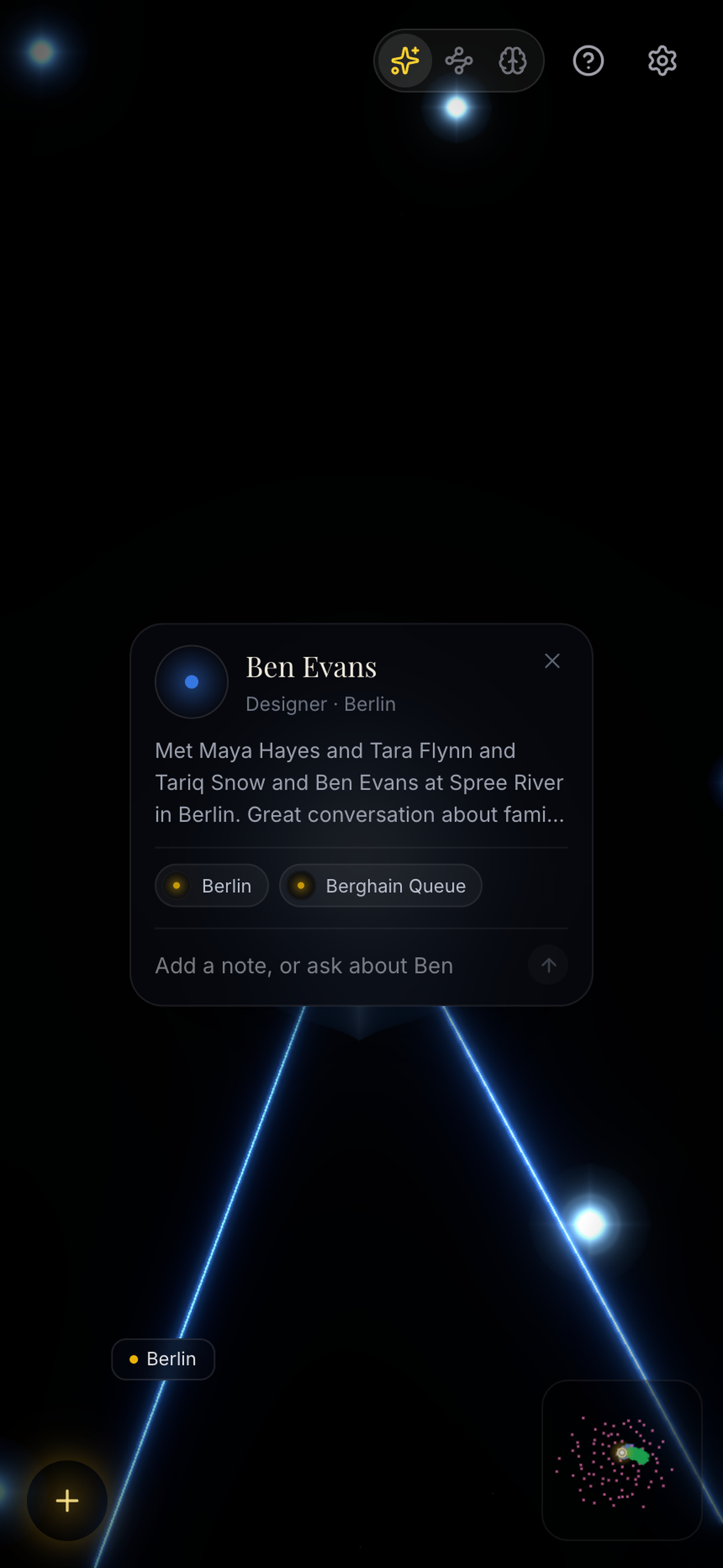
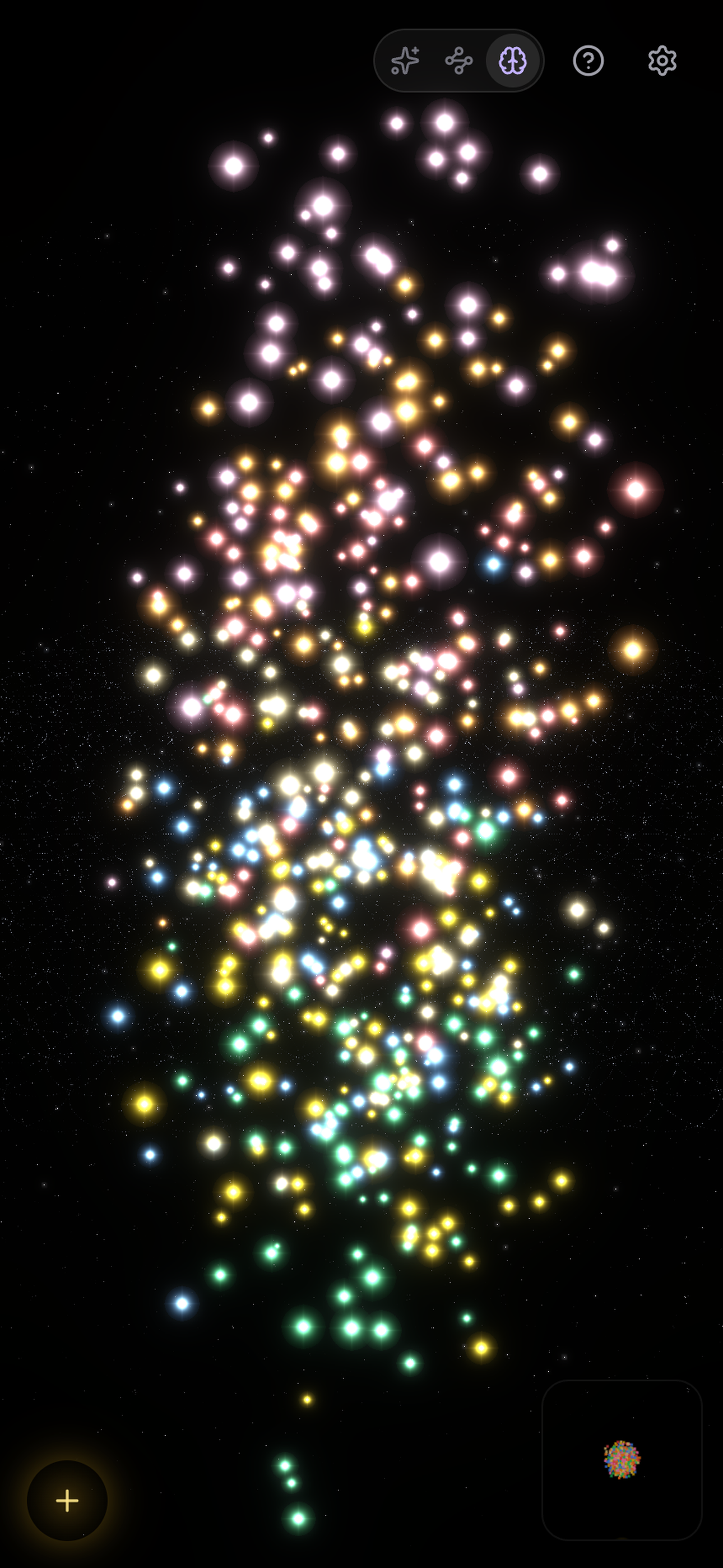
Netty became a private memory system where people, moments, photos, ideas, places, and relationships can exist together. Instead of organizing your life into folders, Netty builds a living universe of connections around you.
The goal became simple:
Remember more. Lose less. See the connections.
How I Built It
I built Netty largely by myself over months of daily development.
The app is built primarily with React, TypeScript and Capacitor, with an iOS-first experience. I designed the interface around boards, memories, people, and a visual universe that shows relationships rather than presenting everything as lists and folders.
A major part of the project became building Netty's intelligence.
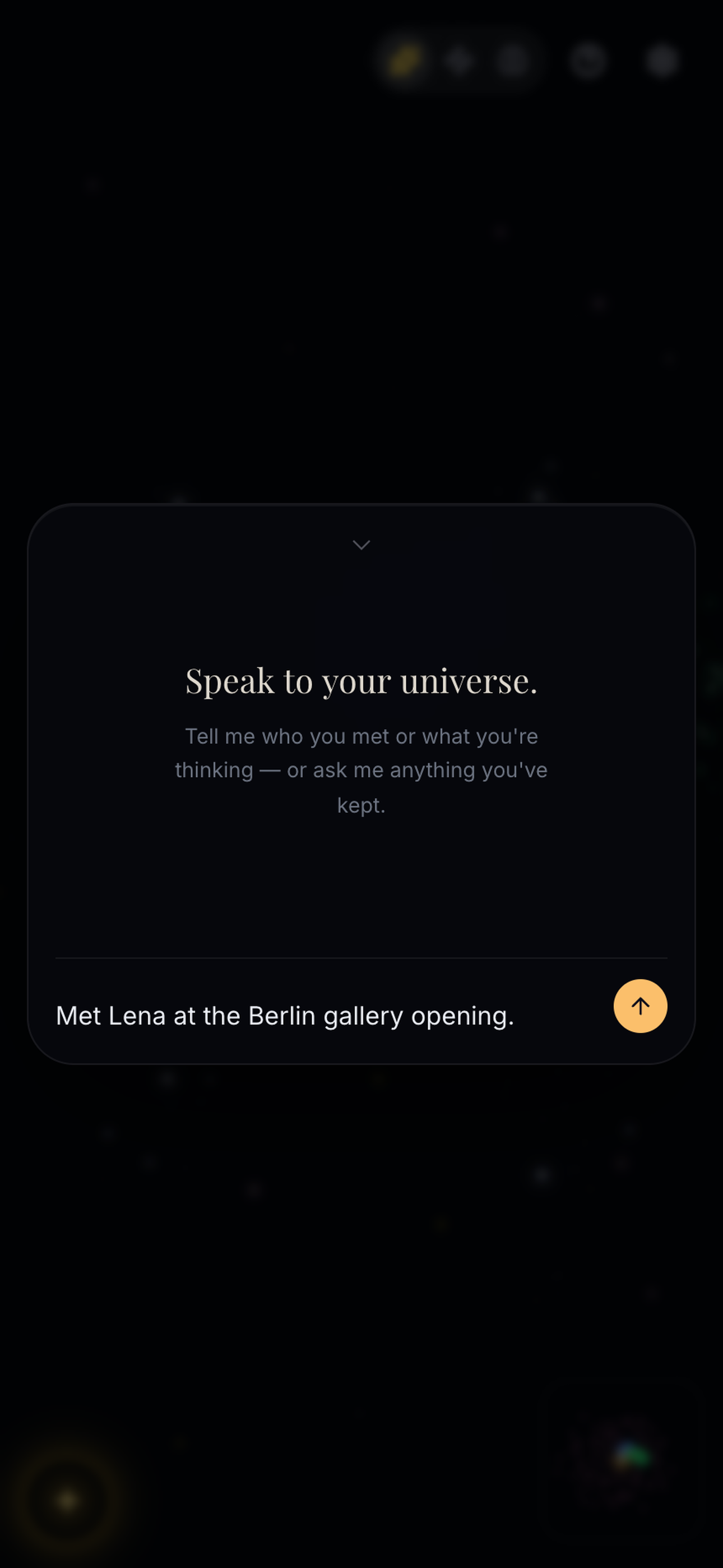
I wanted someone to be able to write naturally:
“Met Sasha yesterday. She lives in Los Angeles.”
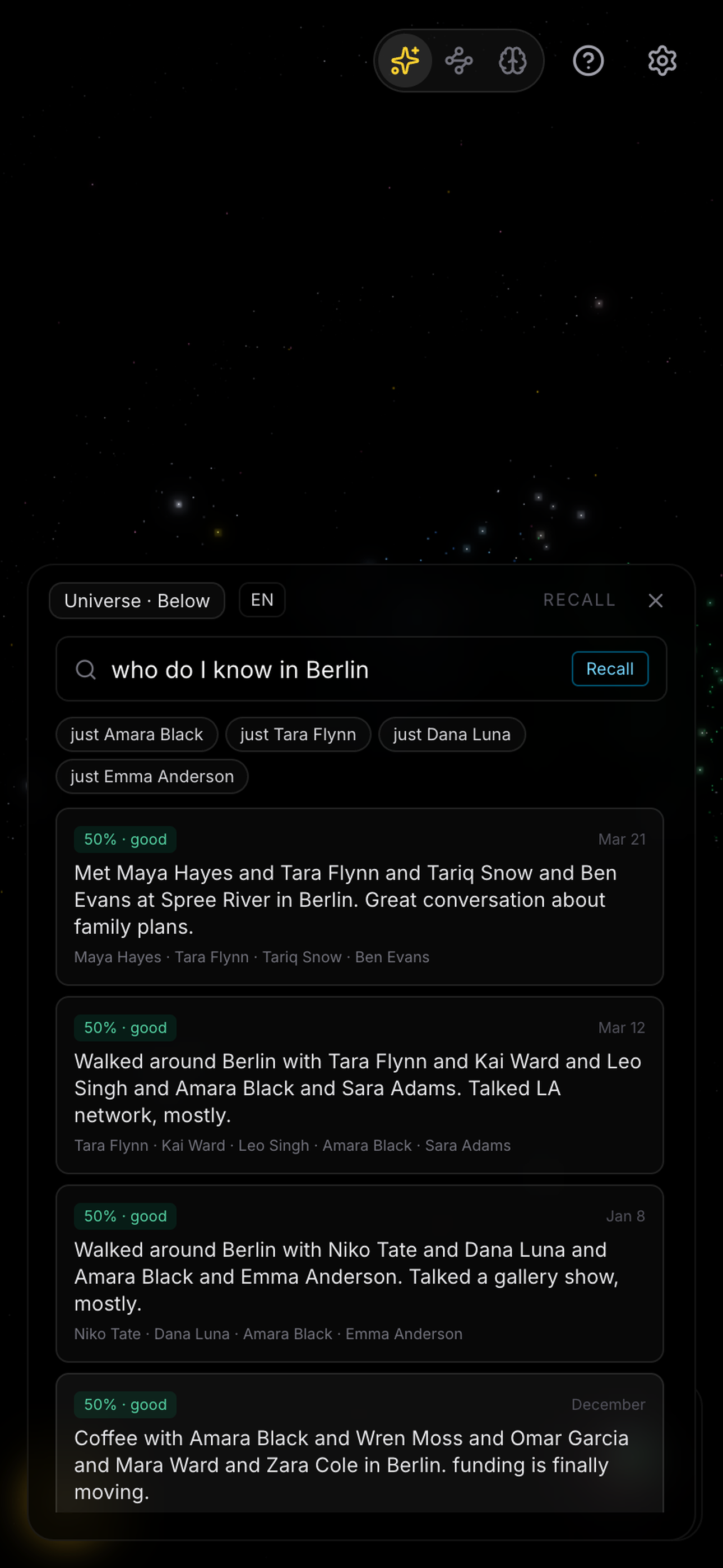
and later ask:
“Who was Sasha? “Who do I know in Los Angeles? “When did I meet her?”
That required much more than storing text. Netty has to understand people, memories, aliases, relationships, dates, and which information it is actually allowed to use when answering.
Privacy also became a core design constraint. I wanted Netty to feel like a private extension of your own memory rather than another service collecting your personal life.
Challenges
The hardest problems were rarely the flashy ones.
Getting a beautiful graph on screen is one thing. Making sure Sasha and Sasha Kim don't accidentally become the same person is another.
I spent a huge amount of time dealing with identity resolution, memory retrieval, conflicting information, duplicate people, relationship inference, and making sure the assistant doesn't confidently answer from the wrong memory.
There were also hundreds of smaller problems: onboarding, camera permissions, voice capture, animations, keyboard behavior, iPad layouts, persistence, offline behavior, performance, accessibility, privacy, and getting the same interaction to feel right on an actual iPhone instead of only in development.
As the project became larger, testing became increasingly important. I built automated tests, reasoning evaluations, repository checks, and device QA processes because changing one seemingly small part of Netty could affect something completely different.
The final stretch has probably been the hardest part. When an application is 90% finished, the remaining 10% contains everything users will immediately notice if it is wrong.
What I Learned
The biggest thing Netty taught me is that building software is not really about writing the most code.
It is about making thousands of decisions about what not to build.
I learned to stop treating every new idea as a feature and start protecting the central experience.
I learned that AI inside a personal product needs boundaries. An assistant that produces an answer is easy. An assistant that understands why it believes that answer, which memory it came from, and whether it should say it at all is much harder.
I also learned how much design and engineering become the same problem when you're building something deeply interactive. Animation, architecture, performance, data structure, language, and emotion all affect how the product feels.
Most importantly, I learned that I could take an idea that originally existed only in my head and keep working on it long enough for it to become a real product.
Netty is still evolving, but the idea at its center hasn't changed:
Your life should not become a pile of forgotten data. It should remain connected.
Built With
- apple
- capacitor
- d3.js
- react
- react-three-fiber
- revenuecat
- sqlite
- three.js
- transformers.js
- typescript
- vite


Log in or sign up for Devpost to join the conversation.