-
-
Chaos
-
Sureal
-

Surreal

Inspiration
This project is inspired by The Dead Internet Theory and the eerie, isolated feeling of navigating the web at 3 AM.
Modern web development focuses on speed, utility, and user-friendliness. We wanted to build the exact opposite: a system that feels alive, hostile, and actively tries to trap the user. We wanted to answer the question:
What happens if you disconnect a browser from the internet, but force it to keep dreaming?
The result is an exploration of liminal spaces and digital decay—a simulation of a haunted operating system that watches you back.
What It Does
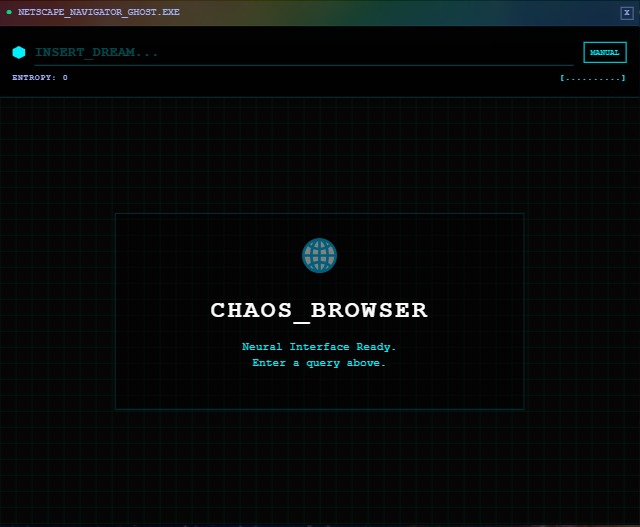
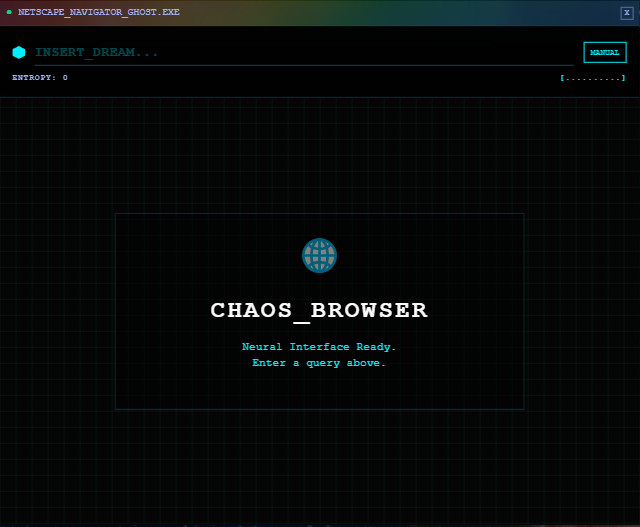
Netscape_Ghost.exe is a browser simulation running inside a fake Desktop Environment. It does not connect to the real web; instead, it hallucinates content based on user input.
🔮 The Chaos Engine
When users type a prompt (e.g., "The end of time"), the app procedurally generates a website layout.
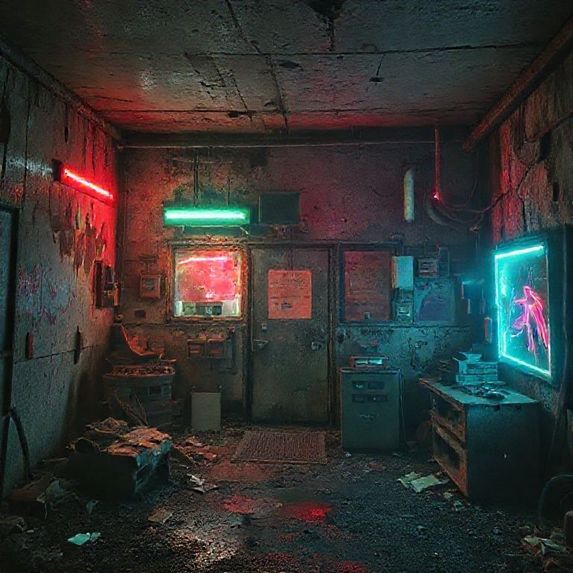
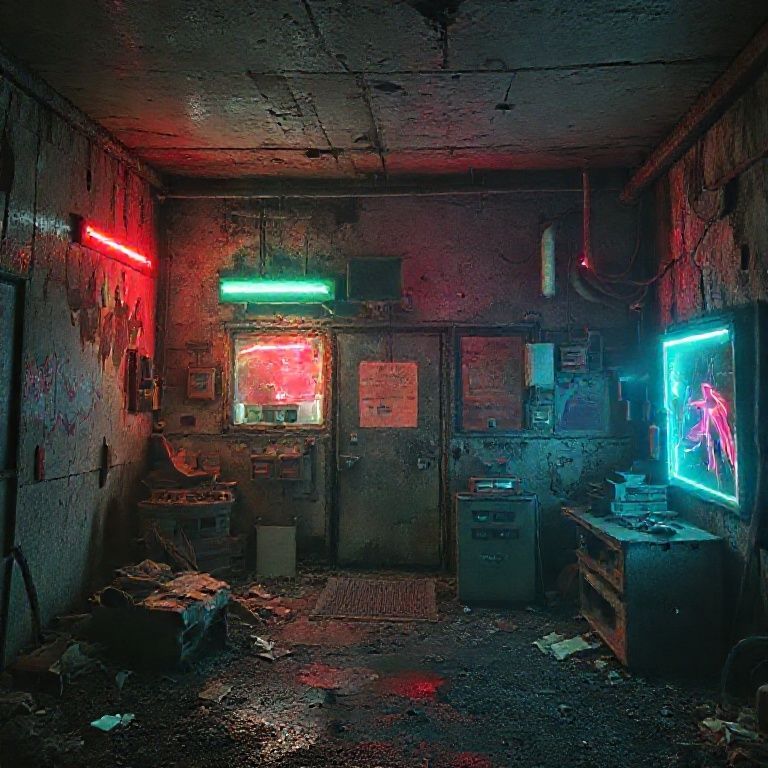
It uses the Pollinations.ai API to generate surreal images in real time—no backend required.
🧠 The Entropy System
Every interaction acts as a variable in a chaos equation.
As users click Trap Links to navigate deeper, the system’s Entropy level rises.
🎛️ Visual & Audio Decay
As Entropy increases:
- The screen physically distorts (CSS skews, hue rotations)
- A background audio drone—generated via the Web Audio API—pitch-shifts downward into a menacing low frequency
⚠️ Hostile UI
At high anxiety levels, the interface fights back:
- The “Go Back” button uses collision physics to flee from the mouse cursor
- The “Start” button triggers panic states and fake system error popups instead of opening a menu
🕳️ The Void
Features like the Hungry Trash Can invert the screen’s colors when clicked, simulating electrical failure.
How We Built It
🧩 Core Stack
- React
- Tailwind CSS for glassmorphism, scanlines, and distortion aesthetics
🔊 Audio Engineering
We avoided static audio files entirely.
Instead, we used the Web Audio API to create real-time oscillators and gain nodes that are directly tied to React state—so the sound reacts to the chaos.
🤖 AI Integration
We used Pollinations.ai for image generation, fetching dream-like visuals via URL parameters on the fly.
🧠 State Management
- A custom Context Provider (
VibeContext) manages global mood - A localized state machine tracks Entropy, controlling:
- Text corruption
- Visual decay
- Button velocity
Challenges We Ran Into
🧮 Fleeing Button Physics
Calculating vector math to make the “Go Back” button dodge the mouse smoothly—without getting stuck in corners—was surprisingly difficult.
We implemented a repulsion radius that feels unfair, but not broken.
🔁 Audio State Synchronization
Managing the Web Audio API inside React’s useEffect lifecycle was tricky.
Early on, oscillators stacked during re-renders, causing ear-piercing audio spikes.
🎭 Balancing the Horror
Finding the balance between glitchy art and total chaos was hard.
Text corruption had to remain readable enough to be unsettling—not just noise.
Accomplishments We’re Proud Of
🌫️ The Atmosphere
The drifting CSS animations, low-frequency audio drone, and scanline overlay combine into a genuinely unsettling experience.
🪤 Trap Links
We built a parser that scans generated text and inserts fake hyperlinks.
Clicking them feels natural—but actually pulls the user deeper into the simulation.
🚫 No Backend Required
The entire experience—including AI image fetching and procedural generation—runs entirely on the client.
What We Learned
😈 Hostile Design
We learned how to invert standard UX principles—using UI patterns to induce stress and anxiety (e.g., buttons changing from “Start” to “RUN”).
🎚️ Web Audio Mastery
We gained deep experience with programmatic frequency and gain manipulation using the Web Audio API.
🧪 Procedural Generation
We learned how to build fake but believable articles and layouts using weighted random data structures.
What’s Next for Netscape_Ghost.exe // Chaos Browser
📱 Mobile Support
The fleeing button currently relies on mouse hover.
We plan to add touch-based repulsion so mobile users can suffer too.
🧠 LLM Integration
Right now, text is procedurally scrambled templates.
Next step: plug in a lightweight LLM so the ghost browser writes its own terrifying news articles.
👻 Multiplayer Hauntings
We’re exploring WebSockets to let users see the ghost cursors of others trapped in the simulation at the same time.
Built With
- css3
- html5
- javascript
- pollinations.ai
- react
- tailwind-css
- web-audio-api

Log in or sign up for Devpost to join the conversation.