-
-
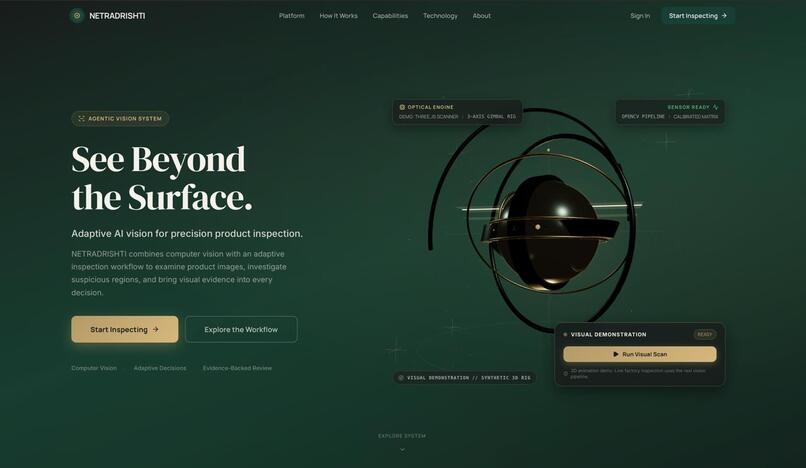
Landing page
-

Sign in page
-
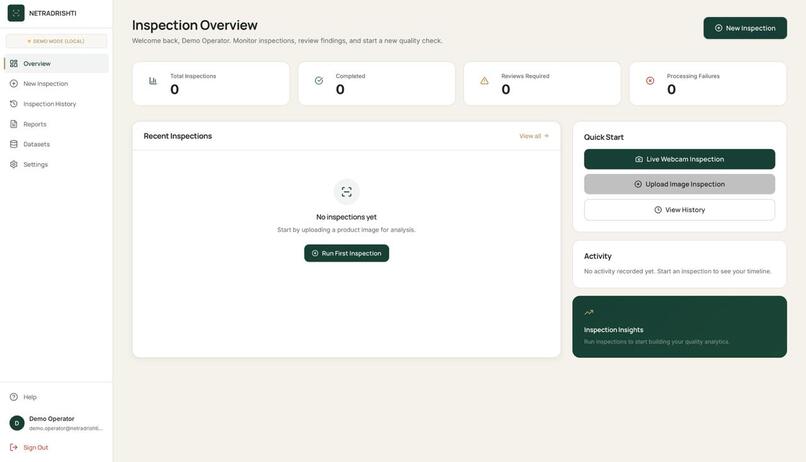
Overview page
-

New inspection
-
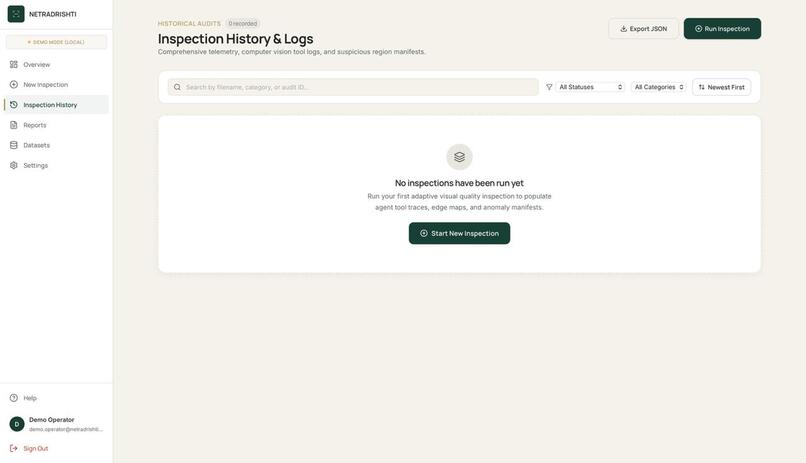
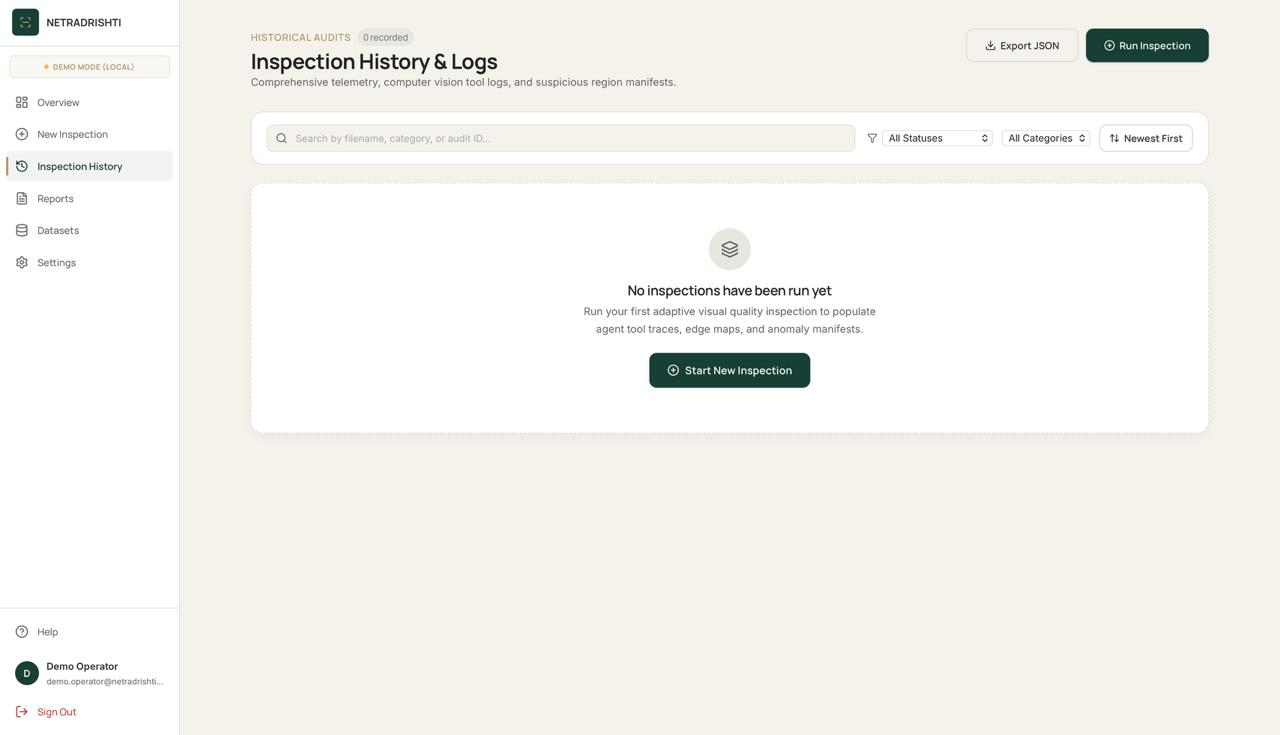
Inspection history
-
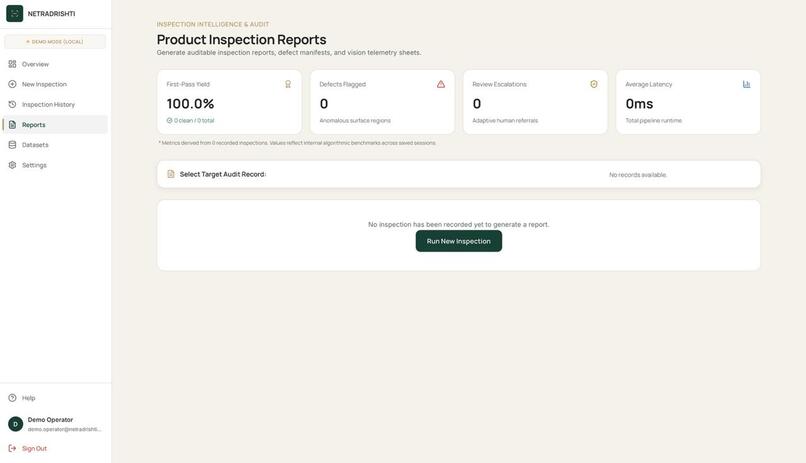
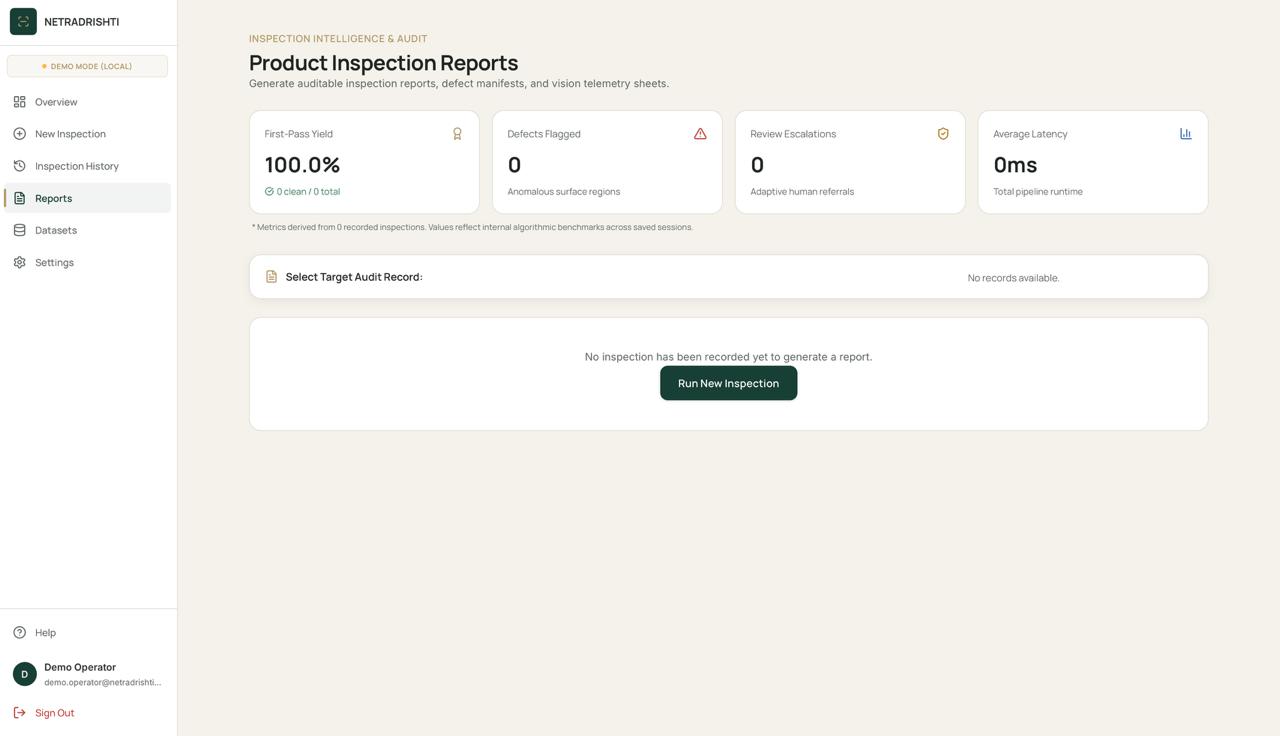
Reports
-
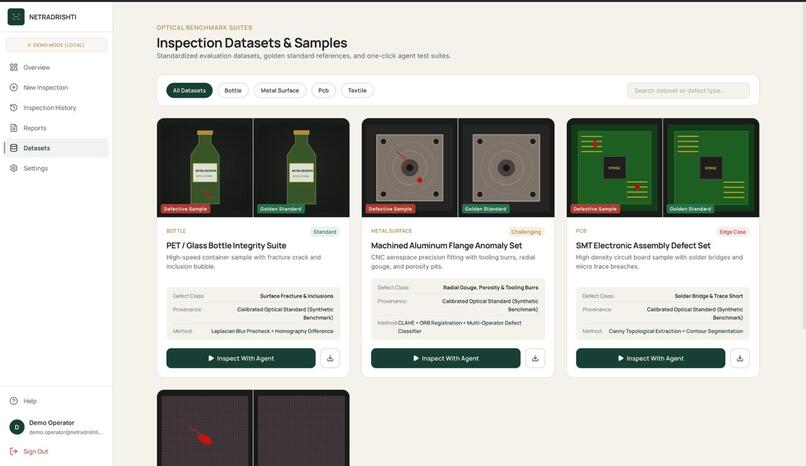
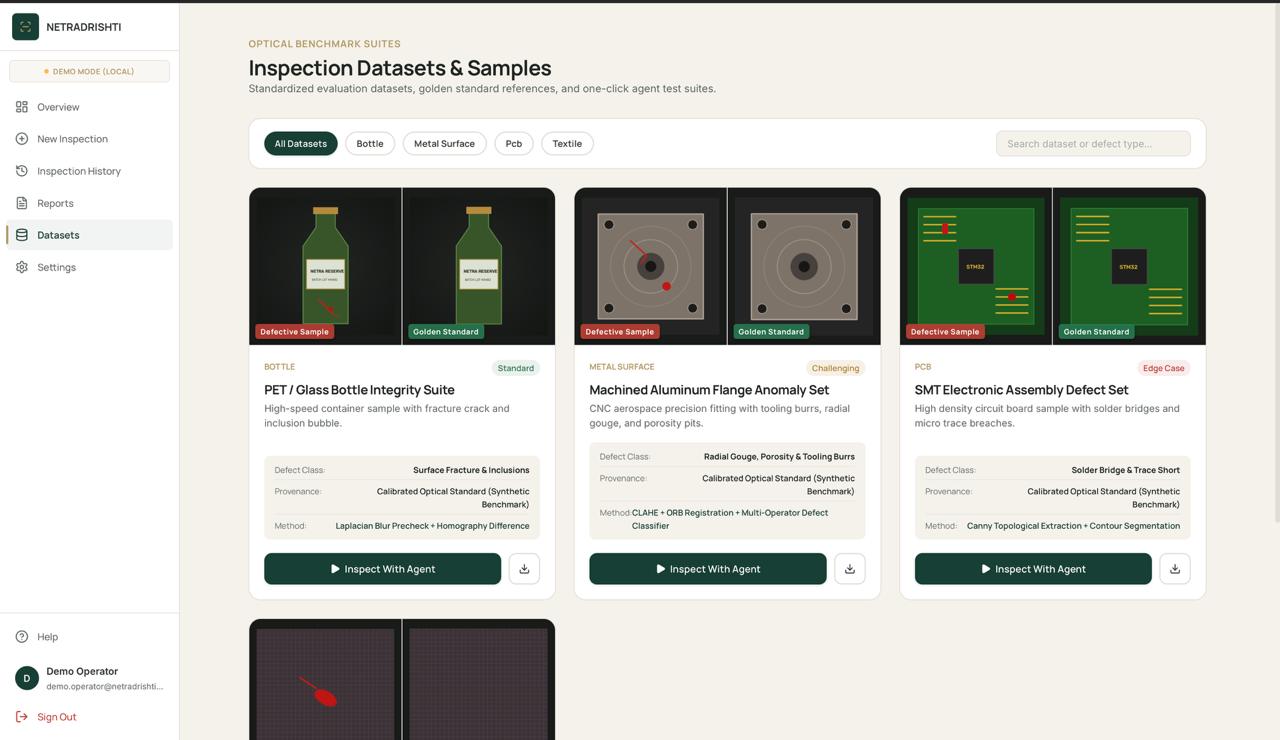
Built in datasets
-
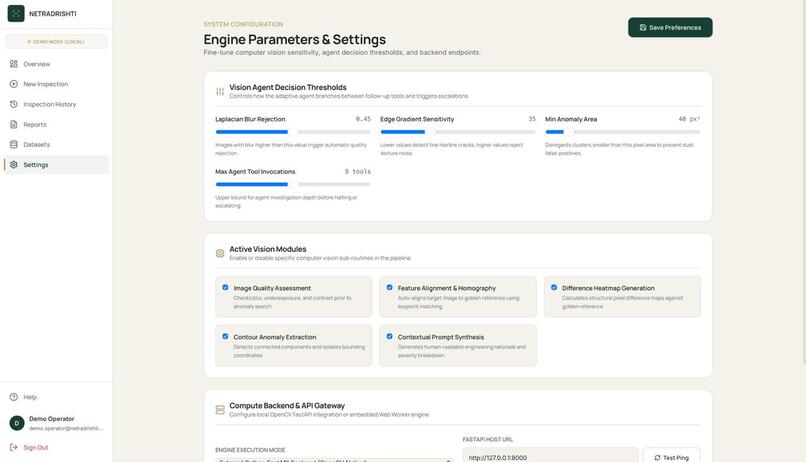
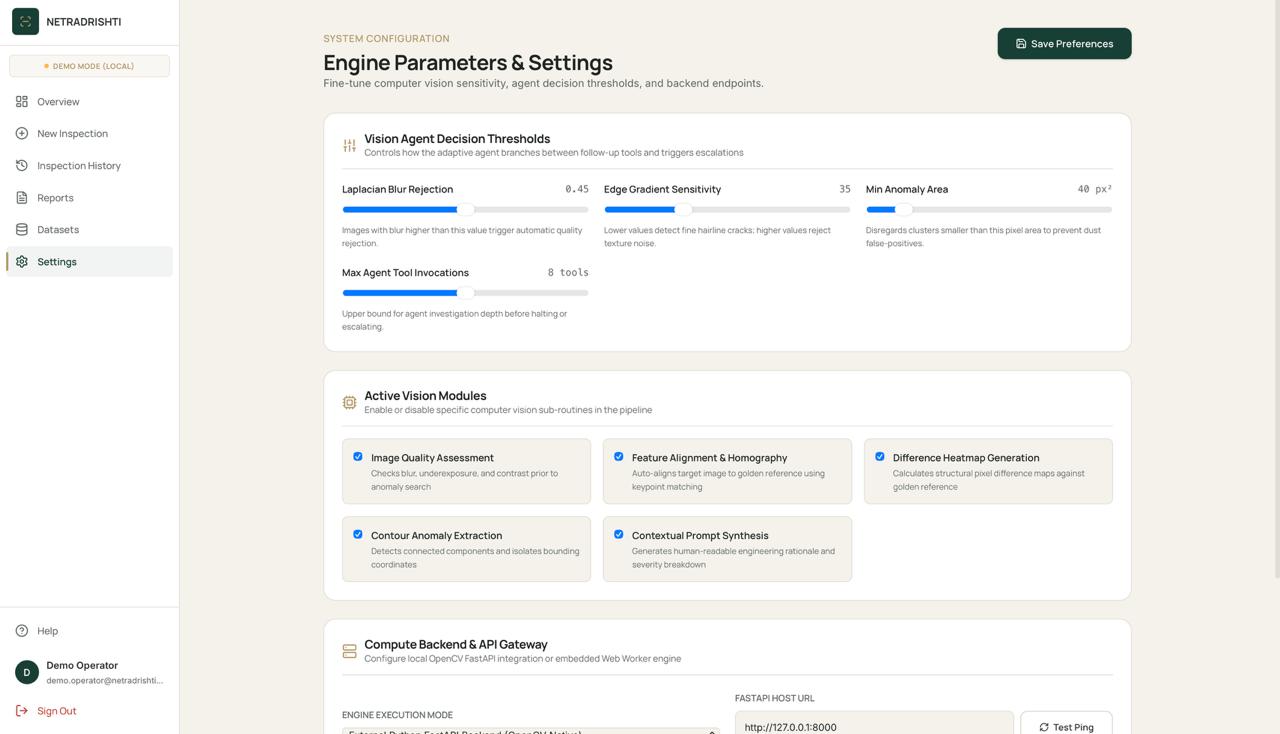
Settings
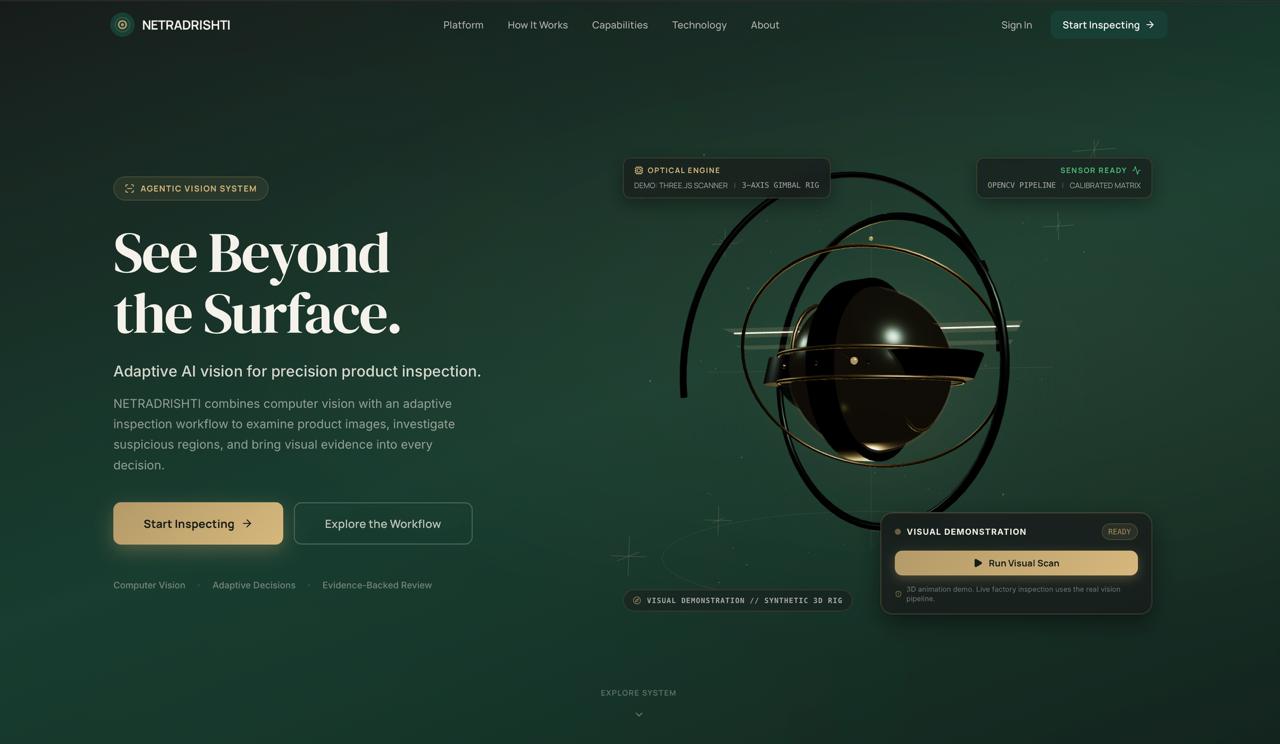

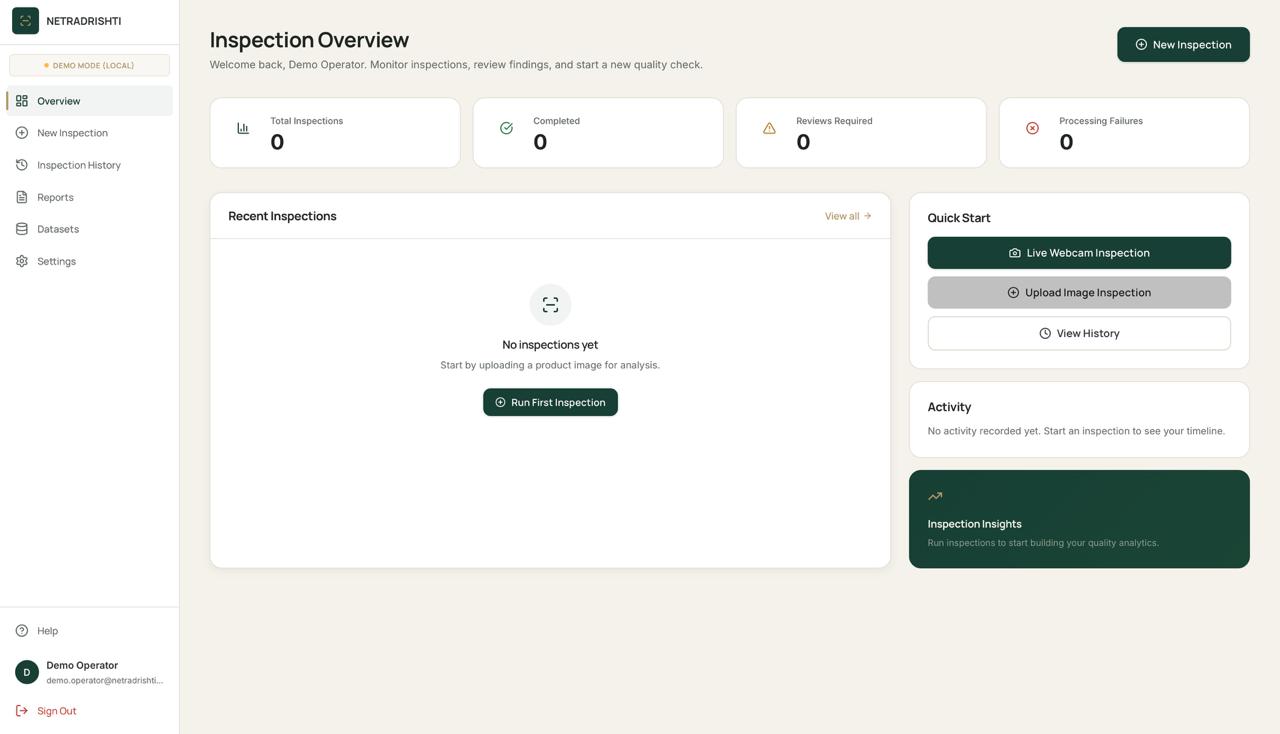

NETRADRISHTI — See Beyond the Surface
The Story Behind NETRADRISHTI
The Problem: A Small Defect Can Have a Big Consequence
Every manufactured product must meet quality standards before it reaches the customer. From metal components used in machinery to glass containers, electronic circuit boards, and textile products, even a small defect can affect product reliability, increase production costs, or lead to rejection.
Yet, inspecting products consistently across long production runs remains challenging. Manual inspection can be repetitive, time-consuming, and dependent on human judgment. Traditional automated inspection systems can also struggle when images are blurry, lighting changes, products are misaligned, or unexpected visual patterns appear.
A system may flag a difference without explaining where it occurred, whether the evidence is reliable, or what should be checked next.
The real challenge is not simply detecting a defect. It is knowing when the visual evidence can be trusted and what action should follow.
The Origin: Rethinking How Machines Inspect
NETRADRISHTI was developed around a fundamental question:
What if a vision system could do more than follow a fixed sequence of checks? What if it could evaluate the evidence, recognize uncertainty, and decide what inspection step makes sense next?
This question inspired NETRADRISHTI: an adaptive, agentic vision system designed to bring more flexibility, traceability, and evidence-based reasoning to product quality inspection.
Instead of treating every image identically, the proposed system combines computer-vision techniques with a decision-making workflow. It evaluates image quality, aligns a product image with a known-good reference when available, identifies suspicious regions, and uses the results of previous checks to determine whether further analysis or human review is needed.
The Solution: Inspection That Adapts to Evidence
NETRADRISHTI combines OpenCV-based visual analysis with an adaptive agentic workflow.
Its intended inspection process includes:
- Assess: Evaluate image quality, including blur, brightness, and suitability for inspection.
- Align: Compare the product image with an appropriate reference when one is available.
- Analyze: Locate suspicious differences and candidate defect regions using supported vision methods.
- Adapt: Select additional inspection tools according to the evidence already collected.
- Explain: Present annotated findings, uncertainty, and the reasoning behind the inspection outcome.
- Escalate: Route ambiguous or unreliable cases for human review rather than forcing an unsupported decision.
This approach aims to make inspection more than a simple pass-or-fail operation. It creates a traceable workflow in which findings are connected to visual evidence and the next action depends on the results.
The Manufacturing Impact: Beyond Finding Defects
In manufacturing, the consequences of unreliable inspection extend beyond a single rejected component. Missed defects can allow quality problems to continue downstream, while false alarms can trigger unnecessary reinspection, interrupt workflows, and consume valuable operator time.
NETRADRISHTI aims to address these challenges by supporting:
Earlier identification of suspicious regions: Help operators focus attention on areas that may require further investigation.
More consistent inspection workflows: Apply structured visual checks instead of relying entirely on repetitive manual examination.
Reduced unnecessary reinspection: Use image-quality checks and evidence-based decisions to help distinguish meaningful anomalies from unreliable visual differences.
Clearer quality decisions: Provide annotated evidence and inspection history so operators can understand what the system observed.
Human oversight where it matters: Recognize uncertainty and request additional checks or human review when automated evidence is insufficient.
A foundation for scalable quality assurance: Establish a modular approach that can be evaluated and extended for supported product categories, including metal surfaces, bottles, PCBs, and textiles.
These are the intended benefits of NETRADRISHTI. Their actual impact must be established through testing against representative manufacturing images, verified defect labels, and measurable inspection outcomes.
Our Vision
We envision a future in which industrial vision systems do not merely identify visual differences but also assess evidence quality, adapt their analysis, and communicate uncertainty clearly.
NETRADRISHTI aims to move product inspection beyond rigid pipelines toward a more adaptive, transparent, and accountable approach to manufacturing quality assurance.
NETRADRISHTI — See Beyond the Surface. Make Every Inspection More Informed.

Log in or sign up for Devpost to join the conversation.