-
-
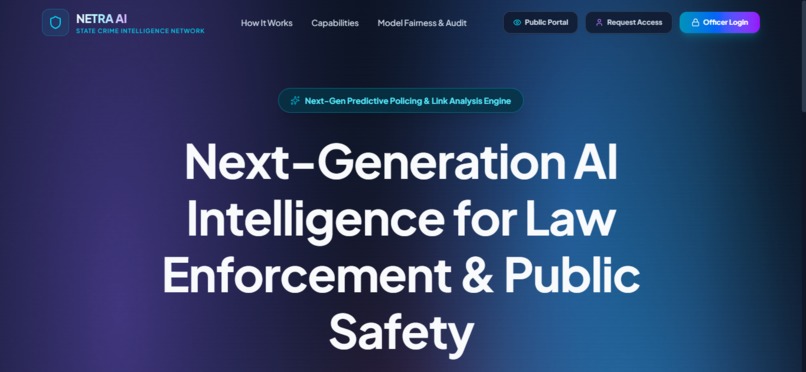
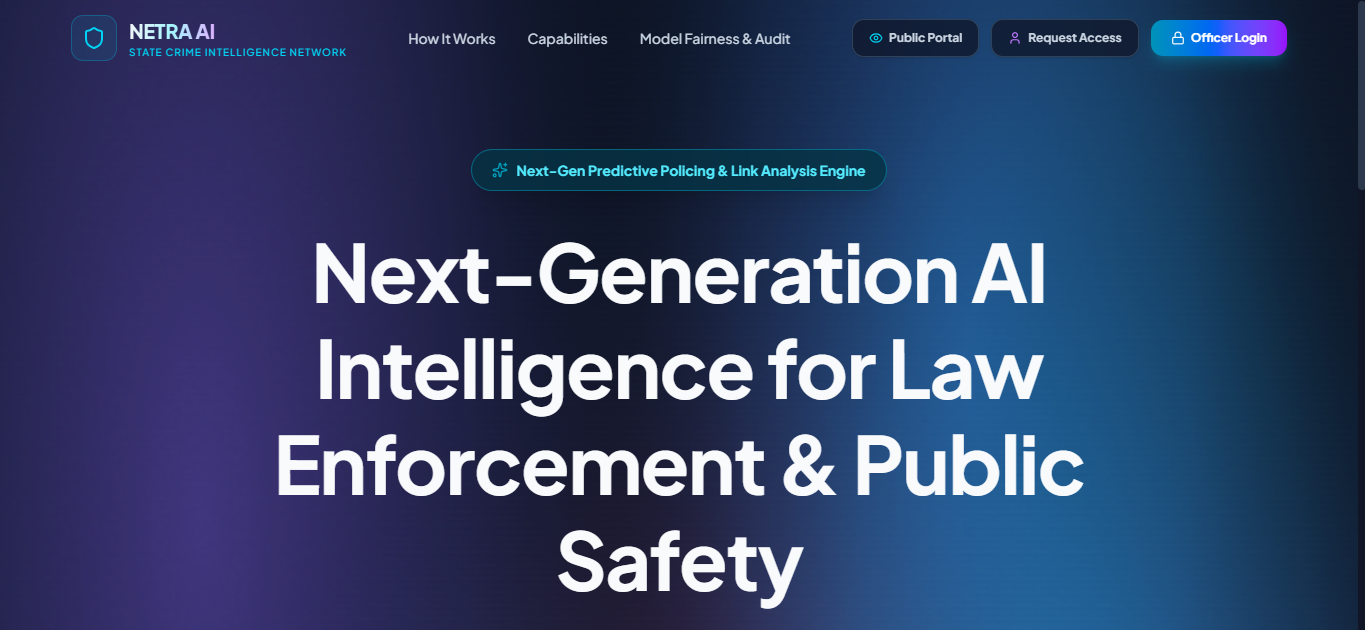
Home Page
-
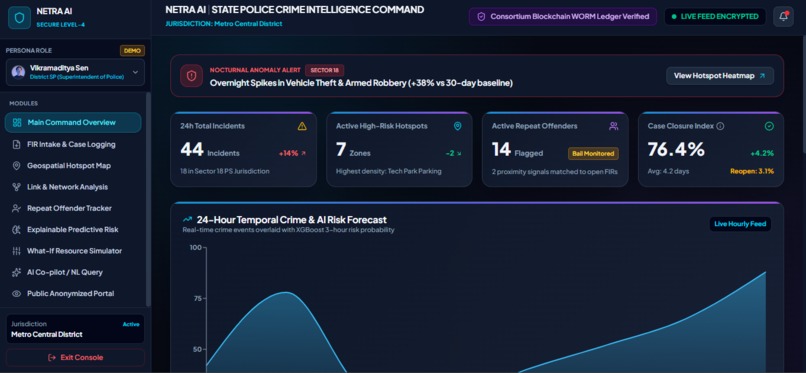
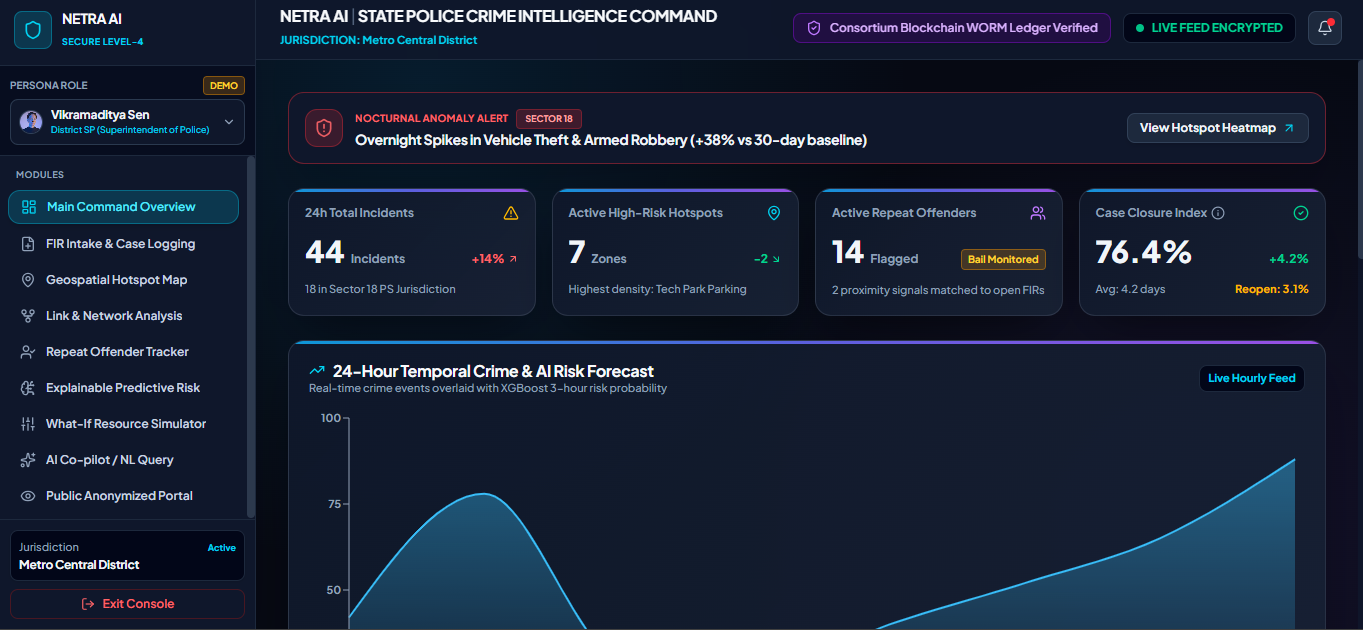
Dashboard
-
-
How We Built It
• We designed NETRA around a data flow, not just a feature list: an officer submits a case, a supervisor verifies it, and only then does it feed the analytics and AI layer a checkpoint that keeps unverified field input from silently shaping every model downstream.
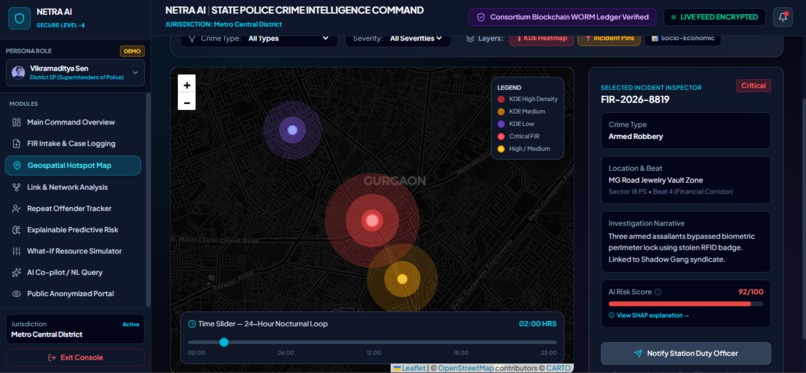
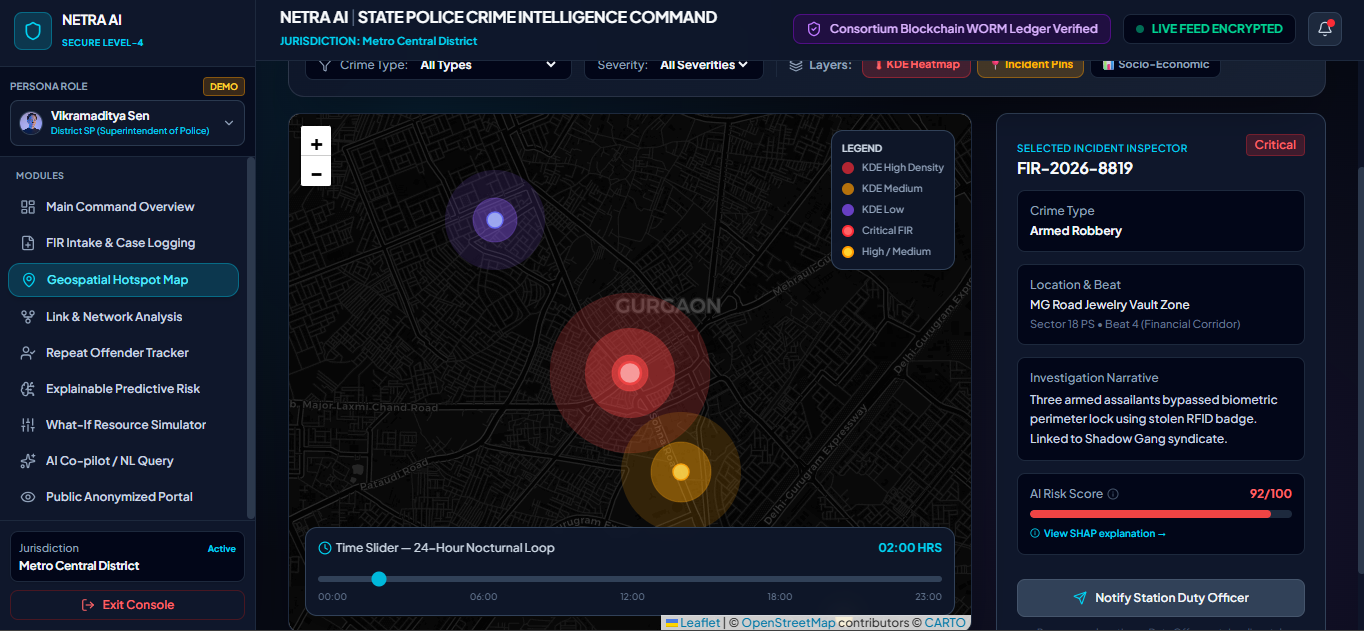
• The frontend is built in React and TypeScript with Tailwind CSS, using Mapbox/deck.gl for geospatial rendering and Cytoscape.js for the network graph. The backend runs on FastAPI with PostgreSQL and PostGIS for geospatial queries, Neo4j for link analysis, Elasticsearch for case search, and Redis for caching. The AI/ML layer combines XGBoost and a spatio-temporal LSTM for risk forecasting, SHAP for explainability, and a RAG pipeline for the natural-language co-pilot integrated with Zoho Catalyst's serverless services (Functions, Data Store, Authentication, QuickML, Zia) for scalable deployment. Every action across the platform writes to an RSA-4096 hash-chained audit log, reviewed by an independent oversight role sitting outside the police chain of command.
Challenges We Ran Into
• The hardest problem wasn't technical it was deciding what the platform should refuse to show. Early designs surfaced named suspects, live location pings, and confidence-scored "gang links" directly on shared dashboards with no legal basis attached. Walking that back adding verification checkpoints, redacting identities outside case context, and reframing AI outputs as leads instead of conclusions took more design iteration than any single feature build.
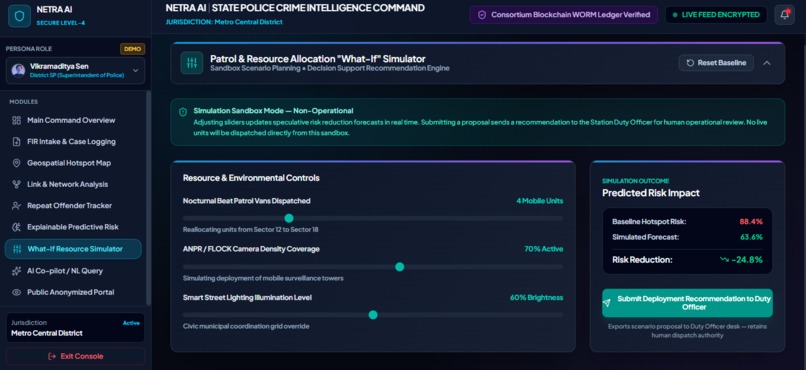
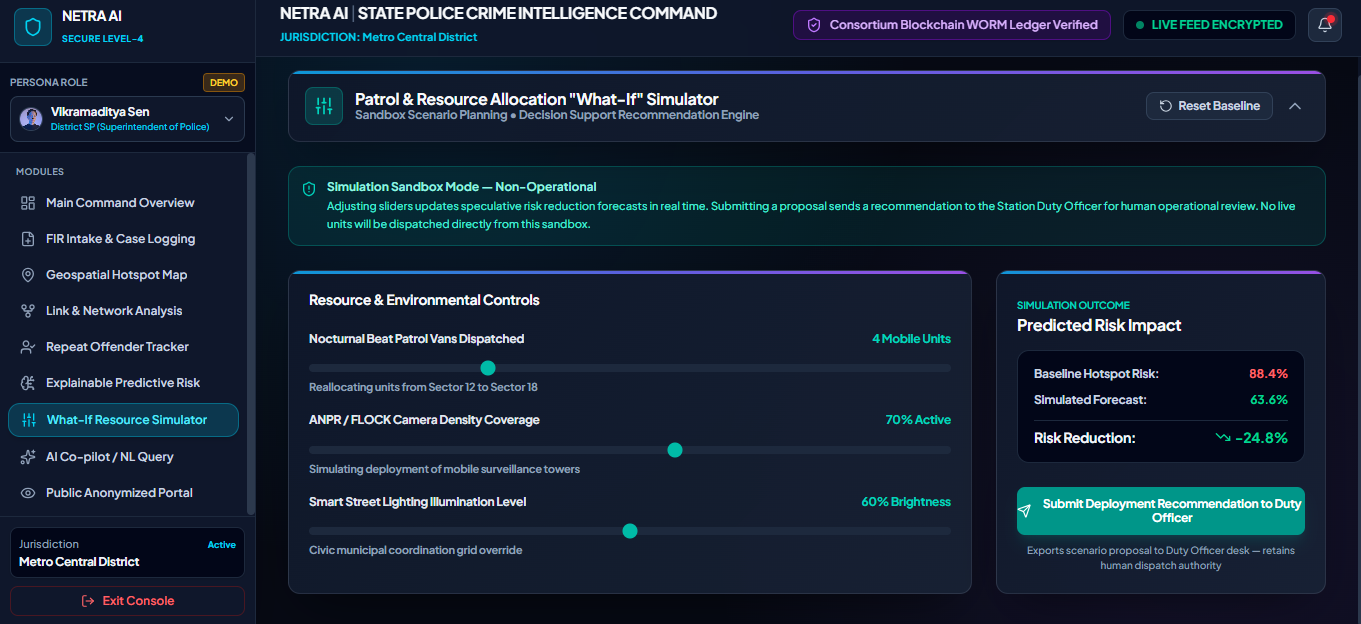
• We also had to draw a hard line between analytics and operations. Several screens originally included one-click "dispatch" buttons that would have turned a decision-support tool into a live command-and-control system with no human accountability step. Recognizing that distinction, and rebuilding those flows around recommendation-and-confirm rather than one-click action, was a turning point in the design.
Accomplishments That I am Proud Of
• Building an explainability layer that isn't cosmetic every risk score in NETRA traces back to the specific factors that produced it, with mitigating factors shown alongside risk factors, not just a bare number. Equally, building governance as core architecture rather than an afterthought: independent audit oversight, human-in-the-loop enforcement and role-scoped access are present in the platform's foundation, bolted on for the demo.
What We Learned
• That the technically impressive part of a system like this the graphs, the predictions, the maps is rarely what determines whether it's trustworthy. What determines that is what the system refuses to assume, how clearly it labels a guess versus a fact, and who's allowed to check its work. We came out of this build far more attentive to that distinction than we expected to be going in.
What's Next for NETRA
• Offline-capable mobile app for field officers. • Multilingual AI co-pilot (Kannada and other regional languages). • Cross-district and cross-state pattern detection. • Integration with judicial case-management systems (e-Courts). • Recurring automated fairness re-certification as case data grows. • Verified citizen tip integration, routed through the same supervisor-verification safeguard used for officer-submitted cases.
Built With
- cytoscapejs
- deckgl
- elasticsearch
- fastapi
- mapbox
- neo4j
- postgis
- postgresql
- python
- react
- rechart
- redis
- rsa-4096
- shap
- tailwind
- typescript
- xgboost

Log in or sign up for Devpost to join the conversation.