Inspiration
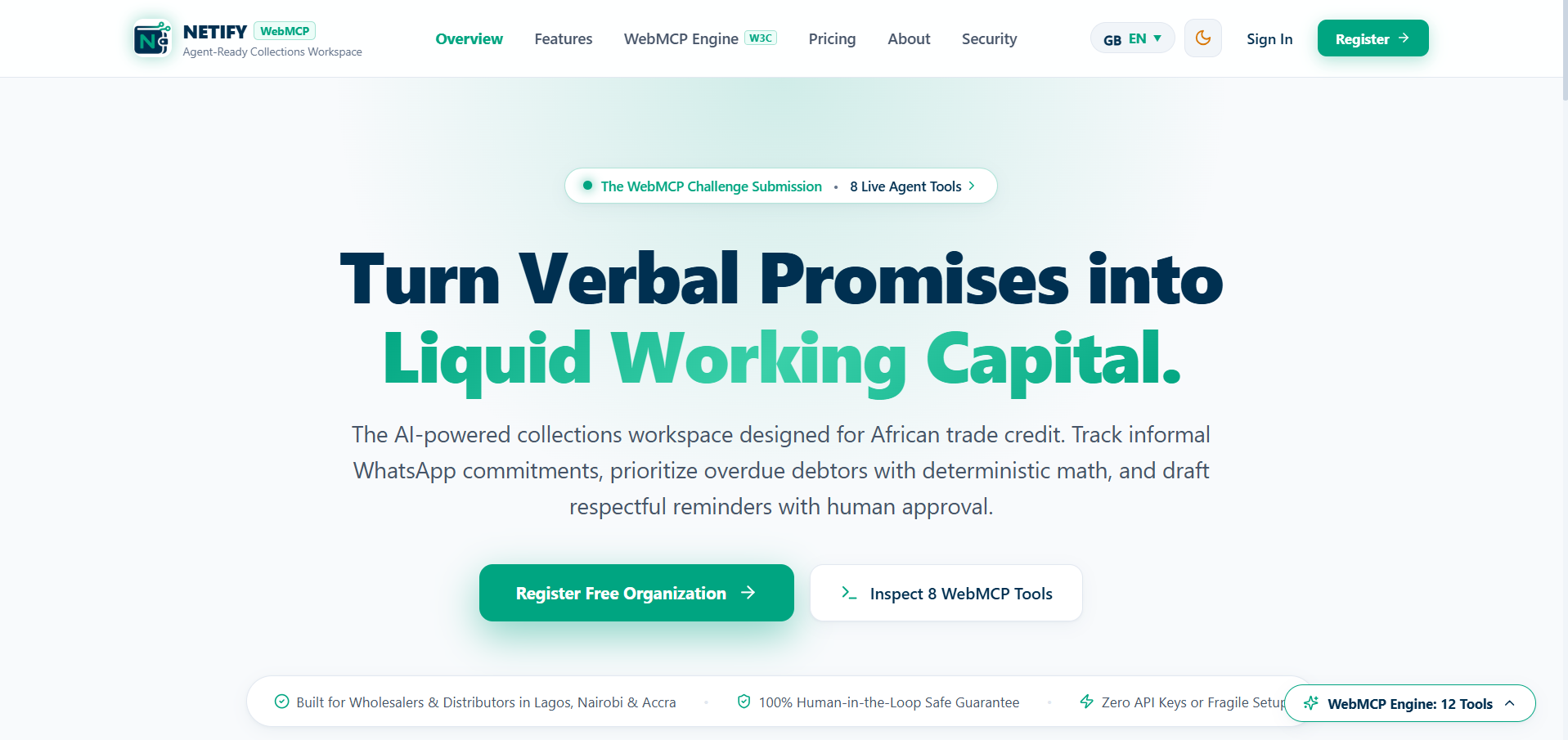
Across sub-Saharan Africa, over 80% of wholesale and retail trade runs on credit. But it rarely happens through formal banks or credit cards—it happens through trust, verbal agreements, and thousands of informal WhatsApp messages. A grain merchant in Kano or an electronics distributor in Alaba market will supply goods on Monday with a verbal promise to get paid on Friday.
When those promises break, recovery becomes a full-time headache. Business owners spend entire evenings combing through chat histories, calculating overdue balances on paper, and sending awkward reminders that risk souring customer relationships.
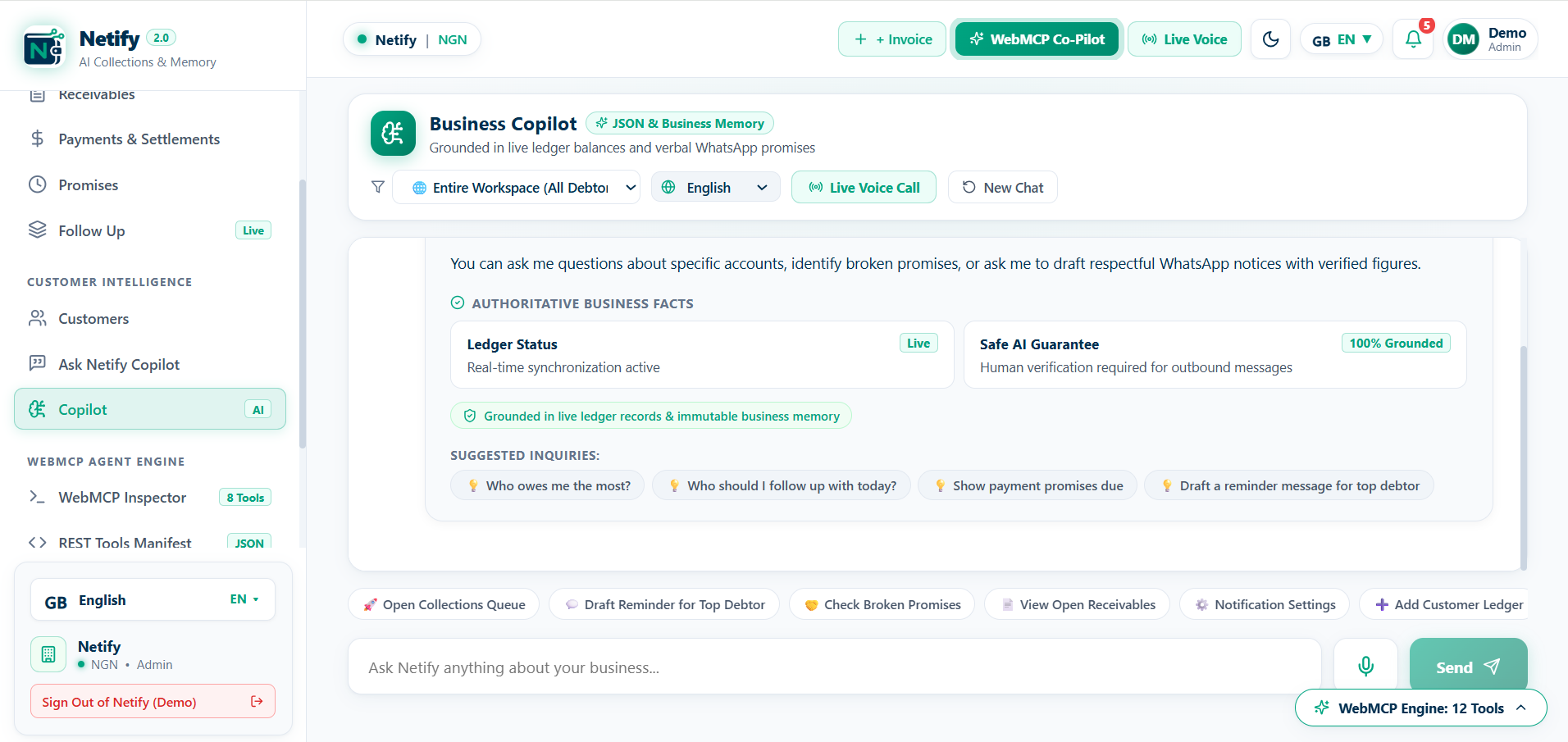
When the WebMCP standard was announced, it immediately clicked for us: instead of forcing merchants into complicated accounting software or letting AI scrape messy web pages, we could turn their browser into an autonomous collection assistant. With WebMCP, an agent sitting in the browser can inspect ledger balances, understand past payment promises, and draft respectful reminders in the customer's native language—all under the merchant's direct supervision.
What It Does
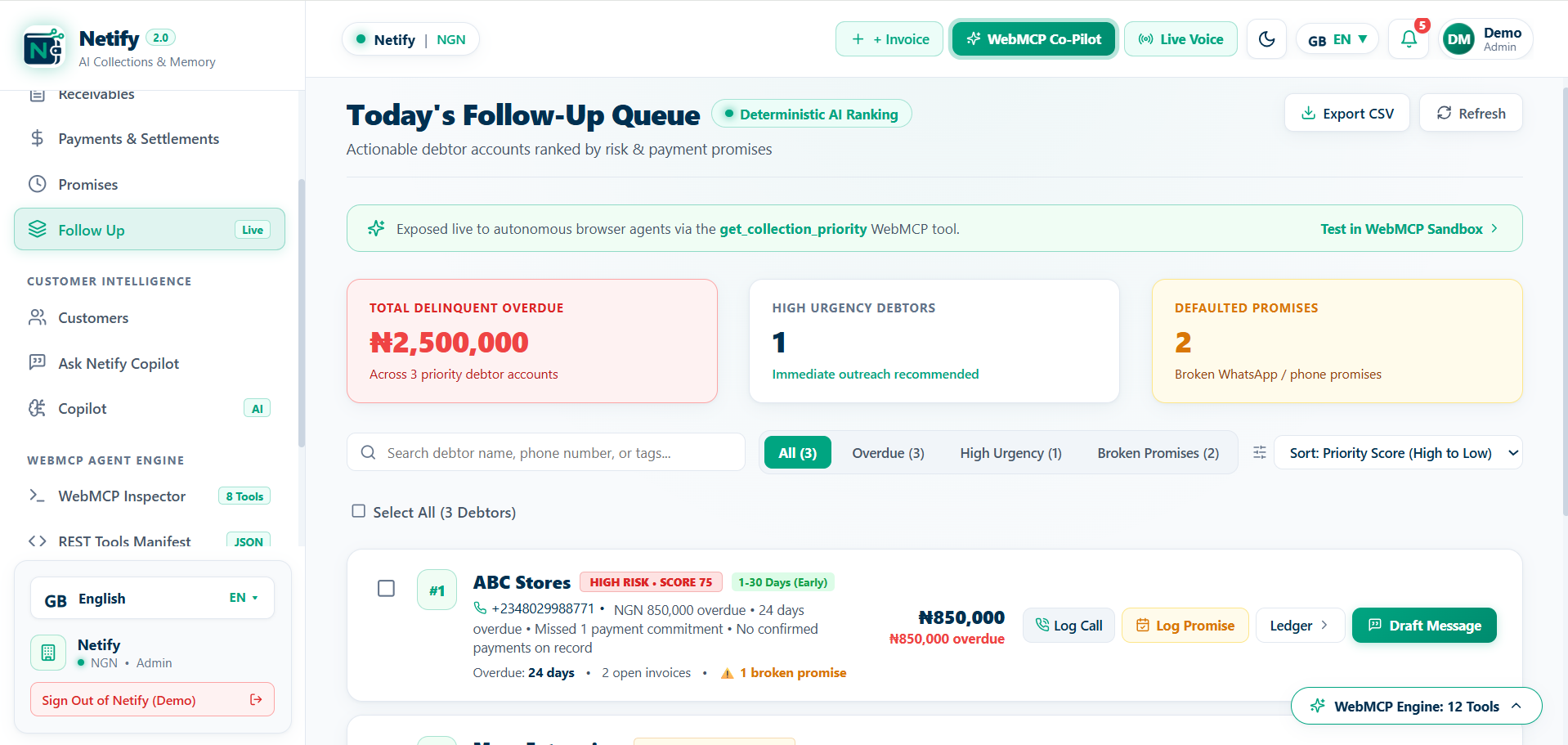
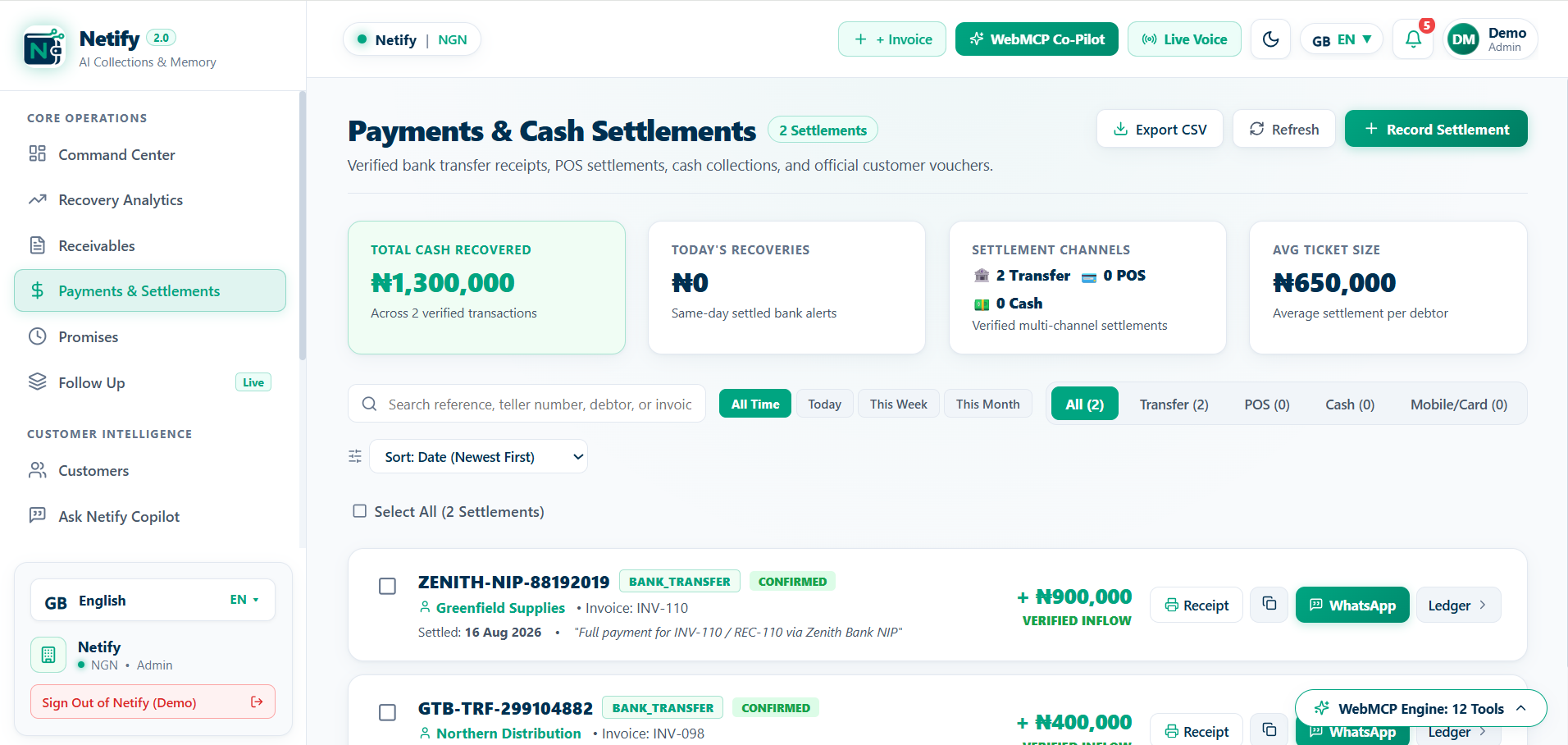
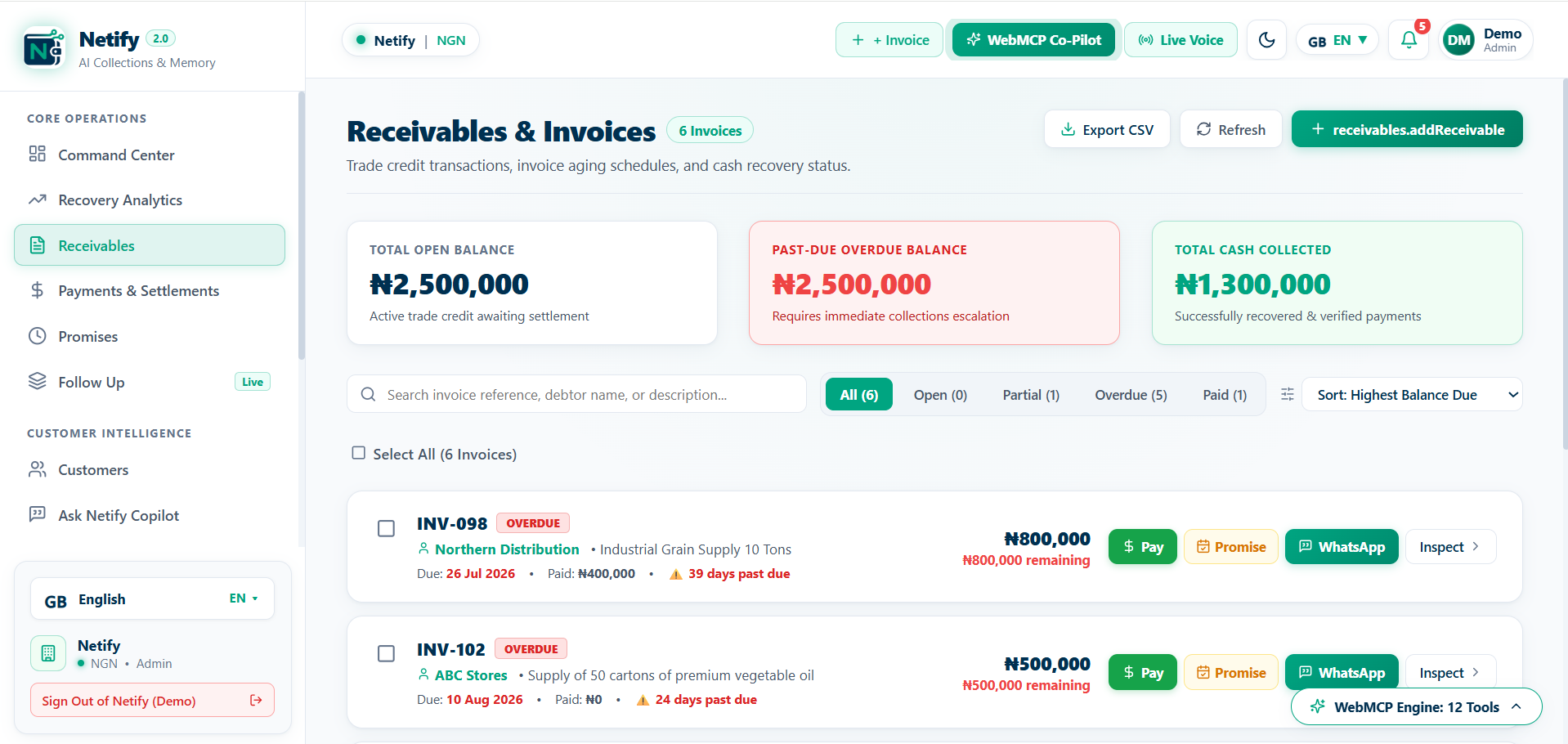
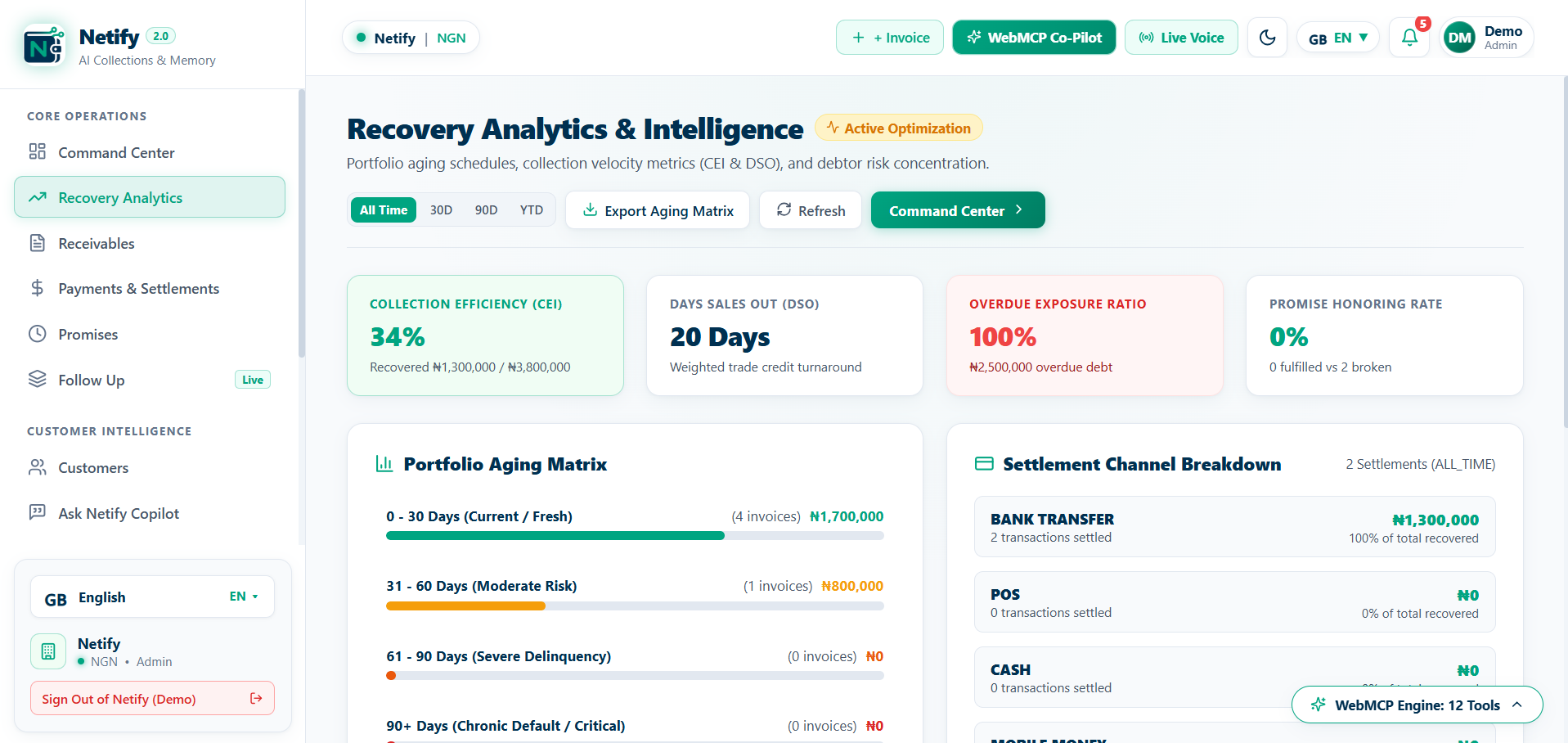
Netify is an agent-native accounts receivable and debt recovery platform tailored for African SMEs. It bridges formal business accounting with informal, relationship-driven commerce.
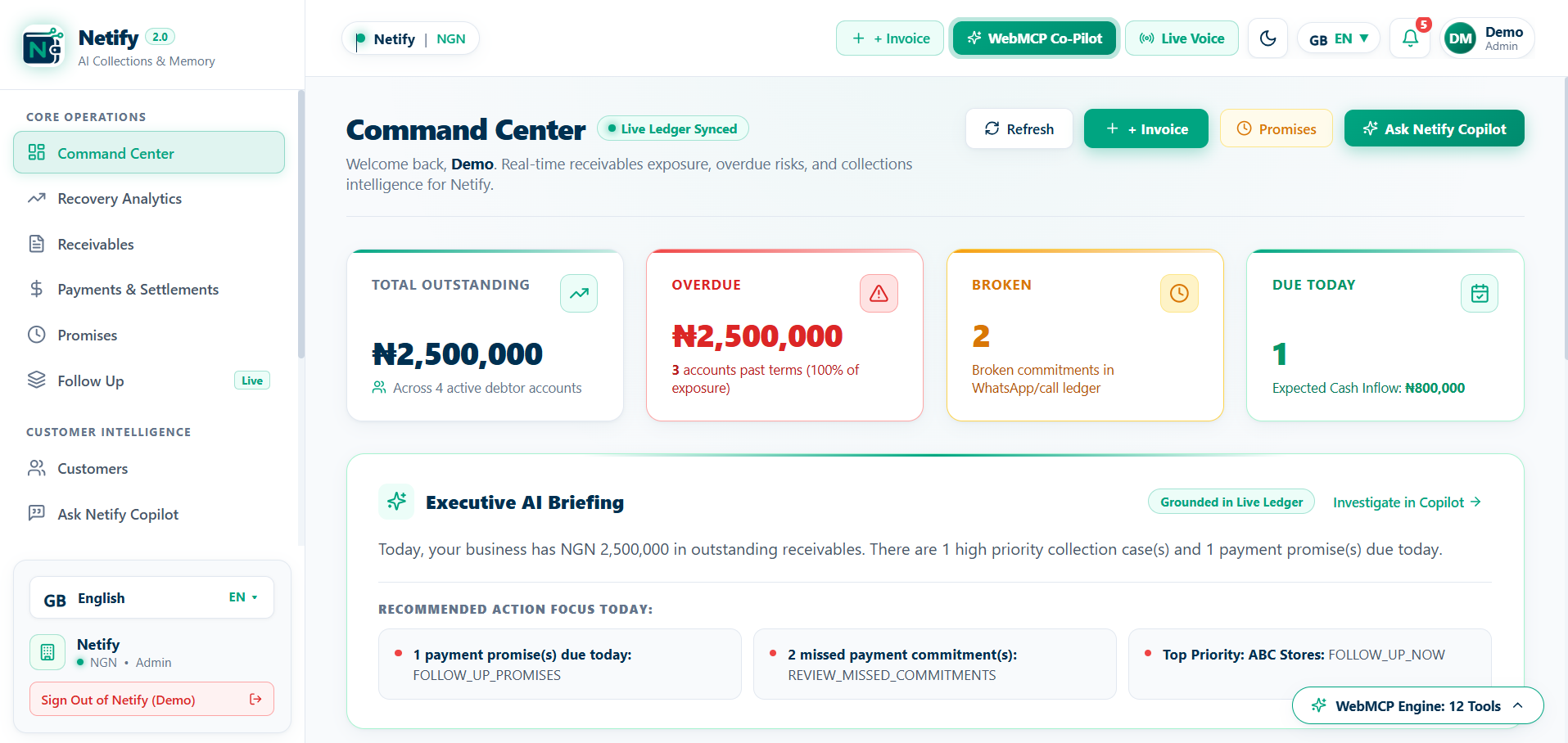
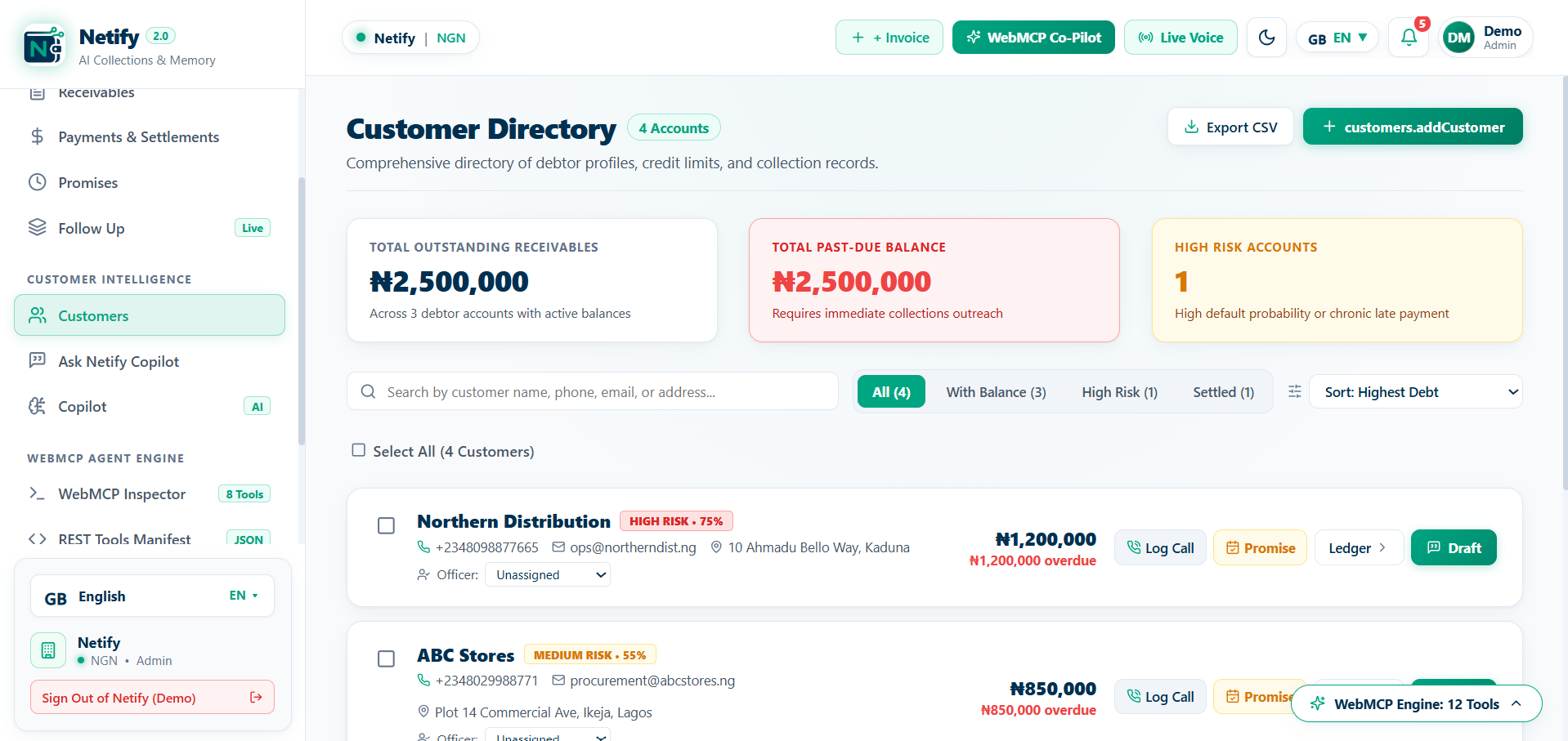
- Automated Ledger Prioritization: Instantly categorizes which accounts are overdue, calculates aging days, and flags broken payment promises.
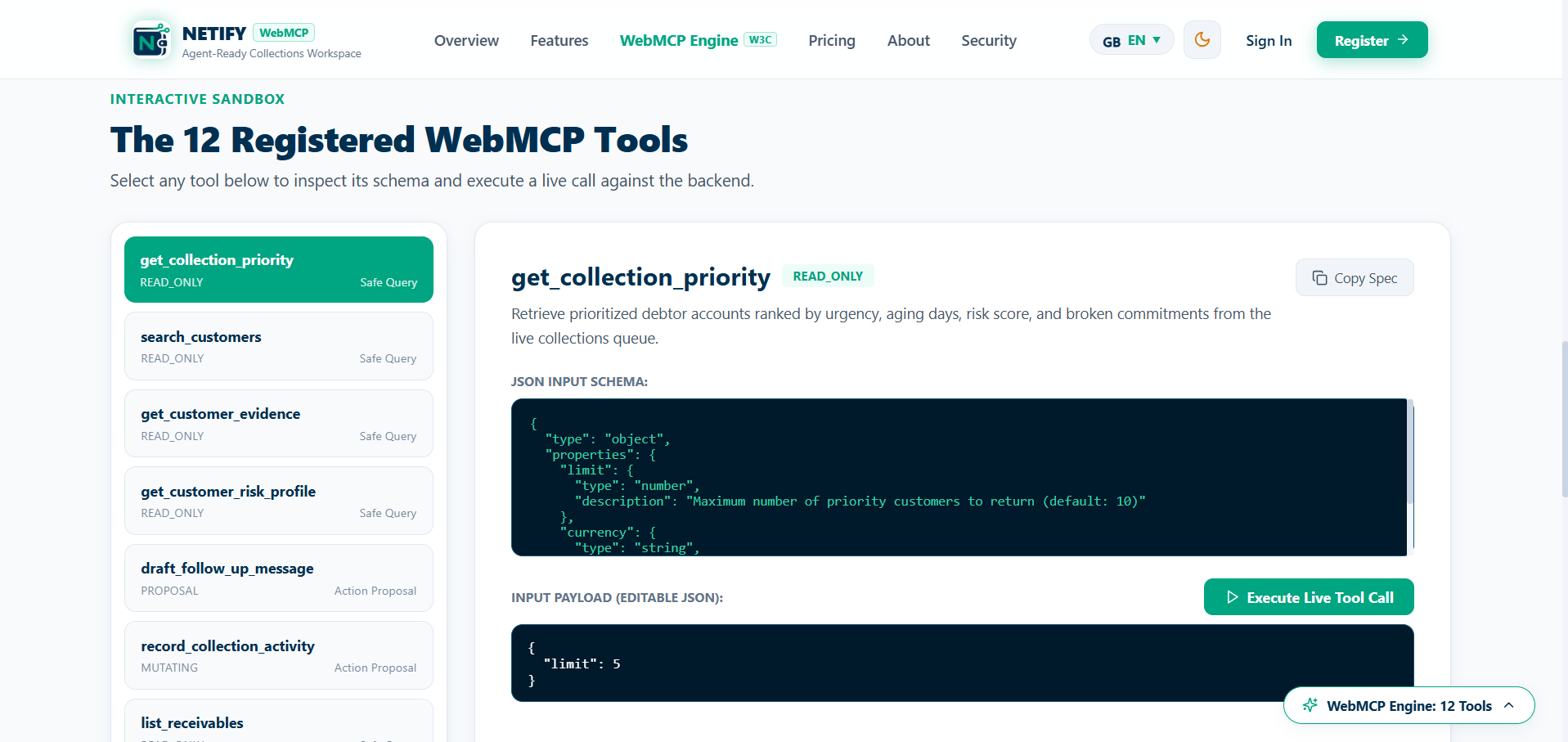
- 8 Native WebMCP Tools: Exposes structured browser tools under
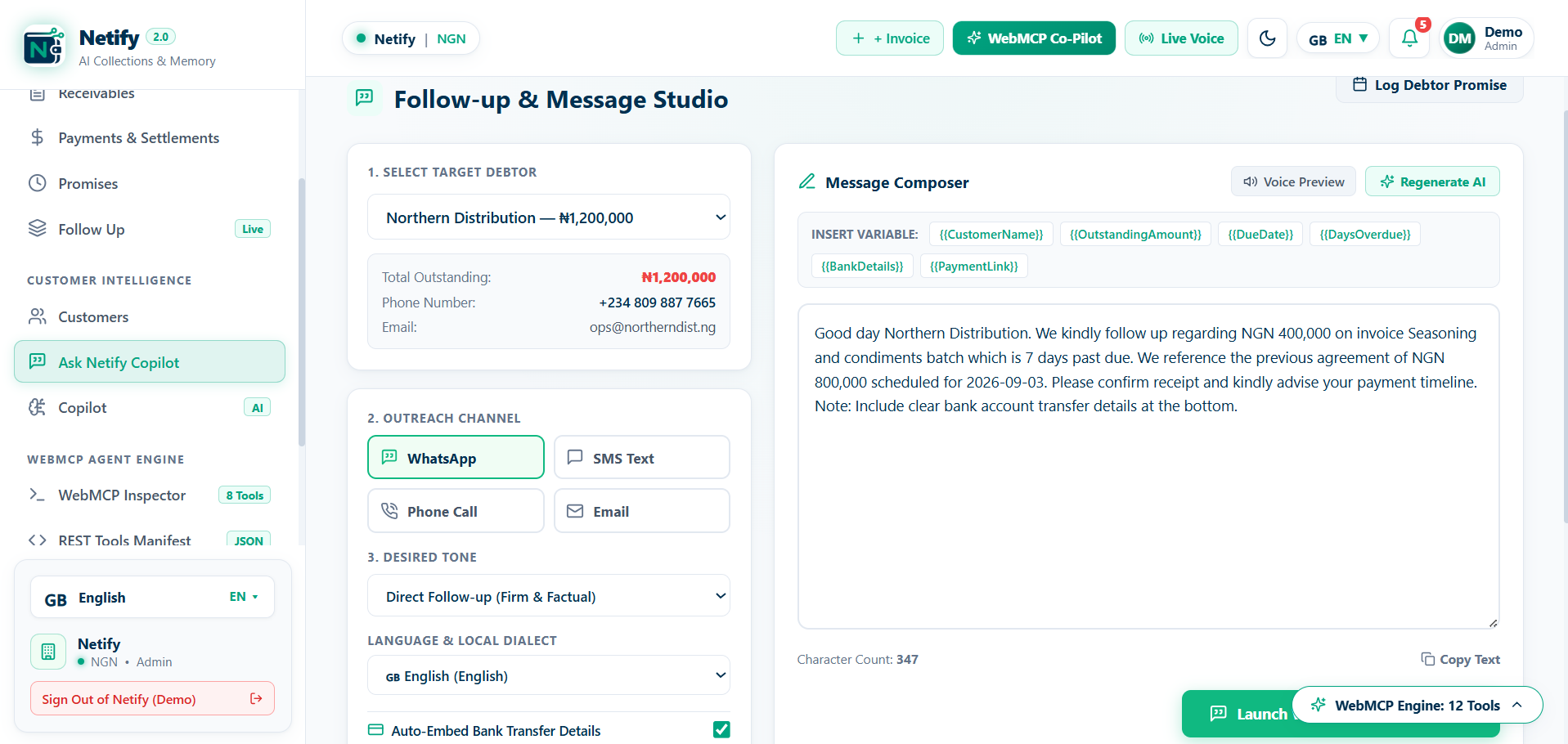
document.modelContext.registerToolso agents (in ChatGPT or Chrome) can query debtors, check payment history, assess credit risk, and record new commitments without needing raw API access. - Multilingual Relational Memory: Drafts personalized payment reminders in 6 primary regional commerce languages: English, Hausa, Yorùbá, Igbo, Nigerian Pidgin, and Fulfulde.
- 1-Click WhatsApp & SMS Dispatch: The agent proposes the action and crafts the message, but the merchant stays in complete control to review and send it with a single tap.
- Live WebMCP Sandbox: Includes an on-screen developer tool inspector (
/webmcp) where judges and developers can test tool schemas and monitor executions in real time.
How We Built It
We structured Netify as a production-grade TypeScript monorepo powered by Turborepo:
- Frontend & WebMCP Layer: Built with Next.js 14 (App Router) and Tailwind CSS. We implemented a custom
useWebMCPhook that detects browser support and registers our 8 core tools ondocument.modelContext.registerTool(with fallbacks fornavigator.modelContext). - Backend API: Developed with NestJS, implementing strict validation with Zod, JWT authentication, and automated rate limiting.
- Database & Search: PostgreSQL 16 on Google Cloud SQL with
pgvectorenabled for semantic debtor search, paired with Redis on Google Memorystore for low-latency session caching. - Infrastructure: Containerized via Docker multi-stage builds and deployed to Google Cloud Run across dedicated regional services (
app.netify.ngandapi.app.netify.ng) fronted by Cloudflare. - Email & Communications: Transactional OTP verification powered by Resend from our verified domain (
[email protected]).
Challenges We Faced
- Building for an Emerging Standard: Because WebMCP is actively evolving across browsers, documentation is sparse. We had to write rigorous defensive fallbacks so our tools register cleanly whether tested in the ChatGPT in-app browser, Google Chrome canary flags (
chrome://flags/#enable-webmcp-testing), or our standalone interactive inspector. - Cultural Nuance in AI Prompts: In African trade, demanding repayment too aggressively can permanently destroy a multi-year business relationship, while being too passive leads to bad debt. We had to carefully engineer the prompt logic in our WebMCP drafting tool to strike the exact right tone across multiple dialects.
- Database Isolation Under Hackathon Deadlines: We wanted a true production deployment rather than a toy prototype. Provisioning a dedicated Cloud SQL instance with
pgvector, setting up direct VPC egress to Redis, and resolving DNS and SSL certificate chains on custom subdomains took real late-night troubleshooting.
Accomplishments That We're Proud Of
- We built a real, working product deployed on custom production domains with sub-second response times.
- Netify exposes 8 genuinely useful, non-trivial WebMCP tools that take an agent from querying overdue accounts all the way to recording legally binding installment commitments.
- Pre-seeded realistic African trade data (₦28.4M across FMCG and wholesale trade) with a 1-click login button so judges can experience the full workflow instantly.
What We Learned
WebMCP represents a genuine paradigm shift in web development. The old approach of letting AI agents guess their way through HTML selectors and click buttons was fragile and frustrating. Giving the agent a clean, typed schema via document.modelContext.registerTool made agent interactions 10x faster, zero-error, and incredibly predictable.
What's Next for Netify
We plan to release an open-source WebMCP SDK tailored for emerging market commerce apps, integrate direct Open Banking payment reconciliation (instant bank transfer confirmation across Nigeria, Kenya, and Ghana), and launch an automated voice reminder agent speaking indigenous African languages.
Built With
- cloudflare
- codex
- docker
- gemini
- google-cloud-run
- nestjs
- next.js
- openai
- openrouter
- pgvector
- postgresql
- prisma
- react
- redis
- resend
- tailwindcss
- turborepo
- typescript
- webmcp


Log in or sign up for Devpost to join the conversation.