-
-
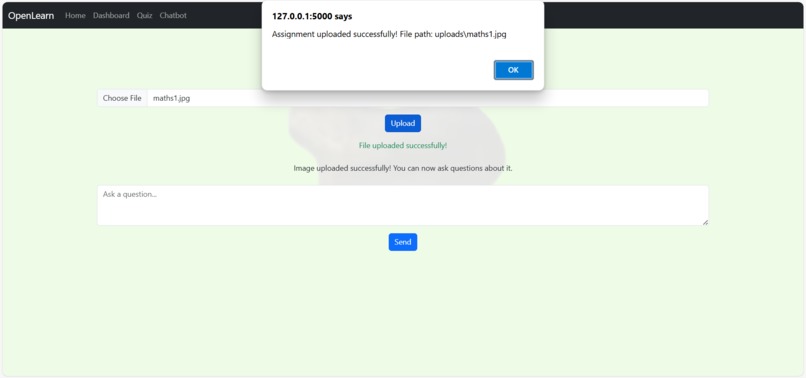
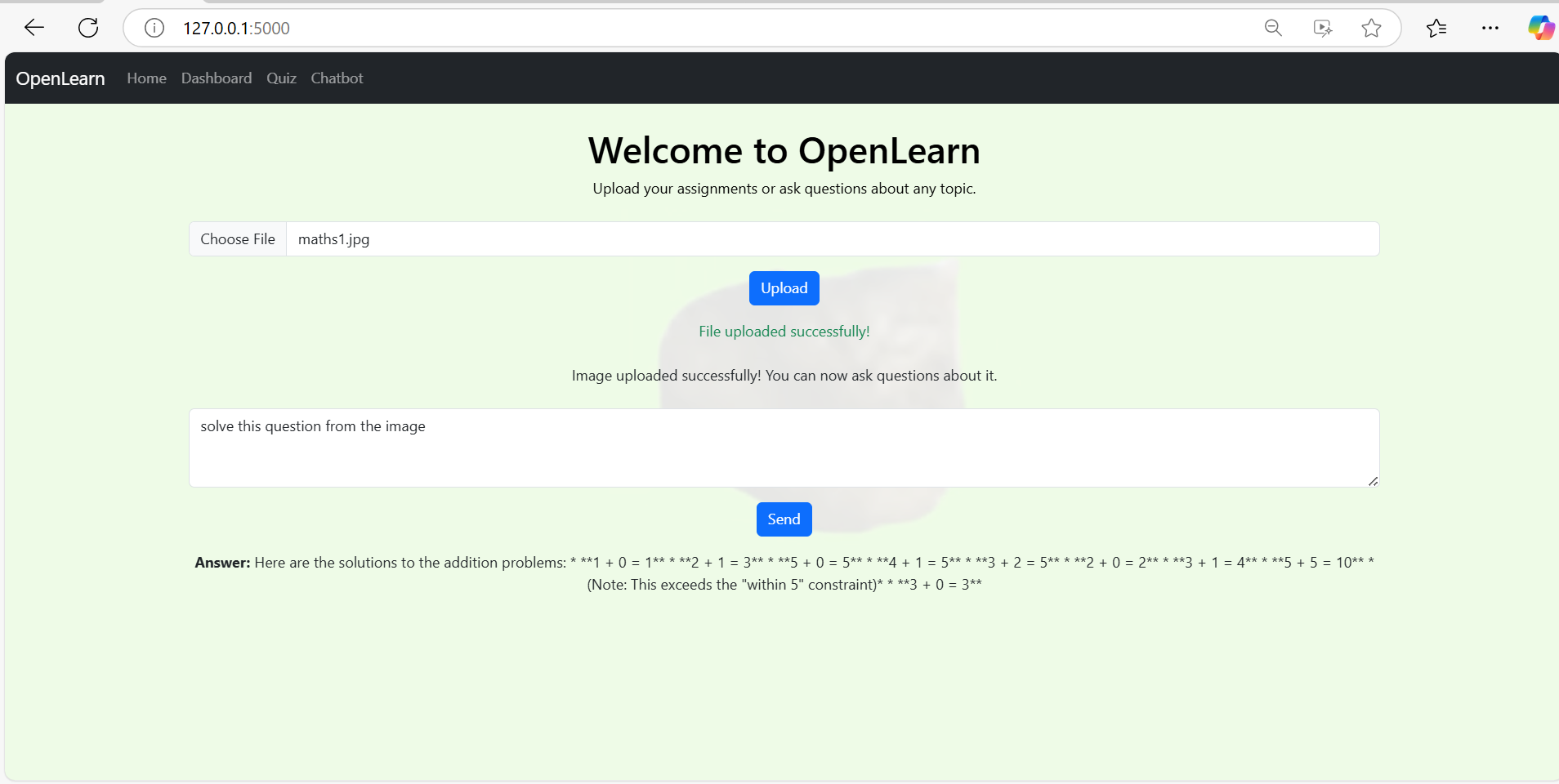
homepage
-
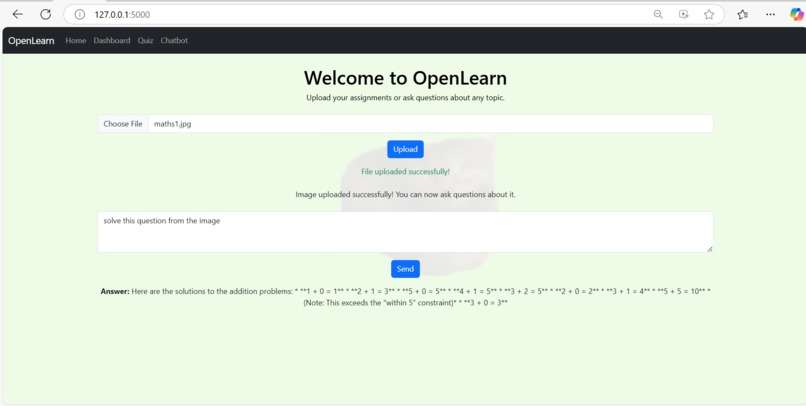
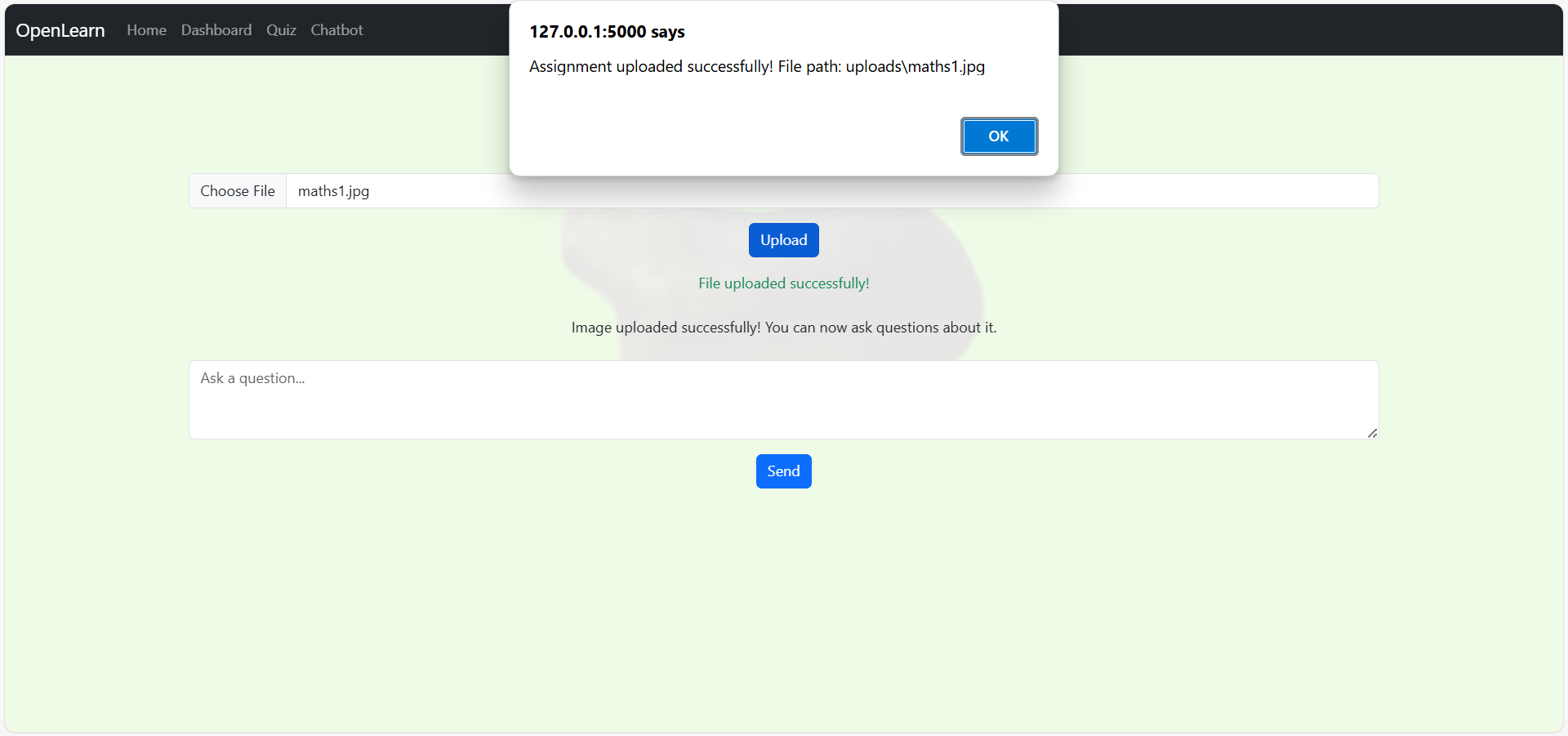
homepage with notification, when students uploads pictures of questions
-
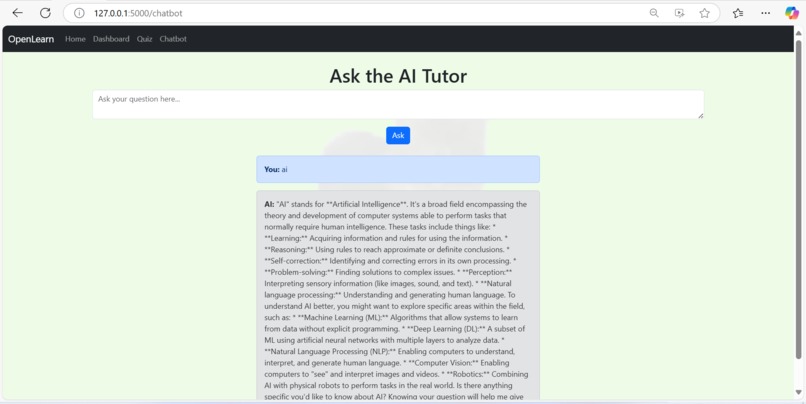
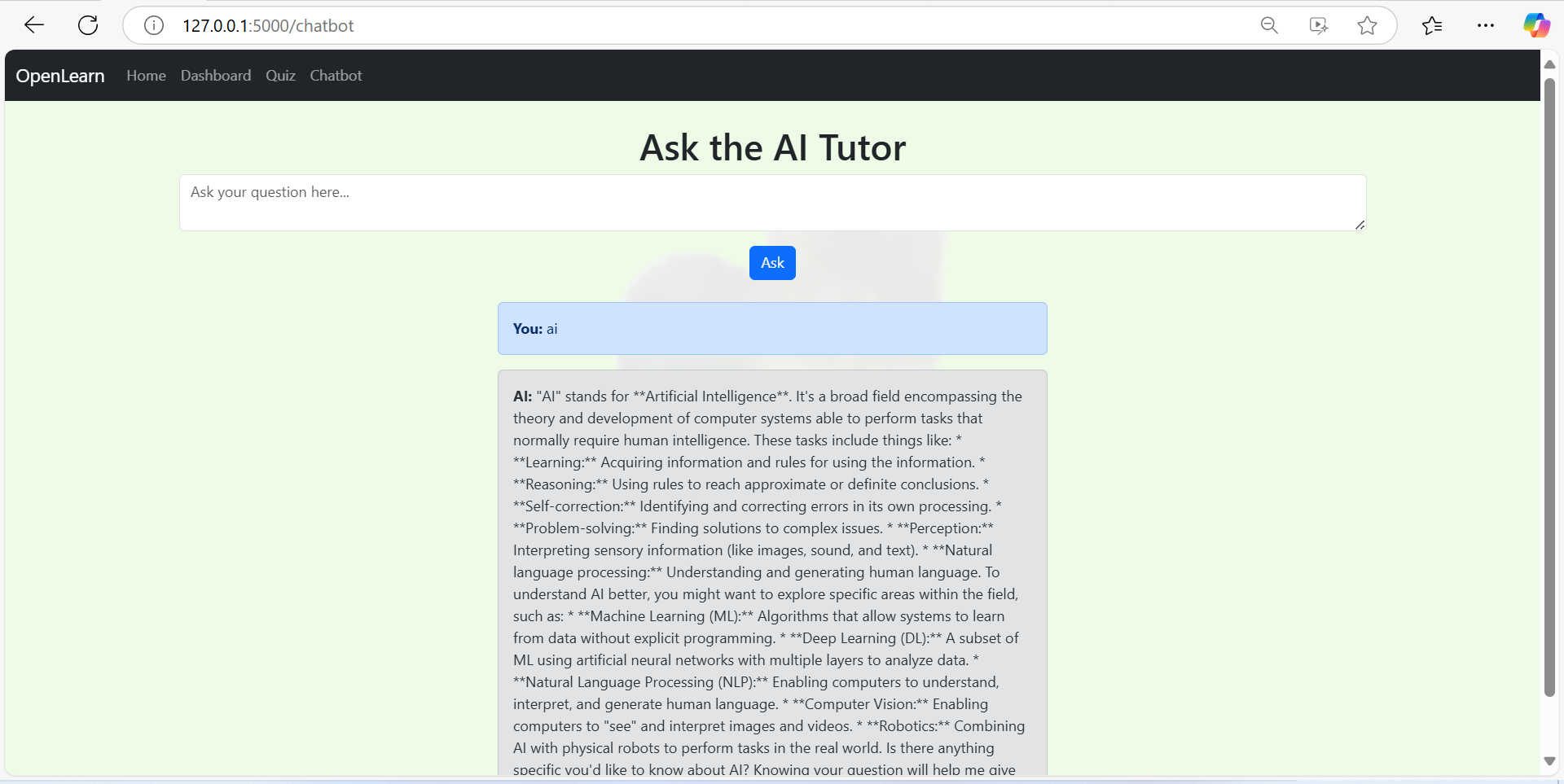
chatbot page, for students to ask questions on things they do not know
-
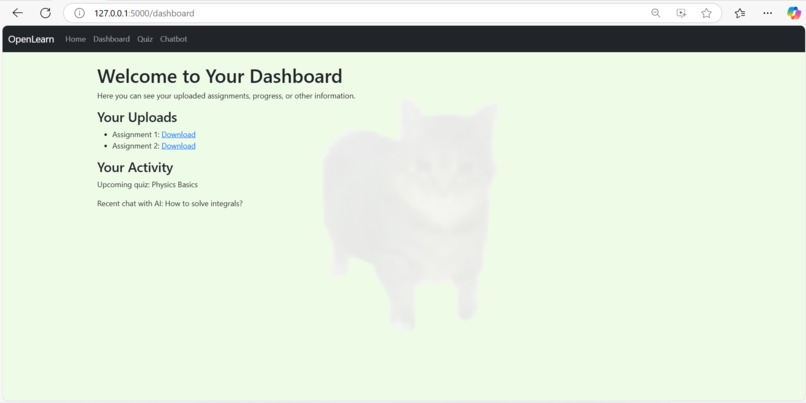
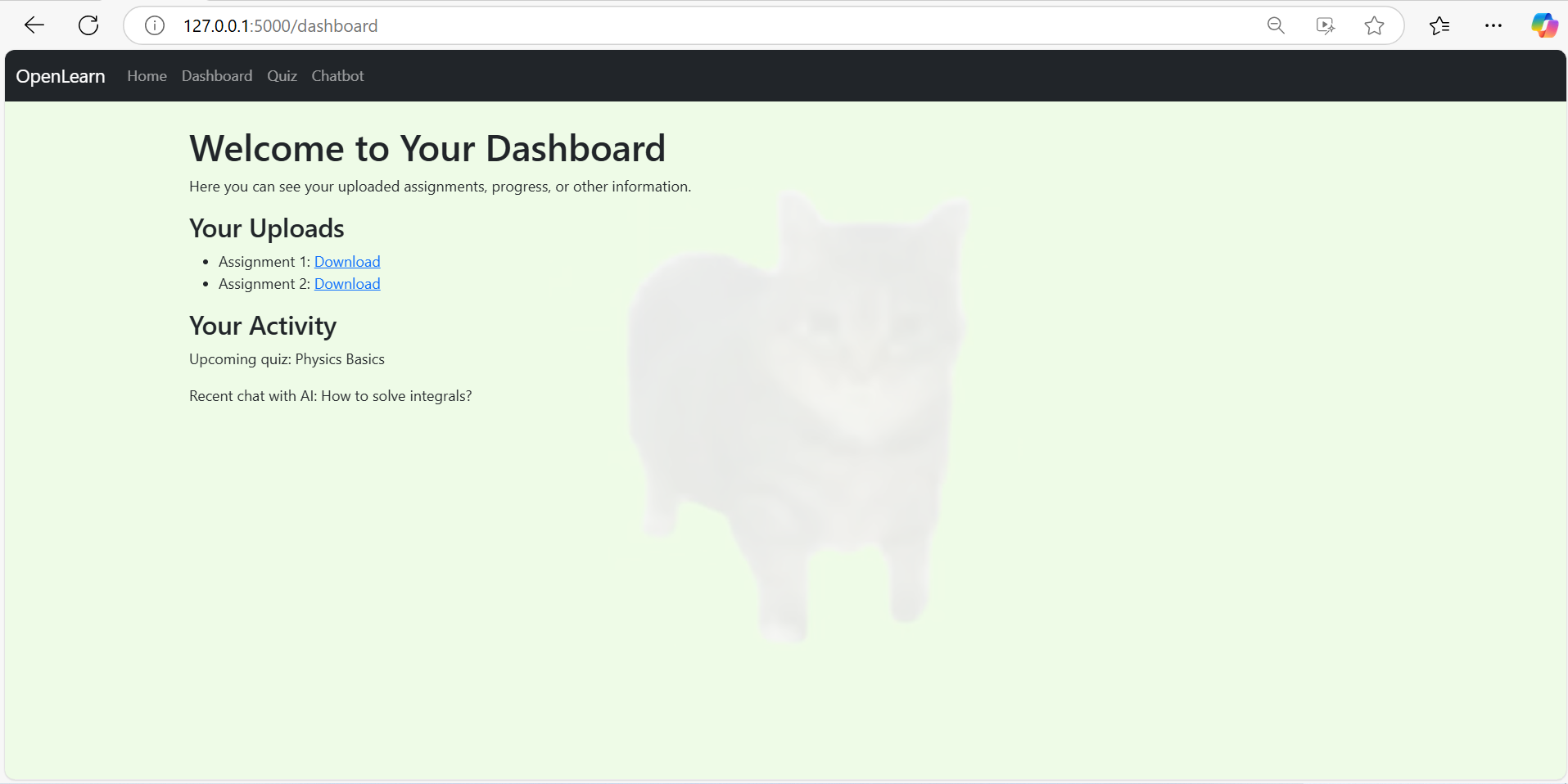
Dashboard of previous questions
-
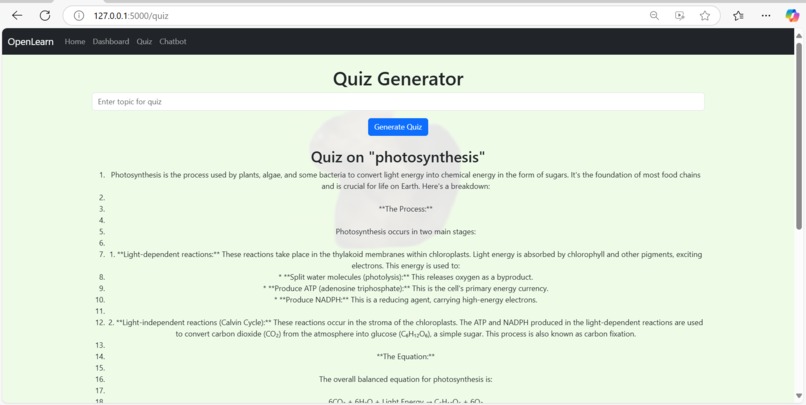
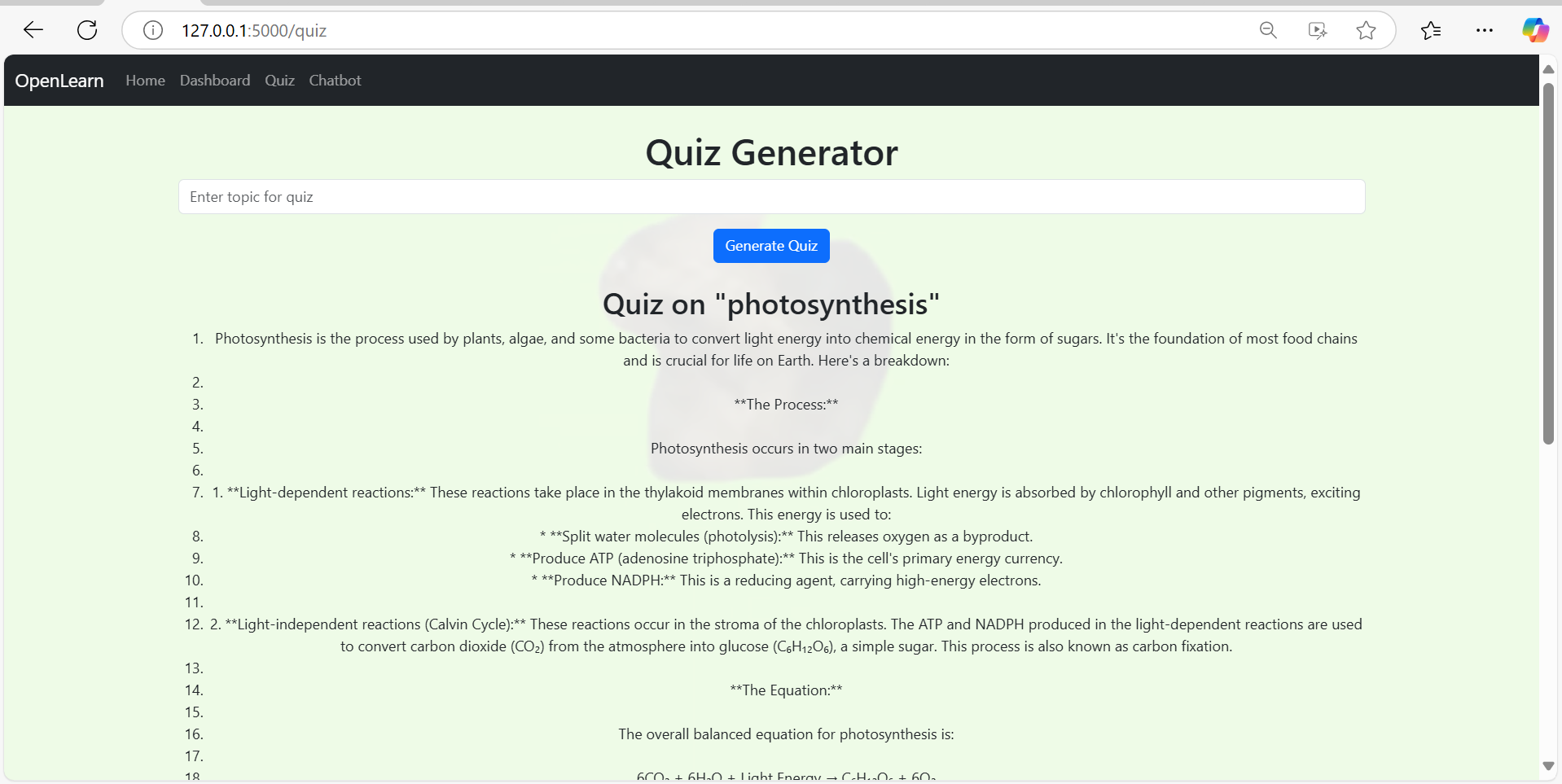
quiz page, for students to take quizes of things they are learning
Inspiration
The inspiration for OpenLearn comes from the growing need for an accessible and interactive educational platform that leverages AI to enhance learning. We envisioned a tool that bridges the gap between traditional learning and technology by providing students and educators with a seamless way to interact with AI, analyze assignments, Provide answwres to questions while ensuring you are learning and improve knowledge. This project aims to simplify learning while making it engaging and effective for users of all ages.
What it does
OpenLearn is an AI-powered platform designed to empower learning. It enables users to upload images or documents for analysis, ask questions about uploaded content or general topics, and receive AI-generated responses. Additionally, it generates quizzes based on topics to facilitate knowledge retention and provides an interactive AI tutor chatbot for personalized learning experiences.
How we built it
We developed OpenLearn with a combination of robust technologies. The frontend was built using HTML, CSS, JavaScript and Bootstrap, ensuring a clean, responsive, and user-friendly interface. For the backend, we used Flask to handle file uploads, manage user interactions, and integrate AI functionalities. Google's Gemini generative AI model was integrated to process and respond to user queries, both text- and image-based. During development, we utilized a local file system for file and image handling to streamline processing, it was interesting to mention that the Nethenoob spinning cat was added to spin in background to ensure that users attention are kept with the application.
Challenges we ran into Developing OpenLearn came with its fair share of challenges. Fine-tuning the AI to provide accurate and relevant answers for a wide variety of queries was a significant hurdle. Managing image uploads and ensuring compatibility with the AI model for analyzing image-based questions was technically demanding. Additionally, designing a user-friendly interface that works seamlessly on different devices required considerable effort. Balancing the AI responses to be both engaging and educational while avoiding overwhelming the user was another key challenge.
Accomplishments that we're proud of
We are proud of successfully integrating a generative AI model to handle both text and image-based queries, providing meaningful and accurate responses. The visually appealing and intuitive user interface is another highlight of the project. Additionally, combining various functionalities—file uploads, an AI chatbot, and quiz generation—into one cohesive platform is a significant accomplishment that we take pride in, all these are to ensure users learn as they upload questions, get quizzes on what they have learnt and ask questions based on what they learnt, all of these in one app, its truly amazing.
What we learned
Throughout the development of OpenLearn, we gained valuable insights into the importance of user experience design, particularly for educational platforms. We also enhanced our skills in handling file uploads and image processing using Flask. Integrating AI to create meaningful user interactions taught us how to adapt advanced technologies to cater to diverse learning needs. Finally, addressing technical challenges and balancing feature implementation within tight time constraints were key learning experiences.
What's next for OpenLearn
The future of OpenLearn involves expanding its capabilities and reach. We plan to integrate cloud-based storage and processing to improve scalability and reliability. Enhancing AI models to deliver even more accurate and comprehensive responses is a priority. Developing a mobile app will make learning accessible on-the-go, while adding gamification features like achievements and rewards can create a more engaging learning experience. Furthermore, we aim to introduce multilingual support, broadening the platform’s accessibility to users worldwide.


Log in or sign up for Devpost to join the conversation.