Inspiration
I make games with a simple priority: fun first, education second.
In Net Worth, players want to earn money because it helps them progress, build their company, buy weapons, and fight off enemies. Learning financial concepts becomes a consequence of pursuing those goals.
Instead of interrupting the adventure with a lesson, I wanted players to encounter situations that make financial ideas relevant. Can I afford a weapon and still cover my expenses? Is borrowing worth the interest? Was that auction purchase actually profitable?
Sparrow grew from that idea: a companion who travels with the player, helps them understand their decisions, and answers questions when they get curious.
This is a new project created during the hackathon submission period; it did not exist before October 1, 2026.
What it does
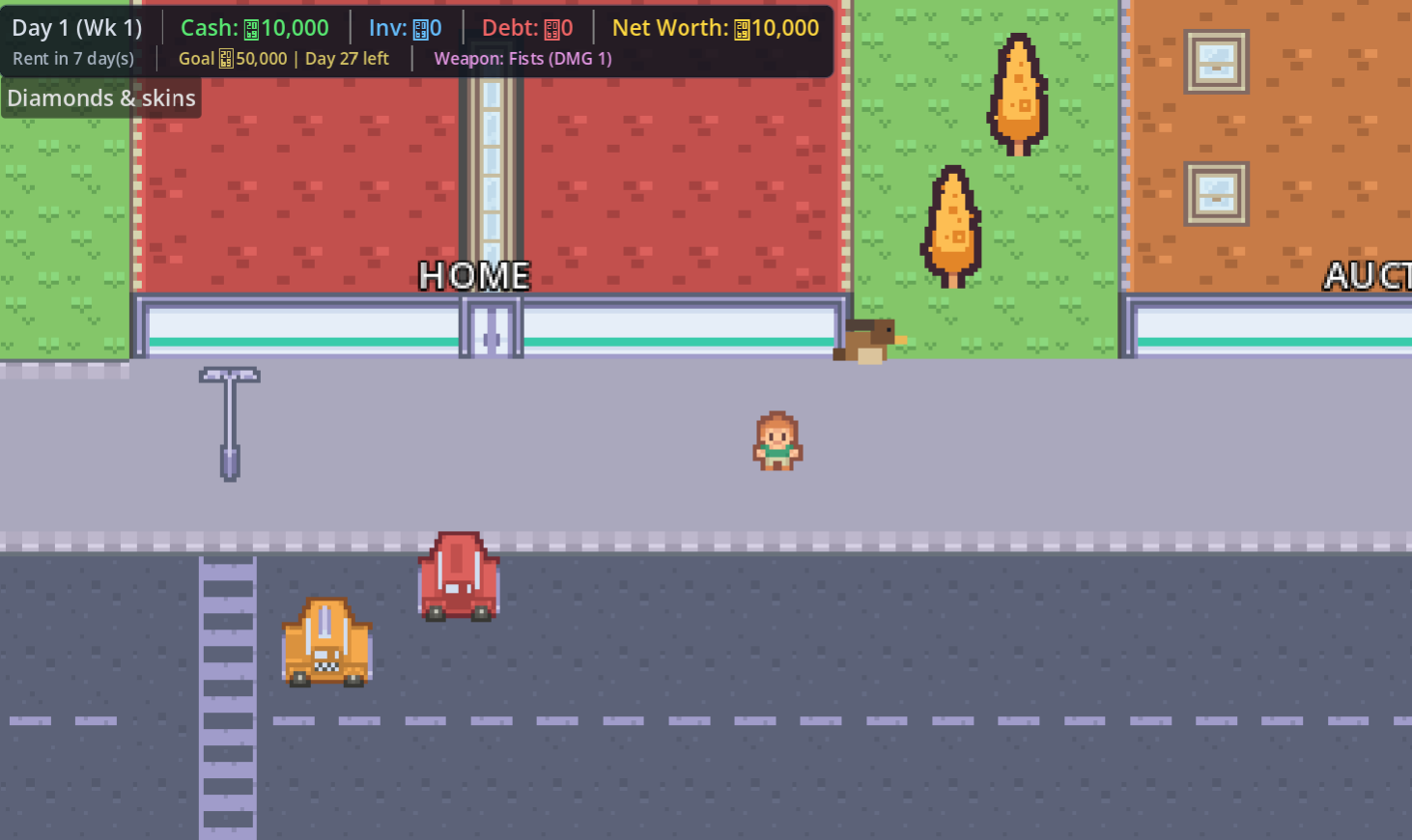
Net Worth is a browser-playable pixel-art game combining business decisions, exploration, and combat.
Players bid for auction lots, resell inventory, trade simulated company shares, manage loans, and pay recurring expenses. Their financial choices affect the resources available for survival and progression.
Sparrow follows the player through the world as an AI companion. It can review completed decisions using the player's actual game context, explain the consequences, answer finance questions, and handle follow-up questions.
Players can also purchase Diamonds through PayPal Sandbox and spend them on Sparrow cosmetics, including Golden Sparrow and Gentleman Sparrow. These purchases provide customization without improving financial returns, combat statistics, or access to advice. No real money is charged in the demo.
How I built it
I built the game in Godot using GDScript and exported it for browser play through WebAssembly and WebGL.
A Python backend hosted on Render connects the game to the Gemini API and PayPal Sandbox. The browser game is hosted on Netlify.
For Sparrow, the game supplies visible financial facts, recent decisions, and conversation history to Gemini. The game calculates transaction values and balances; the model explains their meaning and responds conversationally.
For payments, the backend creates PayPal Orders, directs the player to sandbox checkout, and verifies the completed payment before crediting Diamonds. A SQLite ledger records wallets, orders, and cosmetic ownership, with duplicate-credit protection.
Challenges I ran into
Making the educational element feel like part of the game was a central design challenge. Sparrow needed to feel like a helpful buddy rather than a stream of repetitive tips.
The technical challenges included connecting Godot to a hosted API, handling browser cross-origin requests, adapting rendering for Web export, and making PayPal checkout work across browser tabs.
Payment verification also needed careful handling: returning from checkout alone could not grant Diamonds, and checking the same payment repeatedly could not credit the wallet more than once.
Accomplishments I'm proud of
I brought the game, AI companion, and payment experience together into a working browser demo.
Players can make a decision, discuss it with Sparrow, ask follow-up questions, complete a PayPal sandbox purchase, and equip a cosmetic on the companion they see throughout the game.
The backend also has automated tests covering conversation context, browser access, wallet ownership, payment verification, and duplicate-credit prevention.
What I learned
I learned how to connect a Godot game to AI and payment services, move a local backend into a hosted environment, and adapt a desktop prototype for browser play.
I also learned that contextual explanations are more useful than generic advice. Financial concepts become easier to explore when they explain something the player has just experienced.
What's next
I want to deepen the combat, company progression, and upgrade systems so that financial decisions create even more interesting gameplay choices.
I also want to give Sparrow more personality, improve its explanations for different experience levels, and introduce richer scenarios involving uncertainty, opportunity cost, and cash flow.
The priority remains the same: make a game people want to play, with learning woven into the experience.
Built With
- assets
- github
- godot
- kenney
