-
-
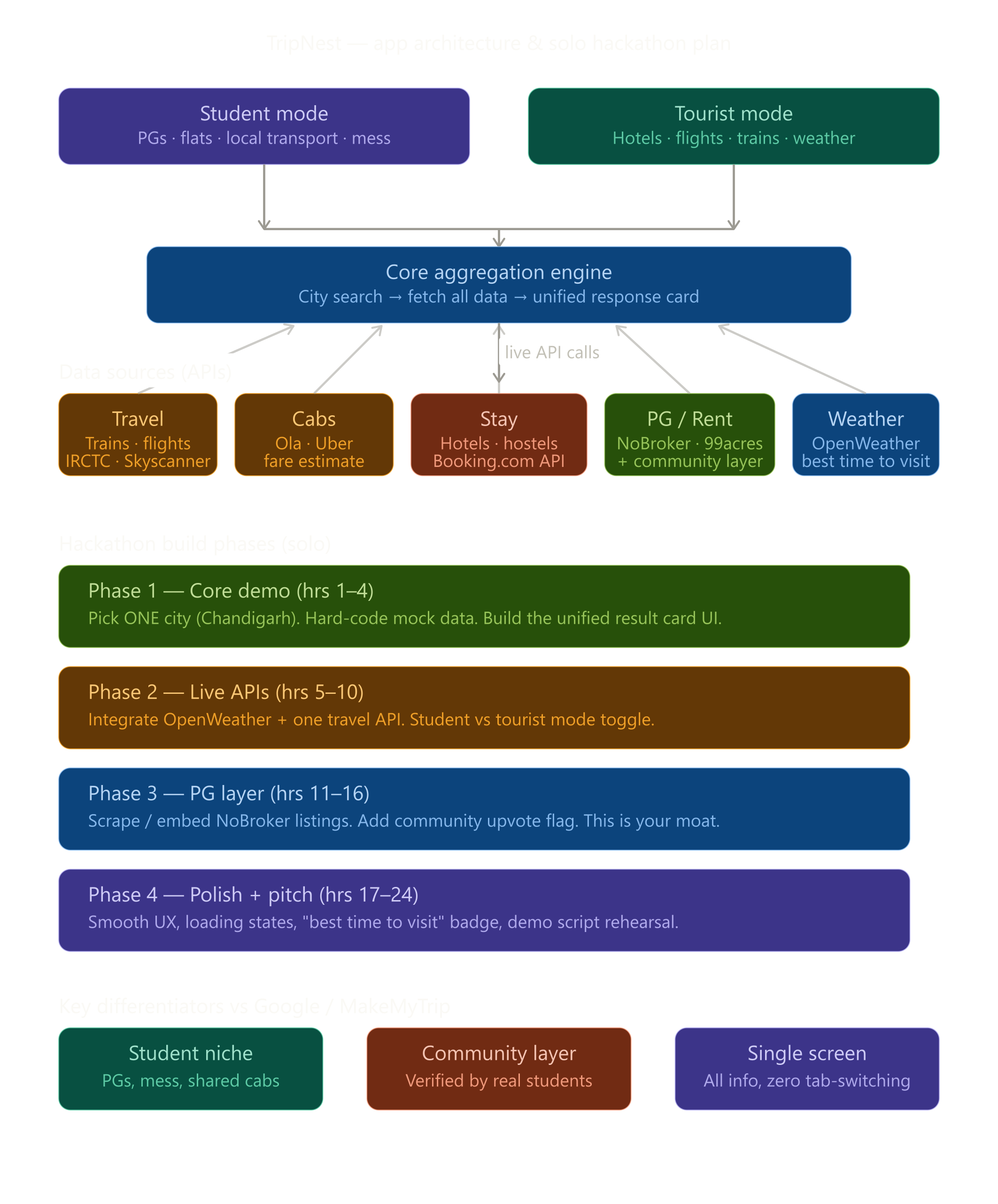
Structure
-
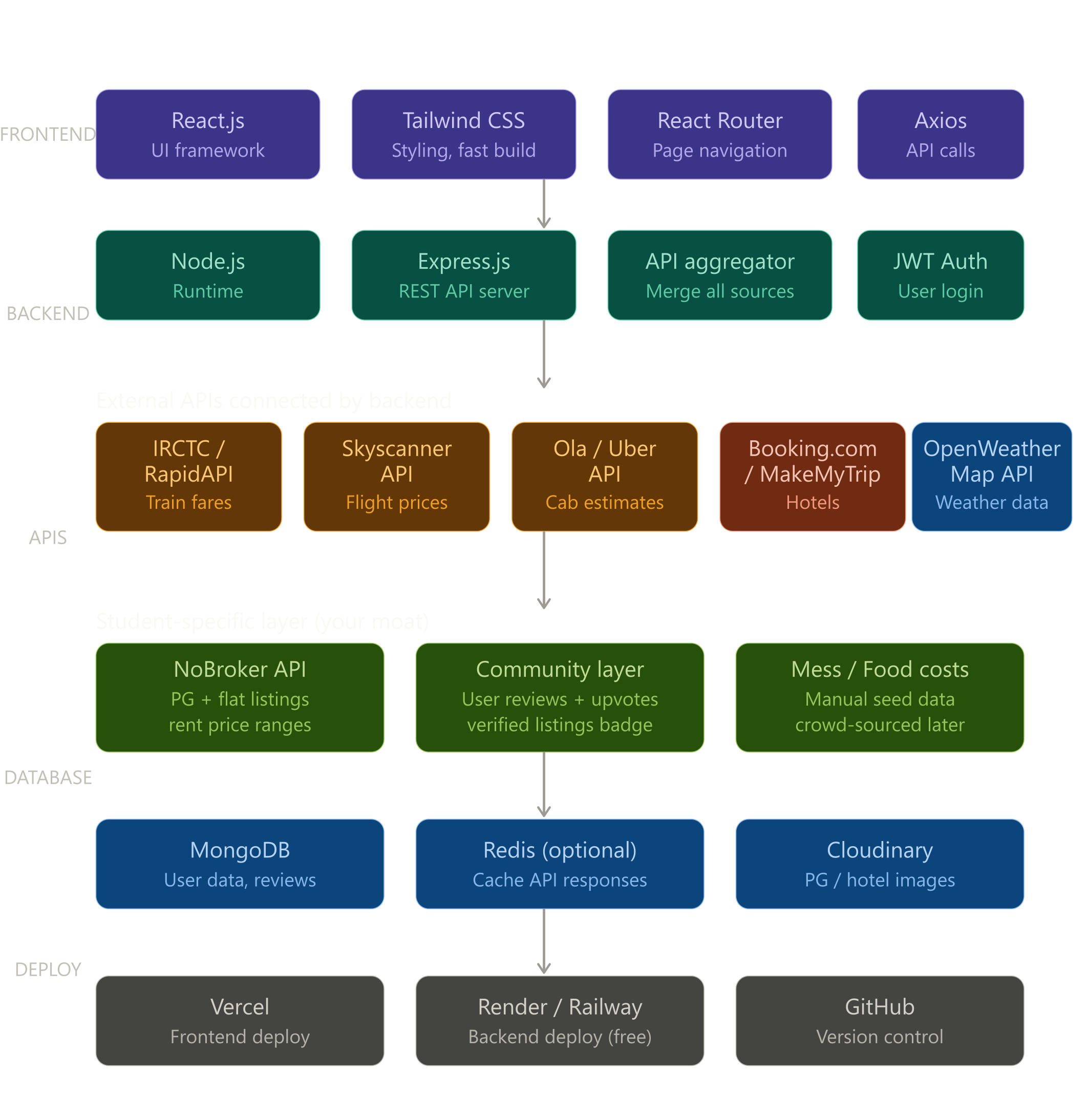
Tech-stack
-
Overwey
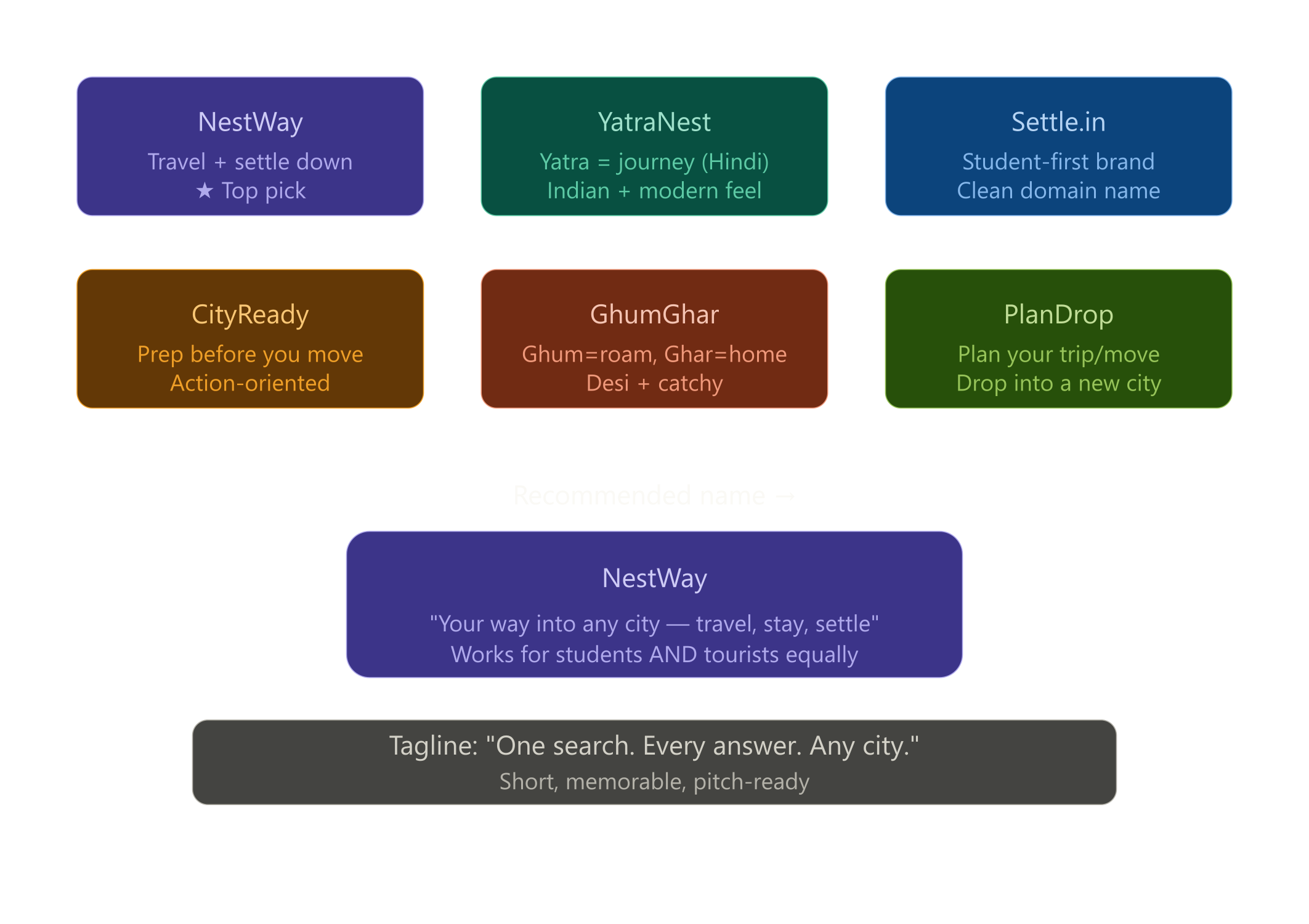
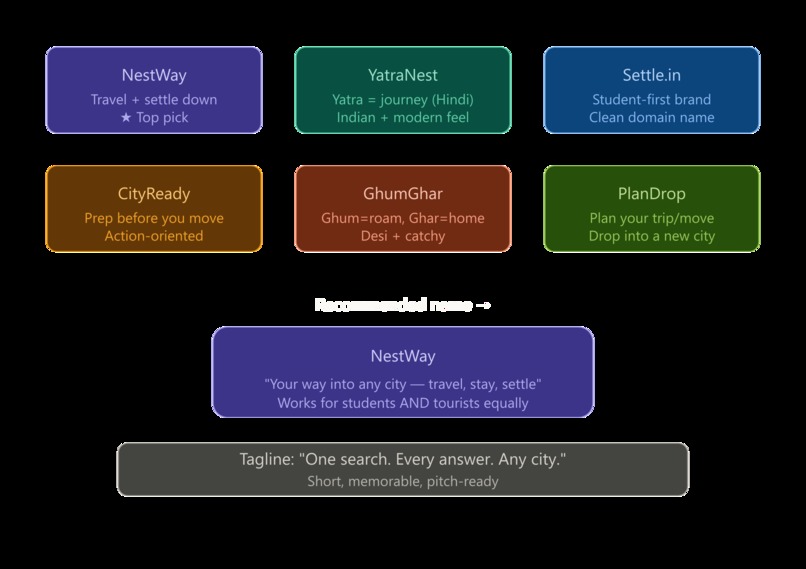
NestWay 🏠✈️
One search. Every answer. Any city.
Inspiration
Every year, millions of Indian students move to a new city for college or work. The process is exhausting — they open MakeMyTrip for trains, Uber for cab fares, NoBroker for PGs, AccuWeather for weather, and still have no idea what their monthly budget will look like.
We've been through this ourselves. That frustration of switching between 6 apps just to answer one simple question — "Can I afford to move to Chandigarh?" — is what inspired NestWay.
Tourists face the same problem. Planning a trip means jumping between hotel apps, weather sites, and transport platforms with no single source of truth.
We wanted to build the app we wished existed.
What it does
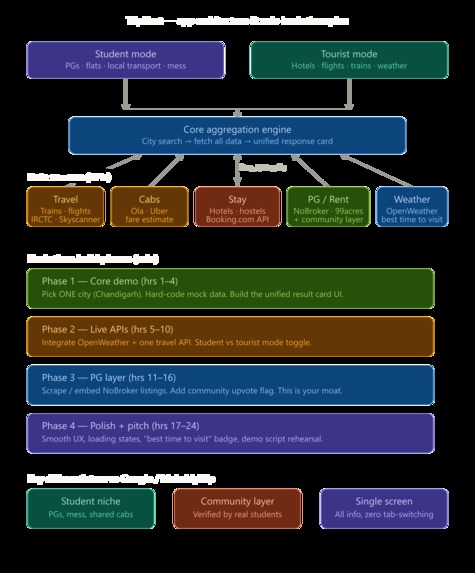
NestWay is a unified city information platform for Indian travellers and students. You type any city, pick your mode, and get everything in one screen:
- 🚆 Travel fares — trains, buses, cabs, and flights from major origin cities
- 🏠 PG & rent listings — filtered by gender, area, and verified status
- 🏨 Hotel options — from budget hostels to 4-star stays
- 🌤️ Weather — current conditions and the best months to visit
- 💰 Monthly budget estimate — rent, food, transport, and misc costs for students
- 📊 City comparison — compare two cities side by side before deciding
Two modes: Student (relocating) and Tourist (travelling). One search. Everything you need.
How we built it
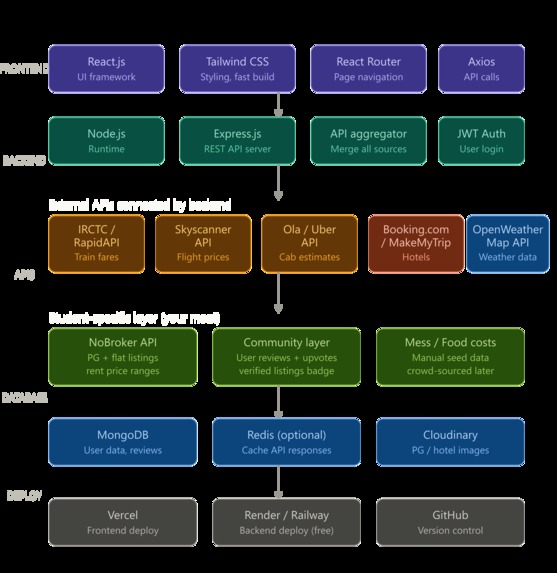
Frontend — React.js with React Router, styled with custom CSS using a warm editorial design system. No UI libraries — every component hand-crafted. Deployed on Vercel.
Backend — Node.js with Express.js. A clean REST API with six route modules: city, weather, travel, stay, compare, and admin. Deployed on Render.
Database — MongoDB Atlas with Mongoose. A cityService layer sits between routes and the database, with automatic fallback to local mock data if MongoDB is unreachable — so the app always works.
Admin panel — JWT-authenticated dashboard at /admin for adding cities, managing PG listings, publishing/unpublishing, and seeding the database.
Smart fallback — built-in offline mock data for Chandigarh means the demo works even without internet or API keys.
Challenges we ran into
Solo development pressure — building a full-stack app with a database, auth system, admin panel, and comparison feature alone in hackathon time meant ruthless prioritisation.
Data freshness — PG rents and travel fares change constantly. We solved this by building a layered architecture: live APIs when available, mock data as fallback, with community upvote/flag system for accuracy signals.
The "why not Google?" problem — we had to find a genuine moat. Generic travel info is everywhere. Our answer was the student niche — PG listings, mess food costs, monthly budget breakdowns — none of which Google or MakeMyTrip surface in one place.
API access delays — IRCTC and Ola/Uber APIs require approval that takes days. We built a clean mock-to-real swap architecture so the demo works today and real APIs can be plugged in without touching route code.
Accomplishments that we're proud of
- Built a complete full-stack product solo — frontend, backend, database, auth, admin, and deployment — in hackathon time
- Zero-dependency demo — the app works fully offline with built-in fallback data, no API keys required to run
- Clean DB-or-mock architecture via
cityService.js— swap data sources without touching a single route - A genuinely useful student budget calculator — the monthly cost breakdown for Chandigarh is something students actually search for
- Admin panel with JWT auth, city management, PG listing management, and one-click database seeding
- City comparison feature that puts two cities side by side — something no existing app does for the Indian student market
What we learned
- Solve a real problem, not a cool one. The student relocation niche is underserved not because it's hard — but because no one focused on it. Specificity beats breadth every time.
- Mock data is a feature, not a shortcut. Building with realistic seed data from day one meant we could demo confidently, iterate faster, and never blocked on external API approvals.
- Architecture decisions compound. The
cityServiceabstraction layer felt like extra work at hour 3. By hour 20, it saved us from rewriting every route when switching from mock to MongoDB. - The admin panel is the product's future. A non-technical person can now add a new city without touching code. That's what makes NestWay scalable beyond the hackathon.
What's next for NestWay
Short term
- Plug in real APIs — IRCTC for live train fares, OpenWeatherMap for real weather, Ola/Uber fare estimates
- Add 10 more Indian cities — Pune, Delhi, Bangalore, Jaipur, Dehradun, Hyderabad, Kochi, Bhopal, Indore, Vadodara
- Community verification — let students upvote and flag PG listings for accuracy
Medium term
- User accounts — save favourite cities, track rent budget, get alerts when PG prices drop
- Mobile app — React Native port of the same codebase
- Mess & food finder — crowdsourced student mess listings with meal prices
- Roommate matching — connect students looking for flatmates in the same city and area
Long term
- Monetisation — affiliate commissions on hotel/flight bookings, featured PG listings, verified landlord badges
- API for colleges — embed NestWay data directly into university admission portals so students get relocation info the moment they're admitted
- Expand beyond India — the same architecture works for any country with a fragmented travel + rental market
Built solo at hackathon 2024 · React + Node.js + MongoDB · Deployed on Vercel + Render


Log in or sign up for Devpost to join the conversation.