-
-
-
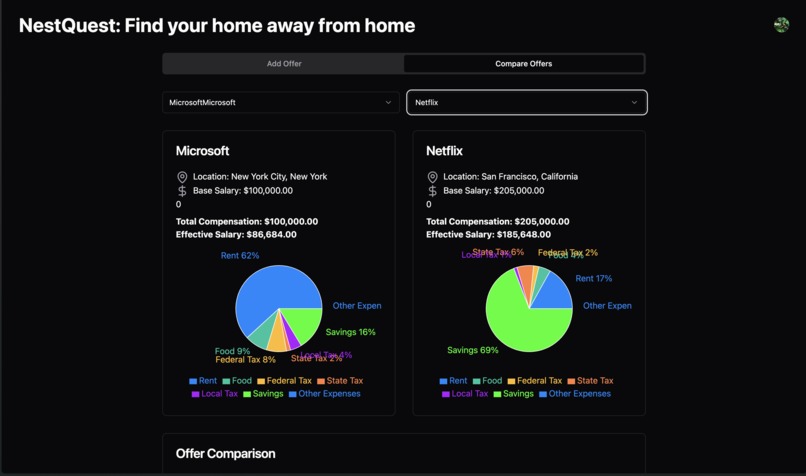
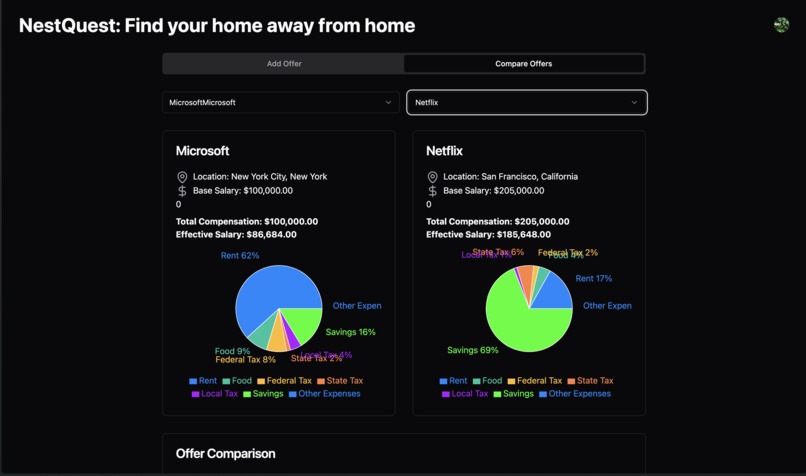
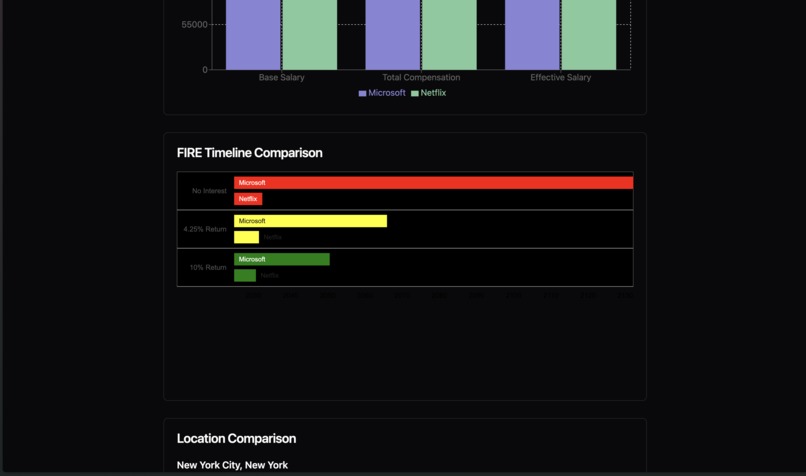
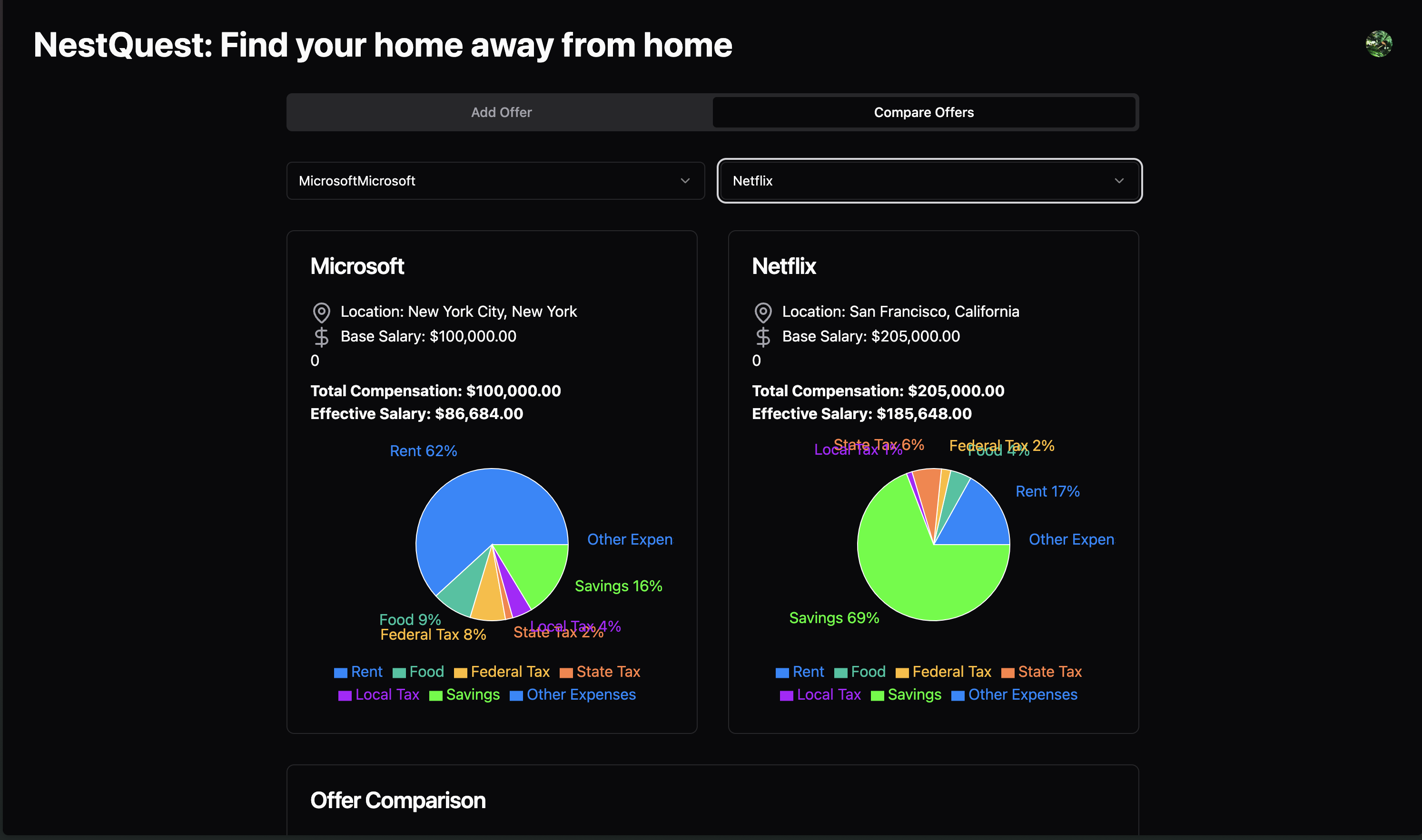
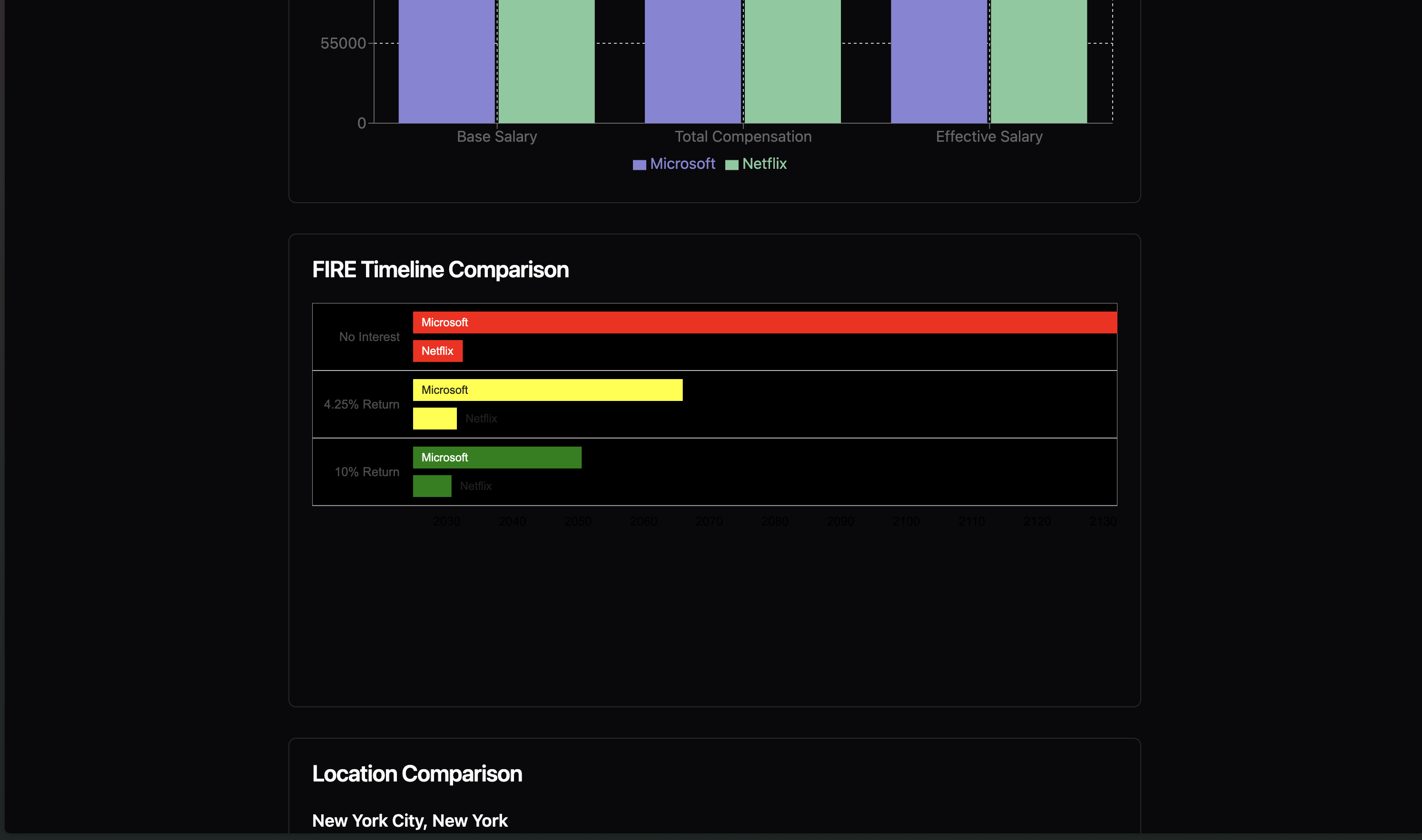
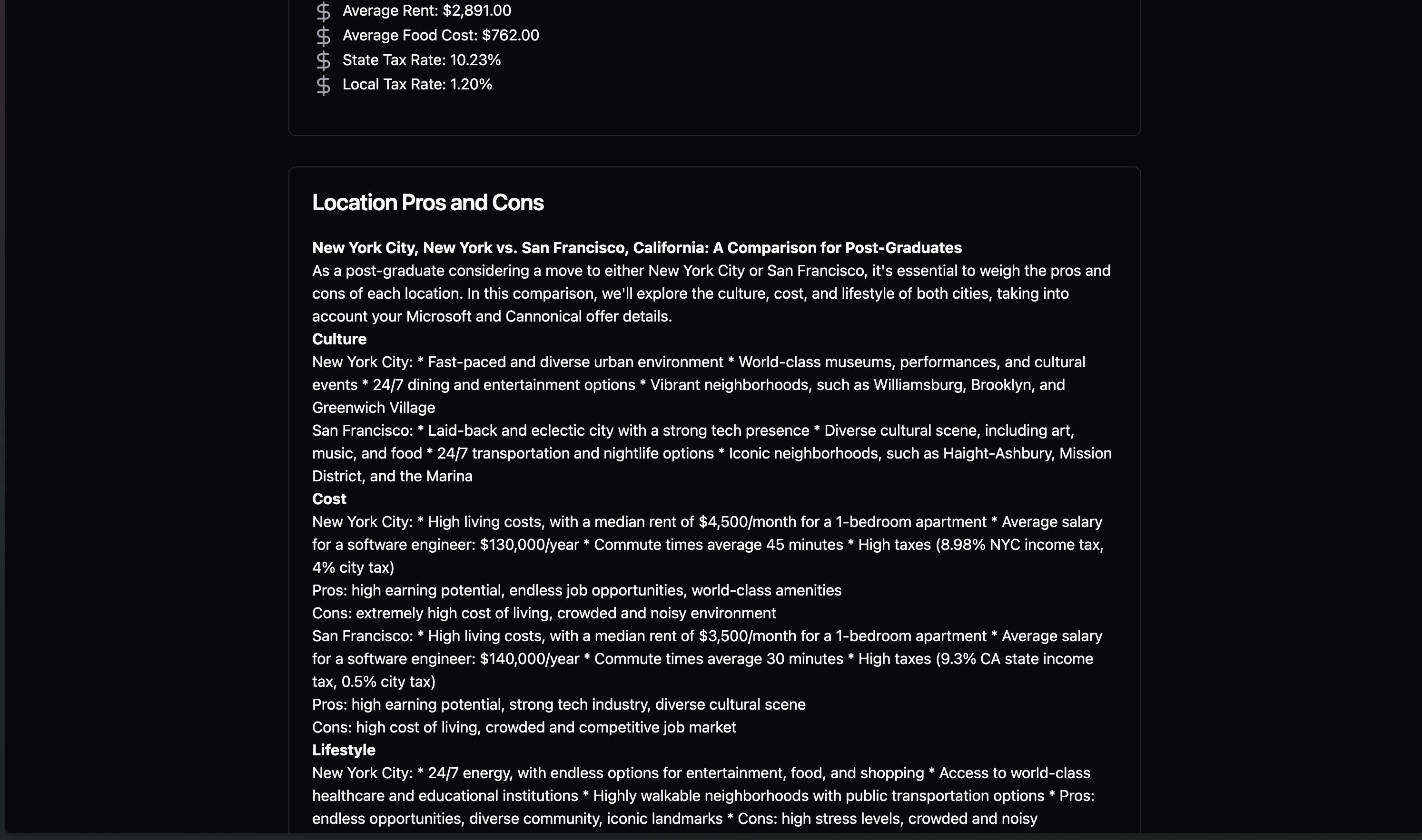
compare page of the project
-
-
-
-
-
-
-
-
-
-
-
-

NestQuest : Project Story
Inspiration
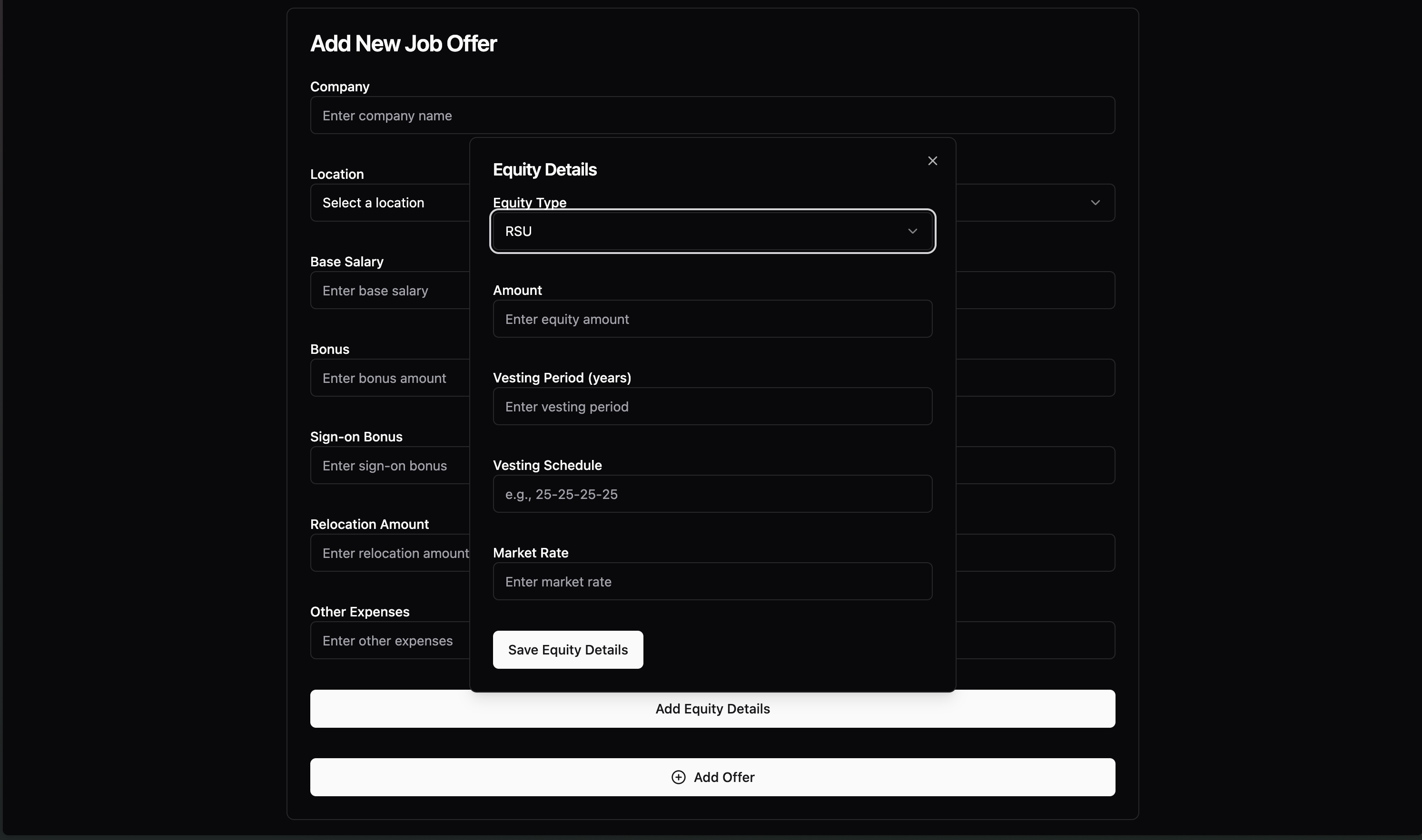
The inspiration for NestQuest came from the challenges many students and job seekers face when navigating through numerous job offers and opportunities. We wanted to create a platform that not only stores this information efficiently but also provides a seamless and user-friendly experience for managing job-related data.
What it does
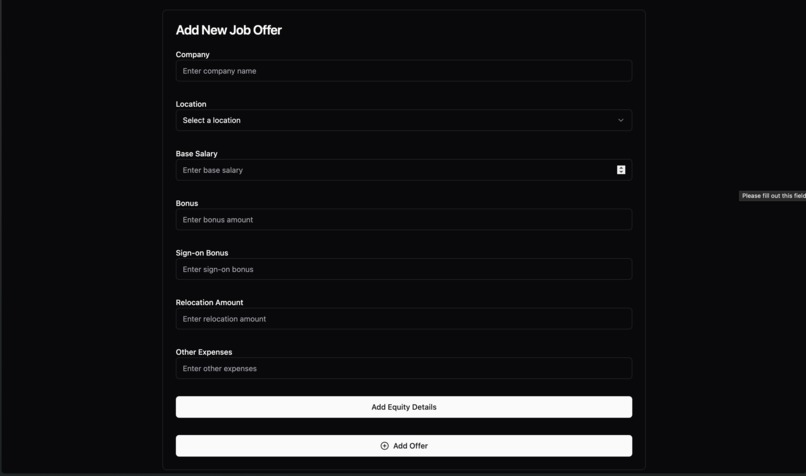
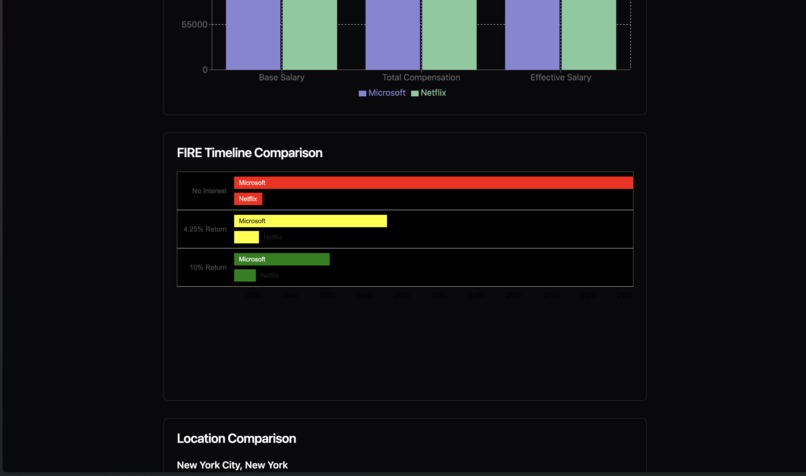
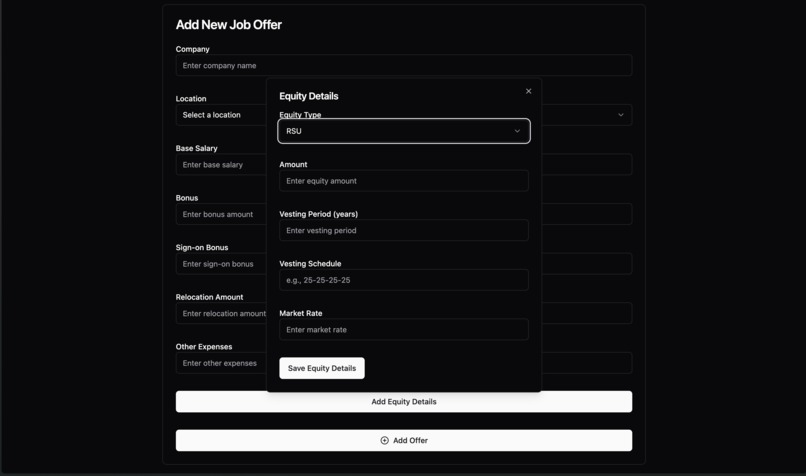
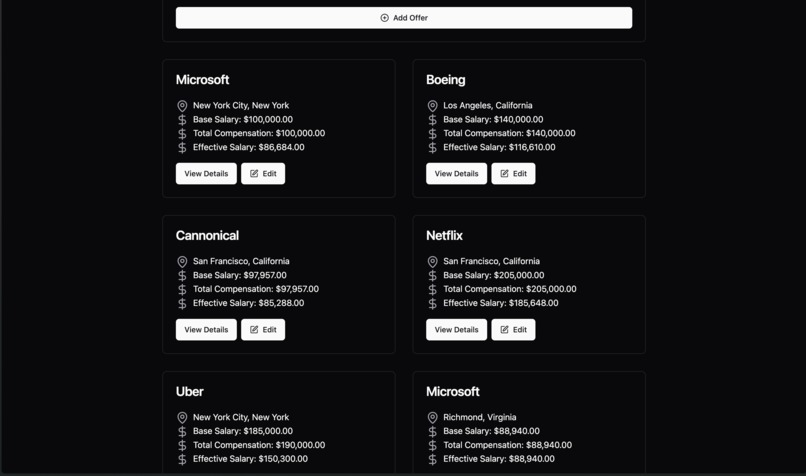
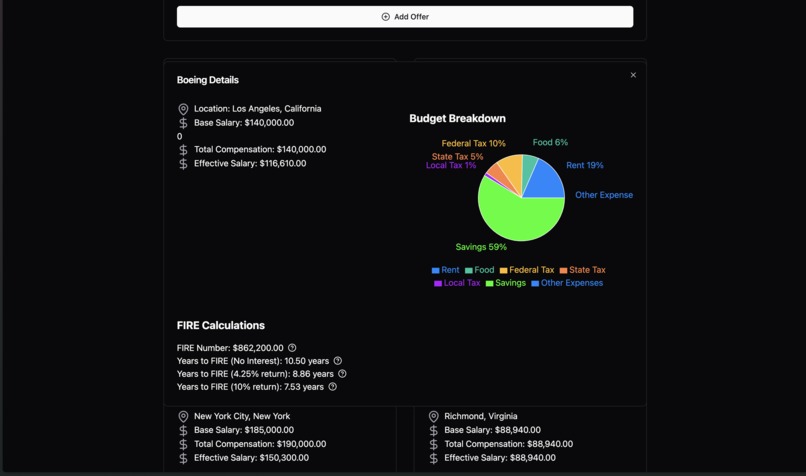
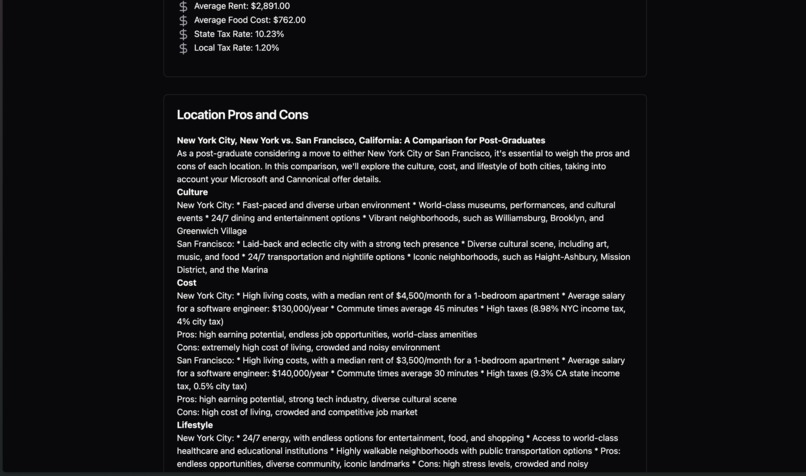
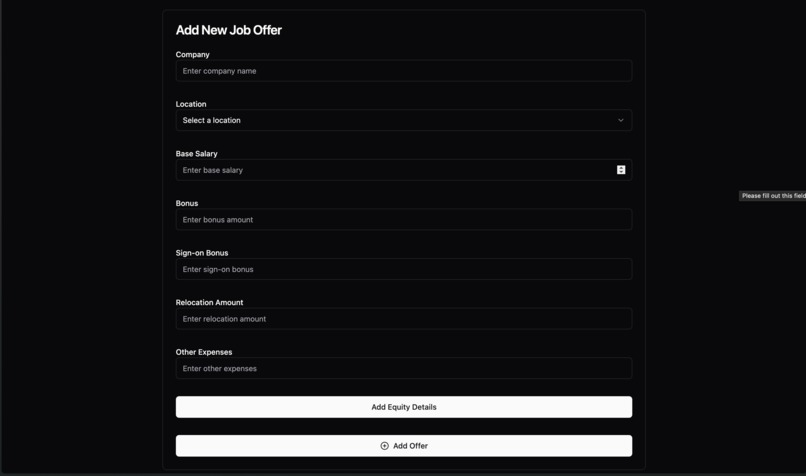
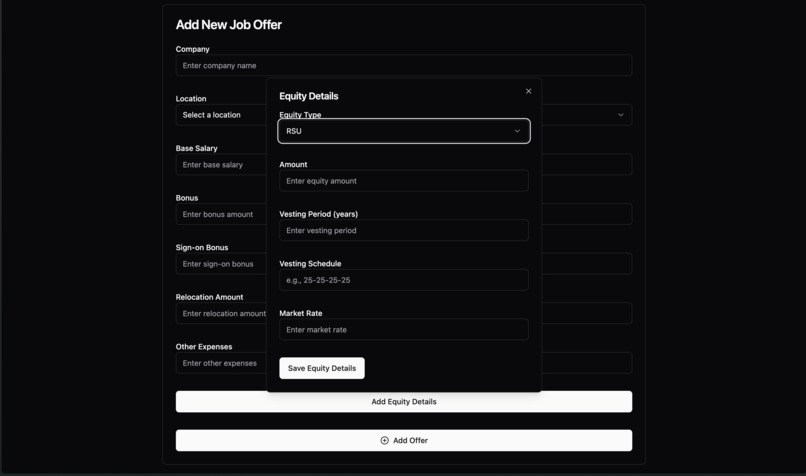
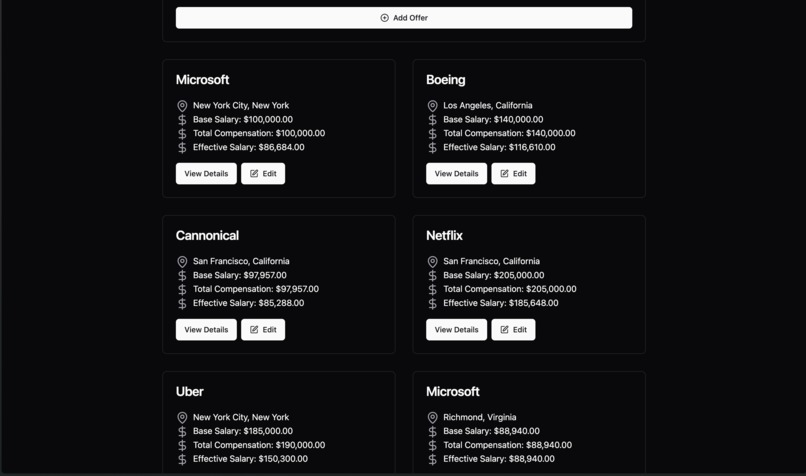
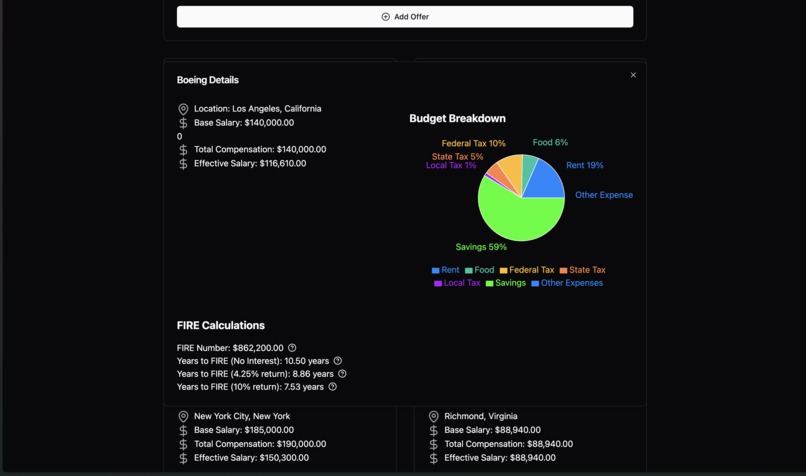
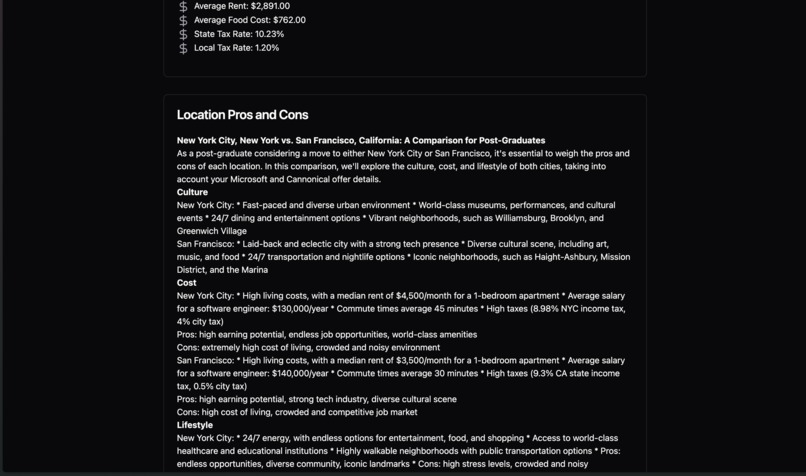
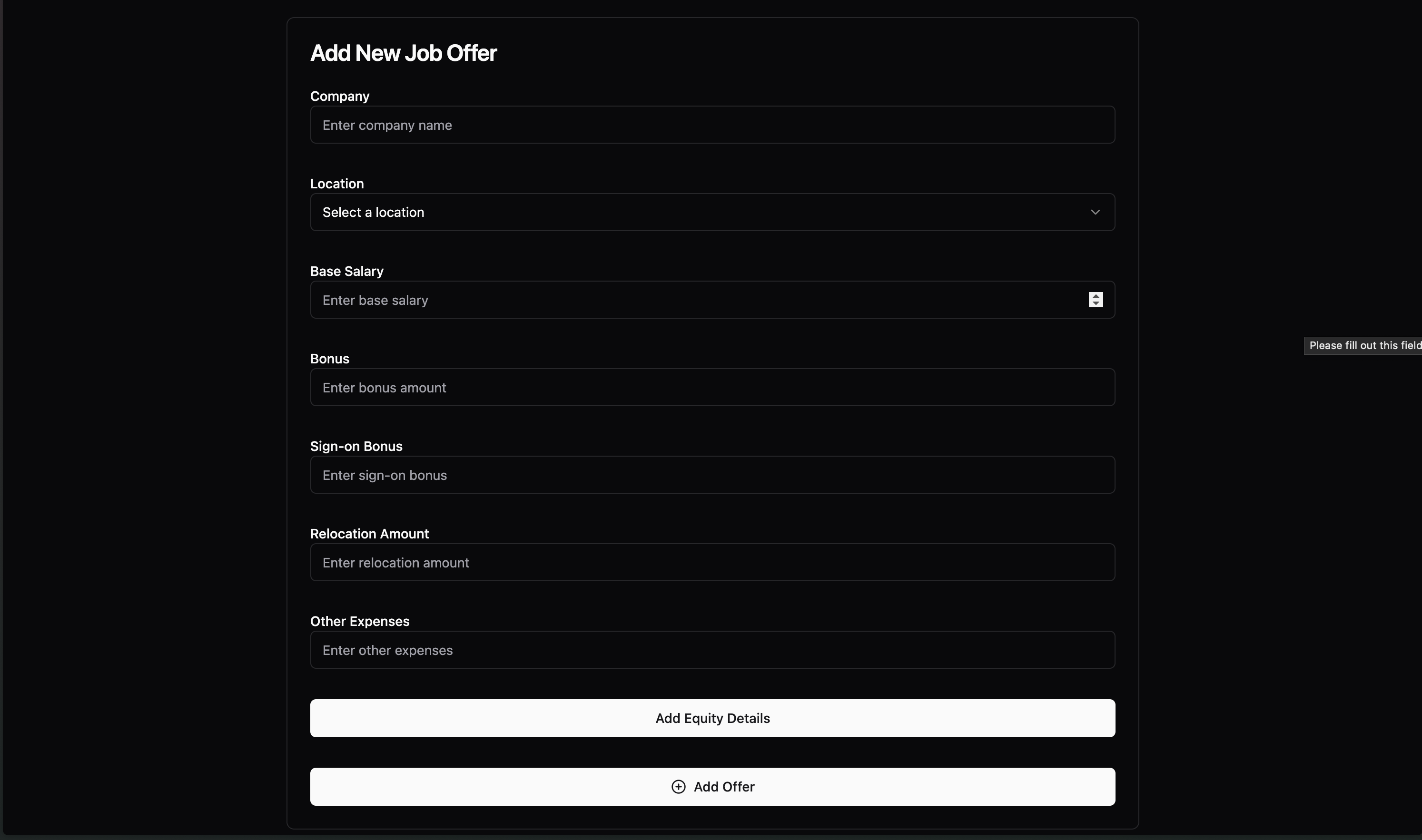
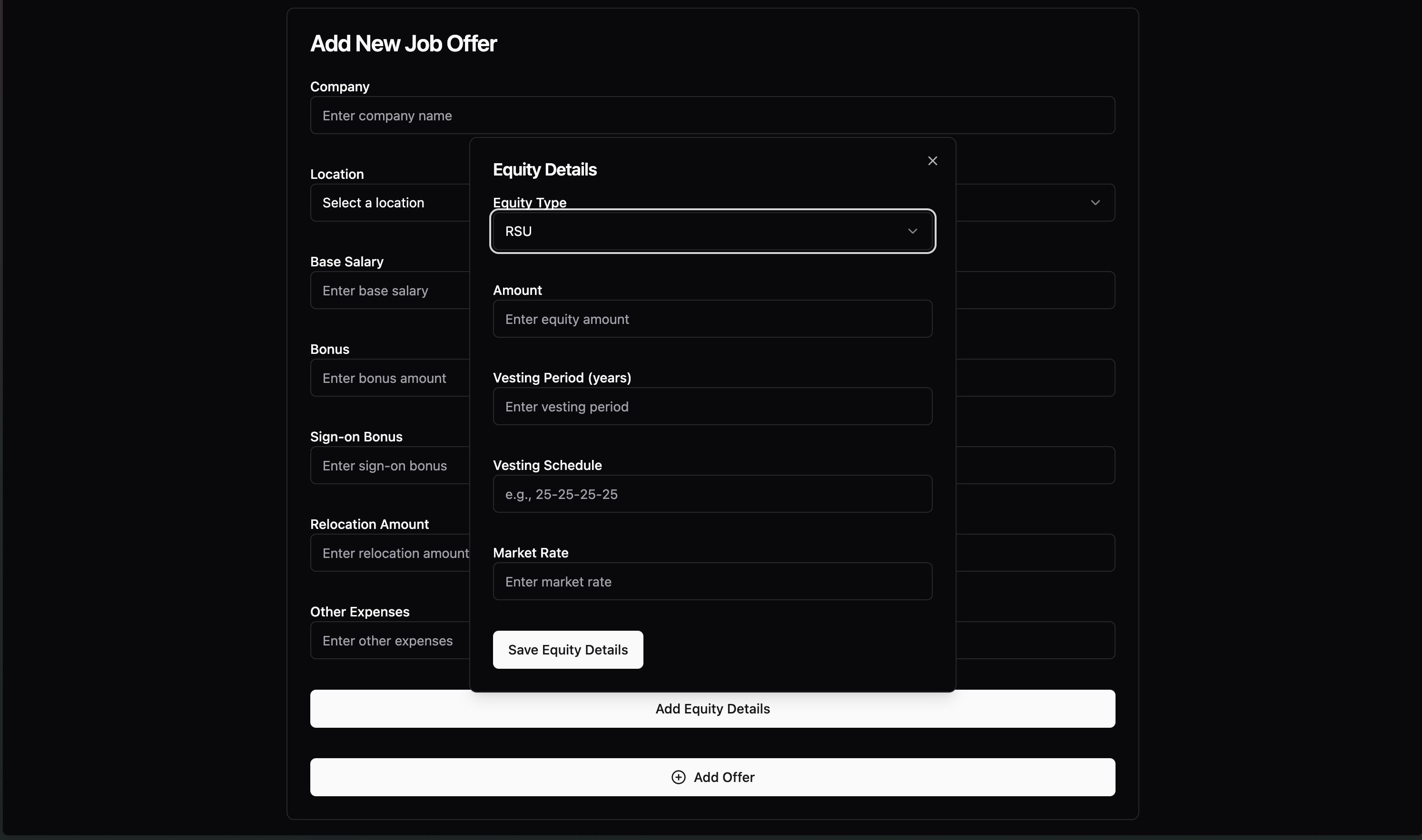
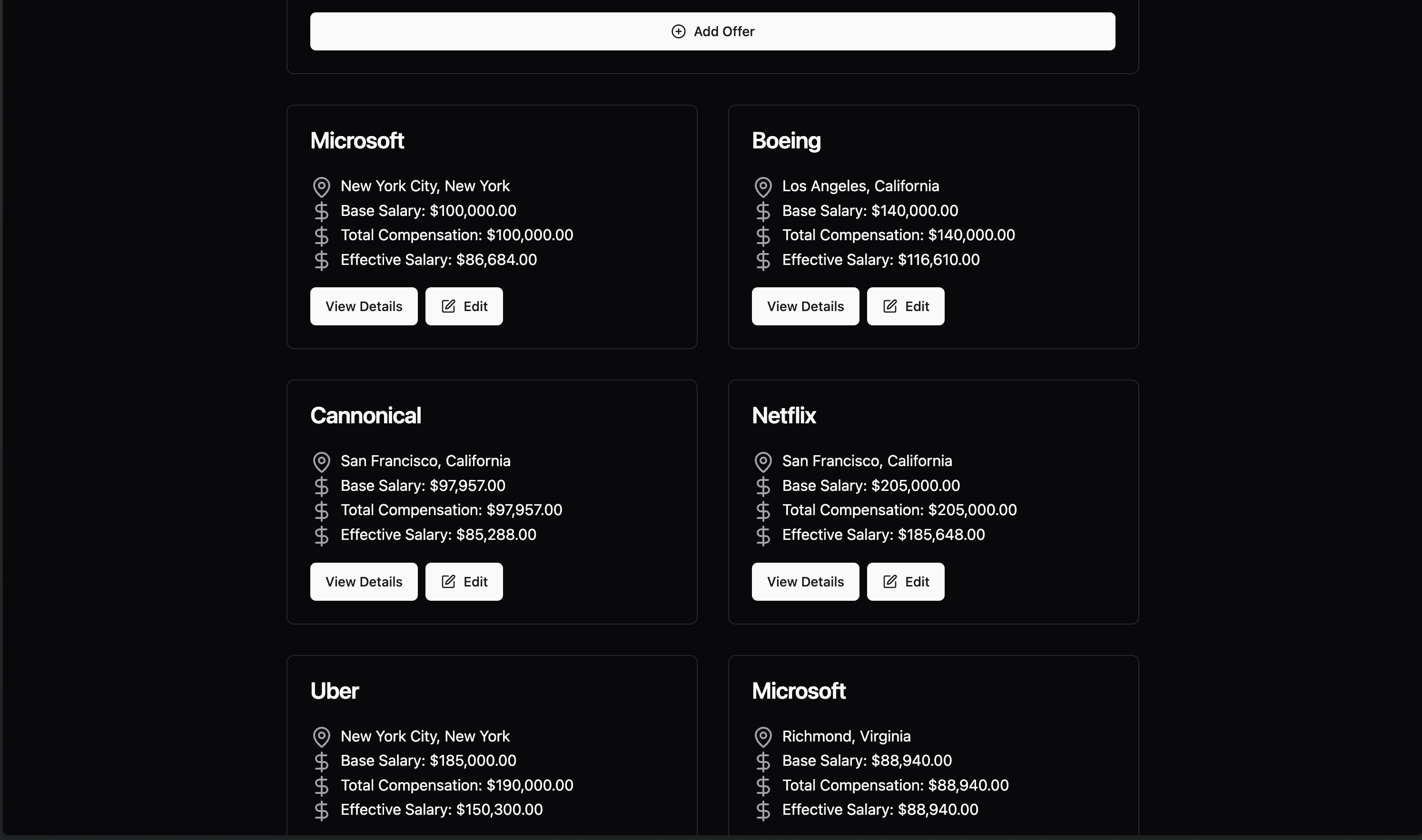
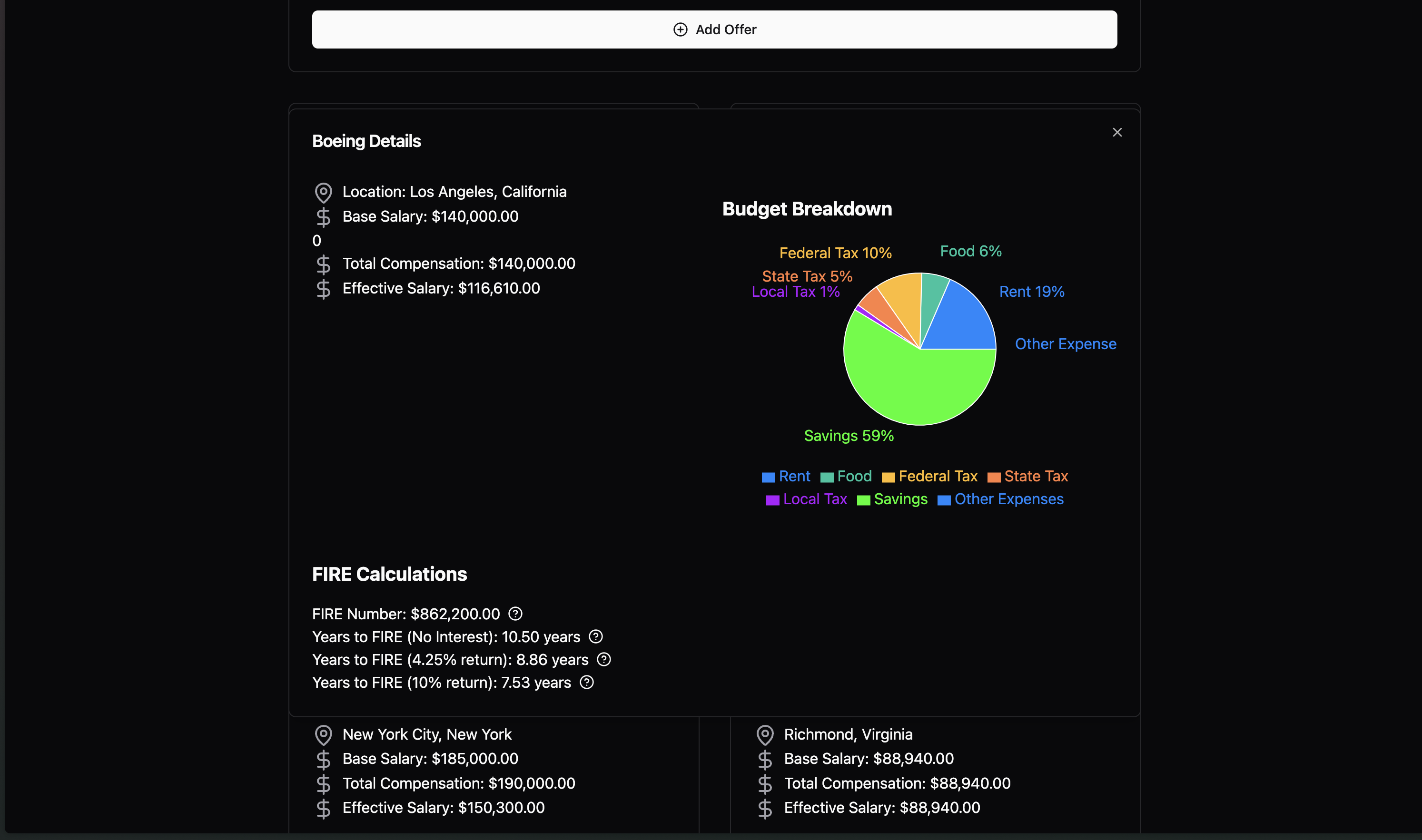
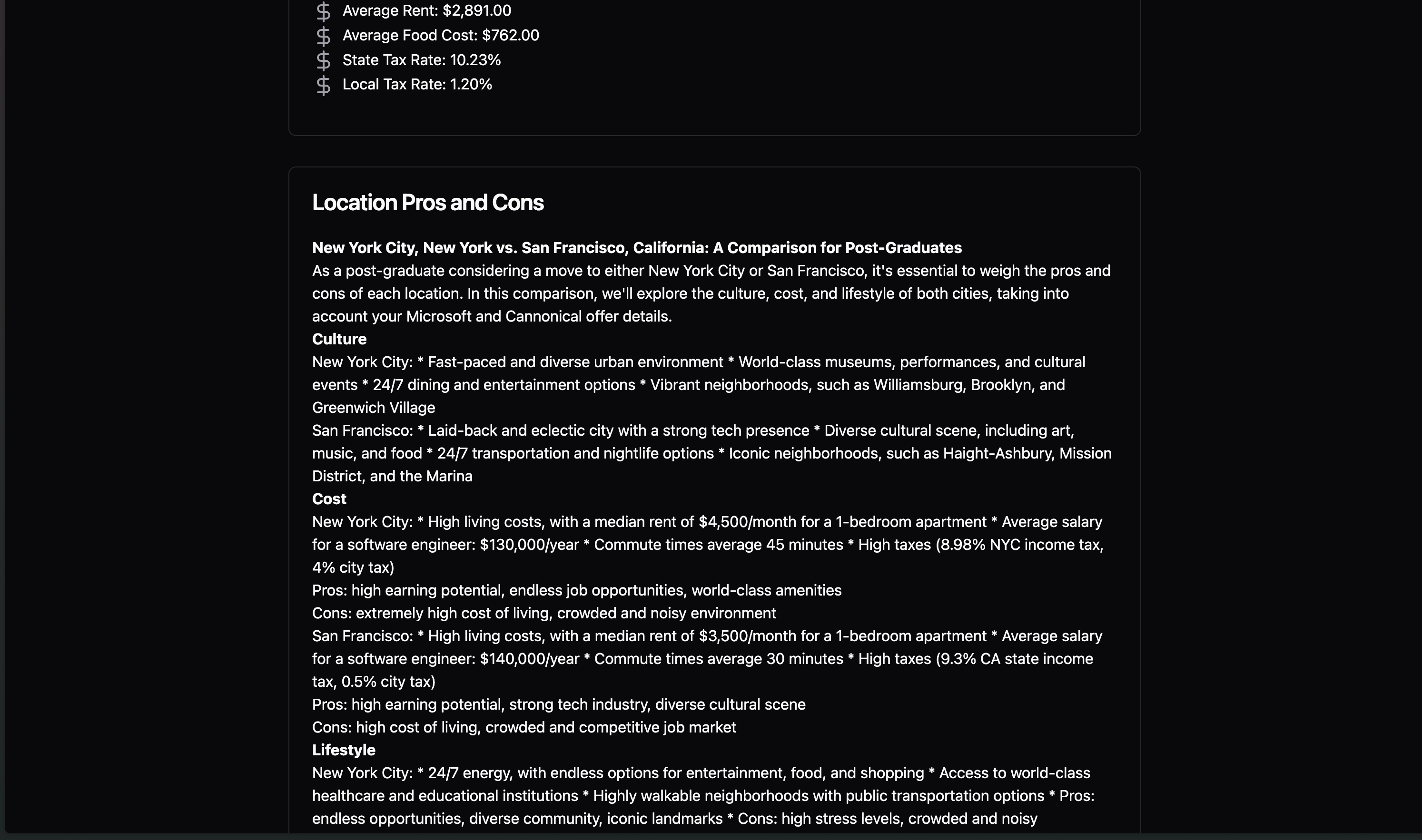
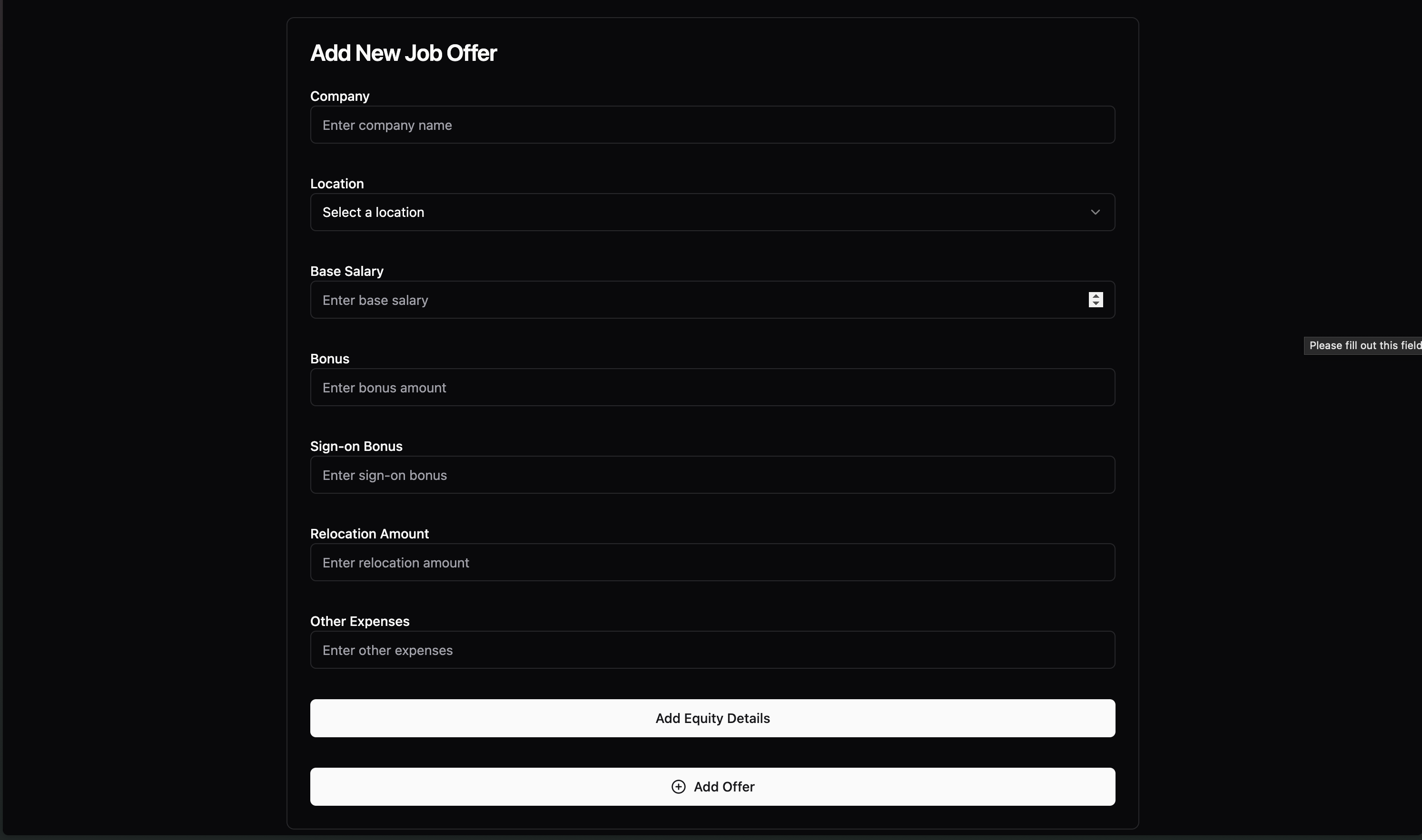
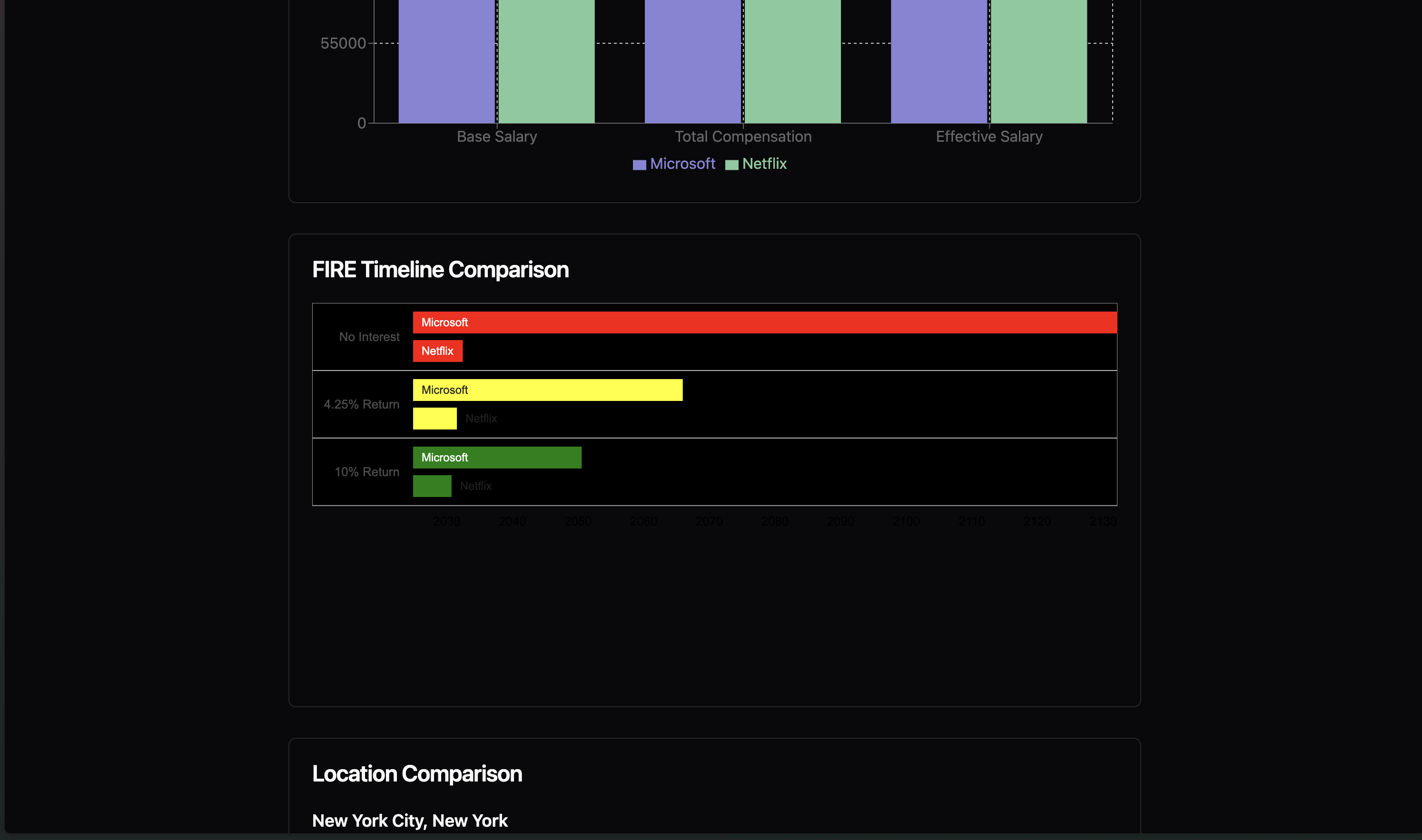
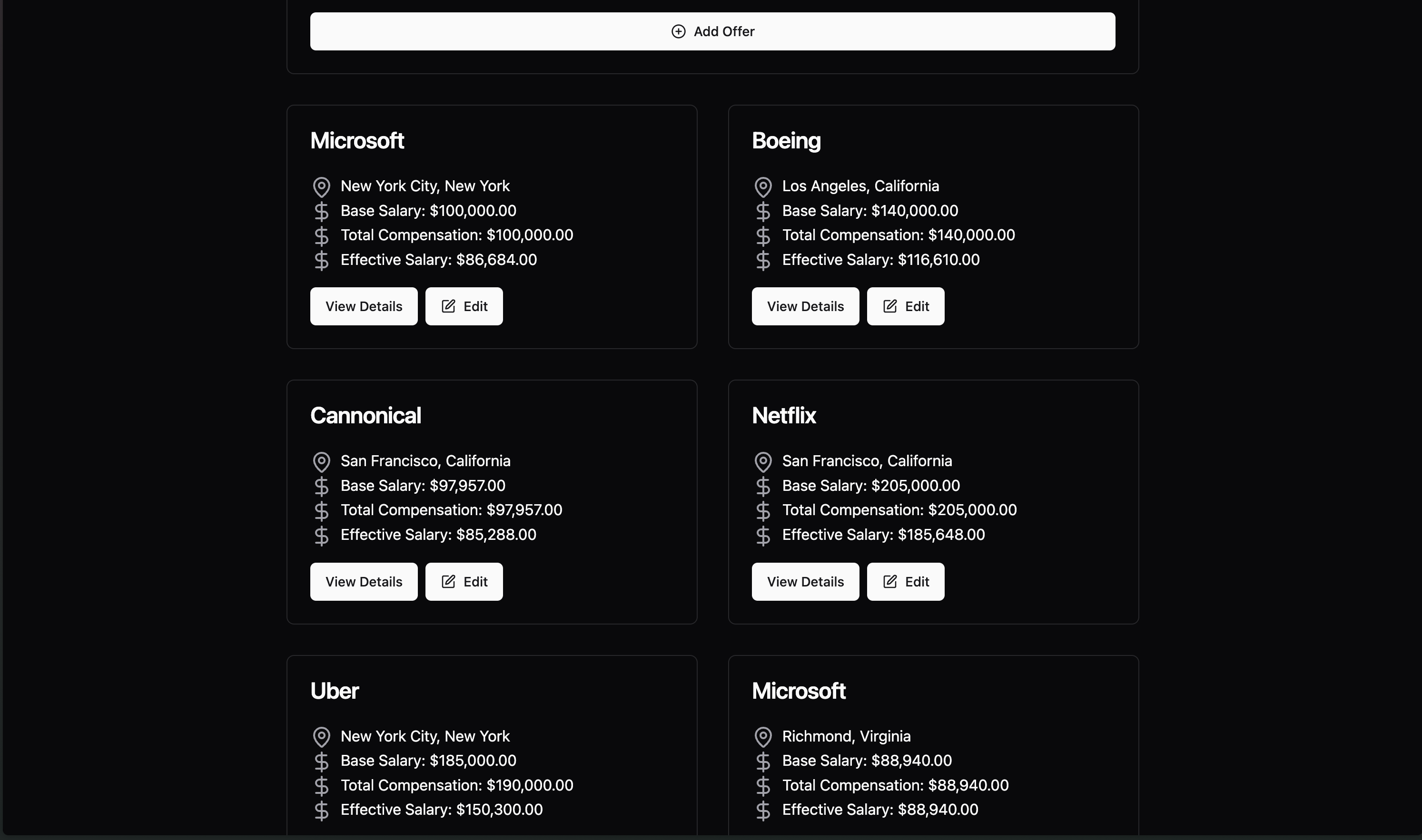
NestQuest is a web-based application that allows users to manage and compare their job offers by storing details such as company names, salaries, and job titles in a structured database. The application offers easy access to all relevant information in one place, helping users keep track of their opportunities in an organized way. It compares locations and costs, taking into account federal income tax rates, local income tax rates, and average cost of living from everyday expenses (rent, food, etc.).
How we built it
We built NestQuest using a tech stack that includes:
- TypeScript and React: For building a dynamic and interactive user interface.
- Next.js: To optimize server-side rendering and improve performance.
- Clerk: For handling authentication, making it easier for users to log in and manage their profiles.
- Firebase: As the back-end service to store and manage user data and job offers. Firebase's real-time database allows for fast and secure data handling. All components are connected through efficient APIs, and the project is structured to ensure scalability and ease of future enhancements.
Challenges we ran into
One of the initial challenges we ran into was finding data. A lot of the API's only dealt with sales tax, and there was nothing standardized for income tax. Hence, we spent a lot of time initially gathering data to use for the project. Another challenge we ran into was implementing a database to store users, their information, and their jobs. We tried MongoDB as a database, but instead went with Firebase as it was better suited for our purpose.
Accomplishments that we're proud of
Building off of above, one accomplishment we're proud of was being able to use Firebase as our database to store user information. This essentially allows for organization and saving of users on the application. Even though we ended up not going with the MongoDB, this was our team's first time using it and we learned a lot about it on the way, so we're proud that we got to gain experience in database management! Another accomplishment that we're proud of is being able to deploy our website using Vercel, and it being demo-able.
What we learned
This project taught us a lot about managing front-end and back-end communication, especially with Firebase and Next.js. We gained experience in debugging UI/UX issues and learned how to design scalable and secure authentication systems with Clerk. The project also reinforced the importance of optimizing server-side rendering for performance.
What's next for NestQuest
Next, we plan to build a page that shows a listing of houses from homes.com, catering to user preferences for sorting and filtering. This feature will allow users to customize their search experience based on specific criteria, improving the usability and functionality of the platform.
Built With
- ai
- authentication
- azure
- clerk
- css
- firebase
- javascript
- json
- llama
- next.js
- python
- react
- tailwind
- typescript

Log in or sign up for Devpost to join the conversation.