NEST — Nursing Environment & Safety Tracker
Inspiration
Nurses work long, demanding shifts in environments where temperature, humidity, and air quality can fluctuate significantly. These factors affect comfort, alertness, and overall well-being, yet they are rarely monitored at the individual level. We wanted to build a compact wearable that helps nurses stay aware of their immediate surroundings so they can better manage fatigue, comfort, and environmental stress.
What it does
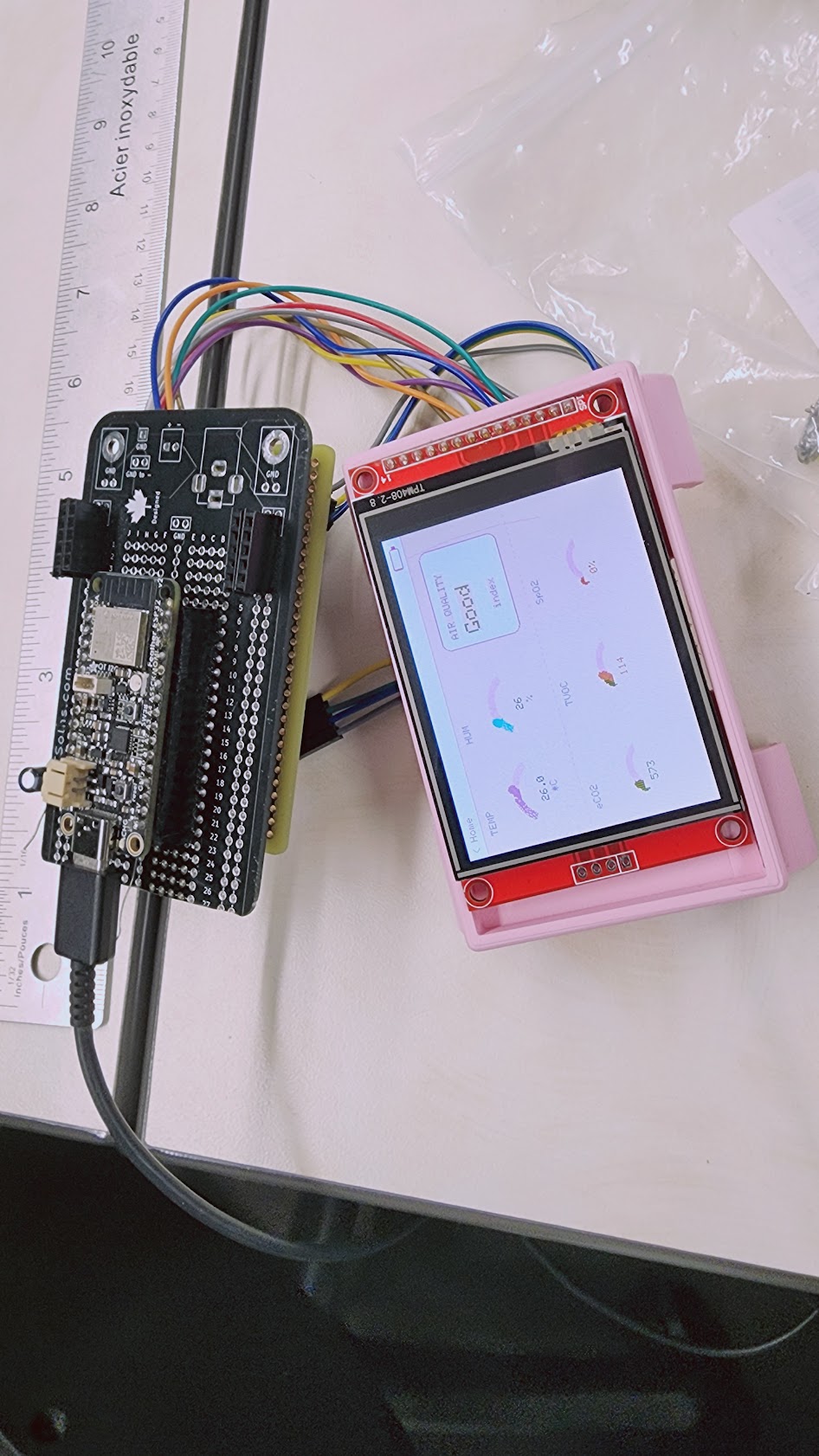
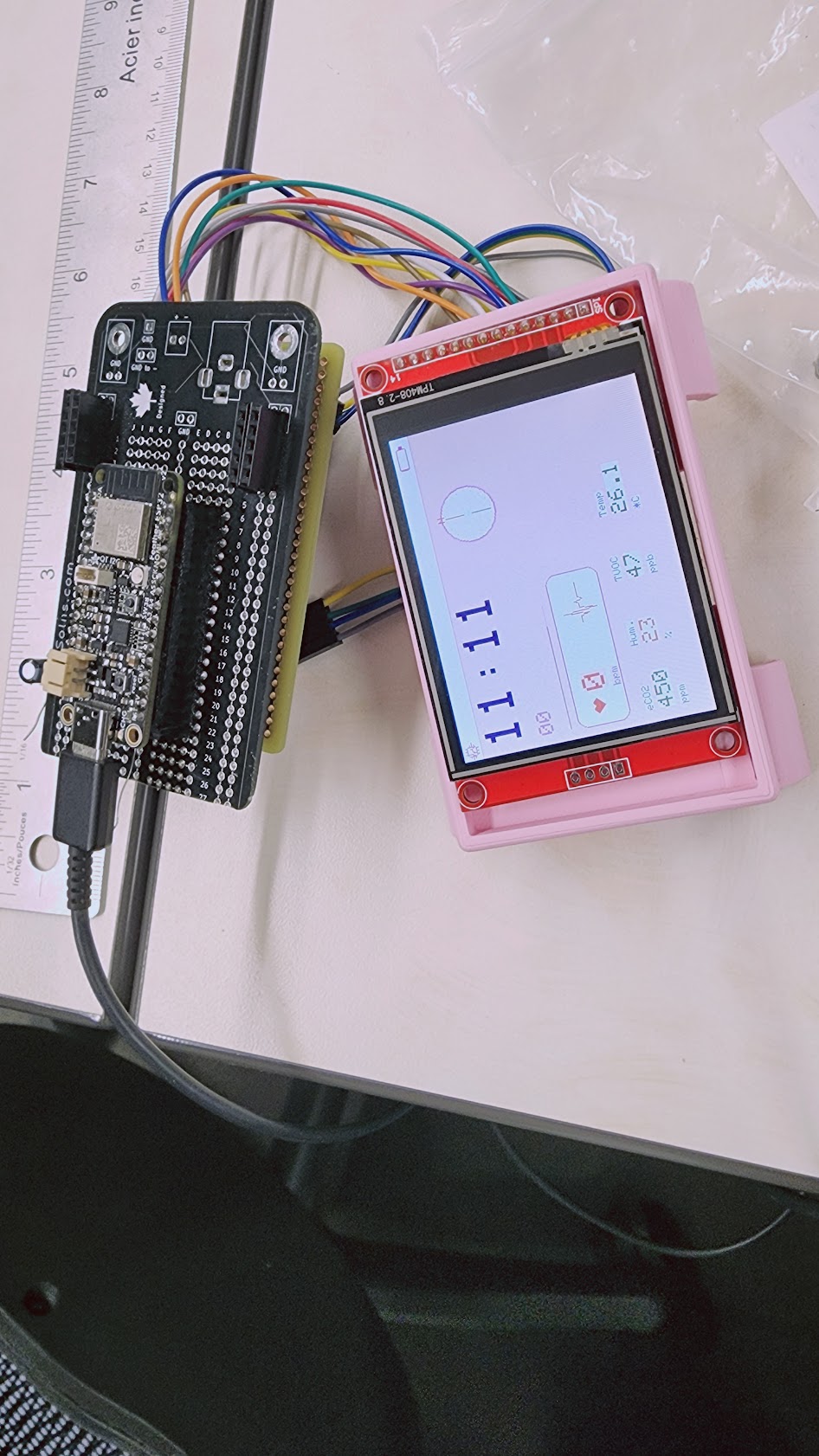
NEST continuously measures temperature, humidity, eCO₂, TVOC, and AQI using onboard sensors. A health-logic layer interprets these raw values into meaningful comfort levels and air-quality categories. The device displays this information on a small TFT screen in real time with clear, color-coded indicators. It also uses adaptive power management to extend battery life through dynamic sampling rates, reduced brightness modes, and deep-sleep operation.
How we built it
We built NEST using an ESP32 microcontroller with the Arduino framework and FreeRTOS. Sensor integration was done using Adafruit’s AHT21 and ENS160 libraries, wrapped in our own driver modules. Our firmware architecture is divided into dedicated subsystems:
- task_sensors: periodic sensor sampling and queue updates
- health_logic: interprets raw data into comfort and air-quality classifications
- task_display: handles TFT rendering and UI updates
- task_power: battery monitoring and energy-saving states
The UI is optimized using DMA-friendly drawing operations to achieve smooth refresh rates. We developed a clean directory structure to keep the system modular and scalable for future features.
Challenges we ran into
The ENS160 required stabilization and filtering before producing reliable readings. TFT rendering was initially slow and required optimized bulk-write operations. We also had to resolve FreeRTOS timing conflicts by refining task boundaries and queue usage. Designing meaningful environmental thresholds required researching comfort models and validating them in real indoor conditions.
Accomplishments that we're proud of
We successfully built a functional, wearable environmental health tracker with stable sensor integration, smooth UI performance, and a well-architected firmware design. Our system feels closer to a production embedded device than a typical hackathon prototype. Achieving clean task scheduling, clear modularity, and responsive graphics were major milestones.
What we learned
We learned how sensitive environmental sensors are to temperature and humidity changes and how much filtering and interpretation they require. We developed stronger skills in FreeRTOS architecture, embedded UI optimization, and low-power system design. We also gained experience turning raw sensor data into actionable, user-friendly information.
What's next for NEST — Nursing Environment & Safety Tracker
Our next steps include adding BLE connectivity for long-term trend analysis, implementing anomaly detection for abrupt environmental changes, integrating haptic alerts, and designing a compact PCB for a true wearable form factor. We also aim to explore adding sensors for particulate matter, noise levels, or UV exposure, and potentially developing an anonymized dashboard to help workplaces monitor overall staff environmental conditions.


Log in or sign up for Devpost to join the conversation.