Nest: Budget & Productivity
Inspiration
Daily life feels heavier than it should.
Busy households juggle food, tasks, and money every single day. Grocery prices keep rising. Planning feels overwhelming. Most tools either overcomplicate things or solve just one piece of the problem.
Nest was inspired by a simple idea:
If we reduce the two most exhausting loops —
“What should I do today?” and
“Why is my grocery bill so high?” —
we reduce daily stress in a meaningful way.
Nest was built to bring clarity, not more noise.
What it does
Nest is a calm planning and savings companion.
It helps users:
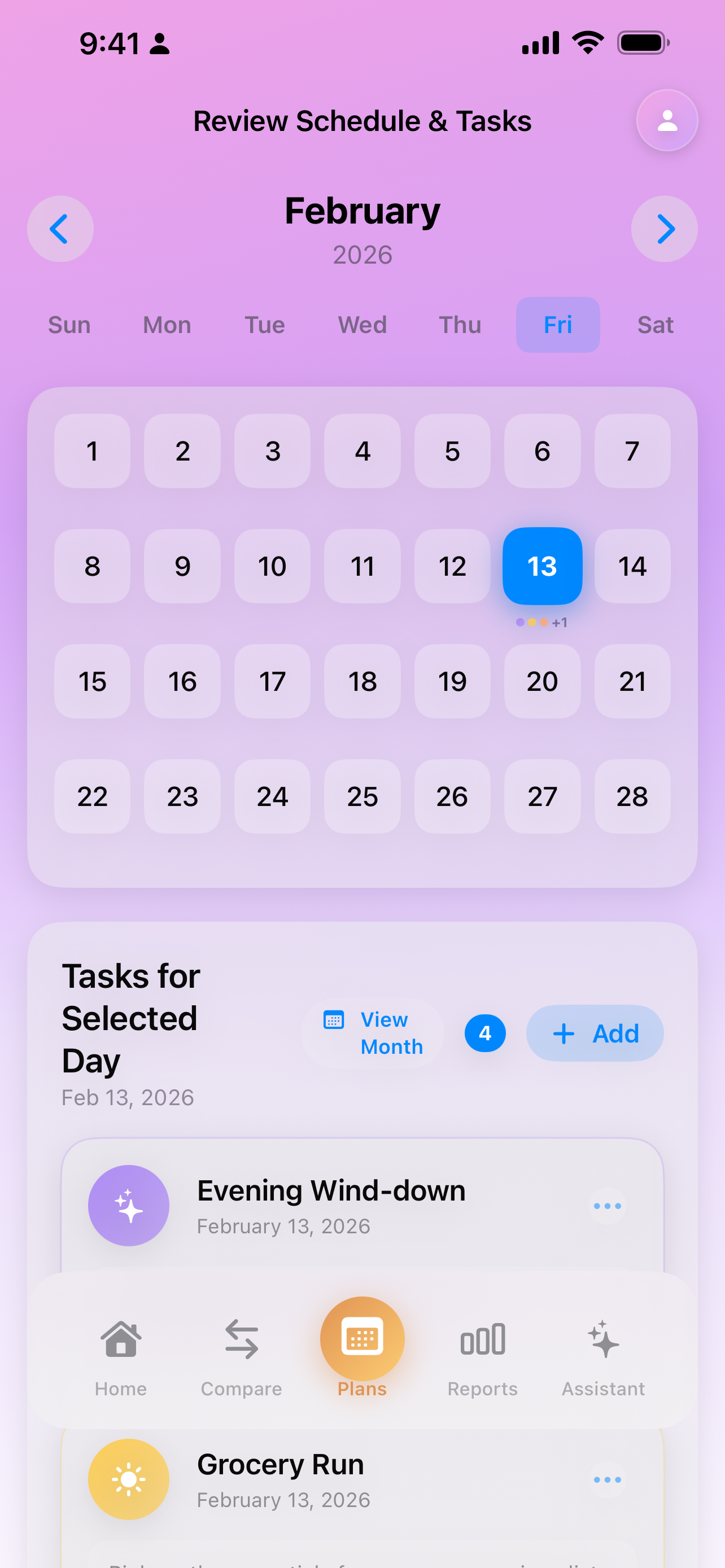
- Rebuild their day with AI in seconds
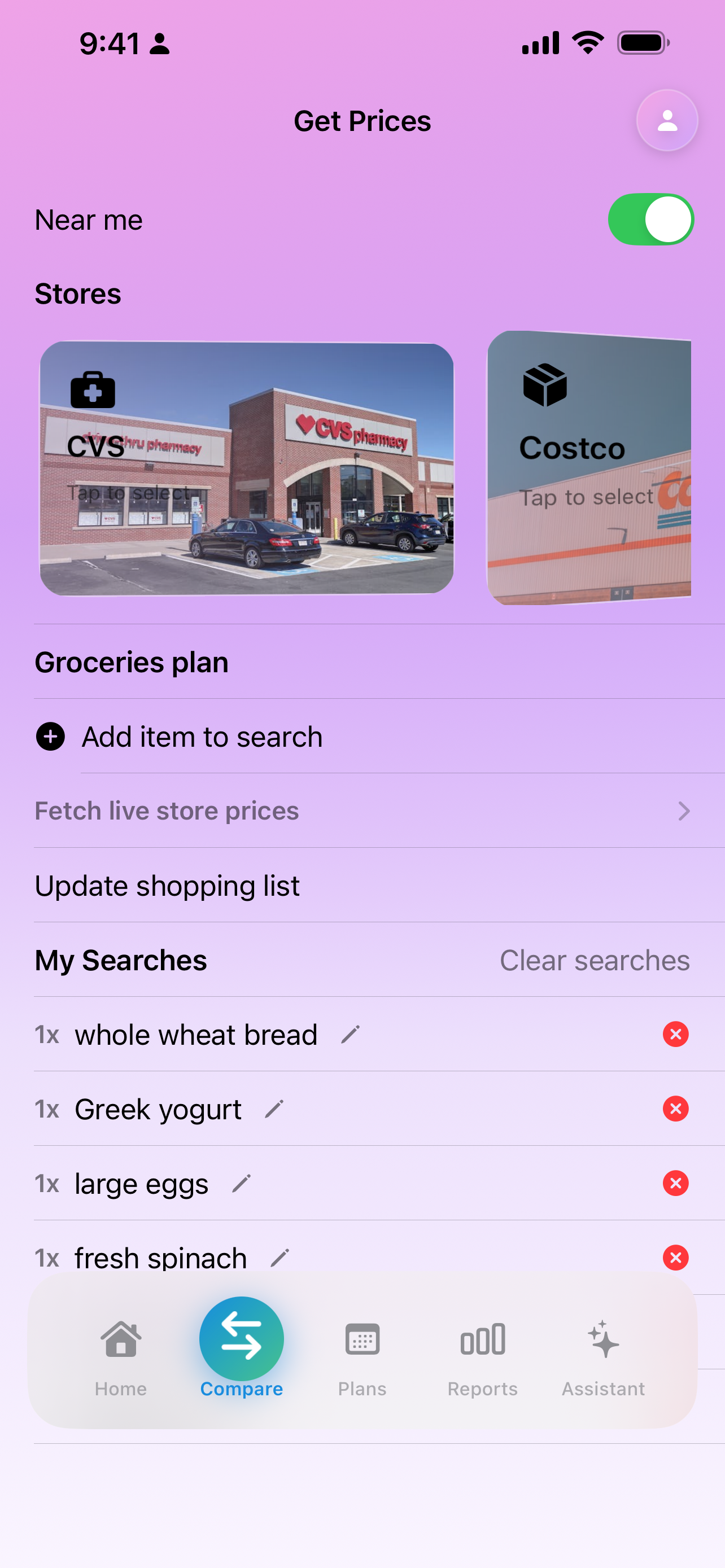
- Compare grocery prices across multiple stores
- See realistic total costs before shopping
- Get cheaper substitution suggestions
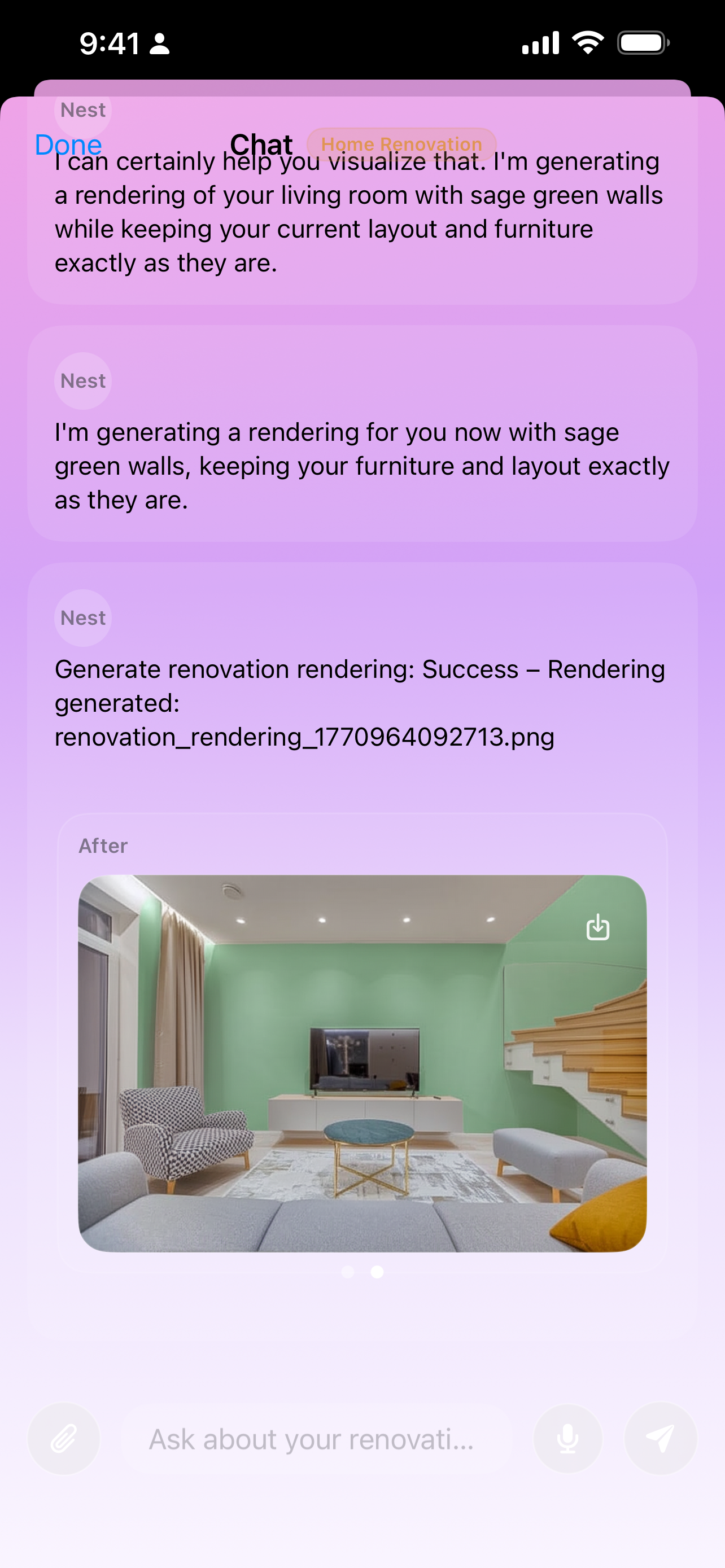
- Use a multi-specialist assistant (Grocery, Budget, Tasks, Renovation)
- Confirm actions before anything changes
Nest turns recurring chaos into structured decisions.
How we built it
Nest was built as a full-stack system:
- iOS (SwiftUI) for a fast, focused mobile experience
- Next.js backend for APIs and orchestration
- Supabase (Postgres + Auth) for secure user data and persistence
- A streaming grocery comparison engine that returns store results progressively
- A schema-validated AI assistant that proposes structured actions
The grocery engine streams progress in real time so users see results quickly instead of waiting on a single response.
The AI assistant uses strict validation and confirm-before-execute logic to maintain user trust.
Every design decision centered around reducing cognitive load.
Challenges we ran into
Grocery Data Reliability
Retail sites change frequently, and scraping introduces latency and blocking challenges. Stabilizing this required caching strategies, normalization layers, and graceful partial results.
AI Reliability
LLMs are powerful but unpredictable. Ensuring consistent structured outputs required strict schema enforcement, validation layers, and idempotent action handling.
Avoiding Feature Overload
It’s easy to keep adding features. It’s harder to simplify.
Maintaining a calm, focused experience required disciplined constraint.
Accomplishments that we're proud of
- A real-time, multi-store grocery comparison engine
- A structured AI assistant that safely proposes and executes actions
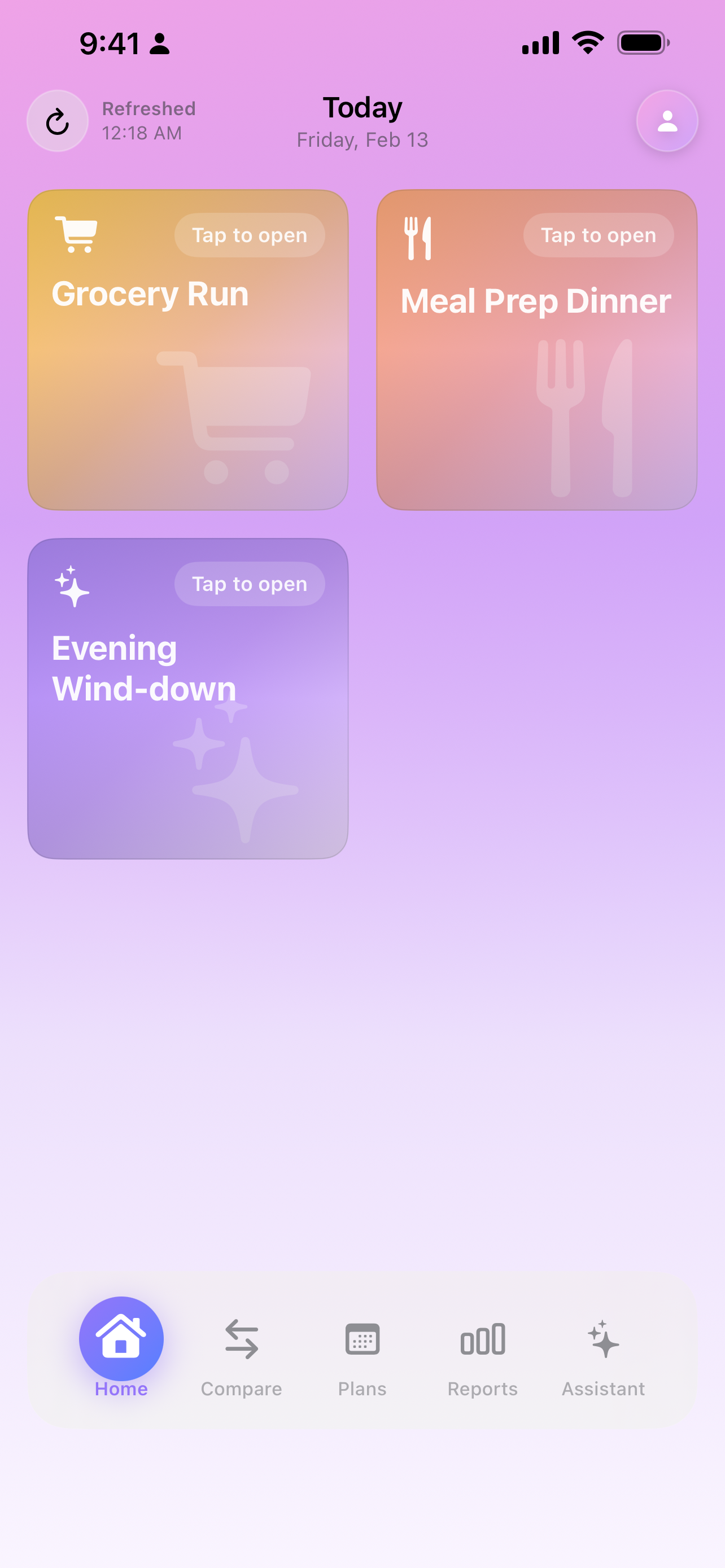
- A clean “Today” view that reduces overwhelm in under 10 seconds
- A working full-stack system built solo
- A cohesive product story that connects planning and spending
Most importantly, Nest feels calm — not chaotic.
What we learned
Clarity is more valuable than features.
Users don’t want more dashboards.
They want direction.
Trust matters more than automation.
AI must feel safe before it feels powerful.
And small, consistent savings create long-term impact.
What's next for Nest: Budget & Productivity
Next steps include:
- UPC barcode scanning for faster grocery item identification
- Deeper personalization and smarter substitutions
- Expanded premium packaging and value clarity
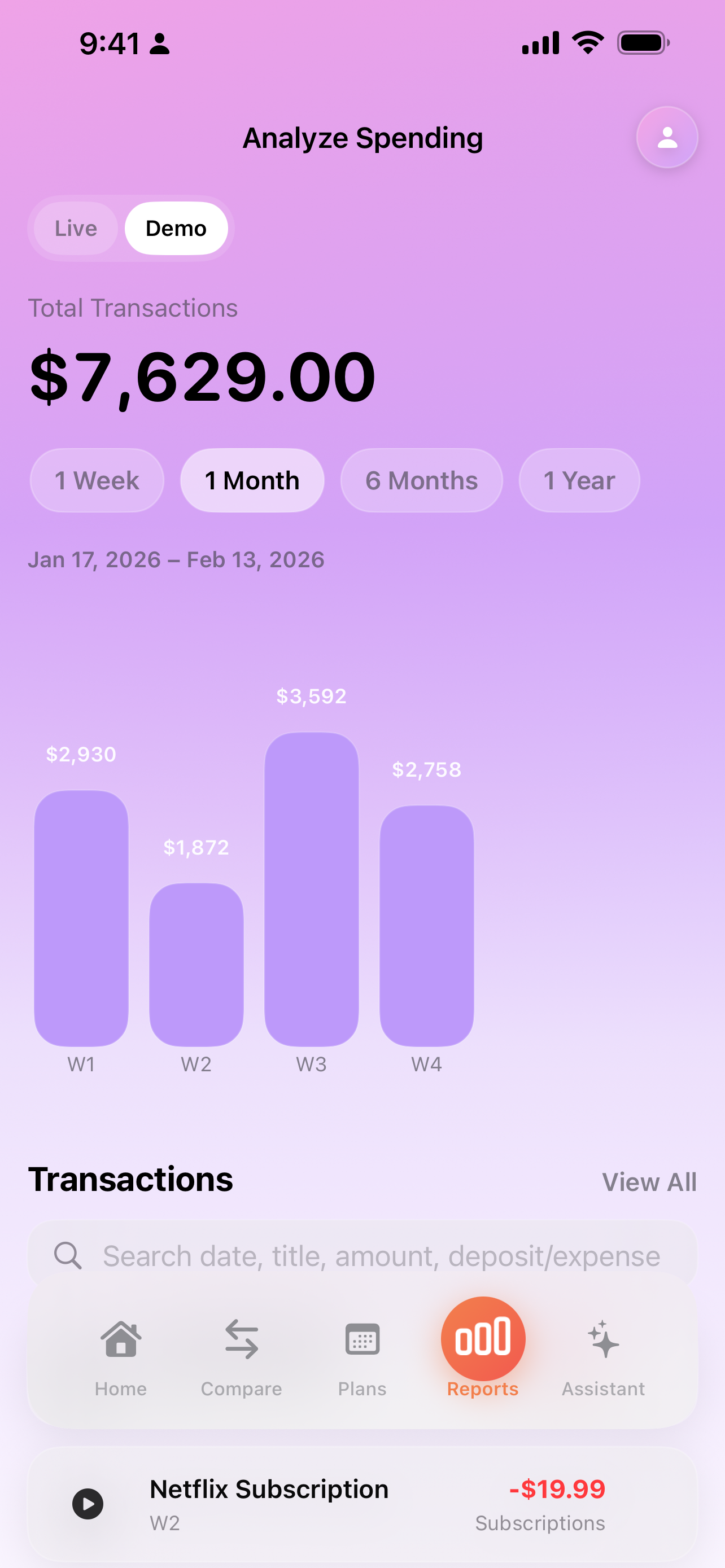
- Improved savings insights and trend visibility
- Continued refinement of the assistant’s action system -Restaurant comparisons
The long-term vision is simple:
Make Nest the trusted daily system
that quietly makes life lighter.
Built With
- next.js
- restapi
- revenuecat
- supabase
- swift
- swiftui
- vercel

Log in or sign up for Devpost to join the conversation.