-
-
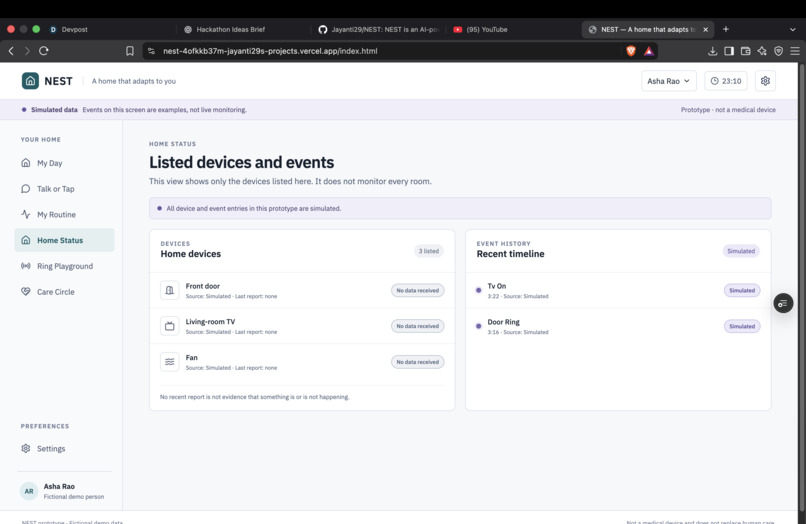
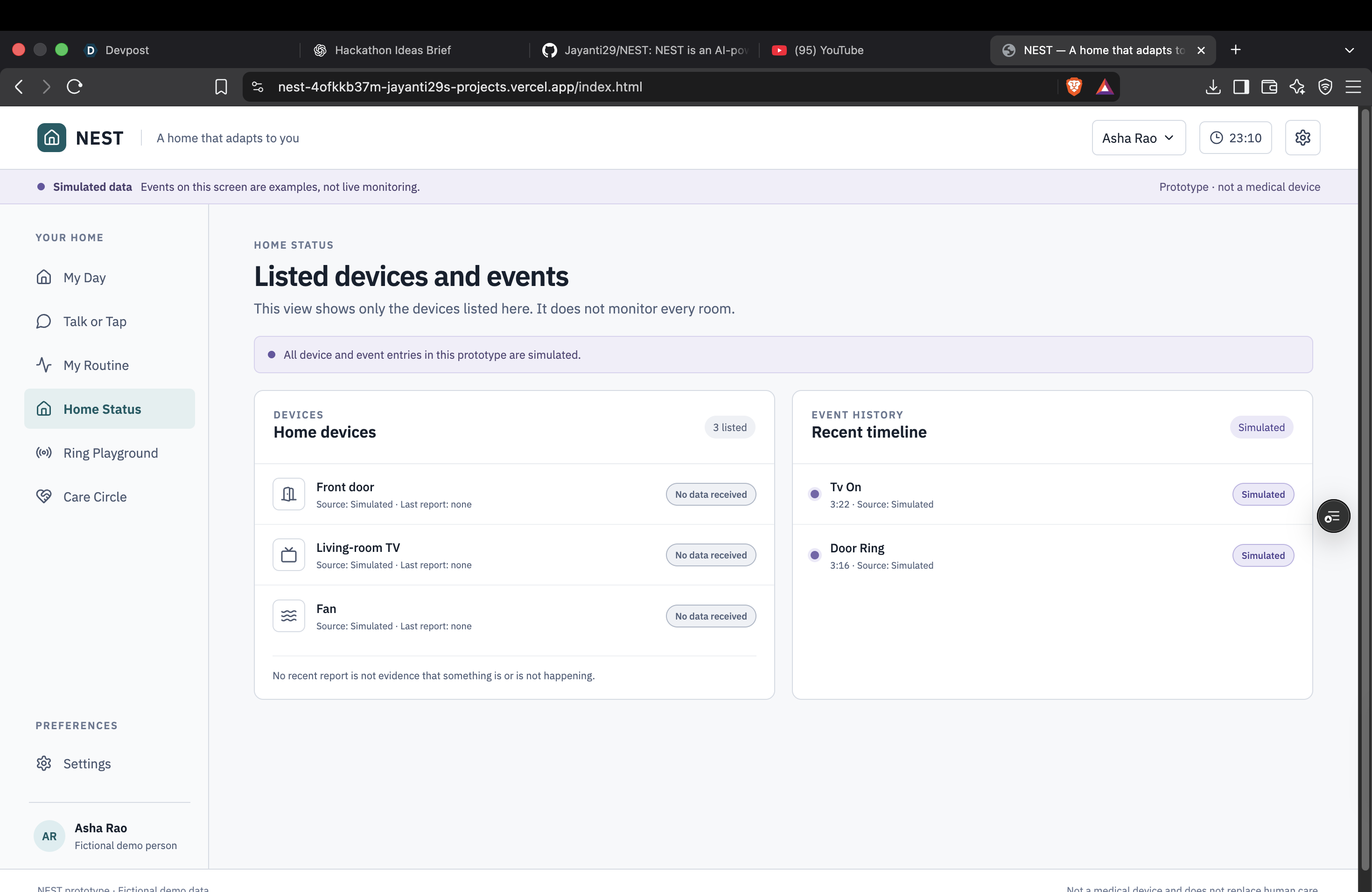
Home Status displays listed devices and event history, clearly distinguishing simulated data from real monitoring.
-
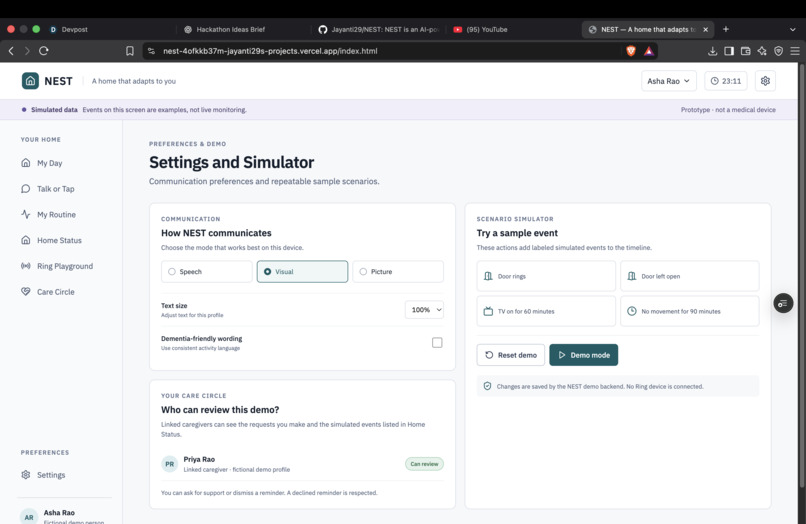
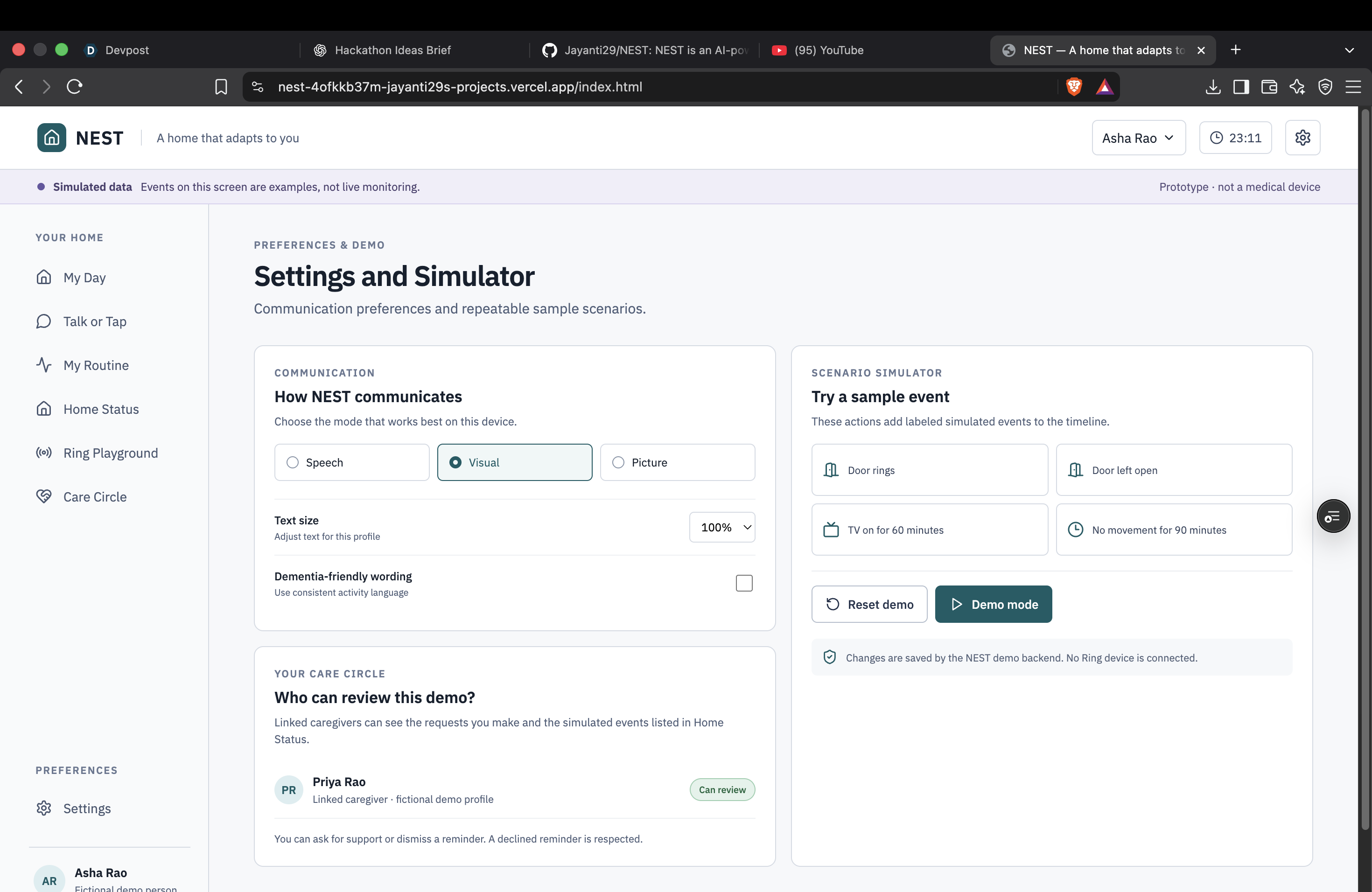
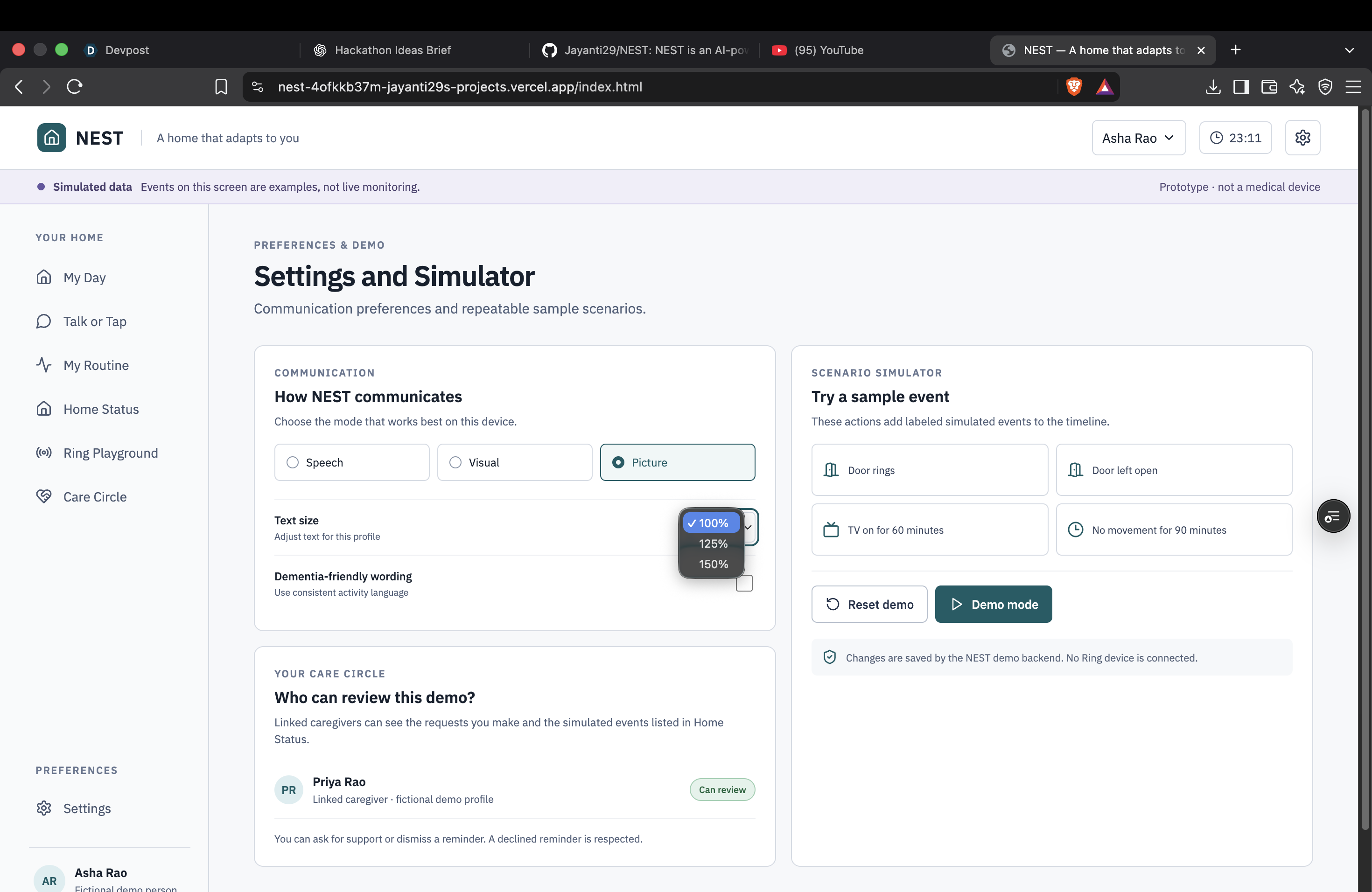
Personalise NEST with speech, visual, or picture-based communication and adjustable accessibility settings.
-
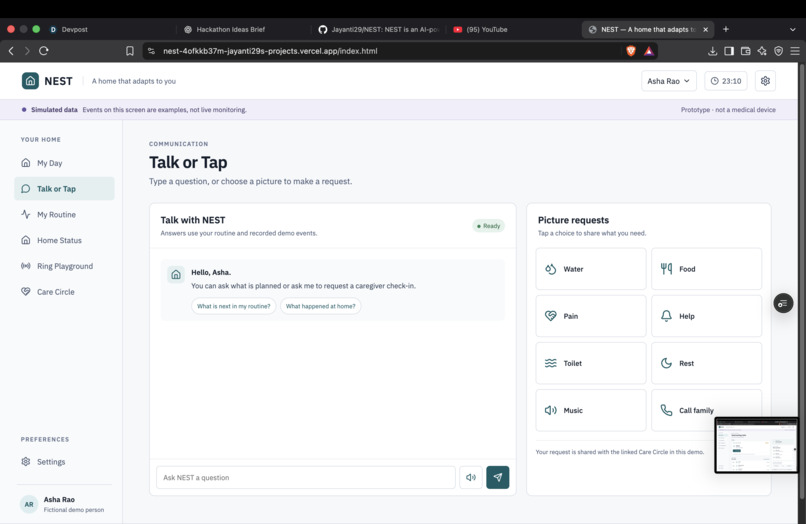
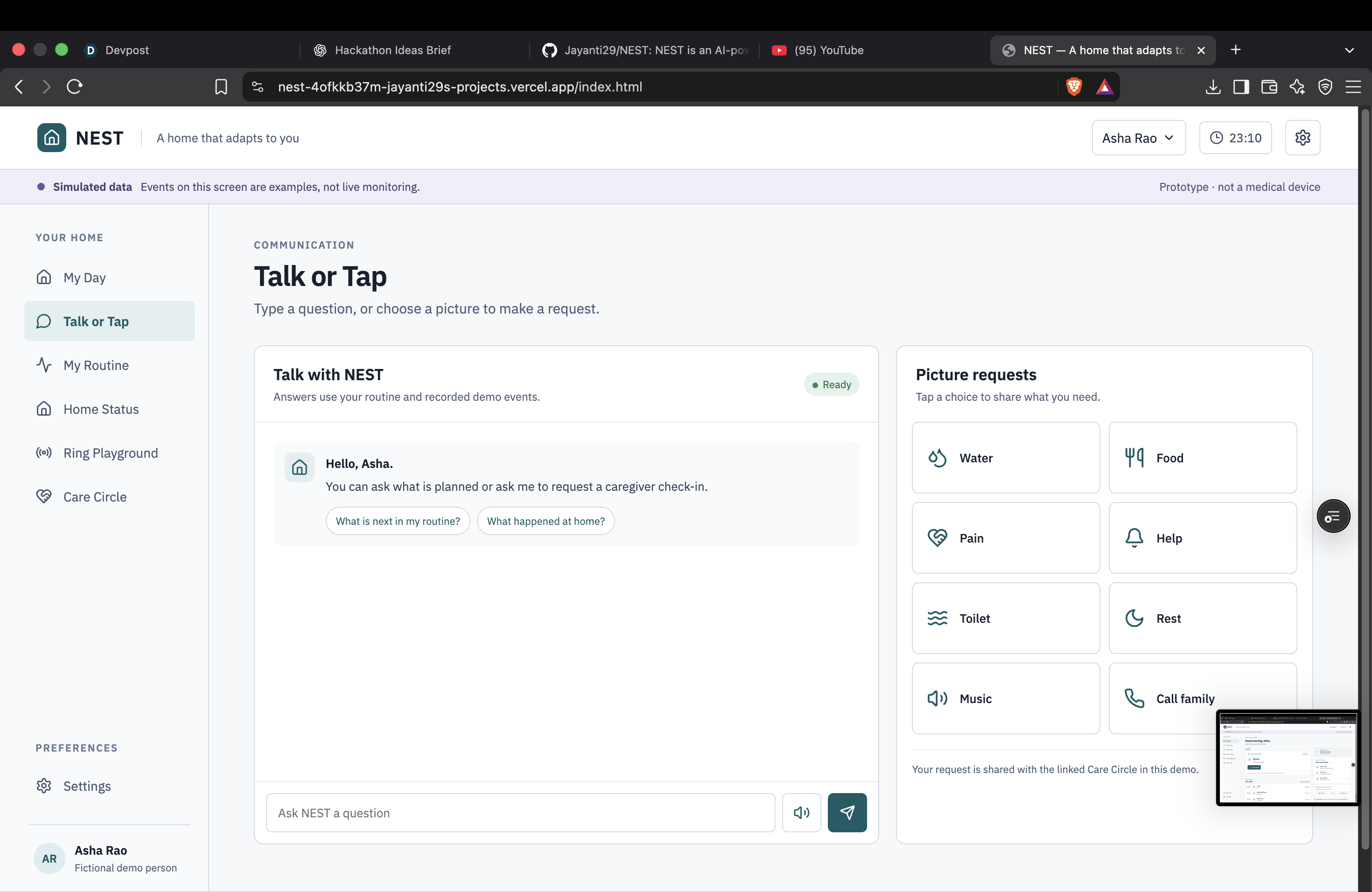
Talk or Tap makes communication easier with text and picture-based requests for everyday needs.
-
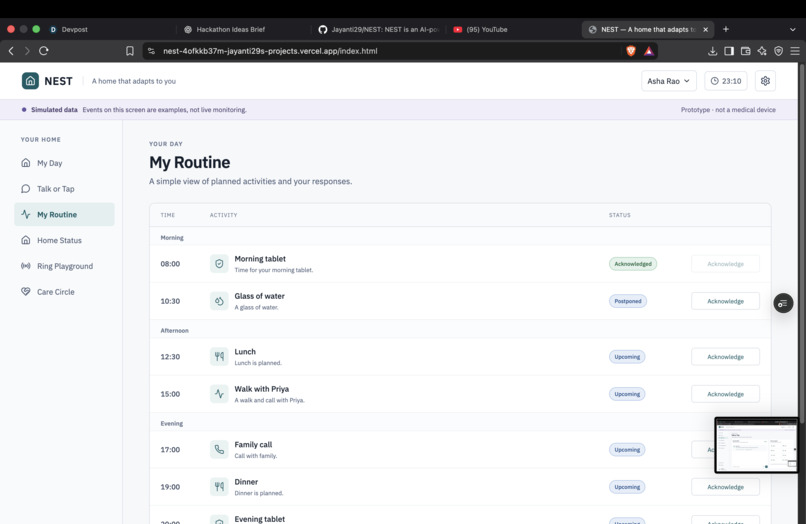
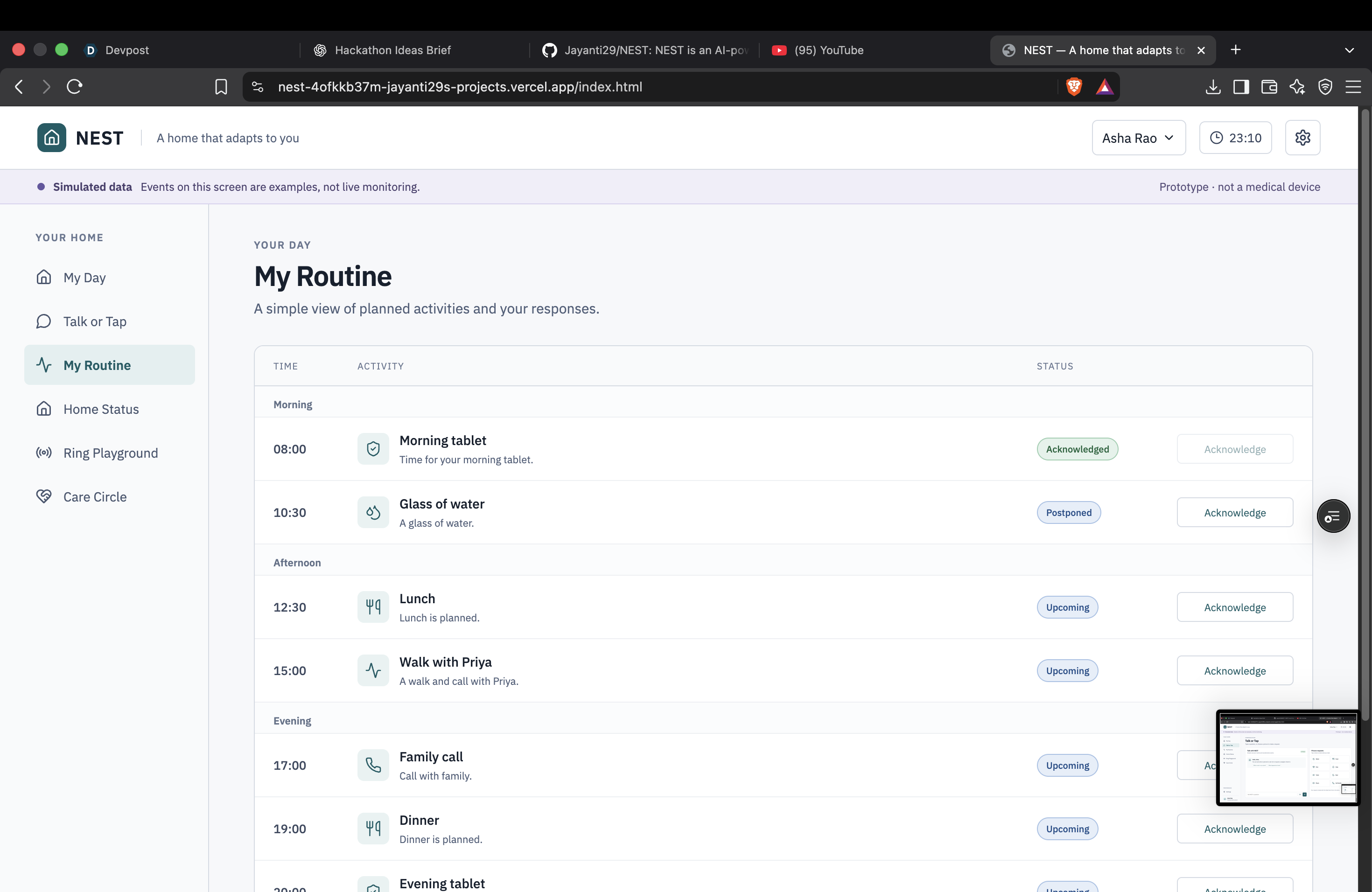
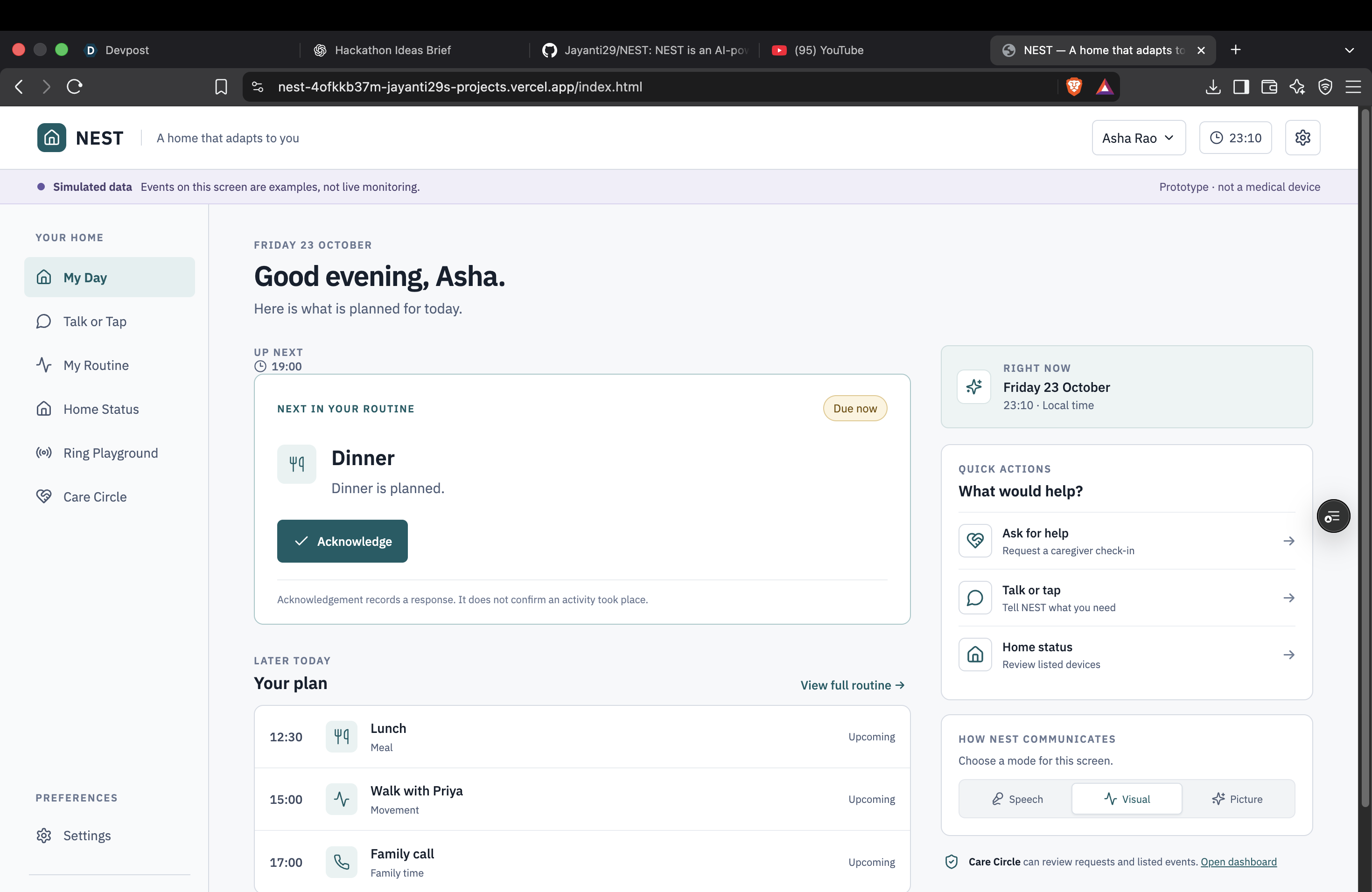
My Routine provides a clear daily schedule with planned activities, reminders, and simple acknowledgement options.
-
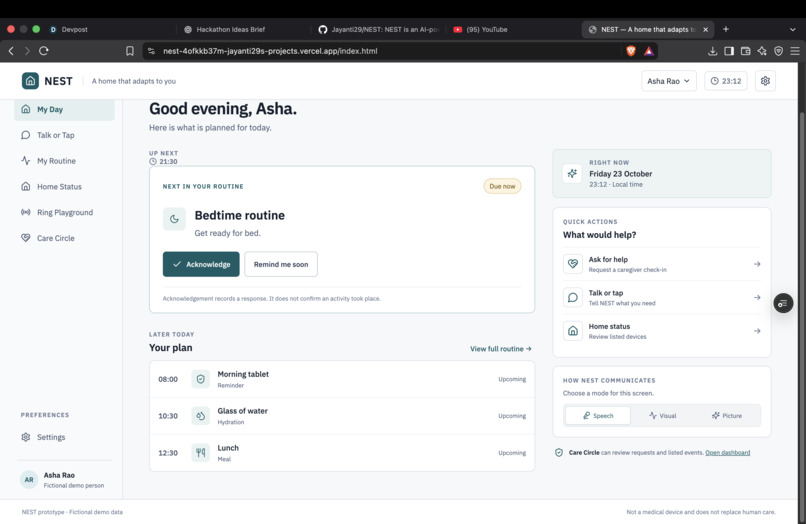
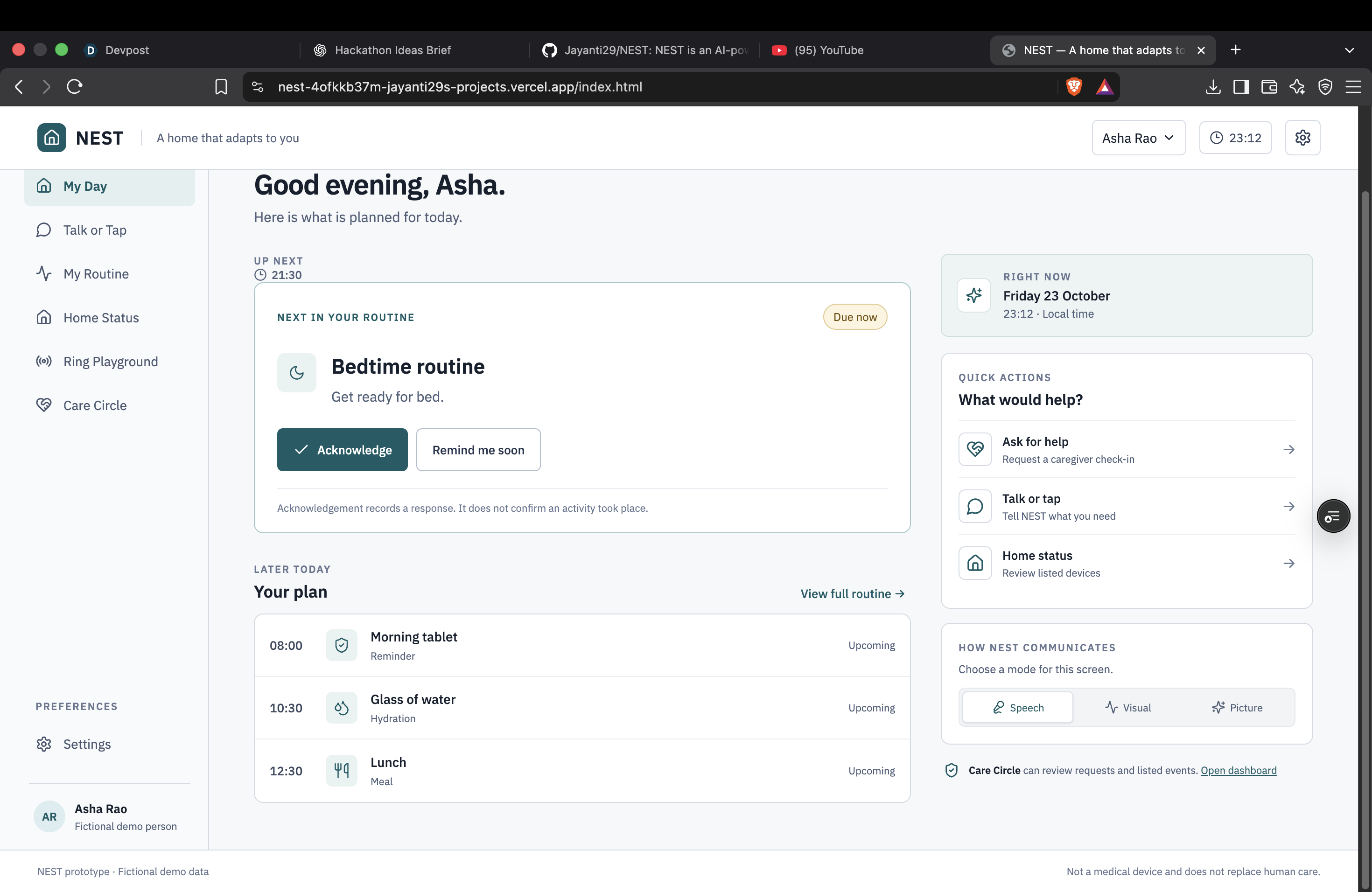
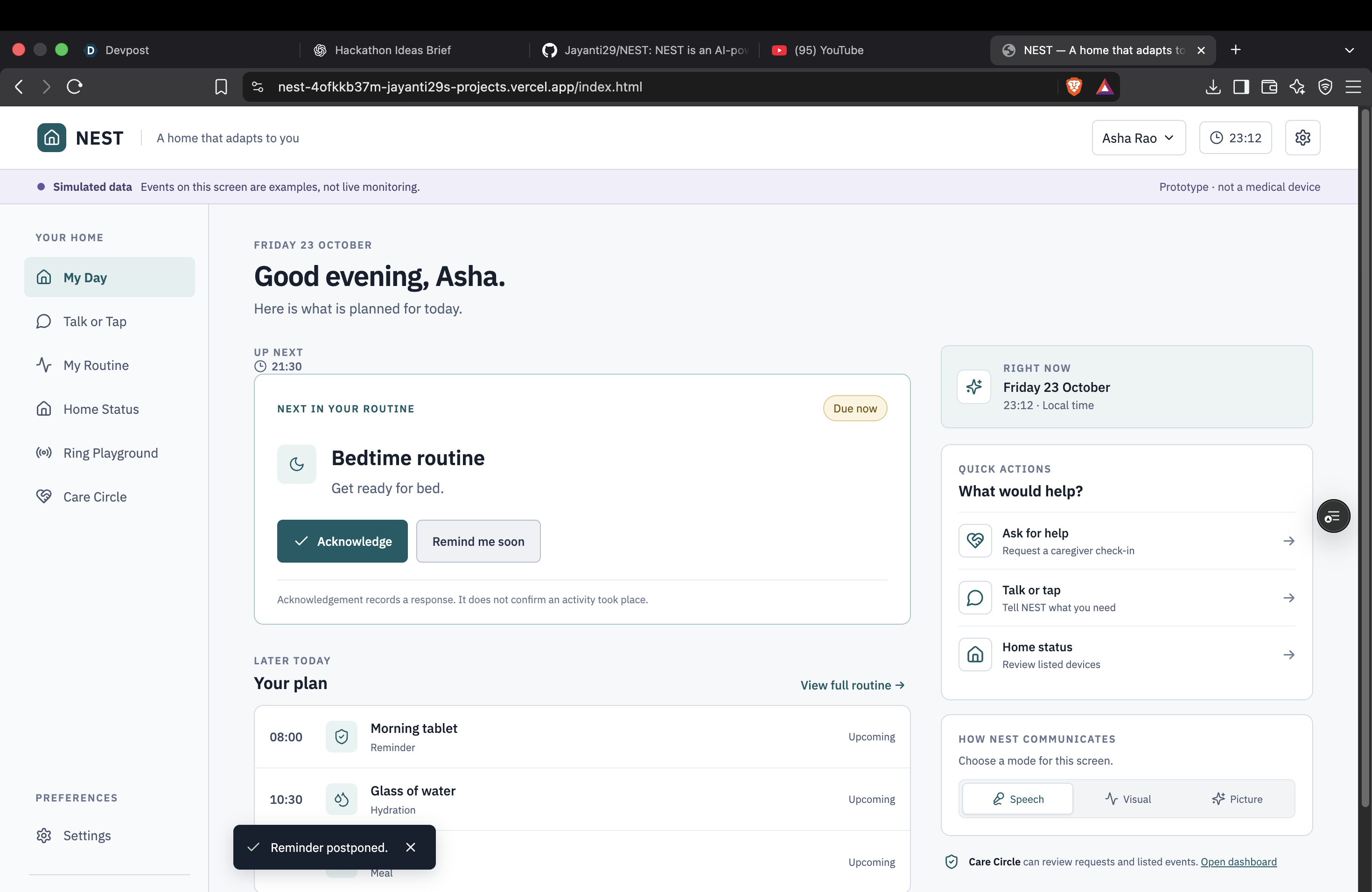
NEST supports evening routines with clear bedtime reminders and flexible acknowledgement options.
-
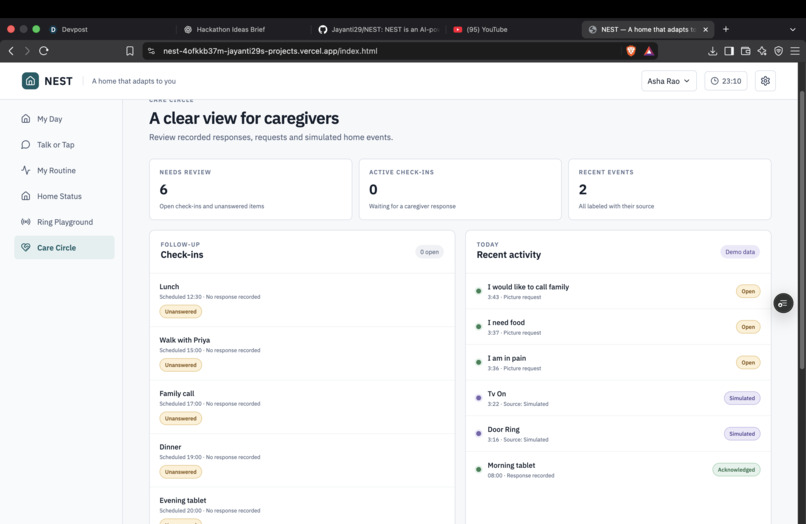
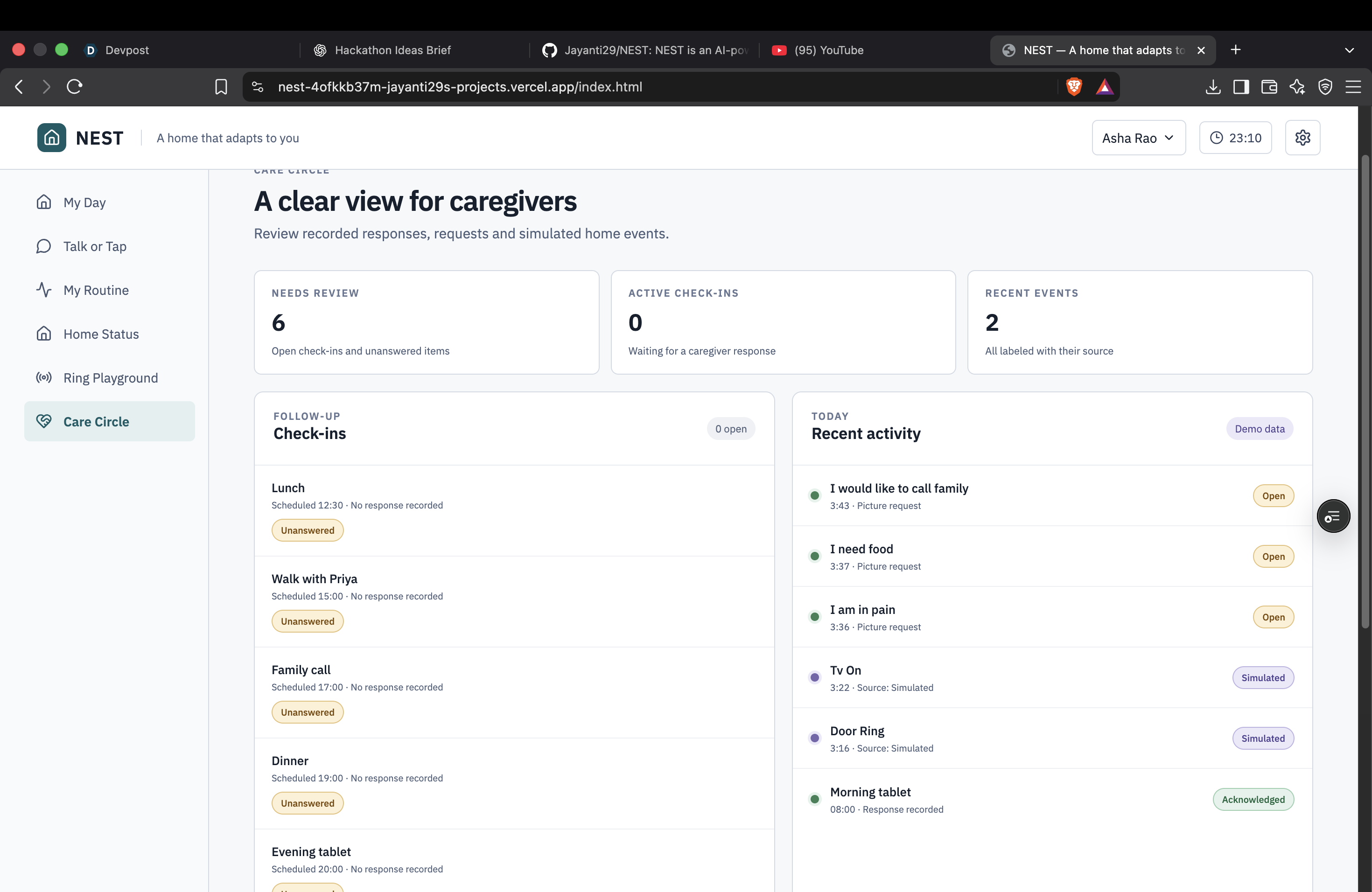
Care Circle helps caregivers review requests, recorded responses, and activities awaiting a response.
-
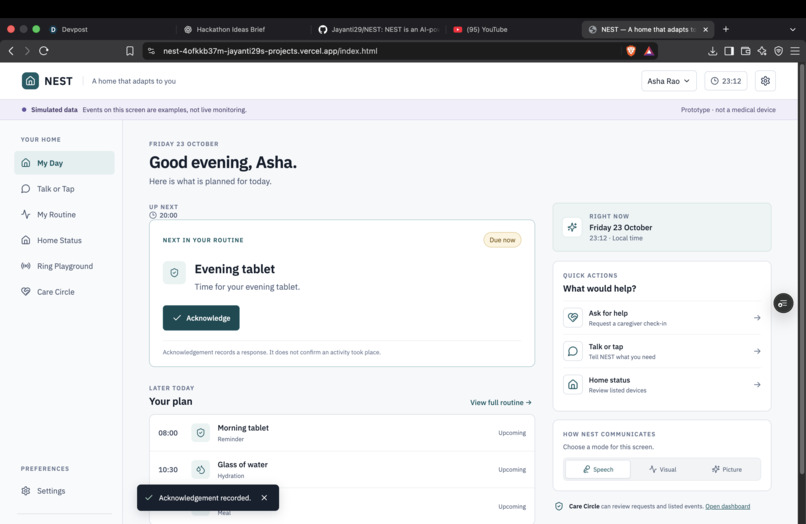
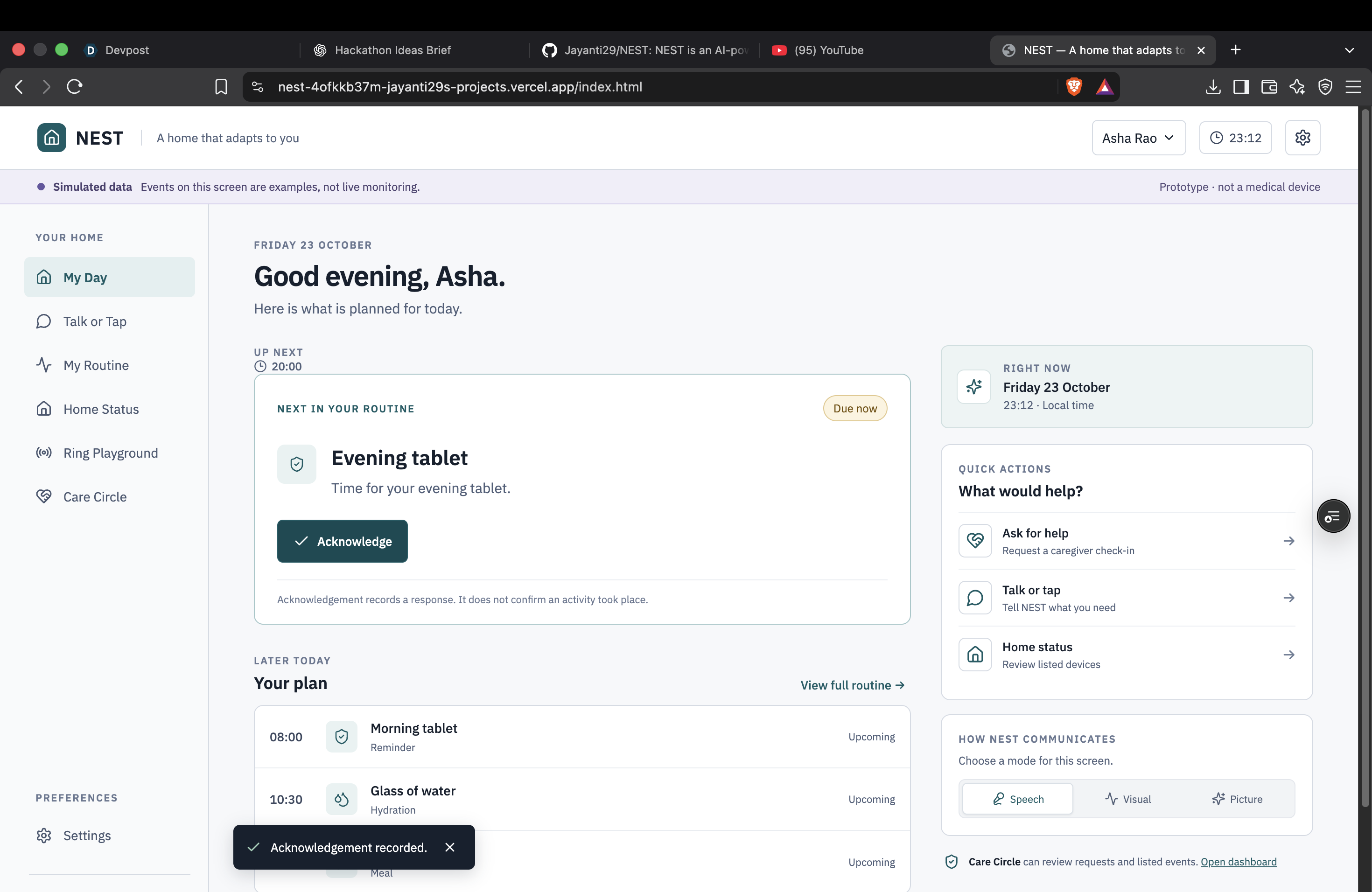
Gentle reminders help users stay aware of upcoming activities and manage their daily routines.
-
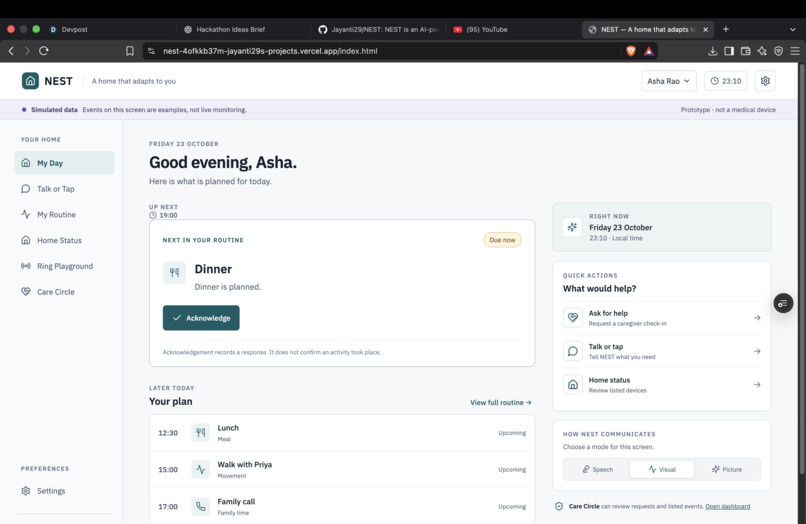
NEST’s dashboard brings daily routines, gentle reminders, and quick-help options together in one accessible home companion.
-
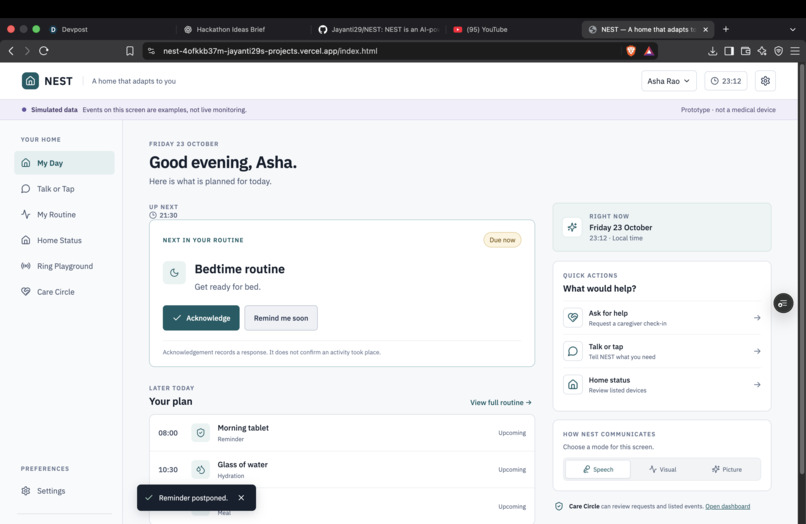
Simple one-tap acknowledgements record responses without assuming an activity was completed.
-
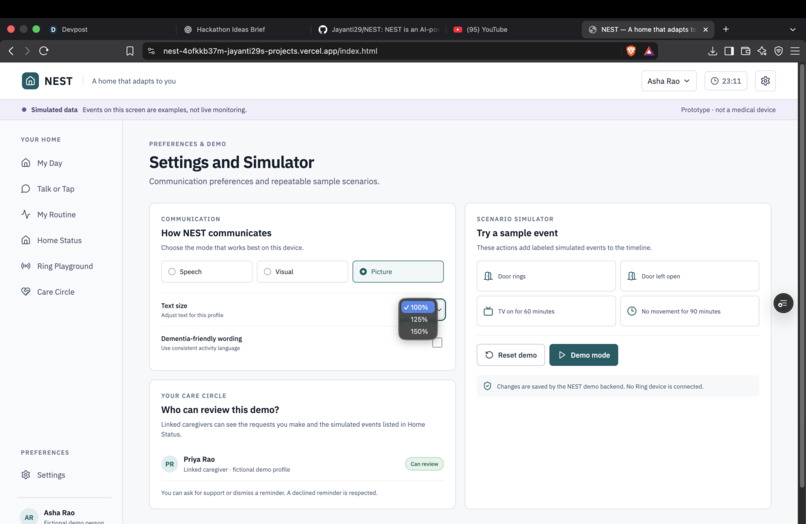
Accessible settings let users adjust text size and communication preferences to suit their needs.
NEST :— AI-Powered Assistive Living
Inspiration
Care for our loved ones should not depend on constant phone calls, physical presence, or remembering to check in. Families often worry about older adults living independently, while caregivers struggle to stay informed about daily activities and potential concerns.
NEST was created around a simple idea: technology should bring people closer, not replace human care. We wanted to build a solution that helps people maintain their independence while giving their families greater visibility, reassurance, and peace of mind.
What it does
NEST is an assistive-living companion designed to connect individuals, families, caregivers, and compatible smart-home technology in one place.
Key capabilities include:
- Activity Monitoring: Organizes daily activities and helps families understand what has been recorded and what still needs attention.
- Real-Time Alerts: Supports timely notifications when configured events or conditions require attention.
- Care Circle Insights: Helps caregivers understand activity updates and responses without confusing missing information with confirmed outcomes.
- People and Care Management: Keeps relevant people and activity information organized in a central interface.
- Smart-Home Integration: Designed to connect with supported Ring capabilities, subject to the permissions and configuration available to the application.
- Privacy-Conscious Design: Emphasizes secure access, protected data, and responsible handling of personal information.
NEST aims to make care more coordinated and less stressful while respecting the independence and dignity of the people receiving it.
How we built it
NEST is built using a web-based architecture with a React and Vite frontend and a Node.js and Express backend. Its data layer supports SQLite for local development and PostgreSQL through Neon for deployed environments. Vercel is used for deployment and Preview testing.
The architecture separates the user interface, backend API, and persistence layer so that features can be tested independently and external integrations can be added securely.
For Ring integration, our approach is to follow the application's supported authorization flow, keep credentials and tokens on the server, validate incoming requests, and handle connection status and failures explicitly. External integration behavior must be verified against the real provider rather than inferred from a simulated response.
Challenges we faced
One of the main challenges is making an assistive-living system trustworthy. A missing activity response does not necessarily mean an activity was missed, and an alert should not claim that something happened without evidence.
Another challenge is integrating external smart-home services securely. Account linking, token lifecycle management, callback accessibility, provider permissions, and deployment configuration all need to work together. We also need to ensure that local development and deployed database environments behave consistently.
These challenges shaped our focus on accurate status reporting, secure backend operations, clear error states, and meaningful testing rather than simply building a visually appealing interface.
What we learned
Building NEST reinforced that assistive technology is as much about trust and communication as it is about software. Reliable data handling, transparent status messages, security, and graceful failure handling are essential when technology supports people's daily lives.
We also learned the importance of distinguishing implemented features from externally dependent capabilities, and of validating integrations through real end-to-end tests.
What's next
Our next steps are to complete and validate the supported Ring integration, strengthen end-to-end testing, improve caregiver notifications, and expand NEST's ability to provide useful, privacy-conscious insights.
NEST's vision is simple: support independence, strengthen connections, and help families care with greater confidence.
Built With
- amazon-ring
- assistive-technology
- cybersecurity
- express.js
- javascript
- neon
- node.js
- postgresql
- react
- rest-api
- smart-home
- sqlite
- typescript
- vercel
- vite
- web-development


Log in or sign up for Devpost to join the conversation.