Inspiration
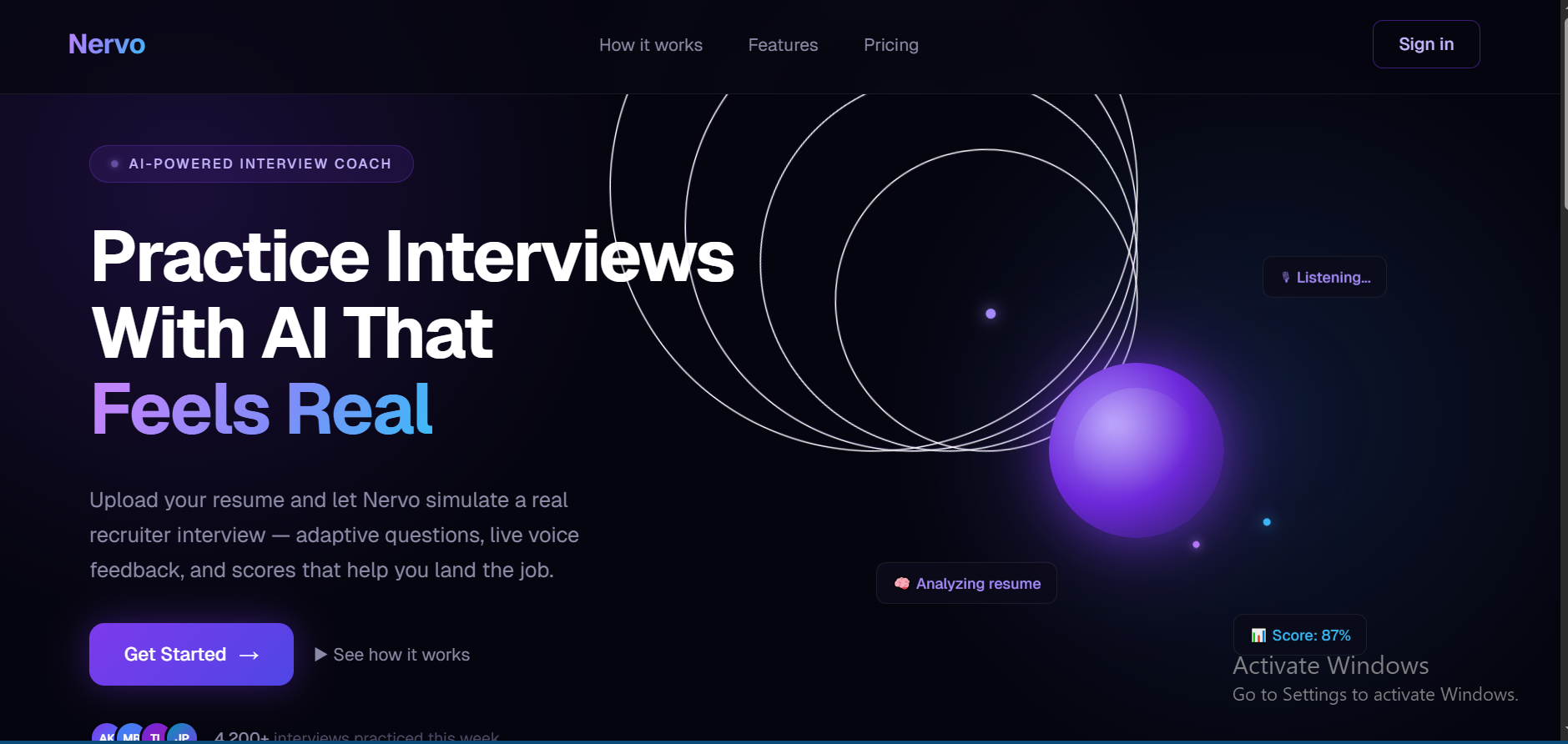
We noticed that many students and early-career developers struggle with interview preparation. Most tools focus on static questions, but real interviews are dynamic, conversational, and often stressful. We wanted to build something that feels like a real interviewer and helps users practice in a more realistic and interactive way. This inspired Navo AI.
What it does
Navo AI is an AI-powered interview practice assistant that simulates real interview sessions.
Users can:
- Enter a role (e.g., Frontend Developer, Data Analyst)
- Input their skills and experience
- Start a live AI interview session
- Receive role-based, dynamic questions
- Respond in real time like a conversation
- Get AI-generated feedback on their answers and performance
It mimics a real interview environment to help users improve confidence, communication, and technical readiness.
How we built it
We built Navo AI as a conversational AI system using modern web technologies and AI integration.
The core system includes:
- A frontend interface for role input and interview session
- A conversational AI engine that acts as an interviewer
- Prompt engineering to generate role-specific questions
- A feedback system that evaluates responses and provides improvement suggestions
- Real-time chat-like interaction to simulate a live interview experience
The design focuses on making the experience feel like a real call/interview session.
Challenges we ran into
One of the biggest challenges was making the AI feel natural and realistic like a human interviewer rather than a chatbot. We also worked on structuring dynamic question flow based on roles and experience levels. Ensuring smooth real-time conversation without breaking context was another key challenge.
Accomplishments that we're proud of
We are proud of building an AI system that can simulate real interview conversations in a structured and interactive way. Creating a role-aware interview flow and feedback system that adapts to user responses is a major achievement.
What we learned
We learned how to design conversational AI systems, how to structure prompts for dynamic response generation, and how to simulate real-world scenarios using AI. We also improved our understanding of user experience design for real-time interactive systems.
What's next for Nervo
Next, we plan to add:
- Resume upload and analysis for personalized interviews
- Voice-based AI interviews for more realism
- Performance scoring and progress tracking
- Company-specific interview modes (e.g., Google, startups)
- AI-driven improvement roadmap for users
Built With
- firebase
- gemini
- github
- nextjs
- tailwindcss
- typescript
- vercel


Log in or sign up for Devpost to join the conversation.