-
-
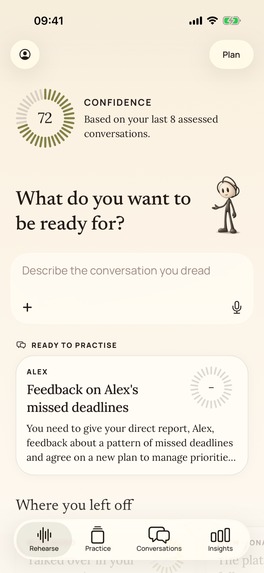
Main Screen
-
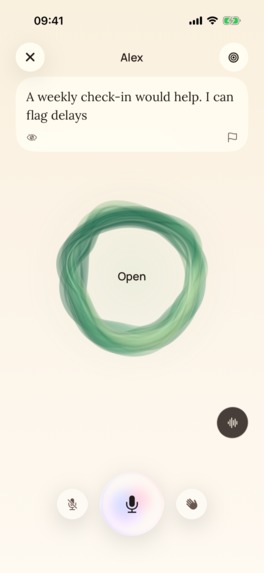
Live conversation
-
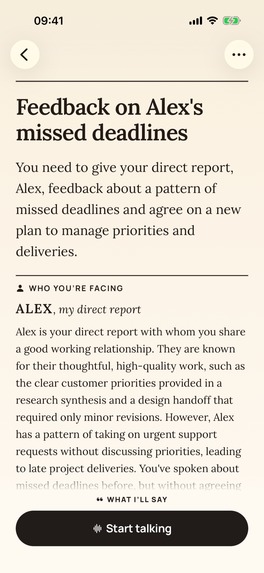
Scenario
-
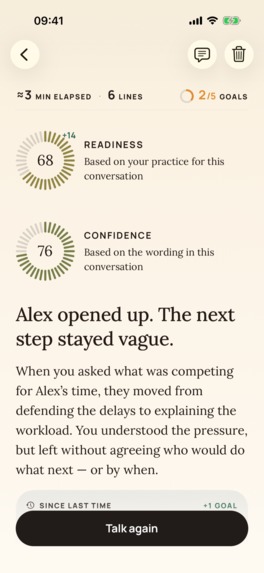
Feedback - 1
-
Feedback - 2
-
Scenario
-
Scenarios
-

App Icon

Inspiration
Becoming a manager brings a new challenge: difficult conversations. They’re often uncomfortable, but leadership depends on how you communicate with your team. I wanted to create a safe space where people could practise any conversation, get feedback, and understand what they might be missing. A place to explore different approaches and find their own way to communicate — one that feels natural and helps build stronger relationships.
What it does
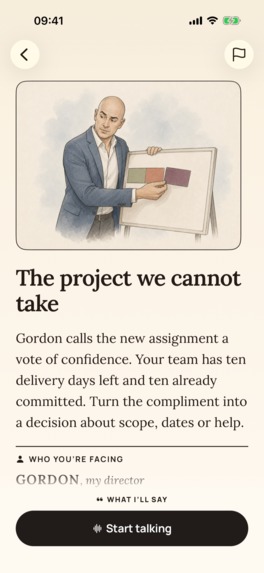
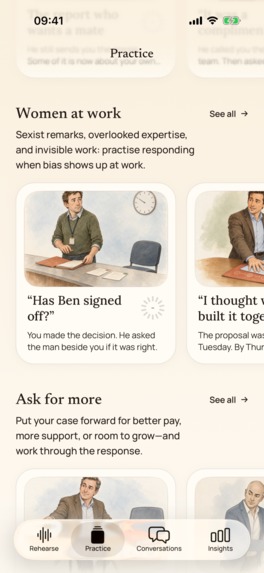
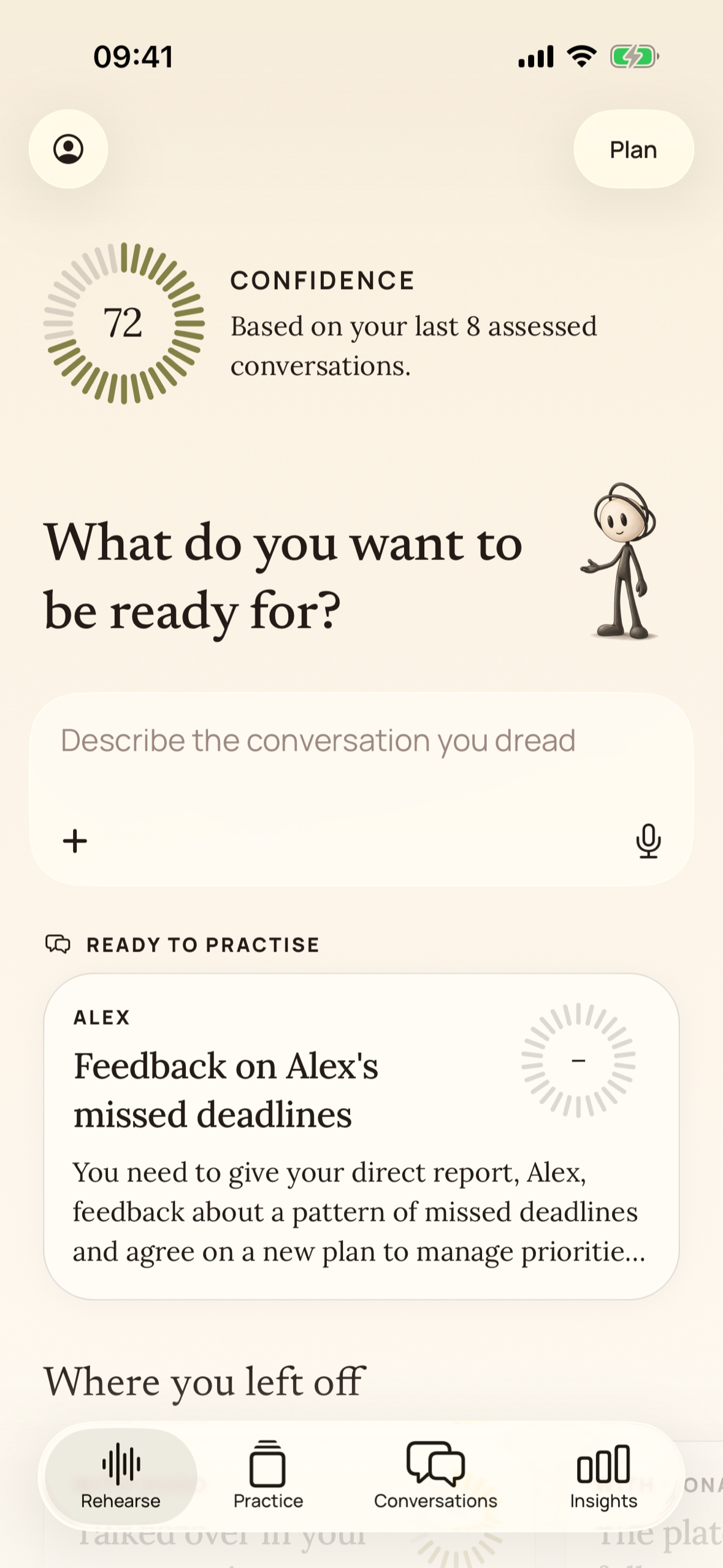
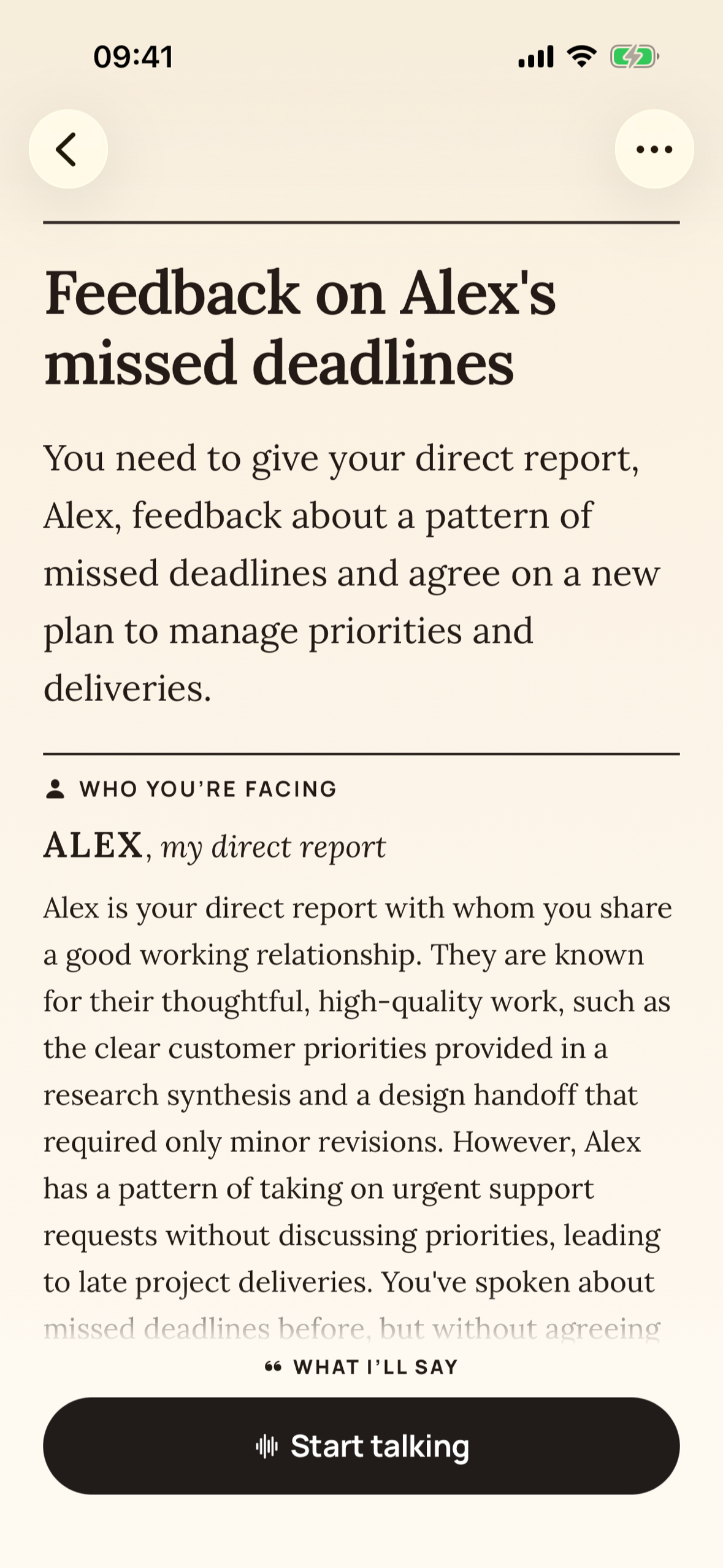
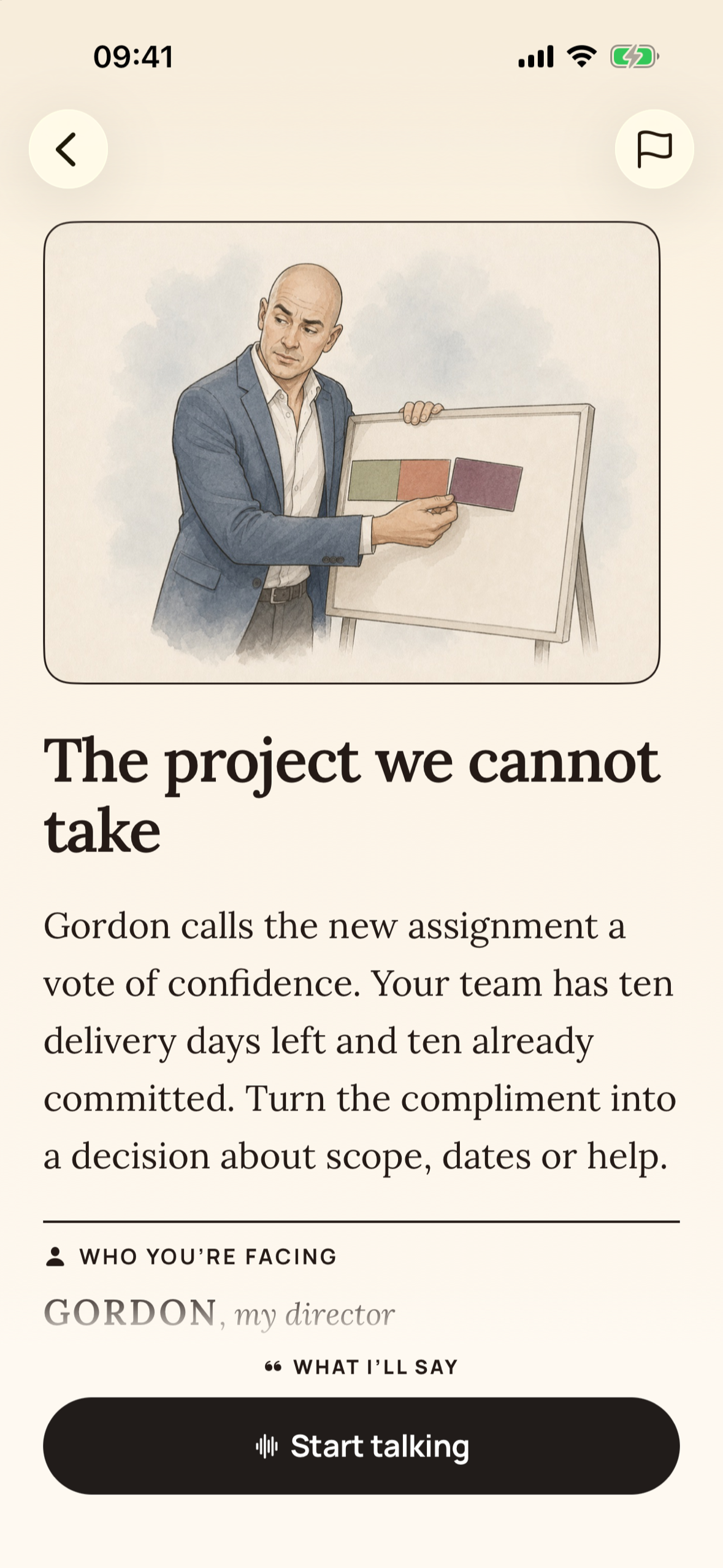
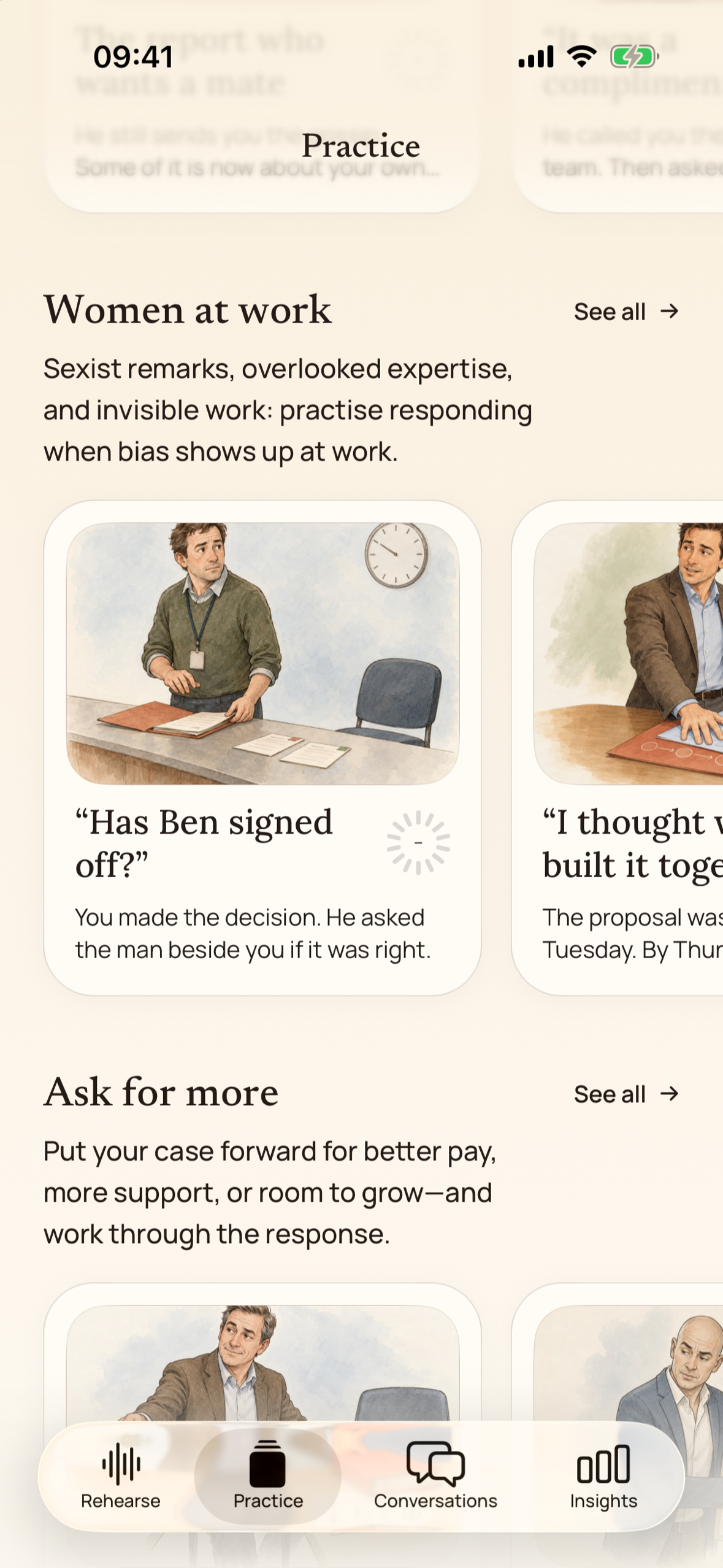
- Creates your practice scenario. Nerve chats with you and adapts its questions to build a scenario around your situation. You can add reports, presentations, or other files for extra context.
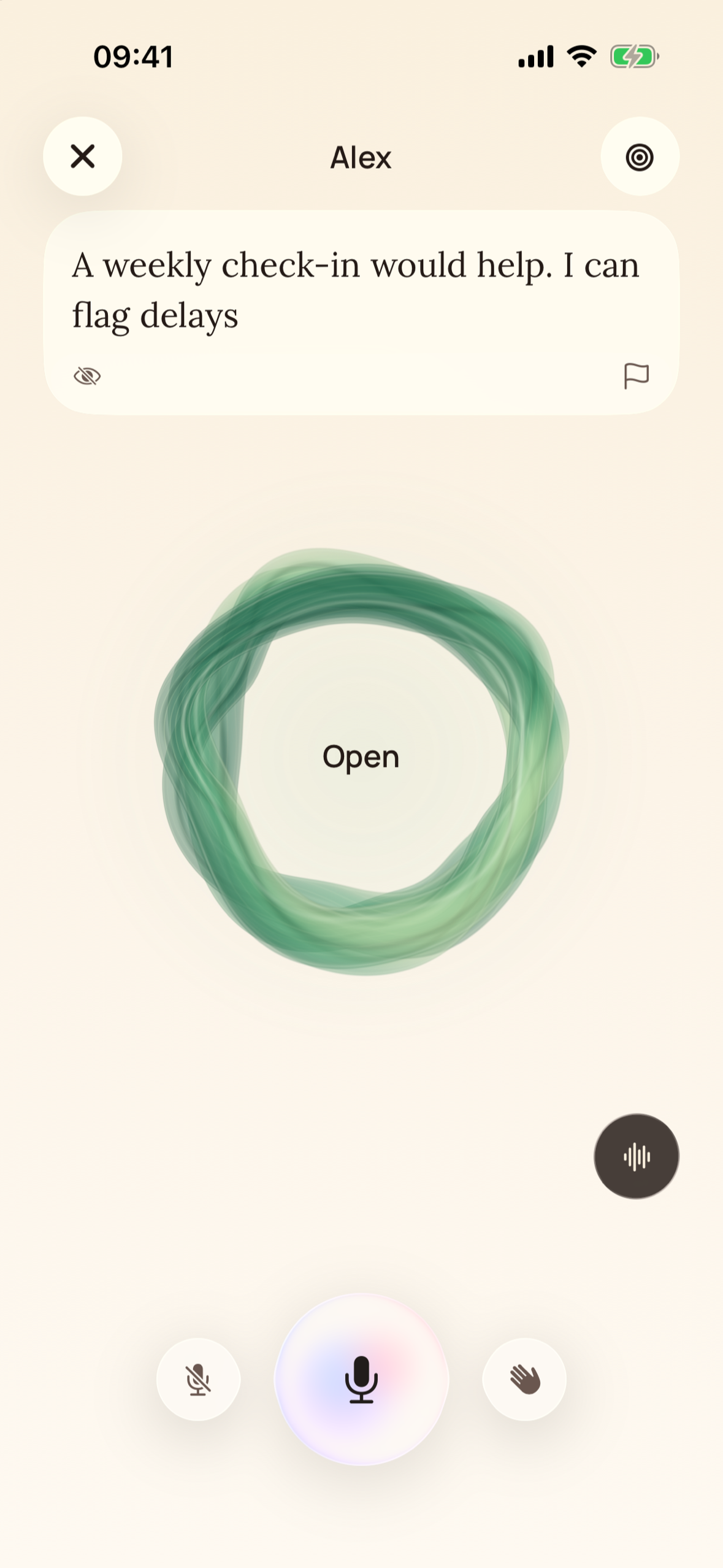
- Simulates a live conversation. Nerve creates an AI counterpart with a personality and voice shaped by what you described in chat. As you practise out loud, an animated ring shows their changing mood across six emotional states.
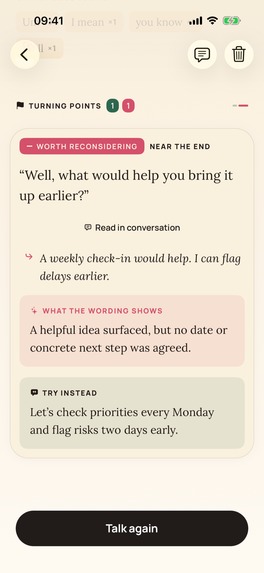
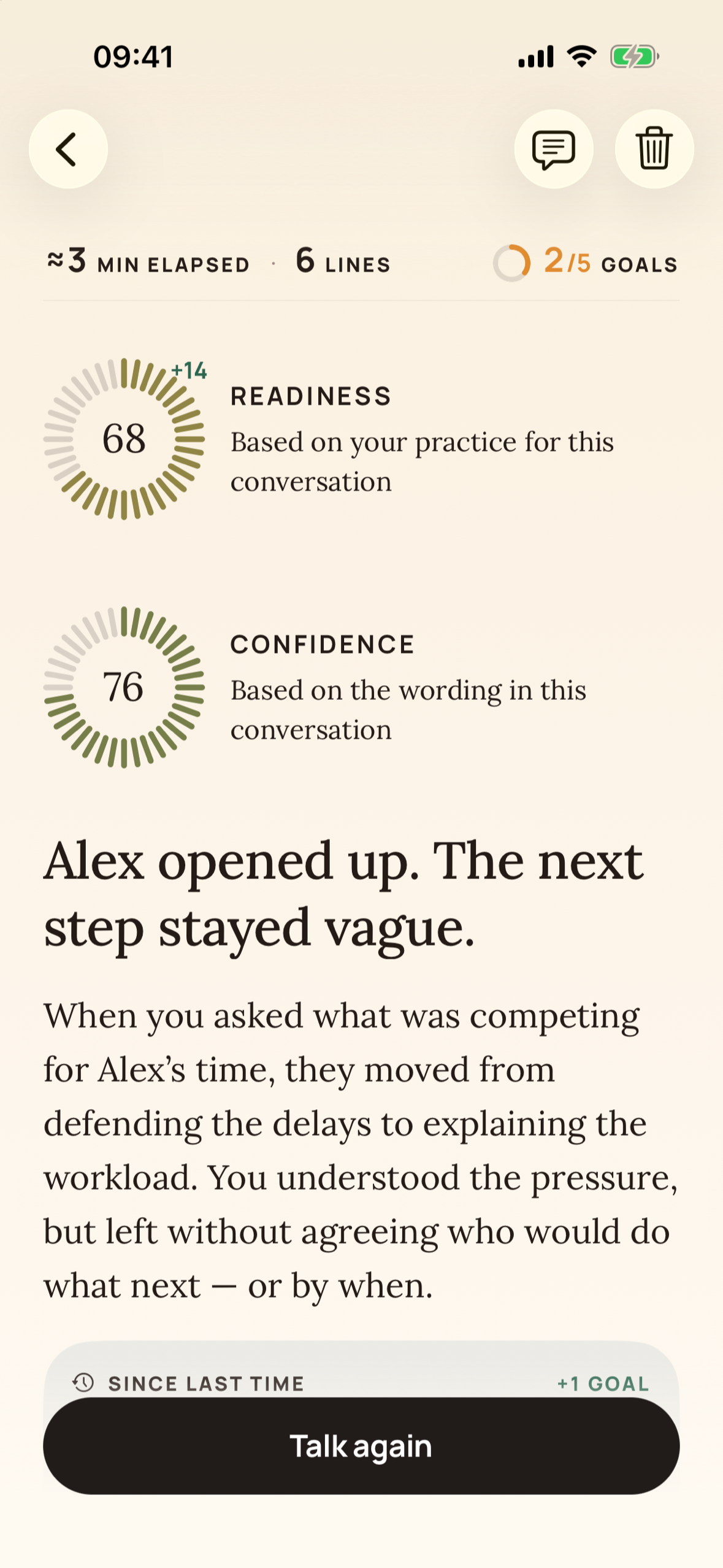
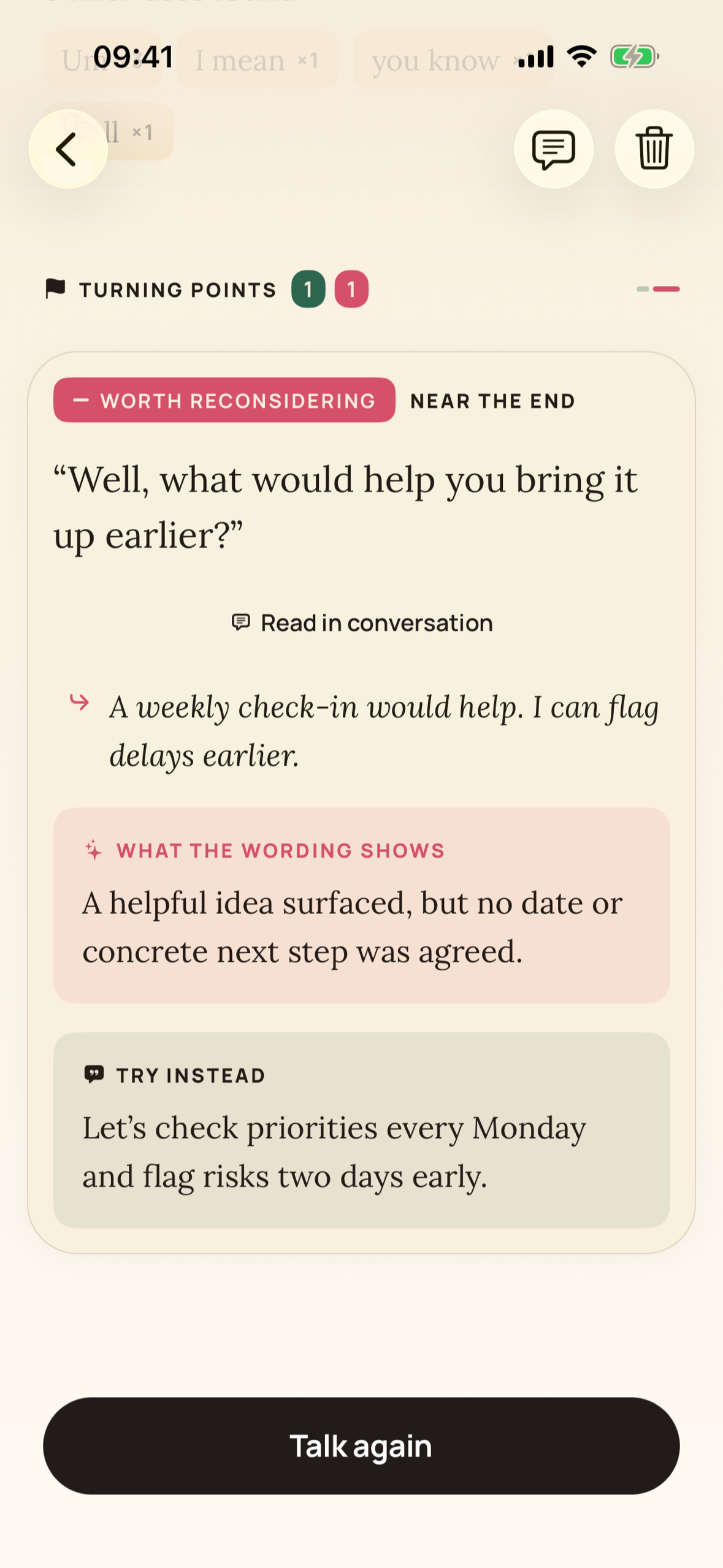
- Gives you feedback. Nerve highlights key moments, progress towards your goals, and suggestions for next time. Readiness takes previous attempts into account, while Confidence reflects how confident your wording sounded in this conversation.
- Shows the bigger picture. Every ten conversations, Insights brings observations together to help you recognise recurring communication habits.
How you built it
Research and prototyping. I studied conversation practice apps, including language-learning tools, to understand their strengths, limitations, and where users felt frustrated or unsupported. This research helped me explore what people needed from practice and shaped the early prototypes.
Making each scenario personal. I built the experience around an adaptive chat that explores the user’s situation: who they need to speak to, what makes the conversation difficult, and what they want to achieve. These details shape both the scenario and the person they practise with. Users can go deeper and add supporting files to make the conversation more realistic. During early testing, people told me that answering the questions already helped them understand how to approach their real conversation—before practice even began.
Building a believable live conversation. I focused on giving each AI counterpart a consistent personality, perspective, and voice shaped by the scenario. Their responses and tone change as the conversation unfolds: they can push back, become guarded, or gradually open up. An animated ring makes these emotional shifts visible during practice.
Making feedback useful. I gathered research and guidance from experienced speakers and leadership mentors to build a knowledge base for feedback. Nerve connects this guidance to the user’s situation and specific moments in the conversation, helping explain what worked, what held the conversation back, and what they could approach differently next time.
Building the app. I built the iOS app with React Native and Expo, using Supabase for the backend, Gemini for scenario creation, live voice conversations, and feedback, and RevenueCat for subscriptions. The central challenge was connecting these parts into one experience where the user’s context carries through from the first chat to the feedback after practice.
Challenges I ran into
One of the biggest challenges was finding a way to convey the other person’s emotions—anger, calm, hurt, or defensiveness—through their voice and the animated ring.
Another was creating scenarios where the AI’s personality and behaviour genuinely reflected the user’s description, so each conversation felt personal.
I also had to think carefully about what readiness means and how to assess it across multiple attempts. I wanted practice to feel connected: users should be able to recognise what they’re improving, understand what still needs work, and see their growth over time.
Accomplishments that I'm proud of
I’m proud of making Nerve personal from the first question to the feedback after practice. The scenario, the person you speak to, and the advice you receive all connect to your real situation—not a made-up one. One of the most rewarding moments was hearing early testers say that the setup chat itself helped them understand their upcoming conversation more clearly. For me, that was a meaningful achievement: helping people find their own approach, even before they started practising out loud.
What I learned
I learned that there is no perfect script for a difficult conversation, and a good outcome doesn’t always mean the other person leaves happy. As a manager, you sometimes need to give uncomfortable feedback, say no, or set a boundary. These conversations can remain uncomfortable even when you handle them well. I tried to build that understanding into Nerve: the goal of practice is not to make the other person happy at any cost, but to learn to speak honestly and clearly about difficult things, listen to their perspective, and stay focused on the purpose of the conversation. You can’t fully control someone else’s reaction, but you can take responsibility for your words, the respect you show, and how you fulfil your role as a manager.
What's next for Nerve: Practice Hard Talks
I plan to learn from early users, refine conversation realism, and make practice feel as close to a real conversation as possible. I also want to add focused exercises for specific communication skills and explore features like voice-volume awareness and, where feasible, heart-rate feedback—all guided by what users actually need.
Built With
- expo.io
- gemini
- react-native
- revenuecat
- supabase


Log in or sign up for Devpost to join the conversation.