Inspiration
Cognitive decline, stress, and mental fatigue affect millions globally, yet most brain health apps lack scientific rigor and fail to offer personalized, actionable insights. Drawing on my original neuroscience research into sleep architecture, neurotransmitter dynamics, and emotional memory encoding, I envisioned NeuroX—a cutting-edge platform designed to transform cognitive wellness through evidence-based technology.
What it does
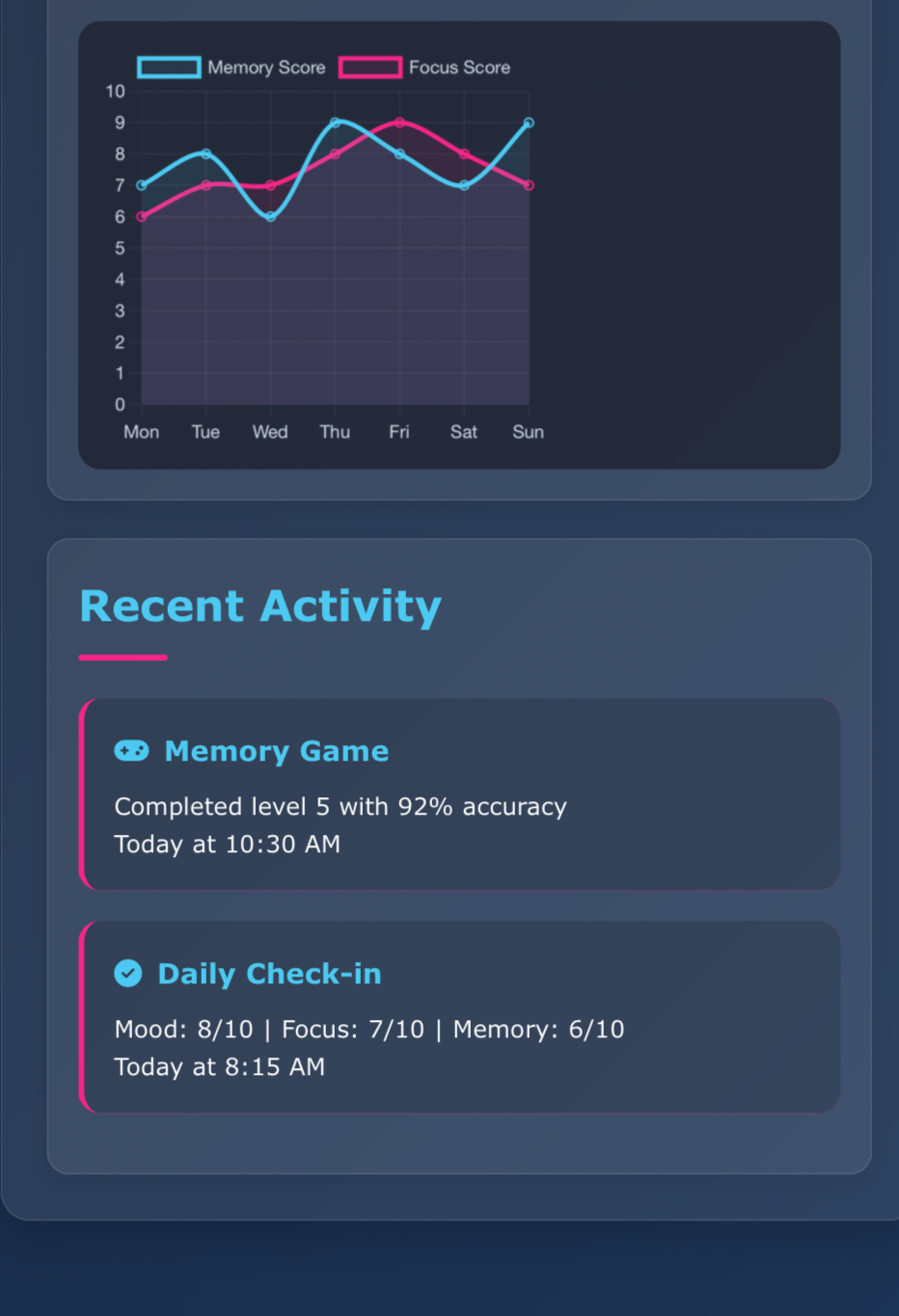
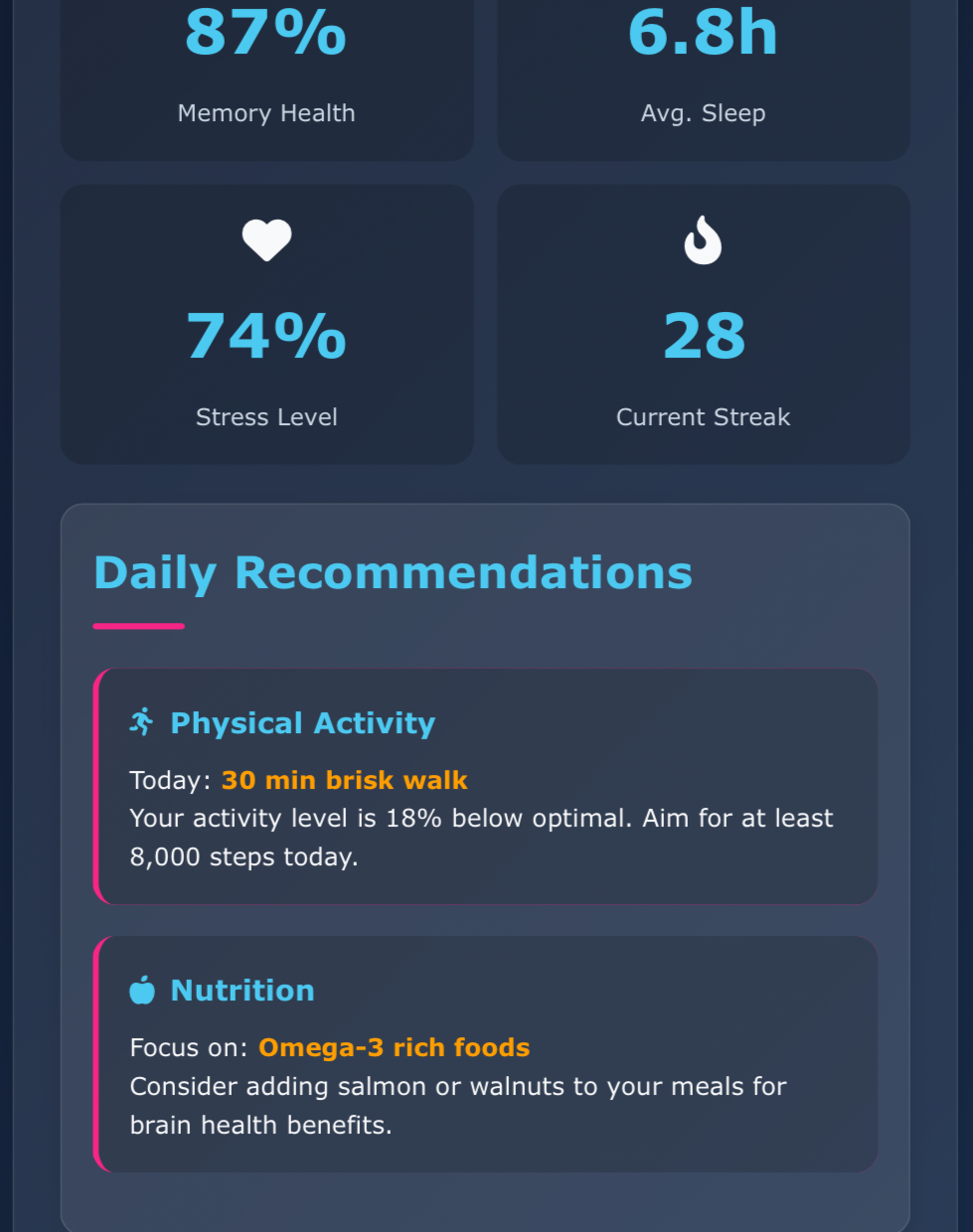
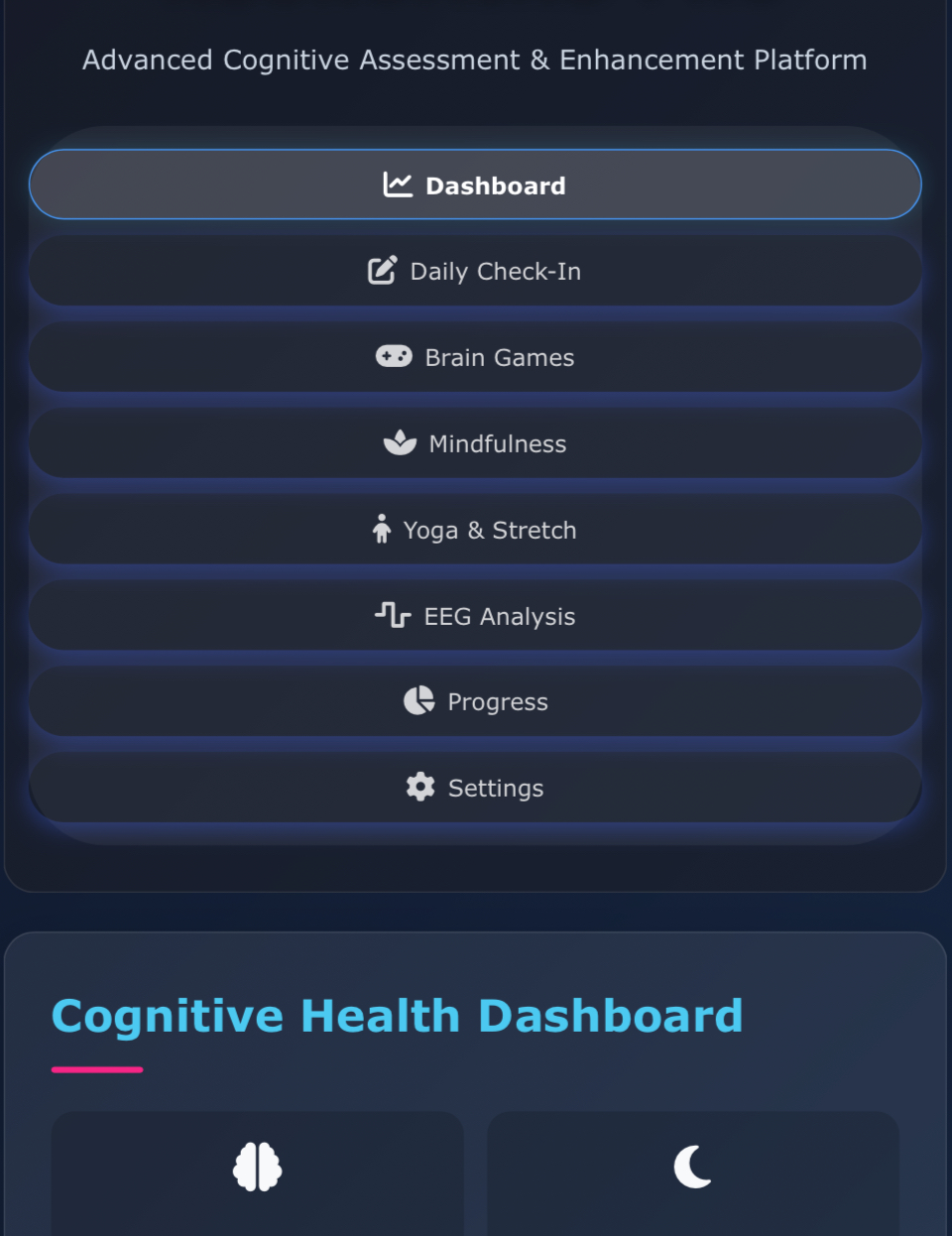
NeuroX delivers scientifically grounded cognitive assessments, including reaction time and memory tests, EEG-inspired brainwave visualizations, and guided meditation. It empowers users to monitor and enhance focus, memory retention, and mental resilience through intuitive progress tracking. Uniquely, NeuroX stores all data locally, guaranteeing privacy while maintaining high usability across devices and browsers.
How I built it
Built with React and JavaScript, NeuroX offers a seamless, responsive experience. Interactive data visualizations are powered by Chart.js, enabling users to understand cognitive trends at a glance. EEG wave simulations are generated using advanced algorithms derived from large EEG datasets. The app employs local storage APIs to securely handle user data without backend dependencies, prioritizing user privacy and performance.
Challenges I ran into
- Simulating accurate EEG brainwave patterns required intensive data analysis and novel visualization techniques to balance scientific validity with user engagement.
- Designing a privacy-first architecture that processes and stores all cognitive data client-side, defying conventional cloud-based paradigms.
- Translating complex neuroscience concepts into simple, actionable digital experiences accessible to a broad user base.
Accomplishments that I am proud of
- Successfully delivering a minimum viable product integrating neuroscience principles within a tight development timeframe.
- Creating compelling, user-friendly visual progress indicators that encourage sustained cognitive training.
- Architecting a fully client-side, privacy-centric application without sacrificing feature richness or UX quality.
What I learned
- Bridging advanced neuroscience with practical application demands rigorous research and innovative tech solutions.
- Privacy-centric design is critical and achievable in sensitive cognitive health apps.
- Interactive visualizations and efficient client-side data management enhance user engagement and trust.
What's next for NeuroX — AI-Driven Cognitive Health Platform
Future releases will incorporate AI-powered personalized cognitive coaching informed by live EEG integration. Additional features will include social engagement tools and expanded wellness content. NeuroX aims to become the premier ecosystem for global cognitive enhancement, empowering users to unlock their mental potential sustainably and securely.



Log in or sign up for Devpost to join the conversation.