-
-
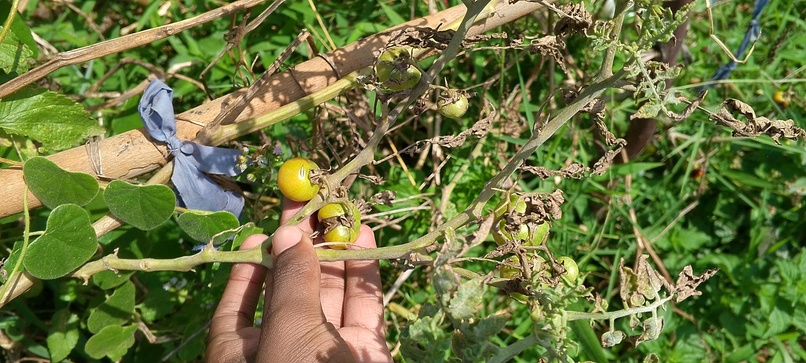
Unsuccessful Tomato Growth (Drought)
-
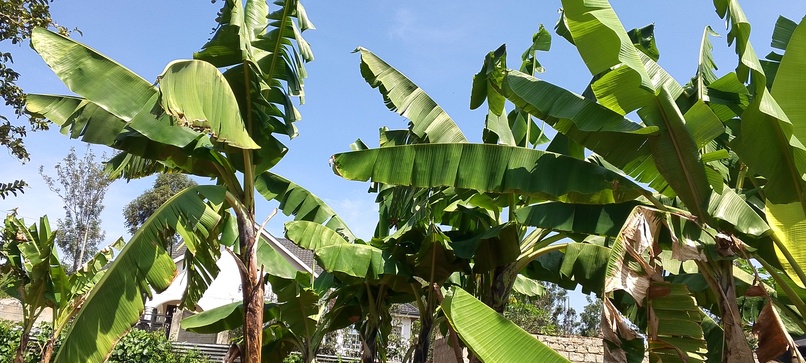
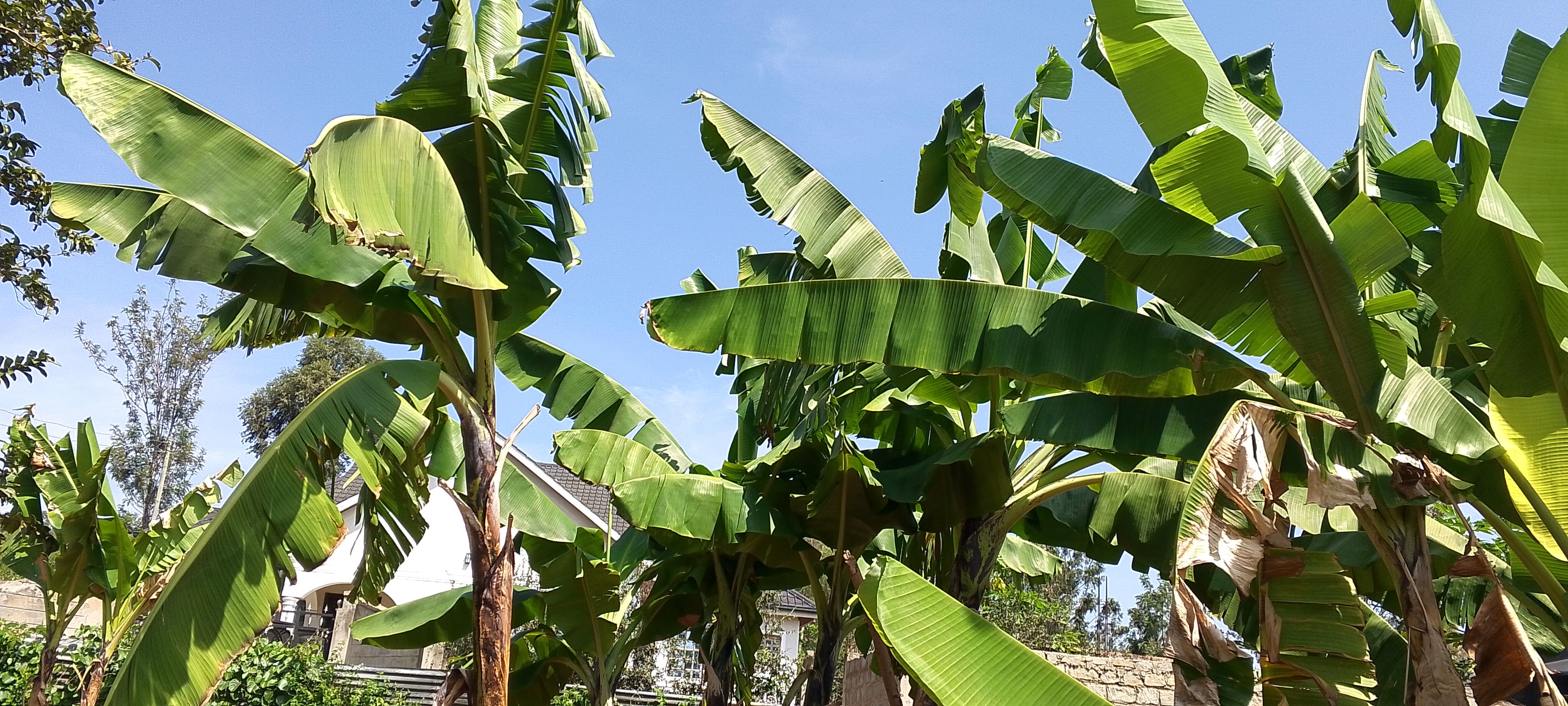
Banana Plantation
-
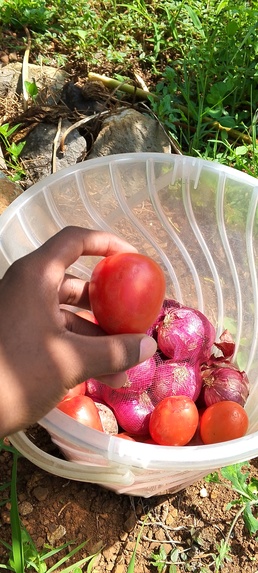
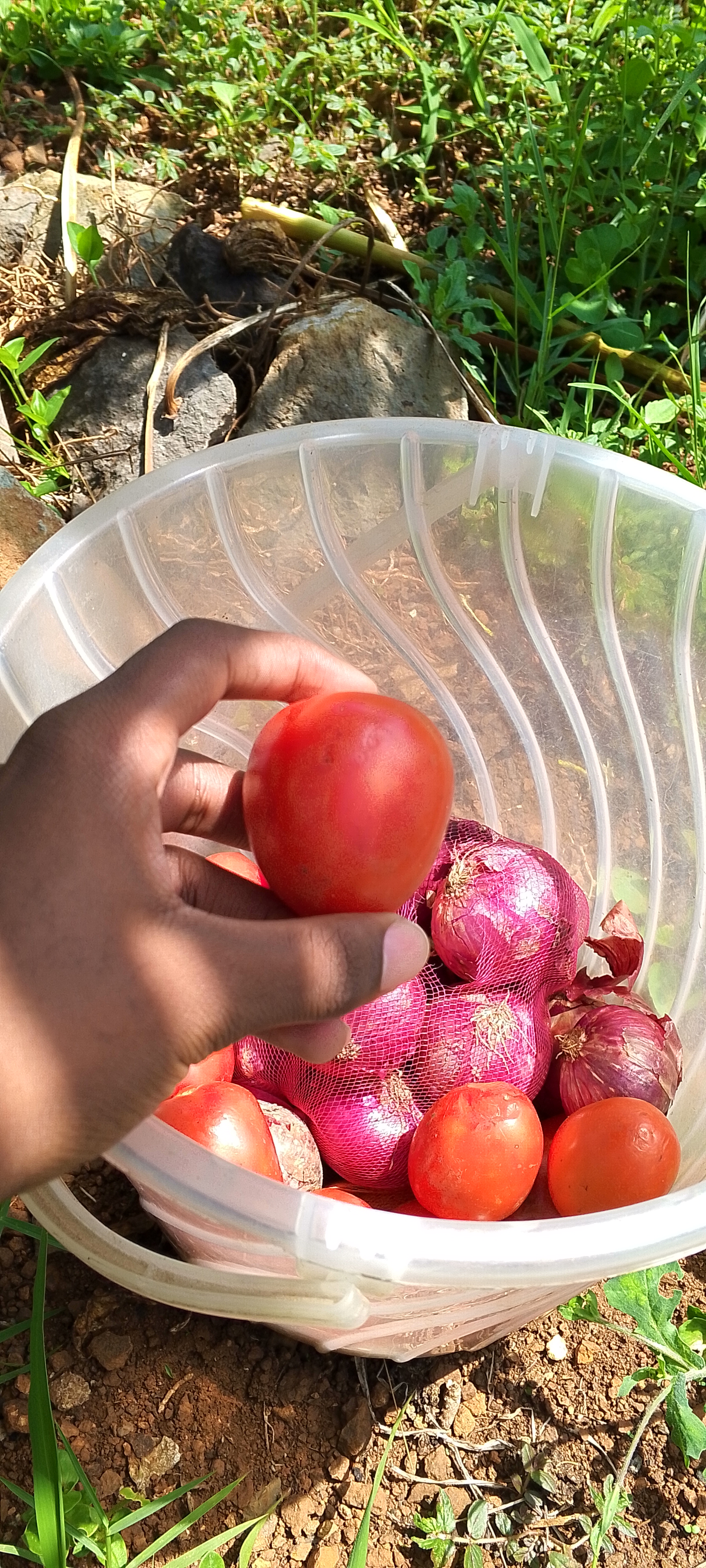
Harvested onions and Tomatoes in Basket
-
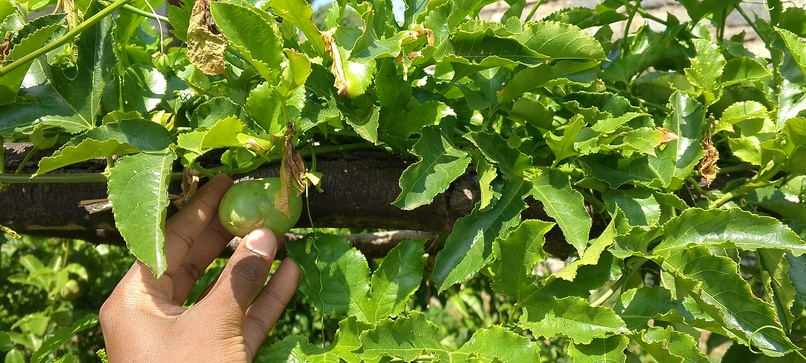
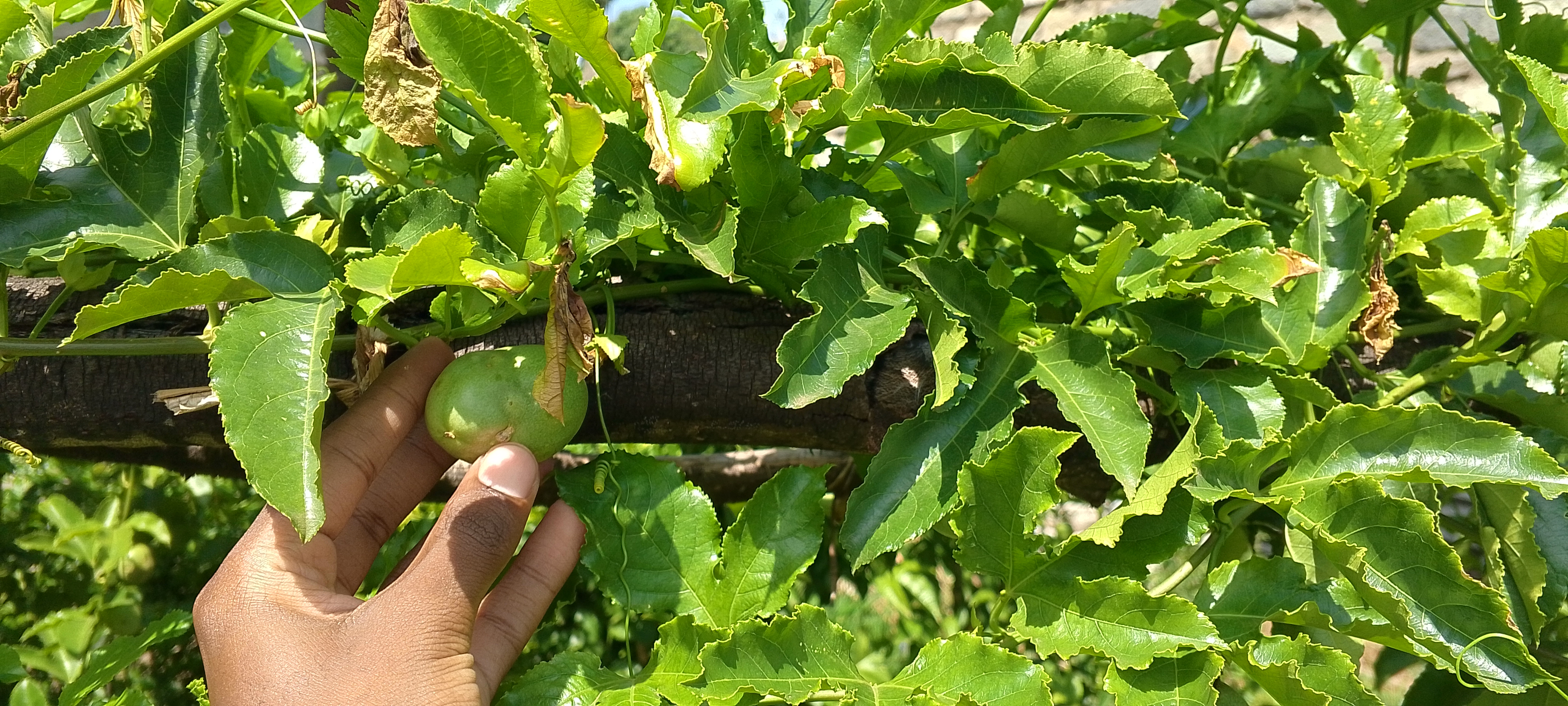
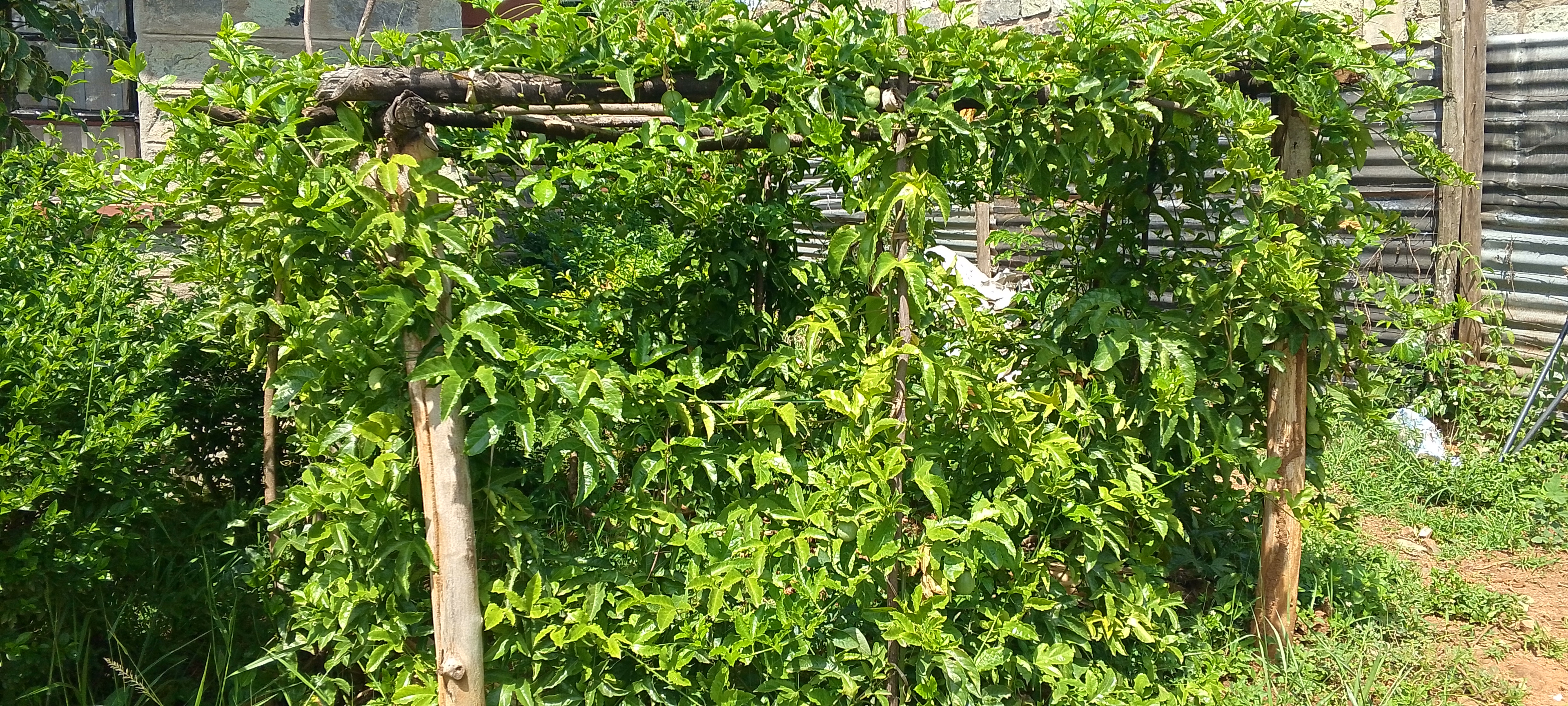
Passion View #1
-
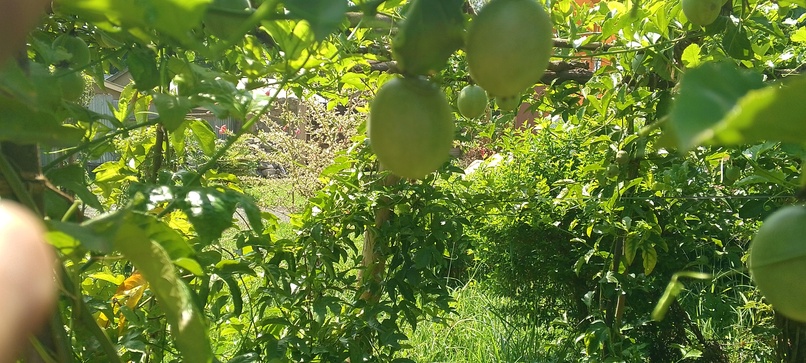
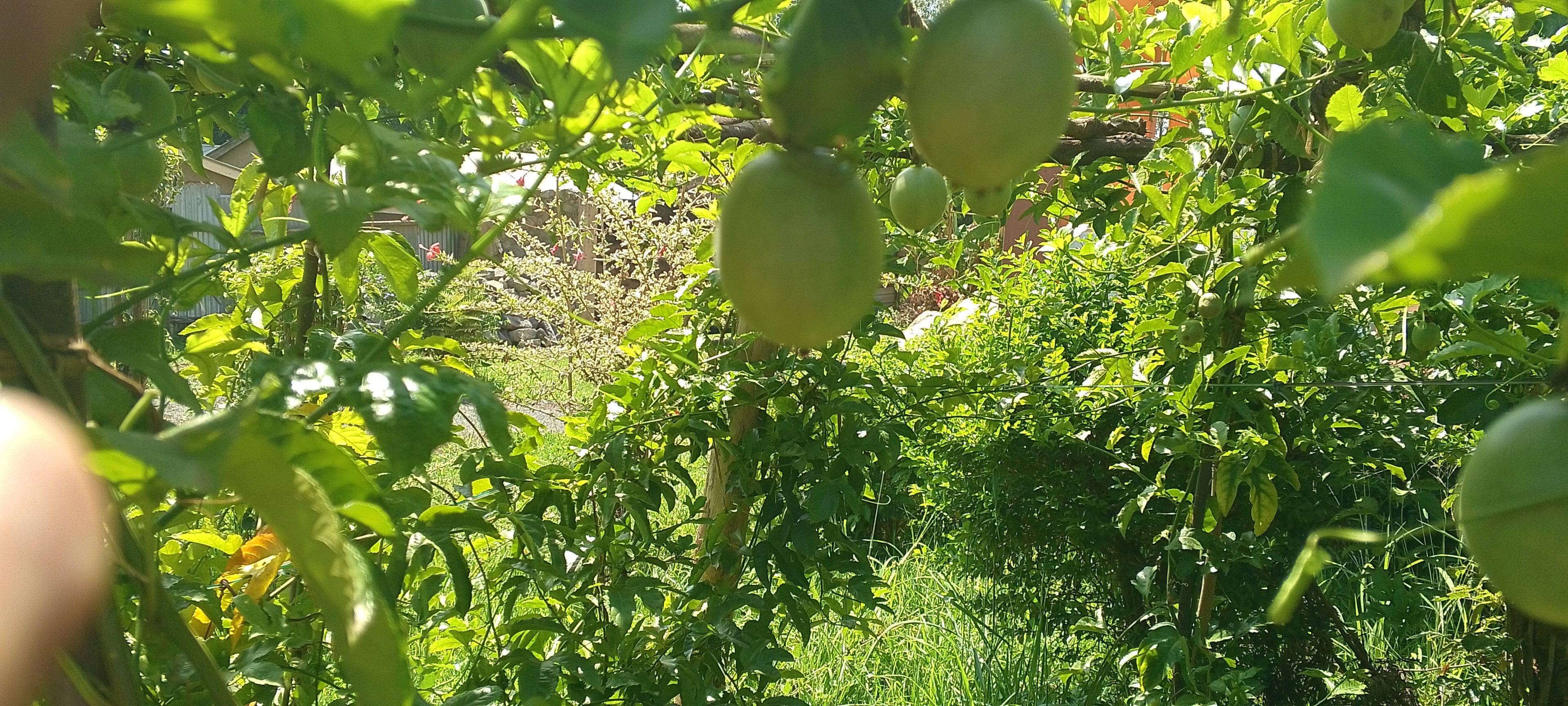
Passion View #2
-
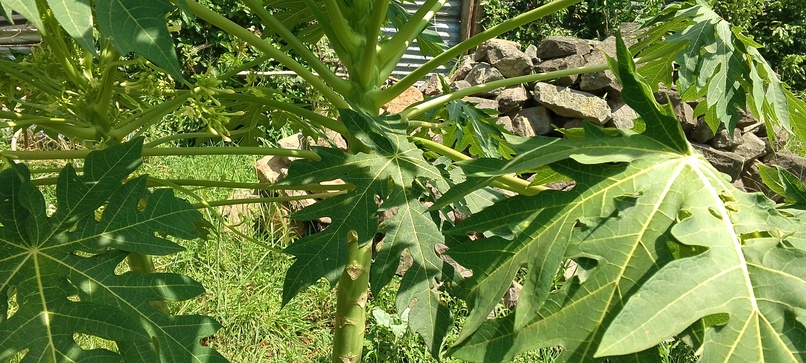
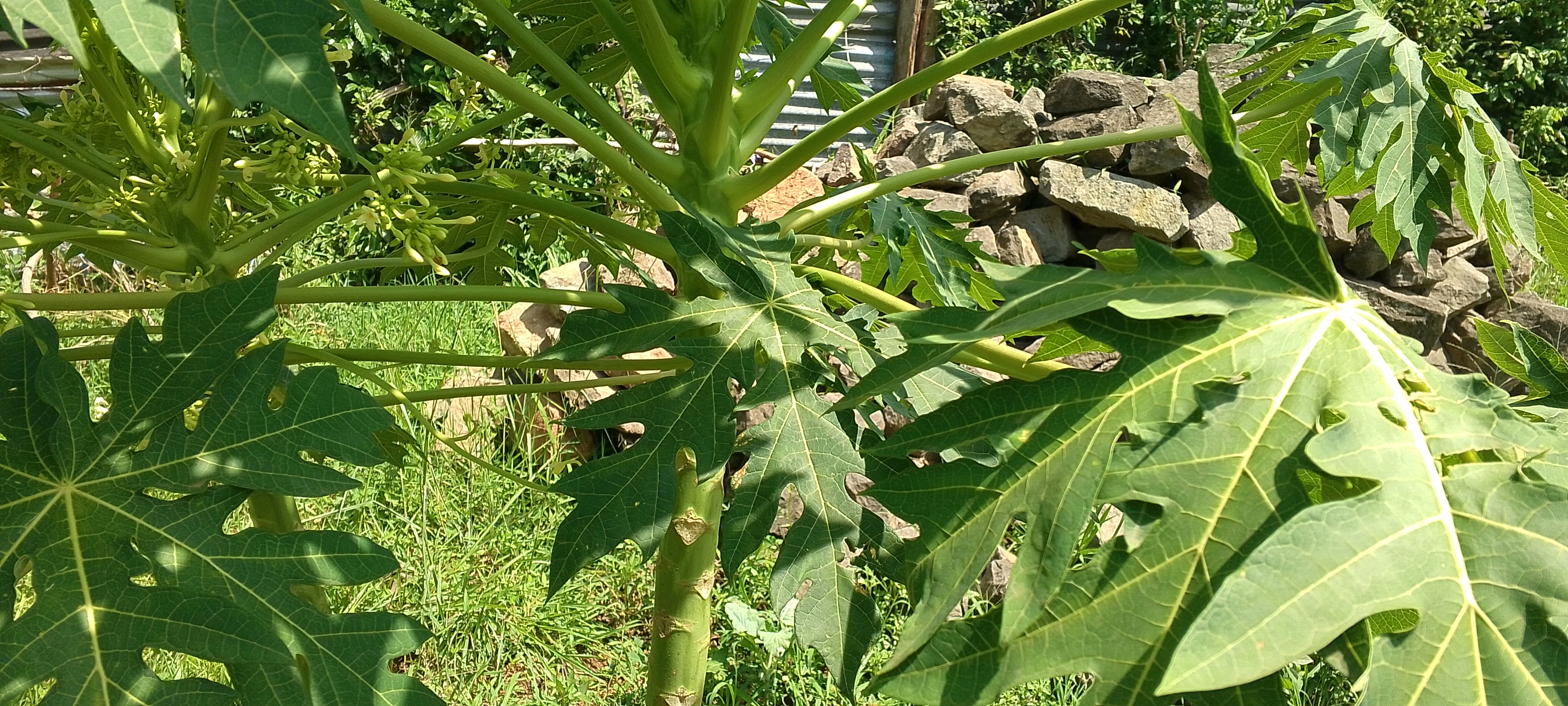
Pawpaw plant
-
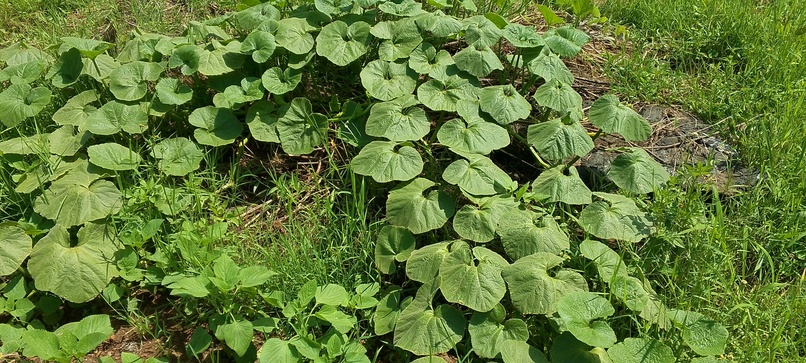
Cassava
-
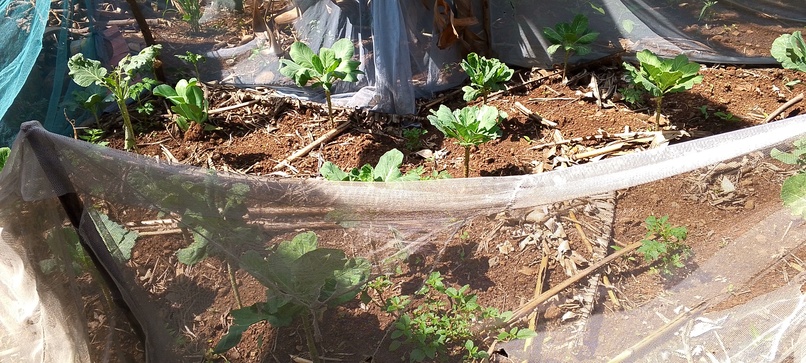
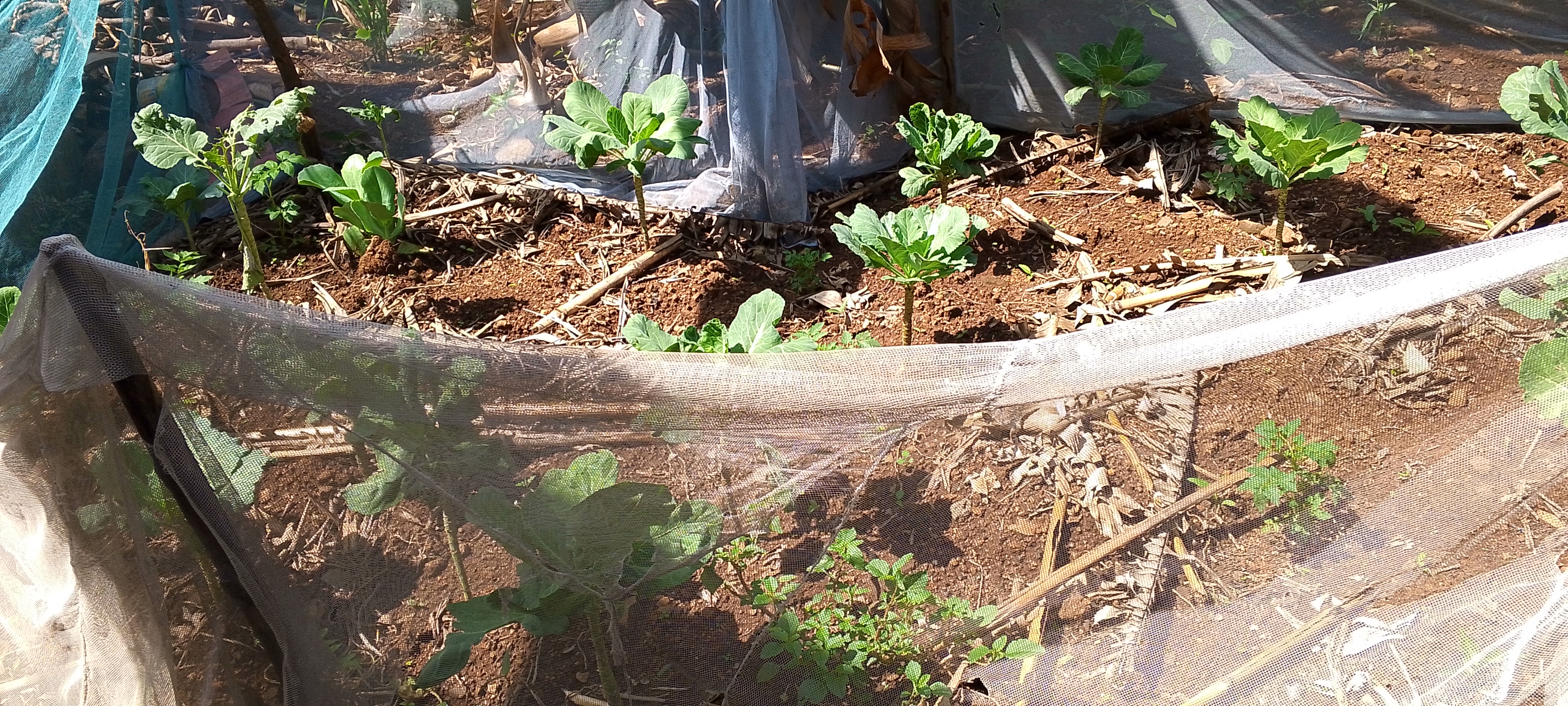
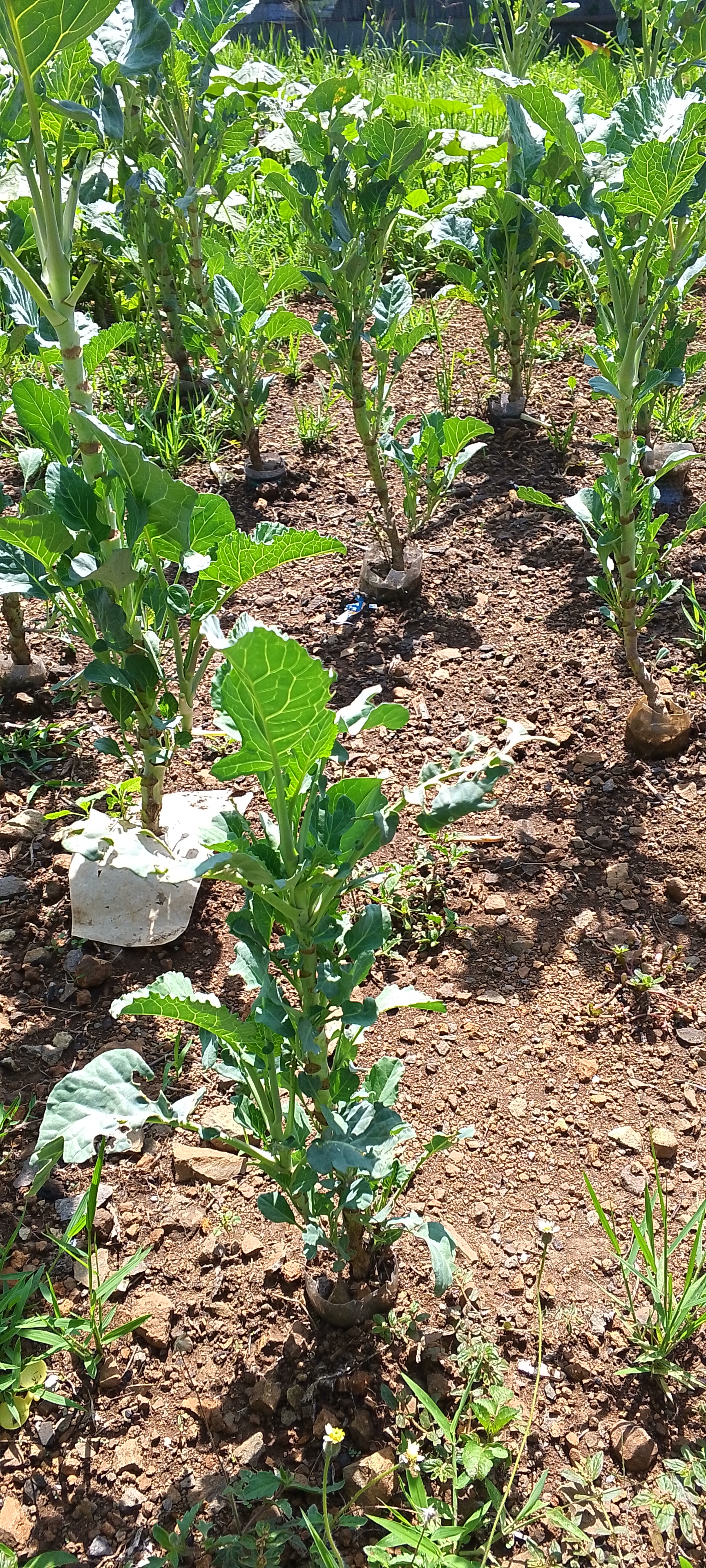
Kales Garden #2
-
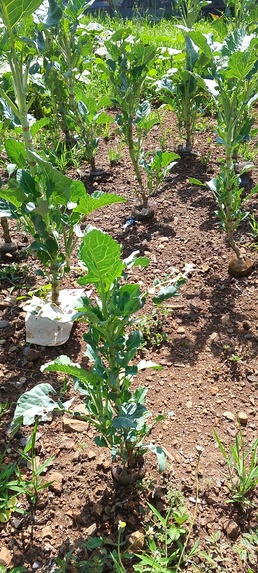
Kales Garden #1
-
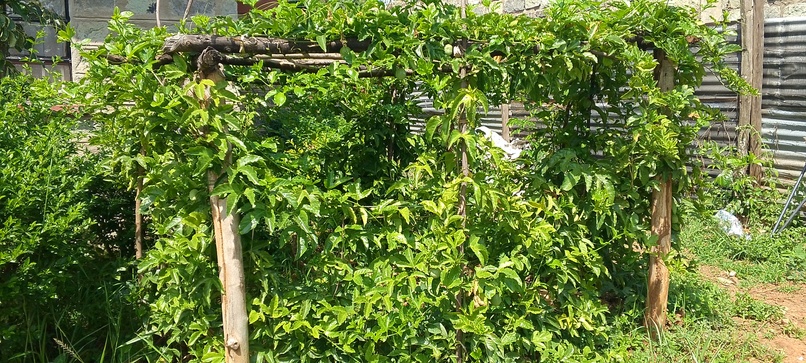
Passion Far View
-
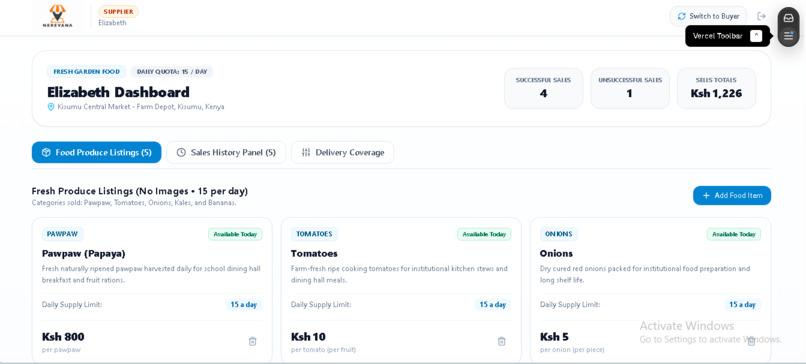
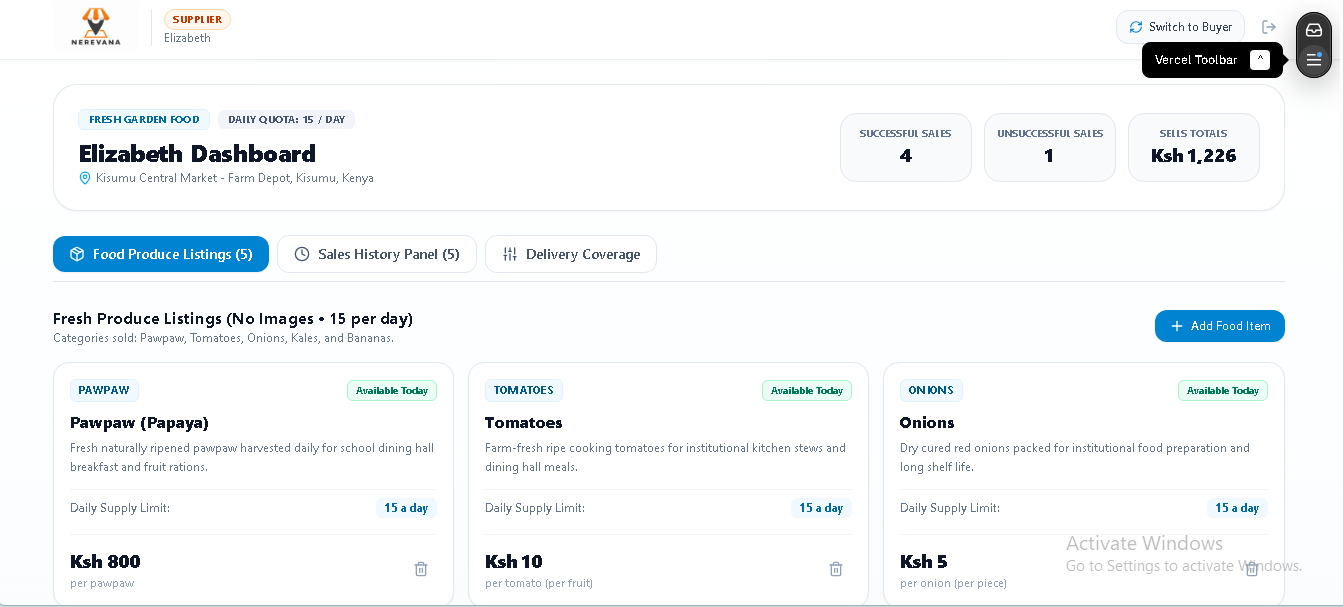
Web view in windows (Edge)
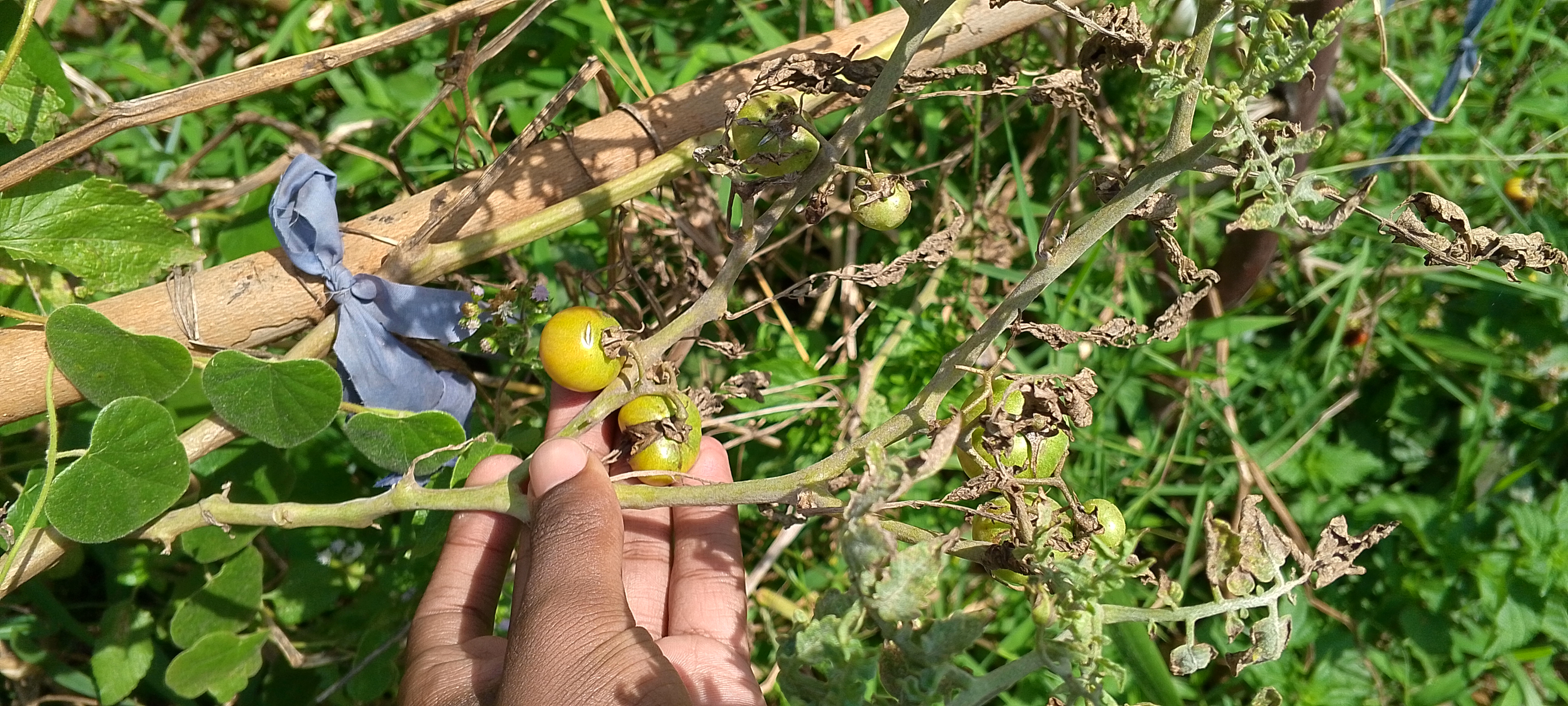
Inspiration
My mom has a garden. She grows onions, tomatoes, passion fruit, pumpkins, kales, pawpaws and bananas. She works hard on it but selling is the hard part. In my village she can only sell a few kilos a day at whatever price the market gives. Sometimes the produce just sits there and spoils which happens often.
Then there is a school nearby where my dad works. That school buys vegetables in bulk every week. But they buy from a wholesaler far away. So we have a vendor with produce and an institution with a need and they are minutes apart but they never see each other.
One time my mom sold to that school directly and it worked well. The school got fresher produce and my mom got a real order. But it only happened because she knew someone there. There was no system for it. That is what inspired Nerevana.
I wanted to build something simple that lets vendors and institutions see each other. Not a big platform. Just a way to connect the two sides so surplus does not go to waste while a school down the road buys from far away. The drought this season made it even more real. Less produce means every sale counts more. That is the problem I wanted to work on.
What it does
Nerevana connects local produce vendors to schools and institutions that buy in bulk. The web app solves a simple problem. A vendor with surplus harvest and an institution with a weekly need are often minutes apart but they never see each other. An example is the distance from my village to the school which aren't far apart.
The vendor side lets a seller list available stock and view their order history. The buyer side lets an institution post what they need. When both sides are active an order can move from request to confirmation to completed history.
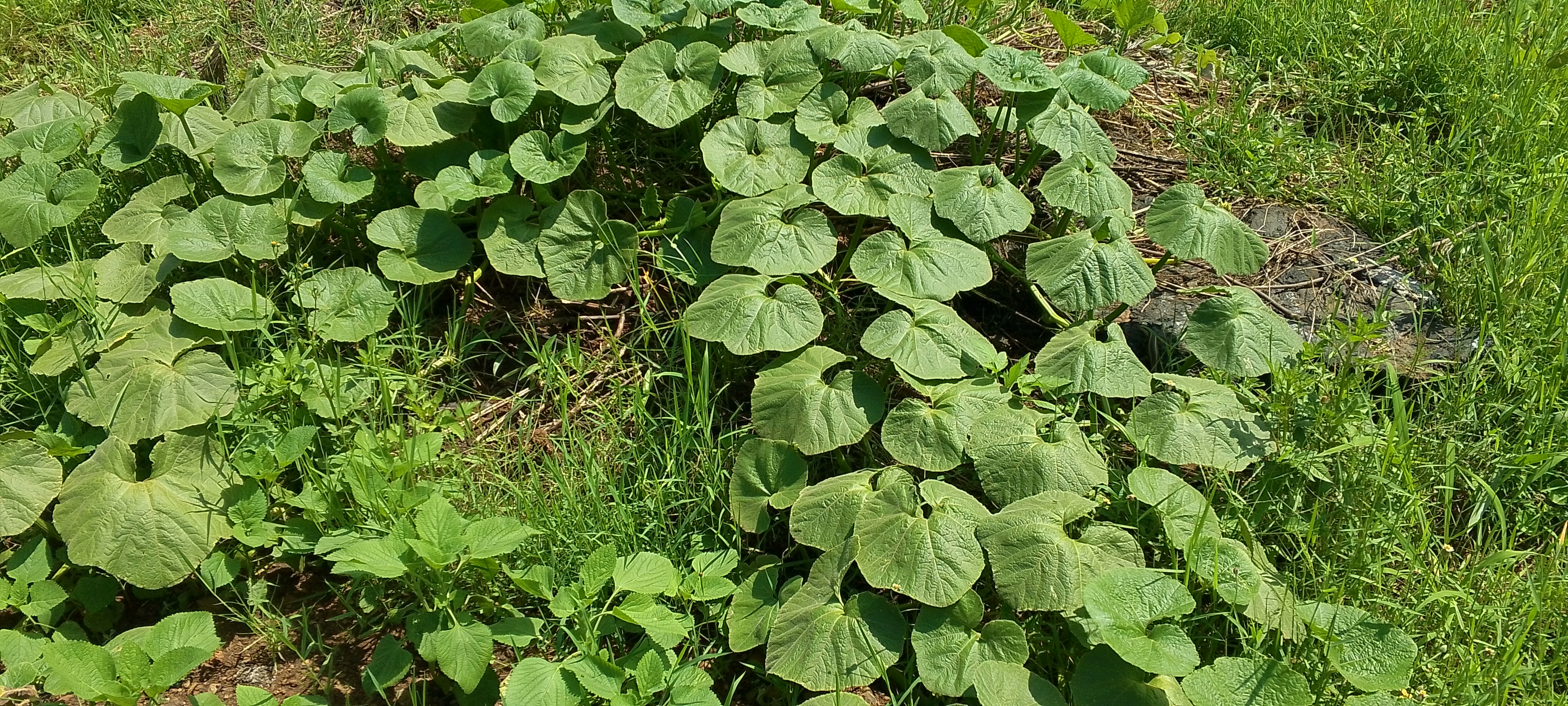
The public produce board shows real crops from my mom's garden. Onions, tomatoes, passion fruit, pumpkins, kales, pawpaws and bananas. With quantities and condition notes so a buyer can see what is actually available before ordering. Condition notes such as maybe a drought affecting the seasons produce or maybe a surplus harvest.
It is a discovery and ordering prototype. It does not handle payments, delivery or procurement paperwork. It was tested with one vendor (my mom) and one institution (the school where my dad works). It also isn't a standalone mobile app which you can install.
How I built it
I built the web app in Google AI Studio as a client-side React application on Microsoft Edge using the inbuilt AI, Gemini to generate code and install packages needed for tunning the app. I used PNG to URL sites for converting images to usable URLs so that I can make my logo for Nerevana visible. I made the app to work in the order: the buyer side posts a request, and the seller side receives it, confirms it, and records it as delivered in order history. I pushed the project into my GitHub through the GitHub push integration and then imported it to Vercel where I hosted it and got my link and sub-domain. I also built a public produce board in Milanote showing real crops from my mother's gardens which include; onions, tomatoes, passion fruit, pumpkins, kales, and pawpaws plus bananas with quantities and condition notes as proof or produce being sold in the app by my mother who is a supplier and I also included a board with the school which is acting as the institution receiving the produce from my mother's garden, including the people and places we managed to take pictures of. The code is on GitHub: https://github.com/DanteTheKing/Nerevana . The project boards are here: (Vegetation) https://app.milanote.com/1XjSf91a5CLE5s?p=ewzP76Qap6E and (The School) https://app.milanote.com/1XjTEC1a5CLE5Y?p=F5gJTtZsyWS
Challenges I faced
Some few challenges I faced was the payment system, every now and then the idea of adding a payment system into the app was tempting but I wanted to keep it in a simple loop and not turn it into a logistics or payment app. I also had to be honest about the supply due to drought, floods and other severe events which could have reduced produce and damaged food supply leading to a minimized produce. I didn't want the app to contain false information such as stable supply of food and definitely not pretend that the food supply is high even though it is not which was a real constraint and could have hurt trust between suppliers and buyers.
I also wanted to export the project as a mobile app but I wasn't able to run android studio on my computer because of having a very slow and low-end computer with low RAM of 4gb which is less than a minimum. Other online tools for making this project to be an app were mostly scams and didn't return back the email containing the compiled app (APK) as promised.
Lack of API keys for use such as the Google Maps API key for allowing use of geographical locations into the app, having to settle on location-based map data where the seller and buyers have to state their location instead of visually pinning them on a map. Exceeding Quata in Google AI Studio too stopped me from continuing my project and being able to update any errors or adding features, especially since I was one day away from the submission deadline, having to wait until morning to refresh and use Gemini AI again in the project.
Finding schools was a problem, it was only by luck that my dad was a Deputy Principal at his school that we were able to connect with the principal and get permission for testing the app, he was happy to help me for my skills and creativity.
Just 10 hours away from the submission deadline a storm approached and the electricity went out, returning at around 8pm after 6 hours of inactivity, making me idle and overthink since my laptop was low on battery and also the battery was broken and not able to last much time.
What I learned
I learned that the hard part of this problem was never the coding part. It was trust, transparency and visibility. A vendor will not change how they sell because of a form. They change when they can see a real buyer with a real need who is also serious about it. I also learned to scope down aggressively by getting one real working loop with a real name and real quantities is more convincing than ten unfinished features in the web app.
Never give up, even at hard times when everything seems impossible, just continue, make plans and wait for the right time to execute. The storms never stopped me from submitting, it was just a reminder that I held everything in my hands, giving up wasn't an option, and I chose not to.
What it does not do
Nerevana does not handle payments, delivery, or institutional paperwork. It also does not verify suppliers or guarantee quality. It is a discovery and ordering prototype, tested with one supplier and one institution which I had confirmed to work. That is the honest limit of what I built.
Built With
- css
- github
- google-ai-studio
- html
- milanote
- react
- typescript
- vercel

Log in or sign up for Devpost to join the conversation.