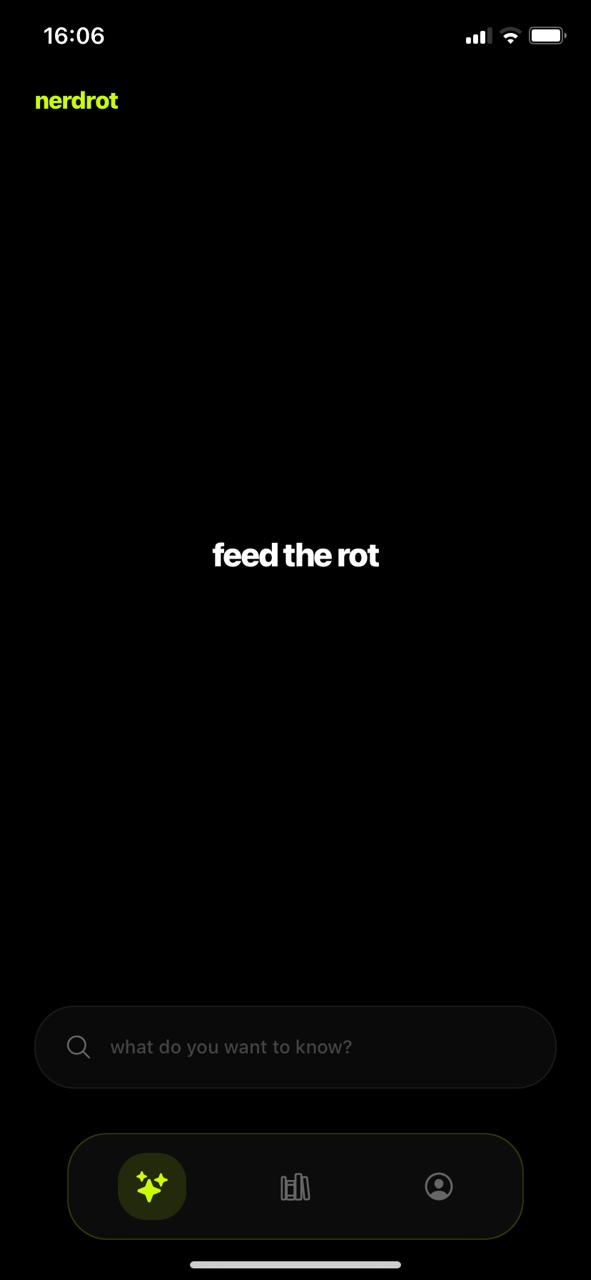
🌙 Inspiration We’ve all been there: It’s 3:00 AM, you’re drifting off to sleep, and a random question hits you like a lightning bolt. I used to fall into "Wikipedia spirals"—reading thousands of words just to find one simple fact, which only made me more awake. Even standard AI chatbots often give long, conversational "fluff" that keeps you engaged instead of informed.
I built nerdrot. to solve the tension between curiosity and rest. It’s an "anti-scroll" app designed for late-night hyper-fixations. It gives you the "nucleus" of the answer immediately so you can save it to your vault, quiet your mind, and get back to sleep.
🧠 What it does nerdrot. is a minimalist "knowledge garden" that captures and distills curiosity:
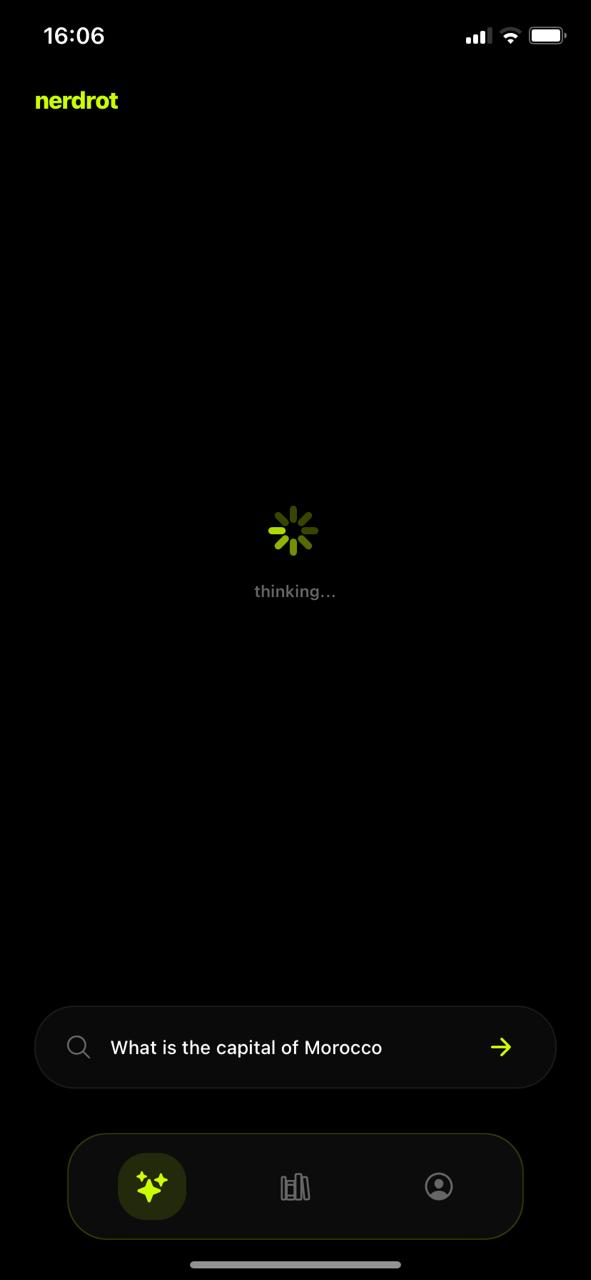
The Inbox: A zero-friction capture tool for rapid-fire questions the moment they strike.
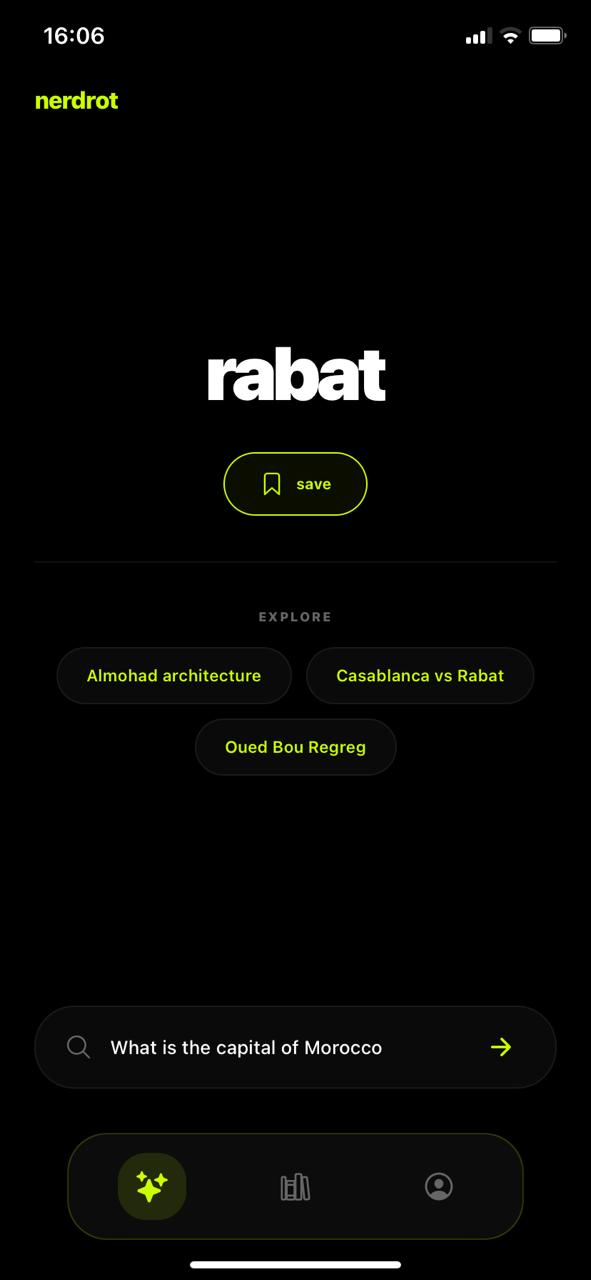
The Distillation: Powered by Gemini 1.5 Flash, it breaks answers into three layers: a high-impact "direct hit" for immediate clarity, a one-sentence context for depth, and three curated "Rabbit Holes" to explore when you actually have the time.
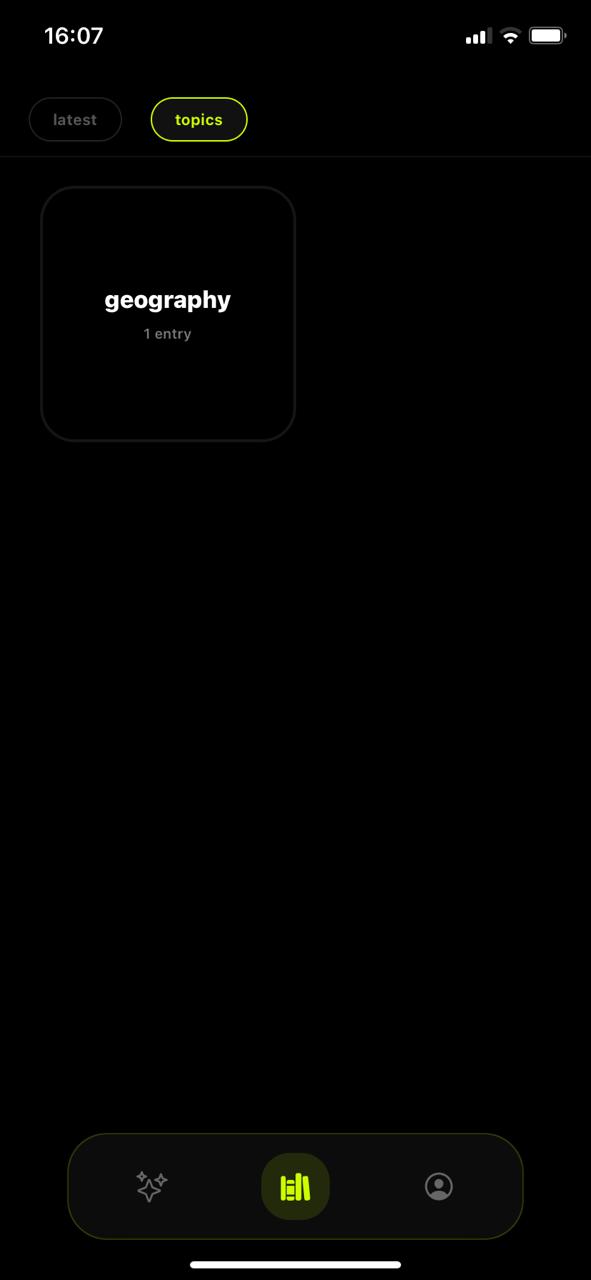
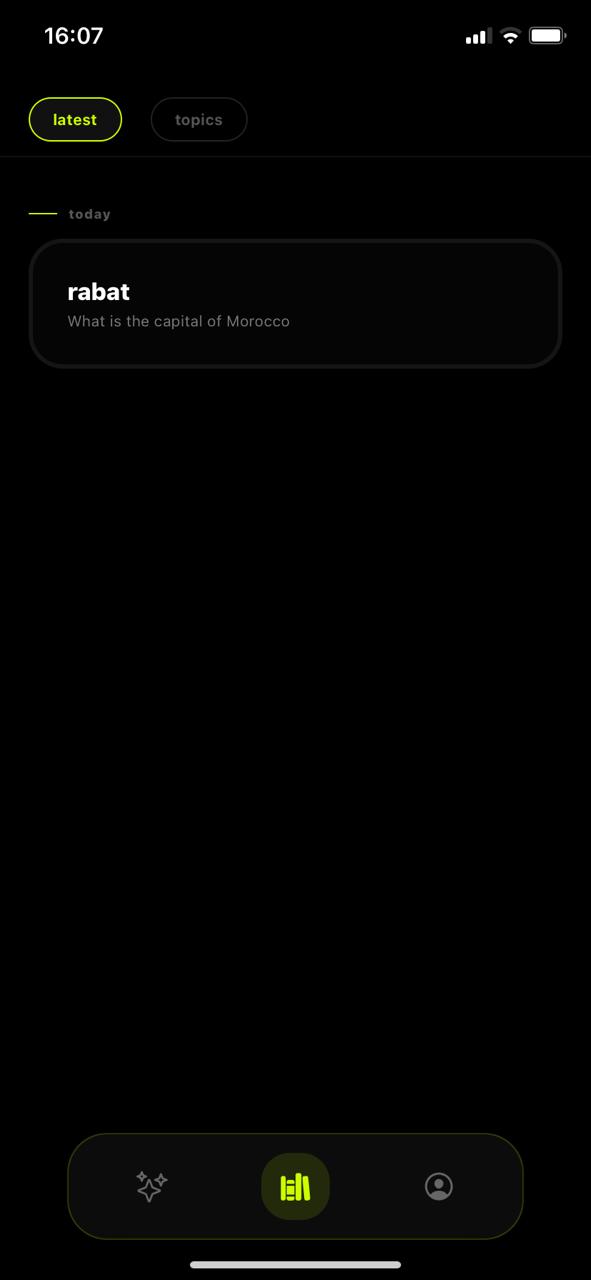
The Vault: Automatically categorizes every discovery into an OLED-black card-based library using AI-driven metadata (e.g., Space, History, Philosophy).
The Vibe: A tactile, lights-out experience that protects your night vision while satisfying your brain.
🛠️ How we built it AI Engine: Gemini 1.5 Flash. We leveraged System Instructions and JSON Mode to turn the LLM into a structured data engine. This ensures every response from the AI is pre-formatted to fit perfectly into our custom UI cards without manual parsing.
Frontend: React Native (Expo) with a focus on an OLED-black aesthetic. We integrated expo-haptics to create a "physical" feel for every interaction, making the digital vault feel like a real object.
Backend (In Progress): Integrated Firebase & Firestore using a custom Singleton pattern to manage authentication and real-time synchronization, aiming for a seamless transition between local guest mode and cloud backup.
🚧 Challenges we ran into The biggest hurdle was the "Runtime not ready" error during Firebase initialization in the Expo environment. Solving this required a deep dive into the Metro bundler's module loading sequence and implementing a robust Singleton pattern to prevent race conditions. We also spent significant time engineering a System Prompt that forced Gemini to stay minimalist—preventing the "AI chatter" that ruins a late-night user experience.
🏆 Accomplishments that we're proud of Dynamic Categorization: The app acts as its own librarian. Users never have to manually tag or organize their entries; Gemini analyzes the semantic content and automatically assigns it to the correct "Vault" category.
Night-Mode UX: Achieving a design that feels "empty" yet highly functional, using #CCFF00 (Neon Green) only for the most critical insights to ensure the app remains usable in pitch-black rooms without causing eye strain.
📖 What we learned We learned that Gemini 1.5 Flash is more than a chat interface—it’s a powerful logic layer. By treating the AI as a "JSON-returning API" rather than a conversation partner, we were able to build a much more predictable and structured product that feels like a native tool rather than a wrapper.
🚀 What's next for nerdrot. Multimodal Seeds: Using Gemini’s vision capabilities to let users snap a photo of a book or an object in the physical world to "capture" it into their digital garden.
The Spaced Repetition Engine: Proactively resurfacing old "discoveries" so users actually retain the knowledge they’ve captured.
Graph View: A 2D interactive map of your brain, showing how your different "Rabbit Holes" connect across seemingly unrelated topics.
