-
-
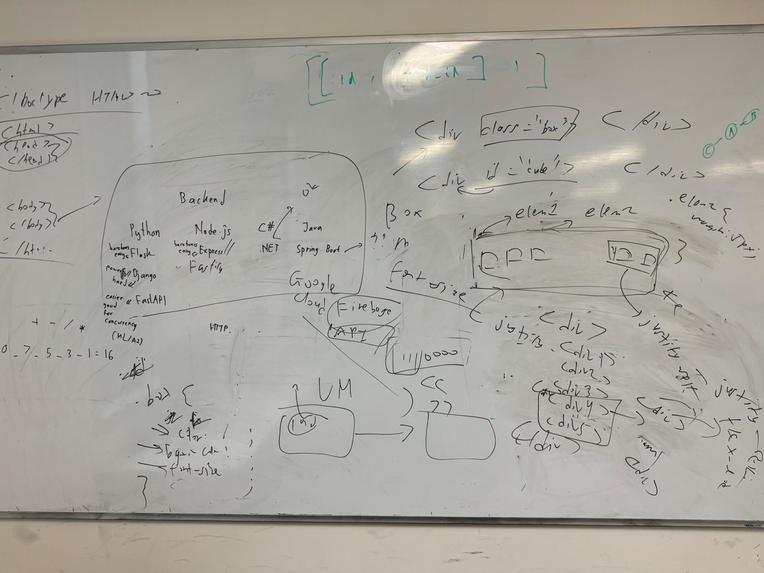
Initial Plan
-
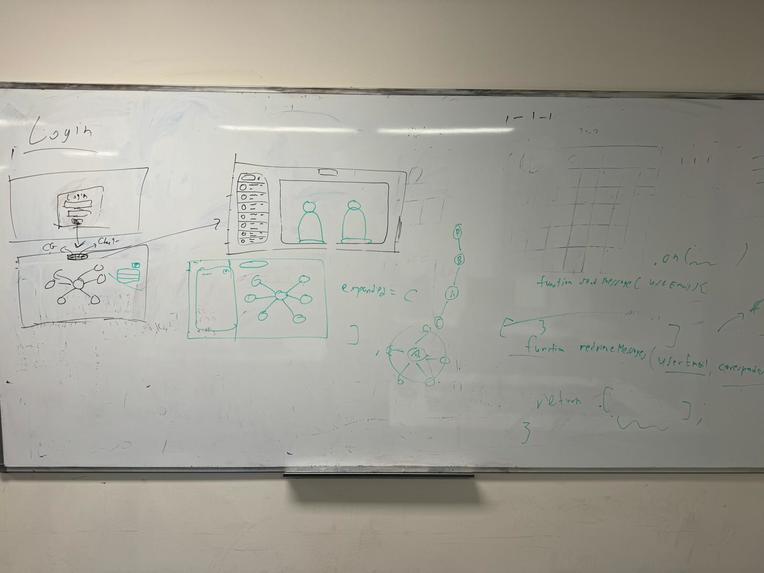
Initial Plan
-
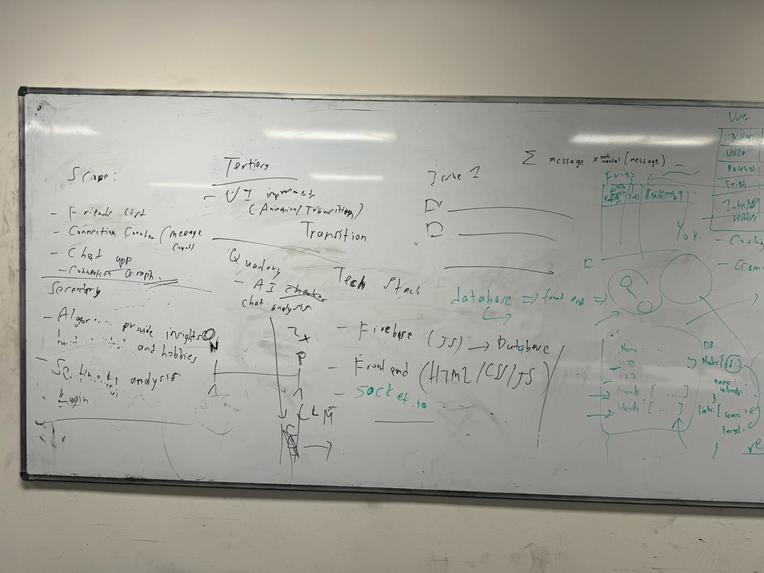
Initial Plan
-
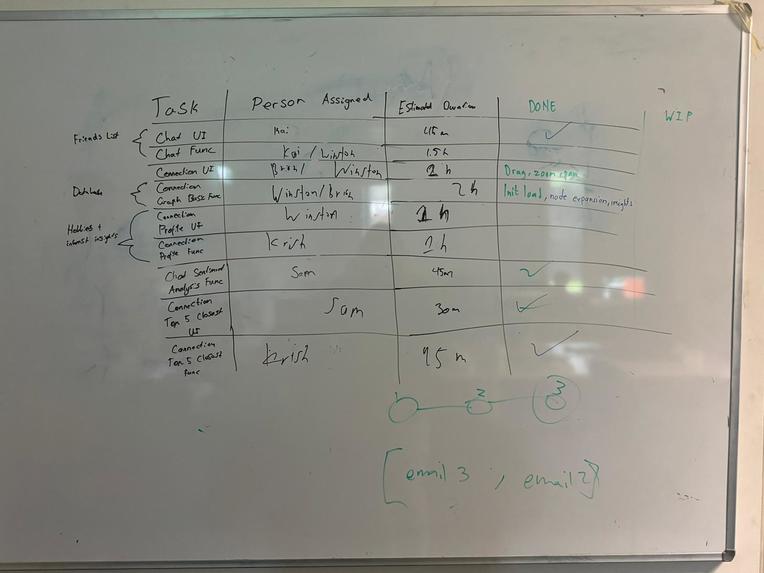
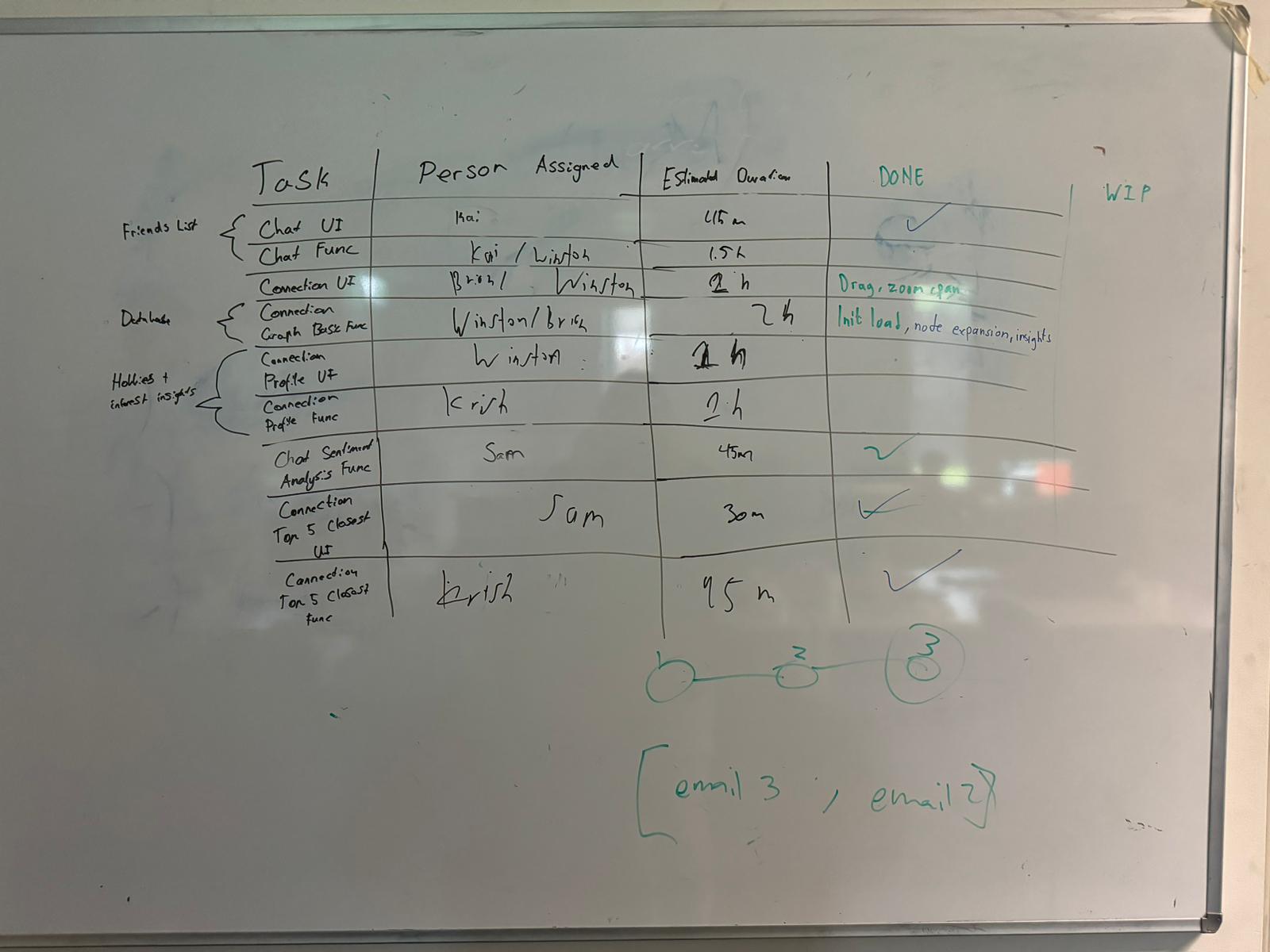
Work Split
Inspiration
The inspiration behind the creation of this platform came from a deep desire to transcend geographic and social boundaries and bridge the gap between individuals where we created a place where people could truly connect, share experiences and build community. In a world where connections are often disconnected, we wanted to provide a place where relationships can thrive and new friendships can be made, making the world feel a little more connected and inclusive.
What it does
Our goal was to create a welcoming space that fostered connection and brought individuals together via making friends with mutual connections and mutual interests, and gave them the opportunity to engage and meet new people. The space was designed to foster meaningful interactions, allowing users to build lasting relationships and expand their social horizons..
How we built it
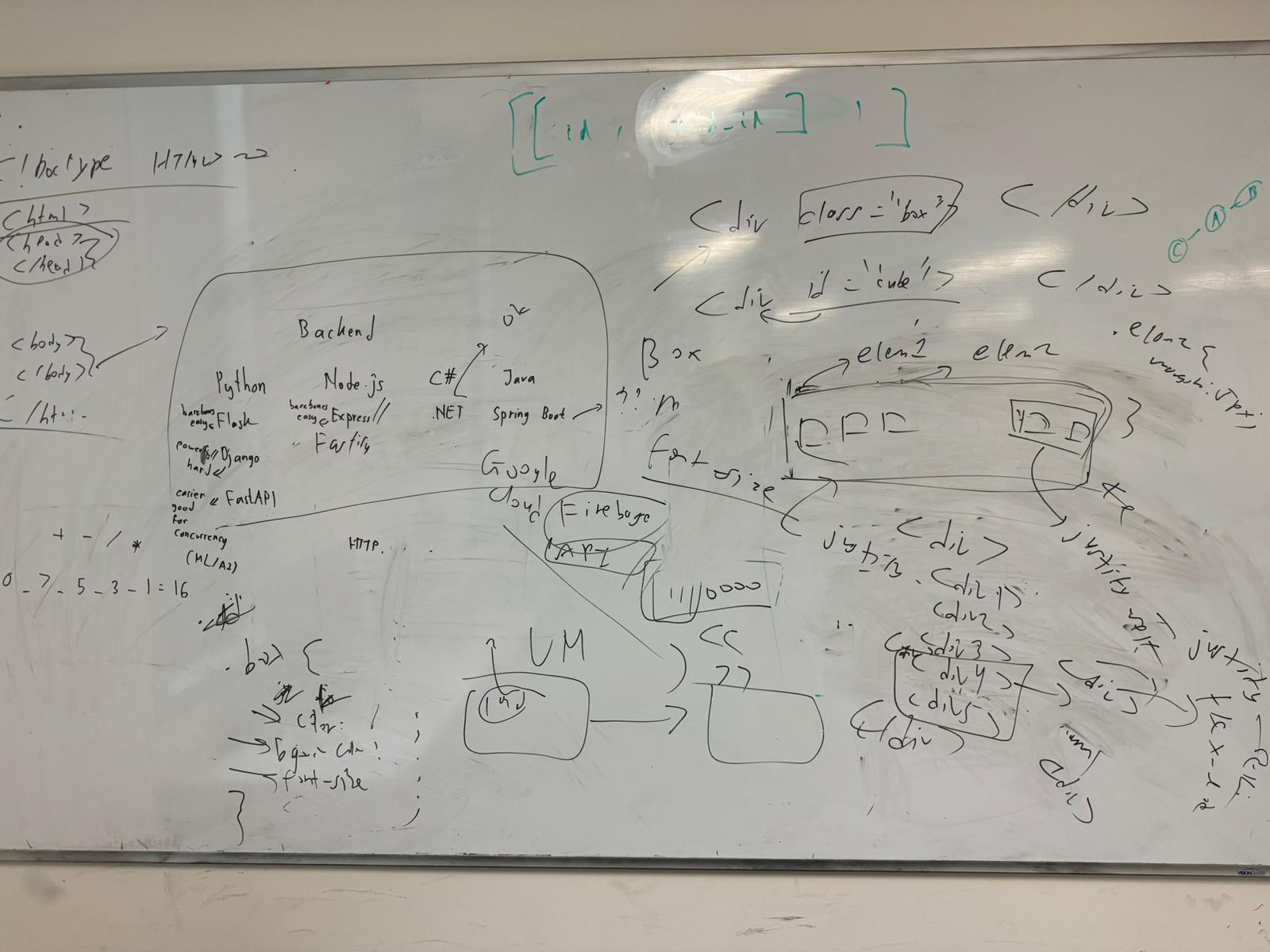
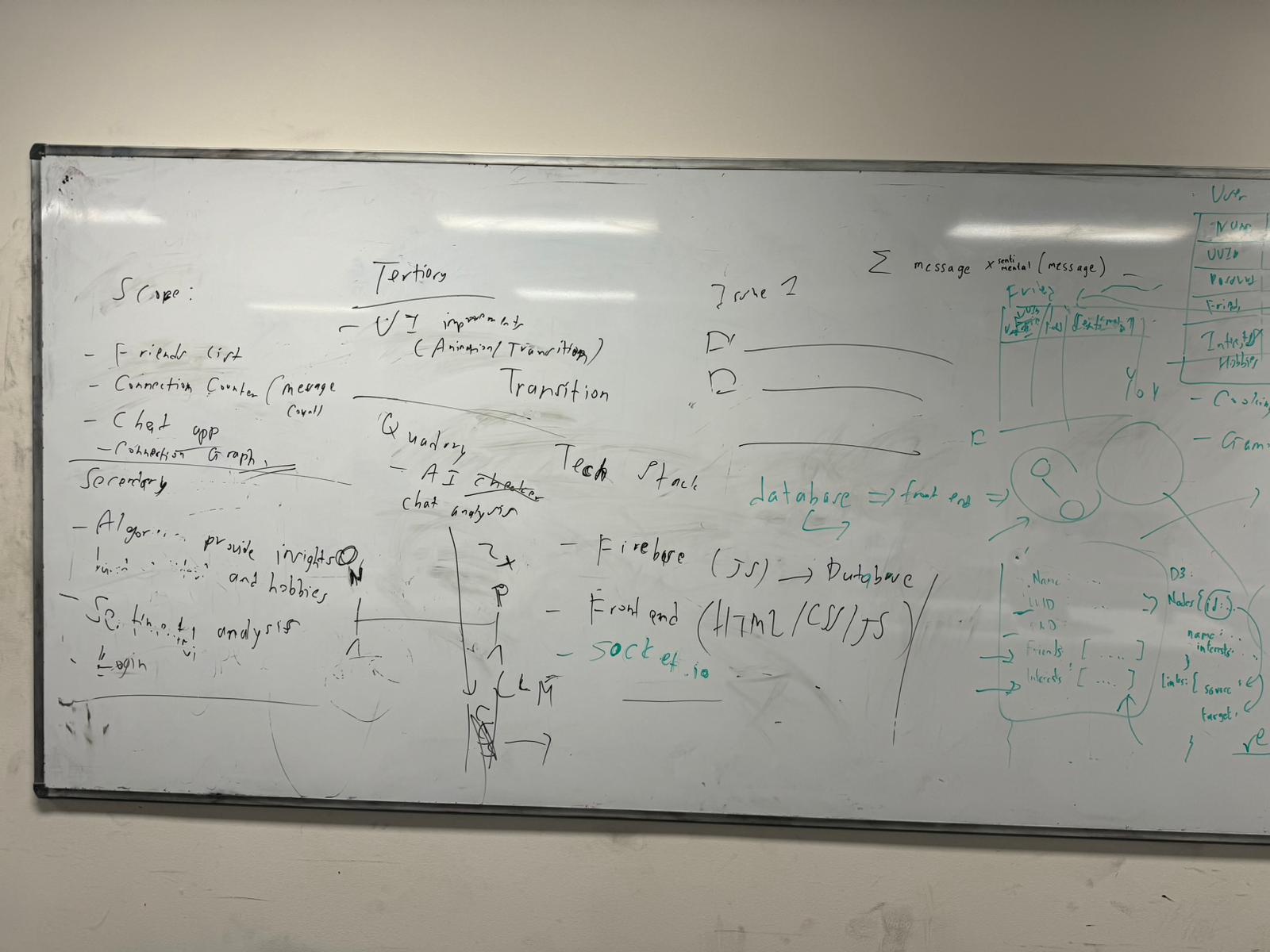
We built the platform using a combination of HTML, CSS, JavaScript, Firebase, and Figma. HTML formed the foundation, shaping the content and layout of web pages. The user interface was designed and developed using CSS, providing an engaging and uniform visual experience. JavaScript added interactivity, providing dynamic features that enhanced user engagement and efficiency.
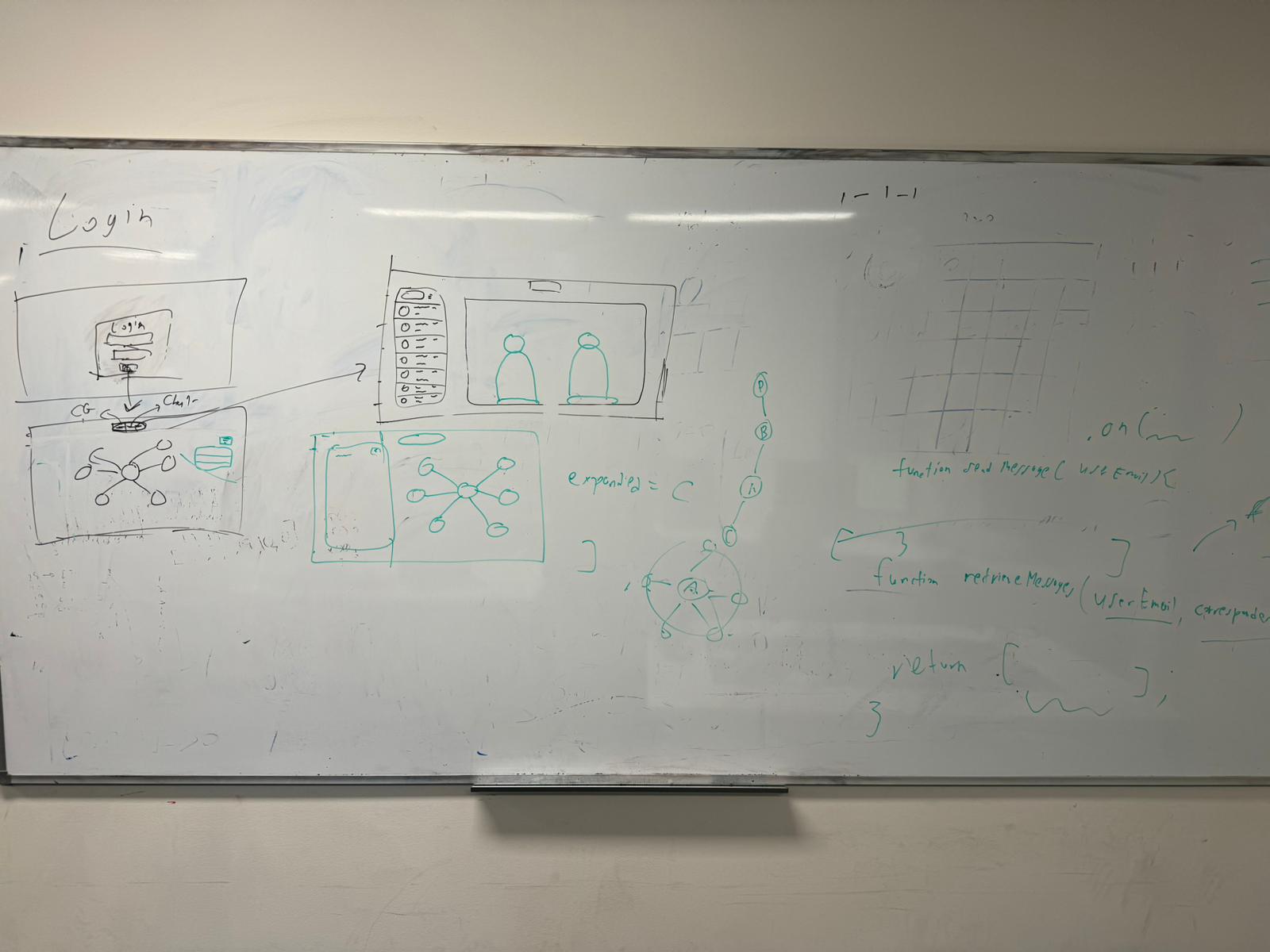
Firebase was our backend solution, providing real-time database management, authentication and hosting services, it enabled us to efficiently handle data and ensure the platform scaled well Figma was used in the design phase to produce a wireframe. This tool allowed us to visualize the user, collaborate on features, and iterate quickly, ensuring that the final product met our aesthetic and functional goals
Data visualization was done using D3.js, where we wrote several utilities to make graph vizualization dynamic and able to interface with the data output from the firebase database.
Challenges we ran into
During the development of the platform, we anticipated and addressed several hypothetical issues to ensure a smooth user experience and robust functionality. These potential challenges included ensuring cross-browser compatibility, optimizing load times, and handling high traffic volumes. The first challenge we encountered was figuring out how to visually represent connections and differentiate the bonds between them. However, we quickly resolved this by deciding to use a spider web-style design, which effectively illustrates both secondary and tertiary connections. After implementing the spider web-style design, we quickly realized that we had significantly exceeded the read rate on Firebase. This issue arose because the complex network required frequent database queries, which slowed the consumption of our inventory. We quickly recognized the need to optimize our data recovery processes to prevent overuse and ensure platform availability. This has led us to look for more efficient ways to manage and back up data, reduce stress on Firebase, and keep our resources within acceptable limits.
What we learned
From this experience, we learned many valuable lessons. First, we understand the importance of planning for scalability and resource management early in the development process. By exceeding the Firebase read quota, we understand the importance of optimizing database connectivity, especially when dealing with complex data structures such as spider web-style designs
They also learned the importance of anticipating potential challenges and proactively developing solutions that would balance performance and resource efficiency. This experience highlighted the need for ongoing monitoring and flexibility, as actual implementation can reveal unexpected issues that require quick and effective responses
What's next for Neptune
Somewhere down the line, we plan on implementing mobile compatibility and some extra features that would provide a more personalized experience. We also plan on implementing Sentiment Scoring which will produce a value depending on the type of messages that get sent between you and your connection. This will in return show a stronger bond on the connections page.


Log in or sign up for Devpost to join the conversation.