-
-
Nept-Cloud
Nept
Inspiration
We were inspired by platforms like Vercel and Netlify, which showed how simple and enjoyable web deployment could be. We wanted to build something great in that spirit while creating our own developer-first platform. Nept was born from the idea that developers should be able to move from code to production without being slowed down by infrastructure, CI/CD configuration, domains, certificates, or scaling.
What it does
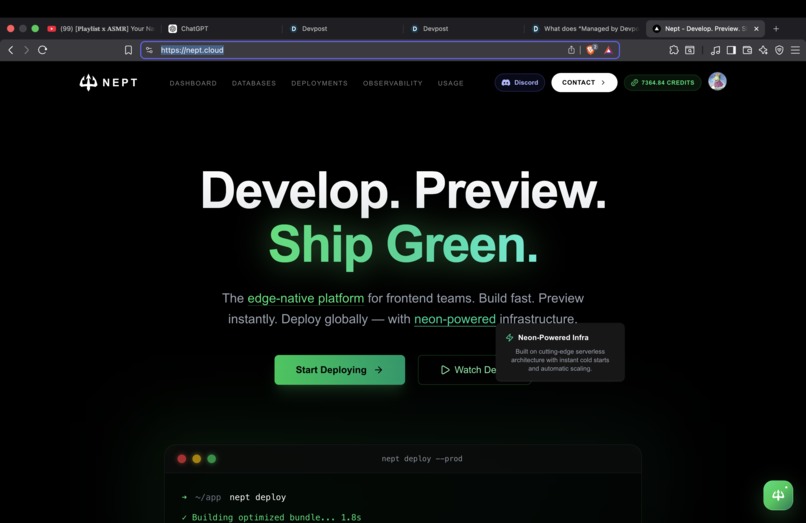
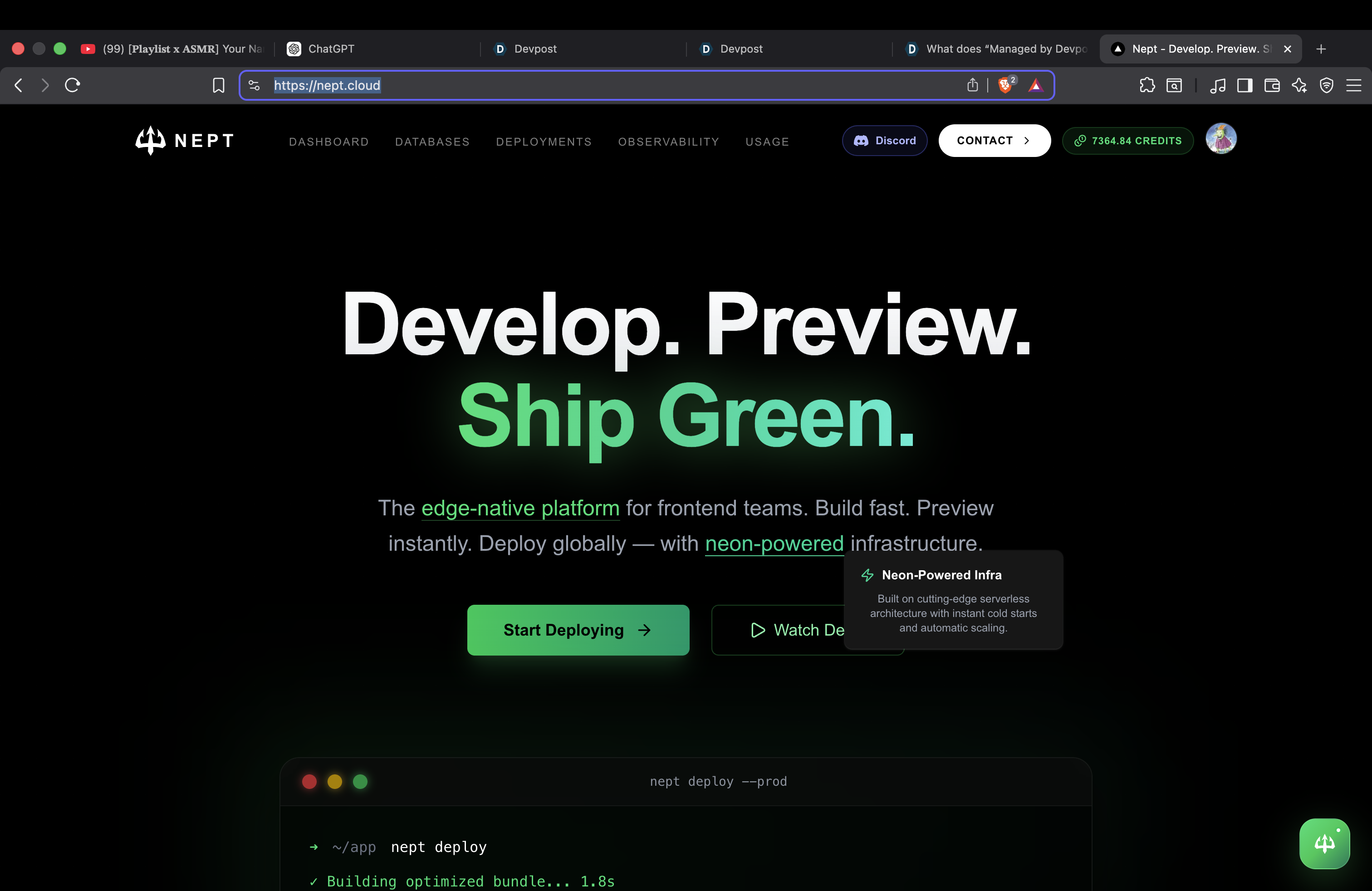
Nept is an edge-native deployment platform that lets developers connect a Git repository and automatically build, preview, and deploy their applications. Every branch can receive its own preview URL, while production releases are distributed globally with automatic TLS, DDoS protection, and scaling. Nept supports modern frontend frameworks as well as backend applications written in Node.js, Python, Go, Rust, Java, PHP, Ruby, C#, and more.
How we built it
We built Nept as an automated deployment pipeline with four main stages: source integration, application detection and build, deployment orchestration, and secure traffic routing. A developer connects a repository or uses the Nept CLI; Nept then builds the project, publishes the resulting workload, assigns a URL, and routes requests to the deployed application. We designed the system to support many frameworks while keeping the developer experience consistent and configuration-light.
Challenges we ran into
One of our greatest challenges was automating DNS configuration through Domain Connect. The process required extensive documentation research and repeated communication with the Cloudflare and Domain Connect teams. We used Codex to help automate the entire workflow: its scheduling feature monitored incoming emails, helped us prepare appropriate replies, and supported the Domain Connect implementation. This allowed us to solve one of the most difficult parts of Nept and turn a complicated, manual process into a smooth automated experience.
Accomplishments that we're proud of
We are proud that Nept turns a repository into a live application through a simple, repeatable workflow. It supports both frontend and backend stacks, provides automatic deployments from Git, creates branch preview environments, and includes production essentials such as global delivery, TLS, DDoS mitigation, and automatic scaling.
What we learned
We learned that a great deployment platform is not defined only by how quickly it ships successful builds. Clear logs, predictable states, useful errors, and safe recovery paths matter just as much. We also learned that supporting many frameworks requires a flexible platform underneath, but a deliberately simple interface on top. By using Codex to run and evaluate tests, we can validate our work continuously and make technical decisions with greater confidence.
What's next for Nept
Next, we plan to introduce true serverless functions and build intelligent agents that can automatically create deployment adapters for JavaScript frameworks. We also want to make Nept one of the safest places to host websites, containers, and backend applications. Our goal is to combine powerful automation, broad framework support, and security-first infrastructure in one simple platform.
Source
Built With
- amazon-firecrackers
- clickhouse
- docker
- kubernetes
- nextjs
- node.js
- psql

Log in or sign up for Devpost to join the conversation.