-
-
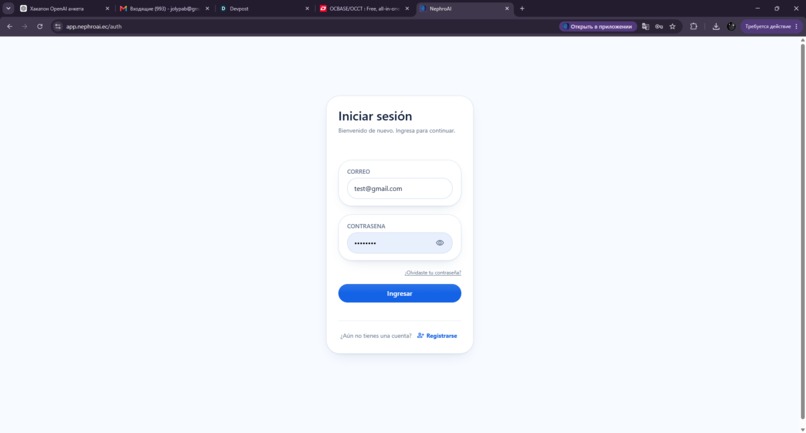
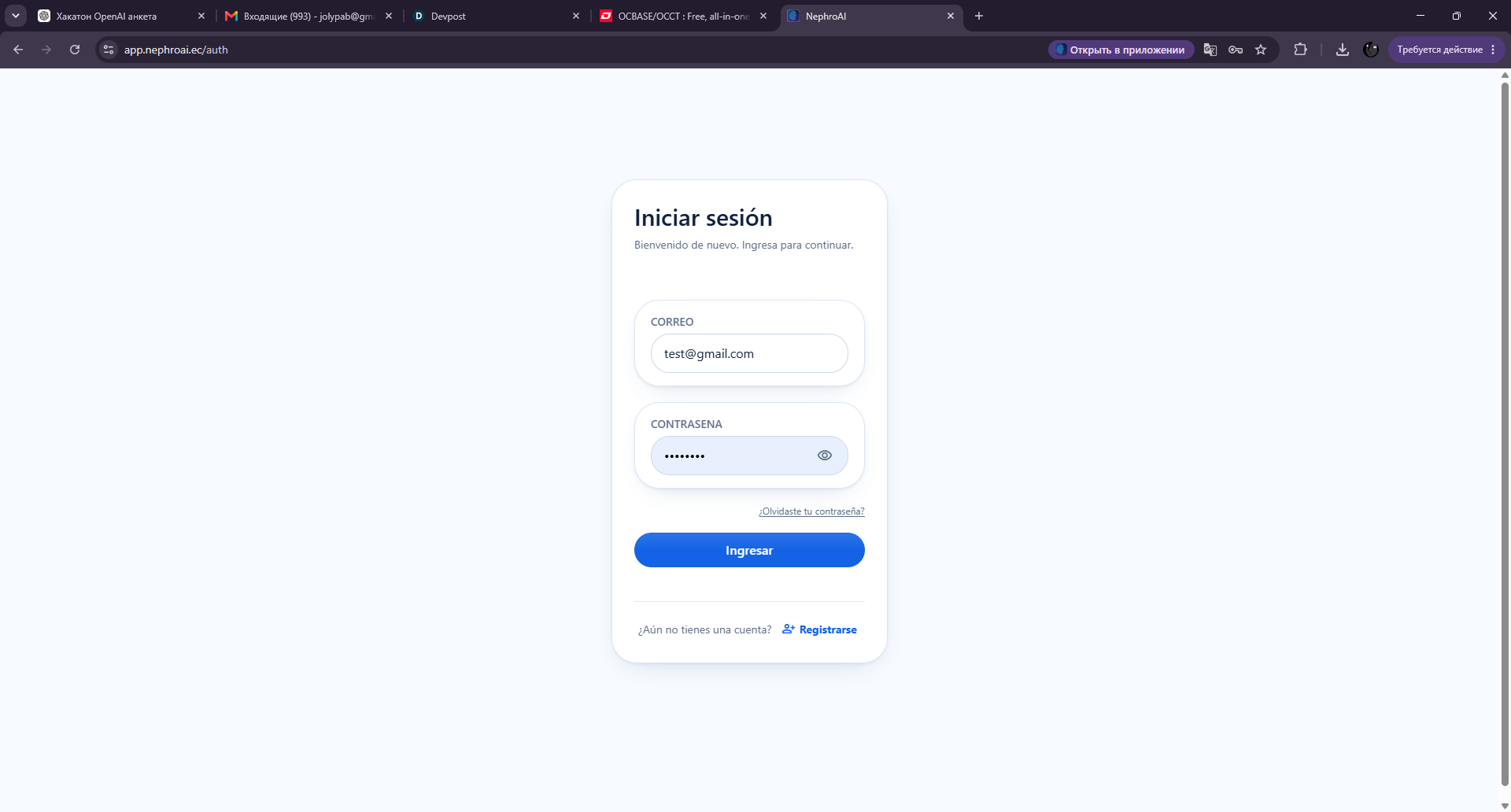
Auth Page
-
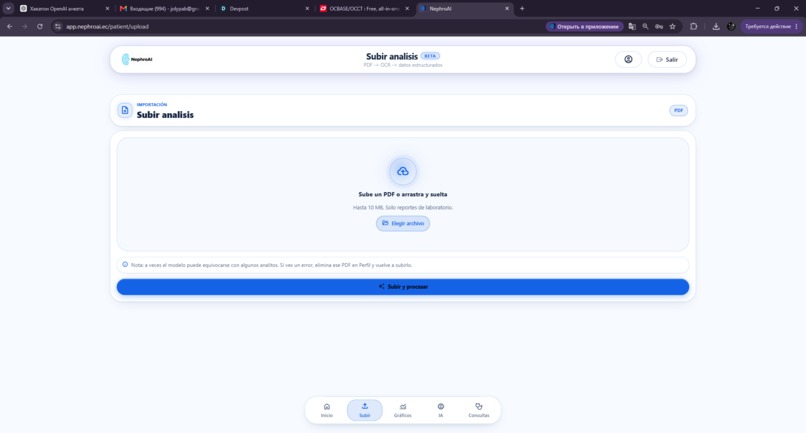
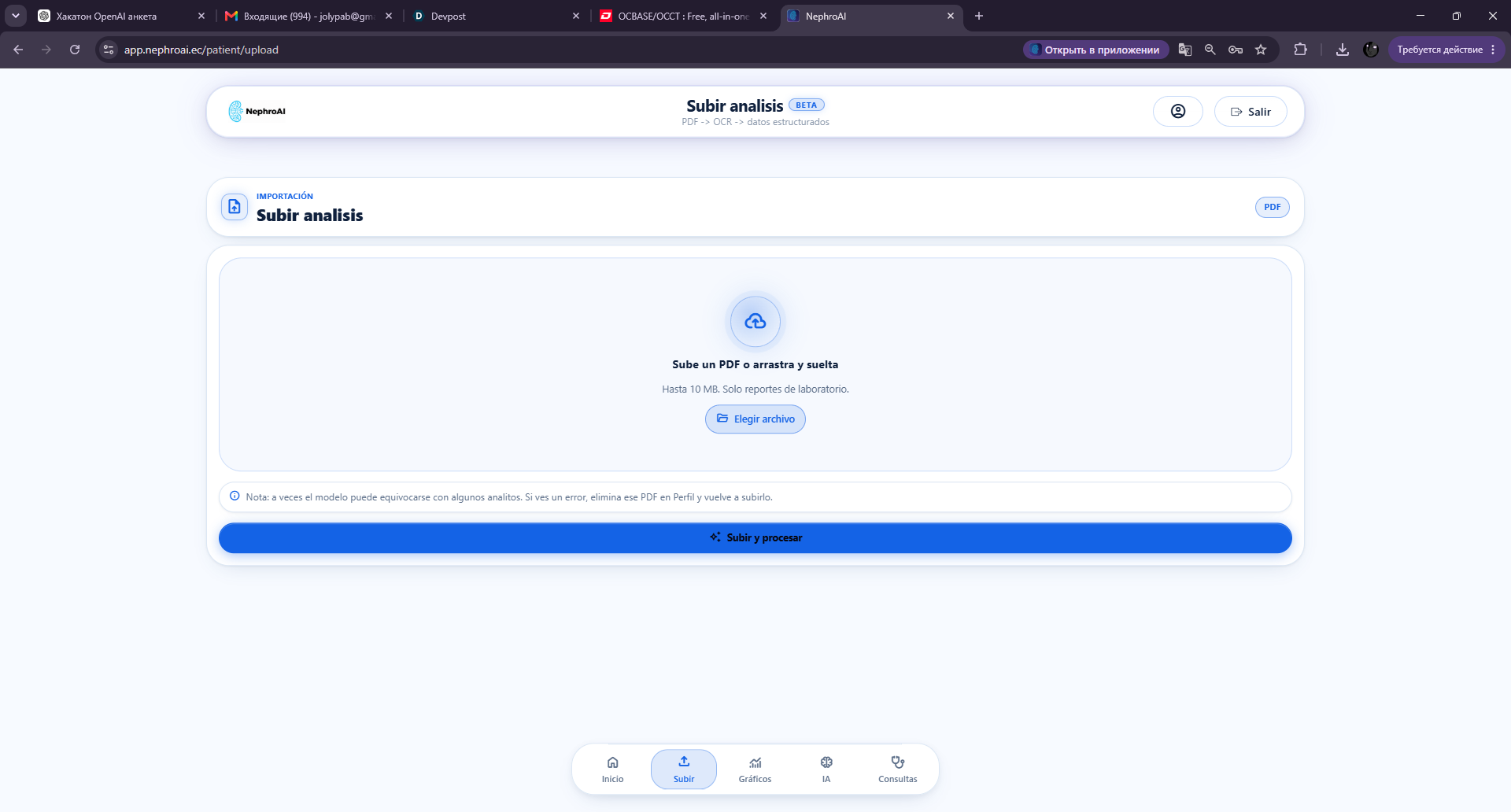
Upload PDF
-
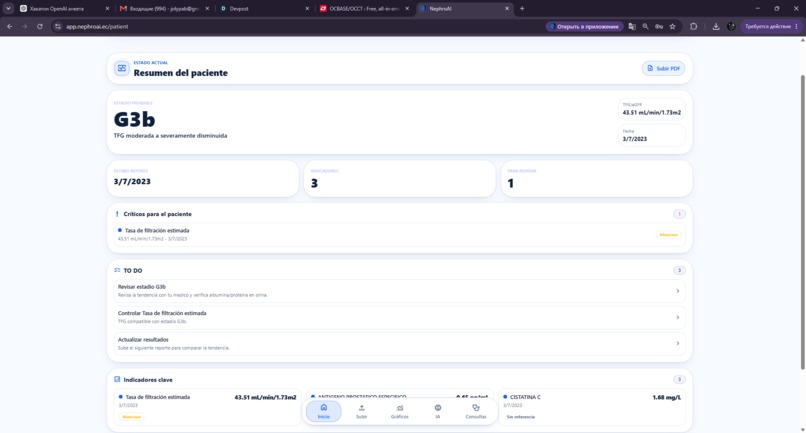
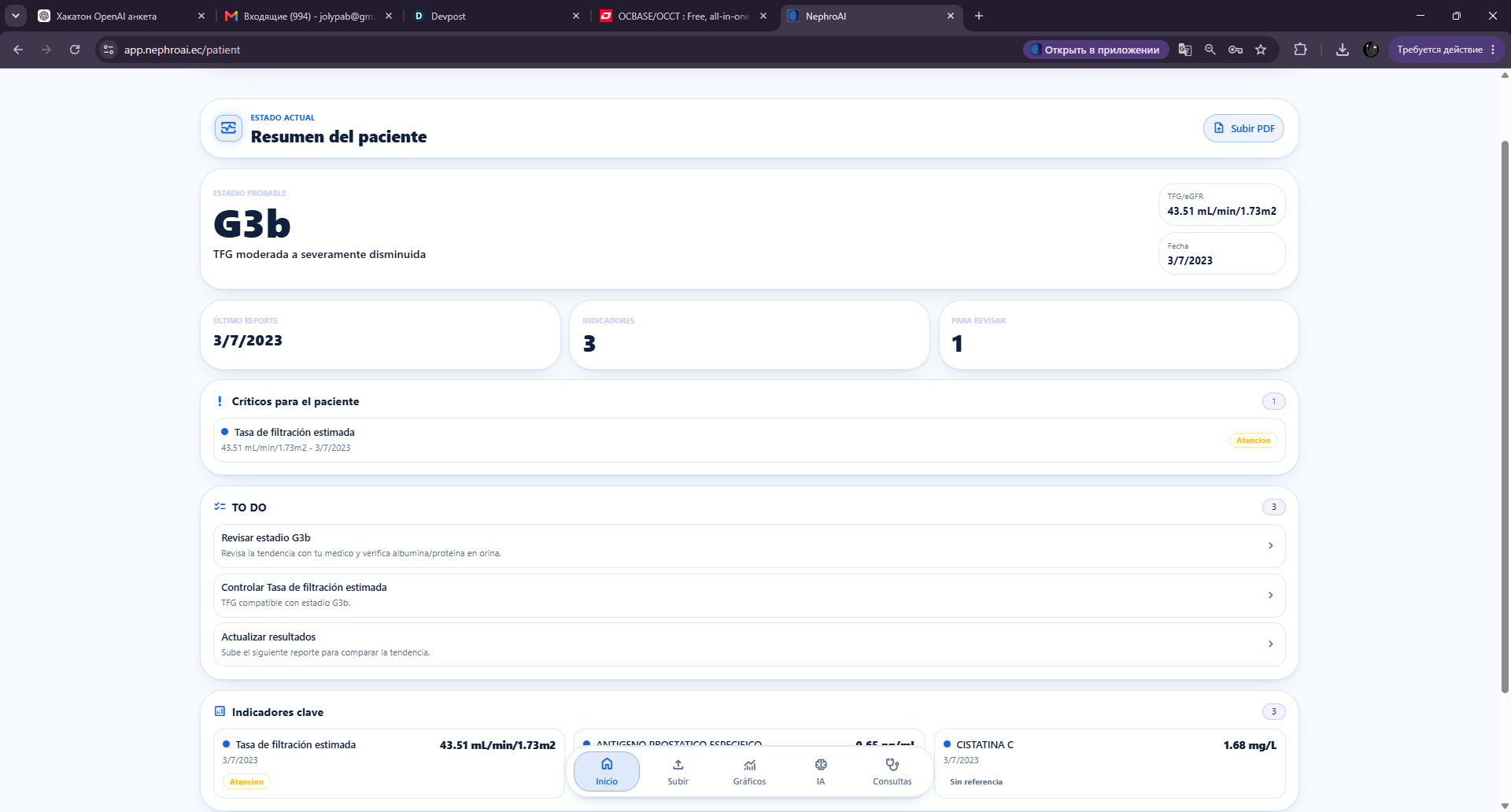
Home Page
-
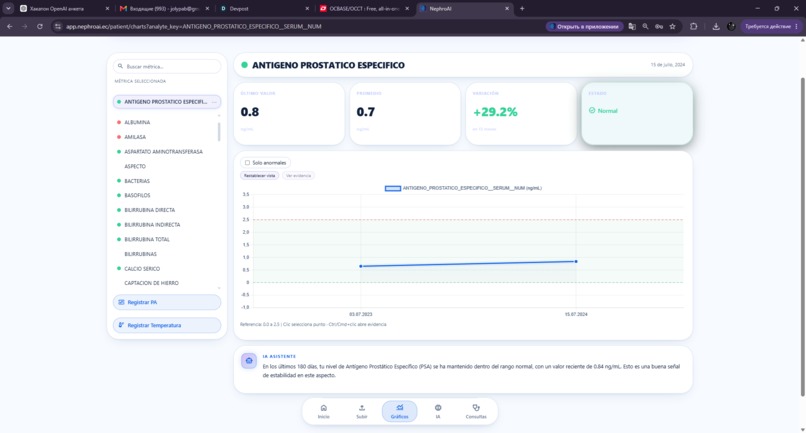
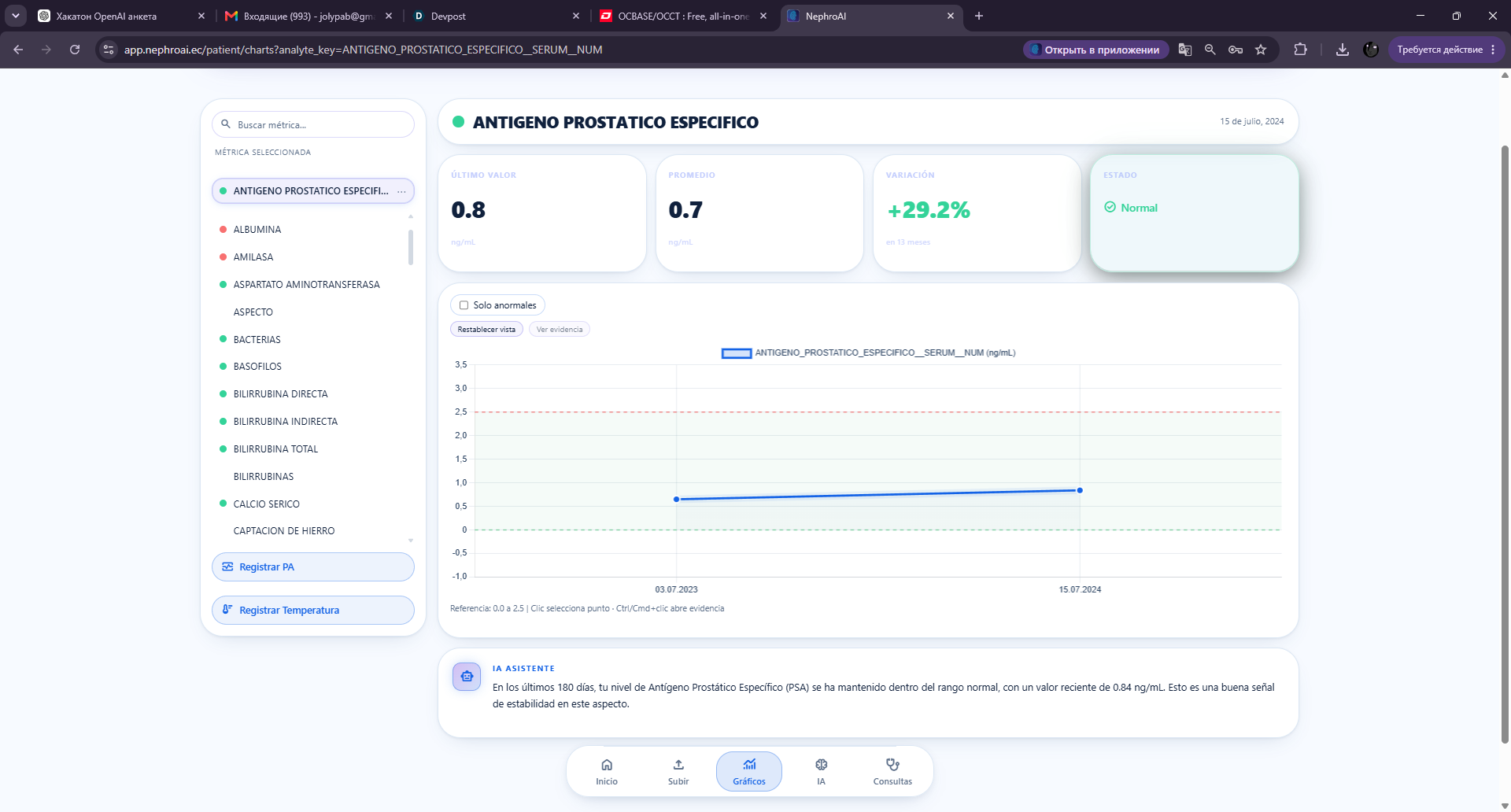
Graphics Page
-
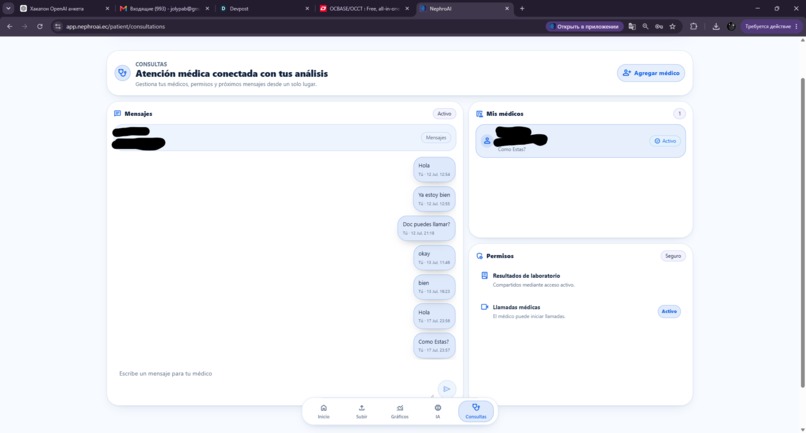
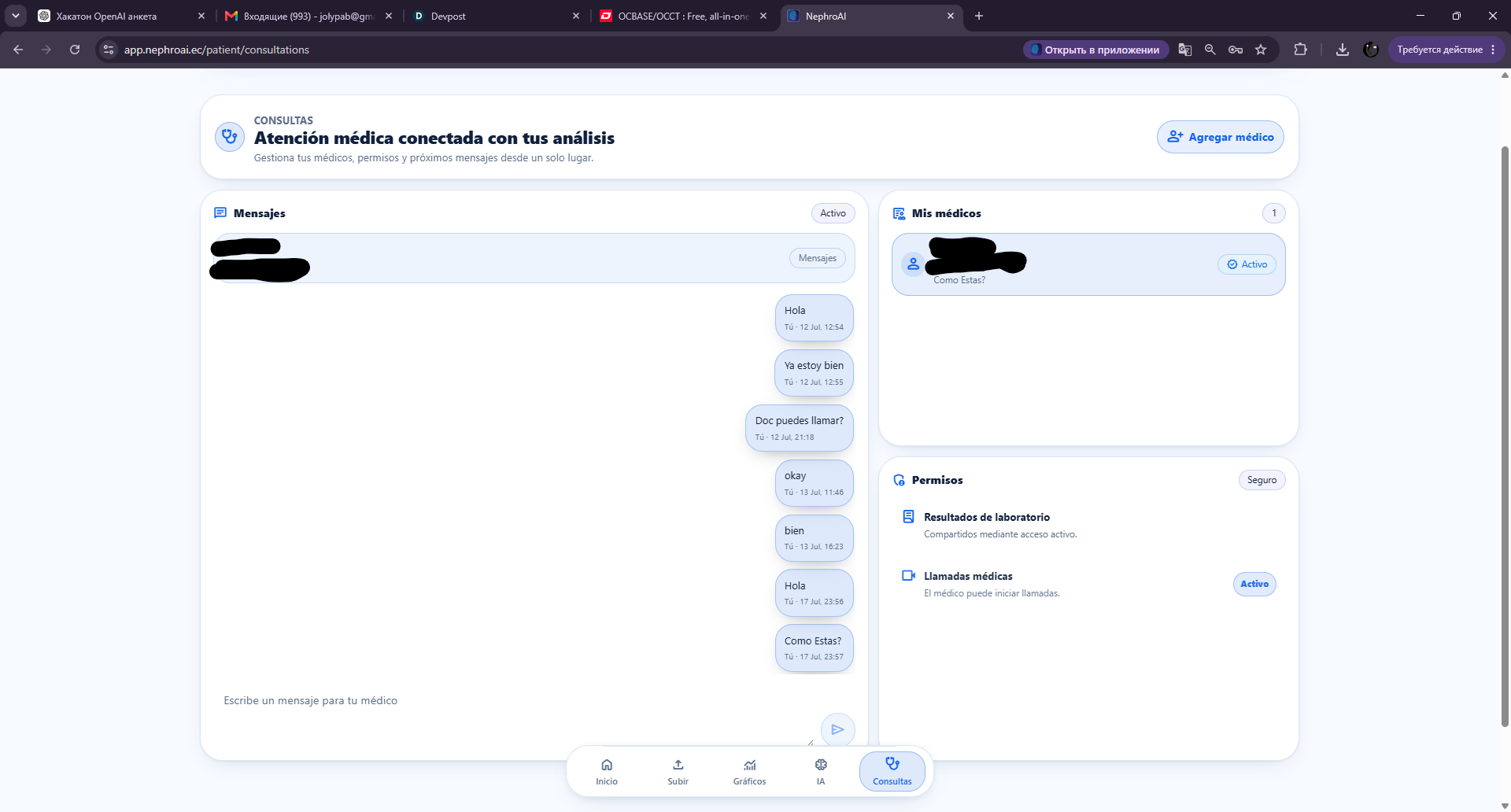
CONSULTATIONS Page
-
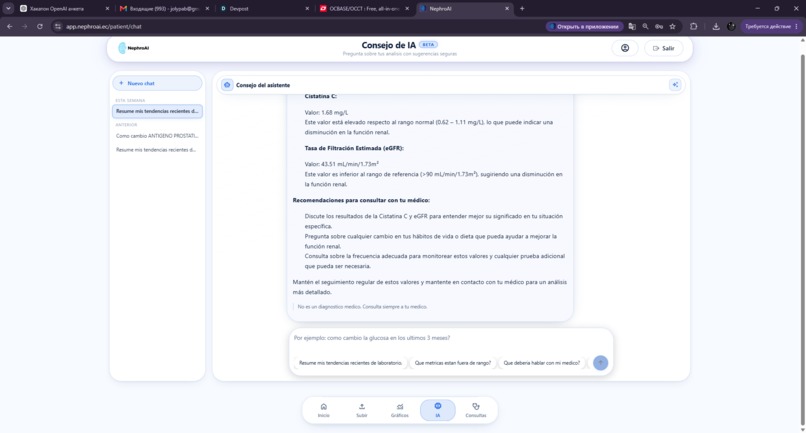
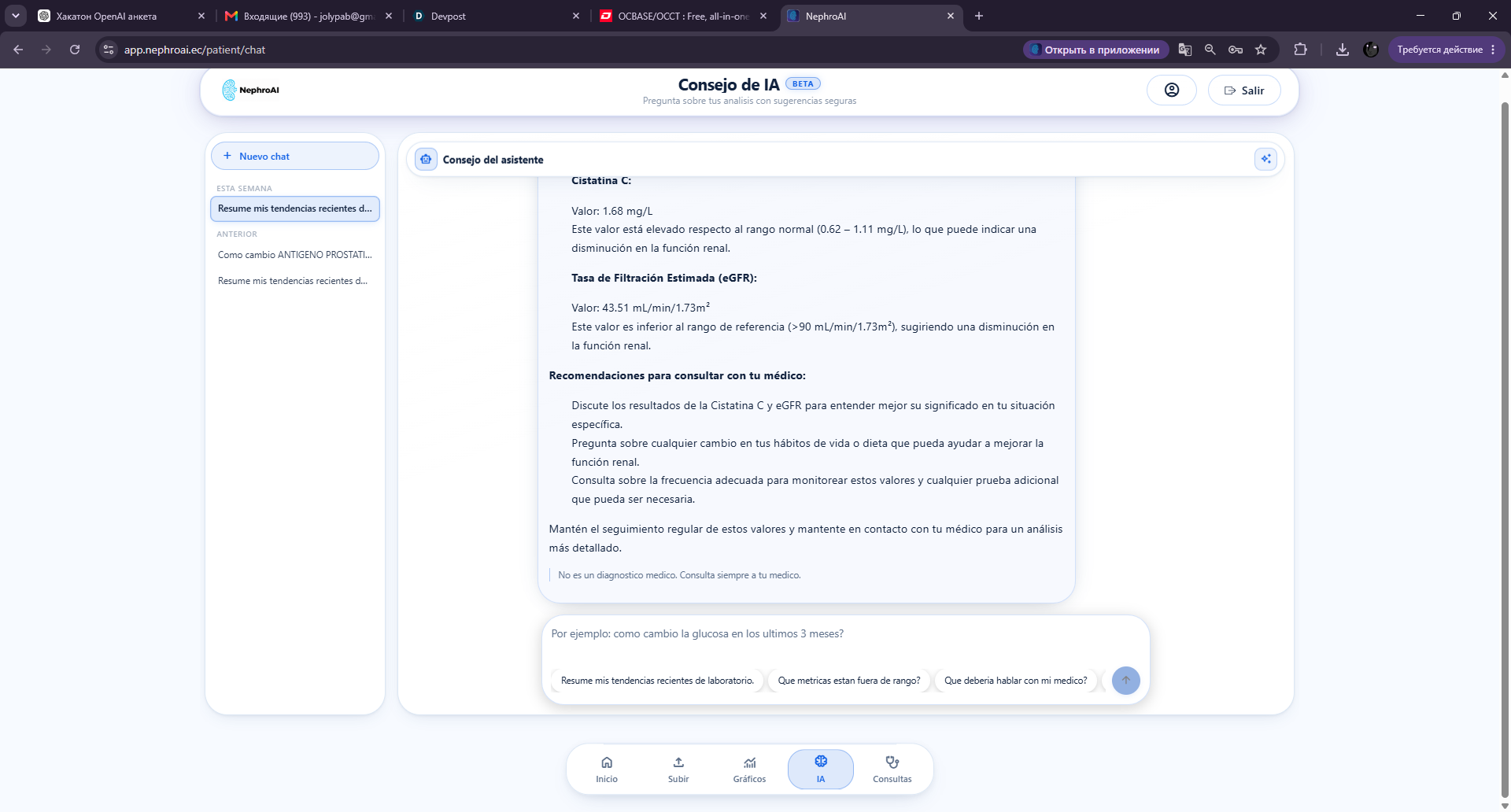
Ai assistiant
Inspiration
Chronic kidney disease affects hundreds of millions of people worldwide, yet many patients struggle to understand their own laboratory results and how their kidney health changes over time.
Reports are often filled with unfamiliar biomarkers, isolated numbers, and medical terminology. Outside of clinical appointments, patients may have no accessible way to understand what changed, what may be important, or what questions they should ask their doctor.
This problem is especially visible in Latin America, where access to specialists and understandable medical information can be limited.
I created NephroAI to close this information gap. The goal is not to replace doctors or provide diagnoses, but to help patients understand the medical information they already have and communicate more effectively with healthcare professionals.
What it does
NephroAI is an AI-powered kidney health platform that transforms fragmented laboratory data into a clear, longitudinal health experience.
Users can upload laboratory reports as PDFs or images. NephroAI extracts relevant values, organizes them, compares results across different dates, and explains important kidney-related biomarkers in accessible language.
The platform helps users:
- Upload and organize laboratory reports
- Track kidney-related biomarkers over time
- Compare current and previous results
- Understand indicators such as eGFR, creatinine, and albuminuria
- Ask questions using the context of their medical history
- Prepare more useful questions for medical appointments
- Share access with a treating physician when appropriate
NephroAI is designed as an educational and organizational companion. It does not diagnose conditions, prescribe treatment, or replace professional medical care.
Why it matters
The potential audience for NephroAI is global.
Kidney disease affects a significant share of the world’s population, while understandable and continuous access to personal health information remains limited. This creates an opportunity to support not only individual patients, but also caregivers, physicians, clinics, laboratories, insurers, and healthcare organizations.
NephroAI initially focuses on Ecuador and Latin America, but the underlying problem exists worldwide. A platform capable of turning complex laboratory data into clear, personalized explanations can potentially serve a very large population while also supporting multiple business models:
- Direct subscriptions for patients
- Clinic and physician tools
- Laboratory partnerships
- Employer and insurer health programs
- White-label deployments for healthcare organizations
How I built it
The current primary version of NephroAI is a web application.
The platform combines document upload and processing, structured health data, historical result comparison, and an AI assistant powered by OpenAI models. The assistant uses the context provided by the user's uploaded results to generate more relevant explanations and answers.
I used Codex throughout development for:
- Implementing and refactoring features
- Debugging frontend and backend behavior
- Reviewing system architecture
- Improving code quality
- Performing security analysis
- Identifying technical risks
- Planning and implementing remediation work
A cross-platform mobile application is also being developed using React Native. It will eventually provide native access on iOS and Android, but the web version is currently the main and most complete product experience.
For the hackathon demonstration, I will present the working web platform.
Challenges I faced
One of the biggest challenges was making medical information understandable without allowing AI-generated responses to appear more certain than the available evidence supports.
Other challenges included:
- Extracting useful data from laboratory PDFs and photos
- Normalizing results from different laboratory formats
- Comparing biomarkers across multiple dates
- Preserving enough context for useful AI responses
- Communicating uncertainty clearly
- Preventing educational explanations from becoming diagnoses
- Protecting sensitive medical information
- Building a product that remains understandable for non-technical users
Accomplishments that I am proud of
I am proud that NephroAI is already a functional web product rather than only a concept.
The current platform brings together:
- Laboratory report upload
- Historical kidney health tracking
- AI-generated explanations
- Context-aware questions and answers
- Medical appointment preparation
- Safety-focused healthcare communication
I am also proud of developing the product independently and using Codex across the full engineering workflow, including implementation, debugging, architecture review, security auditing, and remediation.
What I learned
Building NephroAI taught me that healthcare AI requires careful product and system design, not only a capable language model.
I learned the importance of:
- Structuring medical data before sending it to an AI model
- Preserving historical context
- Clearly communicating uncertainty
- Separating education from diagnosis
- Designing safeguards around sensitive use cases
- Building for users without medical or technical expertise
- Treating privacy and security as fundamental product requirements
What's next for NephroAI
The next steps include:
- Improving laboratory document extraction
- Supporting more kidney-related biomarkers
- Expanding longitudinal trend analysis
- Strengthening safety evaluations and automated testing
- Completing the React Native mobile application
- Preparing the mobile app for beta testing and eventual App Store release
- Improving localization and accessibility
- Validating the experience with healthcare professionals
The long-term goal is to make NephroAI a reliable cross-platform companion for people who want to better understand and manage their kidney health.
Medical disclaimer: NephroAI provides educational information only. It does not diagnose medical conditions, prescribe treatment, or replace professional medical advice.
Built With
- ai
- angular.js
- api
- codex
- computer
- docker
- fastapi
- gpt-5
- gpt-5.5
- gpt-5.6
- healthcare
- next.js
- node.js
- ocr
- openai
- postgresql
- processing
- python
- react-native
- typescript
- vision
- web


Log in or sign up for Devpost to join the conversation.