Inspiration
The inspiration for Nepali-GPT came from the lack of AI tools that understand and respond effectively in the Nepali language. Most modern AI systems are primarily trained on English data, which creates a gap for Nepali speakers who want to interact with technology in their native language. I wanted to explore how machine learning and natural language processing could be used to build an AI model that better supports Nepali users.
What it does
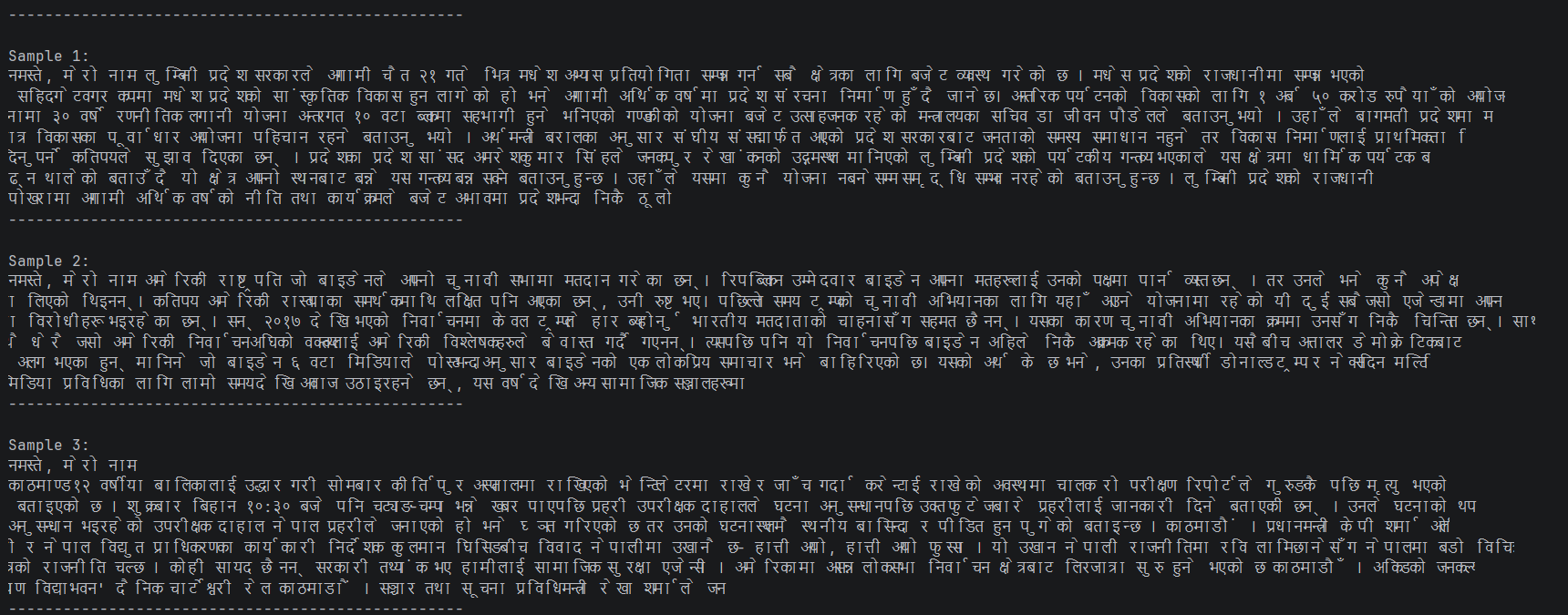
Nepali-GPT is a conversational AI model designed to understand and generate responses in Nepali. The system can answer questions, assist with learning, generate text, and help users communicate more effectively in Nepali. It aims to make AI more accessible to Nepali speakers and demonstrate how language-specific models can improve user interaction.
How I built it
I built Nepali-GPT using modern machine learning and deep learning techniques. The project involved collecting Nepali text data, preprocessing it, and training a language model capable of understanding context and generating meaningful responses. I used Python and machine learning libraries to train and test the model, and experimented with different parameters to improve performance and accuracy.
Challenges I ran into
One of the biggest challenges was the limited availability of high-quality Nepali datasets. Compared to English, Nepali has far fewer publicly available training resources. Another challenge was ensuring that the model correctly understands grammar, context, and cultural nuances in Nepali language conversations.
Accomplishments that I'm proud of
I am proud of successfully creating a working prototype that can generate responses in Nepali. The project also helped demonstrate that it is possible to build language-specific AI systems even with limited resources. Completing the data preprocessing and training pipeline was a major achievement.
What I learned
Through this project, I learned more about natural language processing, dataset preparation, and training machine learning models. I also gained practical experience in handling language data and optimizing model performance. The project helped deepen my understanding of how conversational AI systems work.
What's next for Nepali-GPT
In the future, I plan to improve Nepali-GPT by expanding the training dataset and improving the model’s accuracy. I also want to add features such as voice interaction, better contextual understanding, and integration into web or mobile applications. The long-term goal is to create a more powerful AI assistant specifically designed for Nepali users.
Built With
- deep-learning
- gpt
- natural-language-processing
- pytorch
