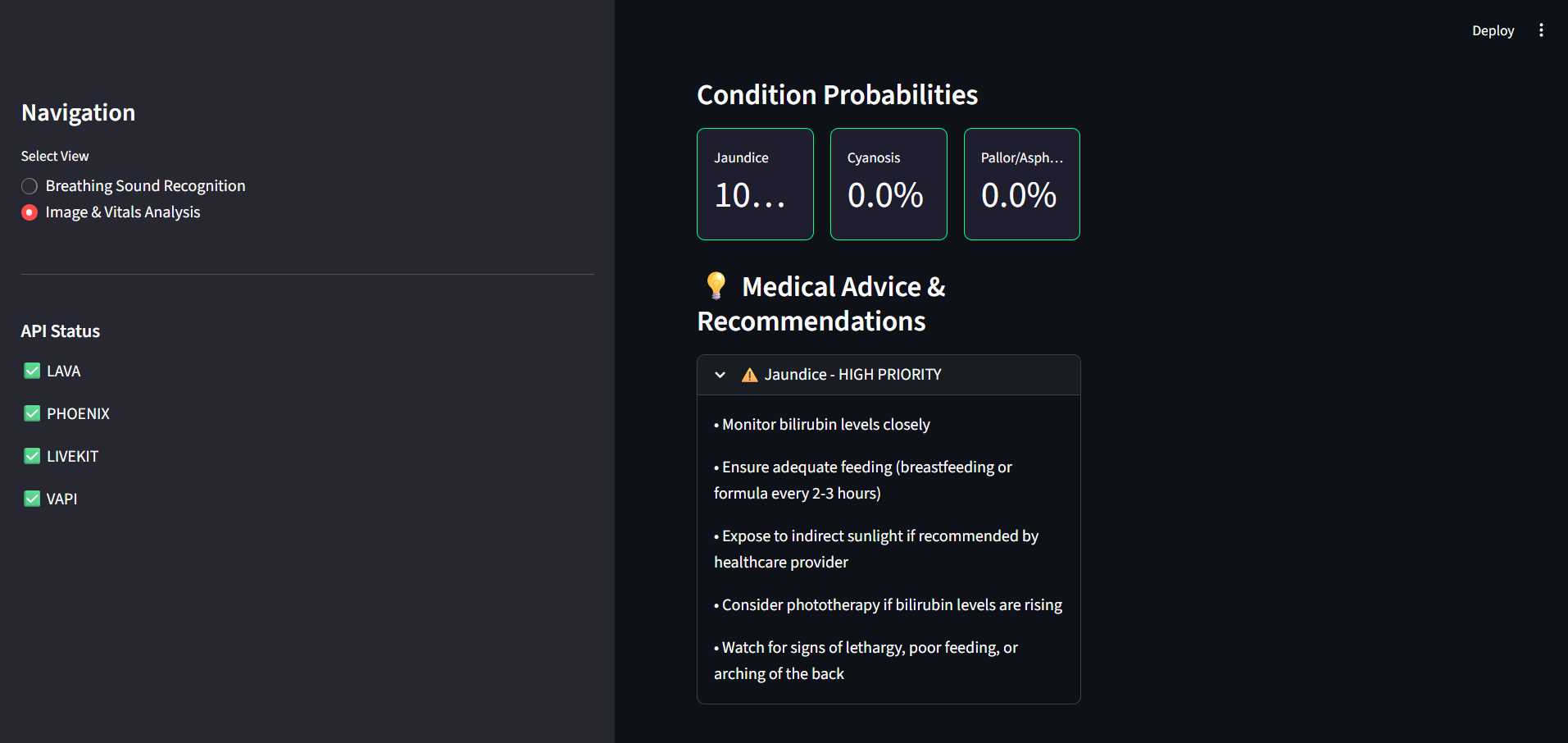
We were inspired by the urgent need for accessible neonatal screening, especially in regions where medical facilities are limited and early detection of jaundice, cyanosis, or birth asphyxia is often missed. While researching, we found multiple studies showing that skin hue variations are directly correlated with oxygen and bilirubin levels, and that computer vision can accurately analyze these hues for early diagnosis. This insight formed the foundation of Neovyn — a low-cost, AI-powered neonatal health screening system that combines image recognition and live audio signal analysis to detect early signs of critical newborn conditions.
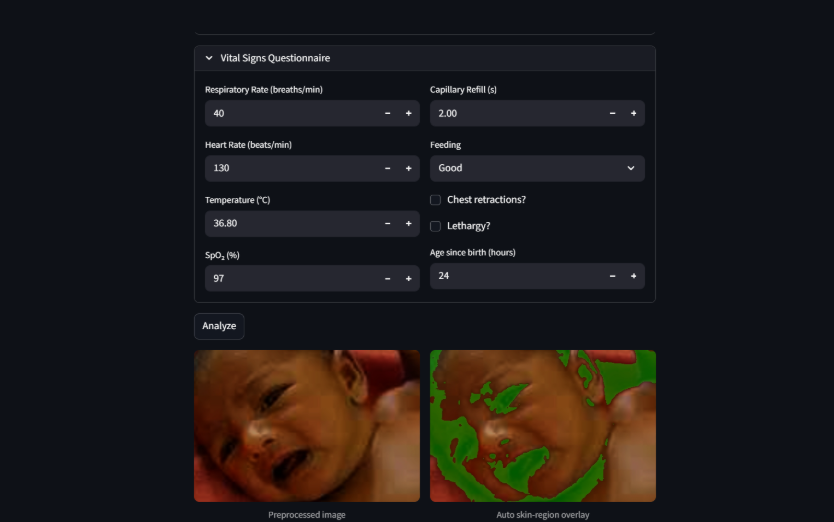
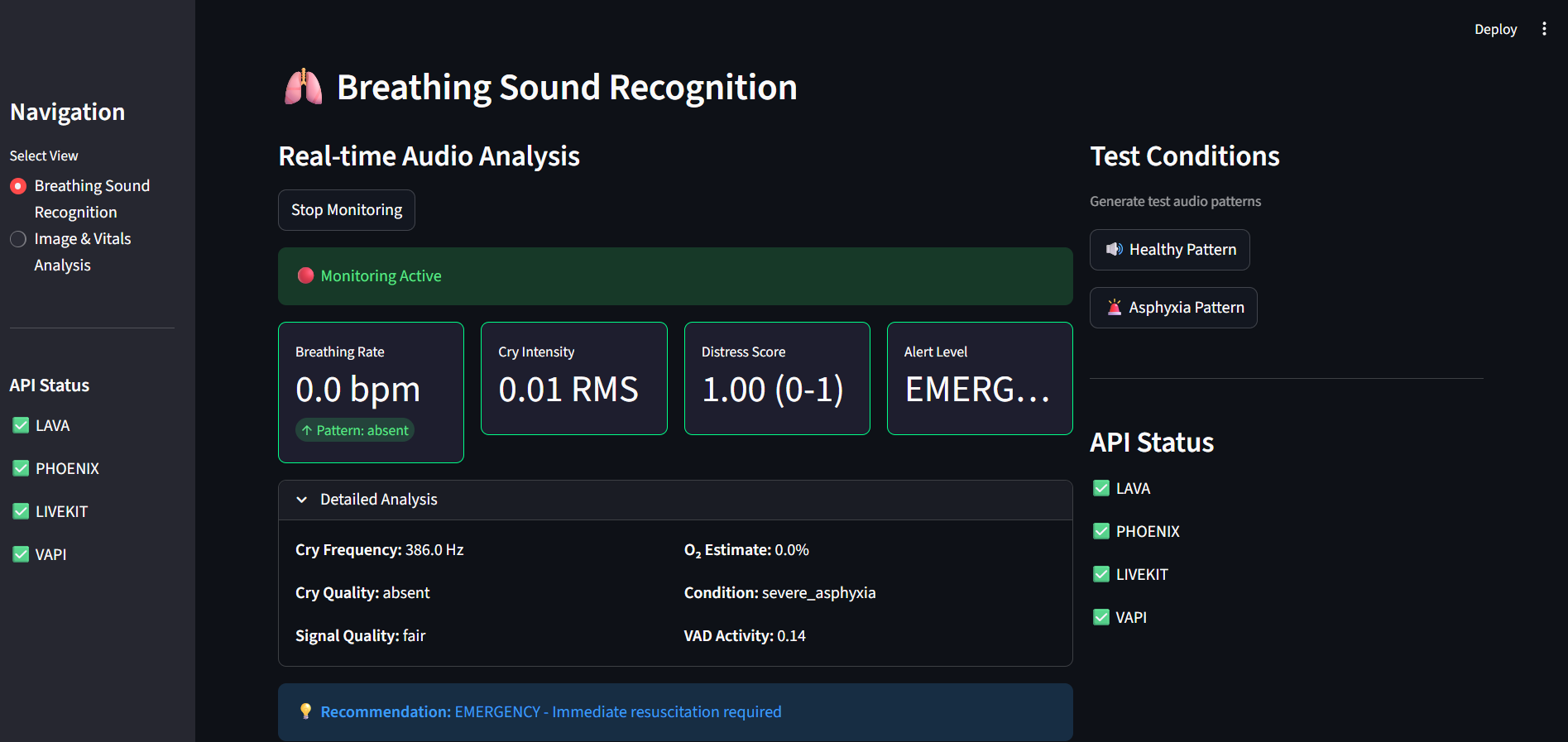
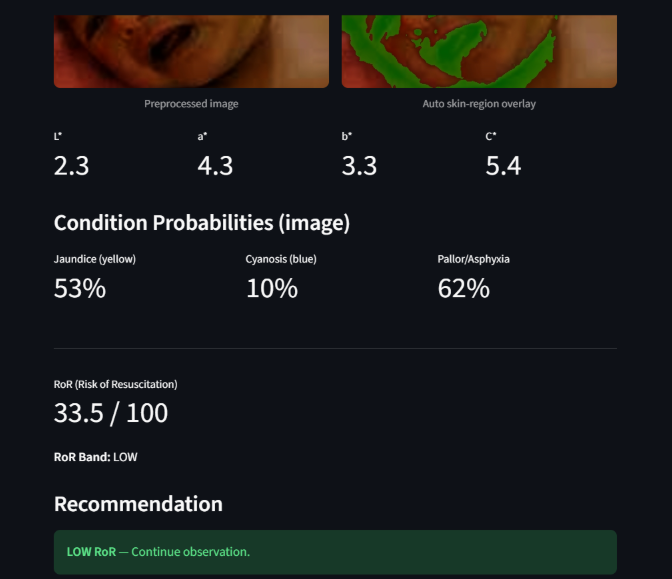
Our image module uses CNN-based classification and hue histogram mapping to identify subtle bluish or yellowish tones in the skin that indicate oxygen deficiency or jaundice. The audio module analyzes cry patterns and breathing sounds using MFCCs and deep learning, detecting anomalies linked to asphyxia or distress. Both modules merge their findings into a unified AI-driven risk report with probabilities and visual heatmaps for interpretation.
Building Neovyn taught us how machine learning can bridge gaps in neonatal care by transforming ordinary sensors into diagnostic tools. We faced challenges in sourcing reliable medical datasets and tuning models for accuracy across diverse skin tones, but each iteration brought us closer to a functional, real-time system. Our working MVP is deployed on Hugging Face Spaces (Streamlit + PyTorch), allowing users to upload a baby’s photo and audio to receive instant, AI-based screening results—making life-saving diagnostics accessible anywhere.
Built With
- arize
- lava
- livekit
- openai
- python
- vapi


Log in or sign up for Devpost to join the conversation.