Inspiration
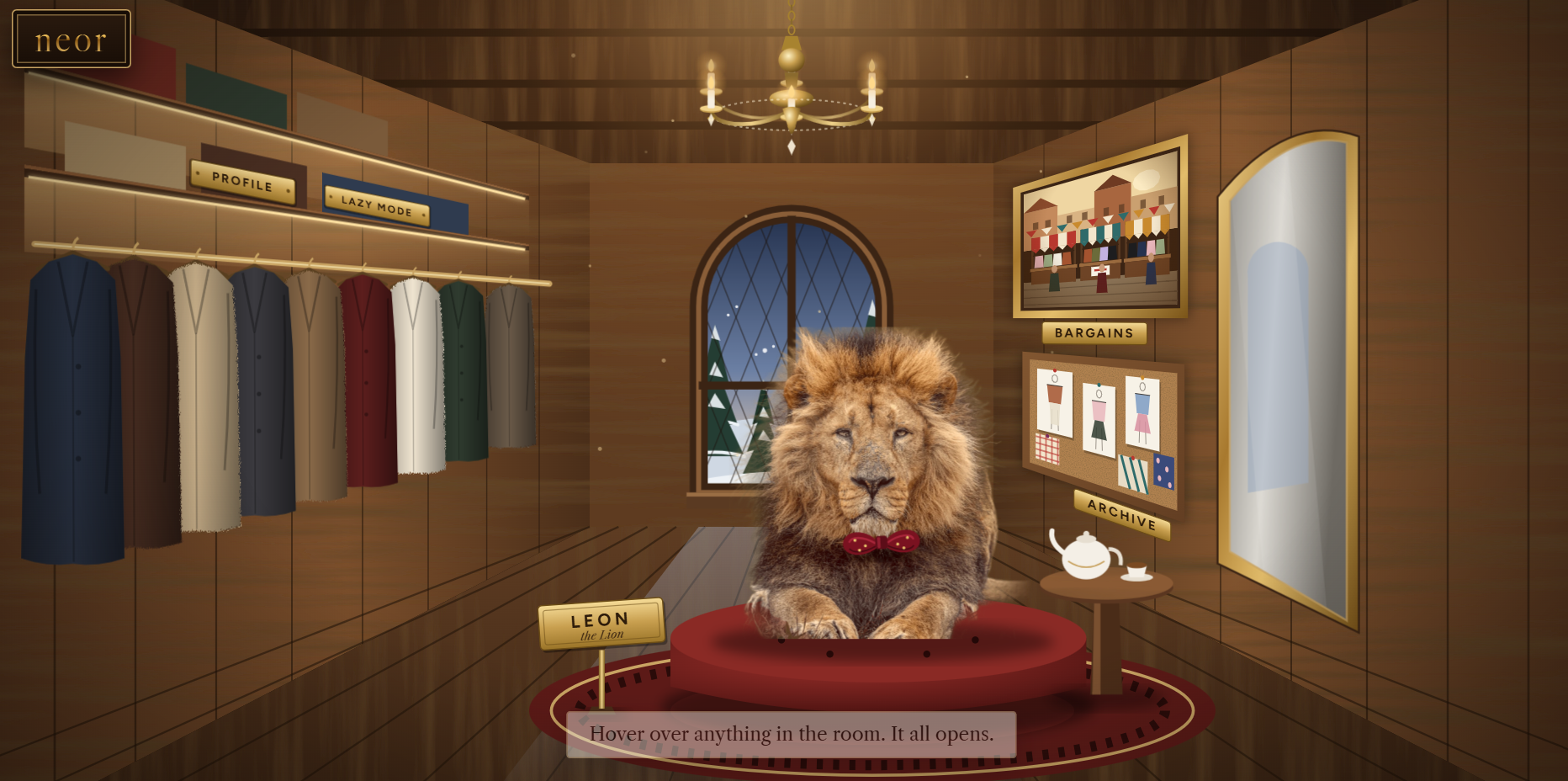
https://neor-closet.web.app/ Shopping often encourages us to buy things we don’t need. We created Neor to make fashion more intentional and tailored to the users’ needs by recommending outfits and purchases based on what users already own, their personal style, budget, occasion, and climate. Inspired by the magical wardrobe in Narnia, Neor transforms building a stylish, sustainable closet into an immersive experience, guided by our mascot, Leon the Lion, who identifies gaps in your wardrobe.
What it does
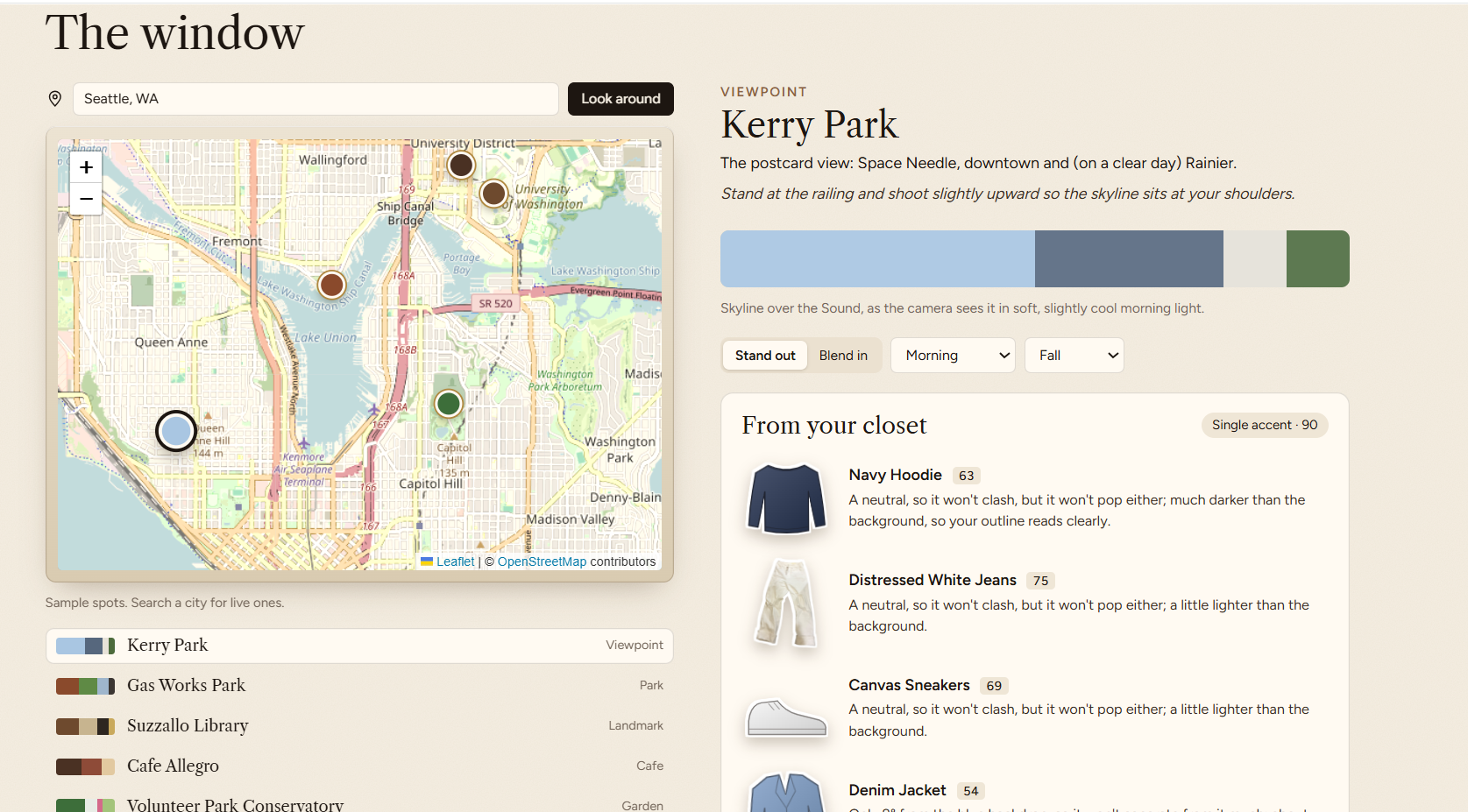
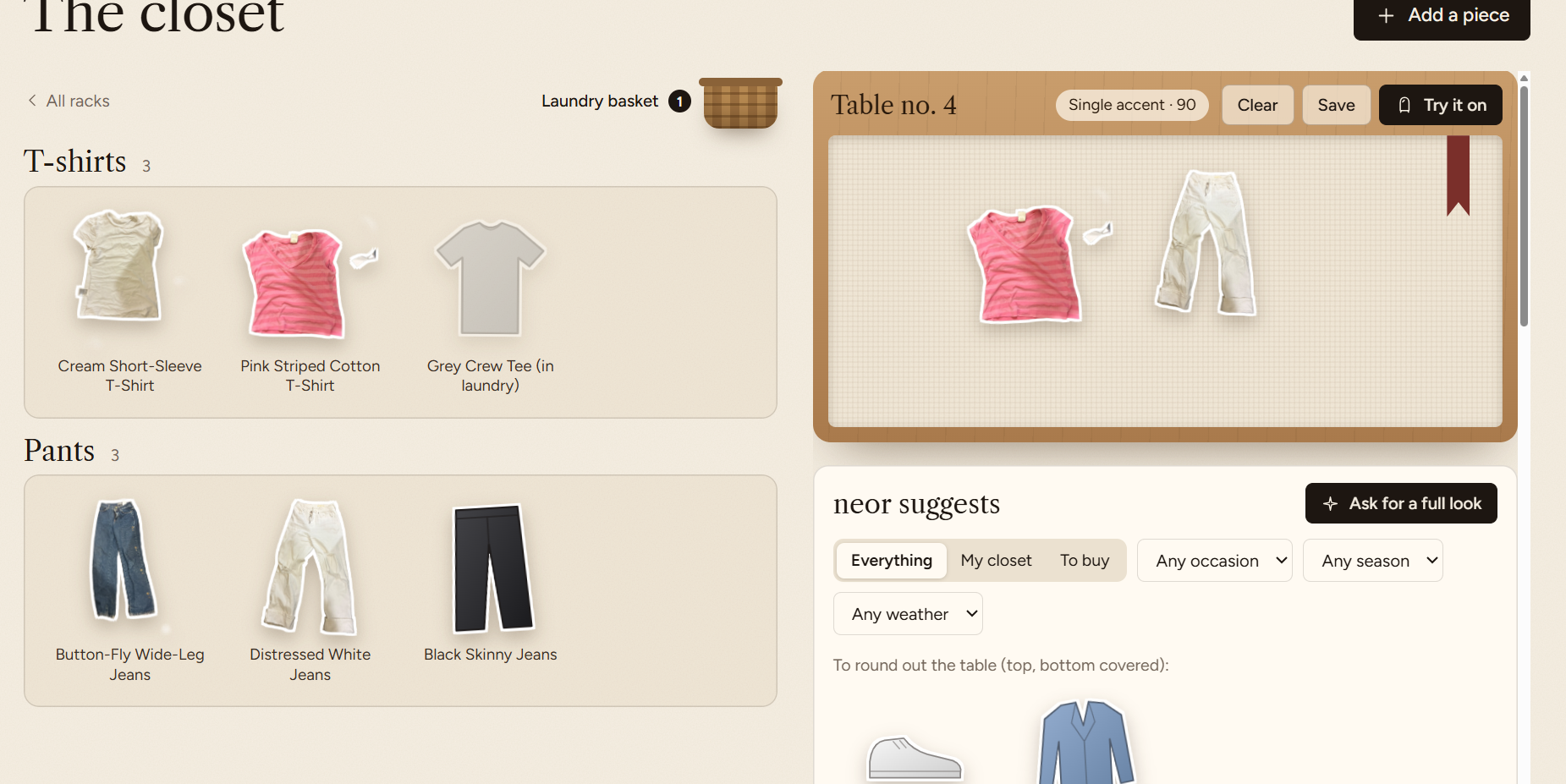
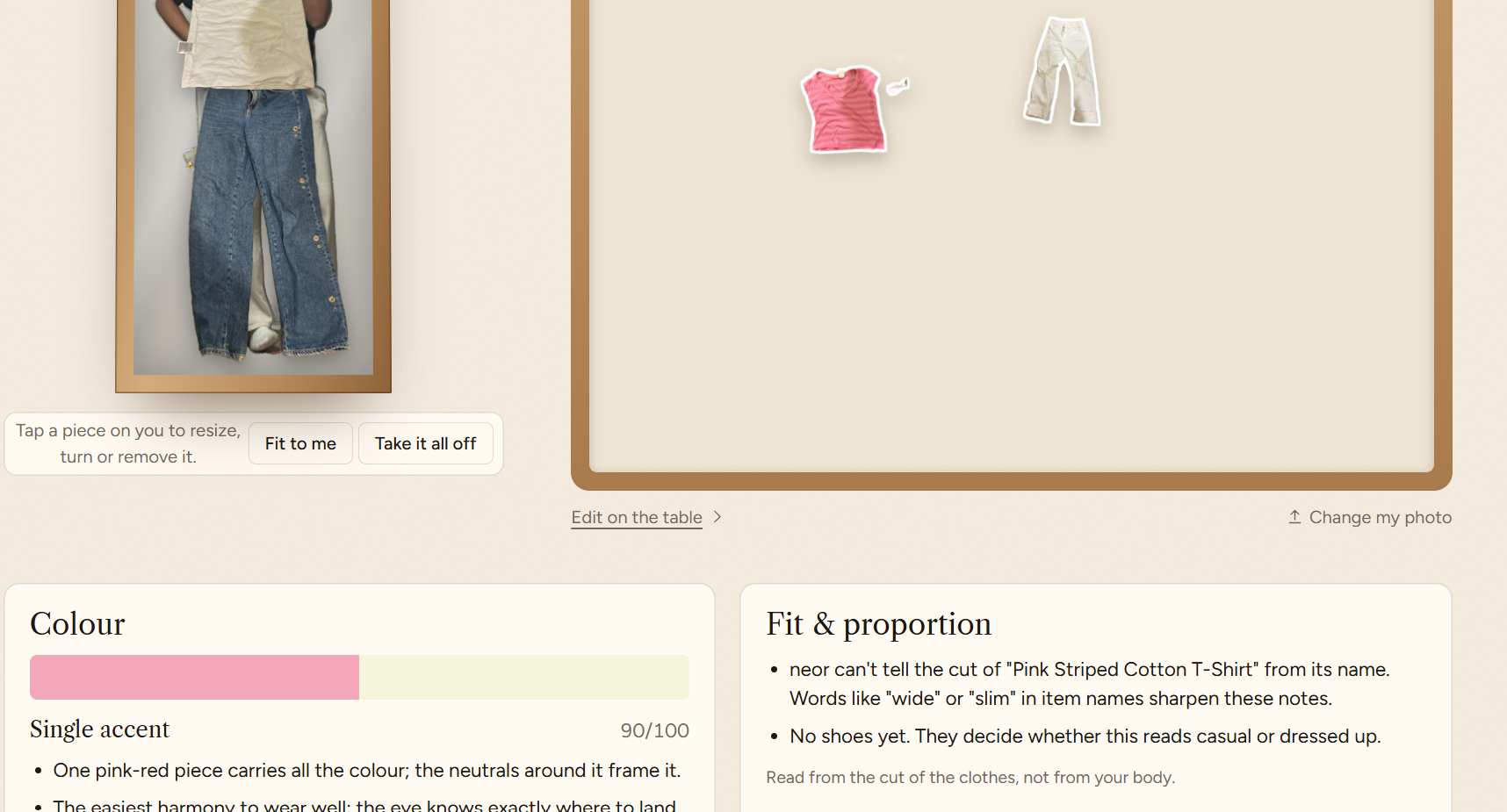
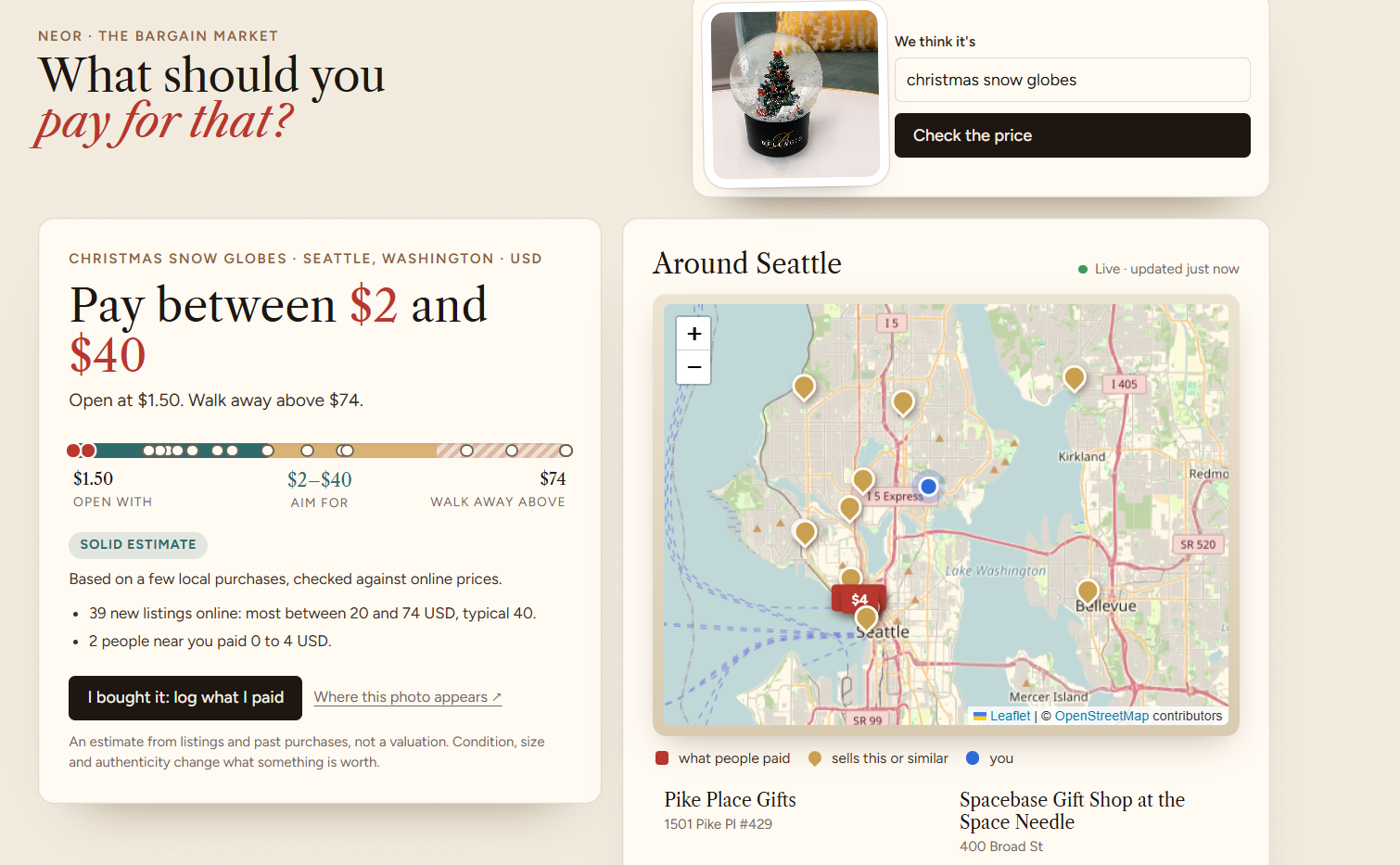
Neor allows you to create outfits from your closet and uses AI to recommend clothing pieces that are not only from your closet, but also clothing items you can purchase online to enhance your outfit. The app also helps you bargain and find the most reasonable price for an item when thrifting or shopping in a non-local location. Using our lion mascot, Leon, users can also identify missing wardrobe staples. Neor can visualize outfits, analyze color palettes and personal style, and also recommend outfits based on location outfit recommendations for cafes, photo spots, and shopping. If the user doesn’t want to create their outfit, Neor will do it for them by viewing user location and analyzing the weather, tracking their events from their google calendar, and Neor can send an email to the user for an outfit recommendation every day.
How we built it
We built Neor with React and TypeScript on the frontend, hosted on Firebase, and Python and FastAPI on the backend, deployed on Vultr. Supabase handles authentication, our database, and private photo storage.
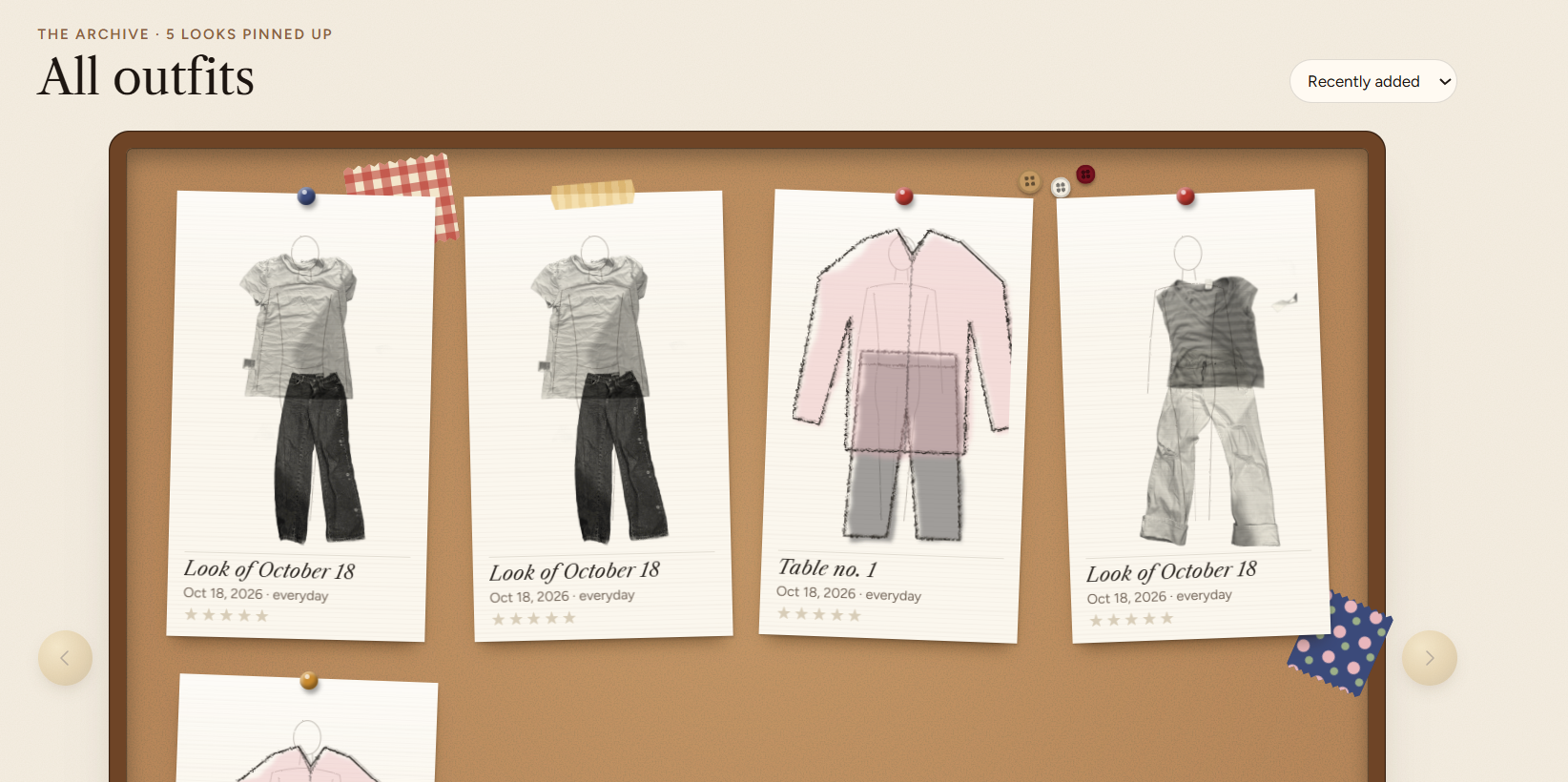
Our frontend brings the Narnia-inspired wardrobe to life with interactive oak doors, hoverable and clickable closet objects, clothing item stickers for users to try on, drag-and-drop outfit building, and a fashionista corkboard-style outfit archive.
For AI styling, we use Groq's gpt-oss models for text and Qwen for image analysis. Python scores outfit combinations before the AI selects and explains recommendations, reducing hallucinations. We also integrated Google Shopping, nearby store data, weather, calendar-based outfit suggestions, and a simulated Visa checkout.
We prioritized privacy and reliability through authenticated requests, database-level access controls, photo metadata removal, and automated testing. With 130+ automated tests, we tested both functionality and security while developing separate backend modules in parallel.
Challenges we ran into
We faced challenges across both frontend and backend development. On the frontend, designing an immersive Narnia-inspired wardrobe while keeping navigation intuitive, modern, and accessible to use required careful UI/UX decisions. We also had to make sure that these decisions were consistent with the API formats.
On the backend, we faced a couple of technical challenges during development, from outdated AI models silently triggering rule-based fallbacks to AI inventing clothing recommendations and statistics. We improved reliability by switching models, validating outputs, and moving scoring into Python. We also addressed vision-model loops, unreliable map servers, iPhone photo compatibility, and dropped database connections. To keep checkout safe, we restricted it to Visa test cards and labeled all orders as simulated. Finally, we resolved deployment issues and published a privacy policy for Google sign-in.
Accomplishments that we're proud of
We are proud of the story and experience behind Neor. By combining a Narnia-inspired wardrobe, an interactive closet, and our character Leon the Lion, we have created a distinctive vision for making personal styling more engaging while encouraging smarter shopping habits.
What we learned
We learned that although AI can think for itself, it needs human eyes to look over and be involved in the decision making process. We also learned how to balance an ambitious, immersive UI with usability, privacy, and accessibility. Working across frontend and backend taught us the importance of clear API contracts, modular development, and testing real-world edge cases. Most importantly, we learned that thoughtful technology should help people make better decisions when purchasing items, not simply encourage them to consume more.


Log in or sign up for Devpost to join the conversation.