-
-
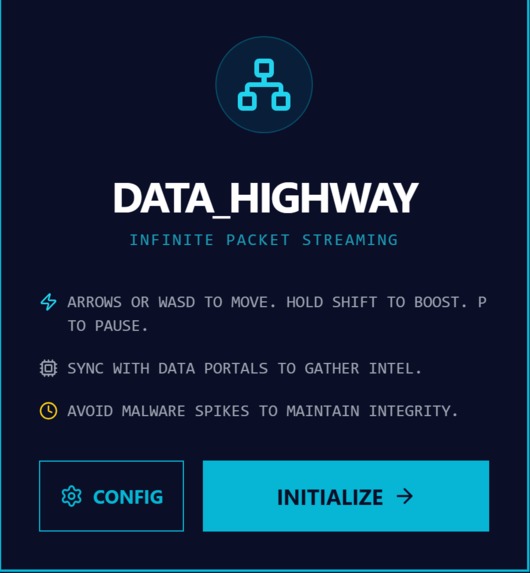
On-ramp to the data highway
-
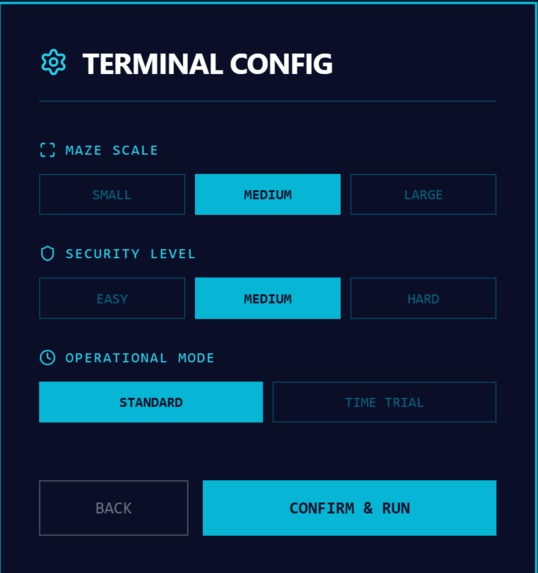
Tune your route before the data highway.
-
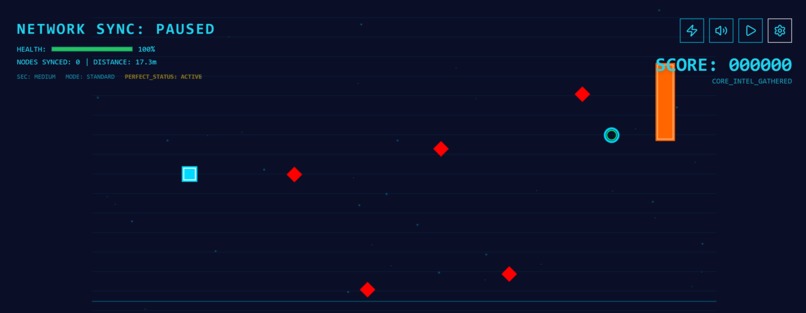
Inside the stream. Stay alive.
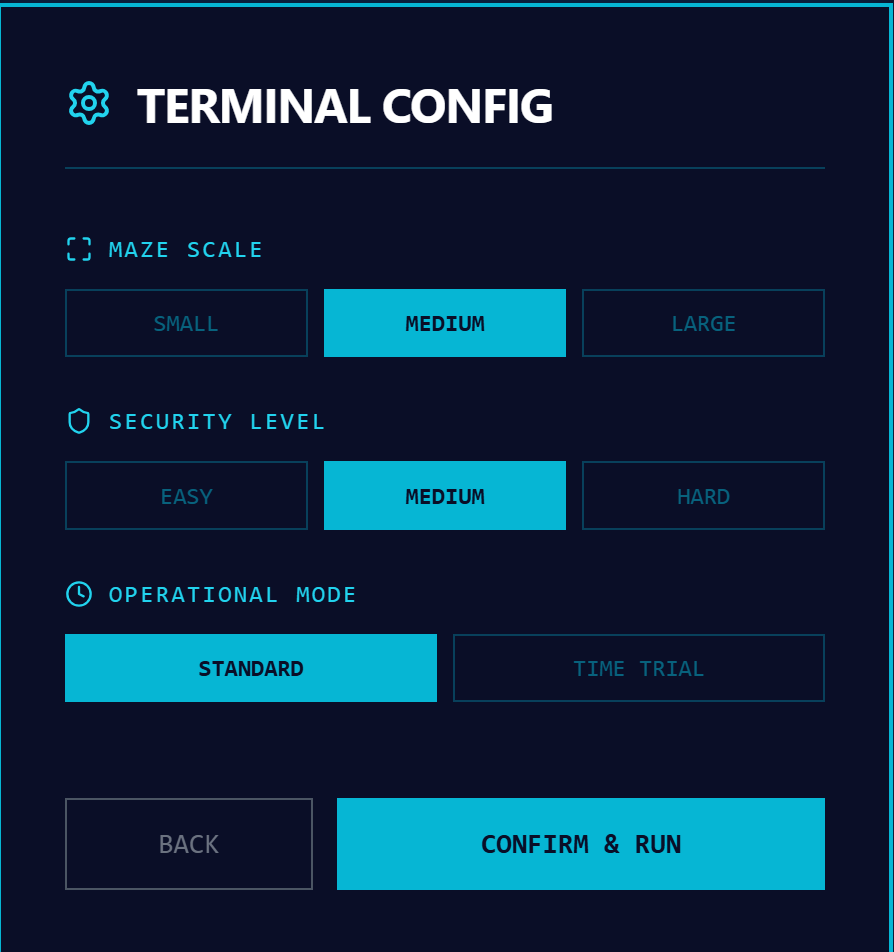
Inspiration The inspiration for Networking Maze: Data Highway came from the realization that while computer networking is the backbone of our digital world, its learning curve is often steep and dry. We wanted to take the abstract concepts of IP addressing, subnet masking, and protocol layers and inject them with the high-octane energy of a cyberpunk infinite runner. Our goal was to create an environment where solving a CIDR calculation feels as critical as dodging an incoming malware spike.
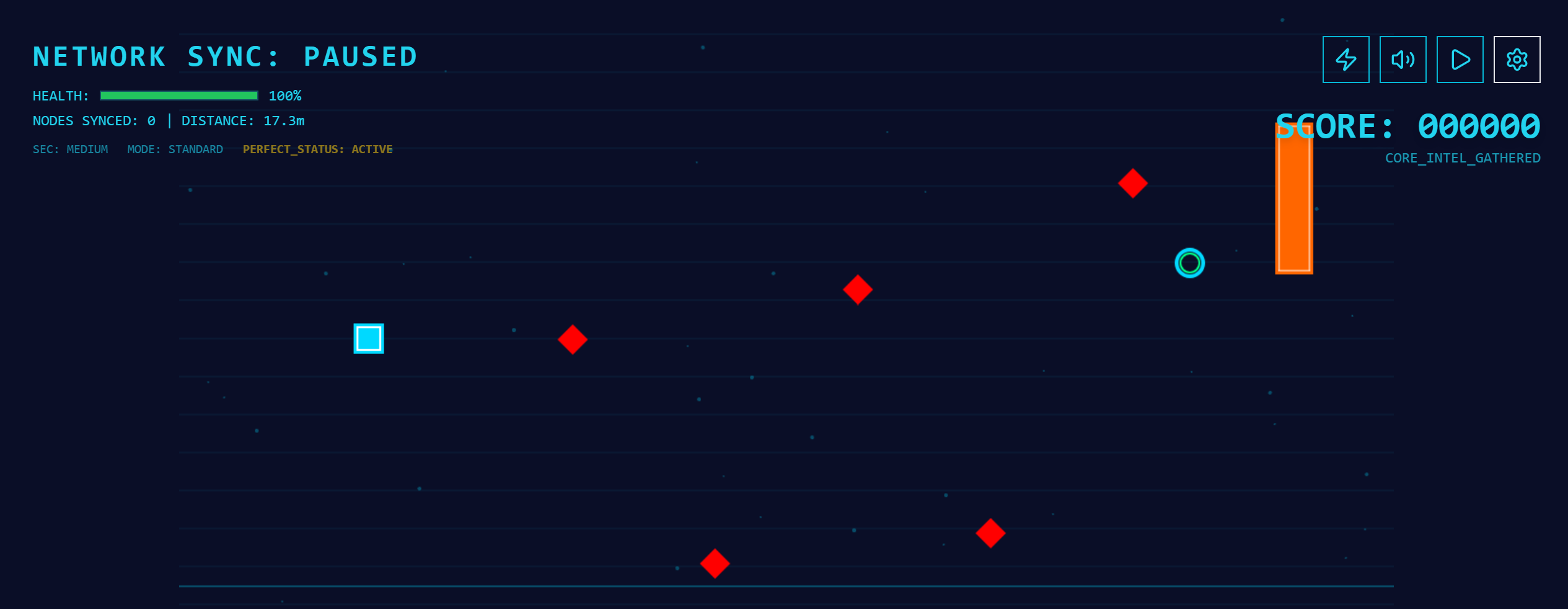
What it does Data Highway is an interactive 2D side-scrolling educational game. Players navigate a "packet" through a futuristic data stream, dodging malware (obstacles) and collecting power-ups. At key synchronization points, players must solve networking challenges—ranging from identifying OSI layers to calculating subnet ranges—to maintain system integrity. The game features:
Scaling Difficulty: From basic IP identification to complex advanced networking protocols. Hacking Minigames: Interactive logic puzzles for server node "de-encryption." Multi-Device Support: Seamless play across Desktop (Keyboard) and Mobile (Touch D-Pad). Infinite Generation: A procedurally generated world that ensures no two "streams" are the same. How we built it The project was built using a modern full-stack web technology suite:
Engine: Phaser 3 manages the physics, sprite rendering, and game loop. UI & HUD: React with Tailwind CSS provides a high-performance, responsive overlay for menus and puzzles. State Management: Zustand acts as the central nervous system, synchronizing data between the Phaser game world and the React UI. Procedural Audio: Tone.js synthesizes a unique cyberpunk techno soundtrack in real-time, adapting to the game's pace. Icons: Lucide React for consistent, futuristic iconography. Challenges we ran into One of the primary challenges was the synchronization of two different rendering engines. Phaser operates on a fixed-step canvas loop, while React uses a declarative DOM-based approach. We had to implement a custom EventBus to ensure that when a player hits a portal in the physics engine, the React UI reflects the challenge state instantly without frame drops.
Another hurdle was procedural audio timing. Initially, the Tone.js loops suffered from scheduling drift. We solved this by implementing a latency-aware scheduling offset ($t_{schedule} = t_{now} + \Delta_{offset}$) to ensure the "Cyber Kick" stayed perfectly in sync with the visual data pulses.
What's next for Data Highway Global Leaderboards: Implementing a backend to track the "Fastest Network Engineers" globally. Multiplayer "Race" Mode: Allowing two players to compete in the same stream to see who can sync all nodes first. Protocol Expansion: Adding challenges for advanced concepts like BGP routing, VPN tunneling, and IPv6 transitions. Visual Evolution: Upgrading the 2D sprites to 2.5D with advanced shader effects for a more immersive "highway" feel.
Built With
- framer-motion
- lucide-react
- phaser3
- react
- tone.js
- typescript
- vite
- zustand

Log in or sign up for Devpost to join the conversation.