Inspiration
I was inspired by my love for the 80s—neon lights, bold colors, and that upbeat, full-of-life energy. I wanted to create a world that felt fun, vibrant, and immersive—like a place you’d want to race through or just hang out in. Neon Rush: Remix Arena is my way of bringing that retro-futuristic vibe to life.
What it does
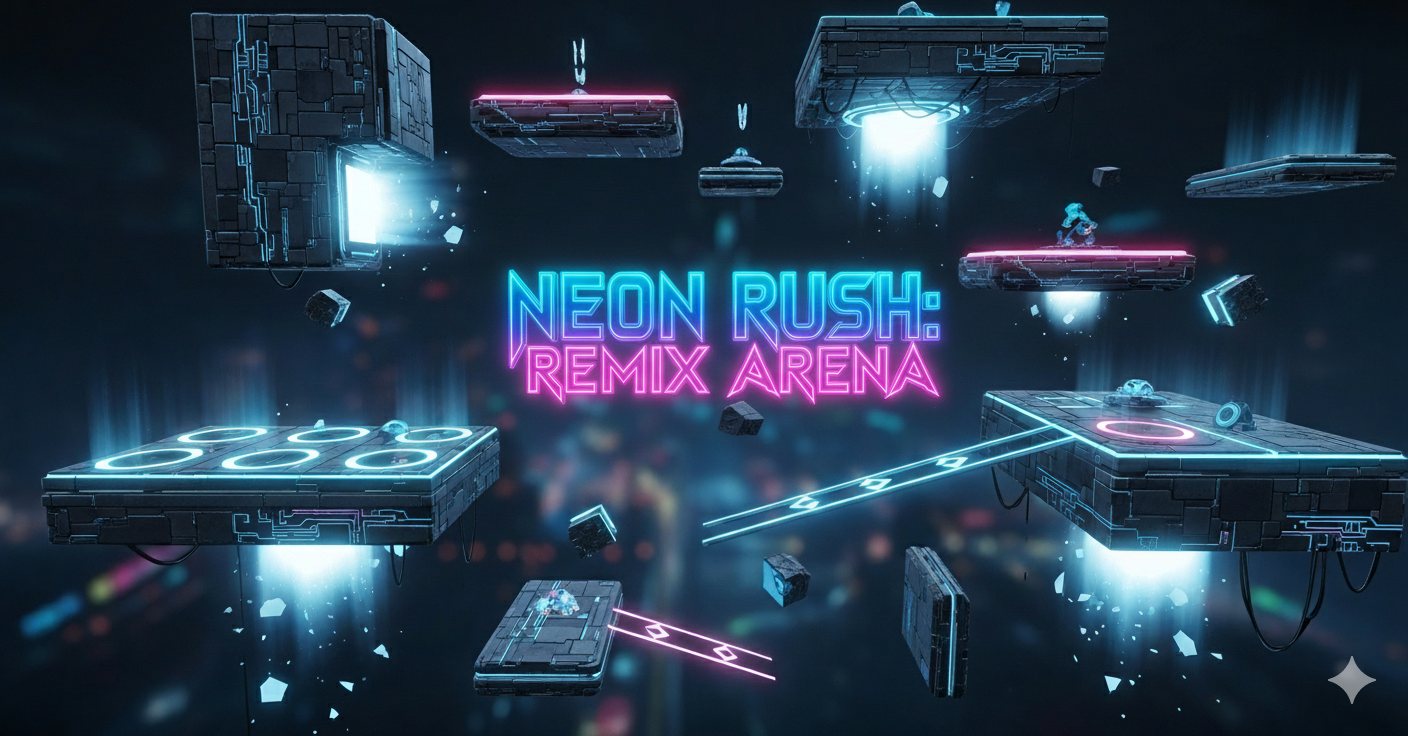
Players race through an obstacle course set in a neon-lit cyber city. They dodge traps, leap across glowing platforms, and collect remix tokens that unlock alternate paths, speed boosts, and visual effects. The world is modular, mobile-friendly, and designed for remixing—so creators can reconfigure the arena or build their own challenges.
How we built it
Neon Rush: Remix Arena was created using the Meta Horizon Worlds Desktop Editor. I used custom prompts with the GenAI feature to generate the cyberpunk skyline and neon atmosphere, then layered in built-in assets, gizmos, and sample scripts from Meta’s GitHub to shape the gameplay. My focus was on design—building a vibrant, symbolic space with modular elements that players can race through or remix. I approached everything step by step, learning as I built and using every tool available to bring the vision to life.
Challenges we ran into
One of the biggest challenges was working around my limited coding and scripting experience. I’m still learning, so translating ideas into working logic took more time than expected. Some GenAI outputs didn’t behave the way I hoped, especially for interactive elements, which meant manually adjusting scripts—often without knowing exactly how. Another challenge was my own creative process. I kept changing my mind mid-build, chasing new ideas instead of sticking to the blueprint. That threw off my progress and made things harder to finish.
Accomplishments that we're proud of
I’m most proud that I persevered and finally published a world in Meta Horizon. As a perfectionist, I kept scrapping drafts and starting over—never feeling like it was “ready.” But this time, I pushed through and submitted something I can keep improving over time. It’s not perfect, but it’s real, it’s playable, and it reflects my growth as a designer learning the ropes. That feels like a huge win.
What we learned
As a neurodivergent with ADHD, I also realized the importance of sticking to a blueprint and saving new ideas for future updates instead of trying to do everything at once. I learned that it’s totally okay to use prefab kits and GenAI tools—they can dramatically speed up world-building and help bring ideas to life. Starting with the basics and layering in detail later made the process more manageable.
What's next for Neon Rush: Remix Arena
Now that the core world is built, the next step is expansion. I want to make Neon Rush more customizable—adding new platform styles, trap types, and remix token effects so creators can shape their own versions. I also plan to introduce different experiences inside the world: a chill hangout zone with ambient music and visuals, and alternate game modes like co-op challenges or mini-games. The goal is to evolve Neon Rush into a vibrant, remixable hub where players can race, relax, or create—whatever vibe they’re chasing.
Built With
- genai
- lighting-gizmos
- place-assets
- timers
- traps
- typescript
- worldsdesktopeditor


Log in or sign up for Devpost to join the conversation.