-
-
-
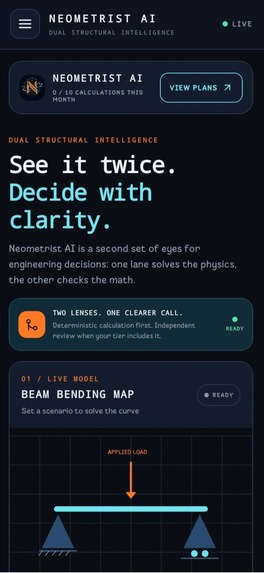
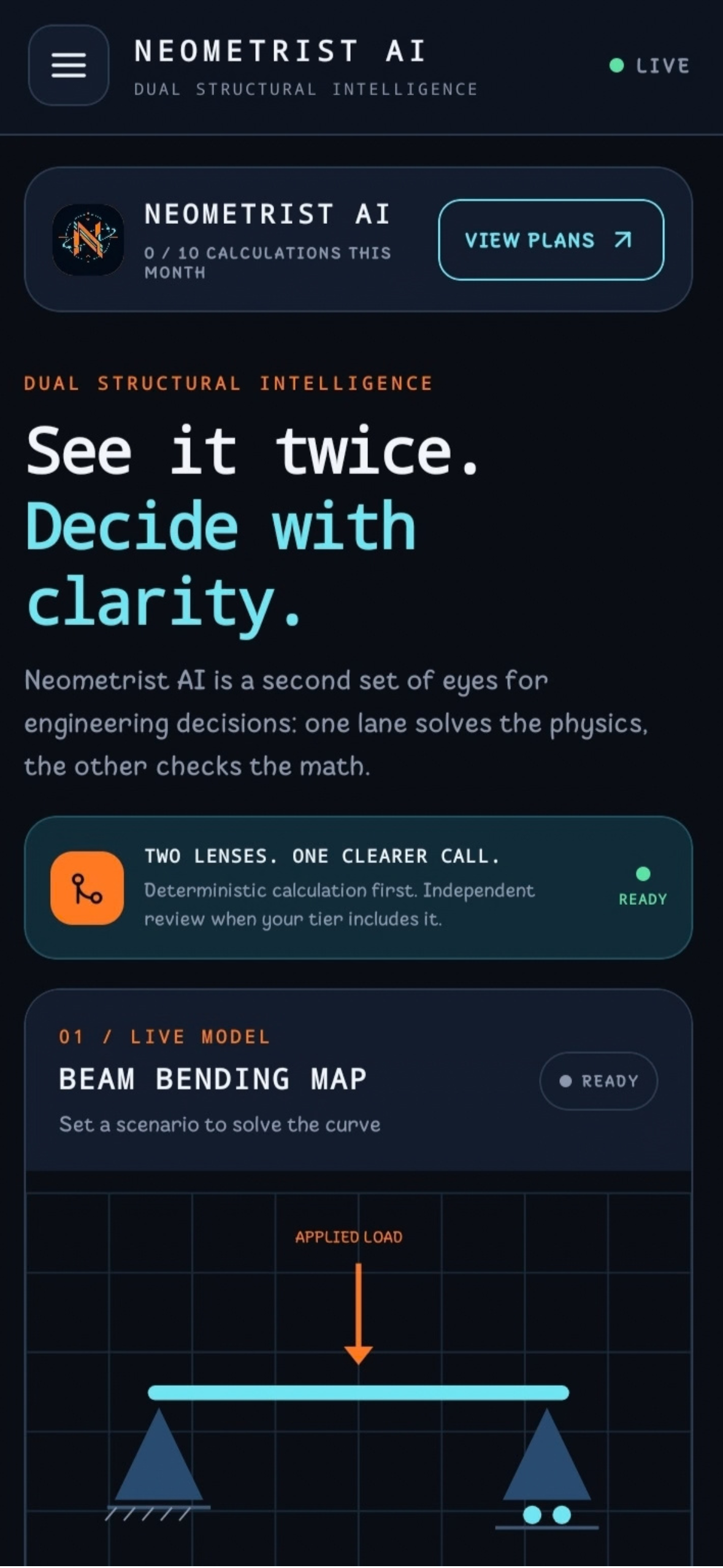
Home screen
-

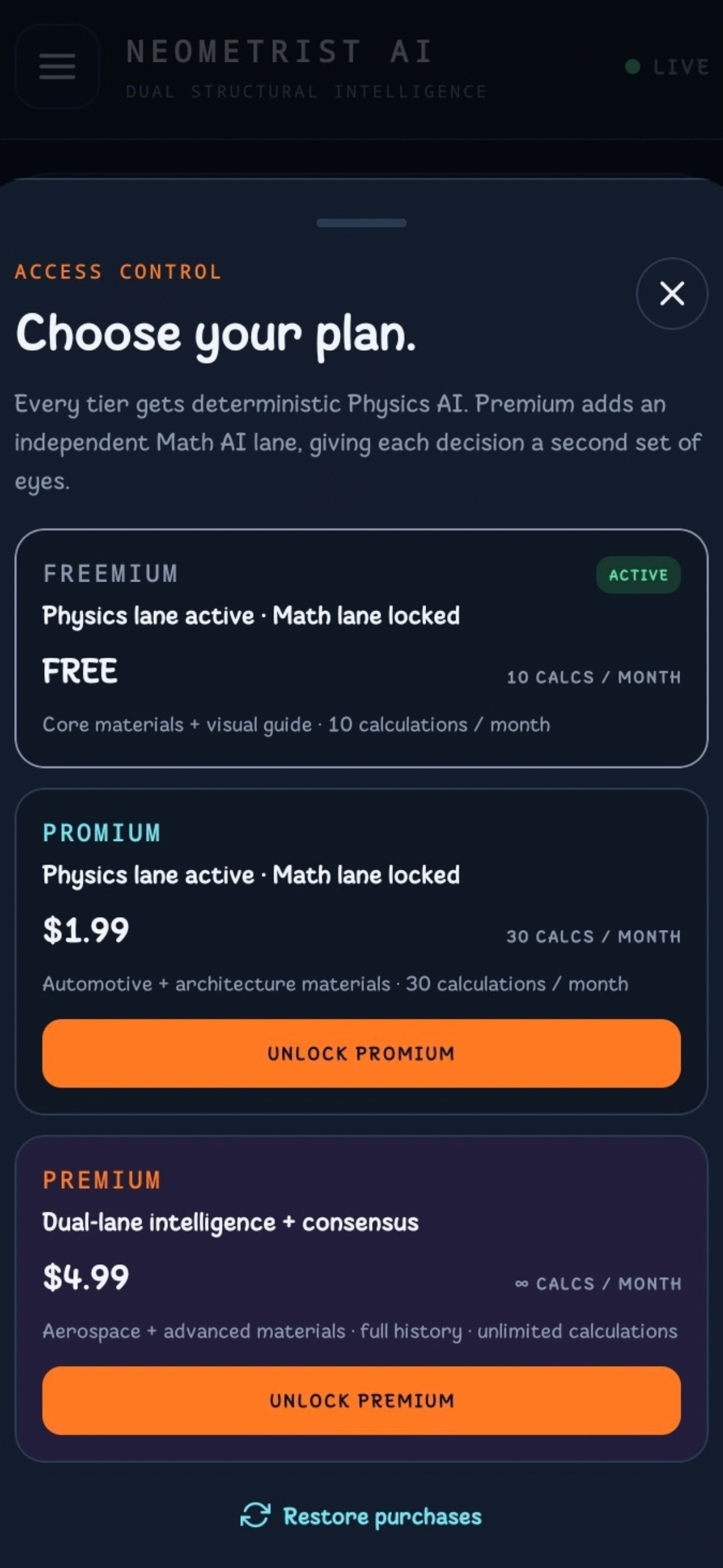
Payment Tiers
-
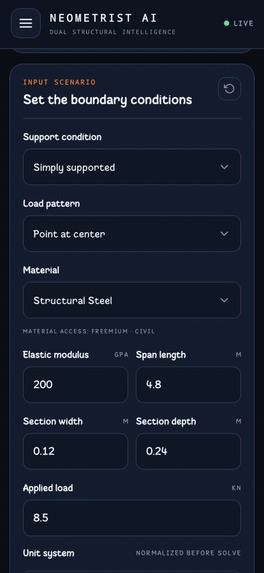
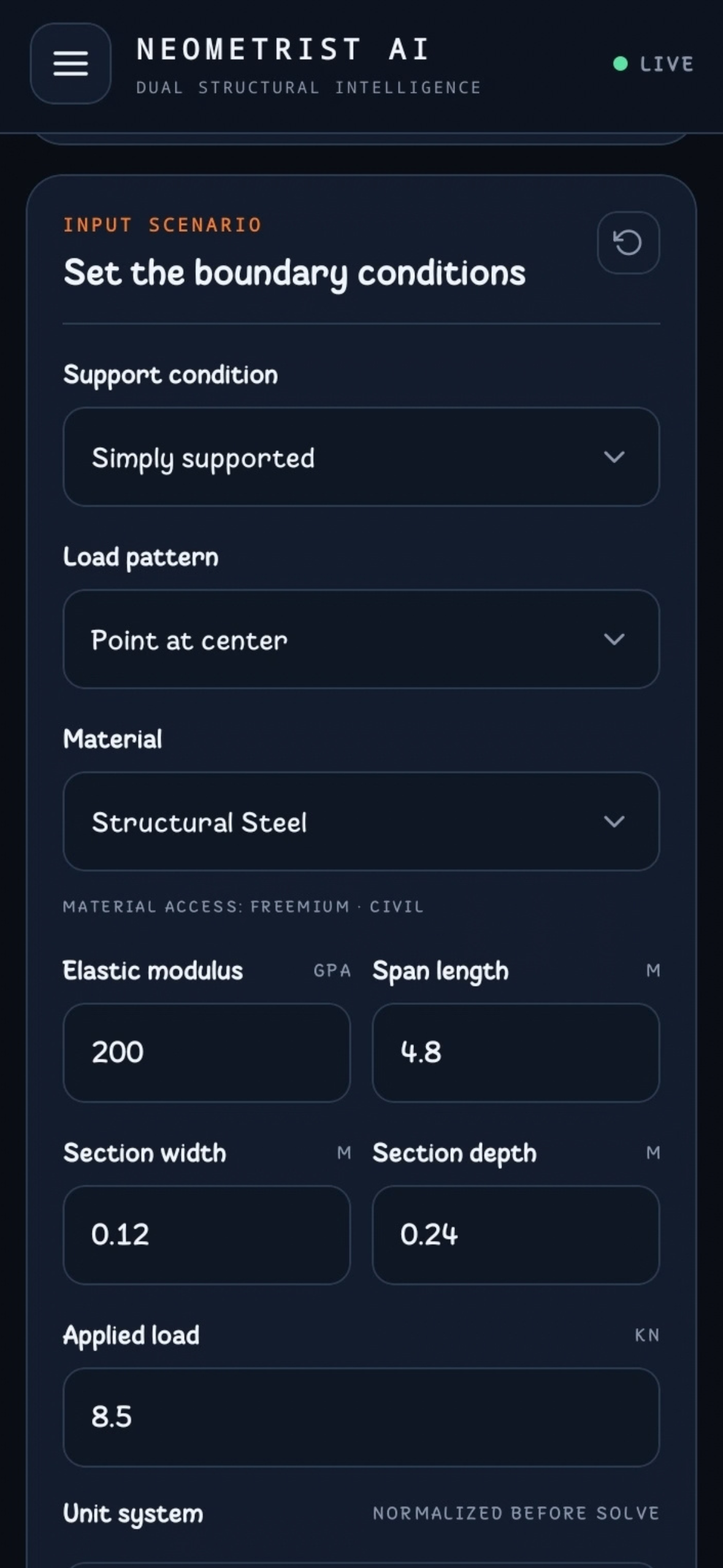
Specification of materials and value
-
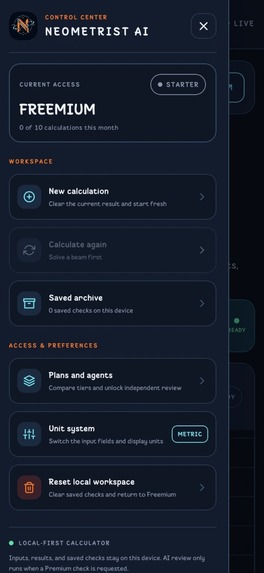
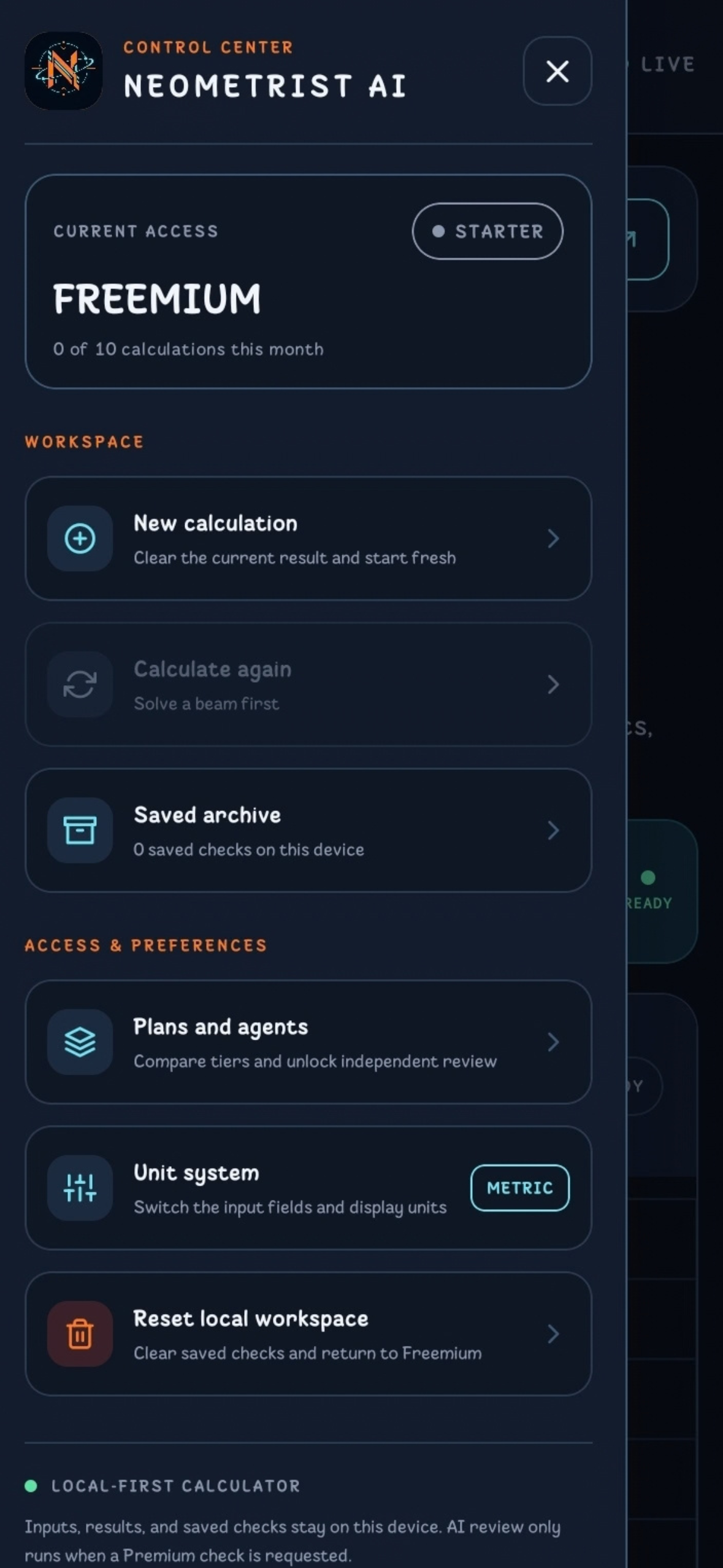
Hambuger Interactive Interface
-
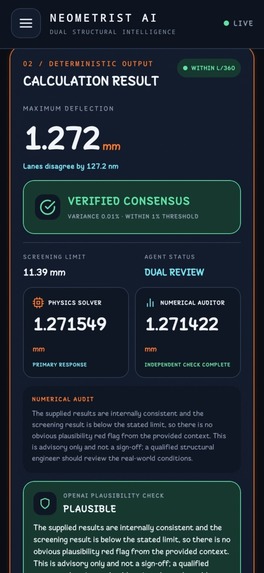
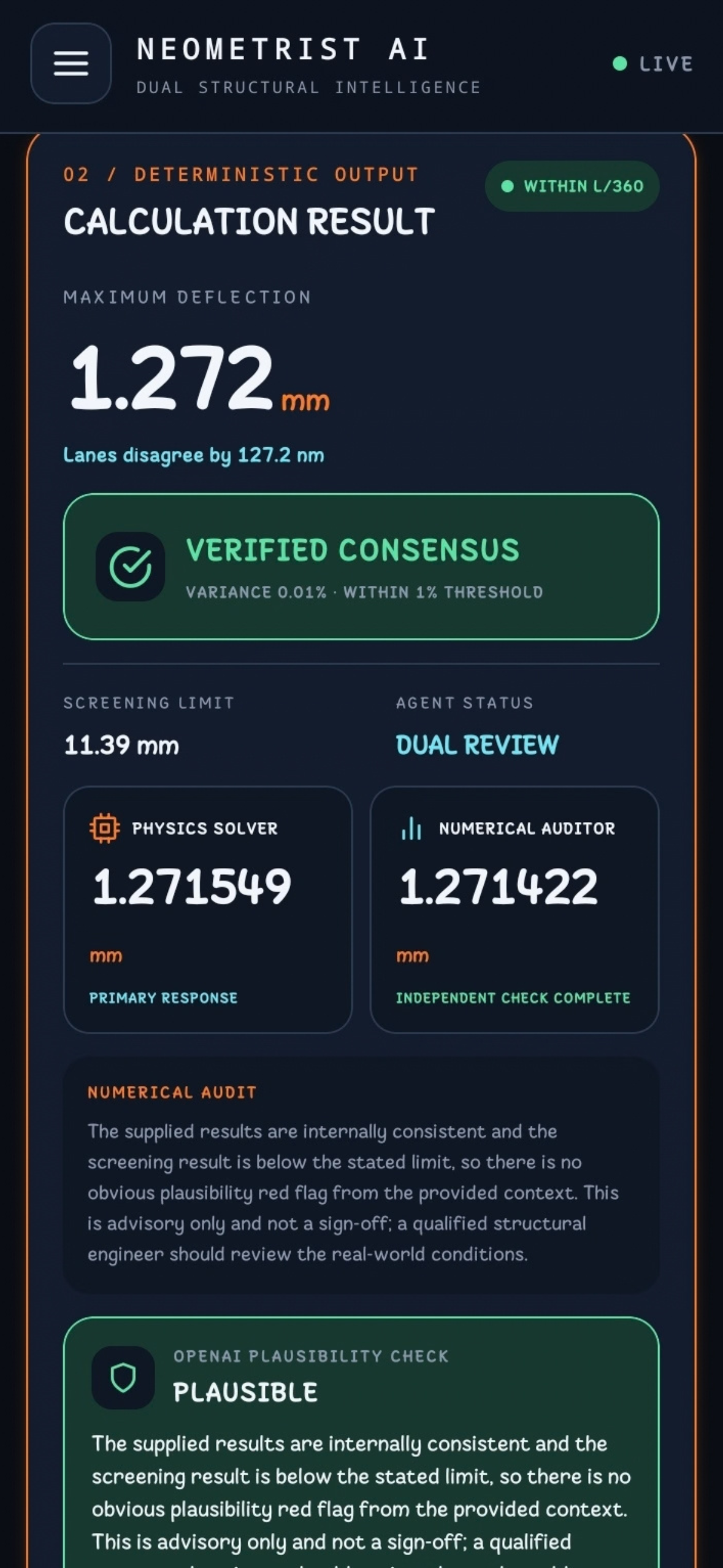
Verified Concensus Between the two agents
-
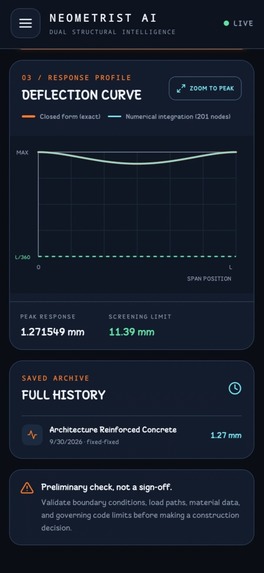
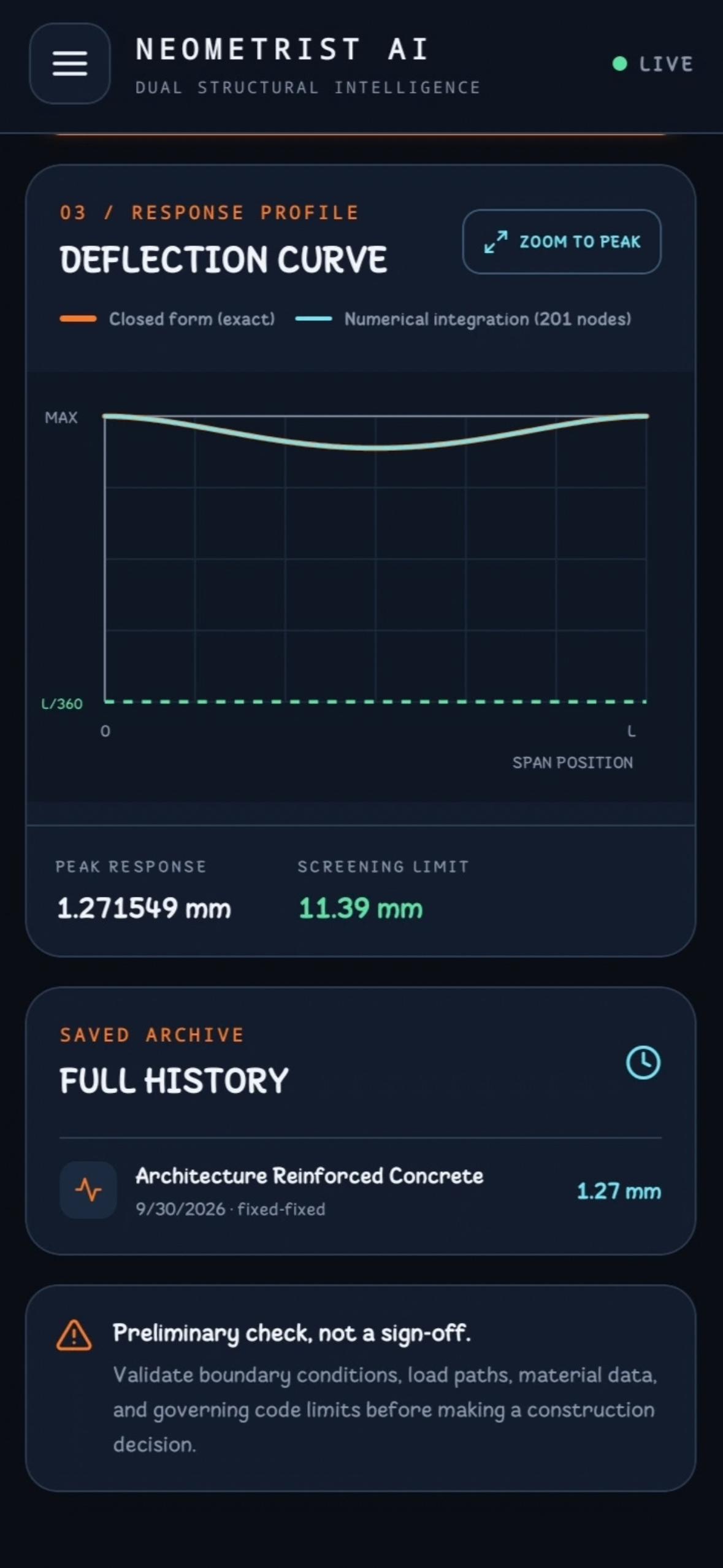
Live Graph Deflection
-
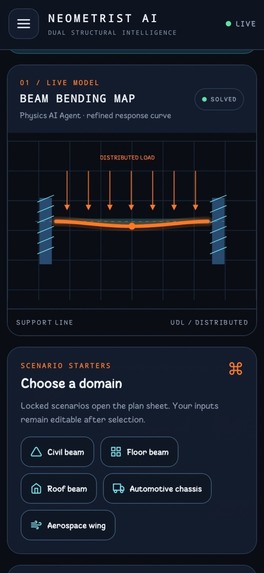
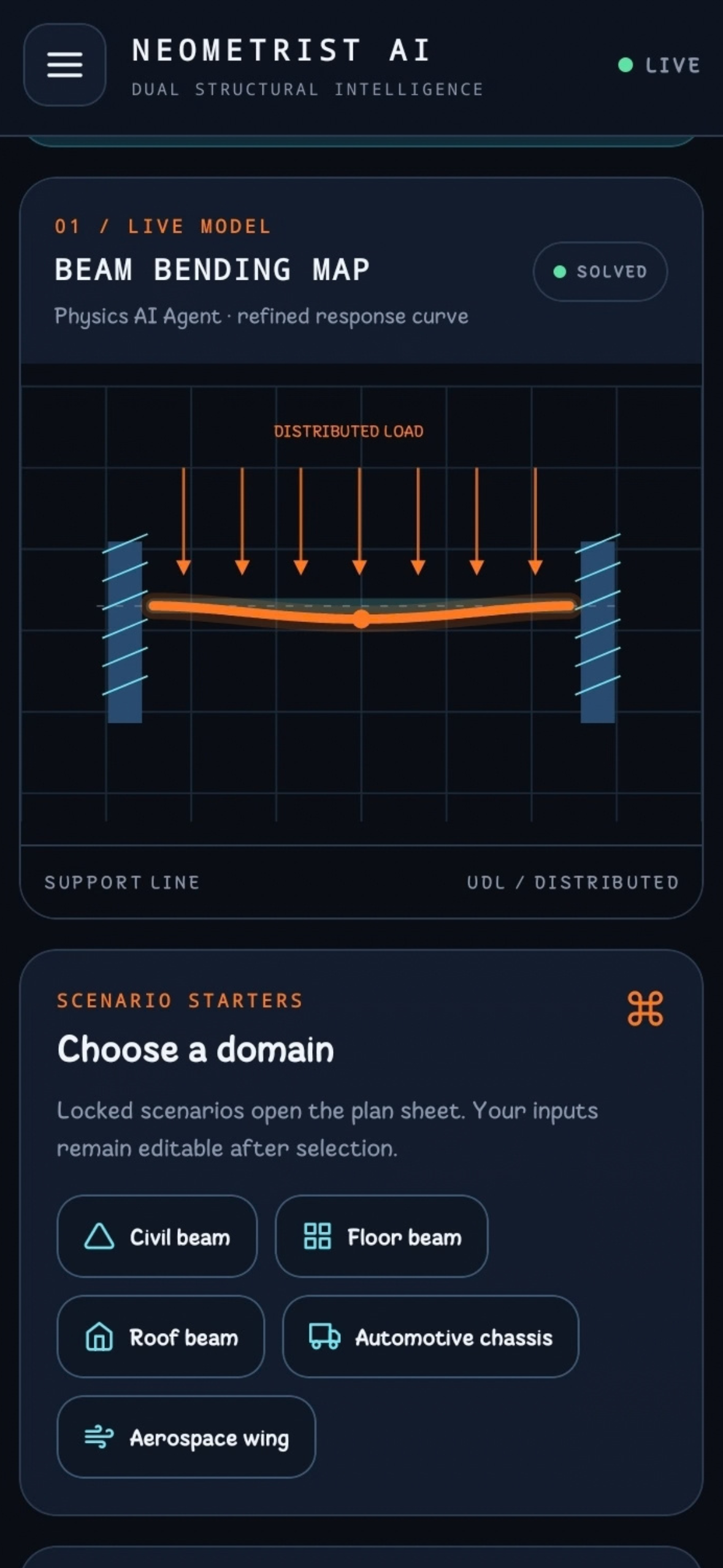
Live Beam Deflection
-
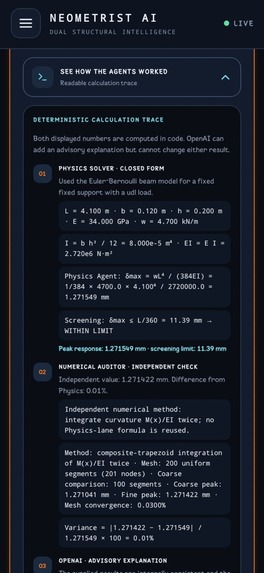
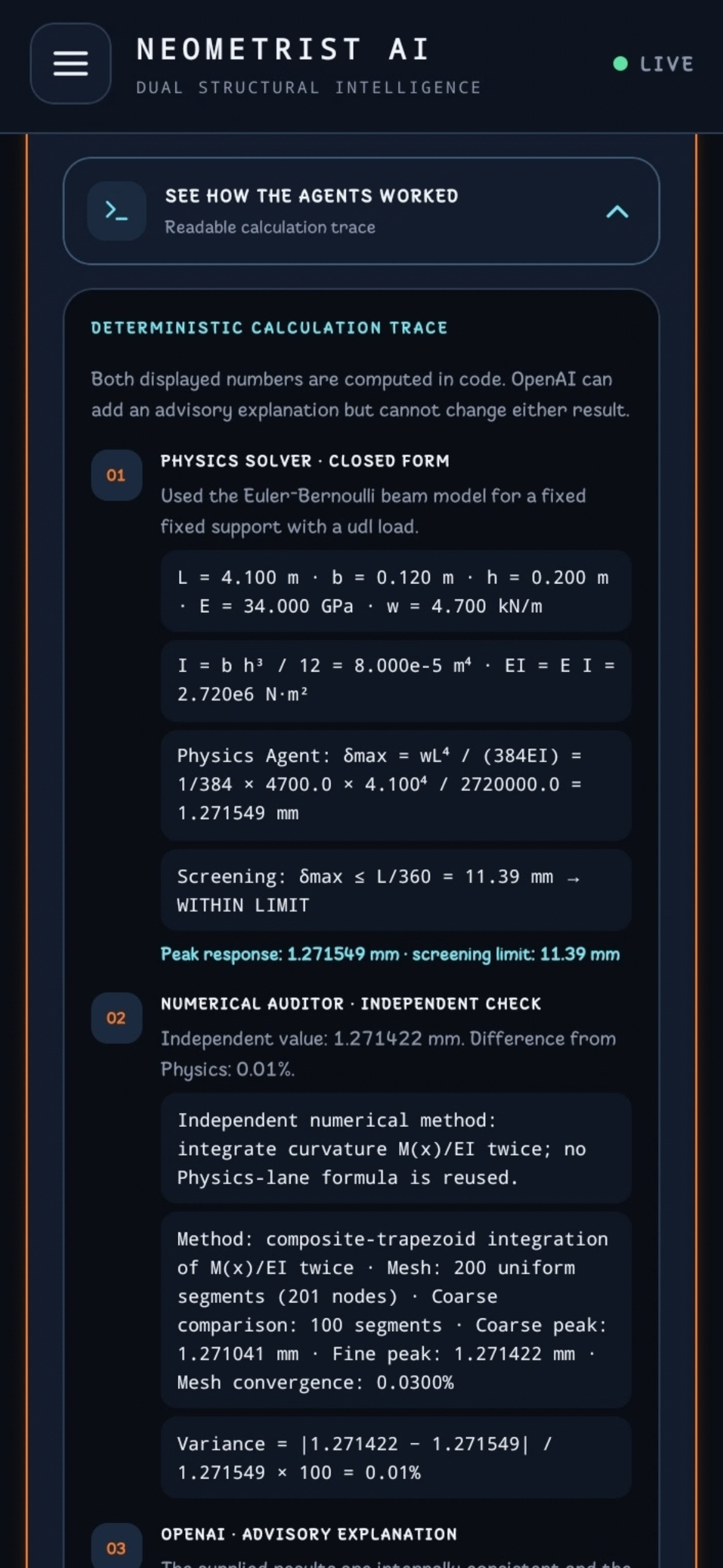
Agents working
Inspiration
I’m heading into aerospace engineering one of the top Universities in Pakistan and kept running into the same problem: single AI tools give confident answers that are sometimes wrong, and doing every structural check by hand takes too much time. I wanted a tool that students like me could actually trust for preliminary calculations. Something fast, mobile, and verified.
What it does
Neometrist is a mobile structural calculator that runs two independent methods on every problem:
- Physics Solver — closed-form Euler-Bernoulli solution
- Numerical Auditor — independent numerical integration
A result is only accepted when both methods agree within 1% (Verified Consensus). It includes material presets, screening limits (L/360), calculation history, and a three-tier RevenueCat subscription system.
How we built it
Neometrist was built as a mobile-first app using React Native and Expo , with TypeScript for the main application logic. The core calculation engine is deterministic and runs locally — it uses closed-form Euler-Bernoulli beam equations for the Physics Solver and an independent numerical integration method (composite trapezoidal integration of curvature) for the Numerical Auditor.
The dual-lane system is orchestrated in JavaScript/TypeScript: both methods receive the same raw inputs, compute separately, and a reconciler compares the final deflection values. If the variance is ≤ 1%, the app issues a Verified Consensus badge. The AI layer (OpenAI) is only used for plain-language explanations and never modifies the numerical results.
Development was accelerated with help from Replit, which was used for rapid prototyping of agent prompts, and backend-style routing before moving the code into the Expo project. The project structure includes separate modules for:
- Deterministic physics and numerical solvers
- Tier-aware routing (Freemium / Promium / Premium)
- RevenueCat subscription handling
- Calculation history (local storage)
- UI components for the beam visualization, result cards, and paywall
RevenueCat powers the three subscription tiers and gates access to advanced materials and the second verification lane. The entire math pipeline is designed so that even if the advisory AI service is unavailable, the core calculations still work.
Challenges we ran into
Getting the two calculation lanes to be truly independent (not just the same formula twice) took several iterations. Making the mobile UI feel clean while still showing technical depth was also difficult. Balancing freemium limits with a real reason to upgrade required careful design.
Accomplishments that we're proud of
- Real dual-lane verification with measurable variance
- Working RevenueCat paywall and tier gating
- Clean mobile experience with presets for Civil, Architecture, Automotive, and Aerospace engineers and students
- Fully open calculation trace so anyone can audit the math
What we learned
Building a tool for engineering students taught me that reliability matters more than flashy AI features. Separating deterministic math from AI explanation made the product much stronger. I also learned how important clear monetization and presentation are in a competition setting.
What's next for Neometrist AI
I plan to expand support conditions, add more materials, improve the visualization, and eventually open it to more engineering students who need fast, verifiable preliminary checks on mobile.

Log in or sign up for Devpost to join the conversation.