Inspiration:
During emergencies like hurricanes, floods, or power outages, the same thing people normally depend on to call for help, cellular service and internet, can become unreliable. That made us think: what happens when someone needs help, but the network they would normally use to ask for it is down?
That question inspired Neo Mesh AI. We wanted to create something that could keep emergency communication moving, while also making it easier for responders to understand what is happening and who needs help most.
What it does:
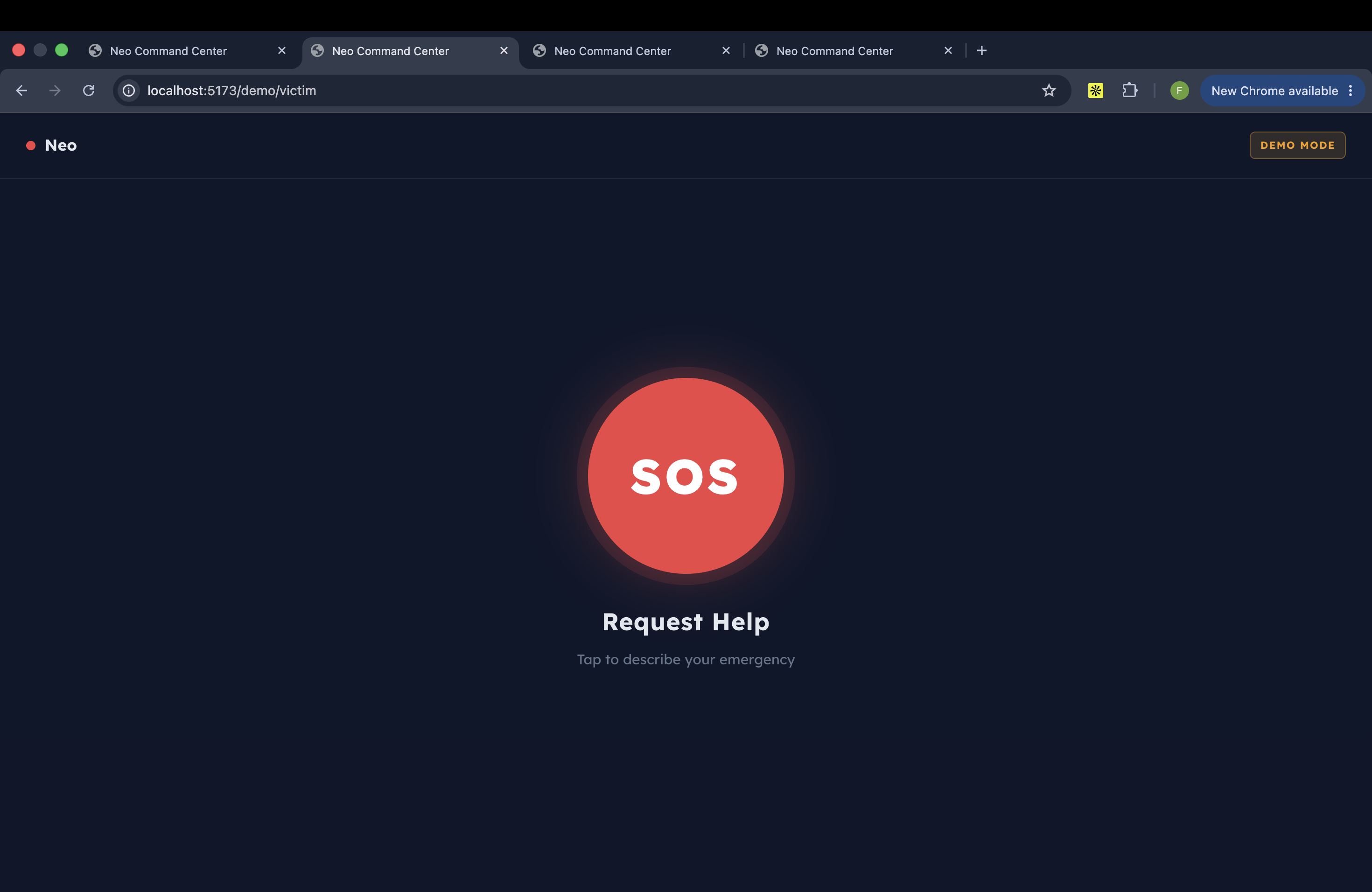
Neo allows someone in an emergency to describe what is happening in their own words. Gemini helps analyze the message, determine urgency, summarize important information for responders, and support translation when needed.
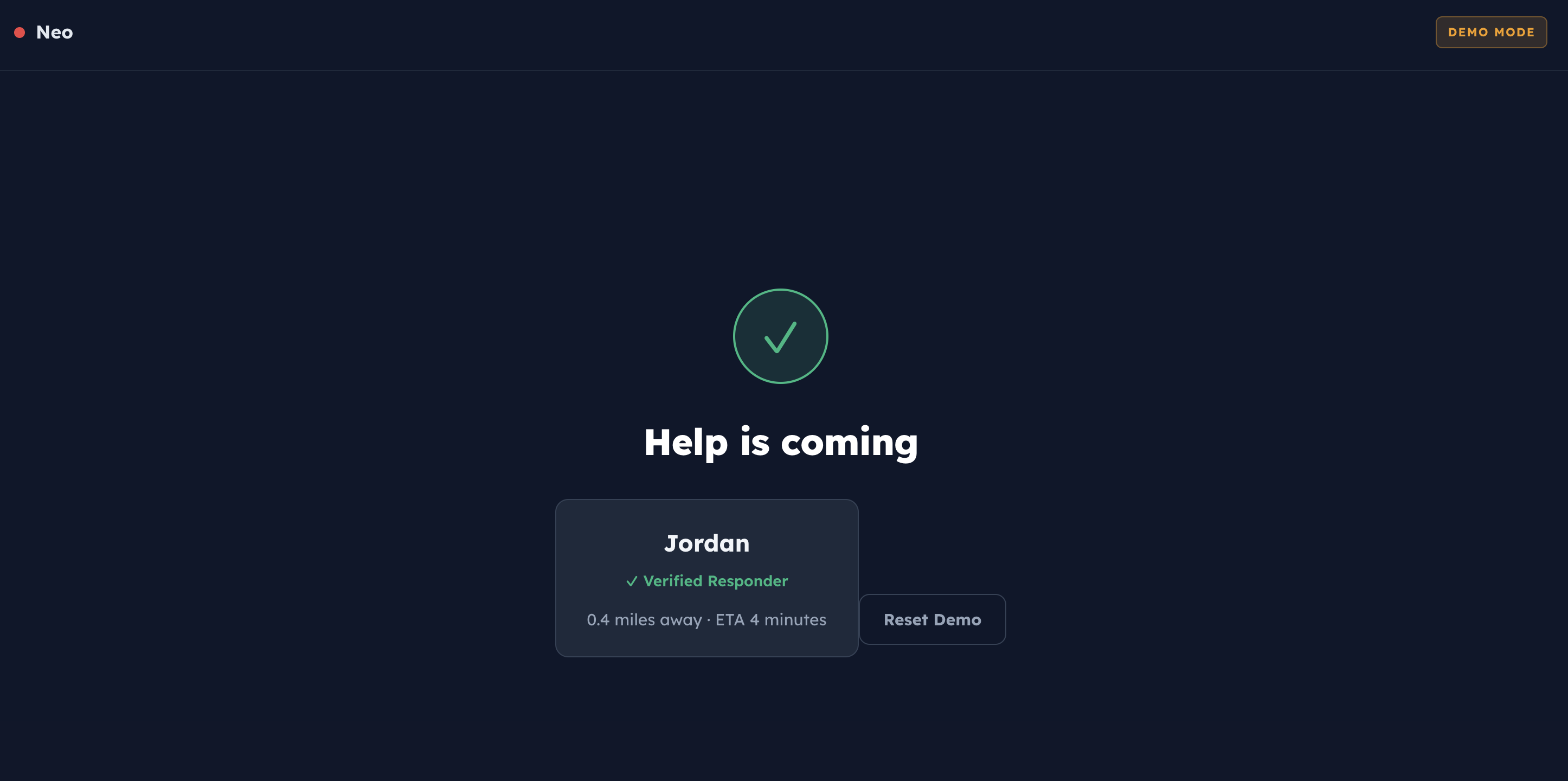
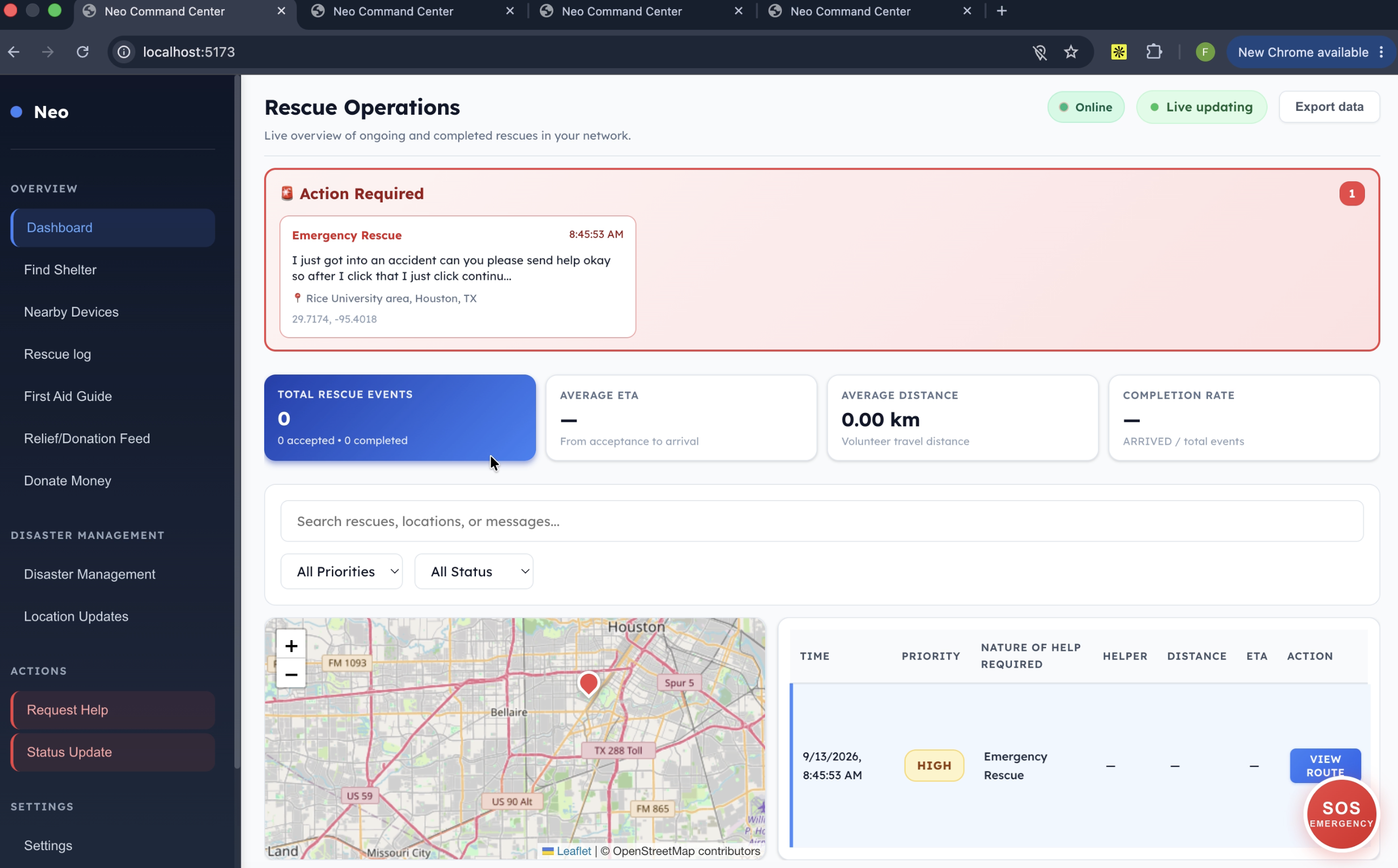
The request can then be shared with nearby devices and responders, along with information like the victim’s location and original message. Responders can accept an emergency, and the victim receives a real time update letting them know help is coming.
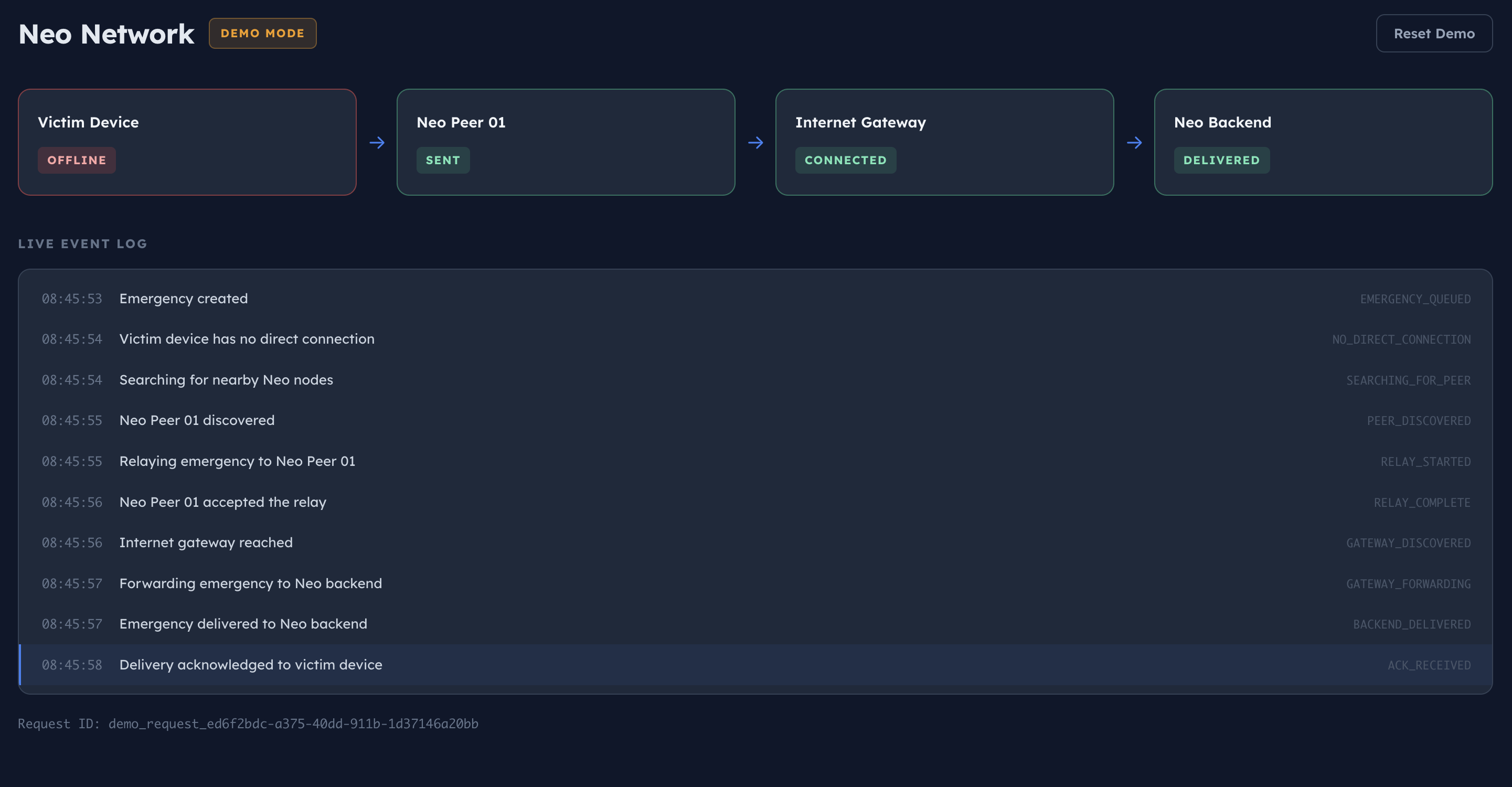
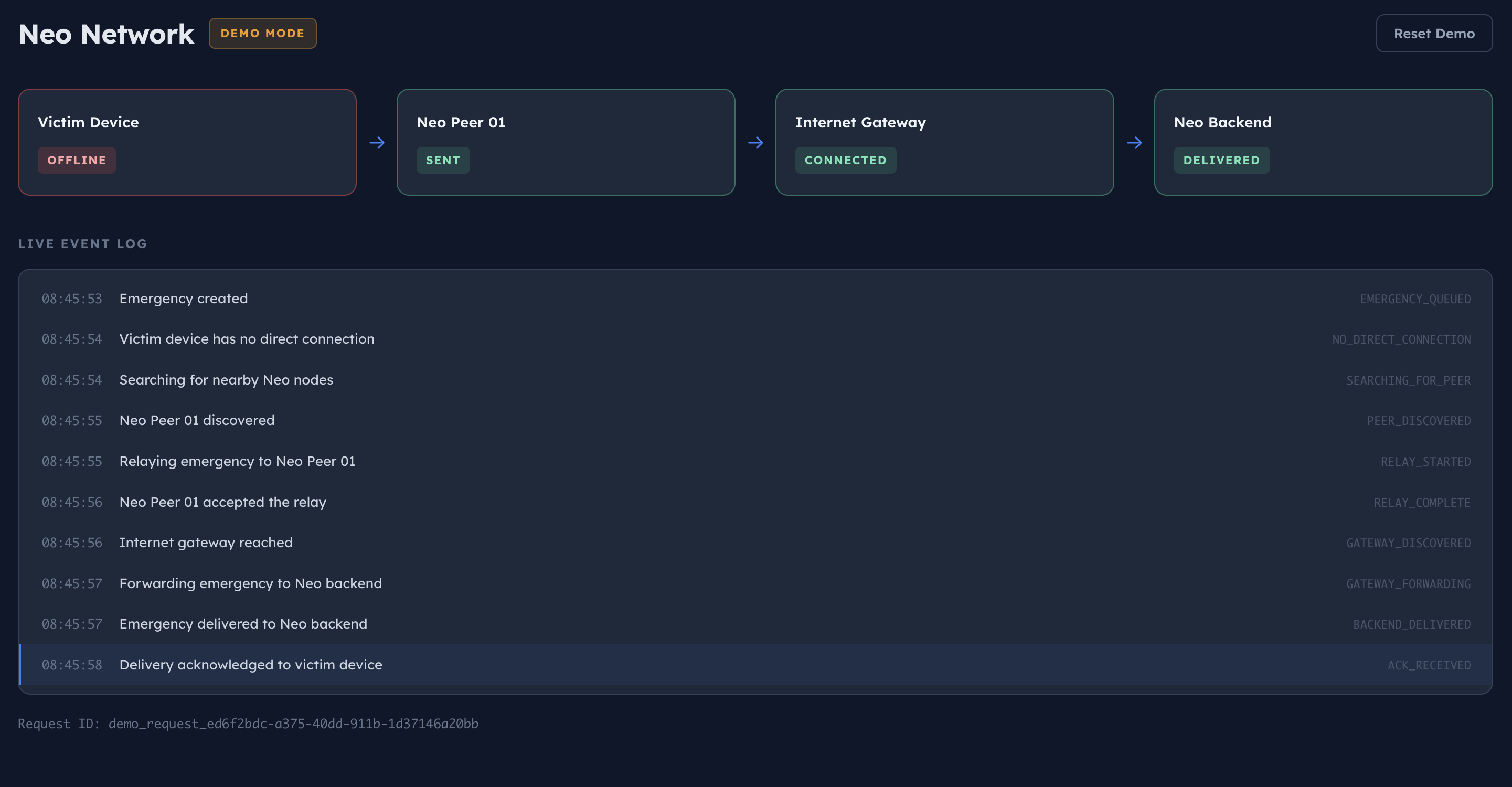
Most importantly, Neo is designed with an offline first approach. Using Bluetooth Low Energy and Wi Fi P2P, nearby devices can help relay messages when normal connectivity is unavailable.
How we built it:
We built Neo with React Native for the mobile experience and React with Vite for the responder dashboard. Our backend uses Node.js and Express, with Firebase and local storage supporting our data.
We integrated Google Gemini for AI assisted emergency triage and translation, and used location services to connect emergency requests with nearby responders. For offline communication, we designed a mesh networking layer around Bluetooth Low Energy and Wi Fi P2P. We also included AES 256 encryption and message signing to protect sensitive emergency information. README.md
Challenges we ran into:
One of our biggest challenges was designing for a situation where we couldn’t assume the internet would always be available. We had to think differently about how messages are stored, forwarded, retried, and eventually synchronized when connectivity returns. README.md
We also had to think carefully about using AI in an emergency. We didn’t want the responder to rely only on an AI generated interpretation, so Neo preserves the victim’s original words alongside the AI generated information.
Accomplishments that we’re proud of:
We’re especially proud that Neo isn’t just an AI chatbot with an emergency interface around it. We combined AI, real time communication, location awareness, security, and offline first networking into one system.
We’re also proud of the responder experience. Seeing an emergency appear automatically, accepting it, and then watching the victim’s screen change to “Help is coming” without refreshing made the entire idea feel real.
What we learned:
Building Neo taught us that designing technology for emergencies is very different from designing a normal application. You have to think about what happens when connectivity disappears, when multiple responders act at the same time, when AI is unavailable, and when the person using your product may be under serious stress.
It also taught us that AI is most useful here when it supports human decision making rather than replacing it.
What’s next for Neo Mesh AI:
Next, we want to test Neo’s mesh communication on more physical devices and improve multi hop routing so emergency messages can travel farther through nearby devices.
We’d also like to expand responder verification, offline maps, notifications, accessibility and multilingual support, and eventually test the system under more realistic disaster conditions.
Built With
- aes-256
- bluetooth
- elevenlabs
- express.js
- firebase
- google-gemini
- google-maps
- hmac-sha256
- javascript
- leaflet.js
- node.js
- react
- react-native
- render
- sqlite
- vite
- wi-fi-p2p

Log in or sign up for Devpost to join the conversation.