-
-
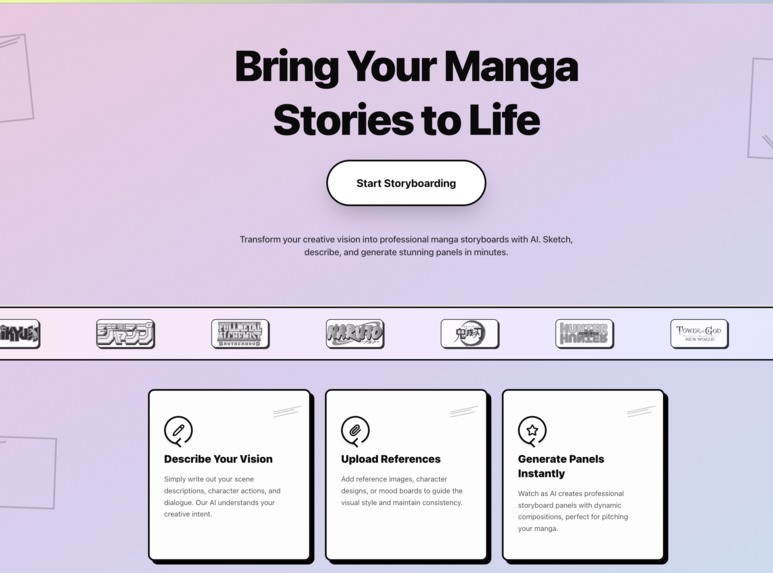
-
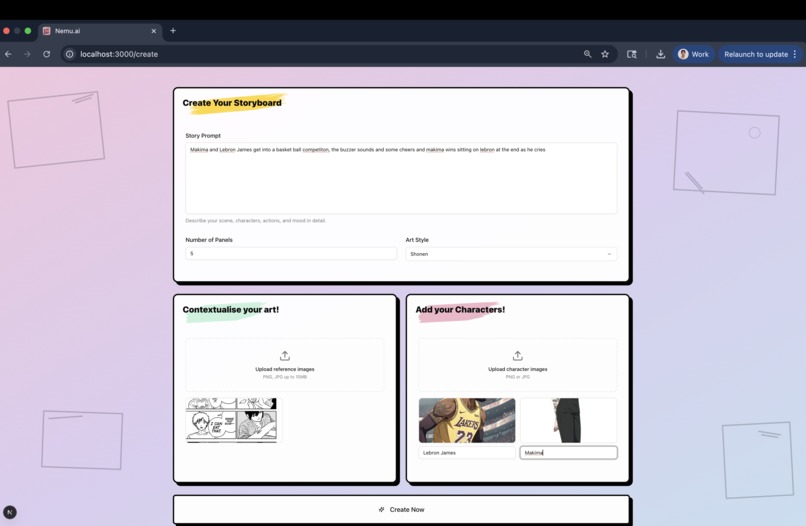
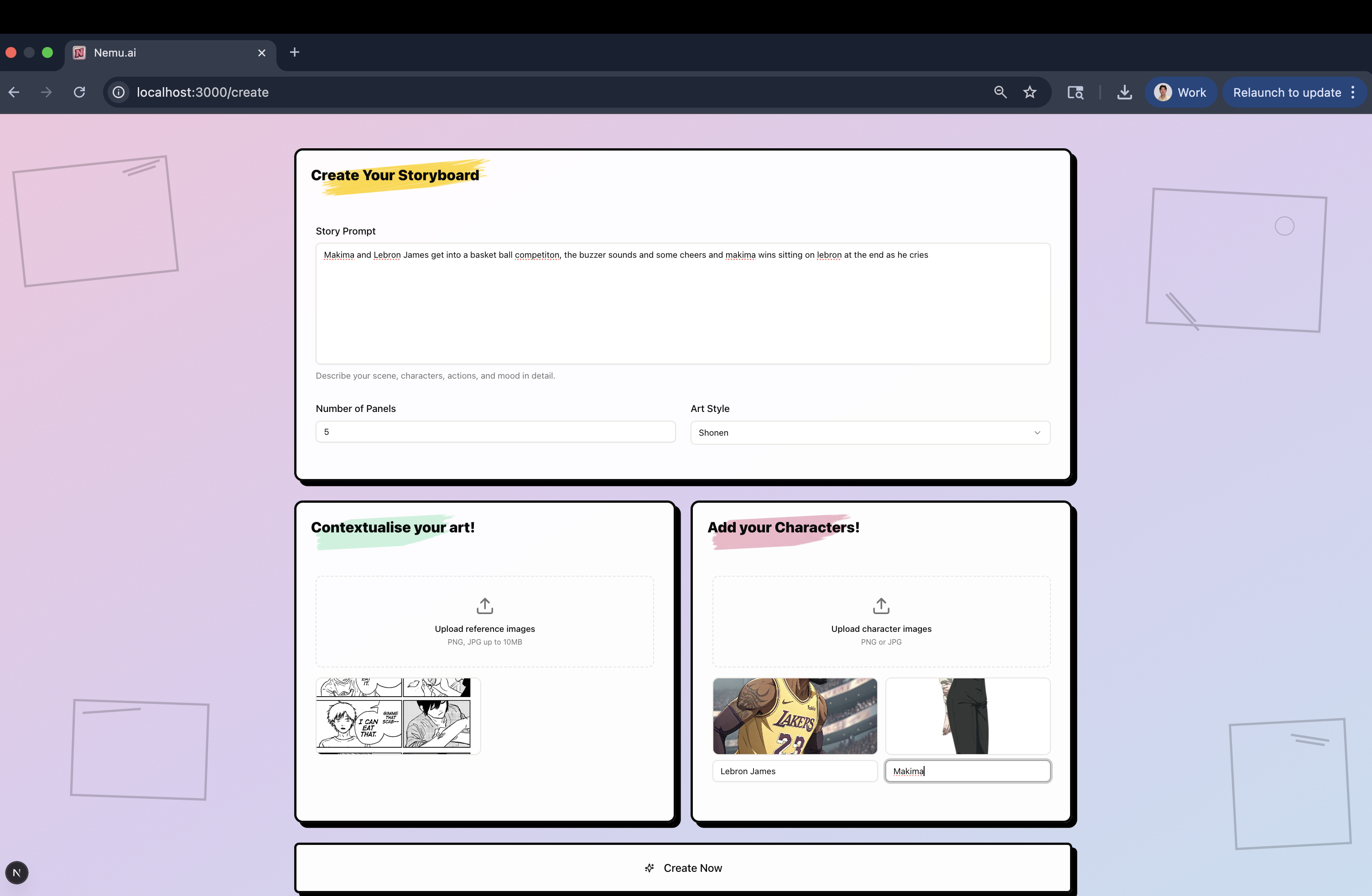
Create new story board page
-
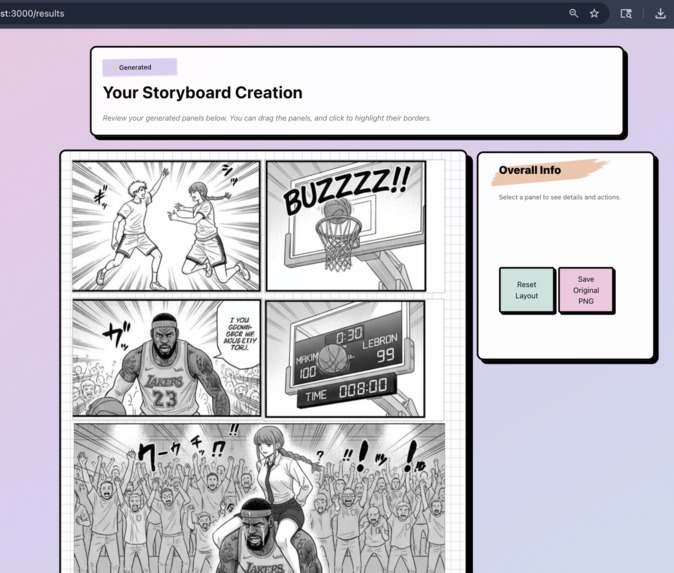
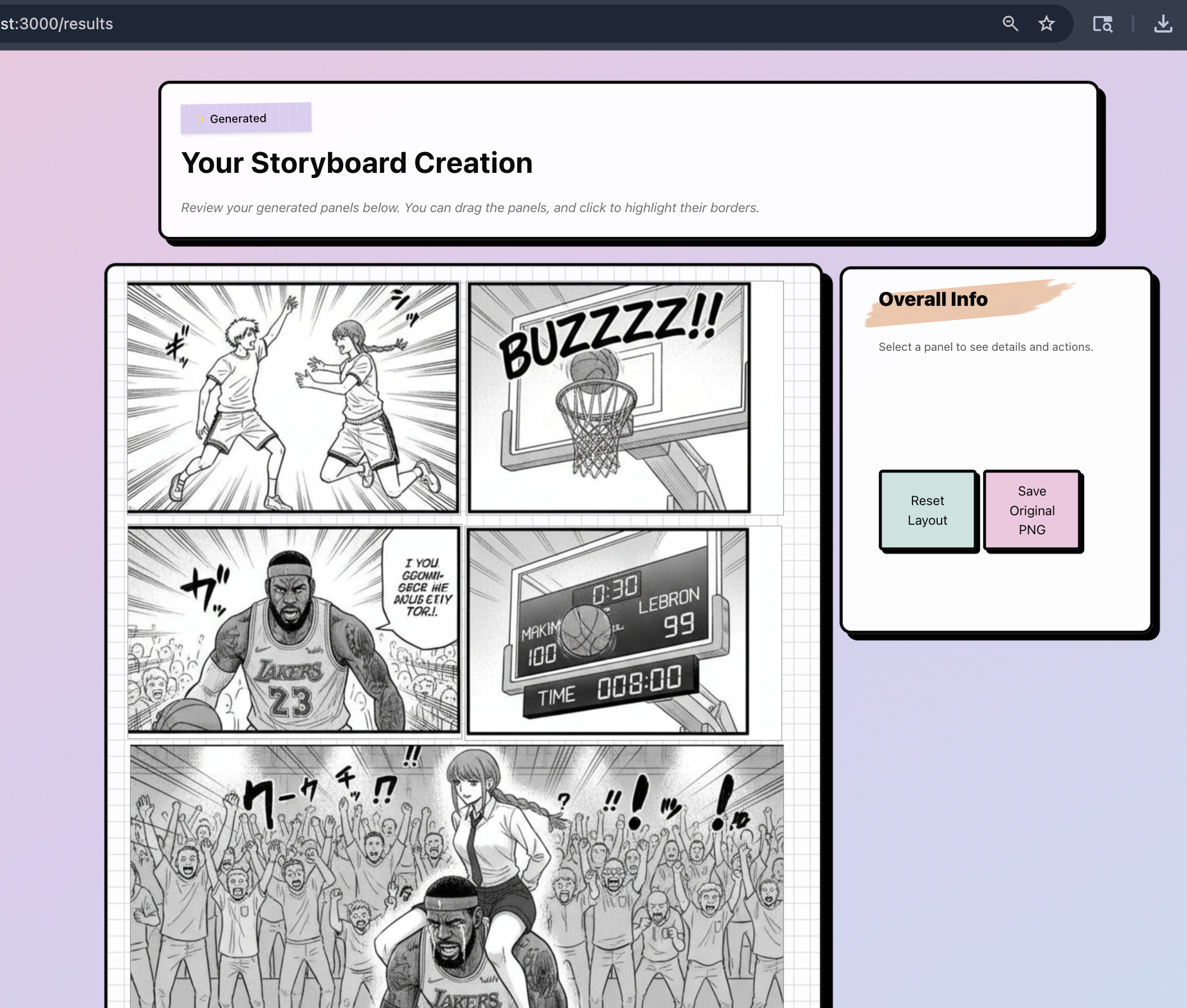
Generated Manga Page
-
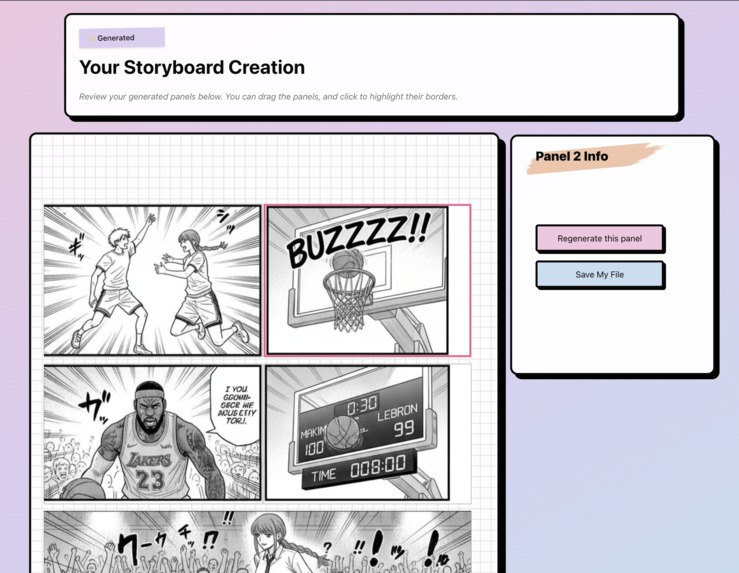
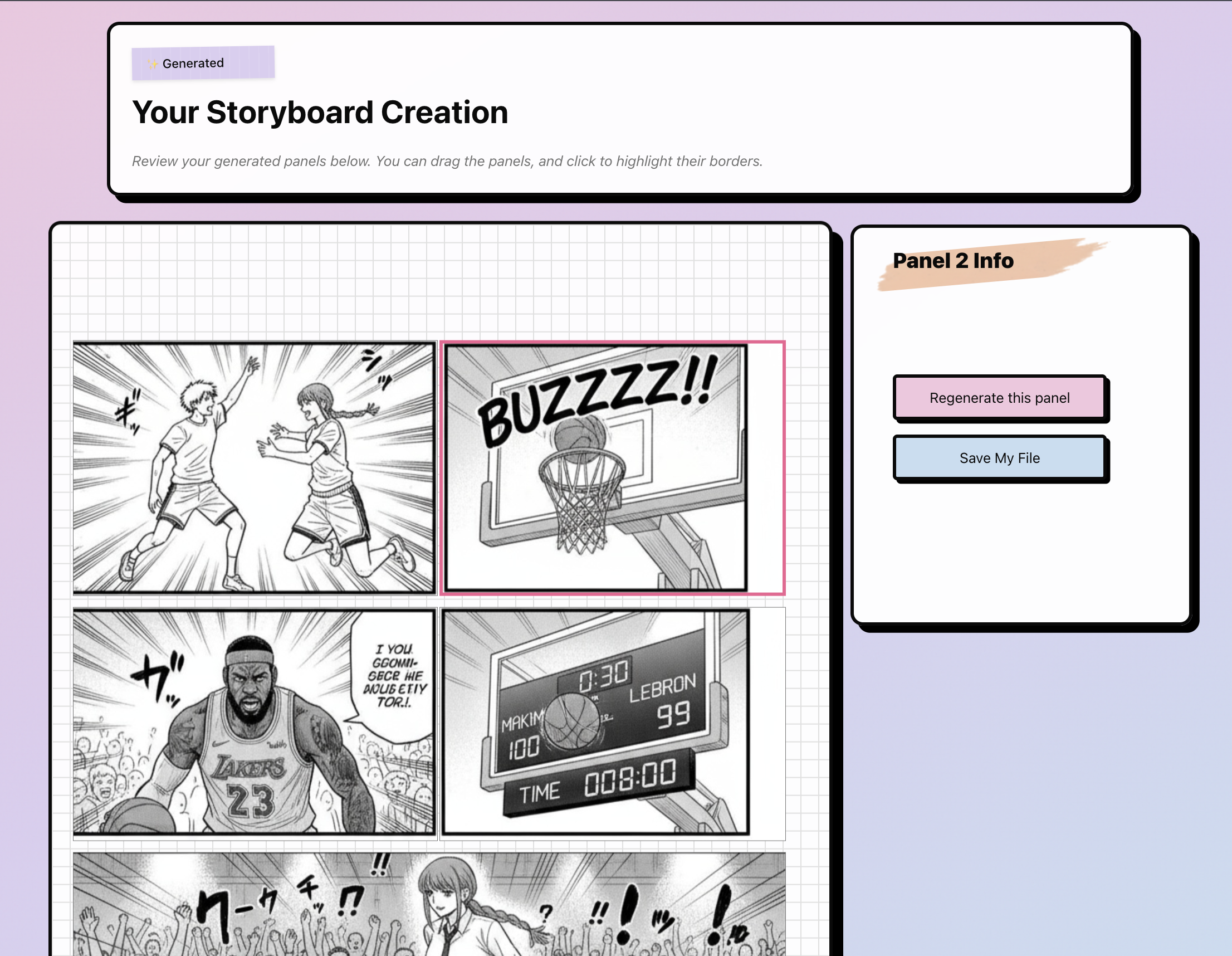
Selected Panel
-
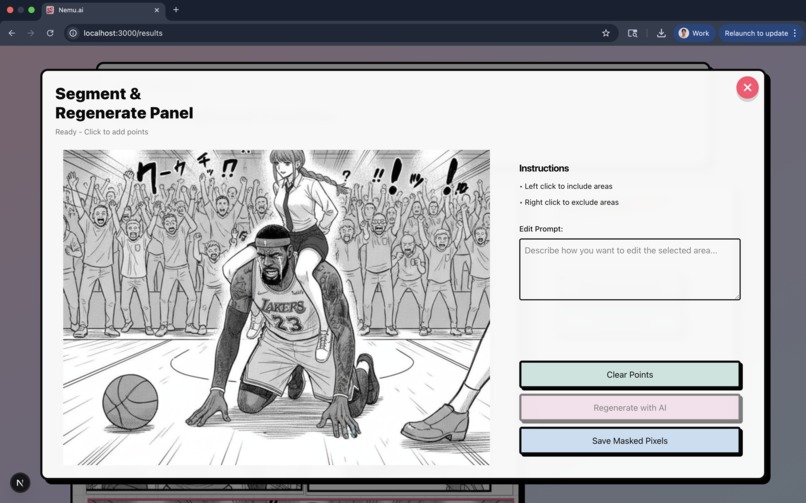
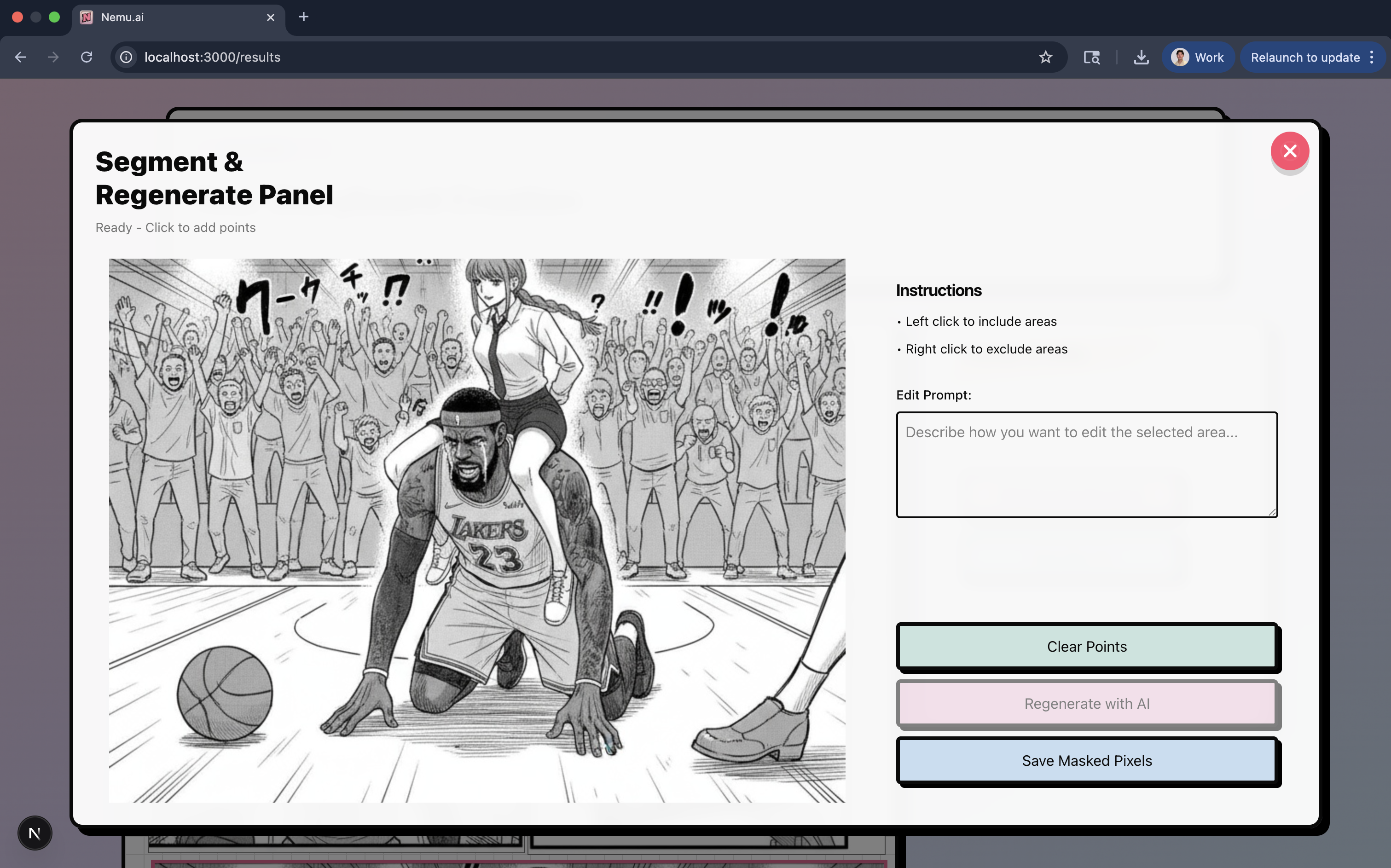
Panel Pop up
-
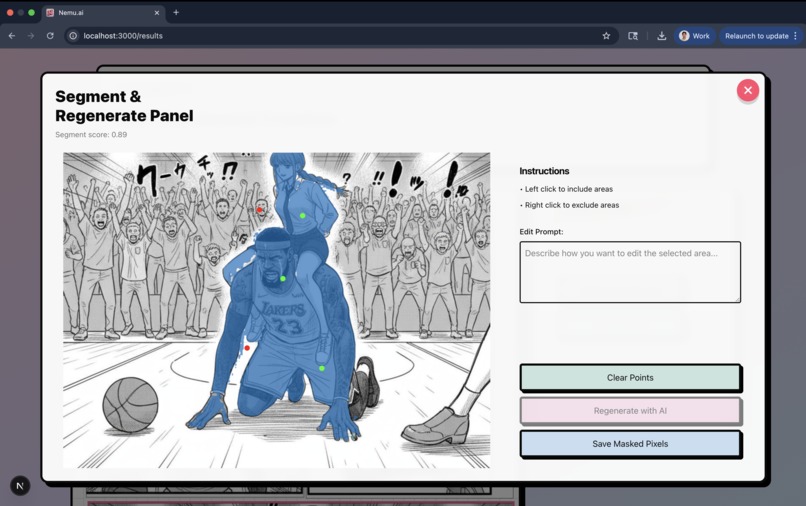
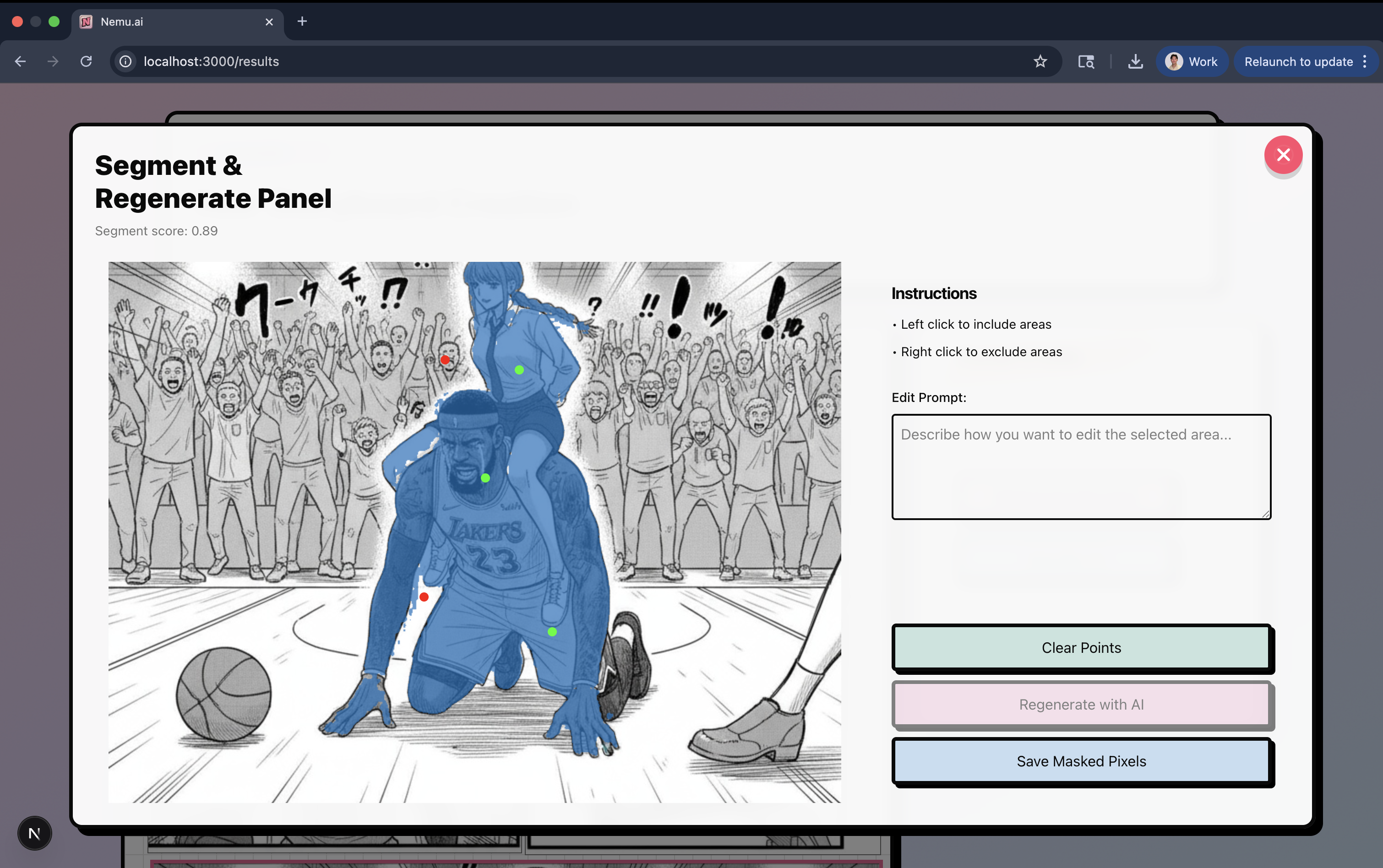
Segmented Image Mask
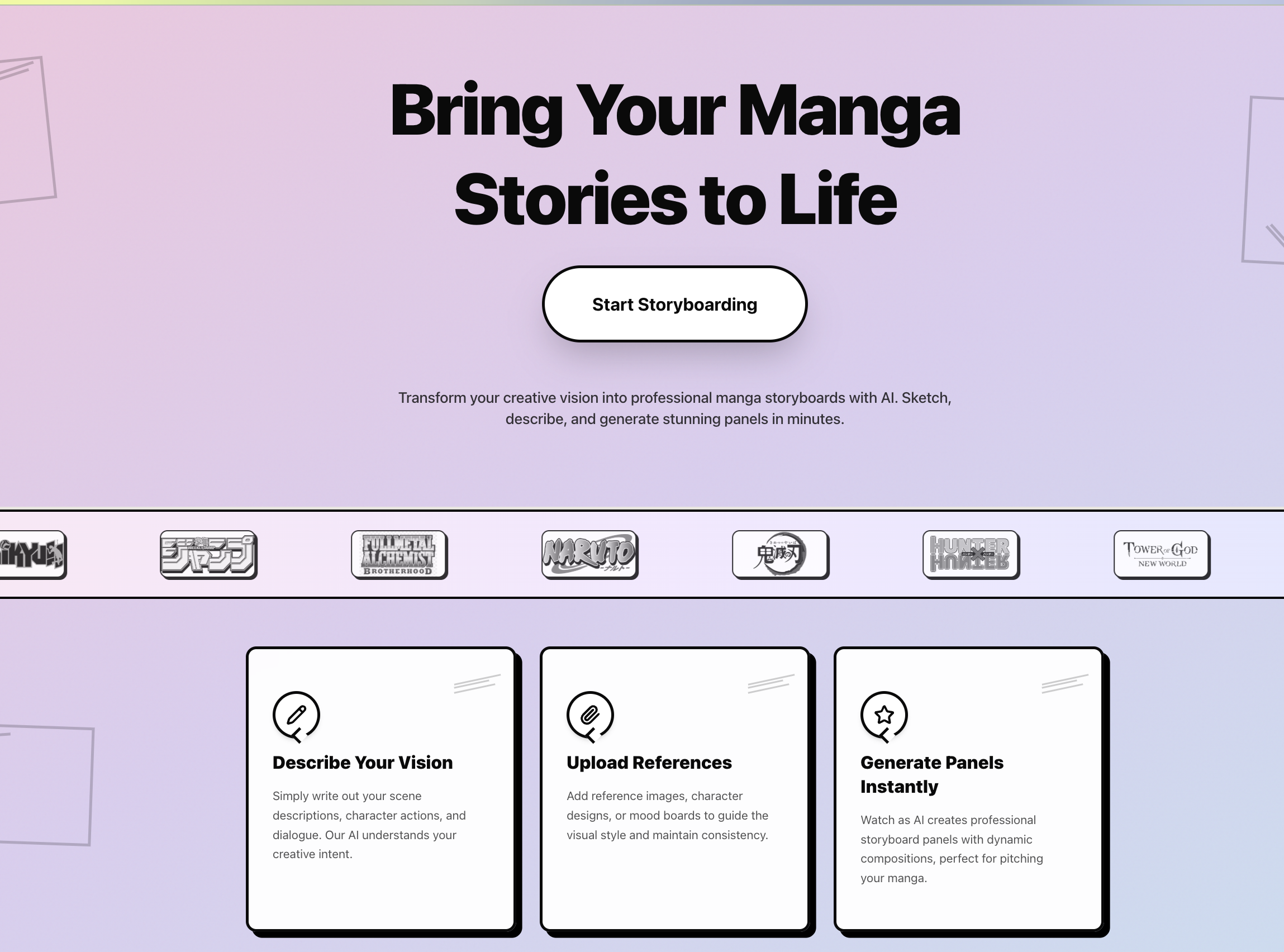
Inspiration
The three of us love to read Manga and webtoons! However, our favorite authors and artist often suffer from bad health and extreme difficult work conditions. the average Mangaka spends over 60 hours a week working! With the two largest activities being story boarding and manuscripting. As huge fans of the industry we want to assist resolving pain points so Mangakas and artist can reduce their enormous workloads!
The Problem
Storyboarding and manuscripting often consume the a large chunk of a mangaka’s time. While genAI offers support in this area, existing solutions are not well-adapted to the specific needs of manga creation. Most current tools produce storyboards that do not align with traditional manga workflows. In addition, the outputs are typically singular and non-modular, which forces creators to spend significant effort manually separating elements. At present, there are no tools that can automatically organize generated images into individual, layered PSD files, something that would make the process dramatically more efficient and creator-friendly it would exponentially accelerate digital art workflows!
What it does
Nemu is a contextual, story-driven storyboard agent built for mangakas. Unlike generic image-generation tools, Nemu focuses on creating a sequence of panels that come together to form a manga page; not just a single flat image. Creators can upload their own art and character designs so the model can follow their style, keeping the results consistent while saving time on repetitive work.
Most AI tools struggle with panel consistency and flexibility, locking every panel into one image and making editing nearly impossible. Nemu solves this by locating each panel and separating it into it's own editable layer so that panels stay coherent and connected while being modular. This gives mangakas the freedom to move, resize, and individual panels.
Users can also regenerate individual panels or select specific areas to refine, with the option to save elements as separate layers for easier editing.
Our goal is to empower creators at every level; from passionate fans experimenting with their first manga, to professional teams looking to speed up their production pipeline. Nemu isn’t just another AI art tool; it’s a creative partner that bridges imagination and execution, helping storytellers bring their worlds to life with ease and precision.
How we built it
We built Nemu with frontend powered by Next.js, FastAPI to handle routing and API orchestration efficiently.
Nemu’s agentic panel flow integrates open-source technologies like ImageMagick and Kumiko for panel detection and segmentation. Our image generation pipeline runs through N8N, connected with Vertex AI and Nano Banana to produce our contextualized manga panels.
Lastly, we leverage a lightweight Image Segmentation Model to allow users to hand pick key areas in individual panels they want to either regenerate or save as individual layers!
Challenges we ran into
Generating Individual Layers Coherently One of our biggest challenges was ensuring that each panel could be generated as its own layer while still maintaining coherence across the page. This was not feasible and wasted a lot of calories in solving this issue.
Segregation and Image Modeling for Layering Accurately separating panels and modeling their contents for layered output proved complex. We had to develop methods to reliably detect and isolate elements while preserving context and visual flow.
PSD Compatibility and Editable Layers Making outputs fully compatible with .PSD files; complete with editable layers and stroke fidelity was a technical hurdle. Ensuring that artists could freely adjust and refine panels without breaking other layers took significant iteration and testing. In the end with our current hardware we were not able to host a strong enough Image Segmentation model for auto-segmenting layers in panels.
Accomplishments that we're proud of
- Finding a solution we thought may be impossible
- Getting a decent performing image segmentation feature after over 10 failures
- Getting Regen working
- Believing in the journey and passionate for the product (we had nothing for the first 18 hours)
- Modularity
What we learned
- The Power of Image Generation and Layer Segregation
- The Value of Communication and Team Syncs
- The Strength of Open Source
What's next for Nemu
Expanding Cultural Accessibility We want to make manga more globally accessible by breaking language barriers. Today, most works are only translated into major languages, leaving many readers out. Our vision is to integrate translation and localization tools so that stories can be enjoyed by fans worldwide, regardless of language or culture.
Streamlining Creative Workflows We aim to reduce the production workload across the manga creation pipeline from mangakas to scanlation teams. By automating repetitive tasks like touch-ups, redrawing, and paneling, Nemu can help teams focus more on storytelling and artistry rather than manual editing.
Advancing Layered Contextualization Our next big step is to deepen Nemu’s ability to separate and contextualize visual elements within each panel. This will allow us to precisely layer every asset and export fully editable .PSD files. (Of course, we’ll need a bigger GPU to get there!)
Built With
- gemini
- n8n
- nanobanana
- next.js
- python
- typescript
- vertex.ai


Log in or sign up for Devpost to join the conversation.