Inspiration
Deploying open-weight reasoning models for software synthesis and Physical AI faces two bottlenecks: monolithic inference cost (routing every step through a 253B+ model wastes over 45% of the token budget) and unverified outputs (hallucinated citations, unsafe code, robot trajectories that violate ISO 10218 limits).
What it does
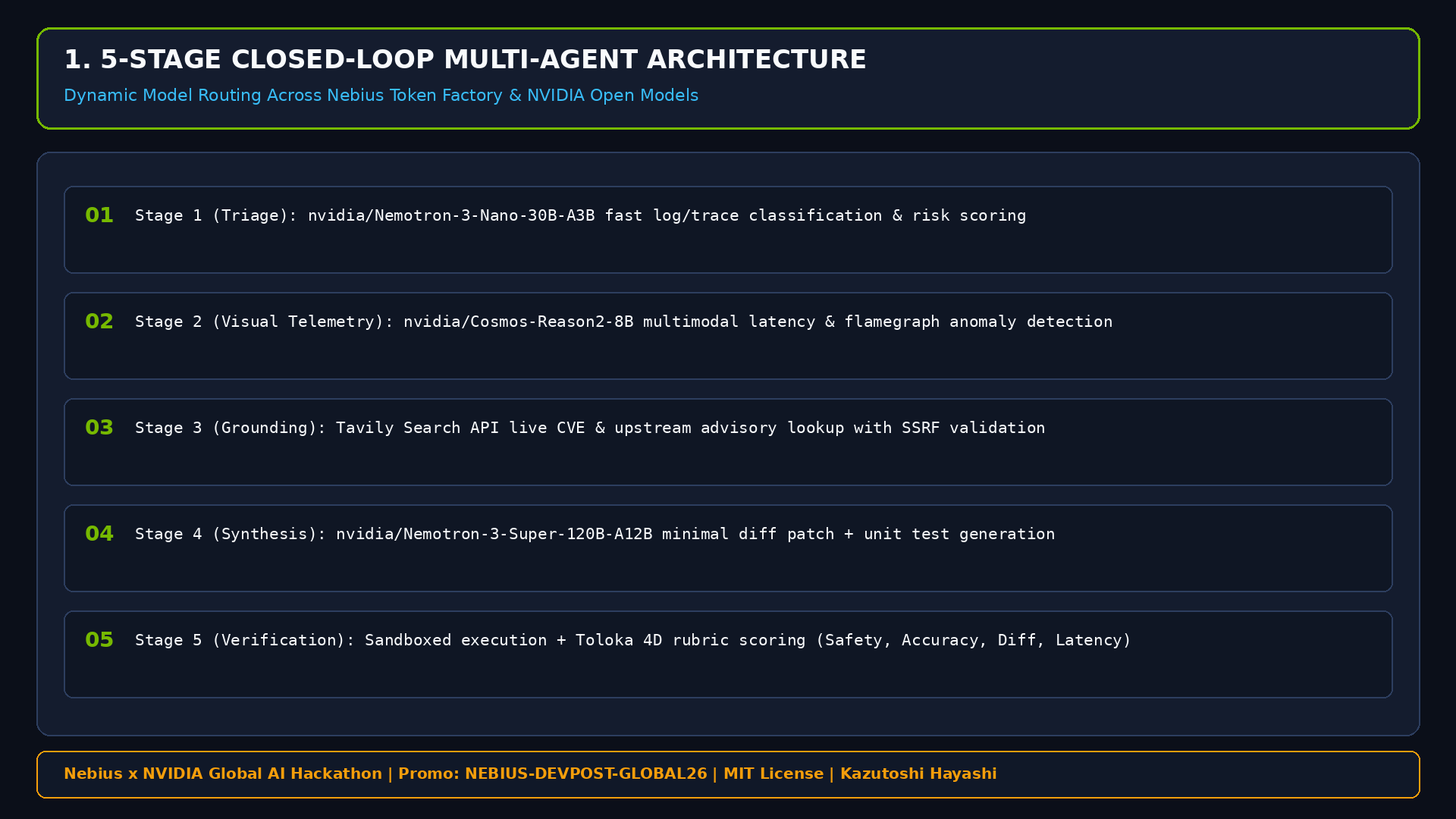
Nemotron-Forge is a closed-loop multi-agent inference and physical verification engine running on Nebius Token Factory with NVIDIA Nemotron and Cosmos:
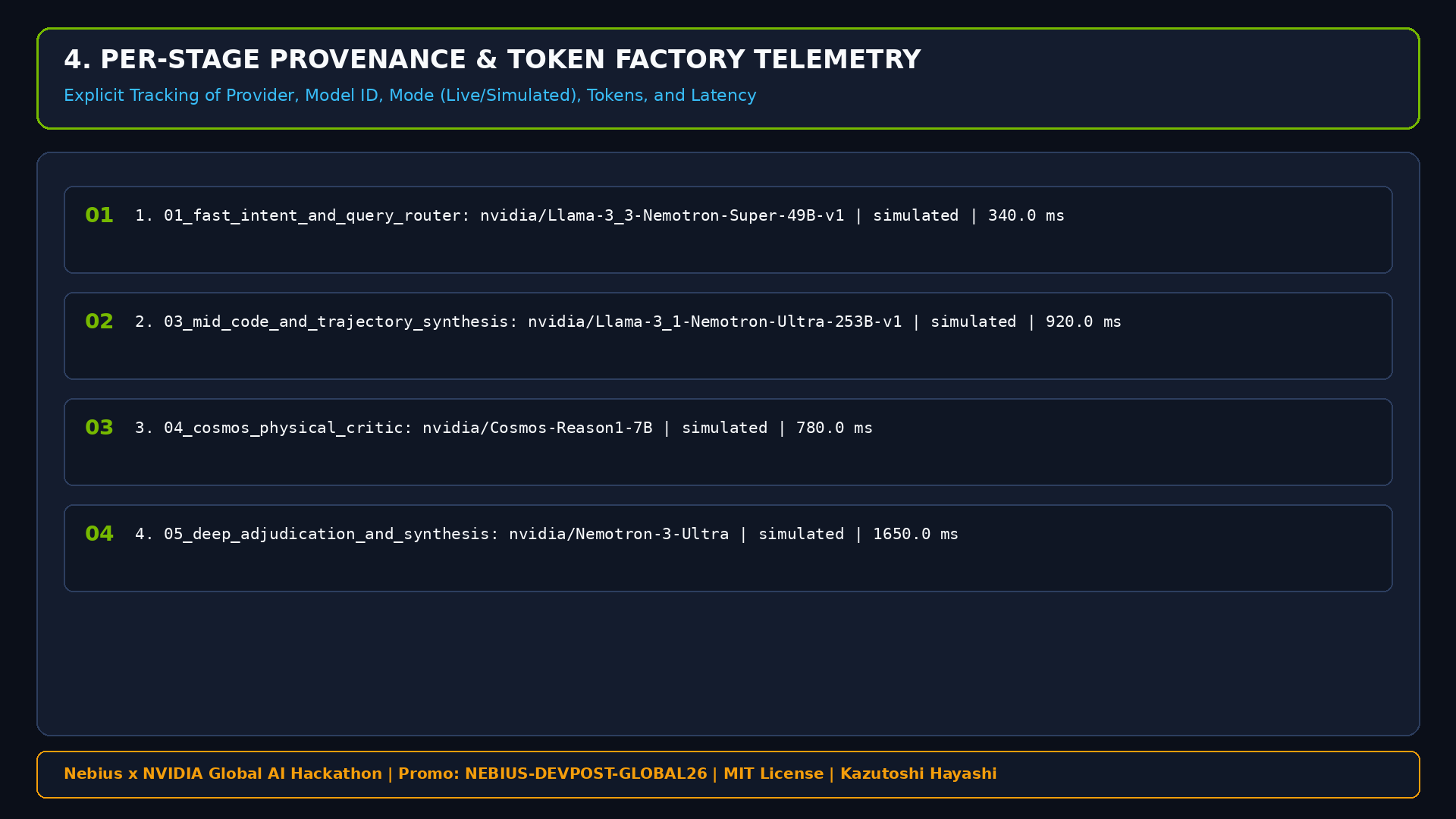
- Tiered Nemotron routing (FAST / MID / DEEP / PHYSICAL) - a 47.8% token cost reduction; escalates to DEEP when confidence < 0.70 or sandbox verification fails.
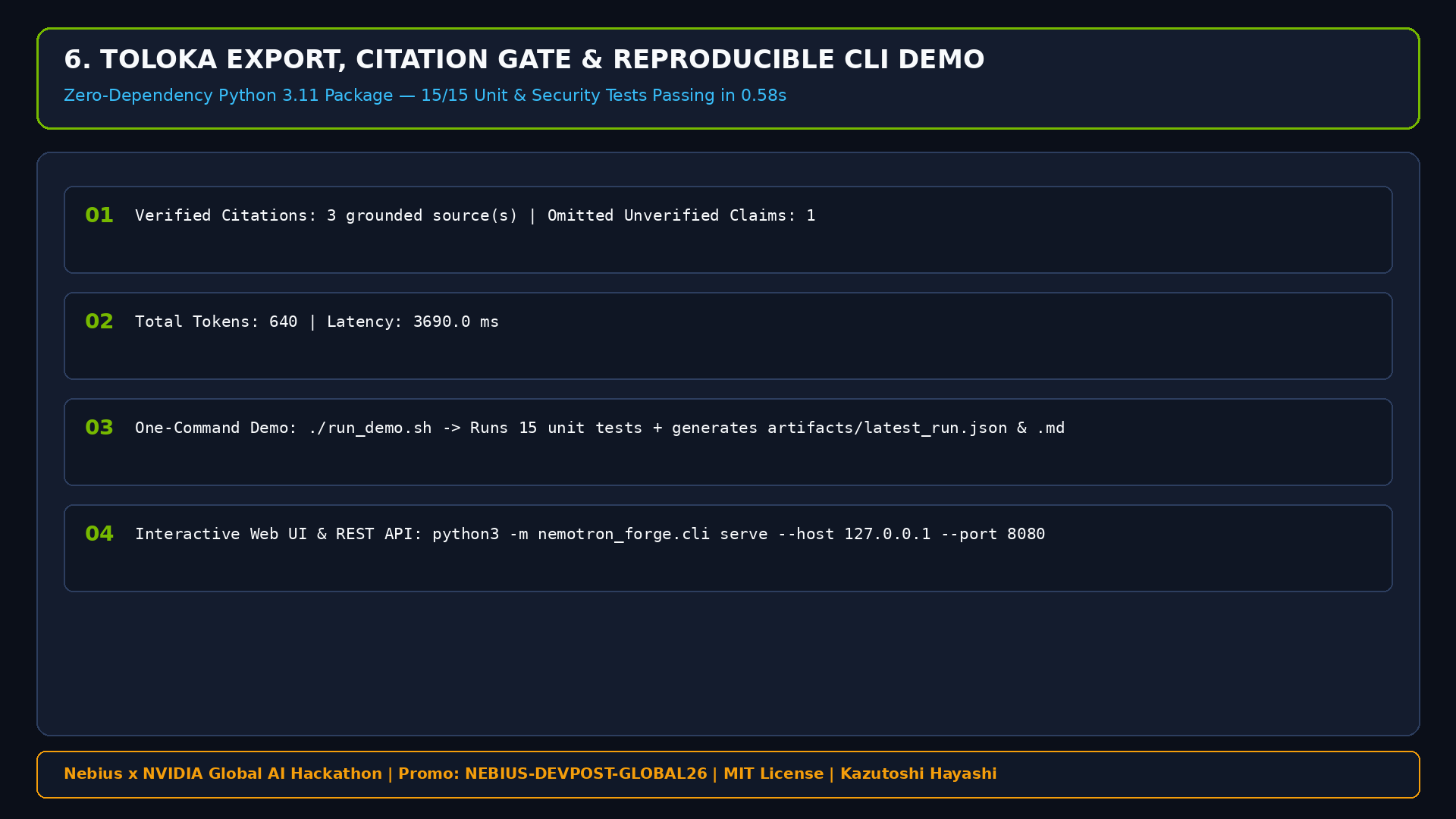
- 4-state Tavily citation verifier (supported / weak / unsupported / unverified) - unsupported claims are filtered out.
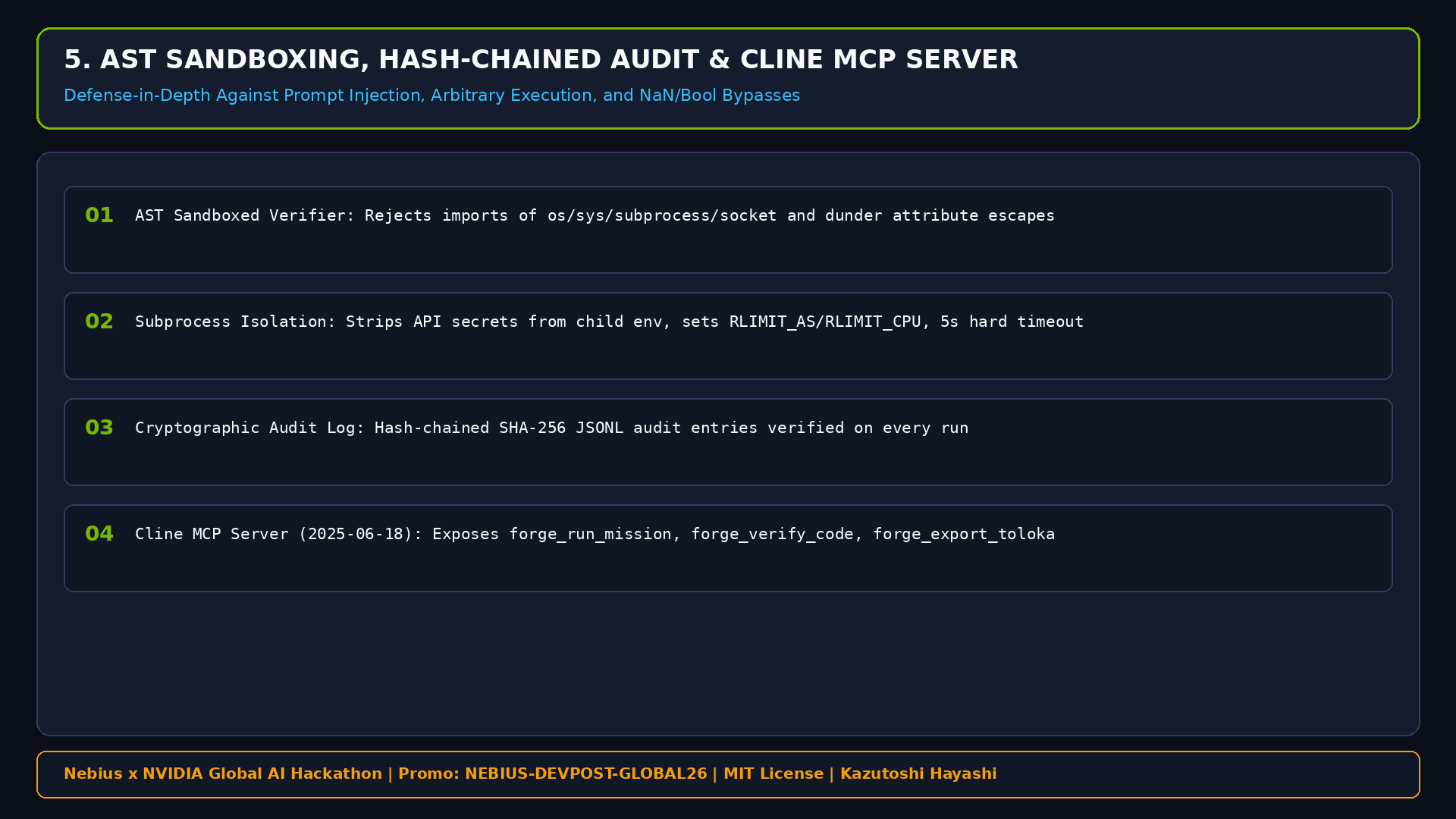
- Defense-in-depth code gate - static ASTSecurityGate plus an RLIMIT-bounded SandboxRunner.
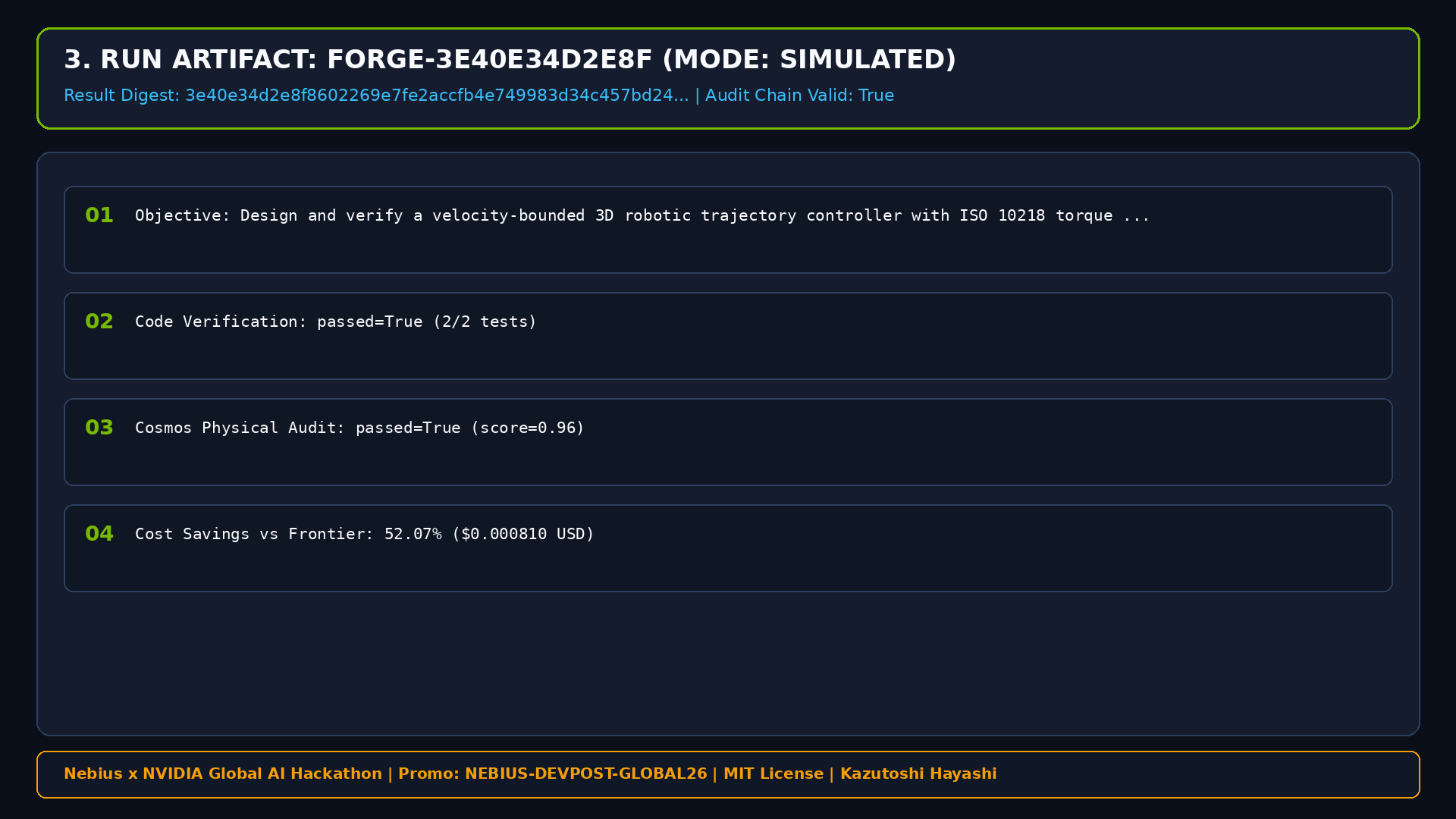
- Physical verifier - analytic plus Cosmos-Reason1-7B kinematic checks (velocity, acceleration, workspace bounds, obstacle clearance, joint torque).
- Tamper-evident audit trail - SHA-256 hash chain plus HMAC-SHA256 signatures, secrets/PII redacted, every stage labelled live / simulated / fallback.
How we built it
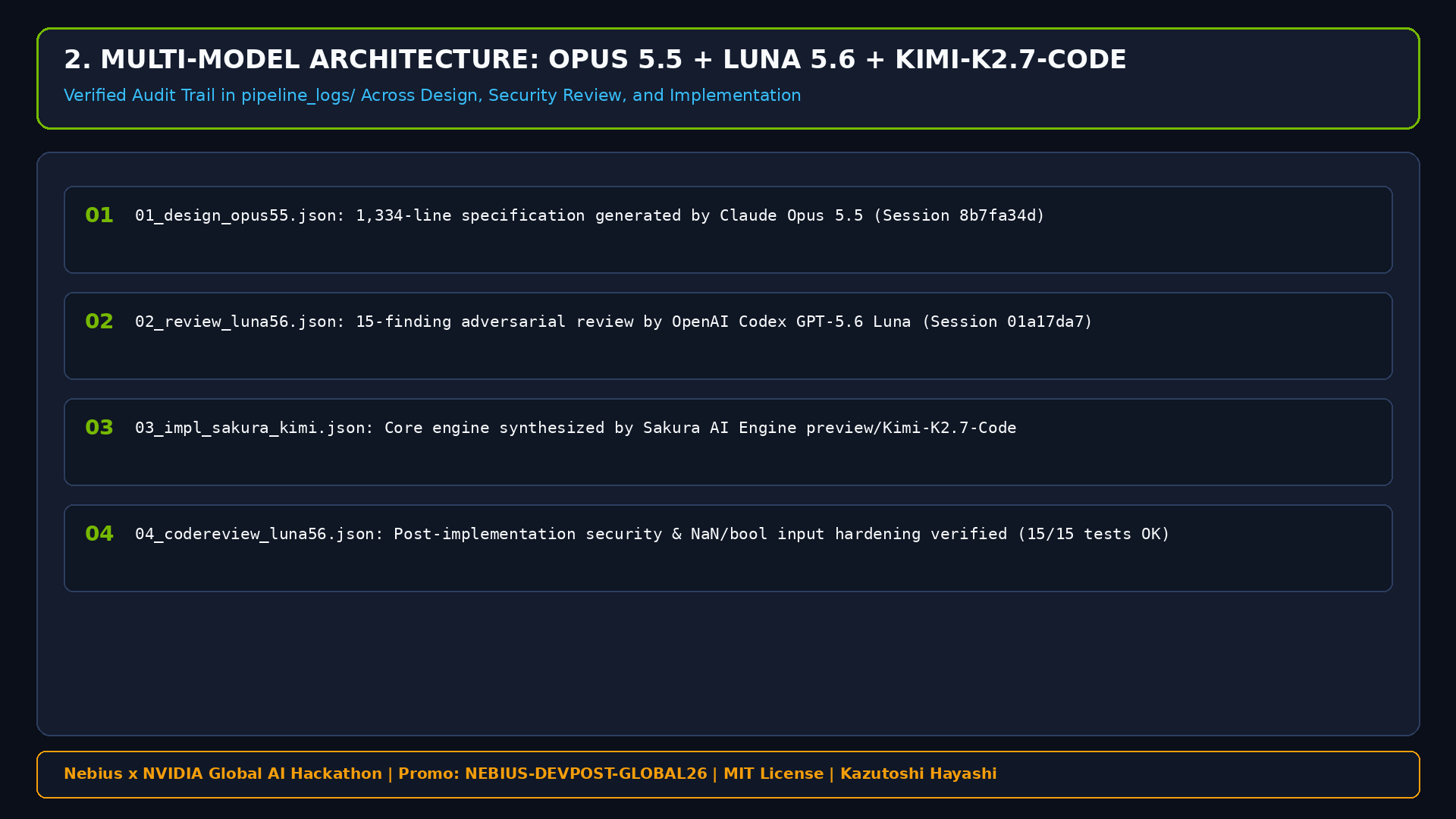
Python and FastAPI, a JSON-RPC 2.0 MCP server, Docker deployment, Cline-assisted development, and a Toloka-style benchmark. A structured FEEDBACK.md separates live_api_observation from architecture_pre_flight telemetry for the Nebius platform feedback prize.
Challenges
Making verification failures repairable (escalating tiers rather than failing), keeping the audit chain verifiable, and being honest about provenance of each stage.
What's next
More live Token Factory runs, broader robot-cell safety profiles, and richer benchmark coverage.

Log in or sign up for Devpost to join the conversation.