-
-
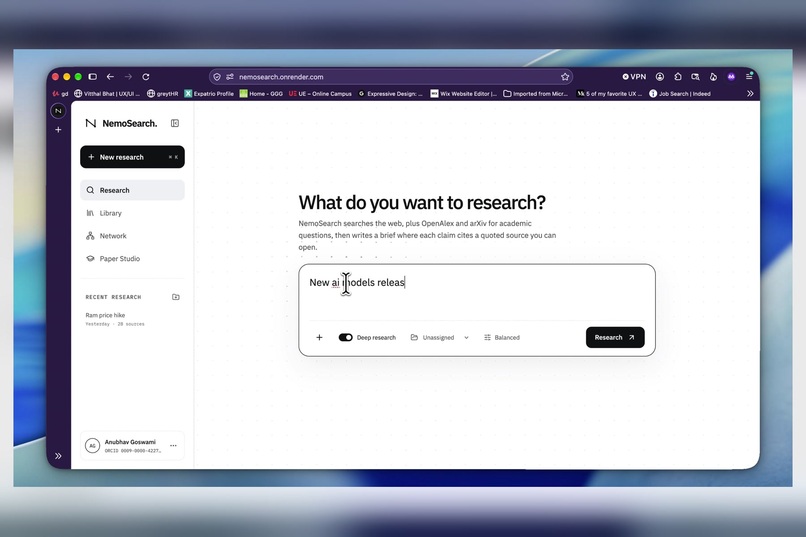
00-search
-
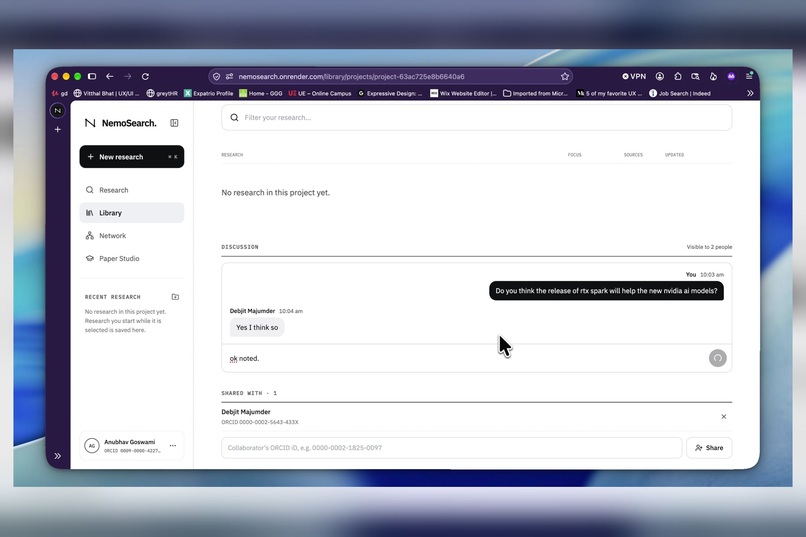
10-project-discussion
-
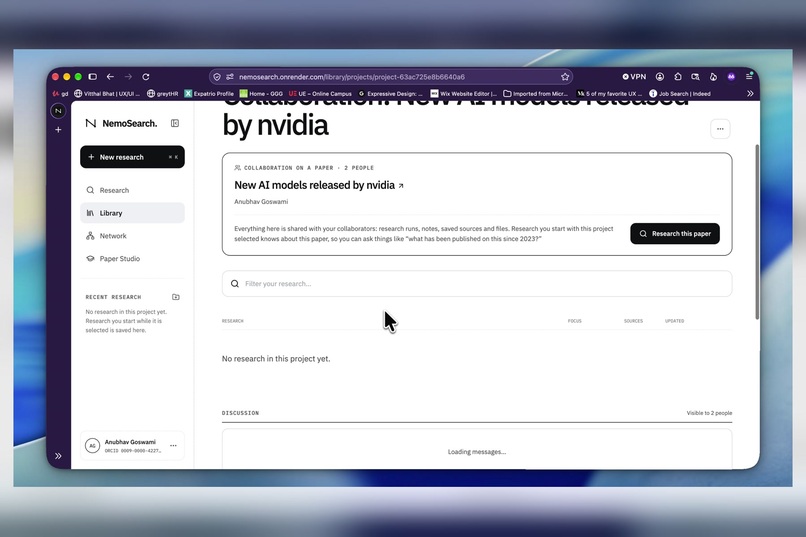
09-shared-project
-
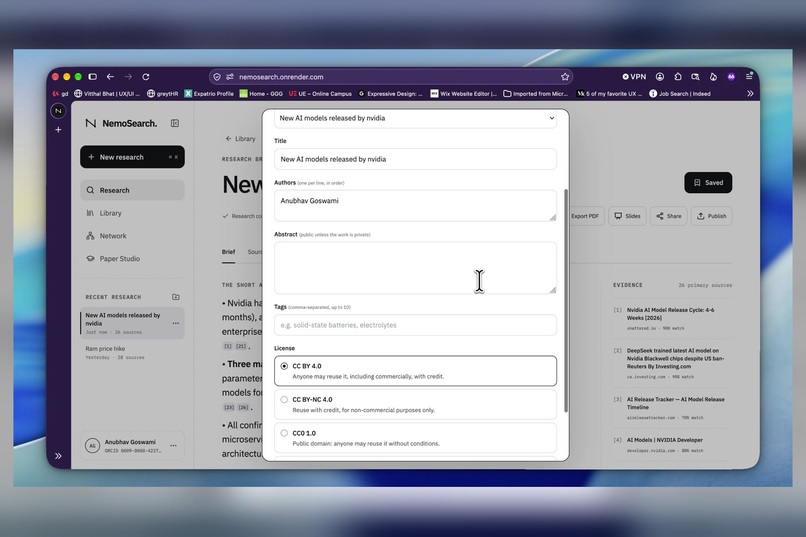
06-publish-work
-
14-paper-preview
-
07-ownership-record
-
11-paper-research
-
02-agents-live
-
12-paper-studio
-
05-citation-quote
-
01-Cutomize Agents
-
04-cited-report
-
13-latex-draft
-
03-Architecture
-
08-Collab Request
Inspiration
As researchers, we noticed the same loop every time we started a project: weeks of searching and reading papers, notes scattered across tabs, and then a blank page when it was time to write. AI chatbots made it faster, but not trustworthy. They answer confidently, cite things that don't exist, and can't tell you what they actually read. And none of them help a team go from research to a finished paper together.
So we set out to build a search engine for research: one that searches the literature, reads it, and shows its evidence, and then helps the team write the paper.
What it does
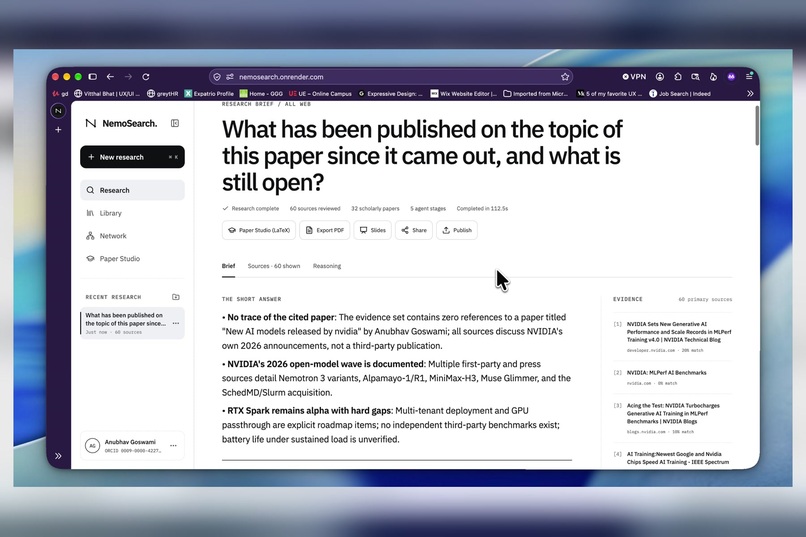
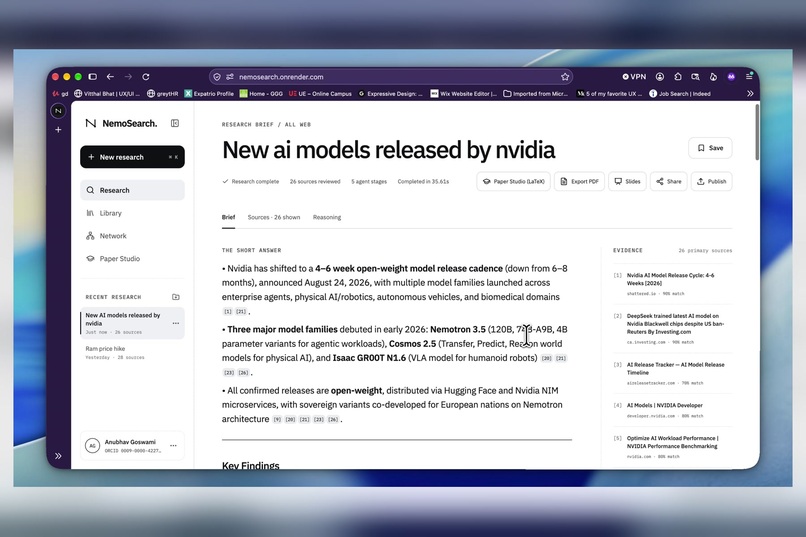
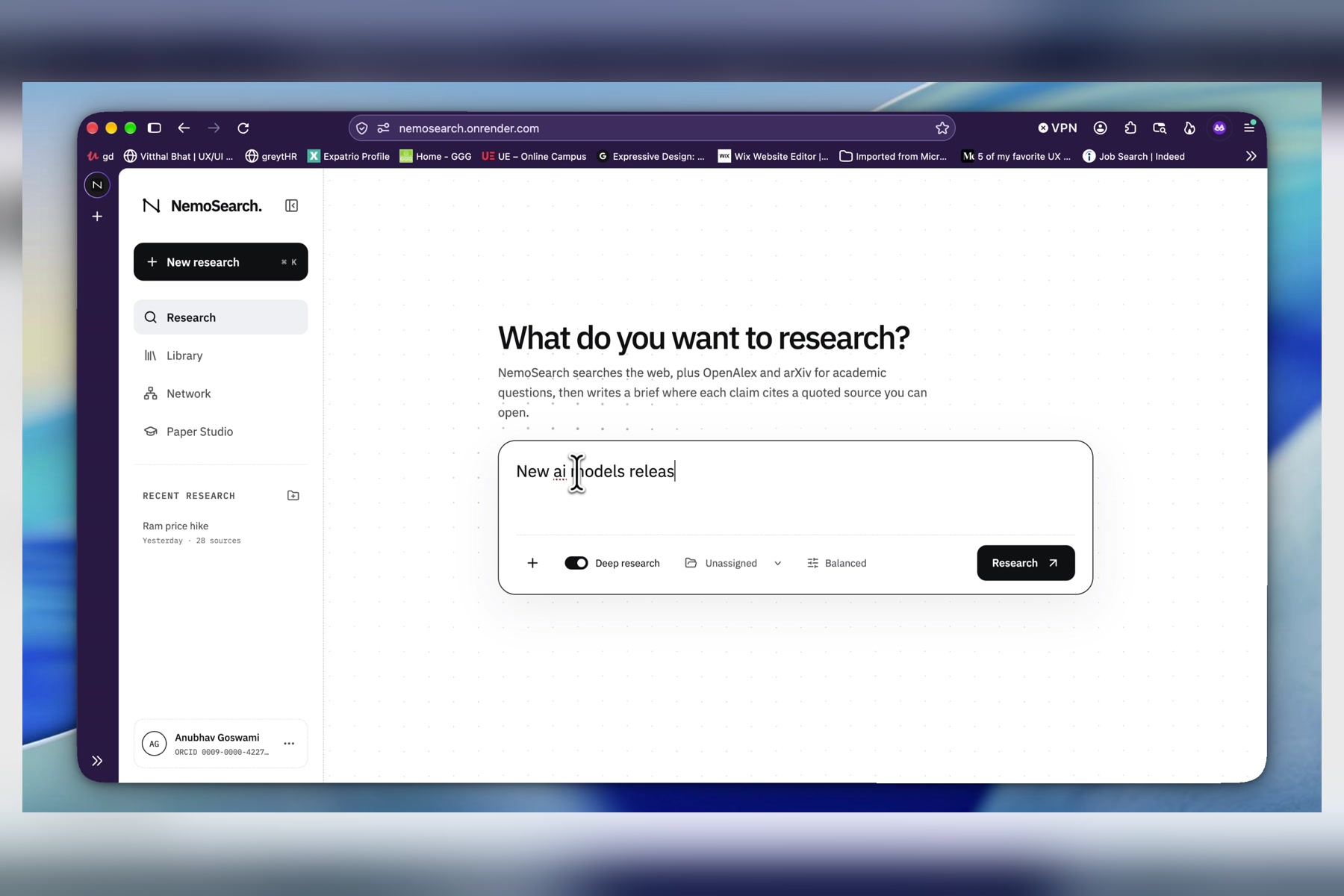
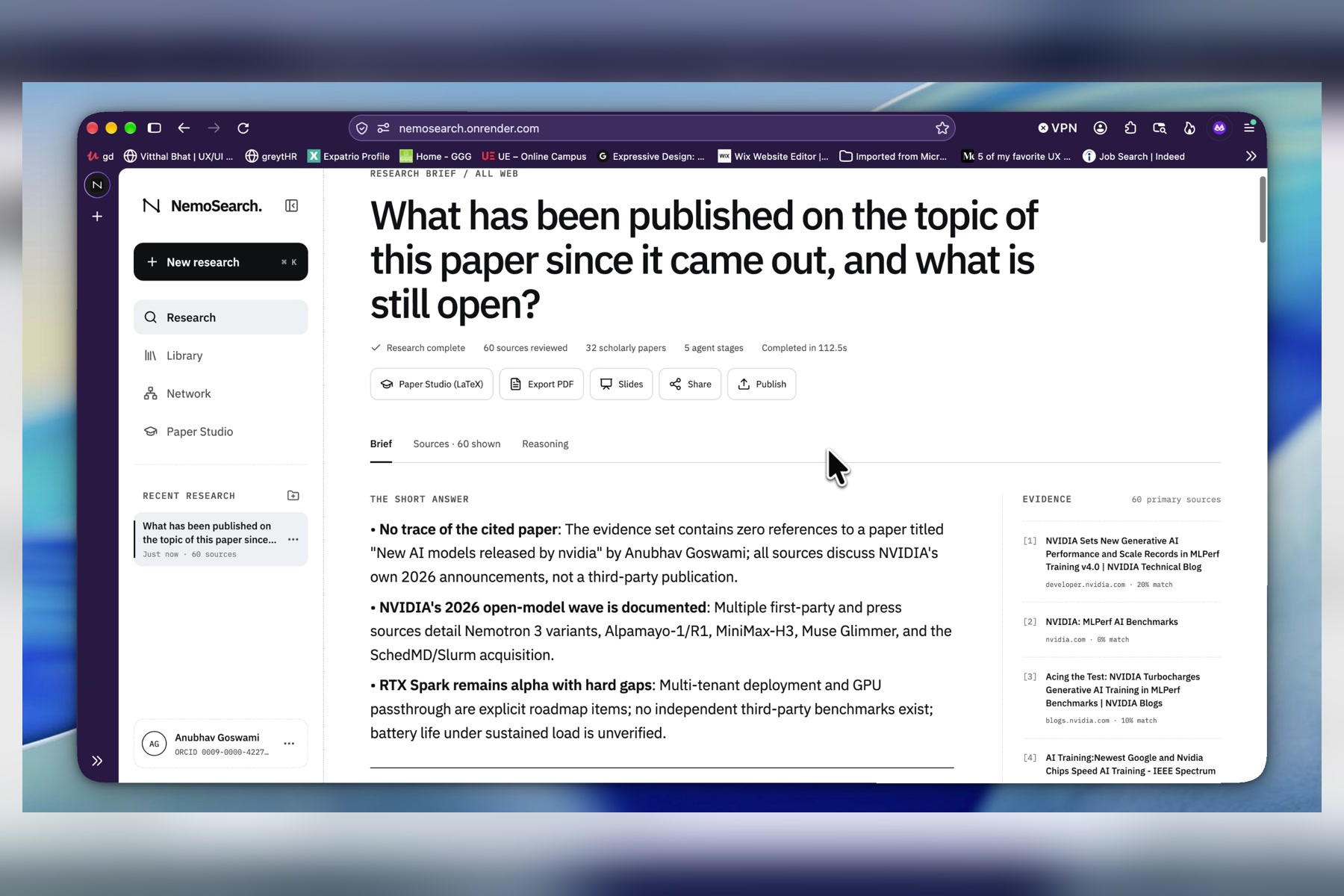
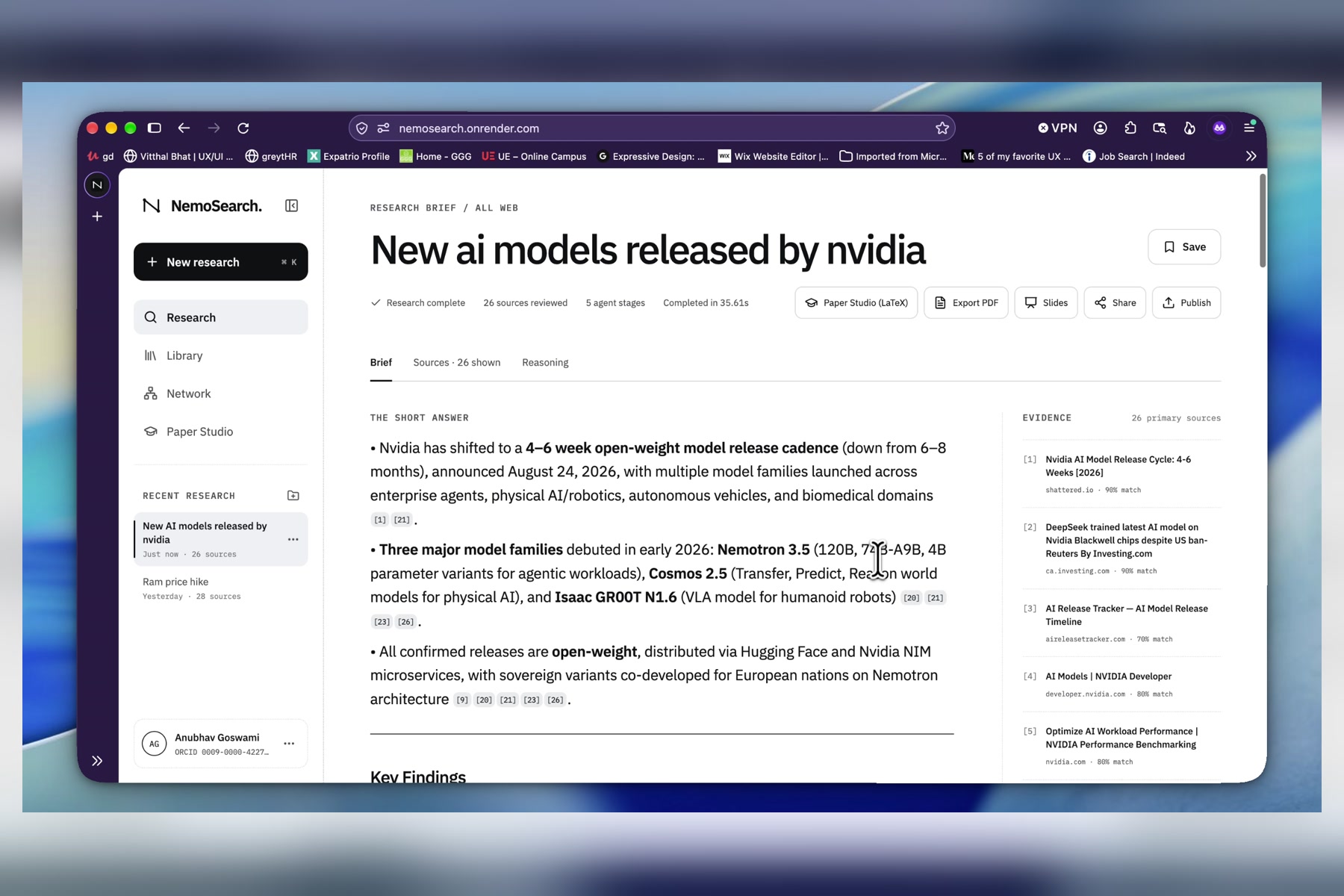
NemoSearch is a search engine built for research. Like Perplexity, you ask a question in plain language and get an answer, but instead of a few web links, NemoSearch searches the web and the scholarly literature (OpenAlex, arXiv), reads the papers themselves, and returns a cited research report you can verify line by line. Then it helps your team turn that research into a paper.
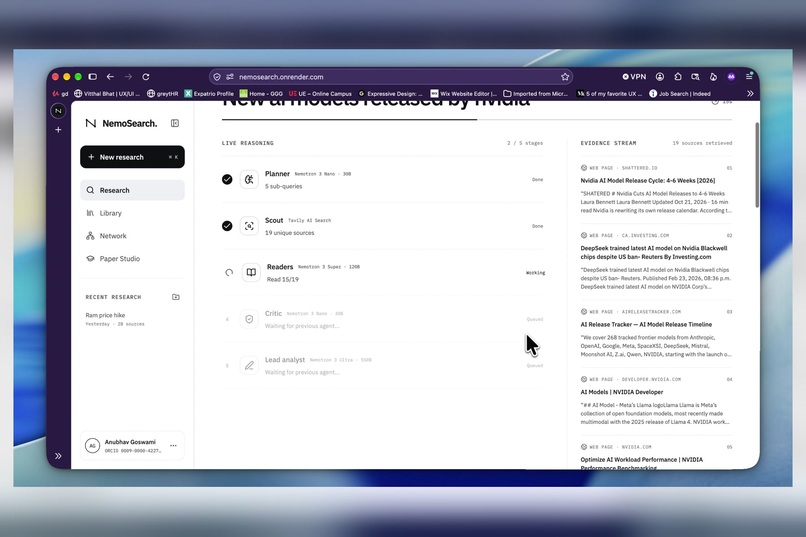
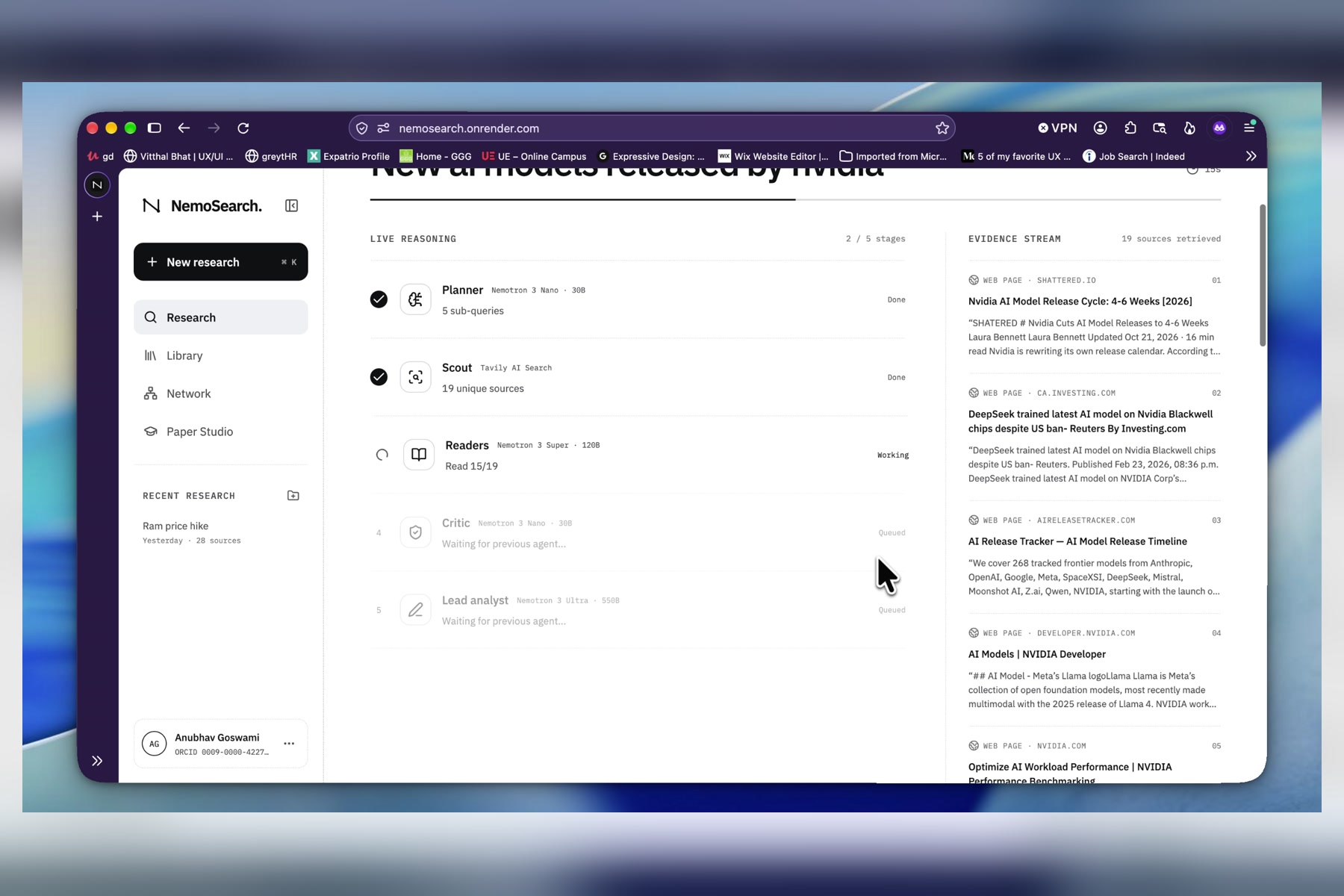
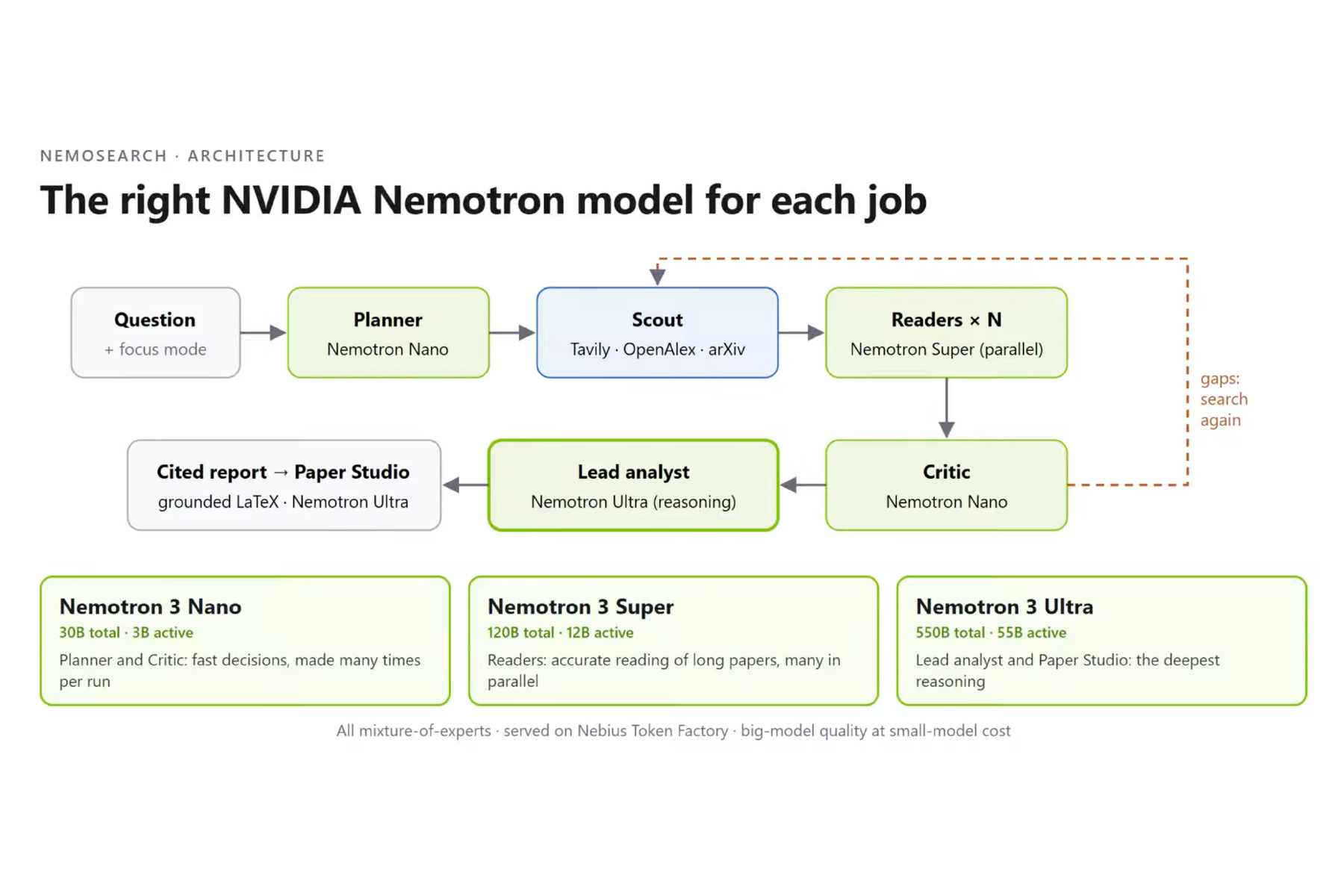
- Deep research with a team of agents. You ask a question, and five agents work on it, live on screen: a Planner splits it into search paths, a Scout searches the web (Tavily) and scholarly sources (OpenAlex, arXiv), Readers extract evidence with verbatim quotes in parallel, a Critic looks for gaps and sends the Scout back if something is missing, and a Lead analyst writes the report.
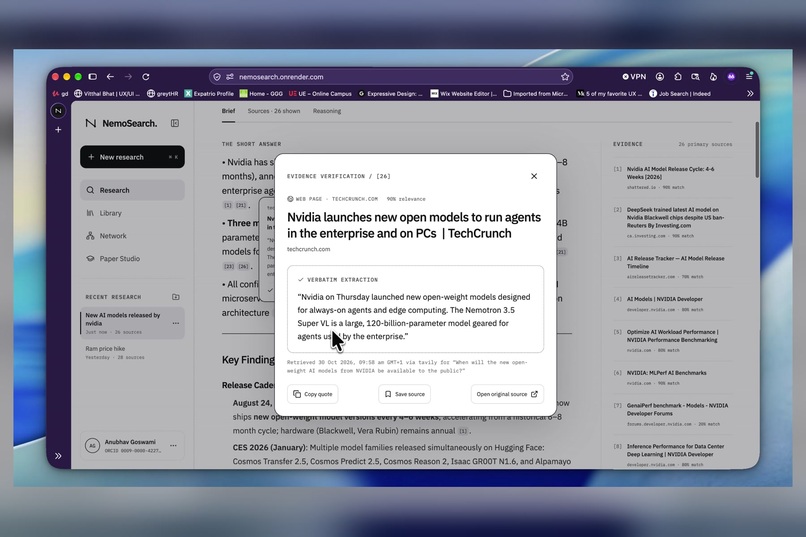
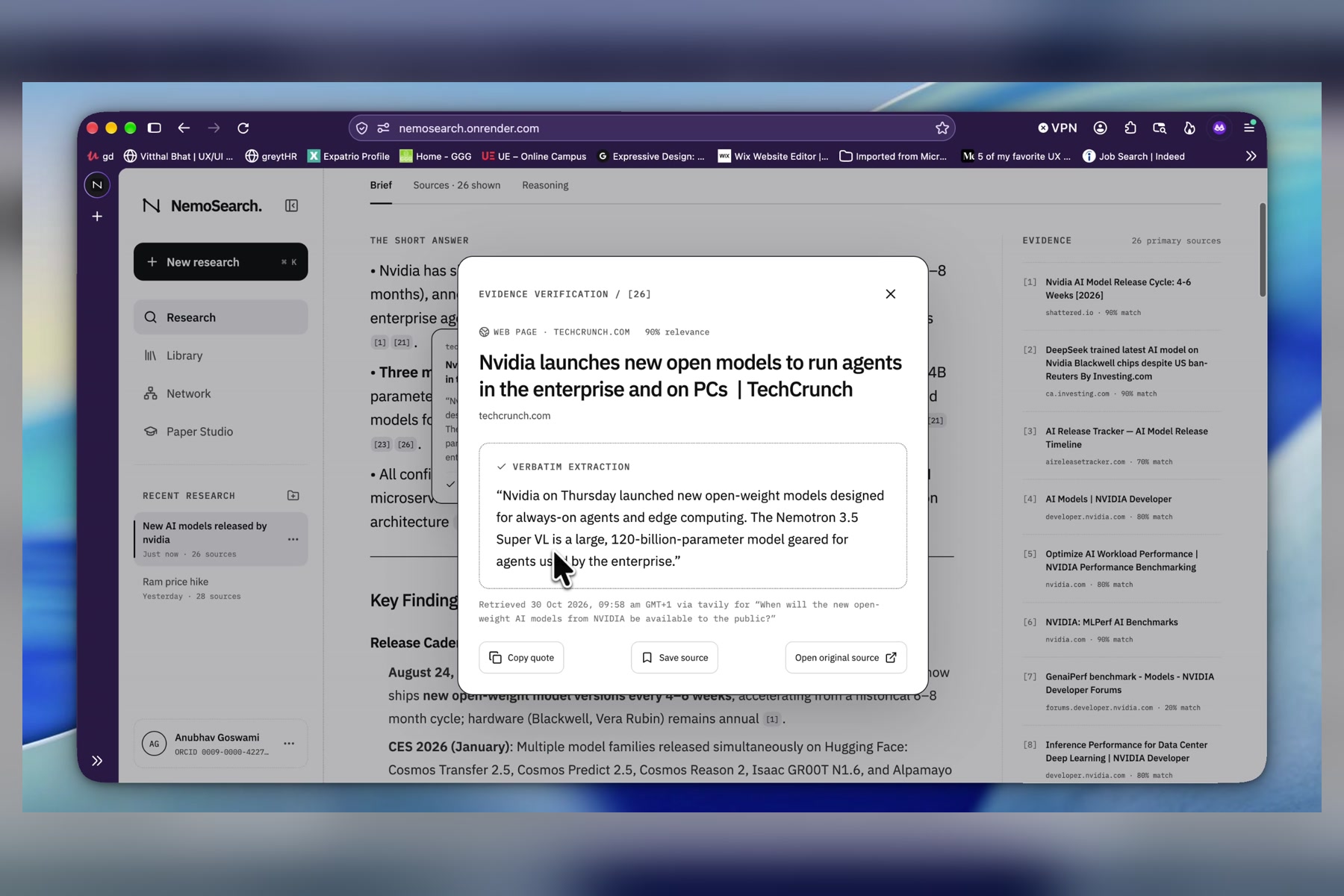
- Every claim is verifiable. Click any citation to see the exact quote it came from. Each source says whether its full text was read (open-access PDFs are fetched and parsed) or only its abstract, and the report openly flags any search that came back incomplete.
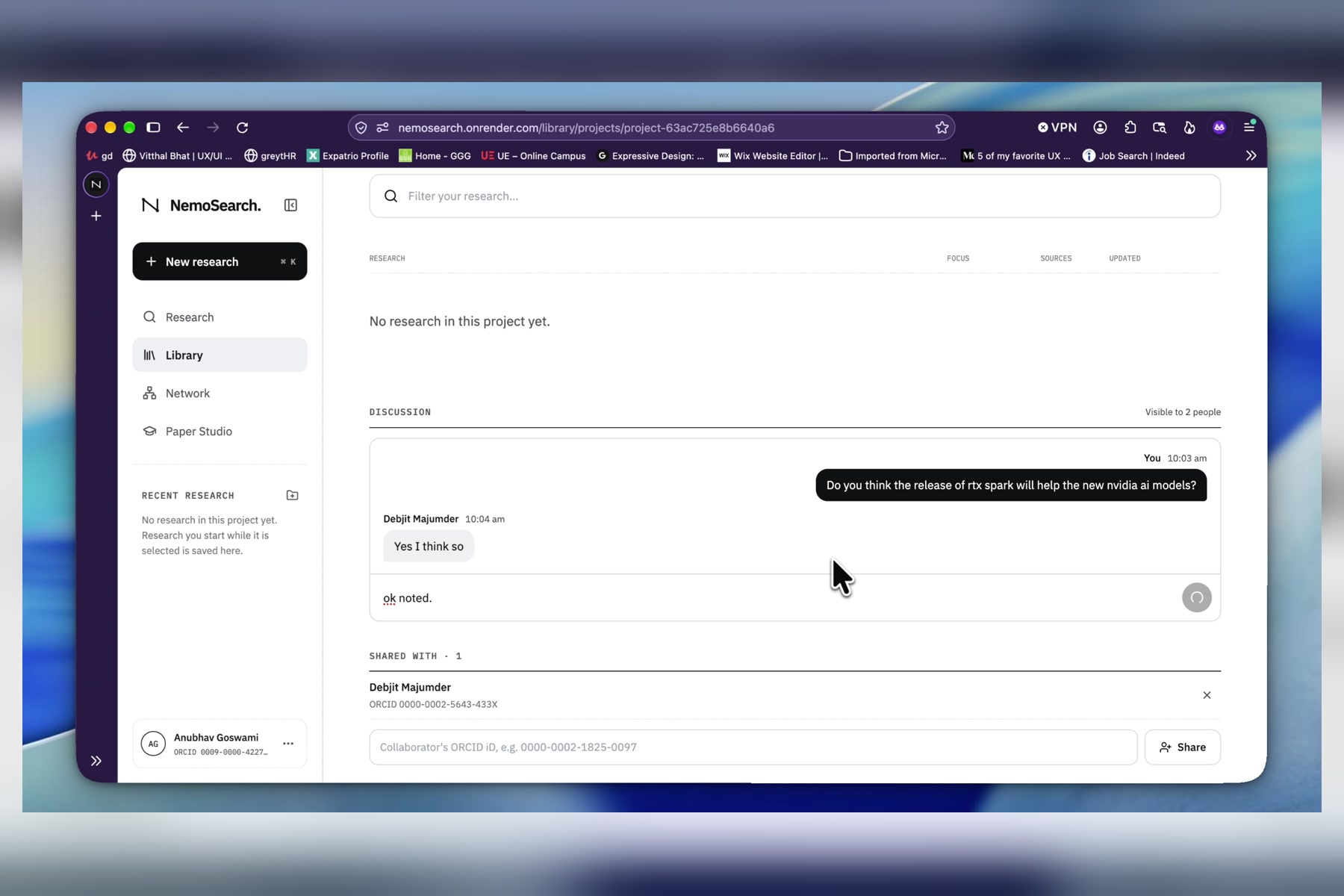
- Projects and collaboration. Sign in with ORCID, the verified identity researchers already use. Add co-authors by their ORCID iD and share research, sources, files and a project discussion.
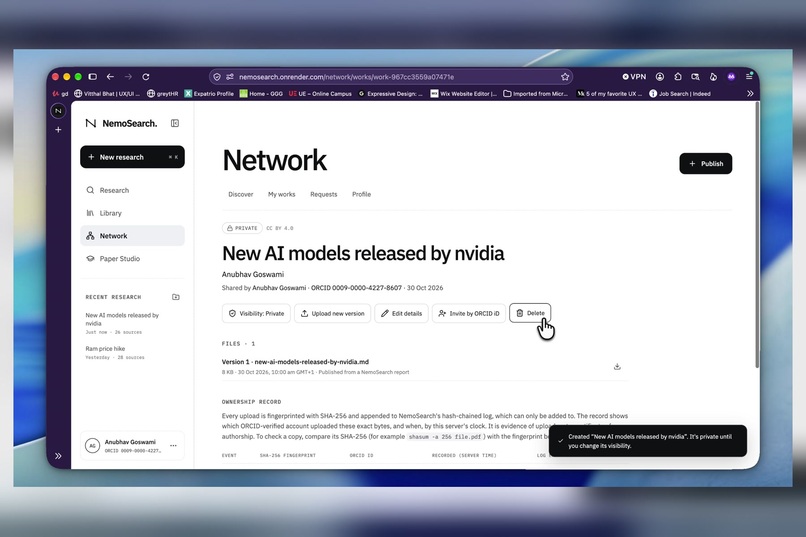
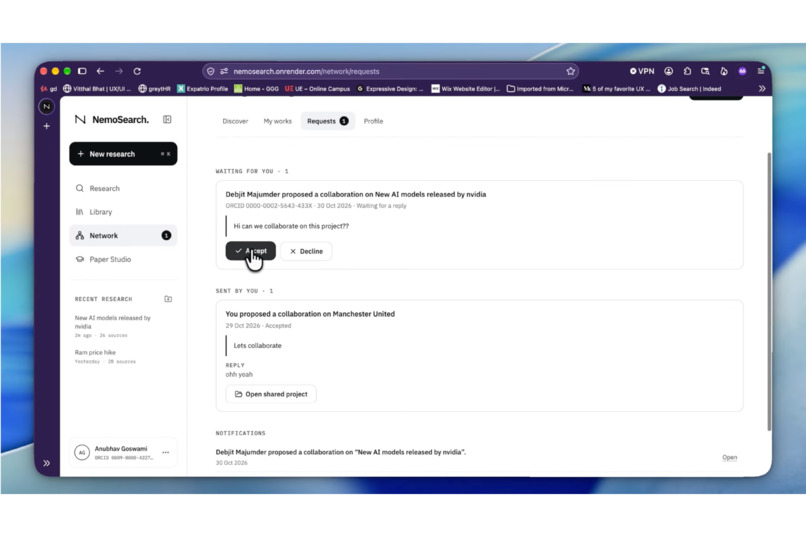
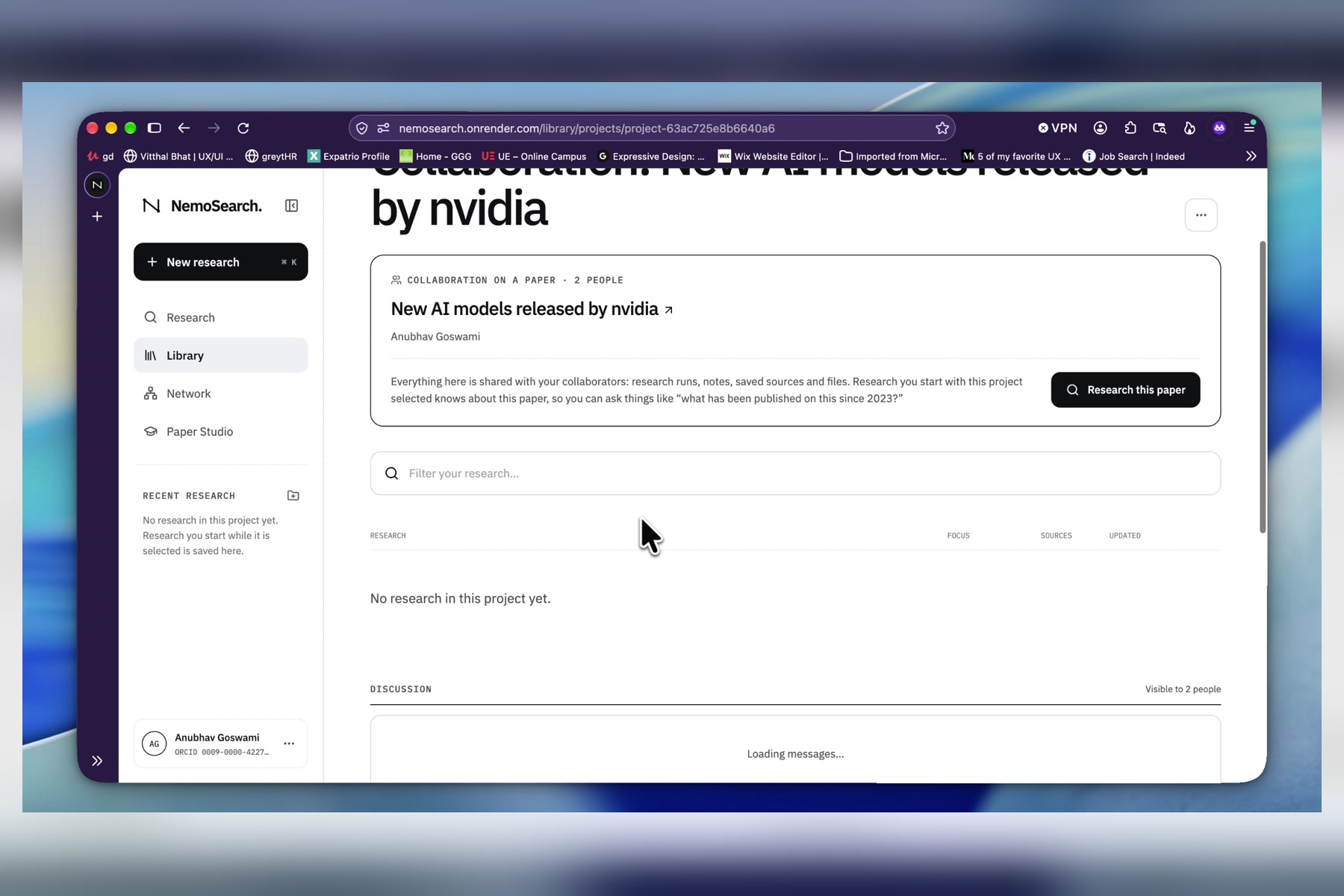
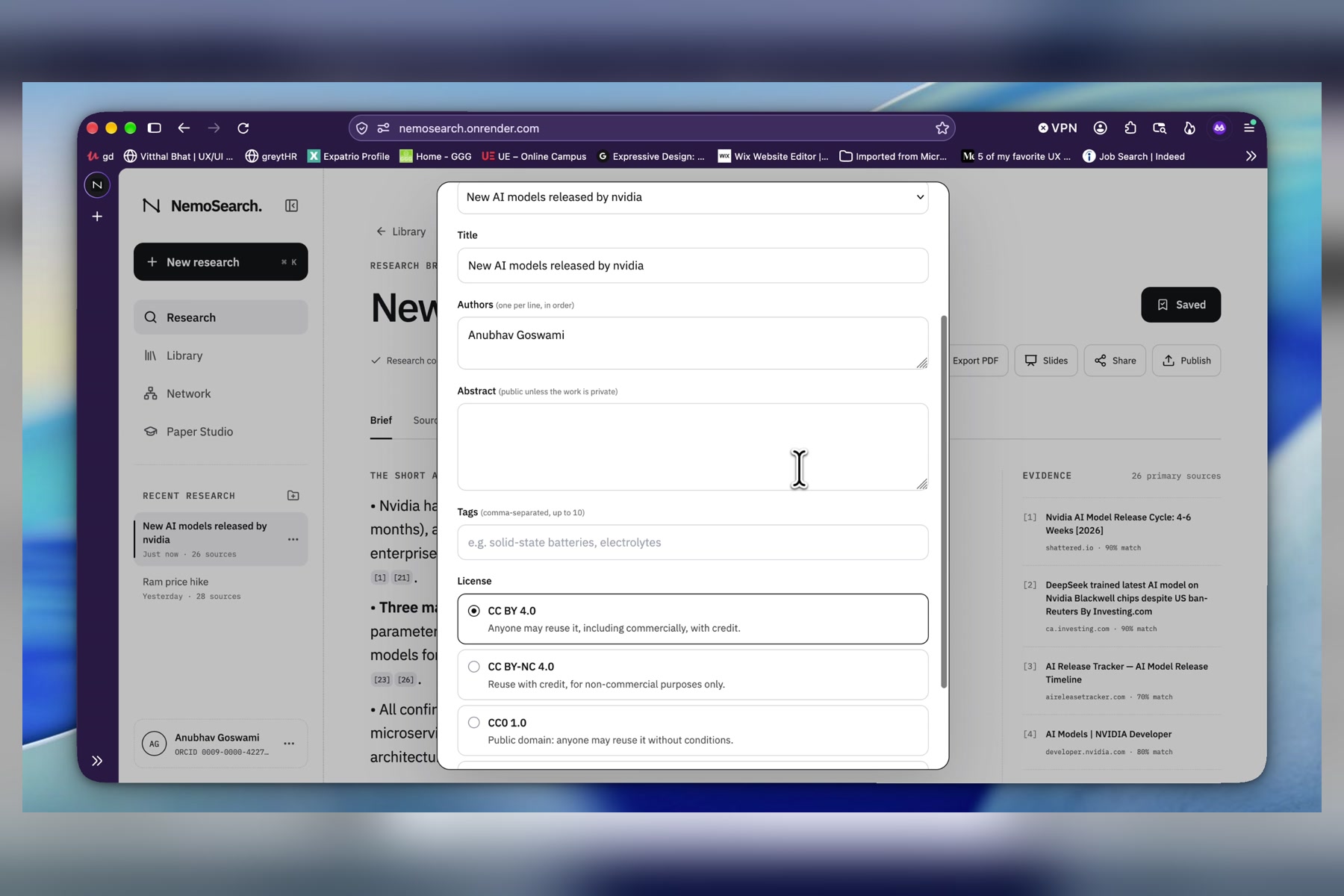
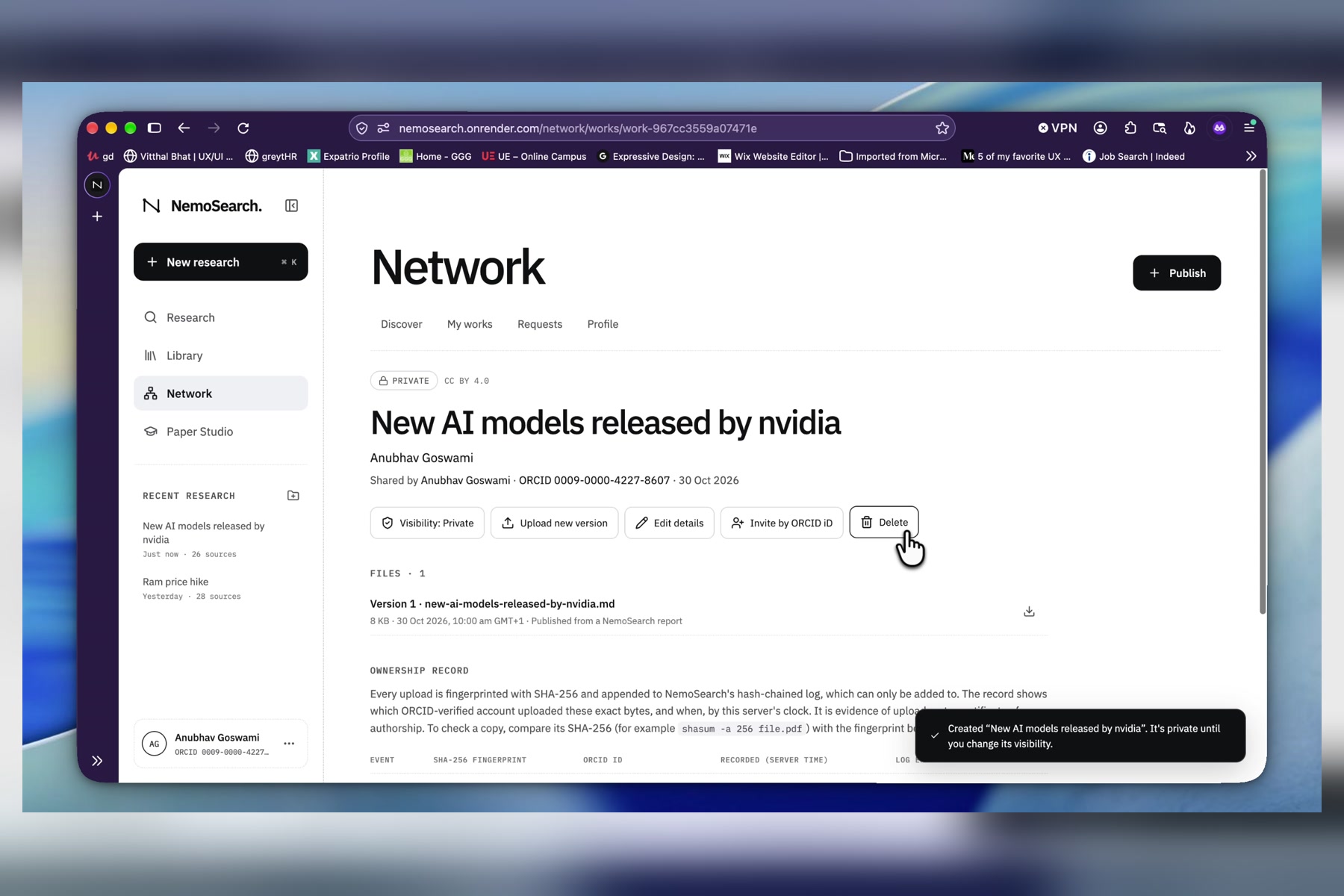
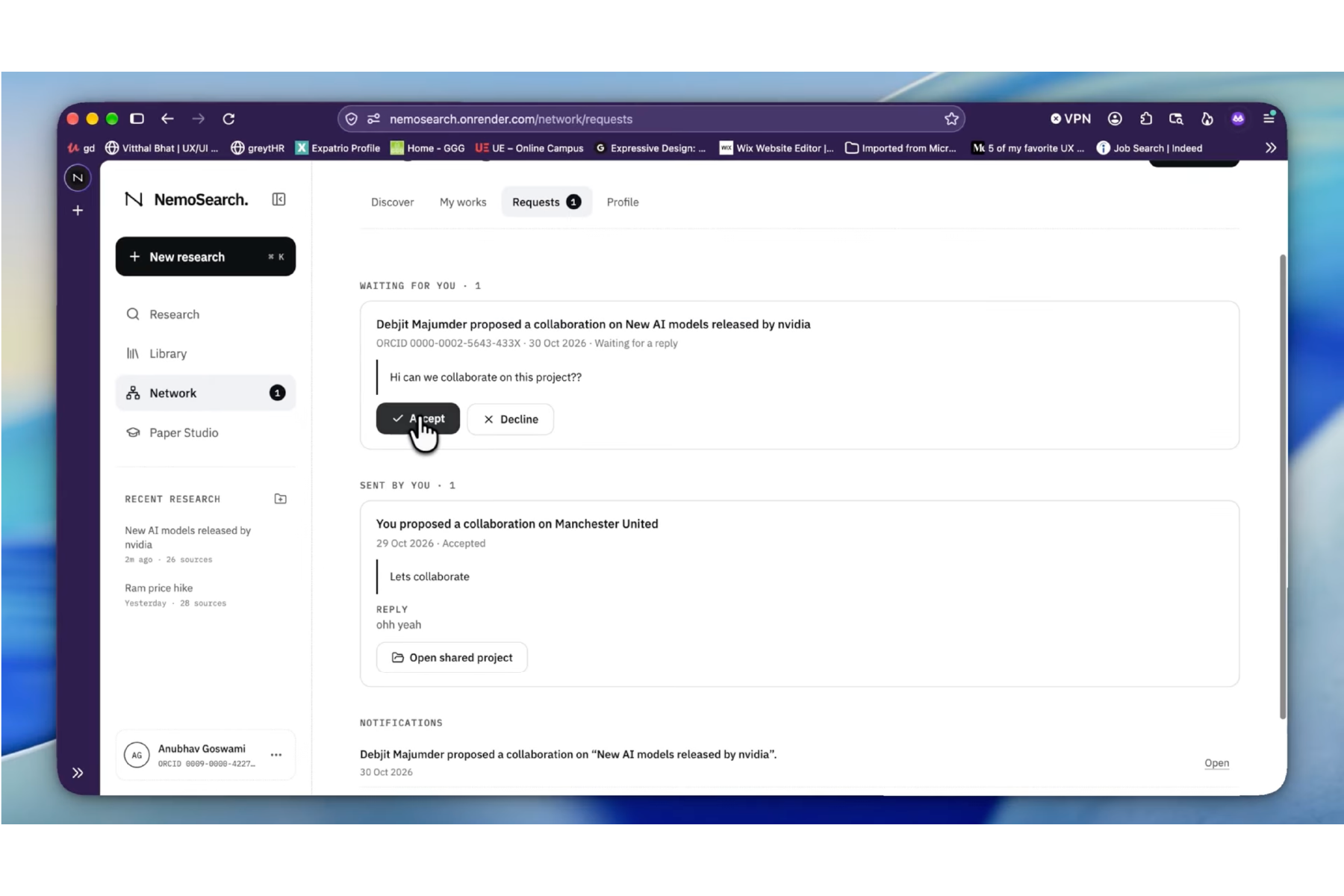
- The Network. Publish your work, choose who can see it and under which license, and receive collaboration requests. Every upload is SHA-256 fingerprinted into a hash-chained ownership log, so authorship is provable. Accepting a request opens a shared project, where you can "research this paper" with the paper's context already loaded.
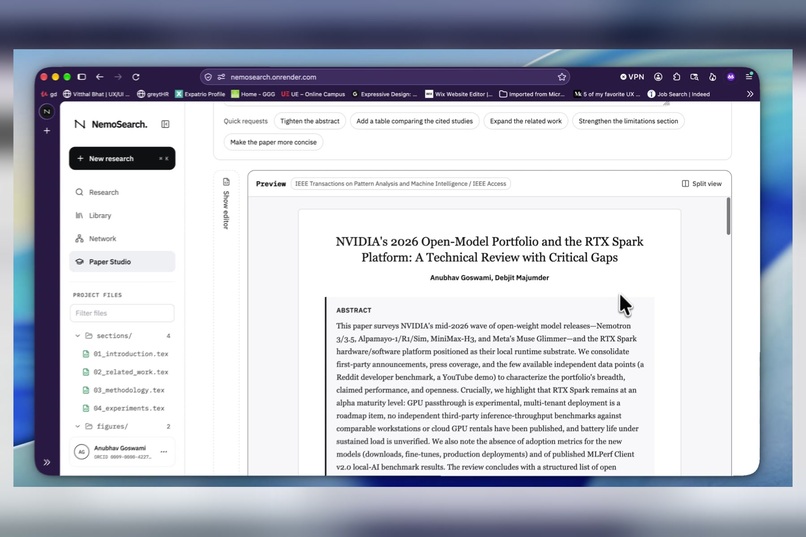
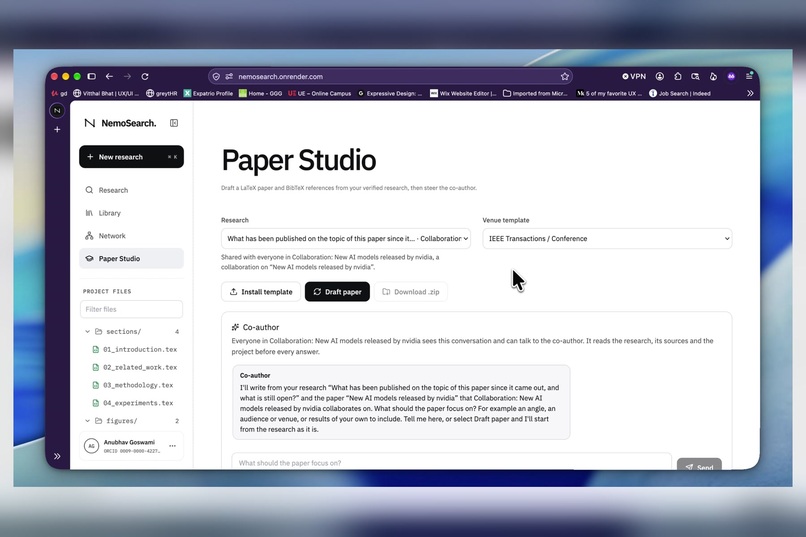
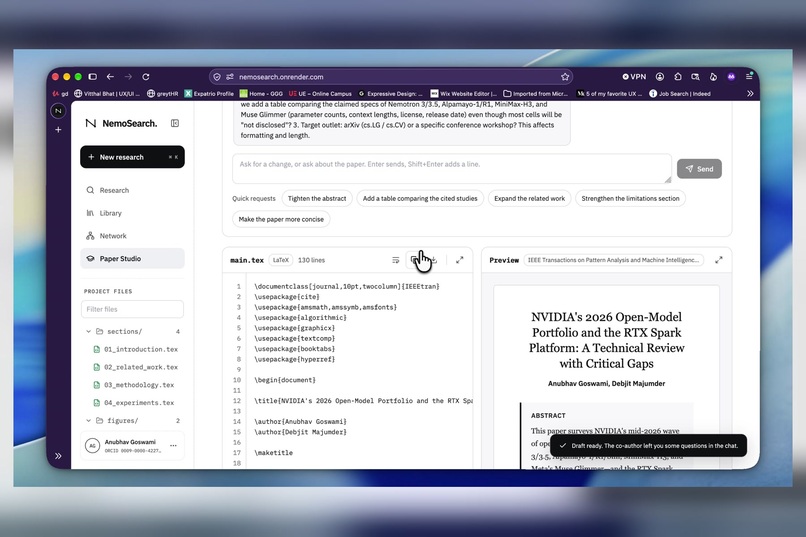
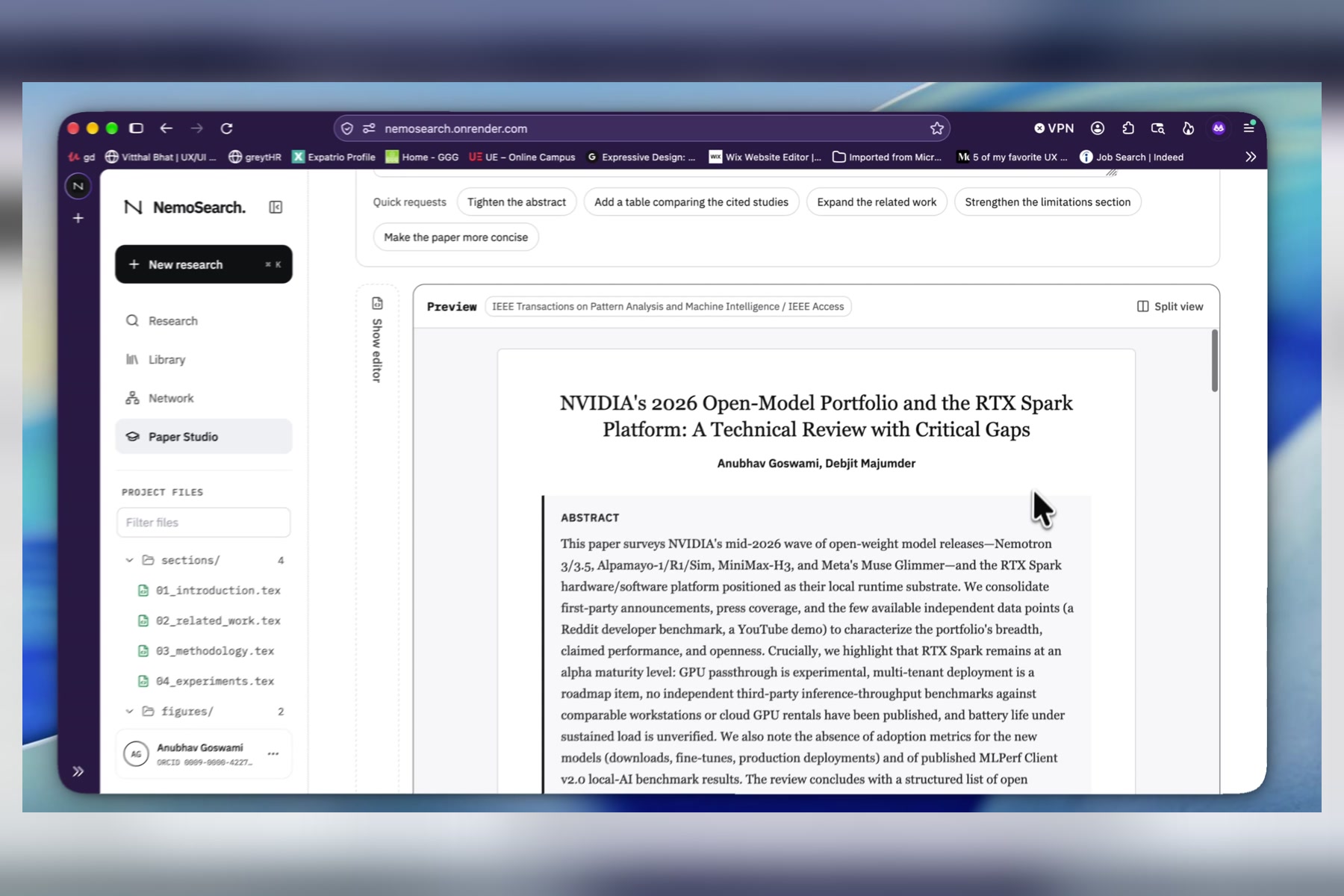
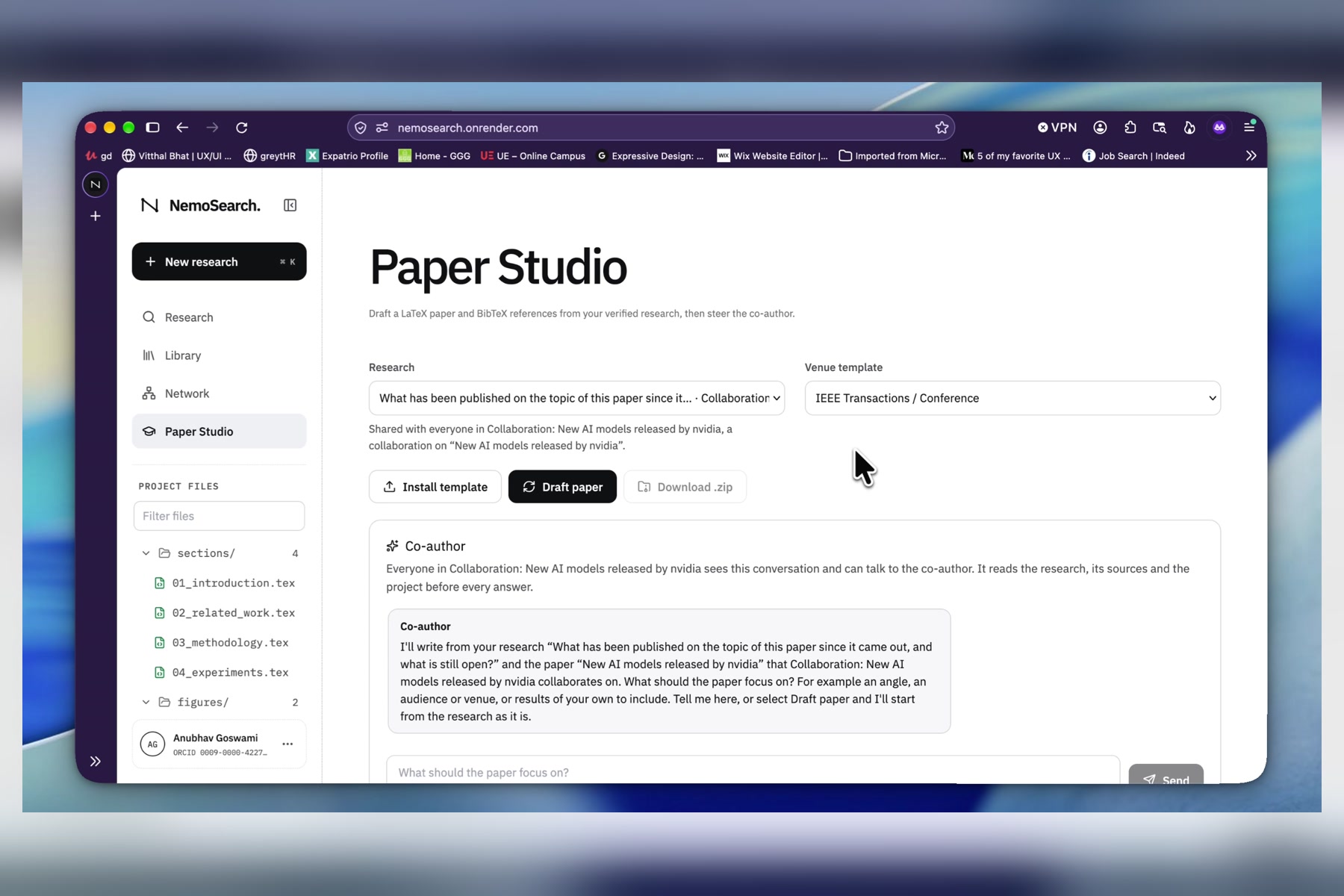
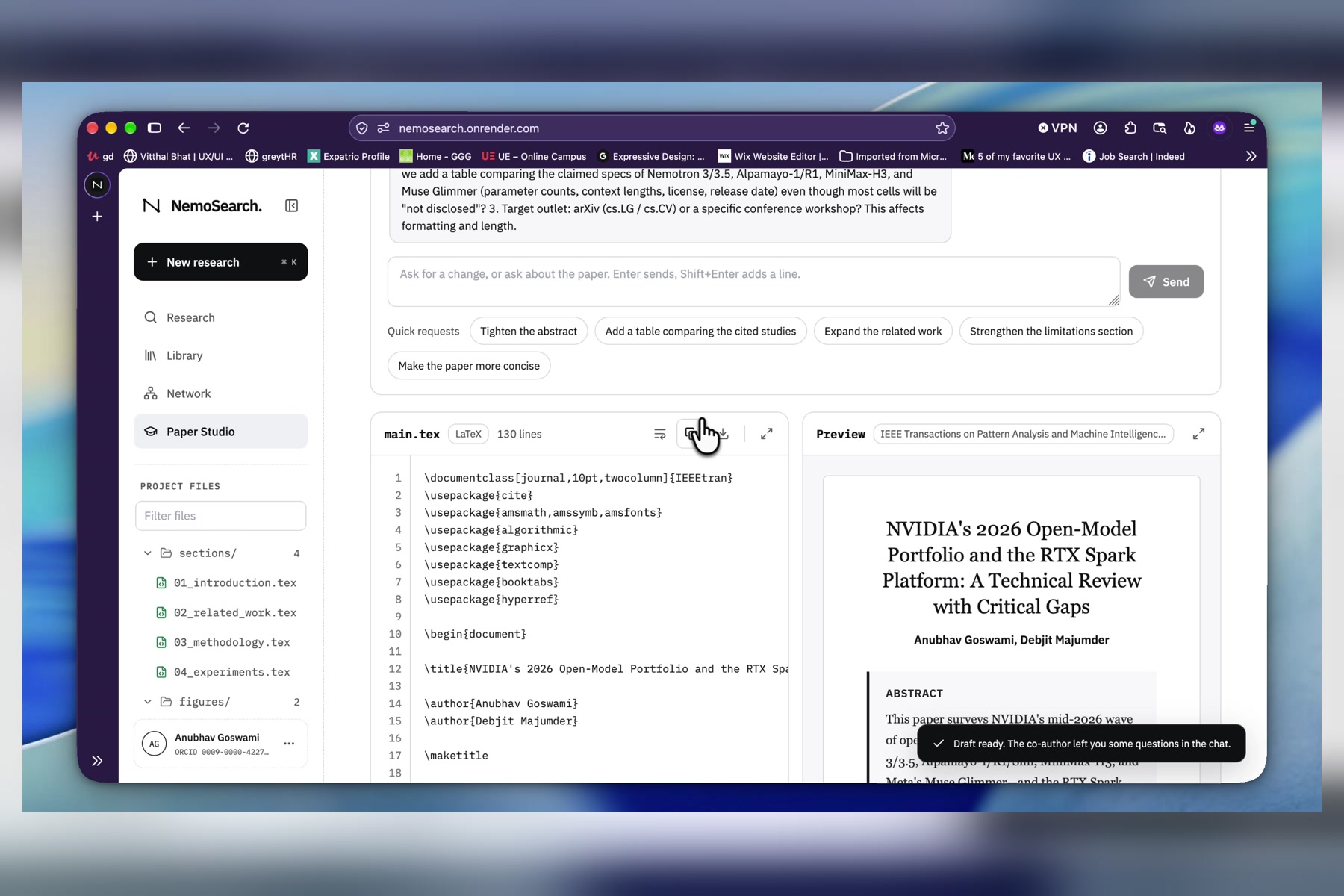
- Paper Studio. Turn the research into a paper in LaTeX, in a venue template (NeurIPS, ICML, ICLR, IEEE, ACM, Nature, Elsevier, or your own). The co-author is a shared, real-time chat: it asks what you want to write, every member of the project can steer it, and it revises the same paper live for everyone. It is grounded: it only cites sources the research actually found, never invents results, and leaves a visible TODO where data is missing. Export a ZIP with
main.tex, sections and real BibTeX, ready for Overleaf (which we plan to do here in future, removing overleaf completely from the pipeline).
How we built it
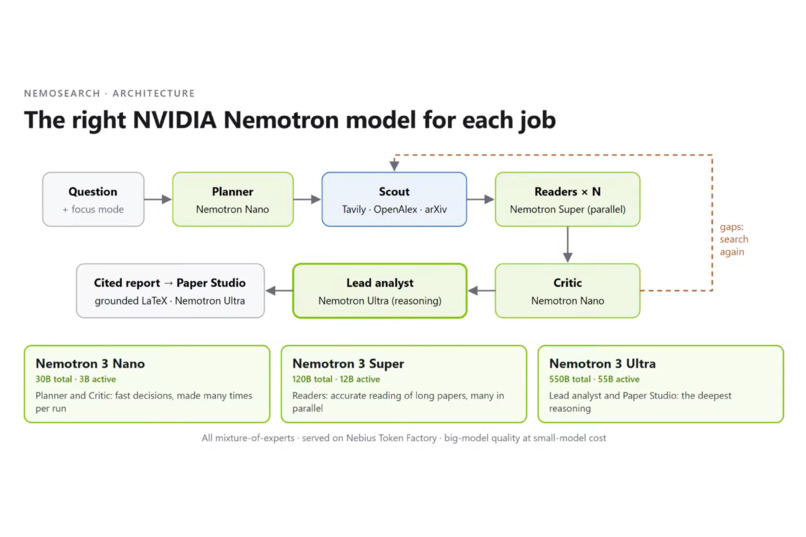
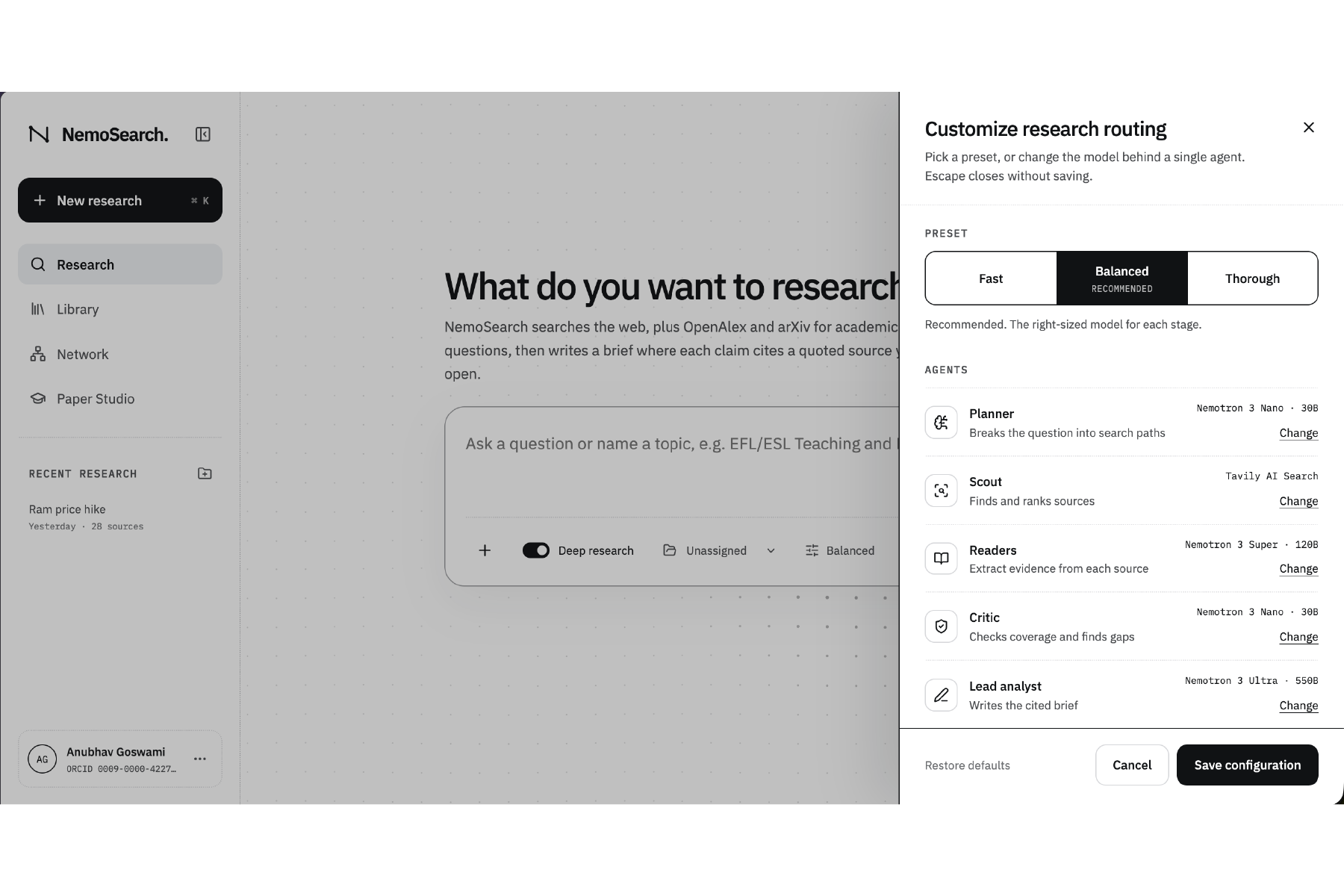
The right Nemotron model for each job. Every model call runs on NVIDIA Nemotron 3 through Nebius Token Factory (OpenAI-compatible API), and each agent gets the model that fits its work:
| Model | Used for | Why |
|---|---|---|
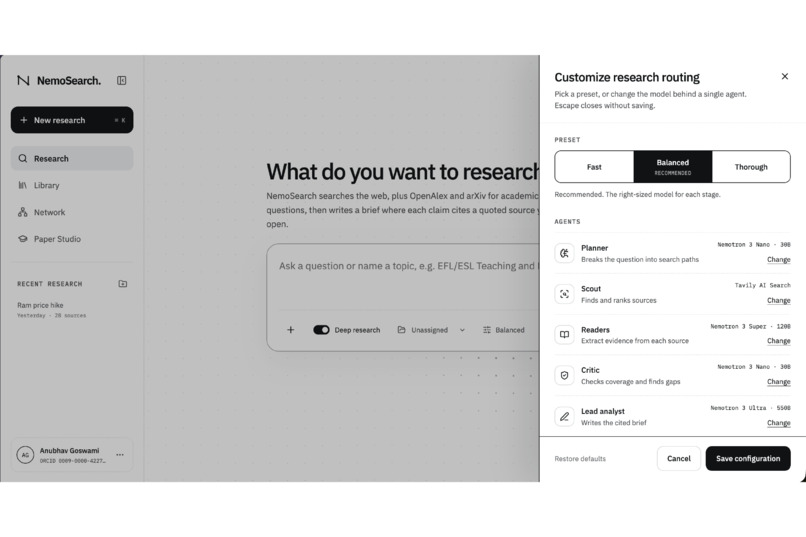
| Nemotron 3 Nano (30B, 3B active) | Planner, Critic, follow-up routing | Fast, structured decisions made many times per run |
| Nemotron 3 Super (120B, 12B active) | Readers, in parallel | Accurate reading of long papers at a cost that scales |
| Nemotron 3 Ultra (550B, 55B active) | Lead analyst, Paper Studio | The deepest reasoning, with its thinking streamed live |
Because all three are mixture-of-experts models, only a fraction of the parameters run for each token: we get big-model quality where it matters, at small-model cost everywhere else. Users can switch between Fast, Balanced and Thorough routing presets, or choose a model per step.
Stack
- Backend: Python, FastAPI, SQLAlchemy, Server-Sent Events for the live pipeline, pypdf for full-text parsing.
- Search: Tavily for the web, plus our own OpenAlex and arXiv connectors with retries and caching.
- Frontend: React 19, TypeScript, Vite, Tailwind CSS.
- Data: PostgreSQL on Neon (SQLite locally), files in Backblaze B2 (S3-compatible, private bucket with presigned URLs).
- Identity: ORCID OAuth.
- Deployment: Docker on Render.
- Testing: pytest on both SQLite and Postgres, plus Playwright end-to-end tests.
Challenges we ran into
- Keeping the paper on topic. Our first Paper Studio drafts drifted away from the research. The cause: the writer never received the full report, only a fallback summary. We rebuilt it so the server assembles the grounding itself: the question, the brief, follow-ups, sources and the project's context. Every source gets one stable, unique BibTeX key, and the model may cite only those keys.
- Real-time co-writing without overwriting each other. Several people can edit and chat with the co-author at once, so we added versioned edits (a conflict is detected instead of silently lost) and a lock showing who the co-author is working for.
- Long LaTeX outputs. Revisions sometimes came back cut off. We detect truncated output and refuse to apply it, so a paper is never replaced by half a paper.
- Trusting model output in a shared UI. The co-author's replies are shown to every collaborator, so we render its Markdown as safe elements instead of injecting HTML.
- Going to production on free tiers. We moved to pooled Postgres on Neon and private object storage on B2, and added startup checks that refuse unsafe production settings.
Accomplishments that we're proud of
- A research search engine where every claim can be checked against the exact quote behind it.
- A real-time, multi-author AI co-author that stays grounded in the team's own research.
- A clear, measurable use of three Nemotron tiers, each where it fits best.
- A full product, from sign-in to research to collaboration to paper, deployed and working.
What we learned
- Model routing matters: most steps don't need the biggest model, and the ones that do benefit hugely from it.
- Grounding is mostly an engineering problem. What you put in front of the model decides whether it stays honest.
- Researchers care less about speed than about being able to verify.
What's next for NemoSearch
- More scholarly sources (PubMed, Semantic Scholar) and better full-text coverage.
- Compiling the LaTeX to PDF inside the app.
- Inviting co-authors into Paper Studio straight from the Network.
- Introduce plugins (slack, gmail, calender, required equivalents of MS Office tools)
- Institution-level workspaces for labs and research groups.
Built With
- arxiv
- backblaze-b2
- docker
- fastapi
- figma
- latex
- nebius-token-factory
- neon
- nvidia-nemotron
- openalex
- orcid
- playwright
- postgresql
- pypdf
- python
- rawgraphs
- react
- render
- sqlalchemy
- tailwindcss
- tavily
- typescript
- vite

Log in or sign up for Devpost to join the conversation.