-
-

Nemo - Your AI Interviewer
-
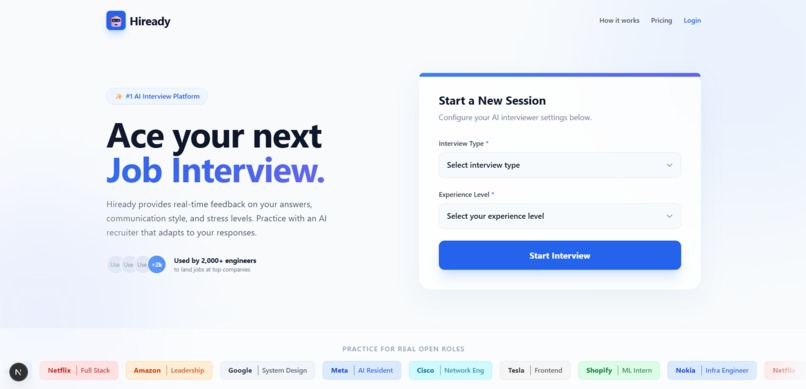
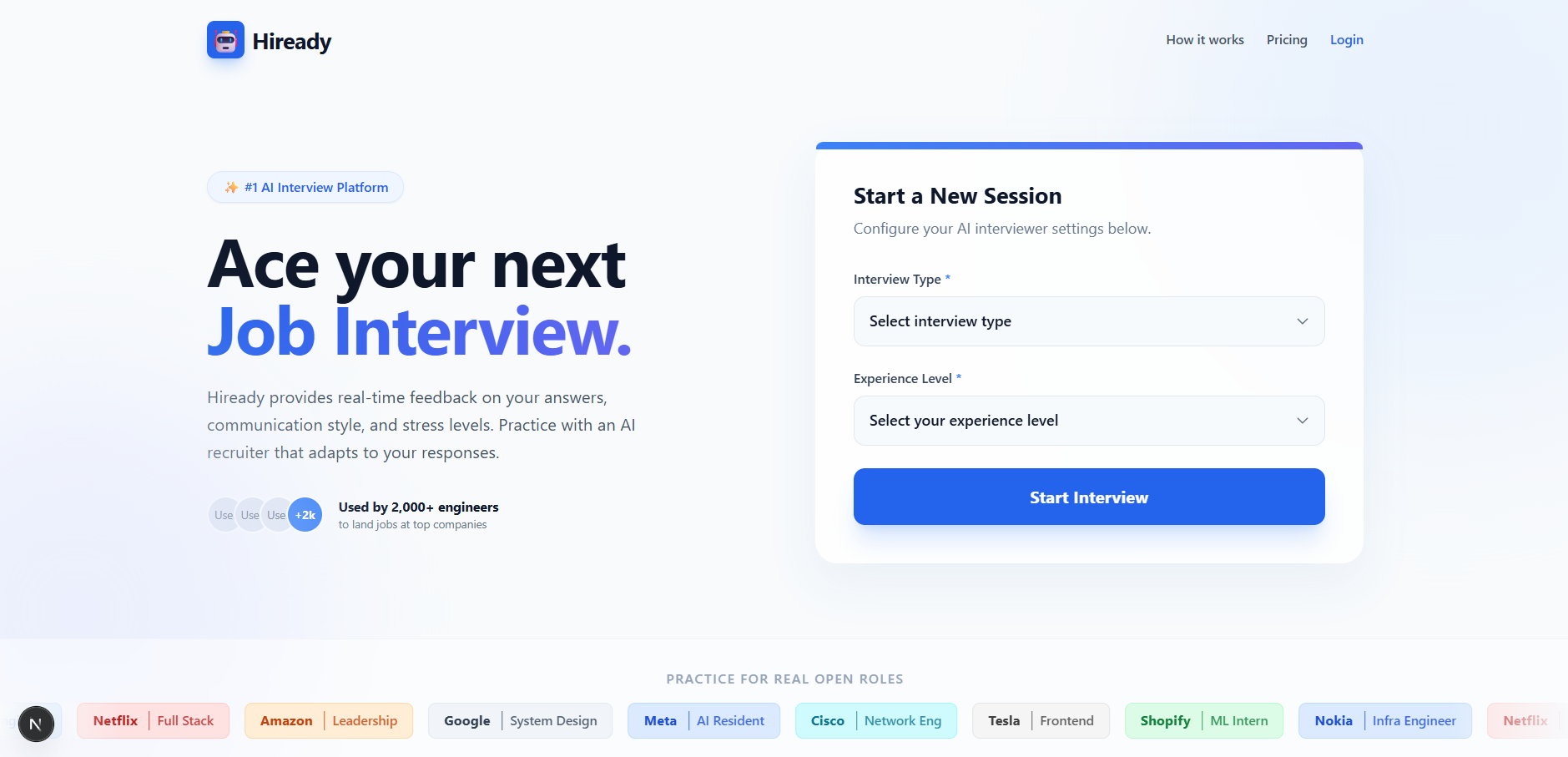
Home Page
-
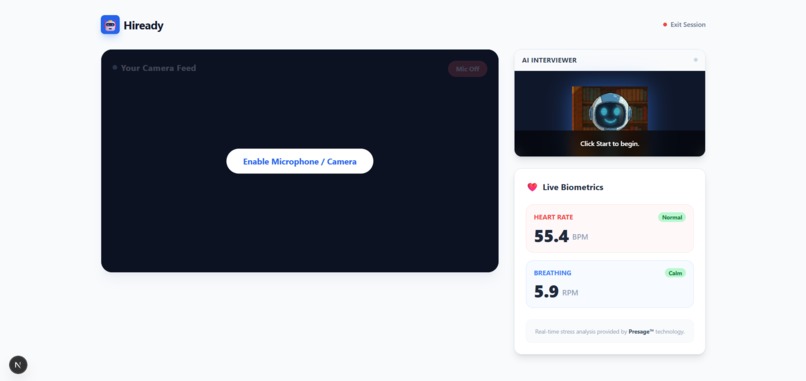
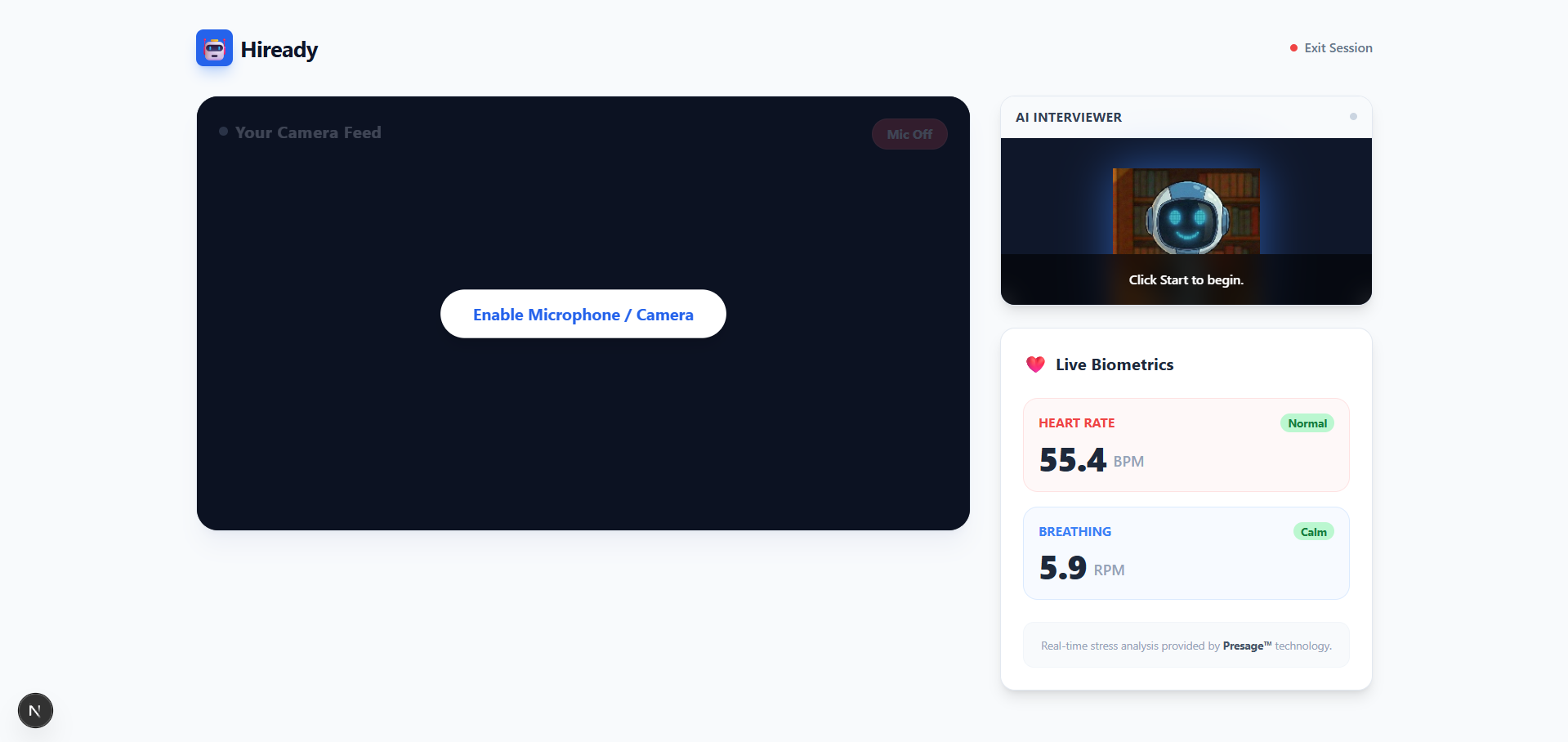
Pre-interview Setup
-
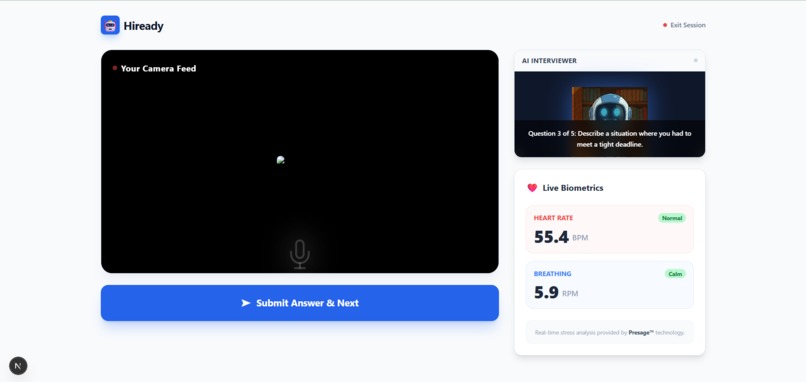
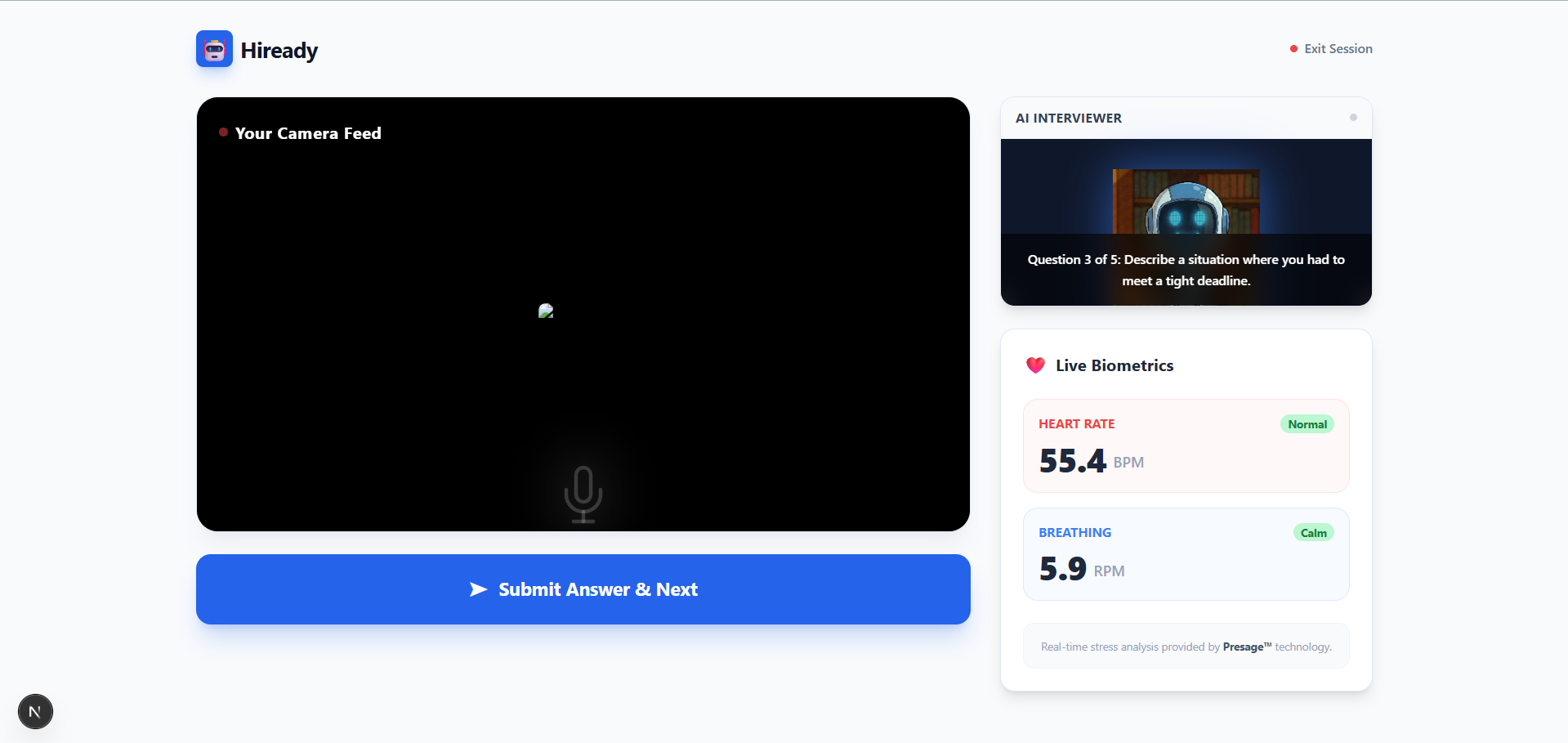
Mid-Interview Question

Inspiration
As engineering students currently navigating the competitive landscape of internship applications, we experienced firsthand the anxiety and uncertainty that comes with the interview process. We realized that this wasn't just a personal struggle; countless students and job seekers lack accessible, effective tools to practice their communication skills before the big day. We felt that existing solutions were either too generic or lacked the depth of real human interaction. Driven by a desire to bridge this gap, we set out to create an intelligent agent that provides a safe, realistic environment for preparation, empowering users to walk into their interviews with confidence.
What it does
Hiready serves as a comprehensive AI mock interviewer designed to simulate real-world scenarios, ranging from behavioral inquiries to deep technical questions. As the user interacts with the agent, the system works in the background to capture a holistic view of their performance. It utilizes Presage to detect physiological stress levels and emotional cues via the webcam, while simultaneously transcribing the spoken conversation. All this data is fed into Google's Gemini, which synthesizes the information to generate a detailed, actionable feedback report, highlighting areas for improvement in both delivery composure and answer content.
How we built it
Our development process relied on a divide-and-conquer strategy to integrate a diverse technical stack effectively. While the frontend and user interface were deployed using Next.js to ensure a responsive web experience, the backend required intricate coordination. One part of the team focused heavily on integrating the C++ SDK for Presage to handle biometric data, while others worked on implementing lifelike audio interaction using the ElevenLabs API. We utilized Git for version control to merge these distinct components, ensuring that the high-performance C++ backend communicated seamlessly with our modern web framework.
Challenges we ran into
One of the most significant hurdles we faced was managing the state and timing of the AI voice generation through ElevenLabs; ensuring the conversation felt natural and responsive rather than robotic was difficult. Additionally, capturing and transcribing the entire video input accurately in real-time proved to be computationally demanding. Balancing the synchronization between the audio output, video transcription, and the underlying logic required several iterations of debugging to ensure the user experience remained smooth.
Accomplishments that we're proud of
We are incredibly proud of successfully integrating distinct and complex technologies—specifically the C++ based Presage SDK and the modern web stack—into a single, cohesive application. Seeing the first successful end-to-end run, where the AI asked a question, analyzed the user's stress, and provided relevant feedback, was a massive milestone for the team. Beyond the code, we are proud of the collaborative atmosphere we maintained; despite the stress of the deadline, we had fun building something meaningful that addresses a real problem we face as students.
What we learned
This hackathon was a crash course in cross-language interoperability and advanced API integration. We gained deep insights into working with the ElevenLabs API for audio synthesis, but the steepest learning curve came from working with Presage. Since Presage primarily operates via a C++ SDK, we had to step out of our comfort zones to handle low-level memory management and integration logic that is rarely encountered in standard web development projects.
What's next for Nemo
Looking ahead, we plan to evolve Nemo from a general interview tool into a specialized technical coaching platform. The next major update will introduce support for live coding interviews, similar to LeetCode style questions. We aim to have the AI not only analyze the verbal explanation but also review the code syntax and algorithmic efficiency in real-time, providing a holistic preparation tool for software engineering roles.

Log in or sign up for Devpost to join the conversation.