-
-
-
-
-
-
-
-
-
-
-
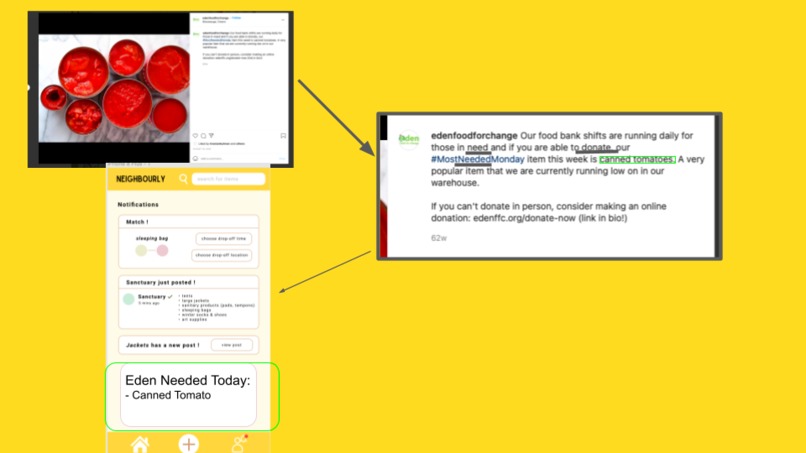
Image detection/ Webscrapping
-
Inspiration
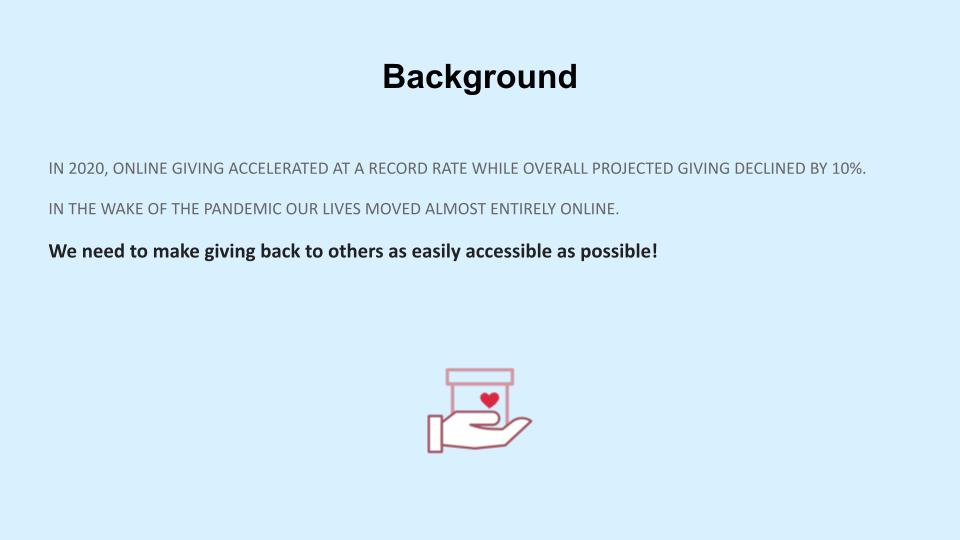
When volunteering with local community outreach, we've noticed there's a real time disconnect between what local shelters need and what is currently on their shelves. In addition, it's really great that during the holidays it's a trend to give back to one's community. However, vulnerable populations need our help all year round. We were also inspired from adopting a family during Christmas in order to take care of their needs.
What it does
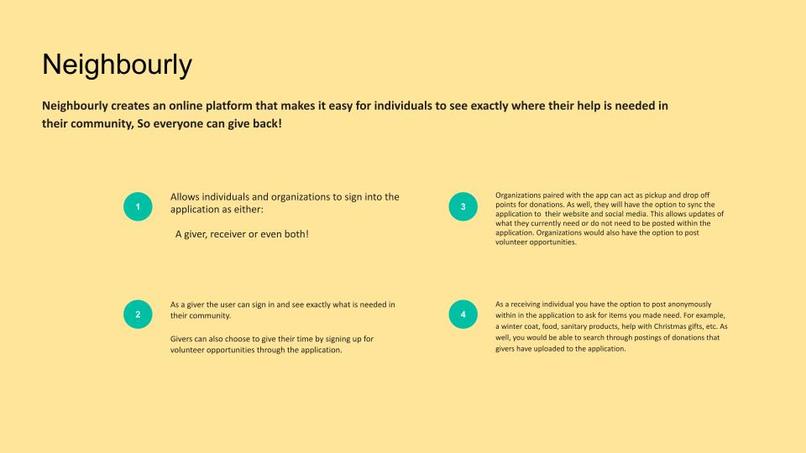
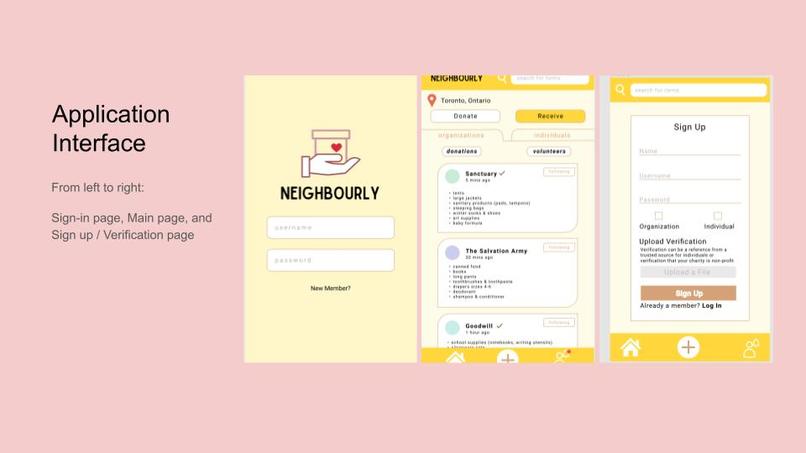
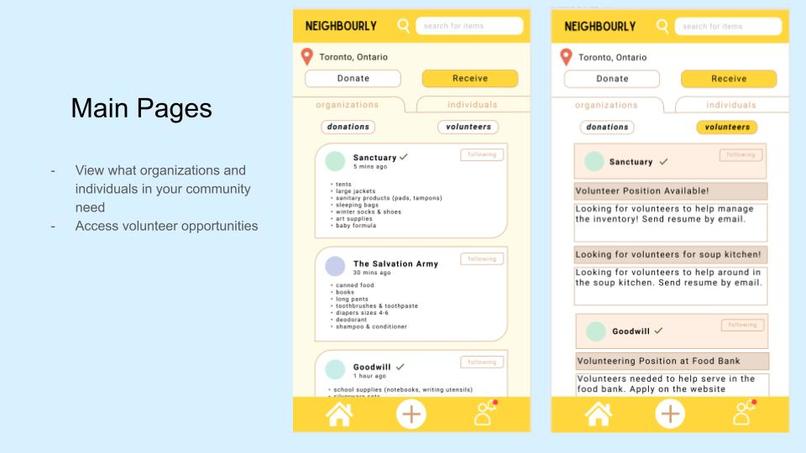
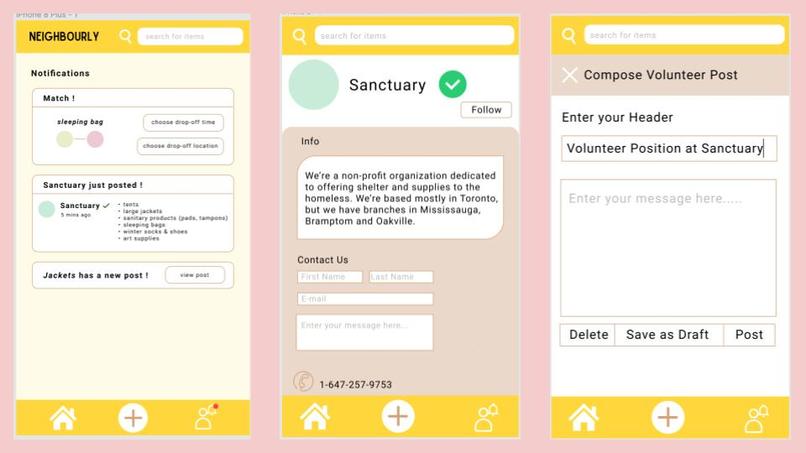
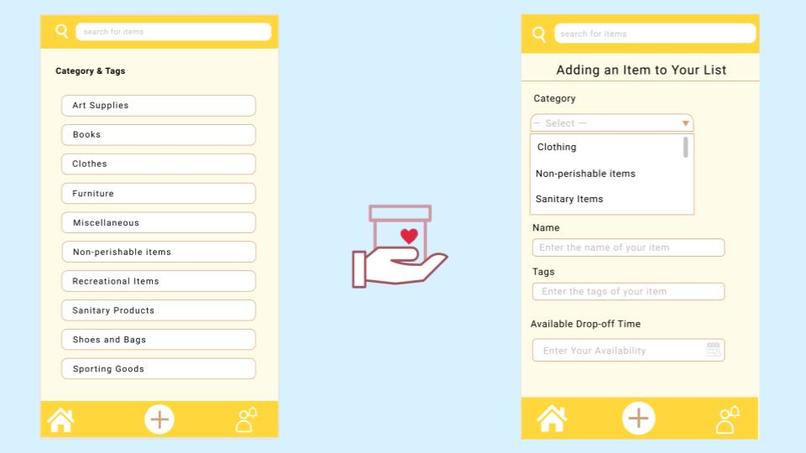
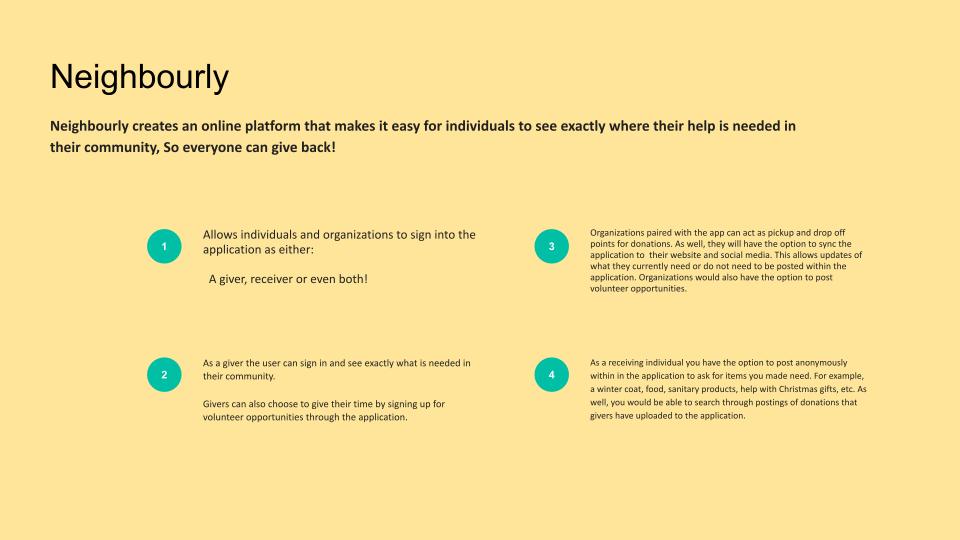
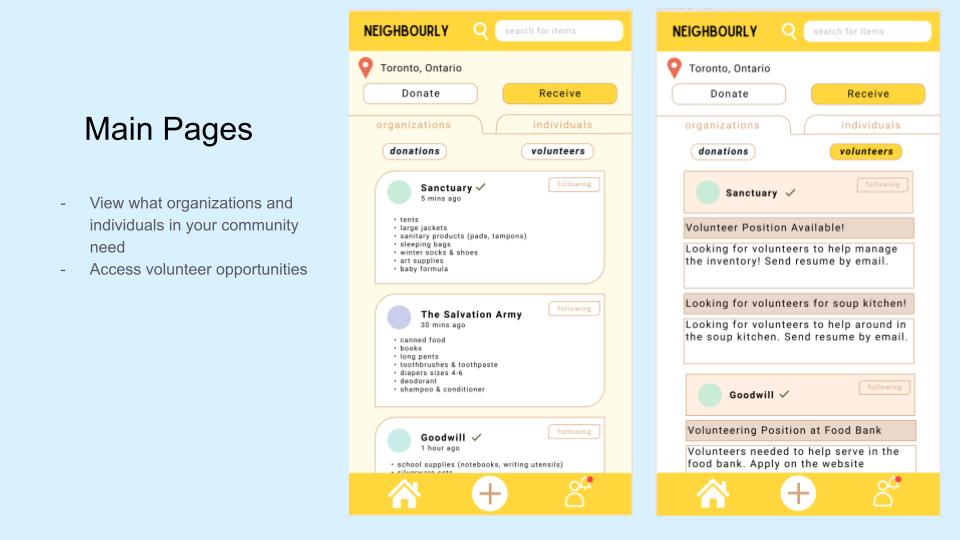
We wanted to create an application that in real-time allows everyone (you do not need to be a part of a community outreach program!) to be notified of exactly where their help is needed. Our application has two parts: being a giver or being a receiver or even both. As a giver you can log onto the application to check what local community organizations need so you can go out and purchase those items. However, if you are more inclined to volunteer you can easily access the volunteer opportunities the organizations have posted within the application. In Ontario, it is necessary for all secondary students to complete 40 hours of service in their community. This would make reaching this requirement as easy as can be! Lastly, givers are also able to fulfill an individual or a family's request.
The best part of this application in our opinions is the ability for individuals to anonymously post exactly what they need. If a new mother needs diapers, baby formula, or an individual cannot afford a winter coat, without shame they can post on the application anonymously. A giver can then take on their request and purchase those items for them. Exactly like a Christmas miracle project but all year round!
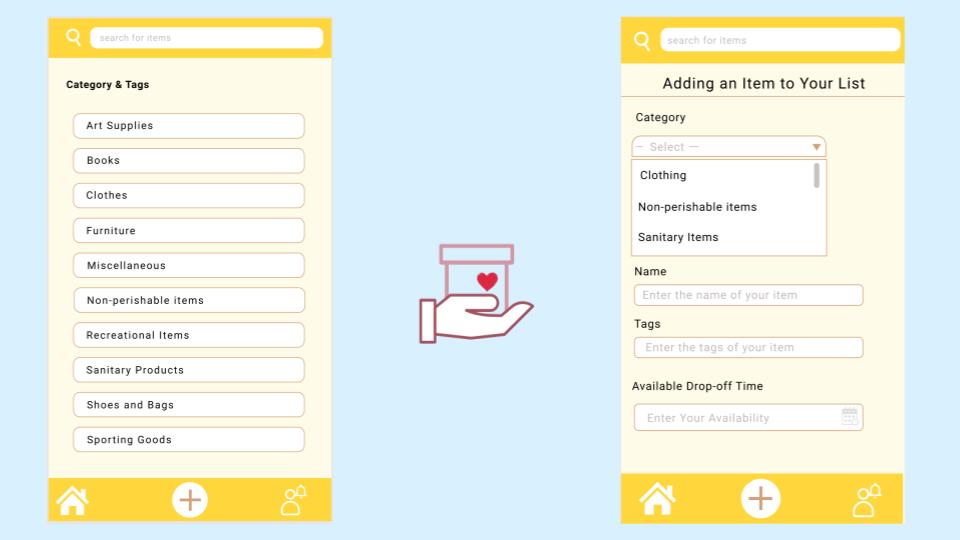
We have also included a second hand or donation aspect so giver's can post their gently used goods and if someone needs that item they can request it.
How we built it
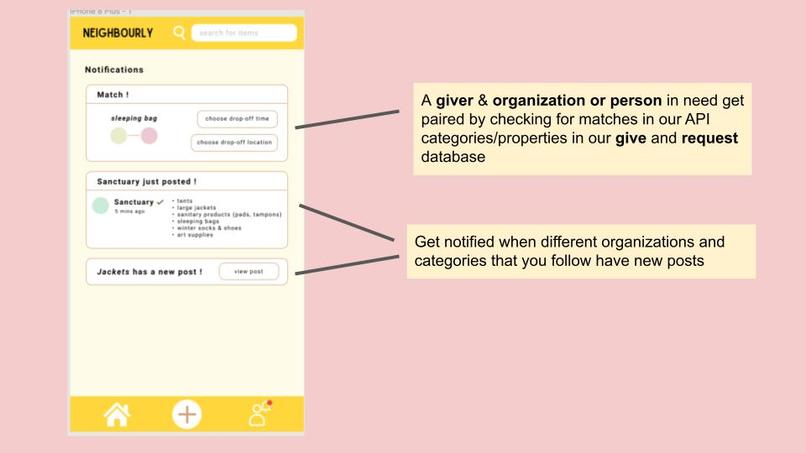
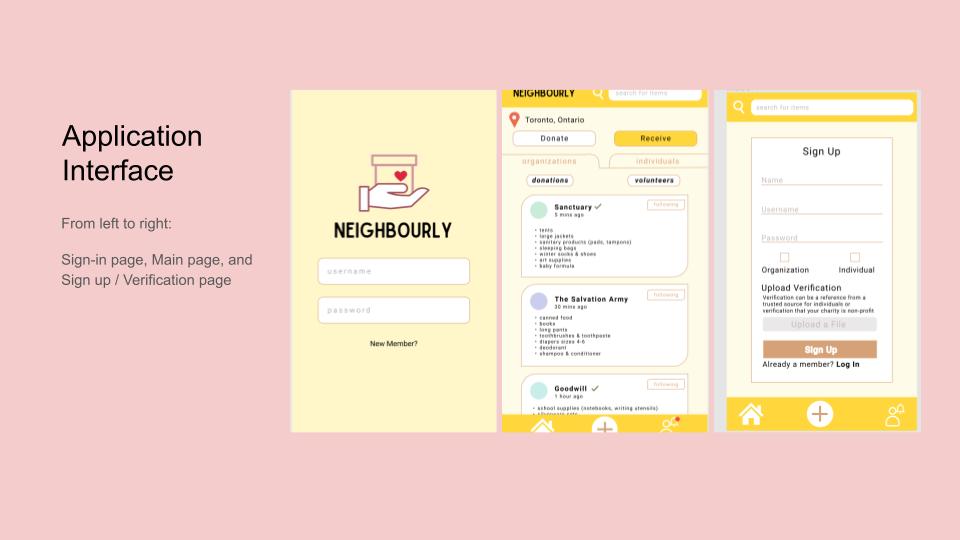
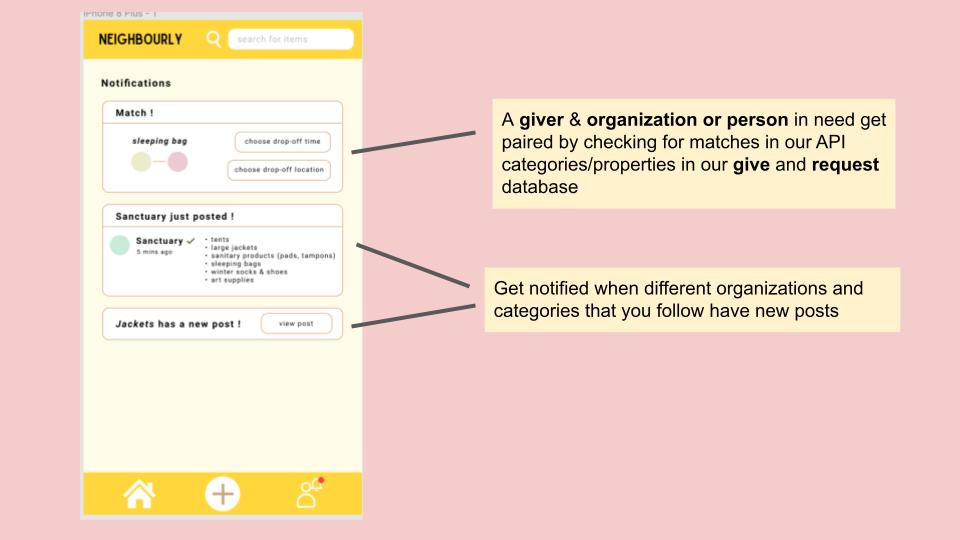
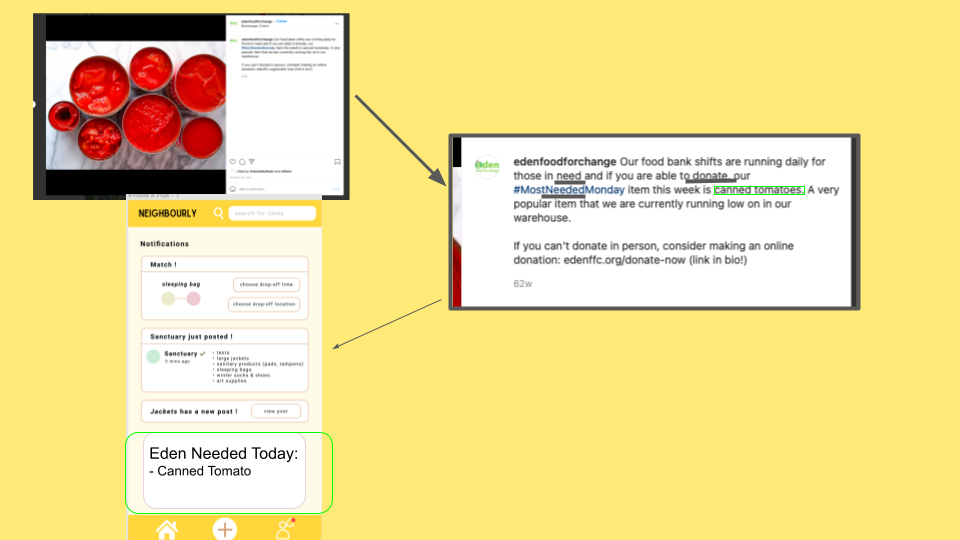
What makes our app special is that verified organizations get full access to our services which includes automatic posting of inventory they’re short on by working with the twitter & instagram API and using the Google Cloud Natural Language API to analyze sentiment and figure out what the organization needs and makes a request post on Neighbourly. The User Interface was designed using Figma We also created a simple python program which stores available clothing on the application in a dictionary called clothing and a dictionary that stores clothing that is needed named itemsNeeded. The program also includes a third dictionary which stores the pending matches that will be completed. The program works by allowing givers to input the size and type of clothing they wish to donate. While the receiver can input exactly what they need and be matched to the item. If the receiver’s request is not available their request is saved to itemsNeeded and itemsNeeded is periodically compared against the available clothing to find matches.
Challenges we ran into
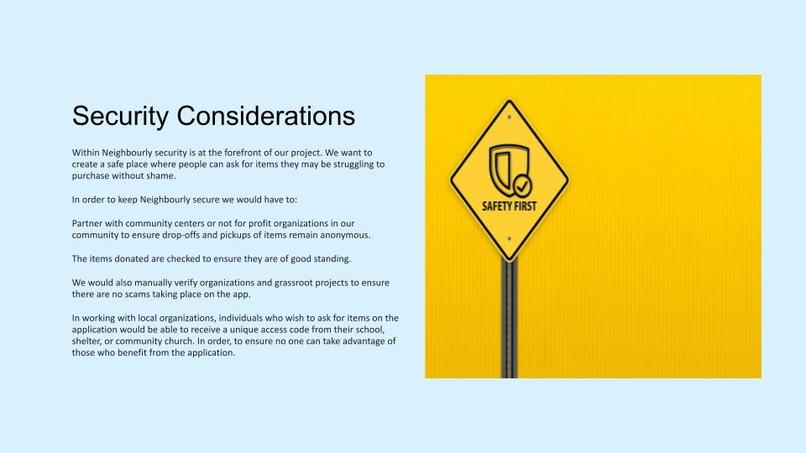
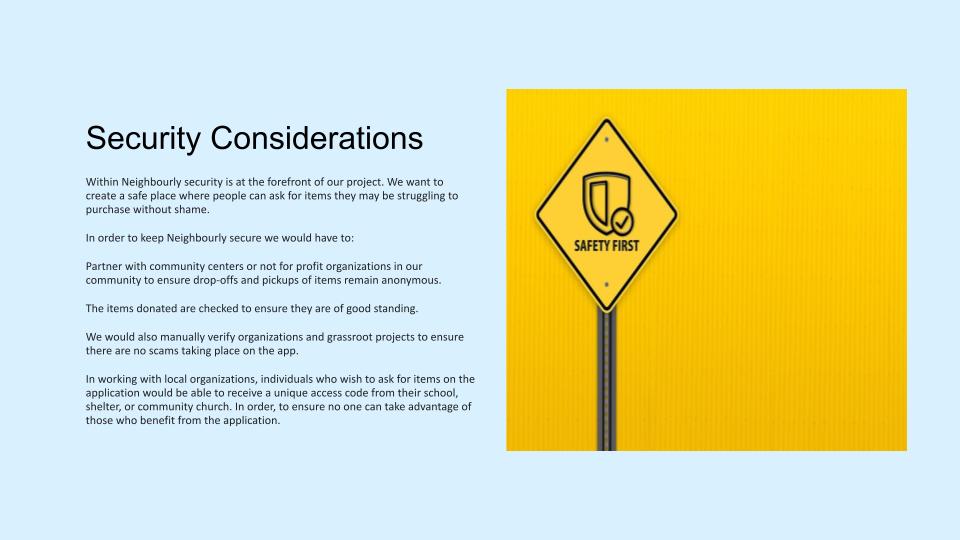
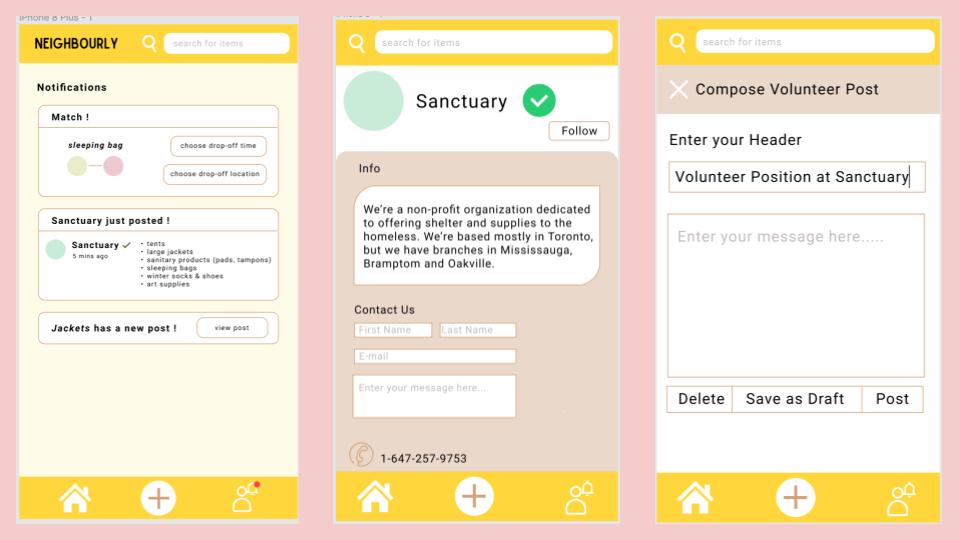
When creating the application, we came into a lot of security and logistics issues. Most notably we want to make sure that user's are safe from discrimination within the application. This entails creating pickup and drop-off points that would ensure givers never interact with receivers and donated items are of good standing.
We also want to protect givers from scams so in order to do so we would verify organizations that sign-up for the application. As well, individuals who wish to request items on that application would receive a unique access code from their local shelter, church, or school.
Another issue we ran into was troubleshooting twitter and instagram API inorder for it to analyze comments so that comments related to what a local shelter needs could be uploaded to our application.
Accomplishments that we're proud of
We’re proud of finishing this project as for most of us this is our first hackathon. Through doing this project, we’ve learned many skills such as how to code for python for some of us, how to access Google Cloud, and using API’s to create an efficient application that save’s organization’s time from cross-platform posting. Figma was a new program that we had to learn how to use and it was a little difficult to navigate. Therefore, we’re proud of how we made it look like a mobile app with Figma and that it looks clean and attractive.
We saw that one of the biggest issues with new innovative ideas is user incentive. We don’t want to burden the verified organizations with having to integrate our app into their to-do list, but rather we take that information off of their posts on Instagram and tweets.
What we learned
For some members, they learned the basics of how to code in Python. We’ve learned how to make app interfaces in Figma and how they are aesthetically pleasing. Inspiration from real apps was taken to make these interfaces. We learned a lot about how to work with databases and how they interact with APIs. Furthemore, from the workshops, we’ve learned about machine learning.
What's next for Neighbourly
Pair up with organizations to verify users Social media marketing of Neighbourly to get a user base Implement actual code to ensure Neighbourly can be used Testing of the app to ensure there are no bugs Addition of more interfaces such as the “choose drop location” interface.
Built With
- automl
- google-cloud
- json
- natural-language-api
- python


Log in or sign up for Devpost to join the conversation.