-
-
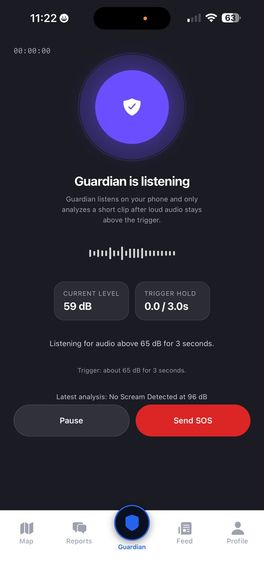
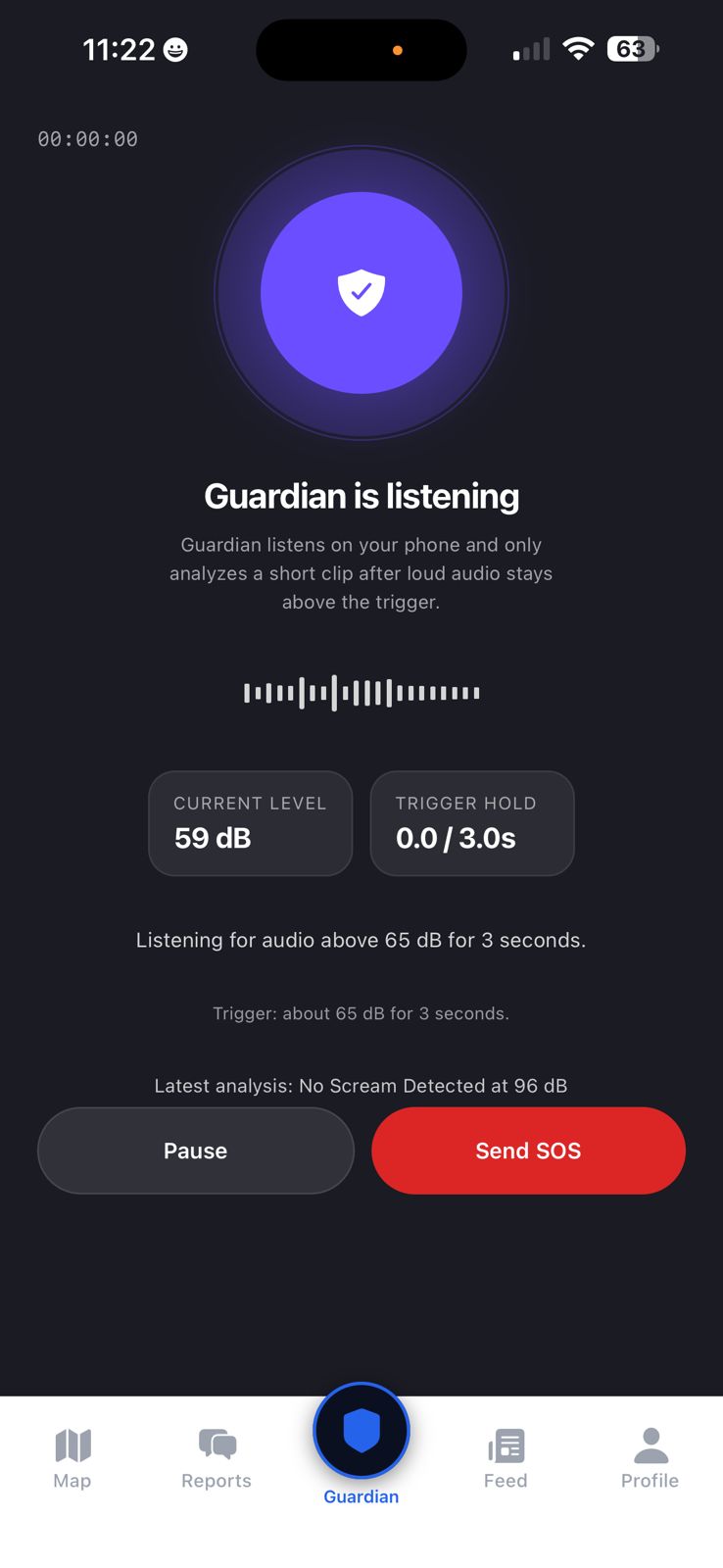
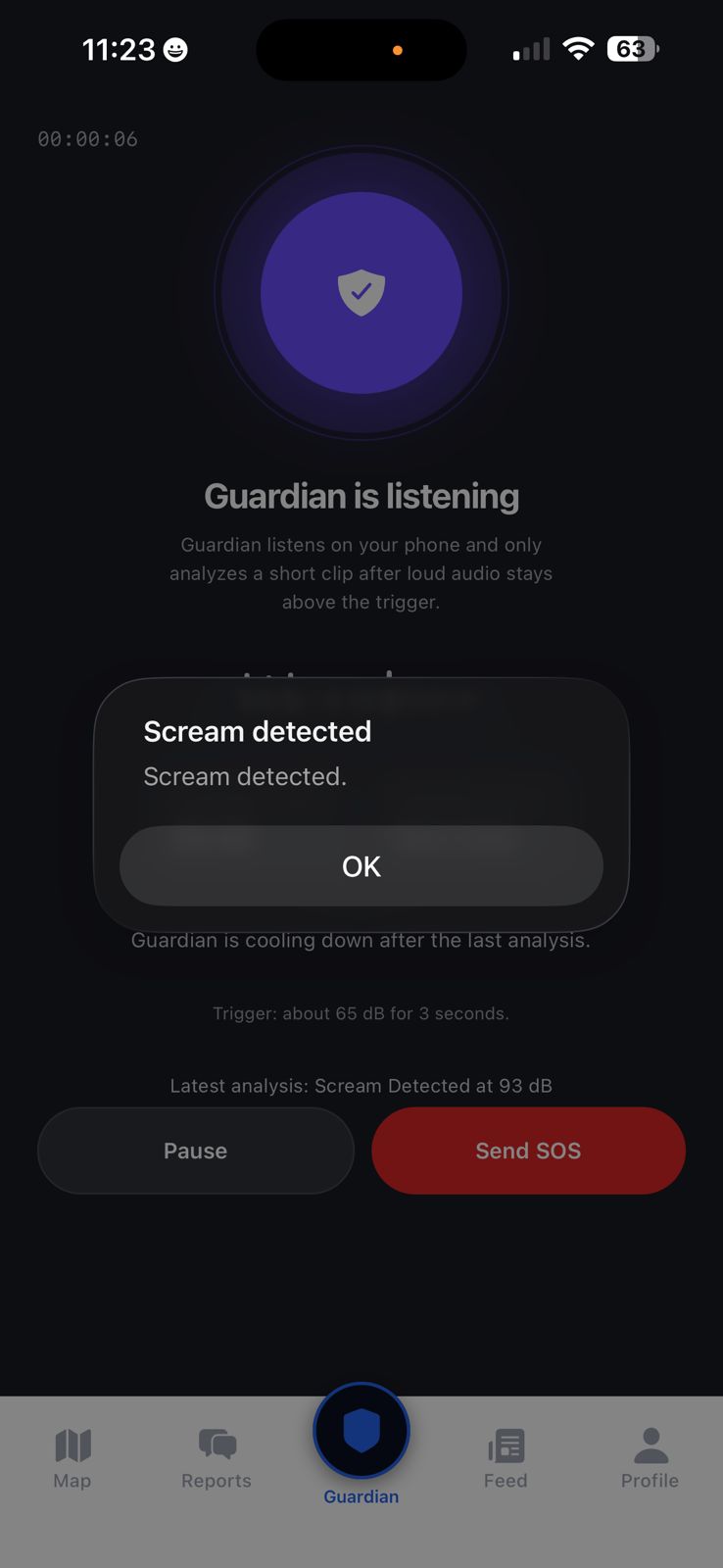
Guardian mode which detects screams for when users enter hotspots
-
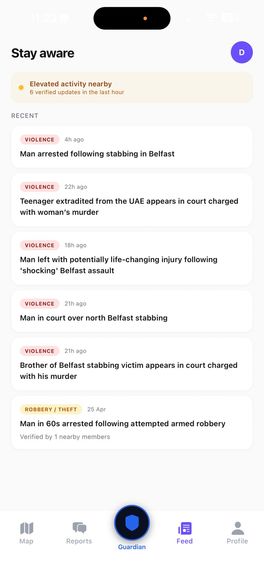
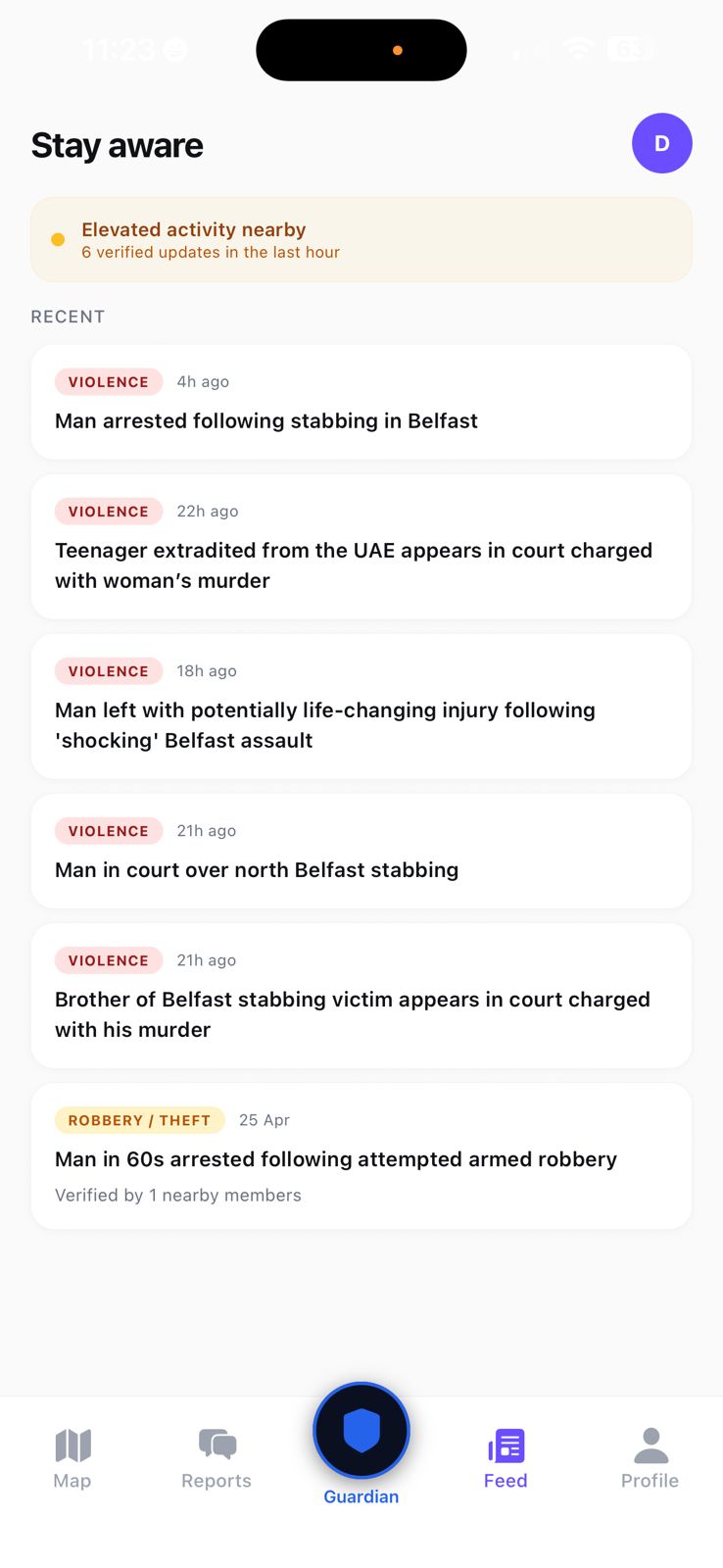
Feed page which shows the recent news of possible crime
-
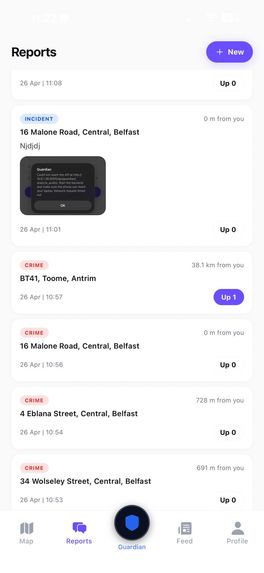
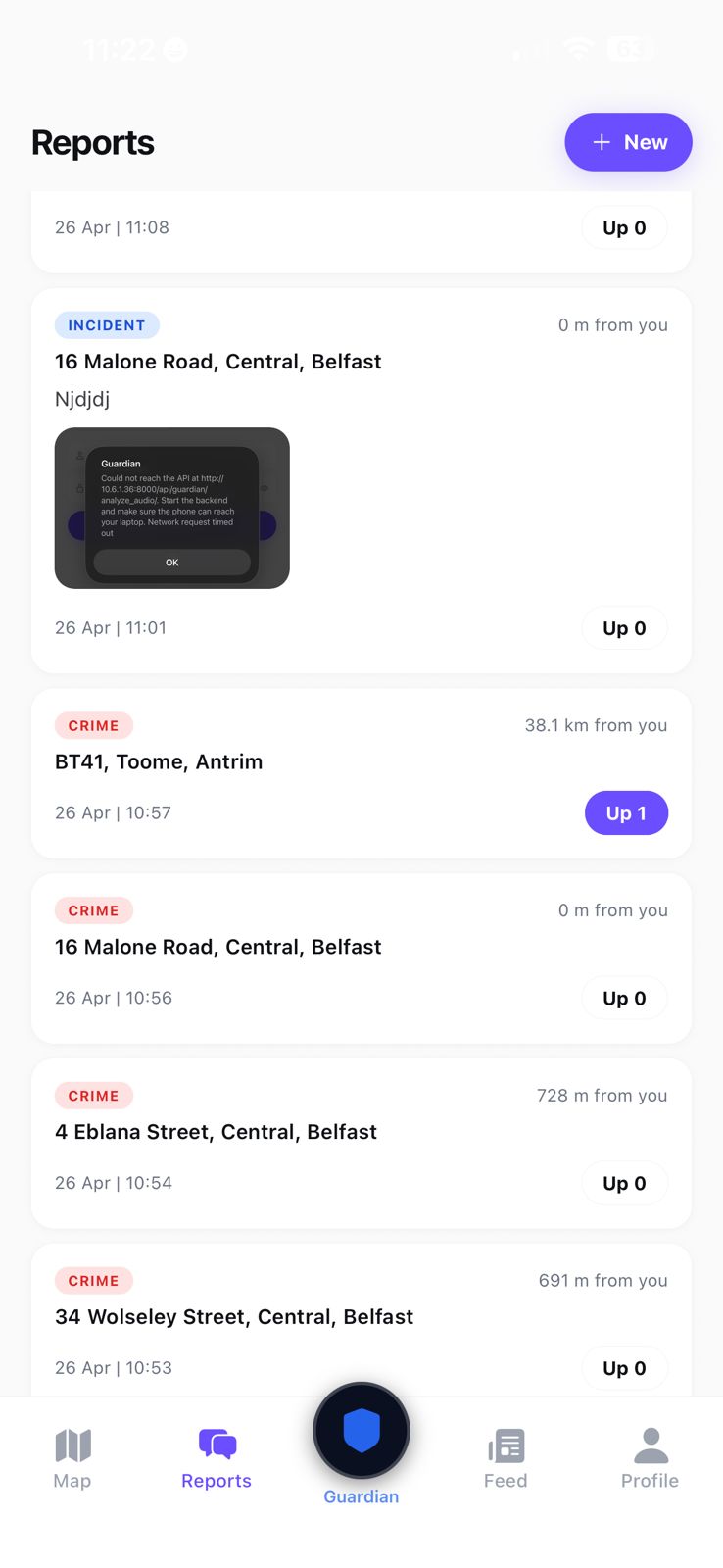
reporting page
-
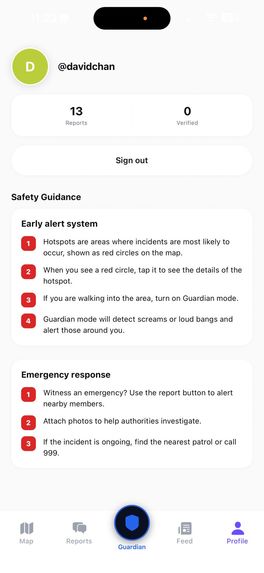
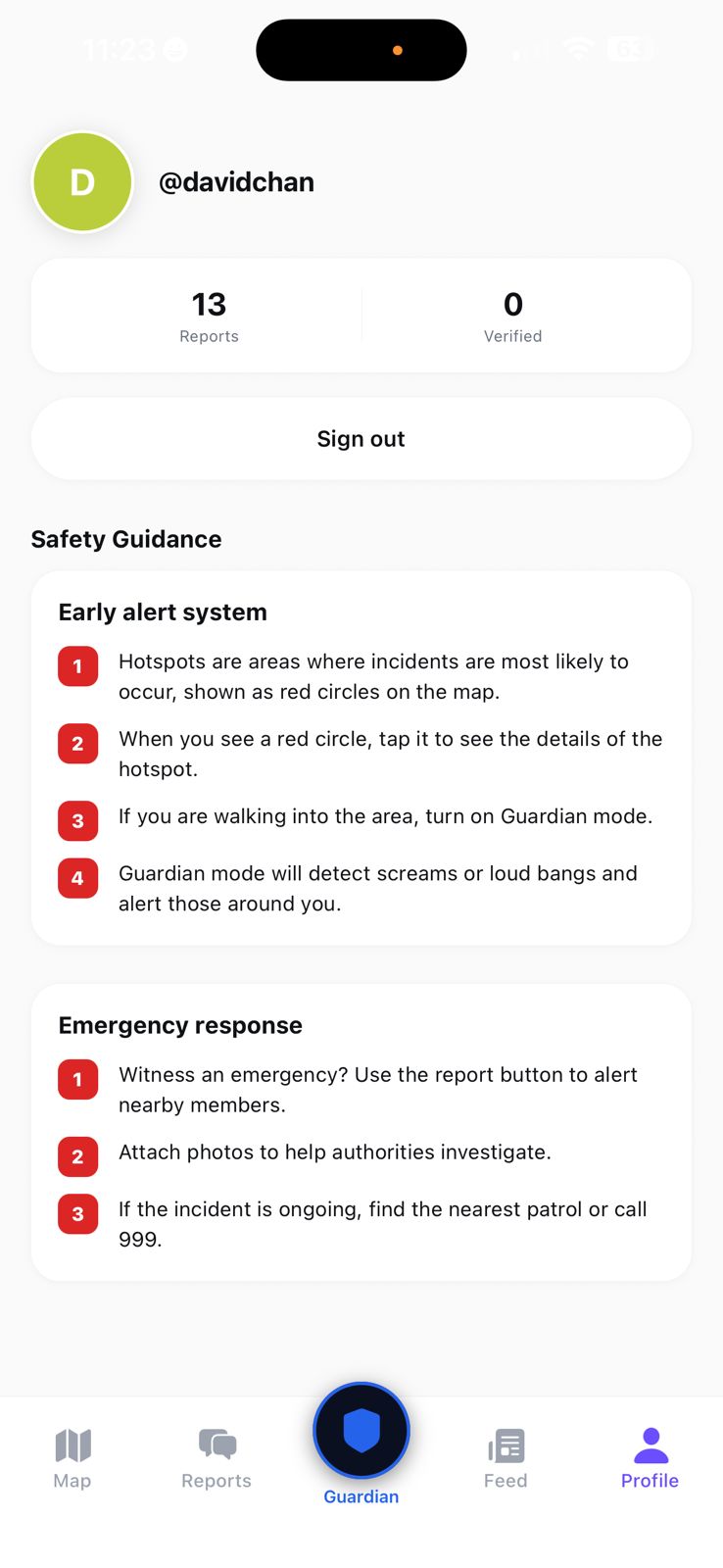
Profile and guidance page which has advice on how to use the app efficiently
-
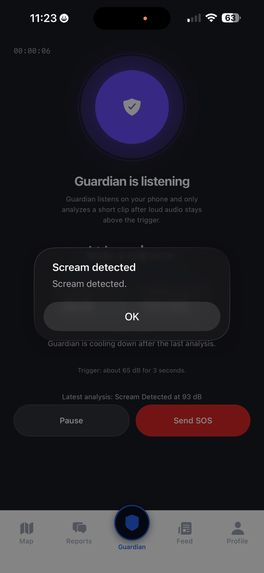
When a scream is detected by the ML
-
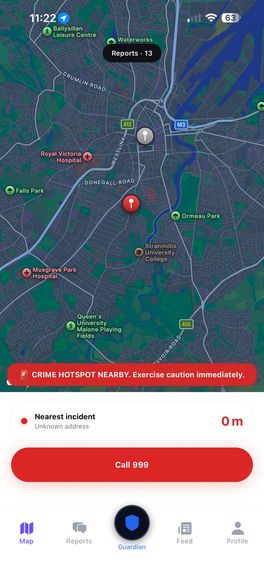
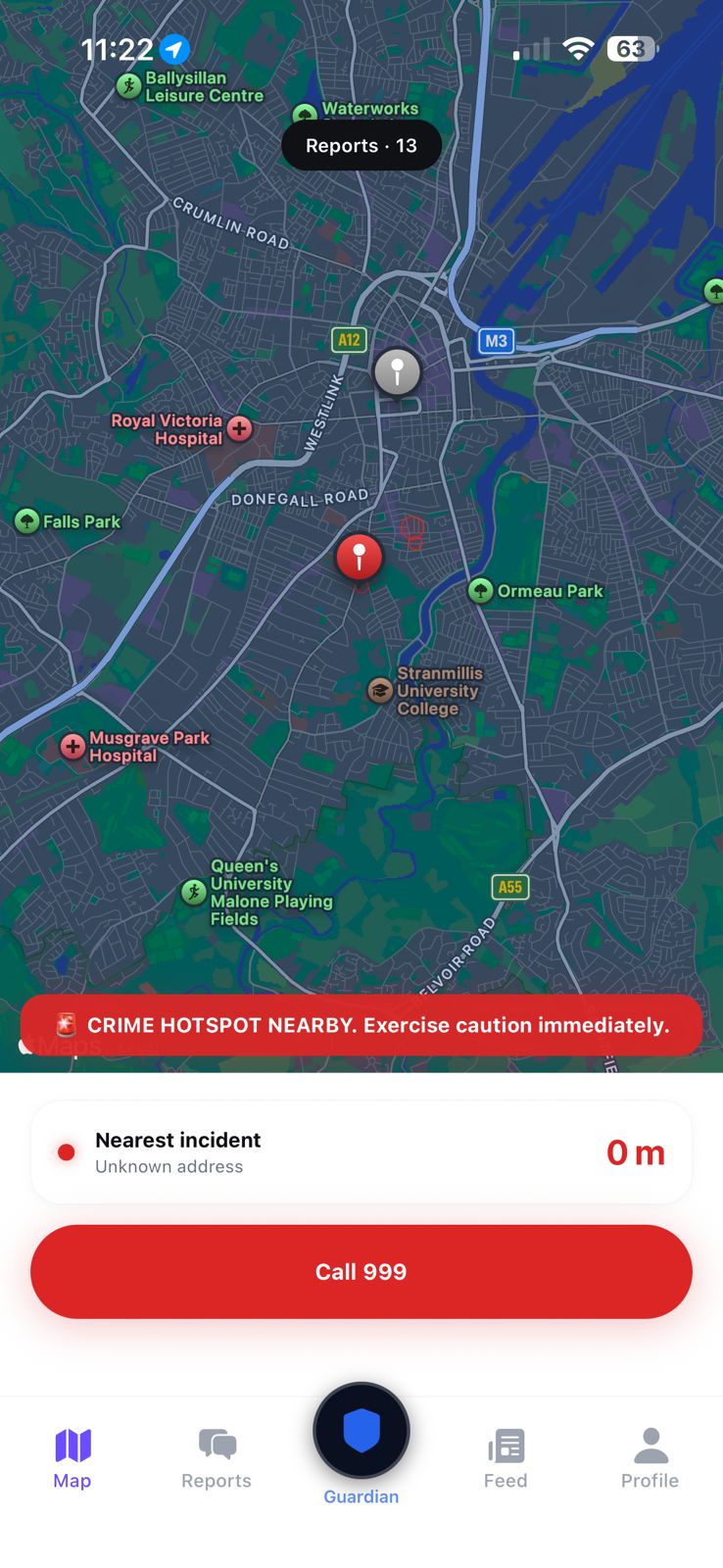
Map to show where hotspots are and where possible crimes may occur
Inspiration
Belfast can’t keep its graduates if they don’t feel safe. After recent incidents like the Holylands homicide and the Ballymena assault cases, it’s clear that fear—especially for international students and people vulnerable to discrimination—pushes talented people away.
What it does
Our key safety layer is an AI-powered commotion early-warning system built around real-time audio risk signals—especially scream detection. When the system detects clusters of high-confidence screams in a location and time window, it correlates that with live community reports and historical incident patterns to produce a single risk score (not just another alert). This turns raw, messy inputs into a clearer decision tool: it helps residents avoid danger sooner, and gives police and responders a better gauge of urgency and legitimacy—so the right resources reach the right place faster, when minutes matter.
How we built it
We built it using react native frontend and Django backend. Along with an MFCC which extracts audio and turns it into features, which then classifies the data on an SVM model trained on labelled audio data.
Challenges we ran into
We bumped into several challenges. The main challenge we bumped into was creating the pipeline for the AI model to interact with the frontend audio detection. We had to understand how the SVM model stores and detects audio. To overcome this, we created a pipeline where the frontend calls the backend to record audio. If the audio exceeds 65dB and lasts for more than 3 seconds, we consider that to be a possible scream, which is then stored, and the ML model is called to analyze the audio file. If the audio is labelled as a scream, an alert is raised, and a report is filed if there is sufficient evidence of a possible crime occurring.
Accomplishments that we're proud of
We are proud of how the audio system ties in with the user experience, as we believe that with the audio detection, reporting, and hotspots, there are real possible use cases for people staying in Belfast to feel safer knowing which areas may be at high risk of crime.
What we learned
We learnt how to develop not just a full-stack app but also work as a team, covering each other's flaws and tapping on each other's expertise to develop a fully functional app with frontend and backend capabilities, along with AI integration. For all of us, it was our first time implementing an AI model, so we are proud that we were able to put what we have learnt from year 2 modules to use in this project.
What's next for Neighbourhood watch
A fully produced community safety platform, not just a crime reporting app, but a real-time support network where those vulnerable can detect danger. Making safety feel proactive instead of reactive. Instead of only reporting after something happens, Guardian mode could warn people earlier, alert friends or nearby users, and give communities a shared view of what is happening around them. With proper privacy controls, verification, and responsible alerting, it could become a trusted “neighborhood safety layer” for students, commuters, families, and vulnerable people.

Log in or sign up for Devpost to join the conversation.