-
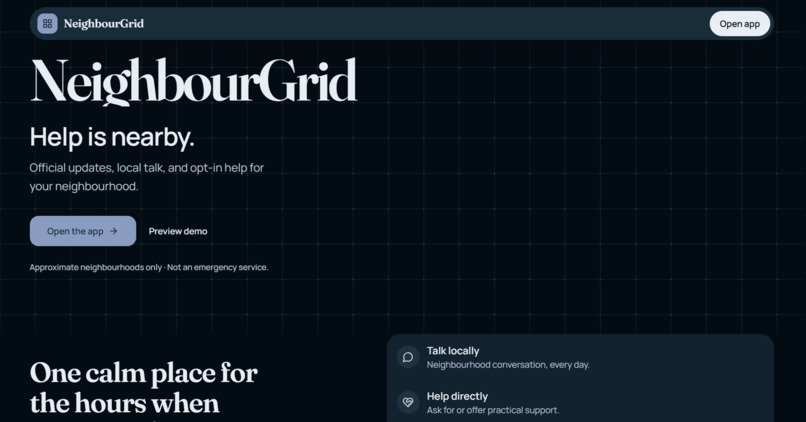
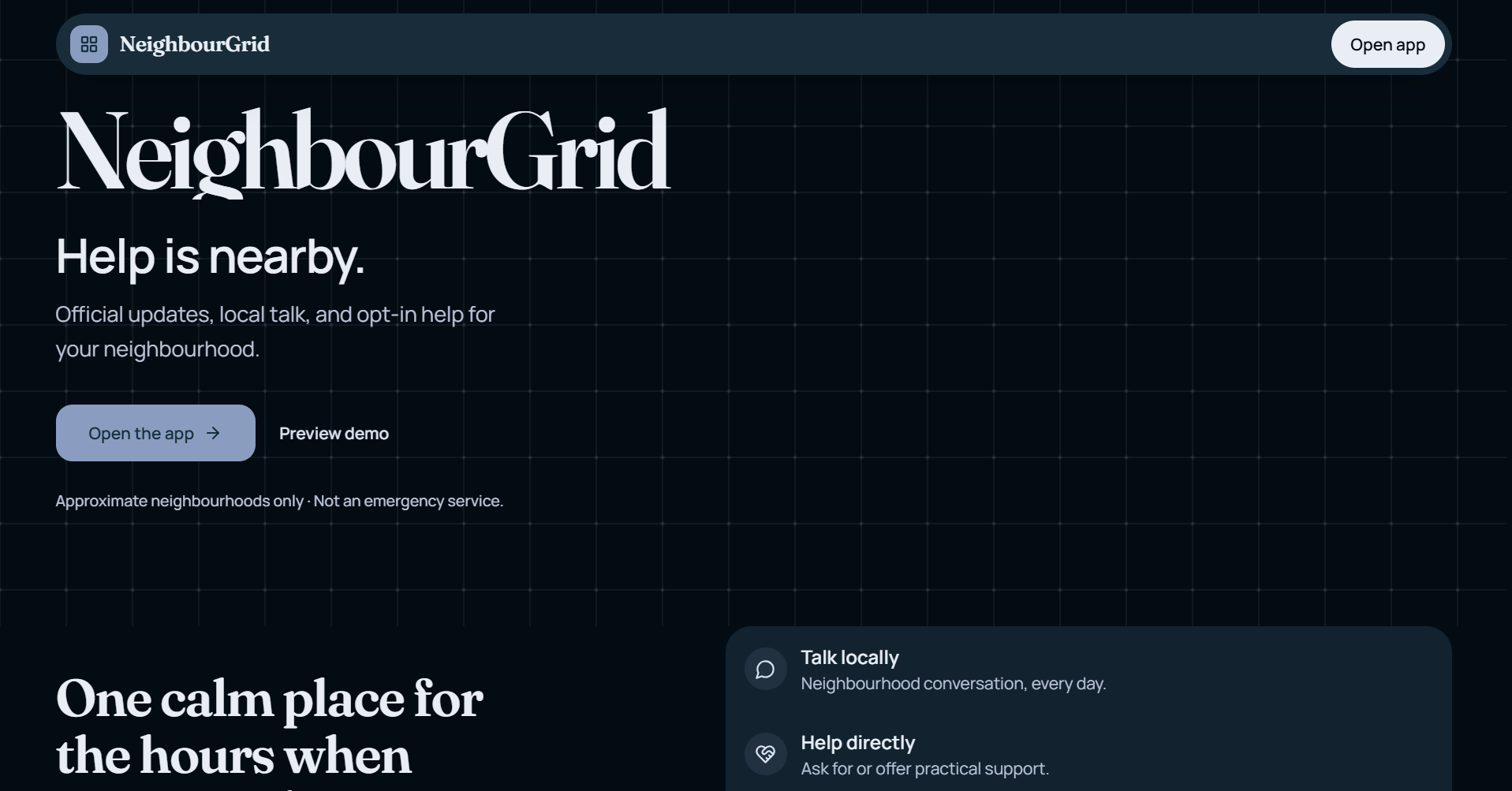
PC Landing Page
-
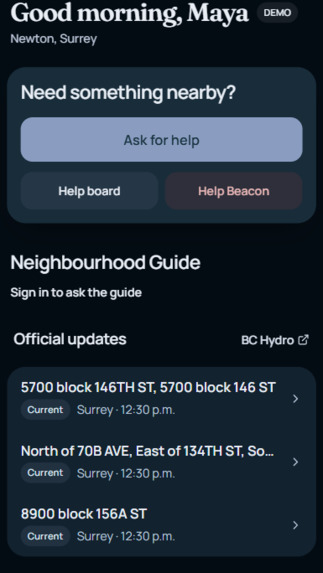
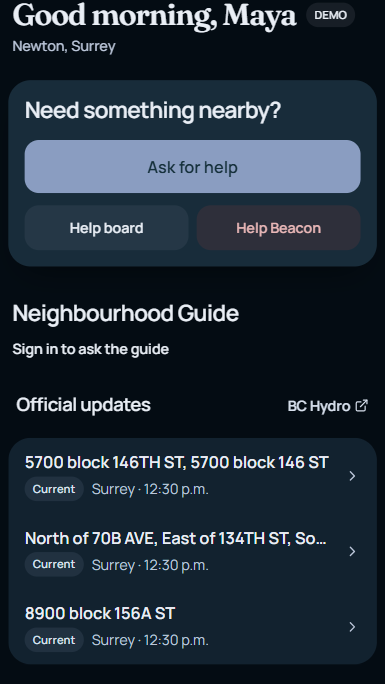
Mobile App Home Page
-
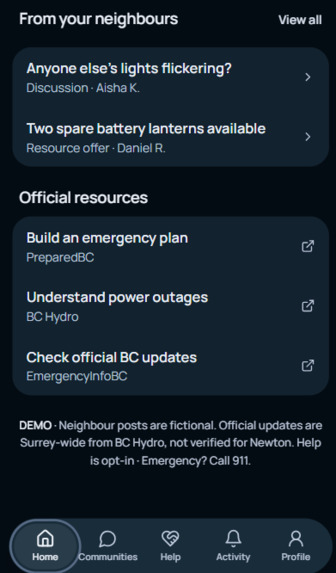
Mobile App Home Page (2)
-
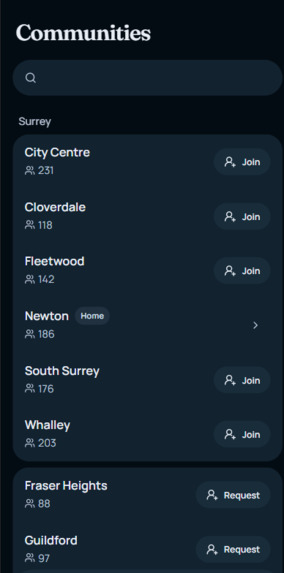
Communities Tab
-
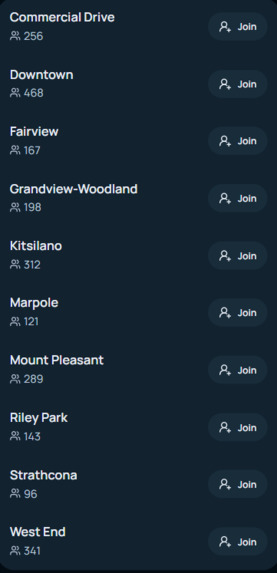
Communities Tab (2)
-
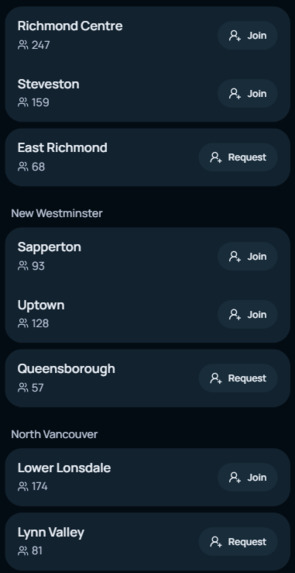
Communities Tab (3)
-
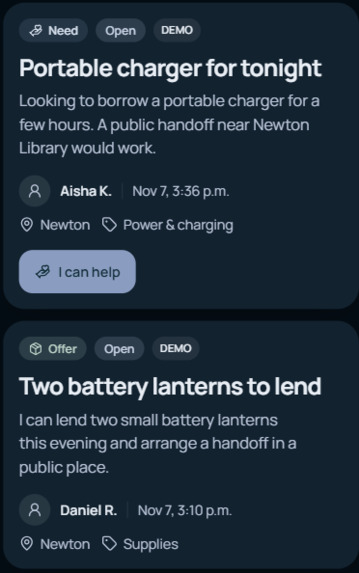
Help Tab
-
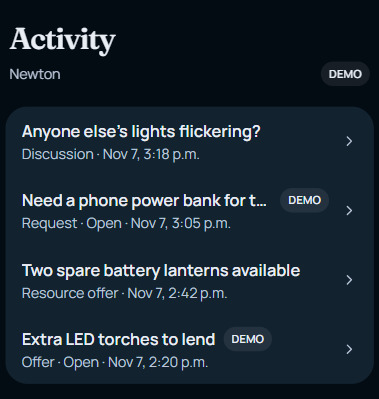
Help Tab (2)
-
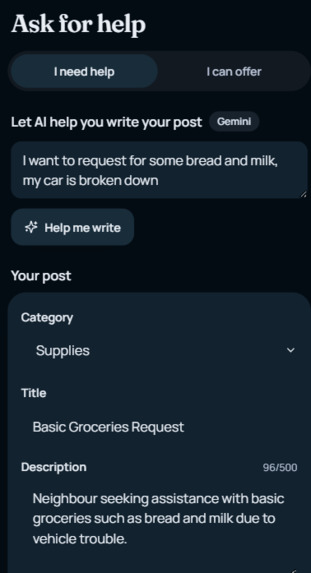
AI Help request
-
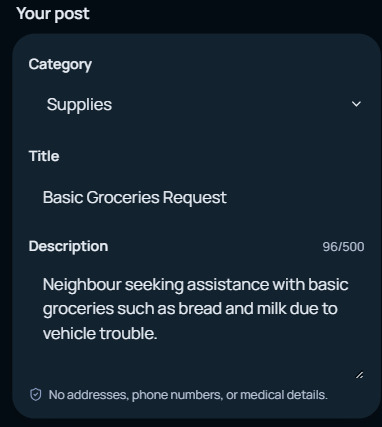
AI Help request (2)
Inspiration
We realized that in minor or major disaster scenarios, the first things that people need in shortages are key survival supplies like batteries, chargers, candles, rations, etc. In times like these it is critical to have a strong community you can depend on to share their resources, especially if you were hit particularly hard by the catastrophe. This is what led us to developing NeighbourGrid, so that even in smaller-scale calamities, like the storm blowing through BC at the time of writing this, people can depend on a strong community backbone.
What it does
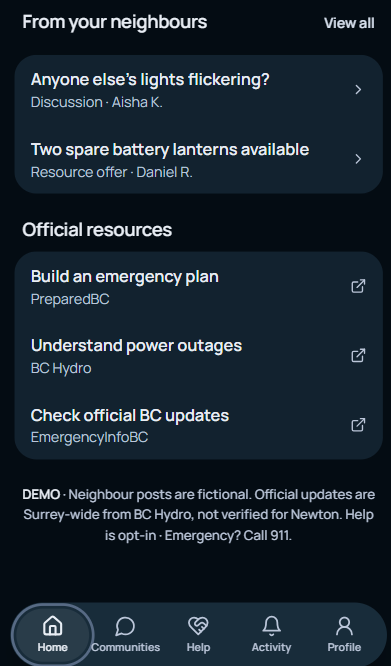
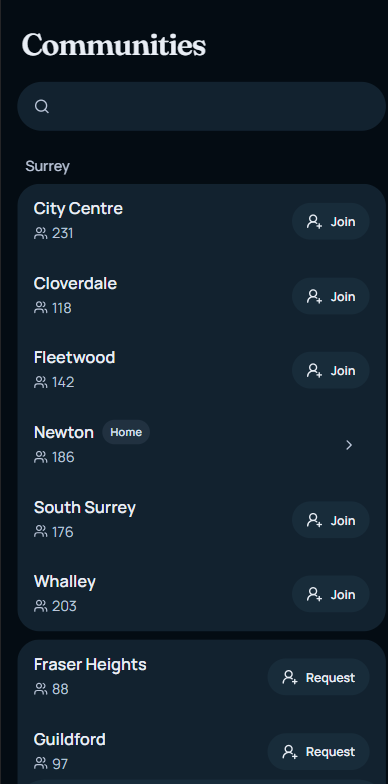
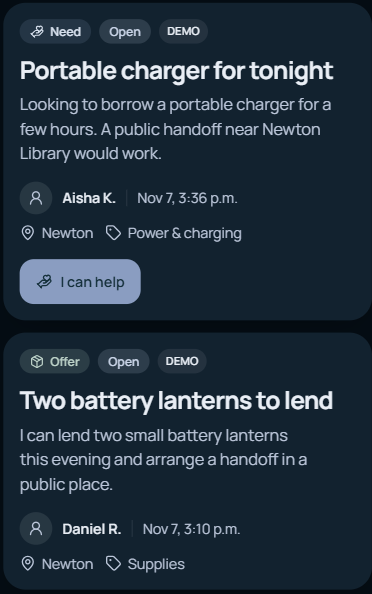
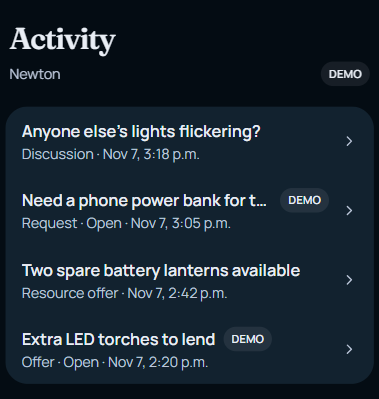
NeighbourGrid is a mobile-first community hub for British Columbia residents that brings official local updates, neighbourhood conversations, and opt-in neighbour-to-neighbour help into one calm, trustworthy experience. Residents can choose an approximate community, view source-linked information, discuss local needs, request or offer supplies and assistance, and use a Community Help Beacon to coordinate voluntary support.
How we built it
Built with React, TypeScript, and DeepSpace realtime infrastructure, NeighbourGrid is designed for everyday community connection and greater resilience during outages or disruptions—while clearly remaining separate from emergency services, government alerts, and guaranteed dispatch.
Challenges we ran into
The hard part was keeping a live help board safe. Neighbours can read what is shared with their community, but one person must not be able to skip the steps. Creating a request, offering help, accepting that offer, and resolving it are checked on the server.
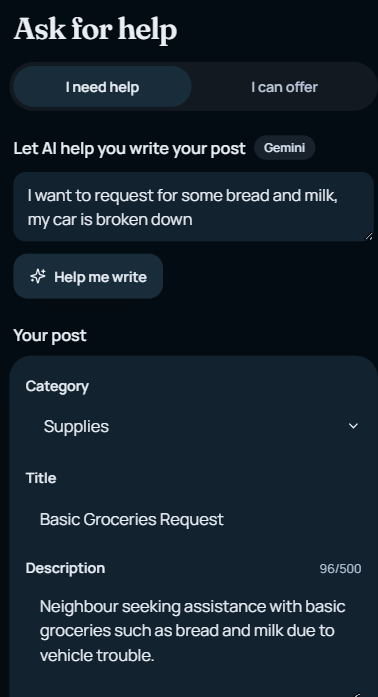
The writing assistant was the other hard boundary. Gemini can draft a request, an offer, or a beacon, and the Home guide can answer from community activity the person can already see plus the BC Hydro Surrey feed. It does not publish for them, and it does not decide how serious a situation is. On the free Gemini plan, live web search is unavailable, so the guide says when it does not have a current source.
We also had to keep official outage information separate from neighbour posts. The BC Hydro cards stay source-linked. Neighbour discussions stay labelled as community reports.
Accomplishments that we're proud of
NeighbourGrid is live at aint-my-first.rodeo. Two signed-in people completed a full help cycle, from request to offer to accept to resolved, and both screens updated without a refresh.
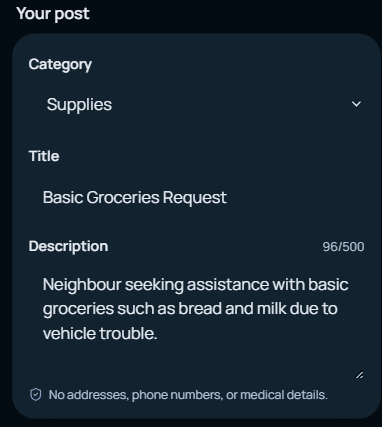
The same writing step is on Ask for help, I can offer, and Help Beacon. The person edits the draft, then posts it. A beacon can stay with nearby communities or reach a whole city or every community, and the confirmation says who will see it. It also says volunteers may not respond and to call 911.
A saved help request can notify an n8n workflow with an anonymous event: category, community, and time, with no request text and no personal details. The Home page shows the BC Hydro Surrey feed with links back to the source.
What we learned
A calm screen matters when the topic is stressful. Familiar pieces, a clear greeting, and short labels did more than extra explanation.
Realtime help is mostly a permissions problem. The screens were the smaller part. The important work was making the offer, accept, and resolve steps follow one order for every account.
What's next for NeighbourGrid
- Integrate emergency services within the platform, in which the AI detects if a user's request requires urgent EMS support, upon which it will automatically connect to 911 and request support.
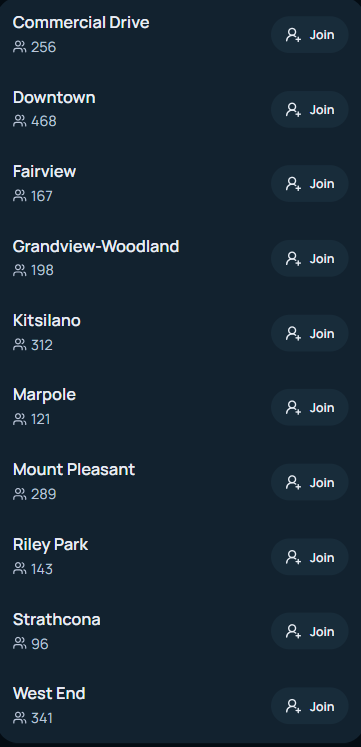
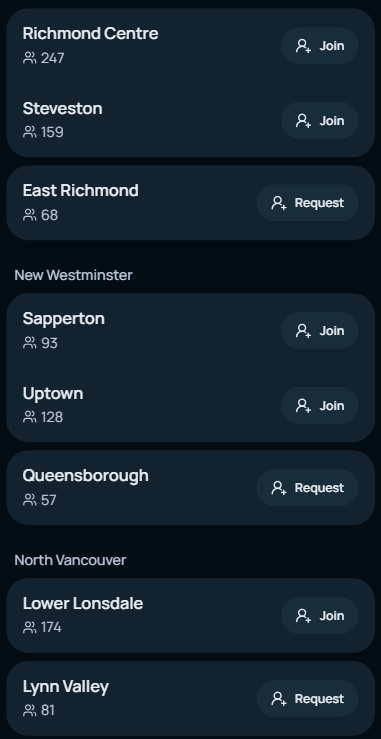
- Support for more communities is also on the horizon, with a short-term goal of expanding to the rest of the Lower Mainland, Vancouver Island, and Fraser Valley. For the future, we hope for a global reach, integrating with various local authorities that would serve as region-specific stand-ins for BCHydro from our current platform.
- We also plan to add more sources of information outside of just BCHydro to refer to in times of peril, which will drastically increase the effectiveness of a support system.
Built With
- ai
- api
- deepspace
- gemini
- html
- json
- n8n
- react
- typescript

