-
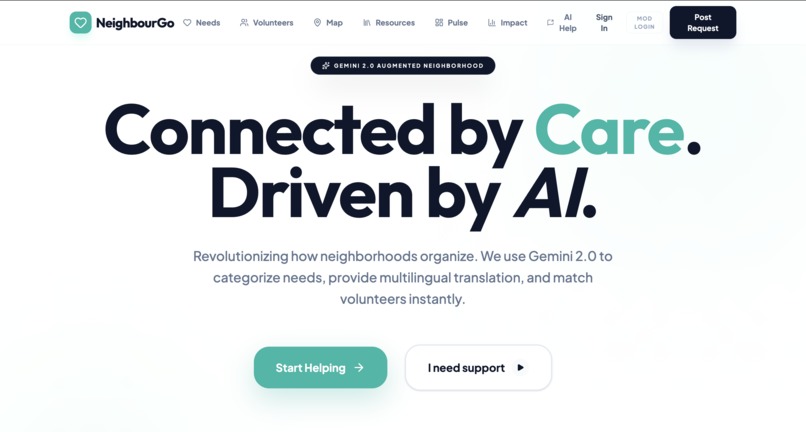
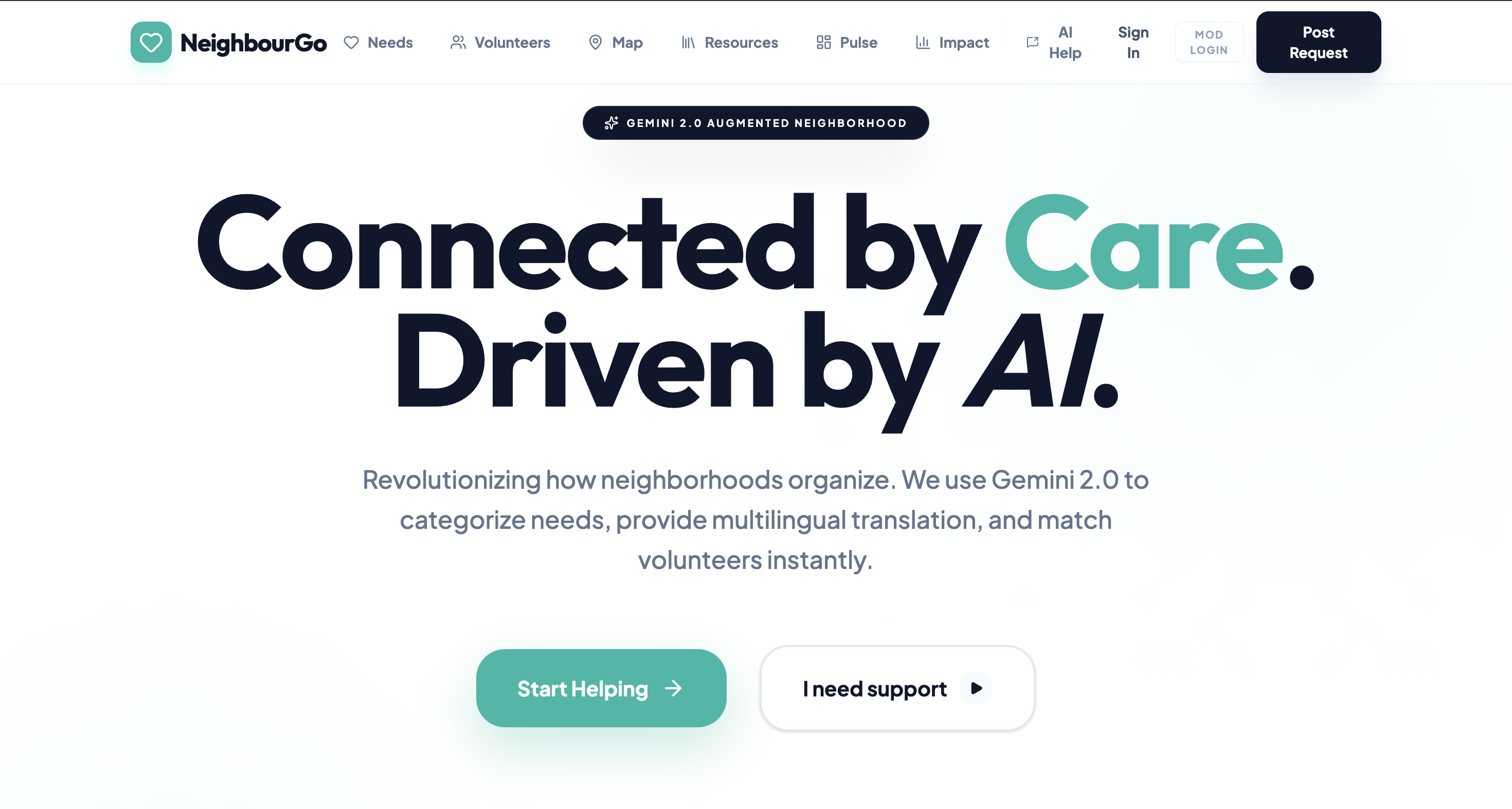
Homepage / landing page
-
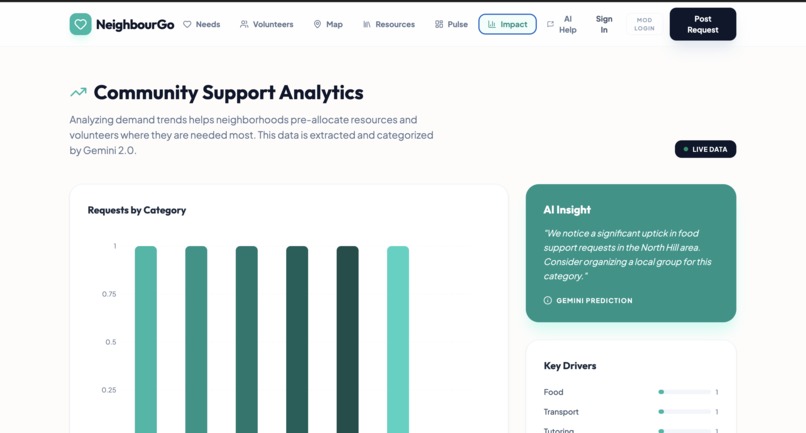
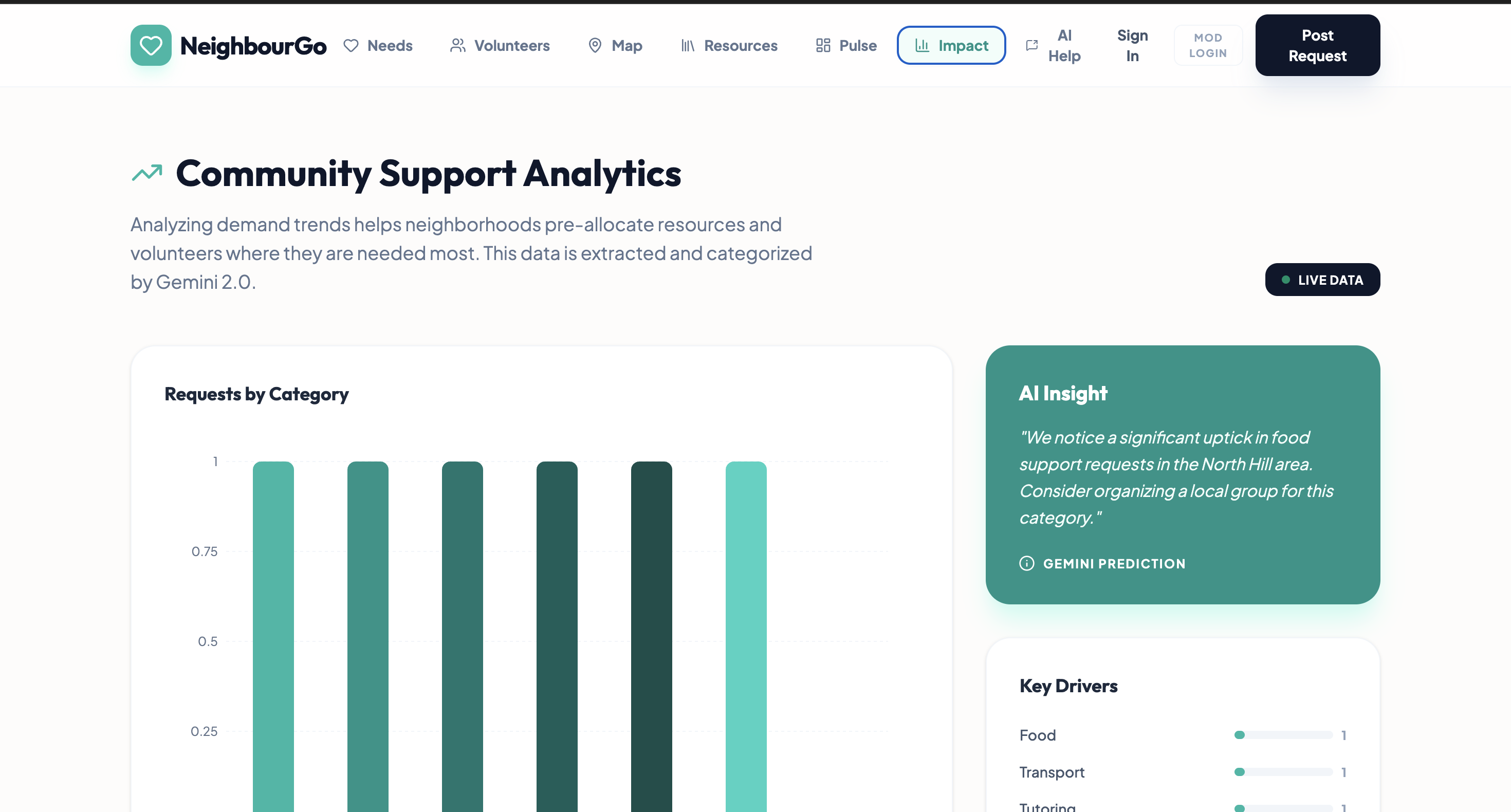
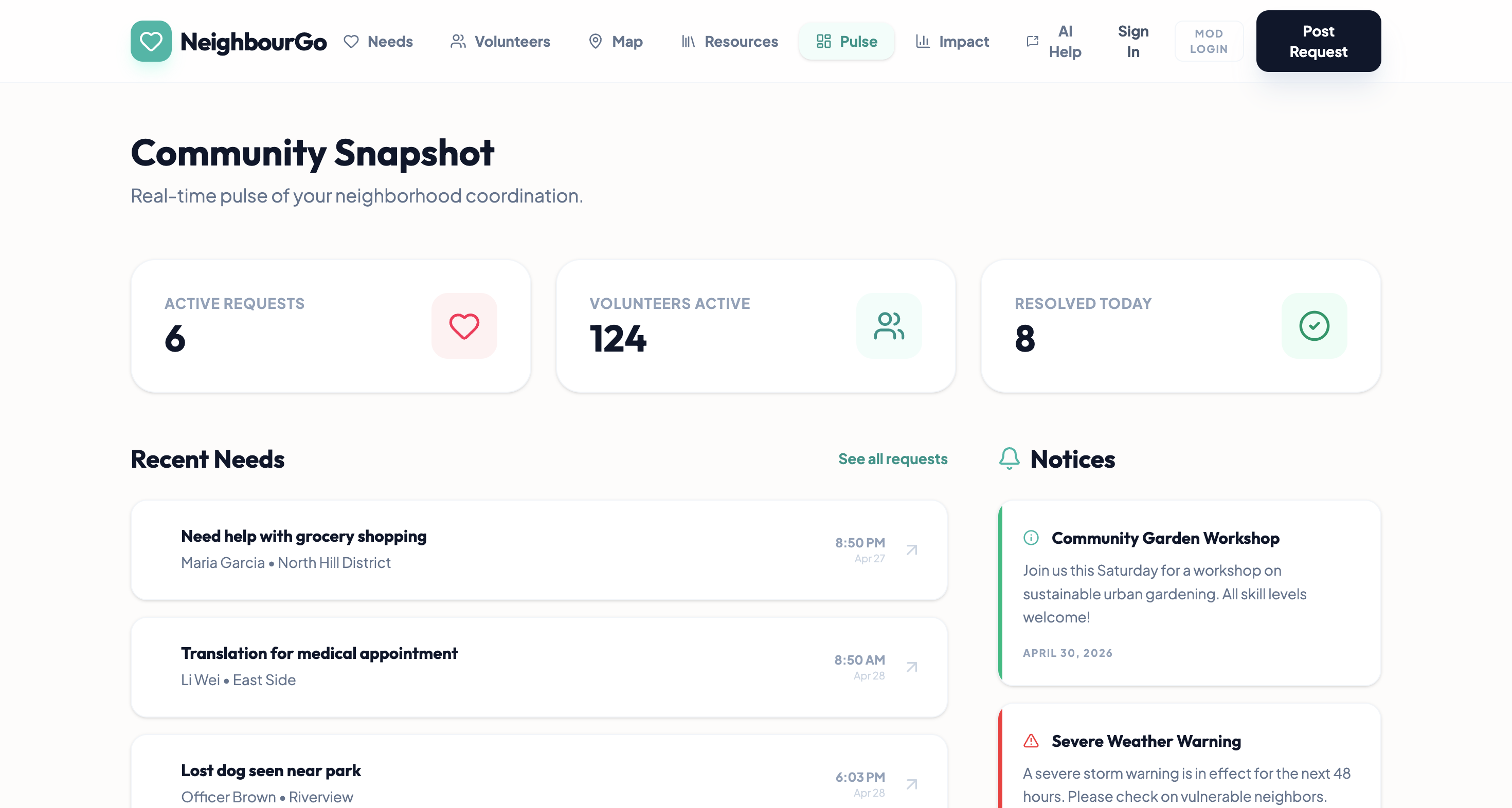
Analytics dashboard
-
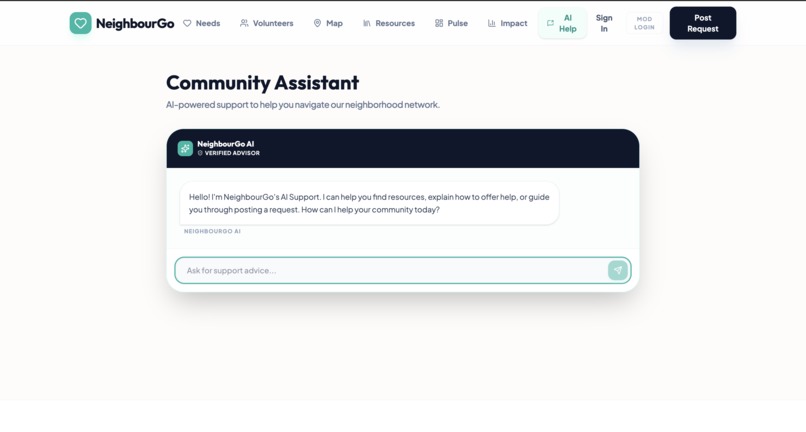
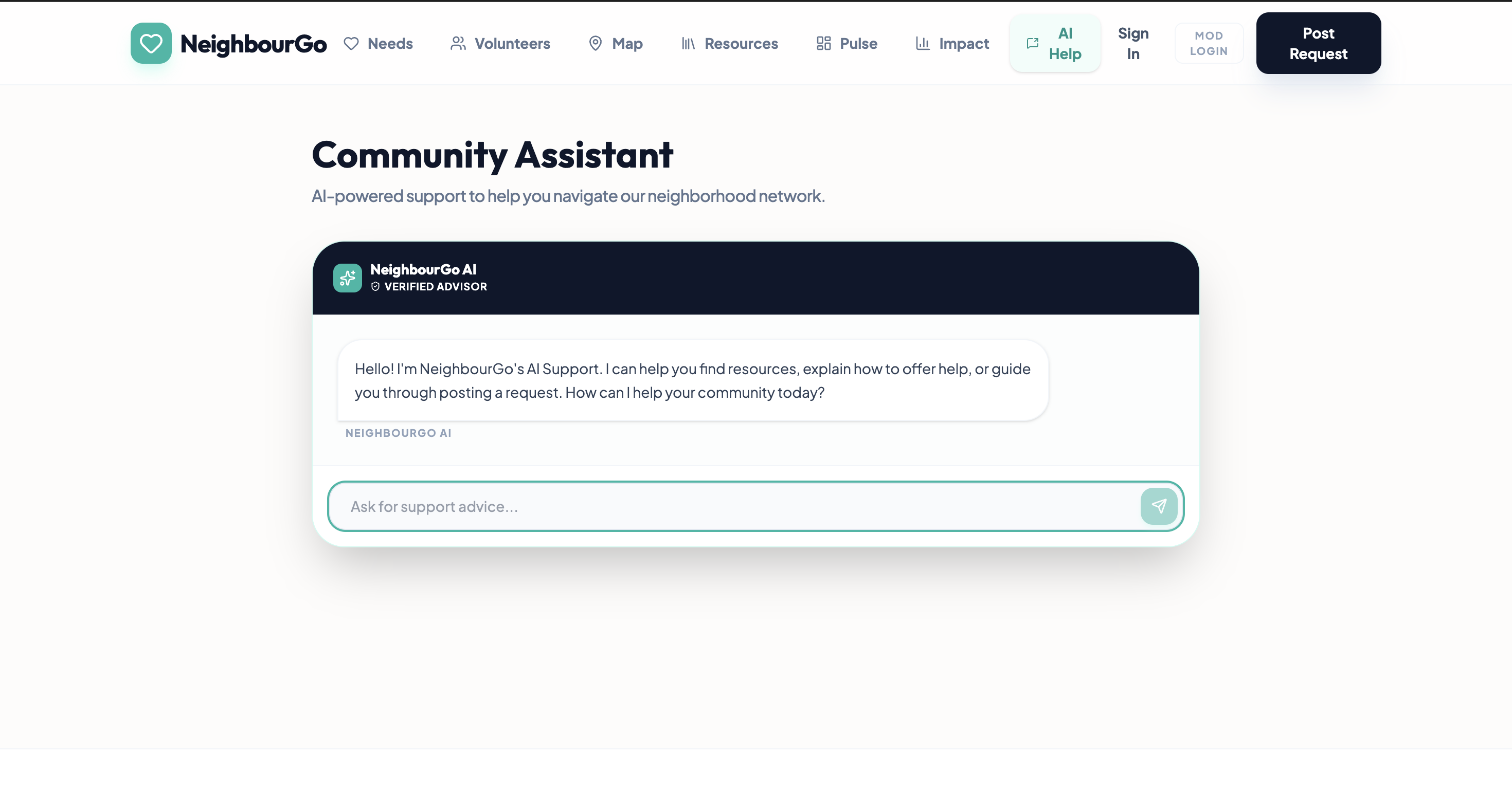
AI assitant Help page
-
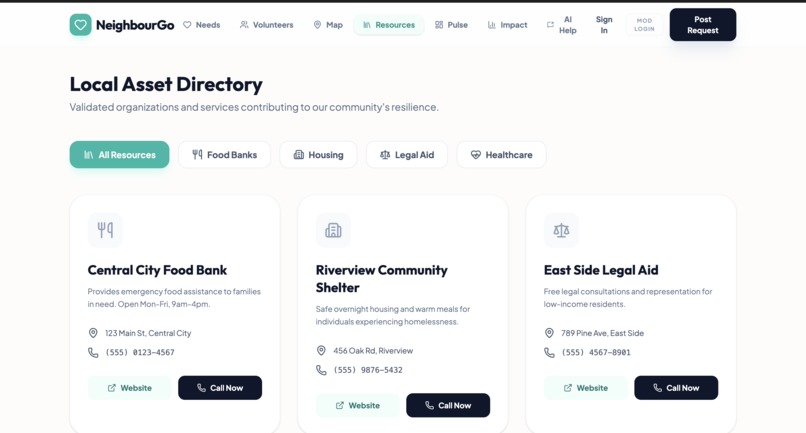
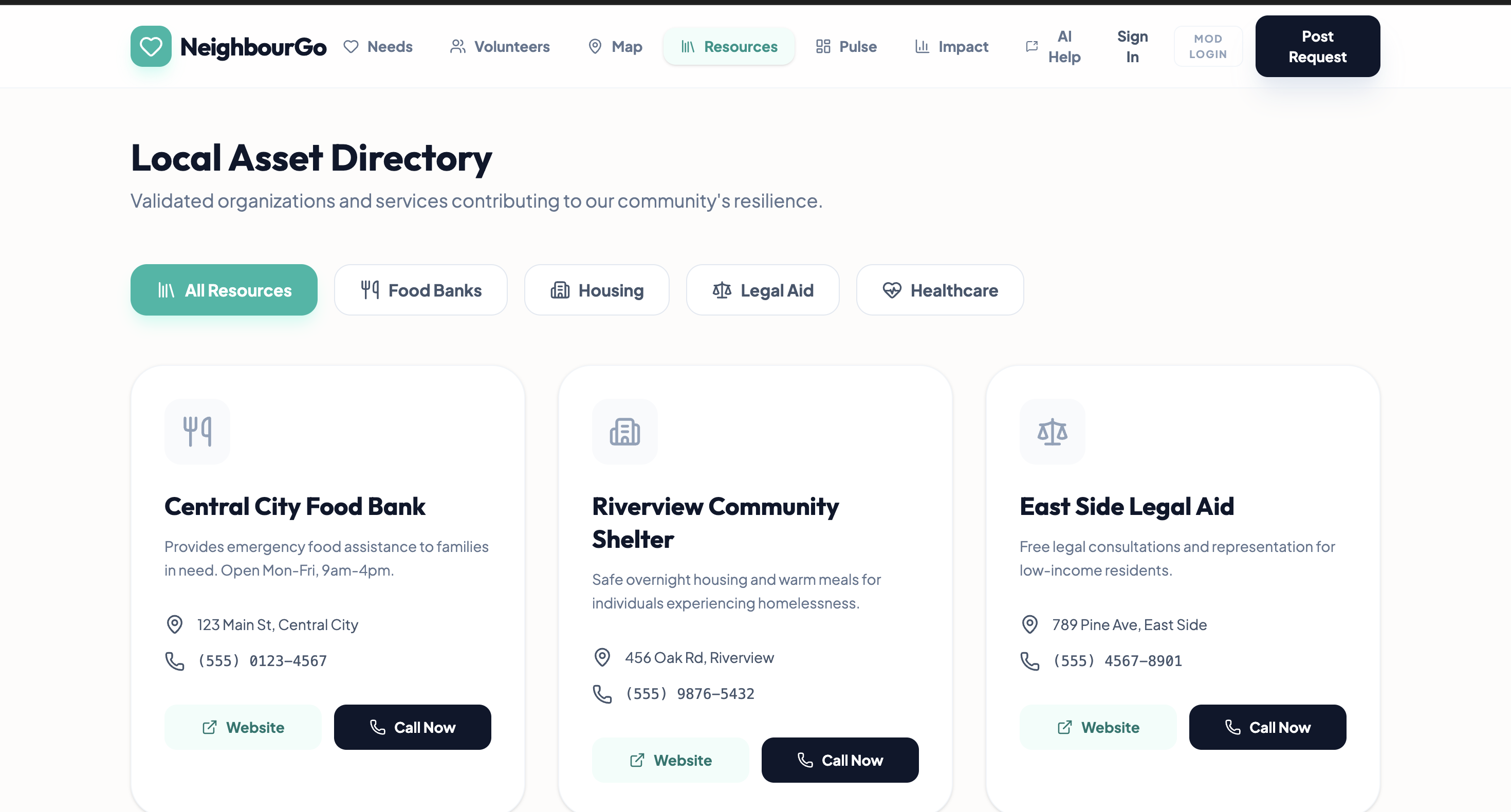
Resources page
-
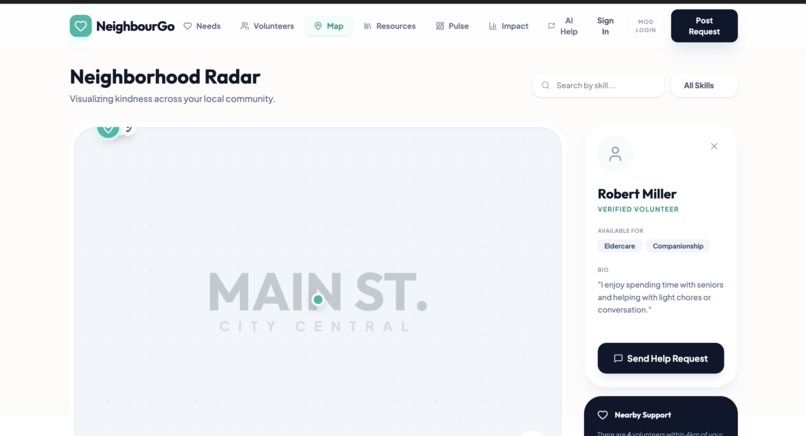
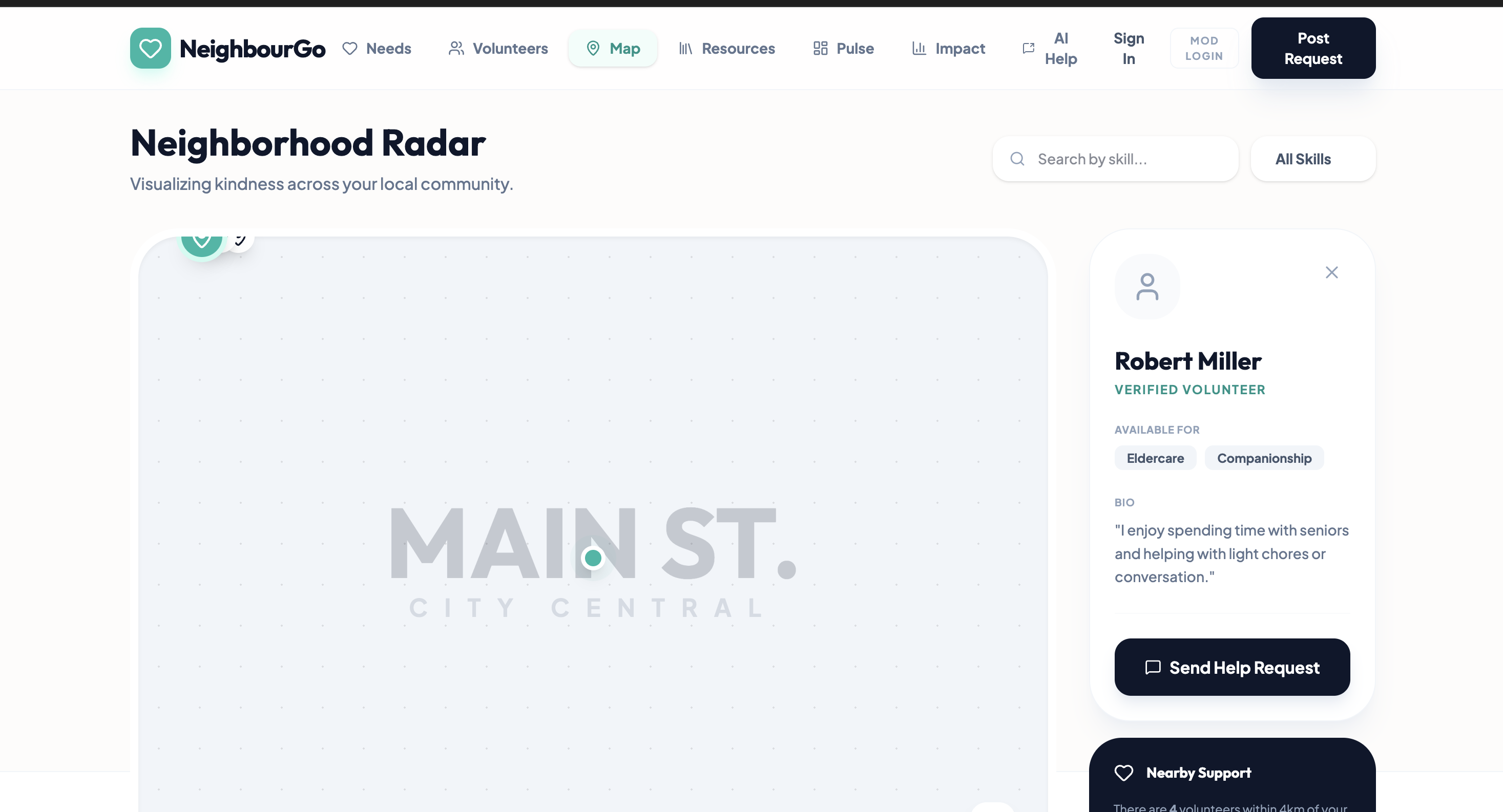
Locate any available volunteers nearby
-
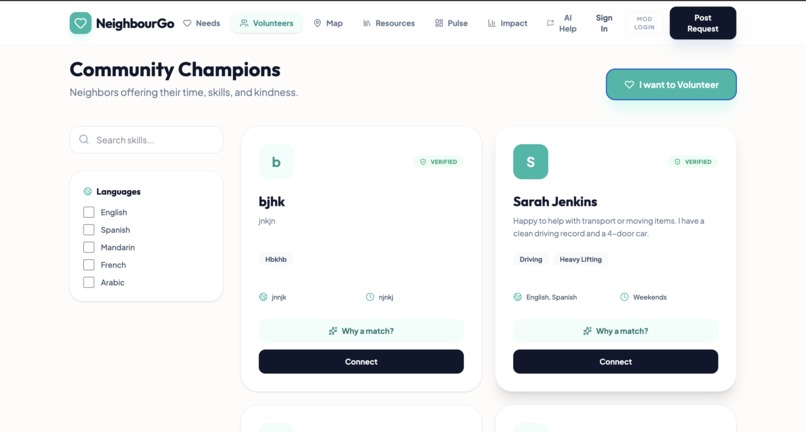
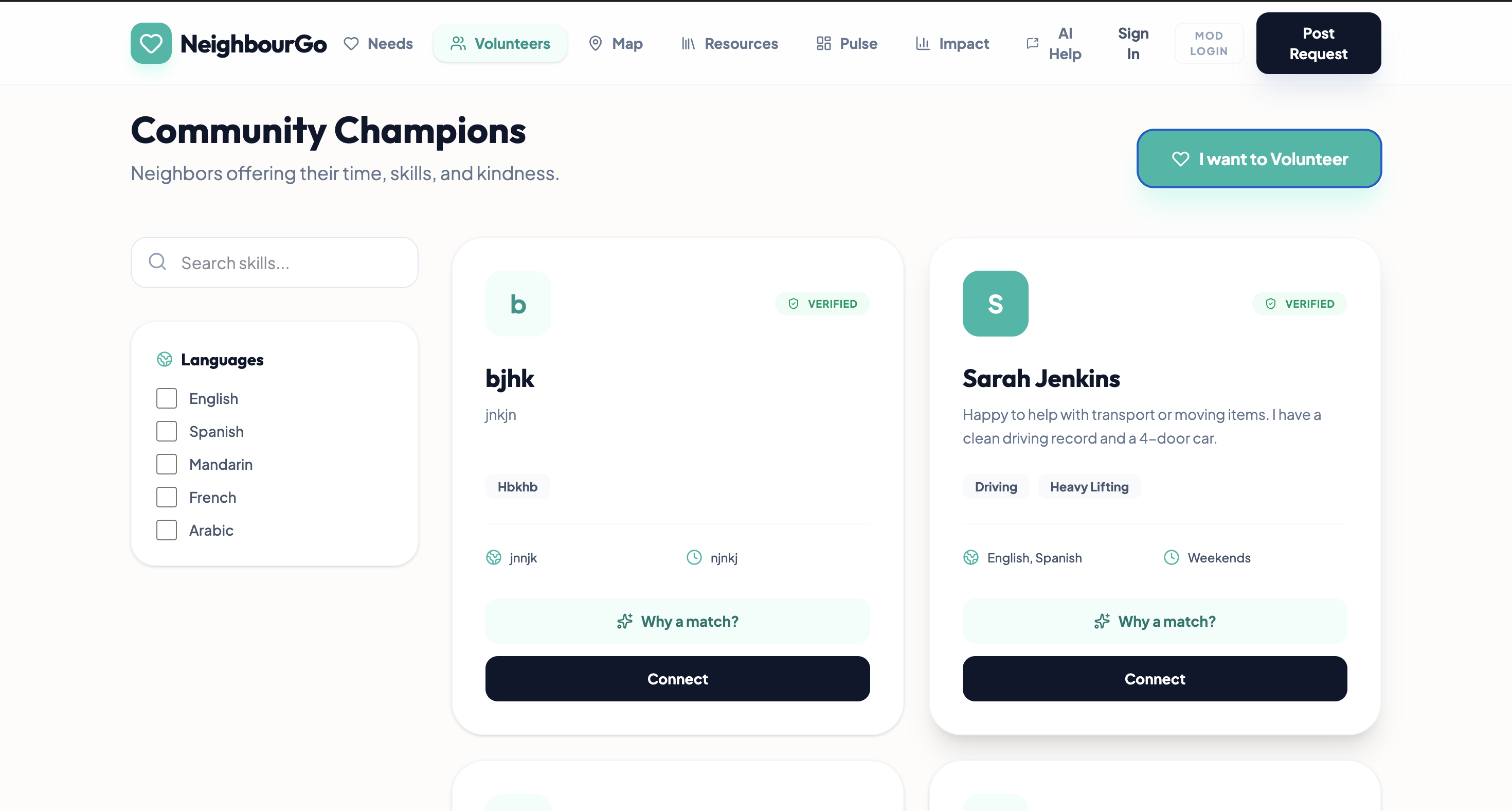
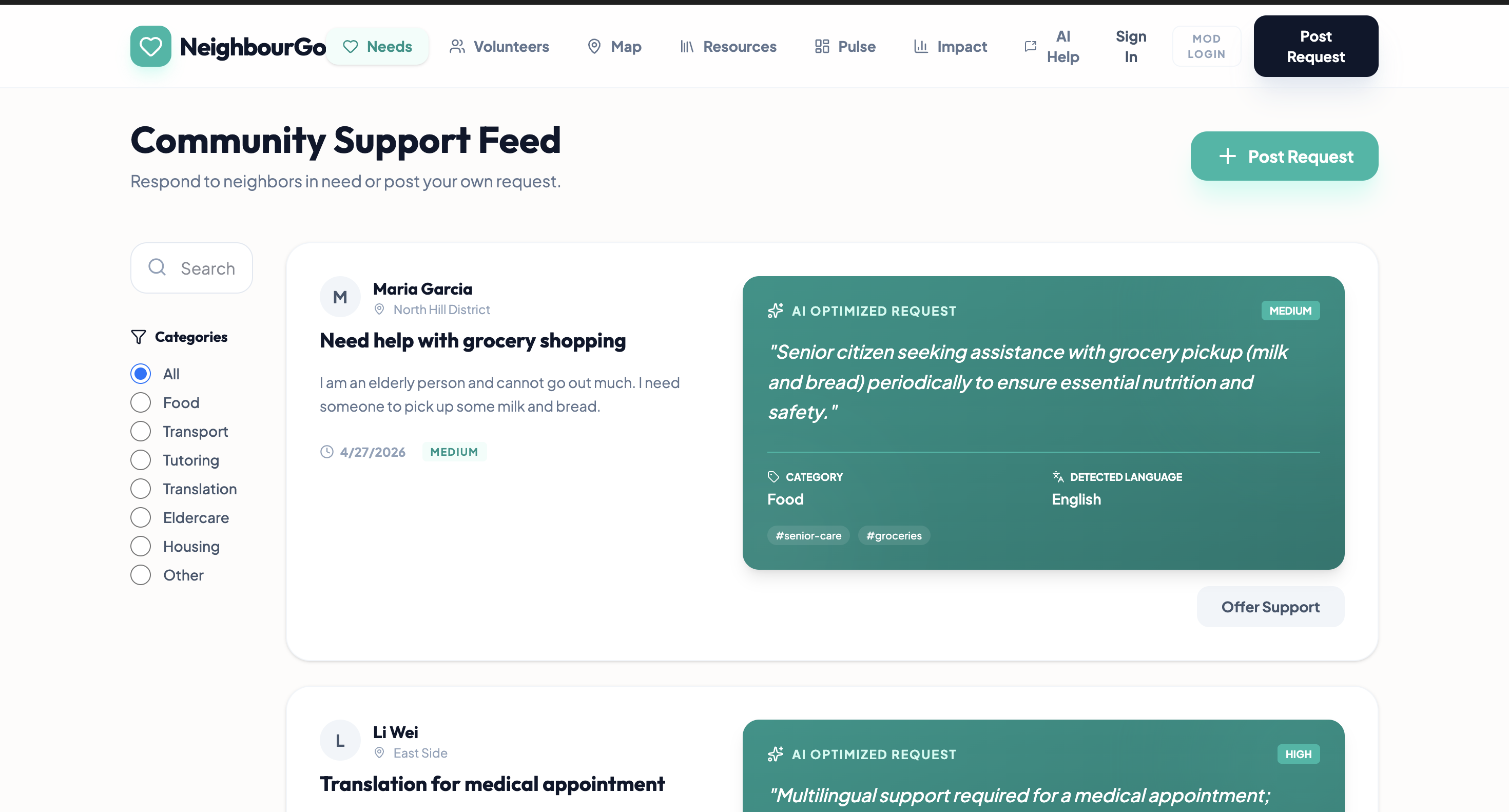
Volunteer offers page
-
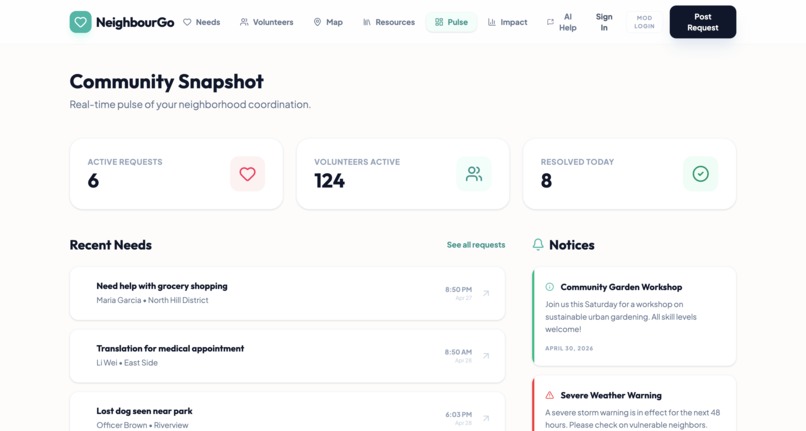
Community Highlights
-
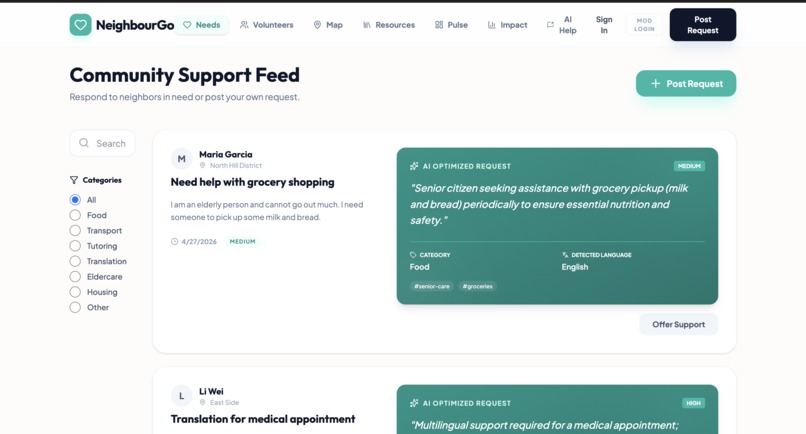
Post a request
-
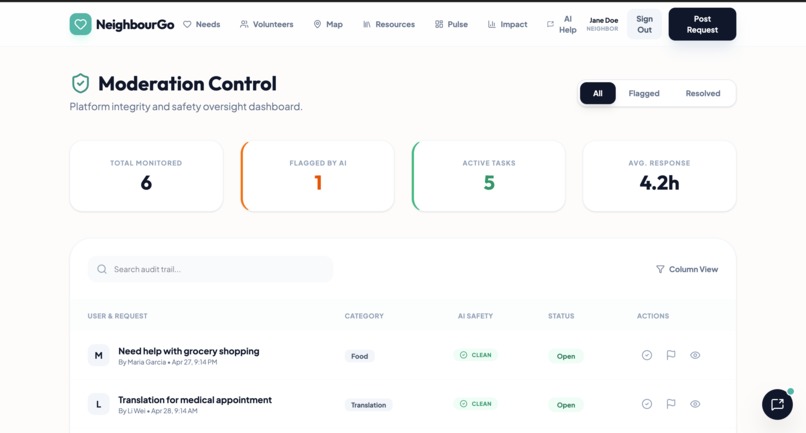
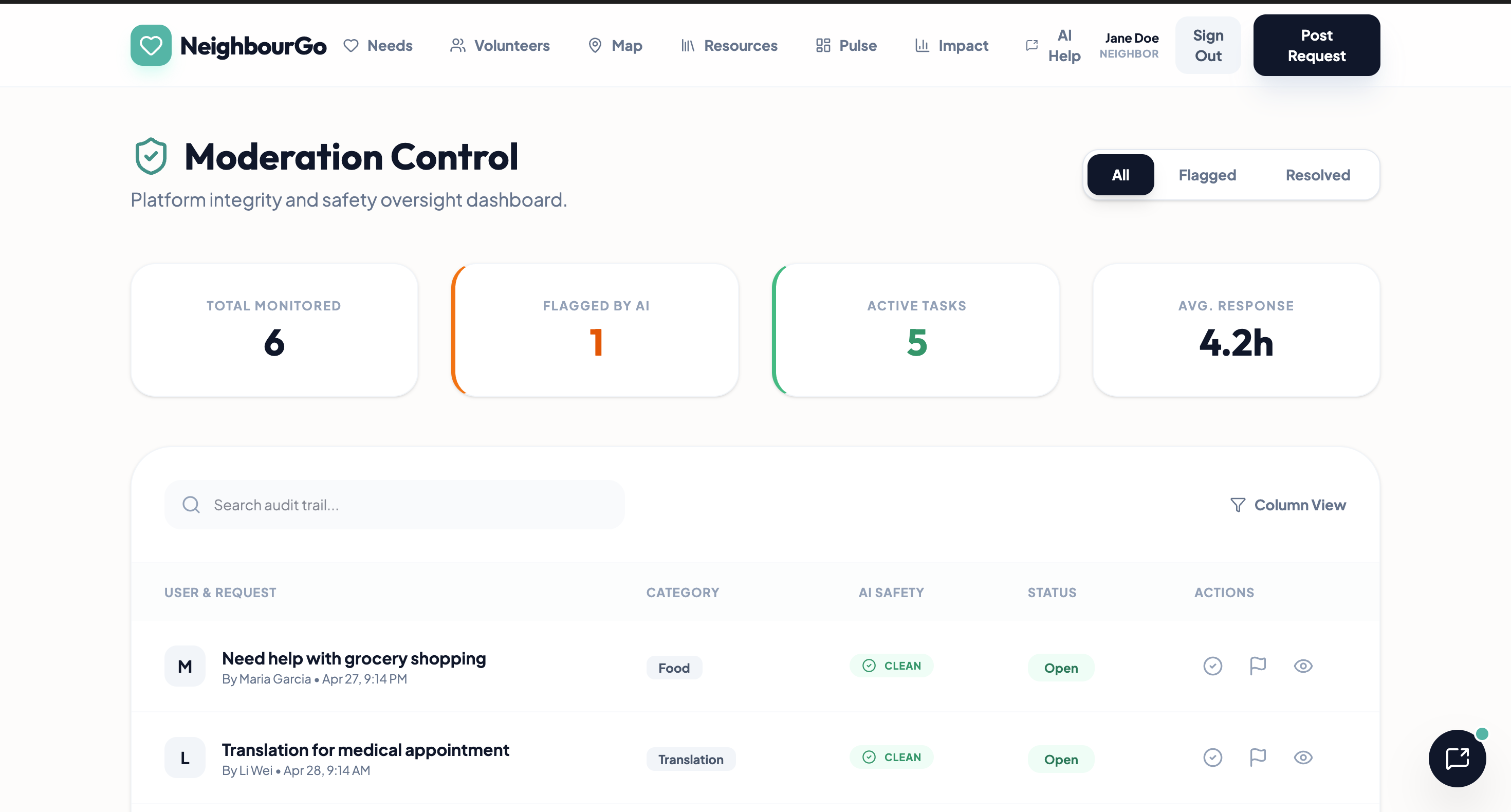
Admin moderation page
-
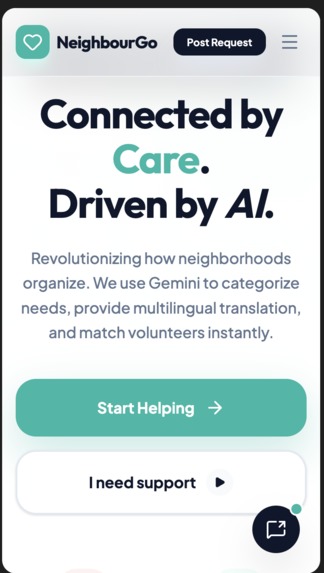
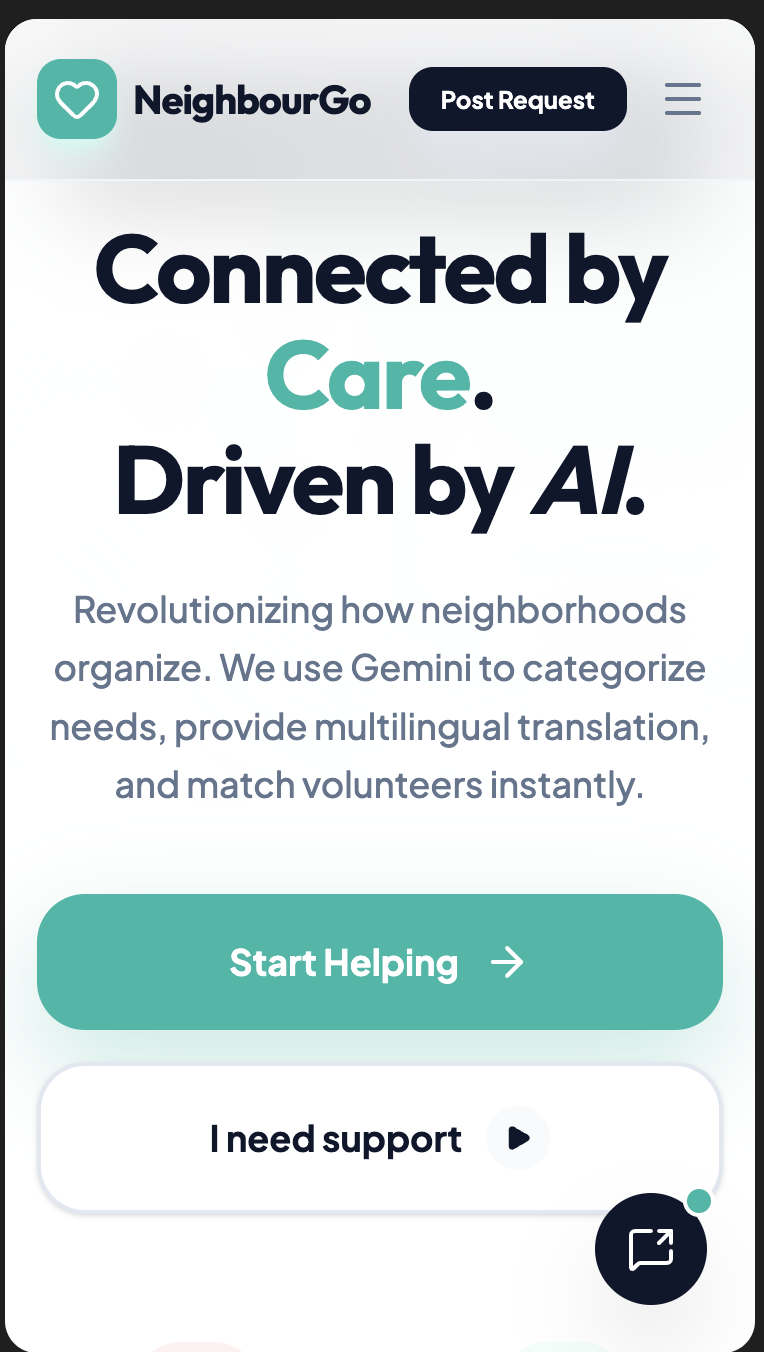
Mobile responsive view
Inspiration
NeighbourGo was created to make community support easier to access, organize, and trust. In many neighborhoods, help already exists, but people often struggle to explain what they need clearly, find the right local resource quickly, or connect with volunteers in a simple and safe way.
The project focuses on a simple idea: local care should be easier to coordinate. Instead of treating AI as just a chatbot, NeighbourGo uses it to improve real tasks like request classification, multilingual support, resource guidance, and safer moderation.
What it does
NeighbourGo is a community support platform where users can post needs, offer help, browse local resources, view community notices, and interact with an AI assistant. The platform is designed to be useful for residents, volunteers, newcomers, students, families, and community organizations.
The website includes:
- A landing page that explains the mission and user flow
- A dashboard for community activity
- A request submission system
- A volunteer offer section
- A resource directory
- A notices page
- An AI assistant page
- An analytics page
- An admin moderation area
How it works
When a user submits a request, Gemini helps turn rough text into structured information such as title, summary, category, urgency, language, and tags.
NeighbourGo also uses Gemini to:
- Rewrite unclear requests into cleaner summaries
- Translate requests for multilingual accessibility
- Support moderation by identifying risky or unsafe content
- Explain why a volunteer or resource is a good match
- Generate next-step guidance using available local resource data
- Answer user questions through an in-app assistant
How we built it
NeighbourGo was designed as a modern web application with a clean frontend, backend API integration, and Gemini-powered workflows. The architecture was planned to feel like a real product rather than a simple prototype, with reusable components, responsive layouts, and seeded content for a realistic experience.
The main implementation includes:
- React for the frontend
- Node.js and Express for the backend
- Gemini API for AI-powered features
- Structured outputs for reliable request analysis
- Responsive UI components for desktop and mobile
- Analytics views for platform activity
Challenges we ran into
One of the main challenges was making the AI feel truly useful inside the product instead of simply adding a chat feature. The goal was to make Gemini improve real workflows such as support intake, moderation, translation, and resource discovery.
Another challenge was balancing a clean, trustworthy civic-tech design with enough functionality to feel like a complete platform. The site needed to be easy to understand for first-time users, visually polished, and organized around real user tasks.
Accomplishments that we're proud of
A major accomplishment was turning the project into a more complete product vision instead of a single-feature AI demo. NeighbourGo brings together community requests, volunteer participation, local resources, notices, moderation, analytics, and AI assistance in one cohesive experience.
Another accomplishment was creating a concept with both technical value and social usefulness. The platform is designed to solve real coordination problems in communities while also showing how Gemini can power useful product features beyond simple text generation.
What we learned
The biggest lesson was that AI becomes much more valuable when it supports clear product workflows. Structured responses, strong prompts, and defined UI actions make the experience far more dependable than relying only on open-ended output.
Another lesson was that good UI and UX matter just as much as model capability. For a community platform, users need trust, clarity, and simplicity before they will engage with advanced features.
What's next for NeighbourGo
The next steps for NeighbourGo would be expanding it into a more production-ready platform with authentication, location-aware resource search, deeper admin tooling, organization dashboards, and broader multilingual support.
Future improvements could also include better personalization, map-based discovery, recurring case tracking, and stronger integration with local organizations.
Built With
- and
- chart.js
- css
- express.js
- gemini-api
- google-ai-studio
- html
- javascript
- json-based-data-storage
- node.js
- react
- responsive
- rest-apis
- tailwind-css
- ui/ux
- vite

Log in or sign up for Devpost to join the conversation.