
Inspiration
Every day, usable food and resources are wasted while people nearby struggle to access them.
A restaurant may have surplus meals at the end of the day. A family may have extra food after an event. A company may have unused supplies. At the same time, another household or community may urgently need those resources.
The problem is not always a lack of resources — it is the lack of trusted coordination between people who have something to give and people who need it.
We built NeighborNet to solve this coordination gap through AI-assisted orchestration, location-based matching, verification, and traceable delivery.
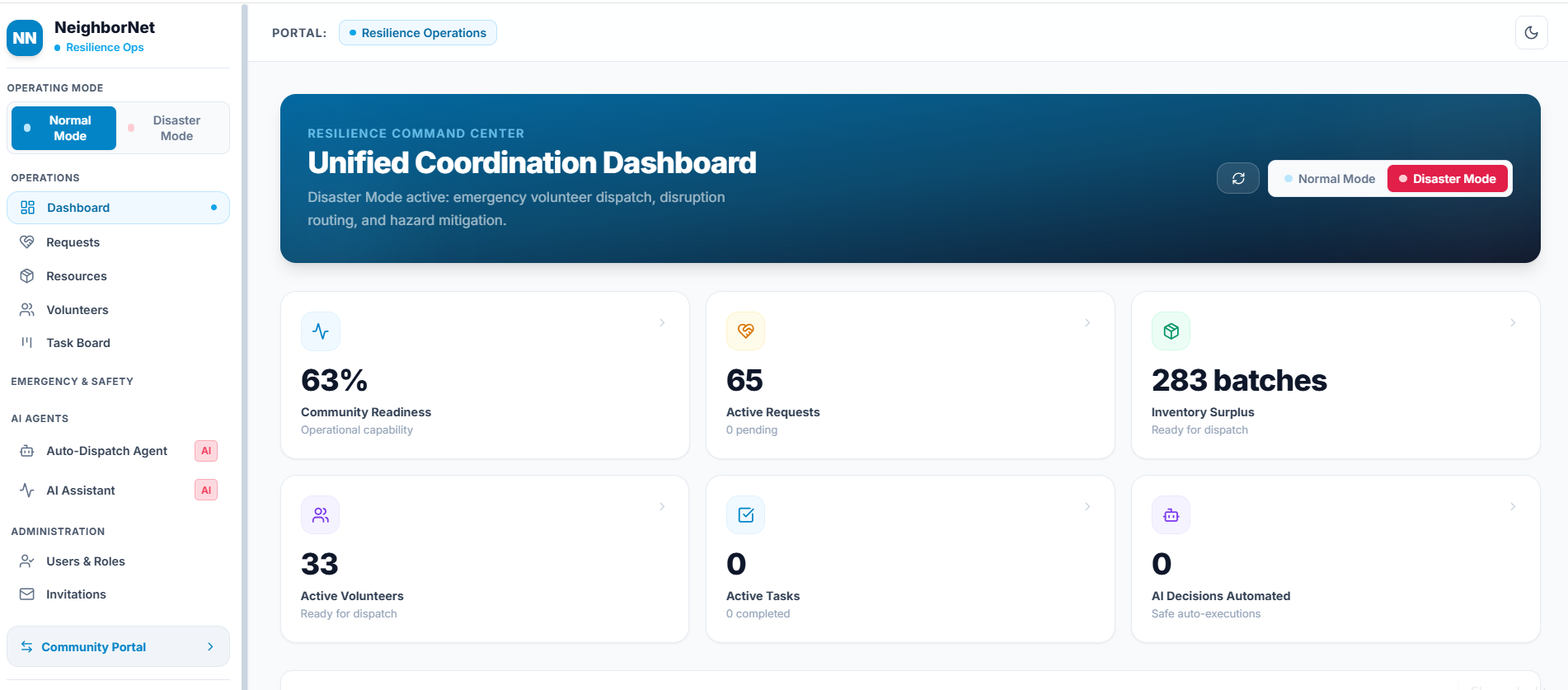
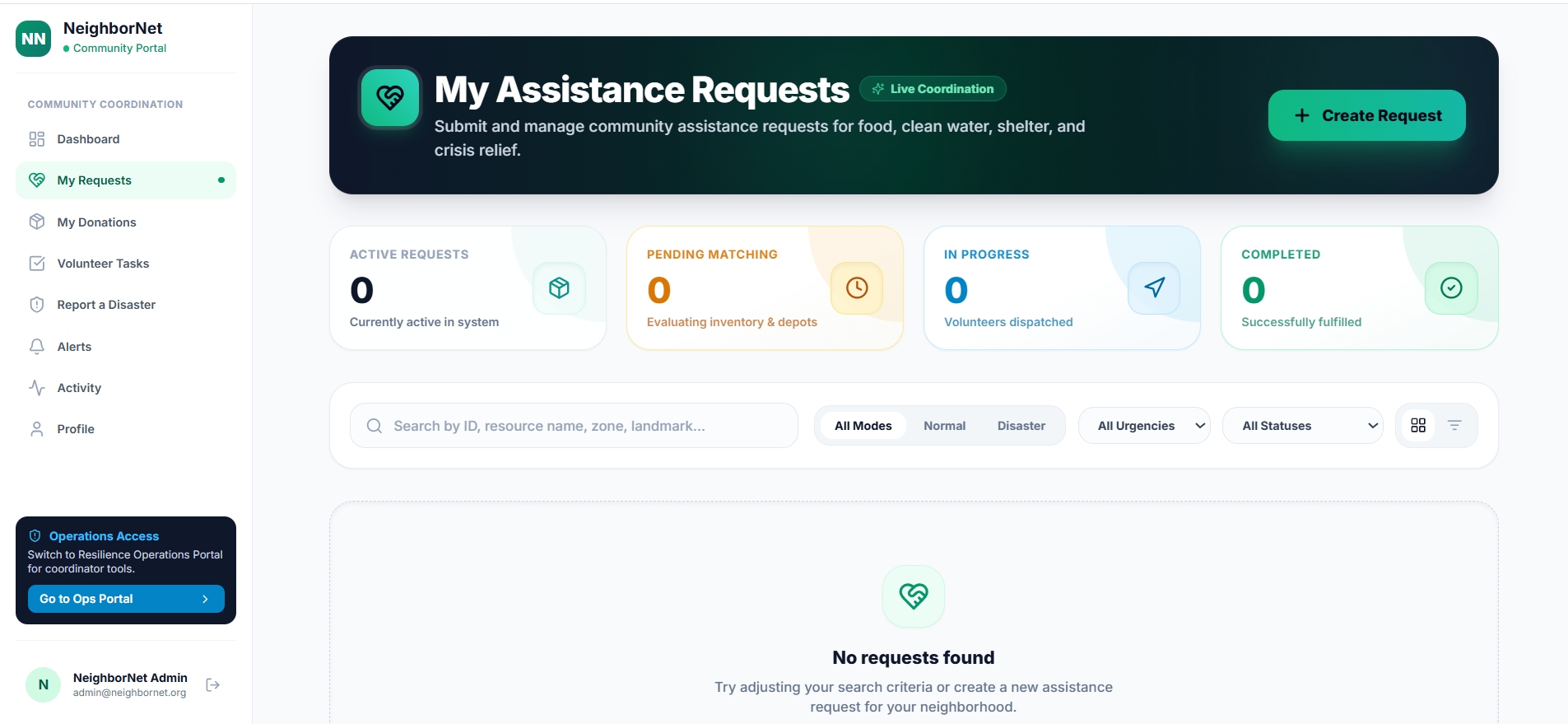
NeighborNet is designed for everyday community resource sharing, while also providing Disaster Mode for urgent community response during emergencies.
What it does
NeighborNet is an AI-powered community resource-sharing platform that connects surplus resources with verified community needs.
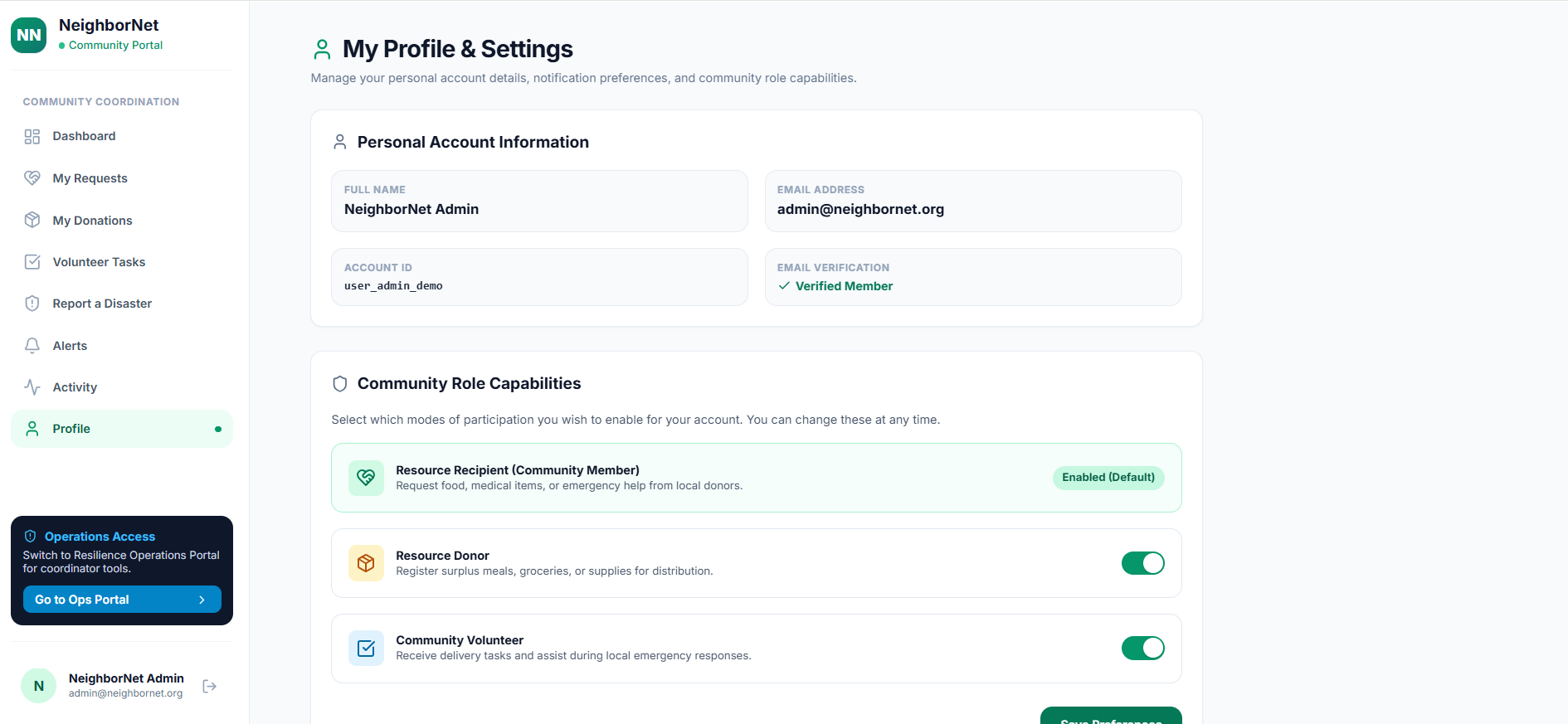
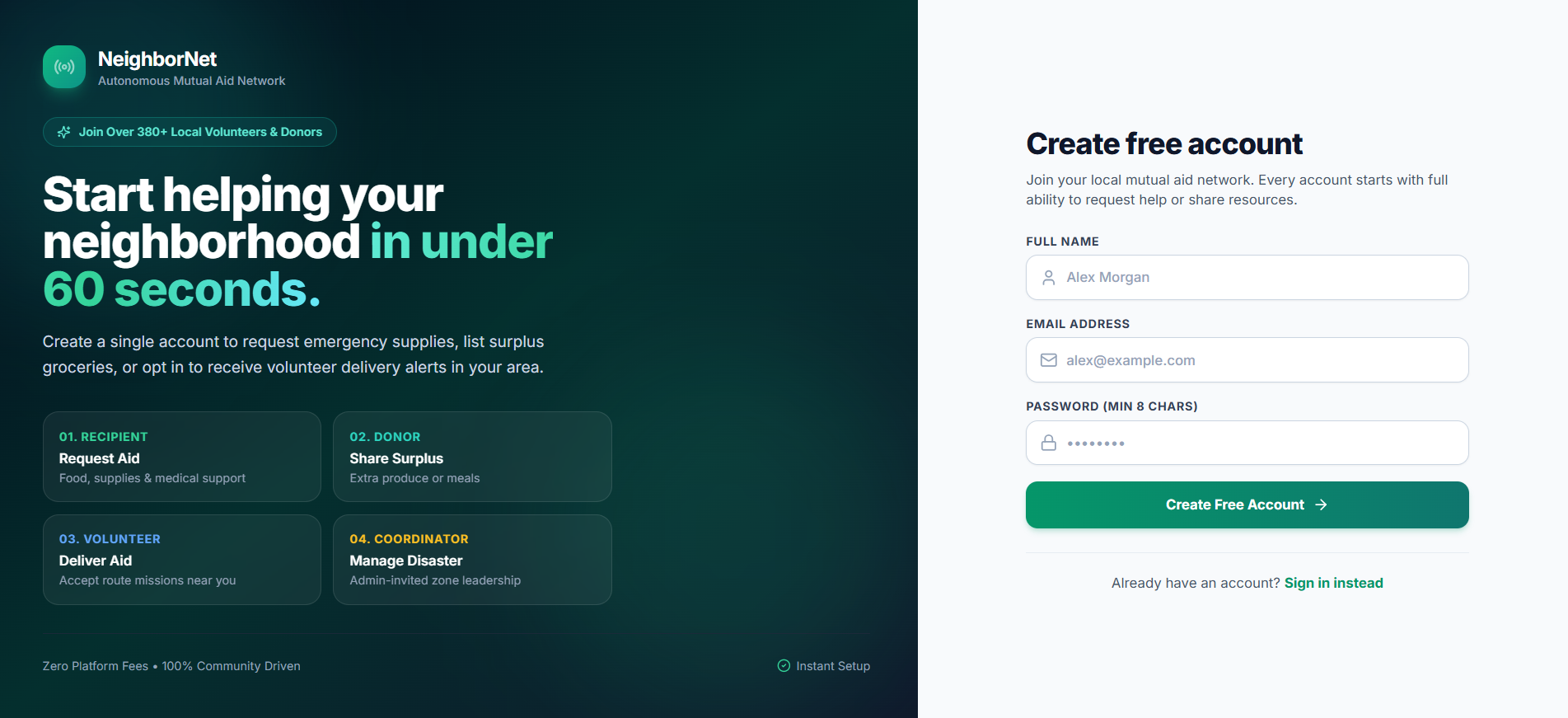
Restaurants, households, companies, and event organizers can donate surplus food and other resources. Verified recipients can request support, while nearby volunteers can transport donations when needed.
NeighborNet creates a trusted chain:
Verified Request → Donation → Volunteer Matching → Pickup Verification → Delivery → Recipient Confirmation
Every donation receives a unique Donation ID, allowing it to be tracked throughout the workflow.
Everyday Community Mode
NeighborNet coordinates normal community resource sharing by:
- Matching available donations with verified requests
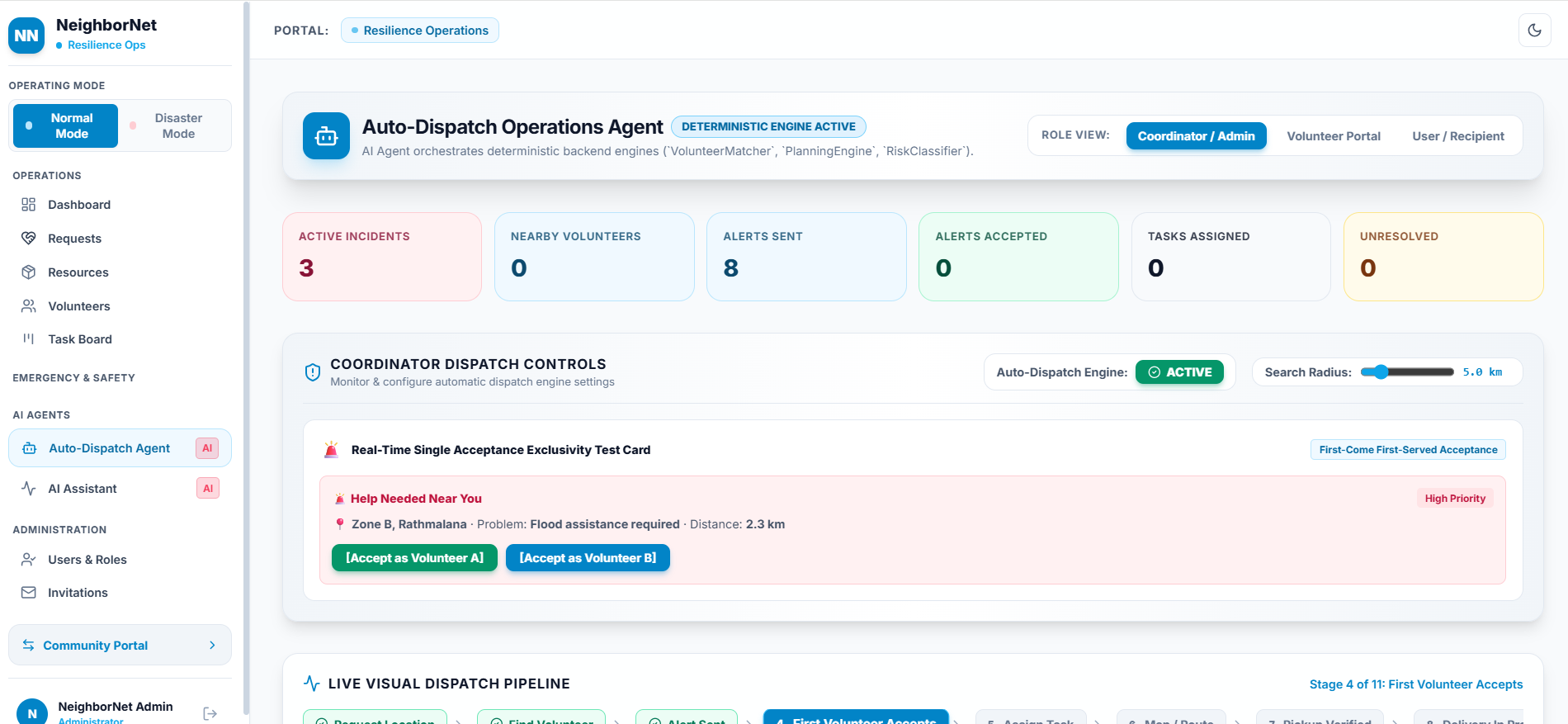
- Finding suitable nearby volunteers
- Considering location, capacity, urgency, and availability
- Preventing over-allocation
- Reserving tasks for the first valid volunteer
- Verifying pickup and delivery using OTPs
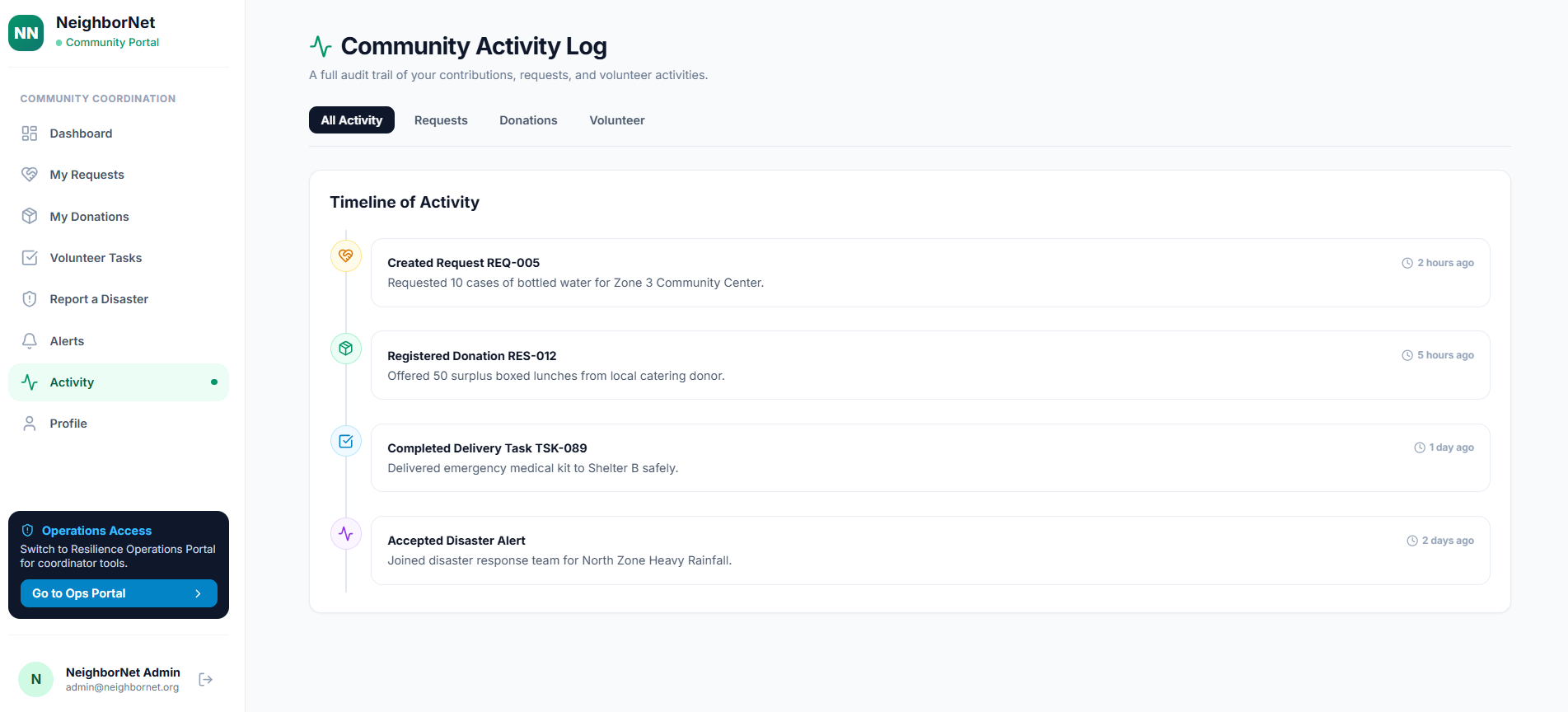
- Tracking task progress
- Recovering and reassigning tasks when volunteers become unavailable
- Maintaining an auditable history of important actions
Disaster Mode
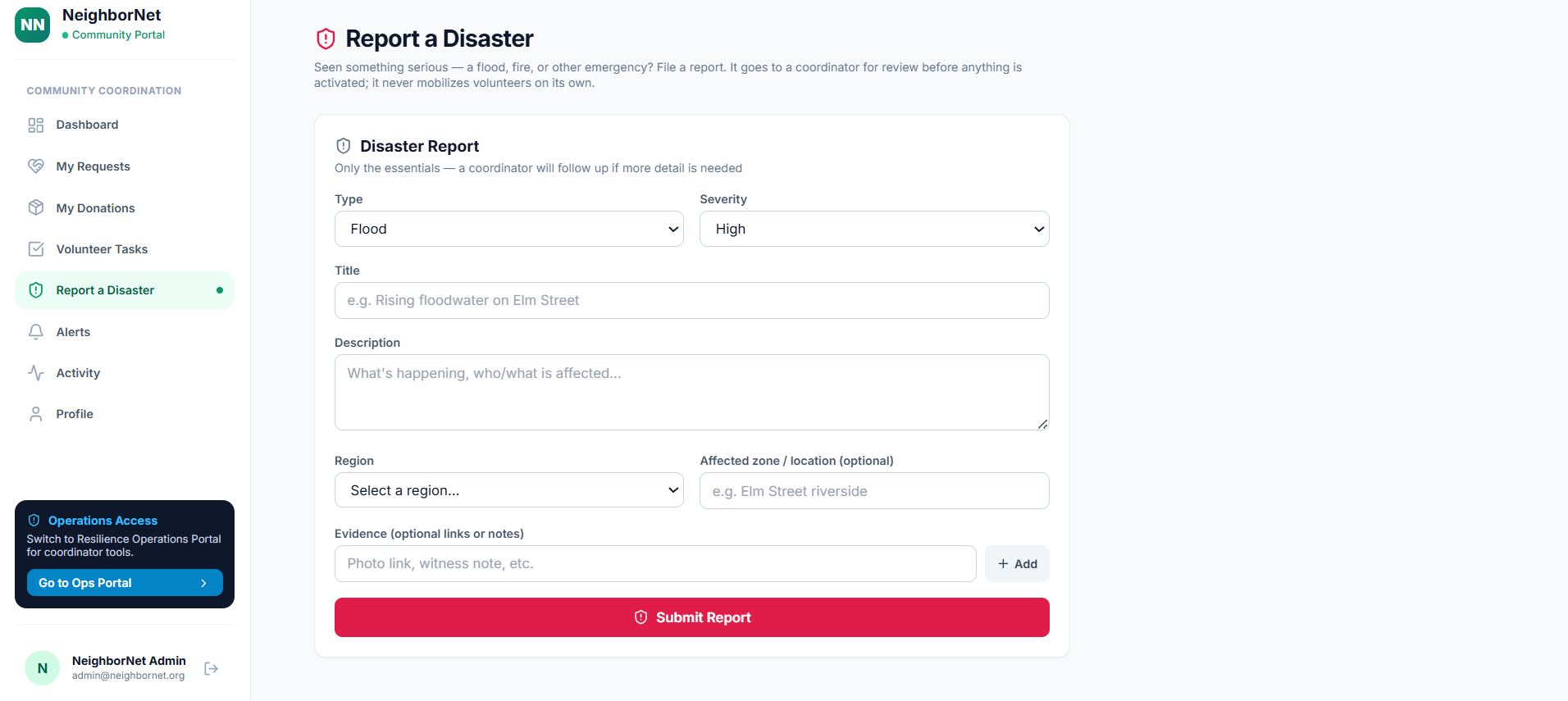
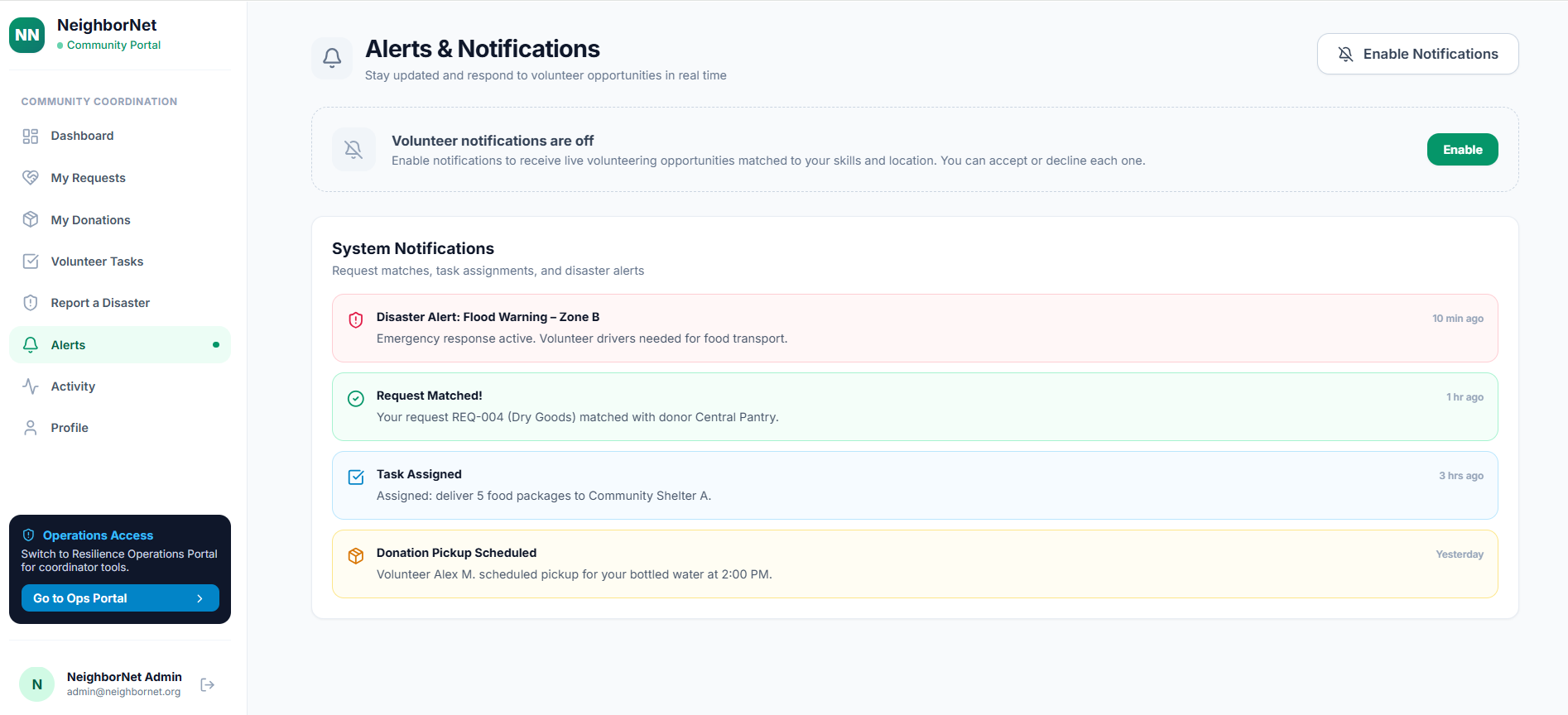
When an emergency occurs, NeighborNet can switch to Disaster Mode.
The platform can coordinate:
- Urgent community requests
- Disaster-affected zones
- Available resources
- Volunteer dispatch
- Task assignment and reassignment
- Risk classification
- Delivery verification
- Operational status tracking
- Human/admin oversight
The same infrastructure can therefore support both everyday community assistance and emergency response.
How we built it
NeighborNet is a full-stack platform with an AI agent orchestration layer.
Core technologies
- Amazon Bedrock
- Strands Agents SDK
- FastAPI
- Next.js
- Location-based matching
- OTP verification
- Persistent data support
- Audit logging
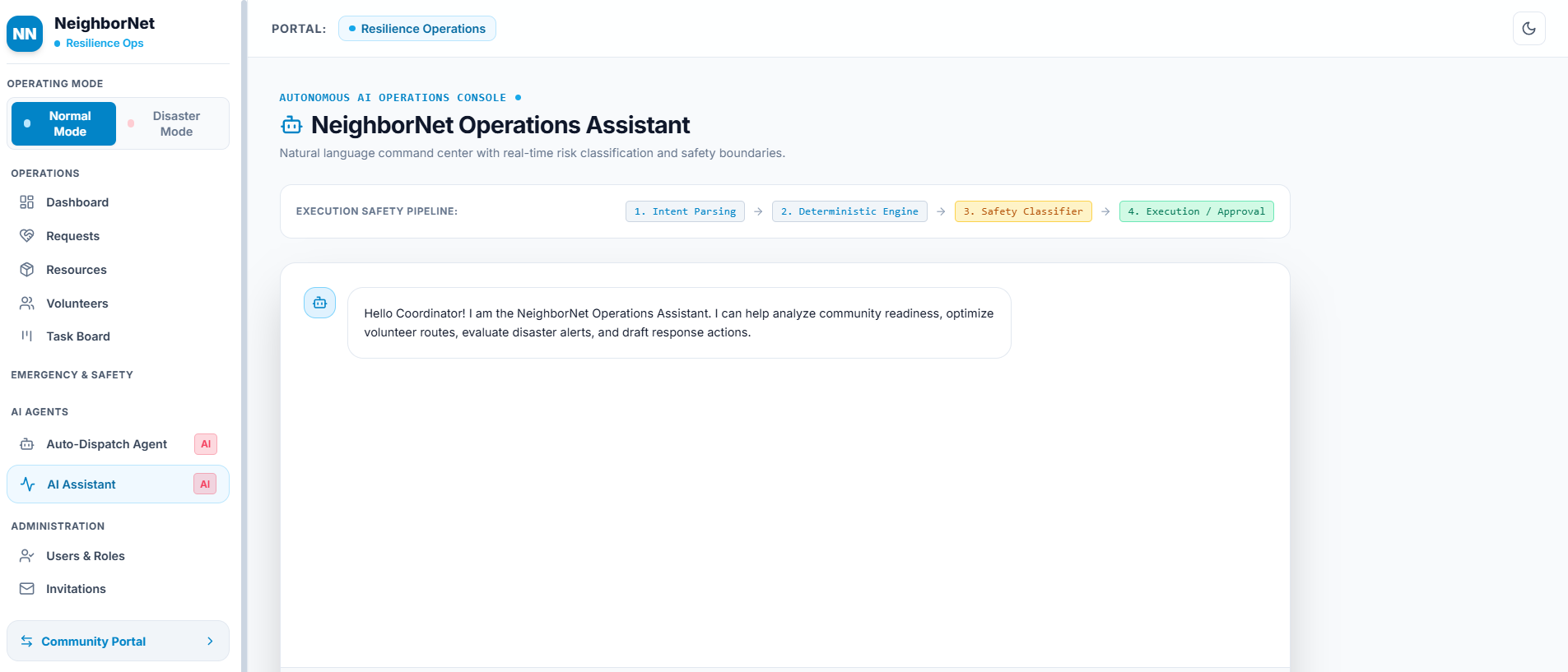
The most important architectural decision was separating AI orchestration from critical operational decisions.
The AI agent determines which tools and workflows should be used, while deterministic components handle decisions that must be predictable, safe, and auditable.
Deterministic operational components
VolunteerMatcher Finds suitable volunteers based on operational constraints such as location, availability, capacity, and task requirements.
PlanningEngine Creates and coordinates delivery tasks.
RecoveryEngine Handles failed, cancelled, or unavailable volunteer assignments and supports reassignment.
RiskClassifier Classifies operational situations into:
GREEN → AMBER → RED
This architecture gives us the flexibility of AI without allowing an LLM to independently make critical allocation or safety decisions.
Trust & Verification
Trust is a core part of NeighborNet.
A simple Delivered status is not enough to prove that a donation actually reached the intended recipient.
NeighborNet therefore uses a verification chain based on:
- Verified community requests
- Unique Donation IDs
- OTP-based pickup verification
- OTP-based delivery verification
- Controlled task state transitions
- Volunteer assignment ownership
- Audit trails
- Recovery and reassignment logic
- Human/admin oversight
This creates a traceable chain from the original request to the final delivery.
Challenges we ran into
1. How much autonomy should the AI have?
Our biggest challenge was deciding what the AI should control.
Allowing an AI model to independently decide who receives resources or which volunteer should handle a task could produce unpredictable and difficult-to-audit decisions.
We solved this by separating:
AI → orchestration and workflow decisions
from
Deterministic software → operational decisions
and
Humans → important oversight and intervention
This allowed us to use AI where it provides value while keeping critical operations predictable.
2. Building trust
Another major challenge was proving that a resource actually moved through the system as intended.
We addressed this with verified requests, unique Donation IDs, OTP verification, controlled task states, and audit logs.
3. Supporting both normal and emergency situations
Community assistance and disaster response have different urgency and coordination requirements.
Instead of building two separate systems, we designed NeighborNet so the same core infrastructure can support both everyday resource sharing and emergency response.
Accomplishments we're proud of
We are proud of building an end-to-end workflow rather than just an AI chatbot.
Key accomplishments include:
- Built an end-to-end surplus resource sharing workflow
- Created location-based volunteer matching
- Implemented verified community requests
- Designed a request → donation → pickup → delivery verification chain
- Added unique Donation IDs for traceability
- Implemented first-valid-volunteer task reservation to prevent duplicate assignments
- Added OTP verification for pickup and delivery
- Implemented controlled task state transitions
- Added automatic recovery and reassignment
- Created GREEN / AMBER / RED risk classification
- Added real-time task status tracking
- Reused the same infrastructure for everyday support and disaster response
- Added audit trails for accountability
- Designed AI orchestration around deterministic operational safeguards
Our biggest accomplishment is turning a simple idea —
"Someone has extra. Someone nearby needs it."
— into a coordinated and trustworthy system.
What we learned
We learned that building an effective AI agent system is not simply about connecting an LLM to tools.
The more important question is:
What should the AI decide, what should software decide, and when should a human decide?
We learned that deterministic logic is essential for operations such as:
- Matching
- Capacity checks
- Task assignment
- Verification
- Recovery
- Risk handling
We also learned that trust must be designed into the workflow, rather than added later.
Verification, traceability, controlled status transitions, and human oversight make an AI-powered system significantly more reliable.
What's next
We plan to expand NeighborNet with:
- Smarter demand and surplus prediction
- Food expiry and freshness tracking
- Multi-donation route optimization
- Community trust and reputation scoring
- Advanced anomaly and fraud detection
- Offline support for low-connectivity areas
- Improved emergency coordination
- NGO and community organization integrations
- Restaurant and business integrations
- Impact analytics showing resources recovered and communities supported
Our long-term goal is to make NeighborNet a trusted community coordination infrastructure where surplus resources can be connected to genuine needs quickly, safely, and transparently — both in everyday life and during emergencies.
Built With
- ai-agents
- amazon-bedrock
- amazon-dynamodb
- amazon-web-services
- aws-lambda
- community
- crisis-management
- disaster
- emergency-response
- fastapi
- food-donation
- good-neighbor-agents
- next.js
- python
- react-native
- resource-sharing
- social-entrepreneur
- social-impact
- strands-agents-sdk
- sustainability
- typescript
- volunteer-management


Log in or sign up for Devpost to join the conversation.