Inspiration
Living in a busy suburban neighborhood, I noticed neighbors often missed local events—from park concerts to book club meetups—because info was scattered across flyers, Facebook groups, and word-of-mouth. I wanted a single, simple space where everyone could access community happenings without barriers like logins or complex sign-ups.
What it does
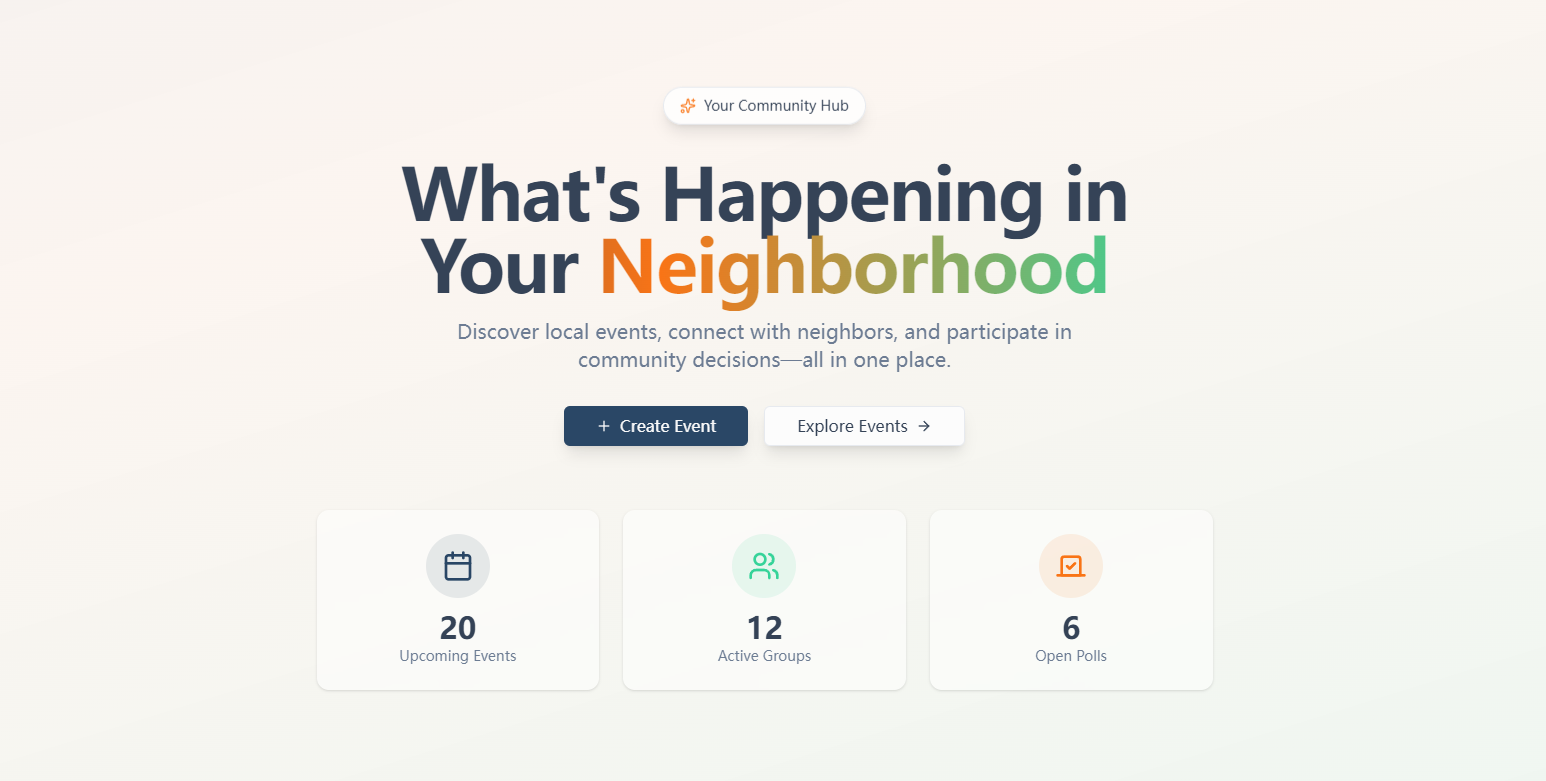
It’s a centralized hub for neighborhood life: residents browse events sorted by date/category, create and promote local events, join interest groups (yoga, pet lovers, youth sports), and vote anonymously on community decisions (park renovations, holiday budgets). All features work without login, keeping it accessible for all ages.
How we built it
I started by mapping core user needs (browsing, creating, voting) and designing a minimalist UI aligned with Western design norms—clean lines, rounded corners, and the brand color palette. I built the front end with React for dynamic filtering, used Node.js/Express for backend logic, and MongoDB to store events/voting data. Chart.js integrated real-time vote visualizations, and AWS hosted the platform for reliability.
Challenges we ran into
The biggest hurdle was balancing simplicity with functionality: ensuring category filtering updated instantly without lag, and making anonymous voting secure yet easy to use (no logins, but preventing duplicate votes). I also had to tweak the calendar to prioritize paid promoted events while keeping chronological sorting intact for non-promoted ones.
Accomplishments that we're proud of
Creating a fully functional, login-free platform that’s intuitive for all age groups—from seniors using the voting page to parents creating kids’ art workshop events. The instant filter refresh and real-time voting updates work seamlessly, and the UI feels welcoming (not clunky) for everyday residents.
What we learned
I deepened my understanding of user-centric design—prioritizing accessibility over complex features. I also learned to troubleshoot real-time data flow (critical for voting results) and balance business rules (promoted event placement) with user experience (not overwhelming the calendar).
What's next for This project
First, add real-time notifications for new events (via email/SMS, no login required). Then, integrate a simple RSVP feature for event organizers to gauge attendance, and expand the interest groups section to let users message group leaders (still login-free, via temporary contact links). Finally, roll out a mobile-responsive version for on-the-go access.

Log in or sign up for Devpost to join the conversation.