-
-
Logo
-
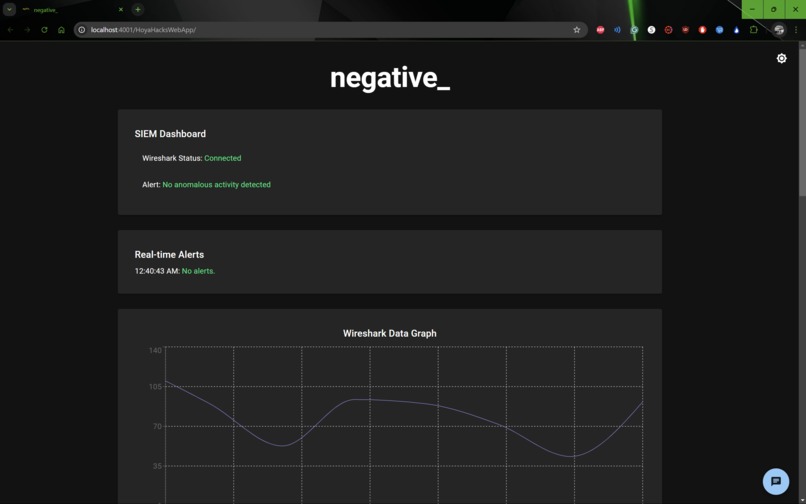
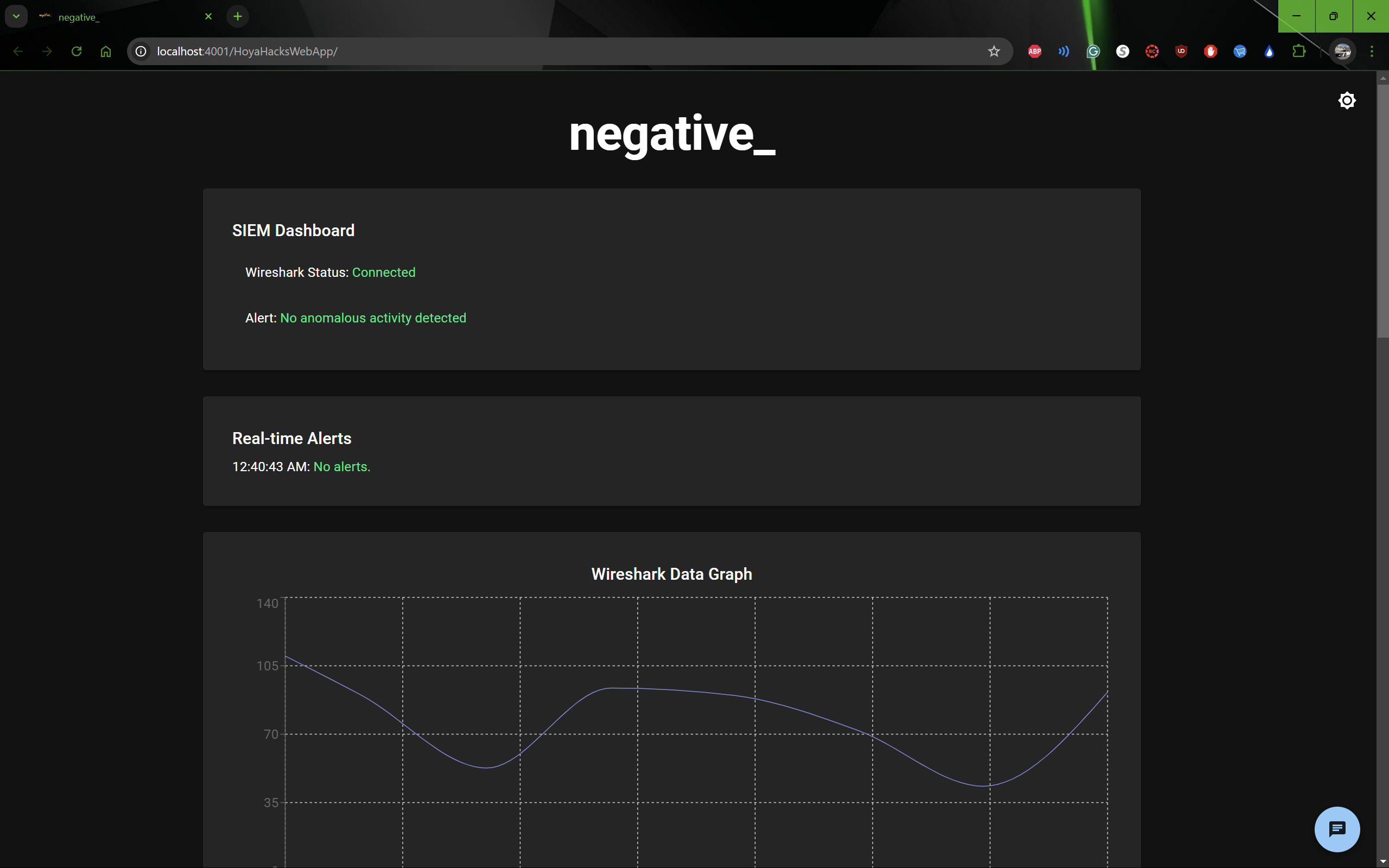
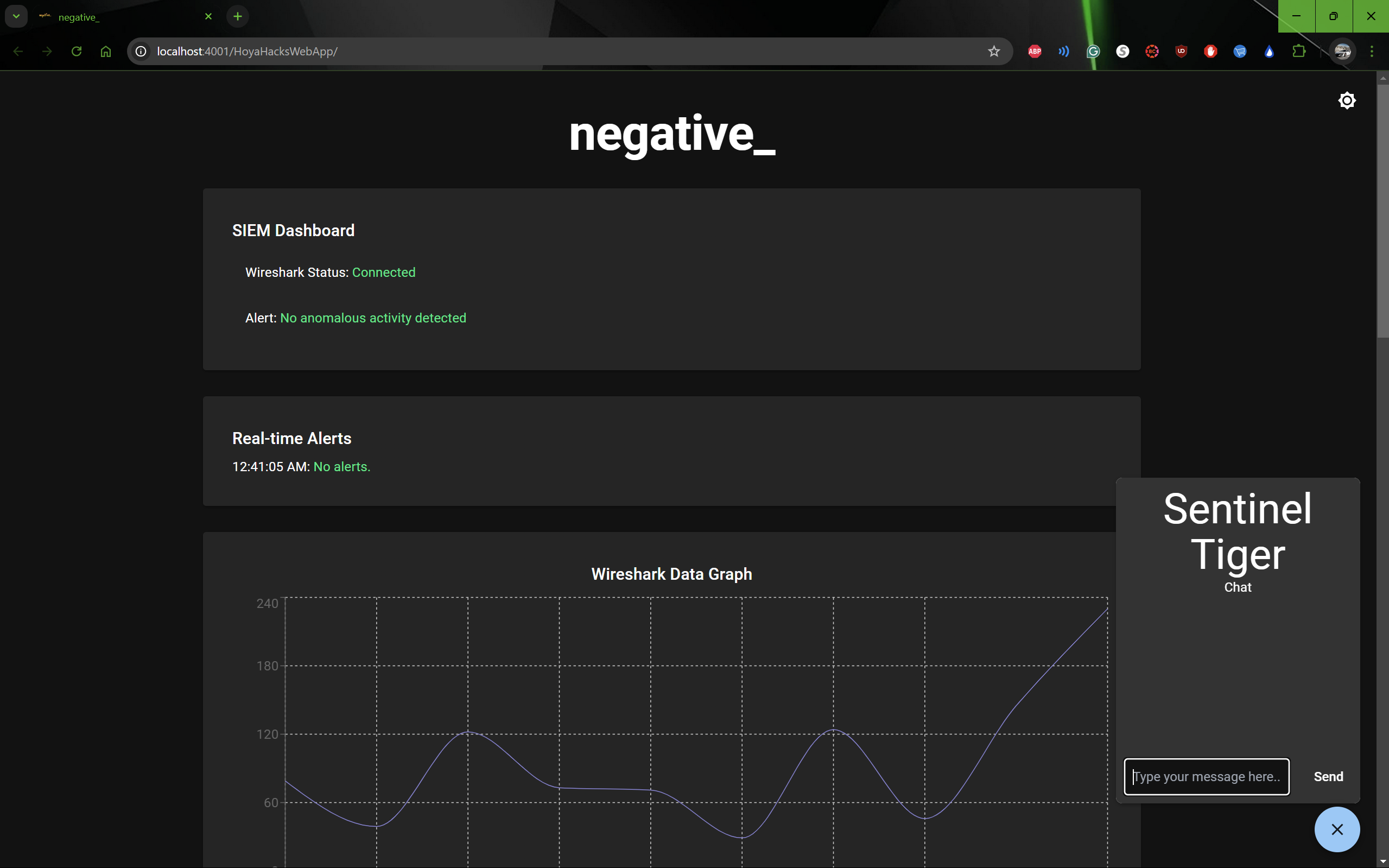
Application without chatbot
-
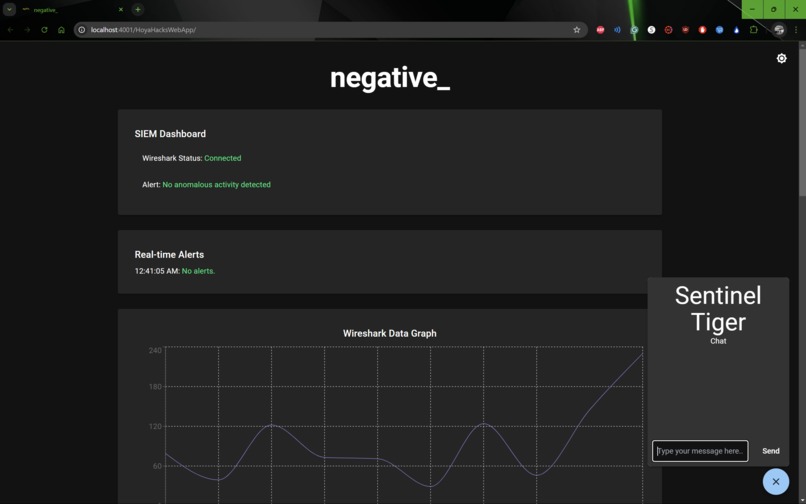
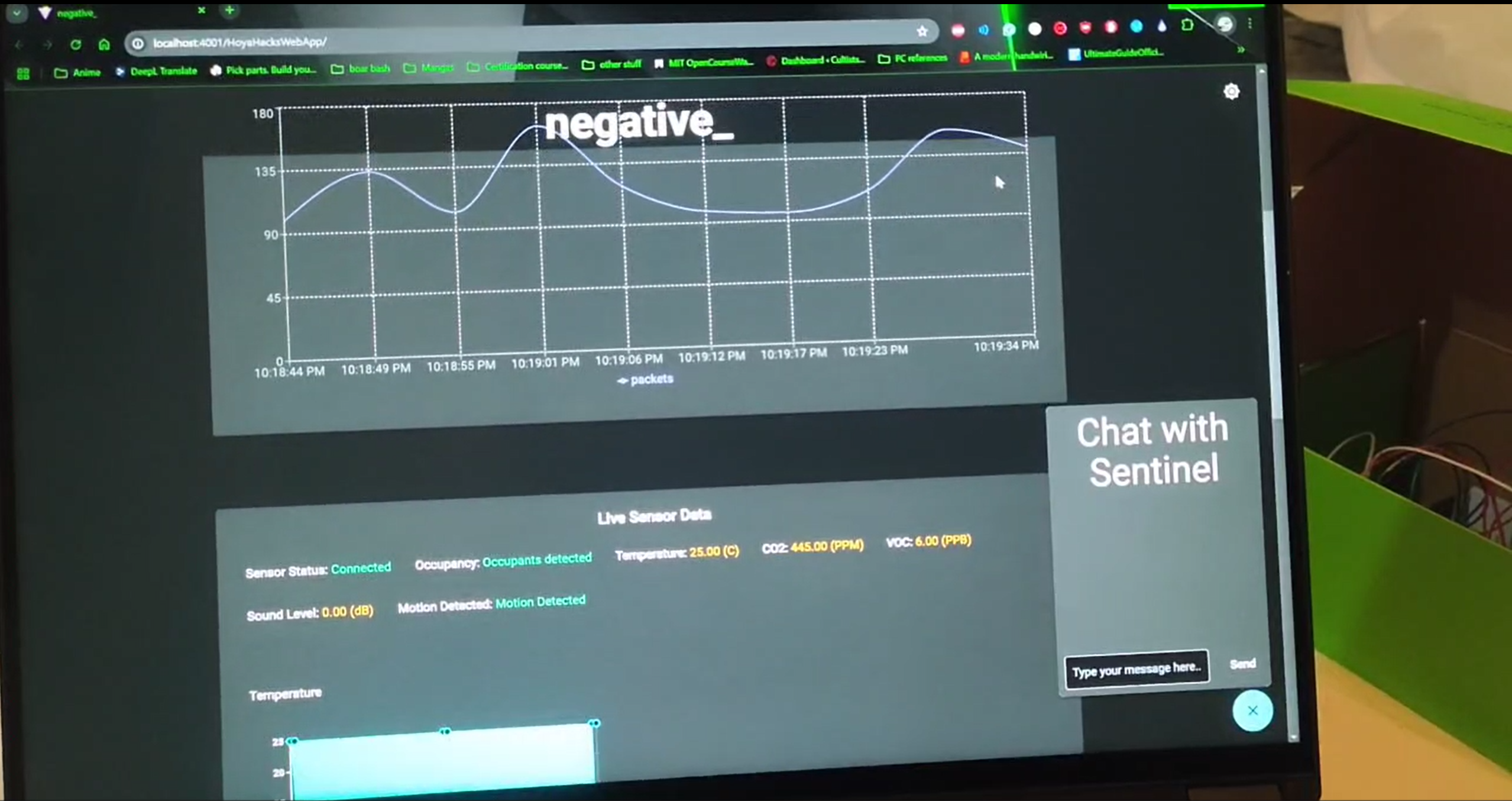
Application with chatbot
-
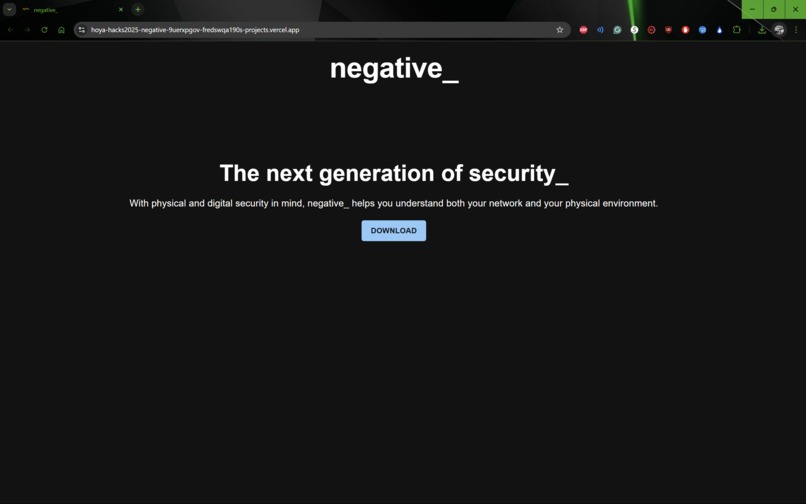
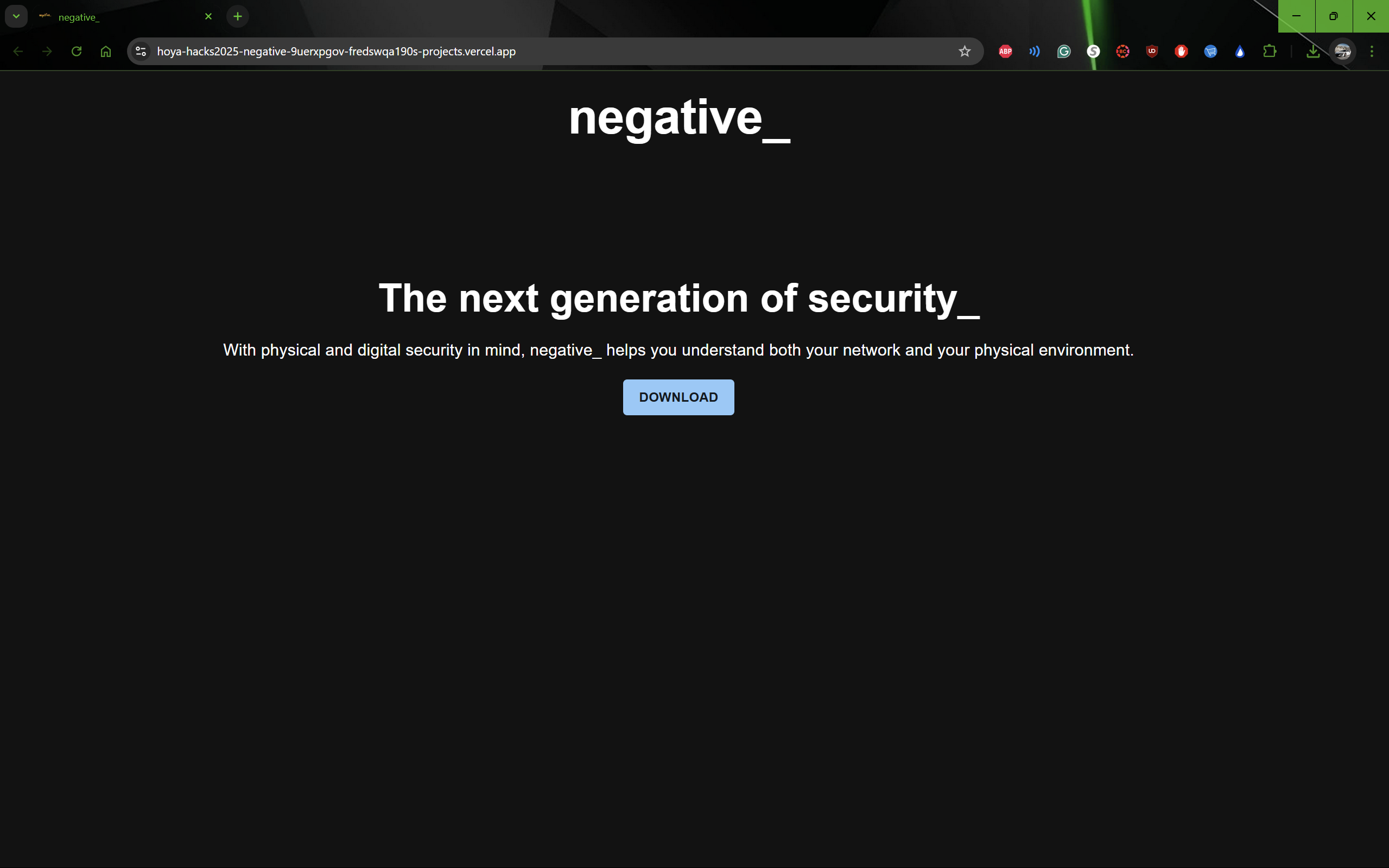
Webpage
-
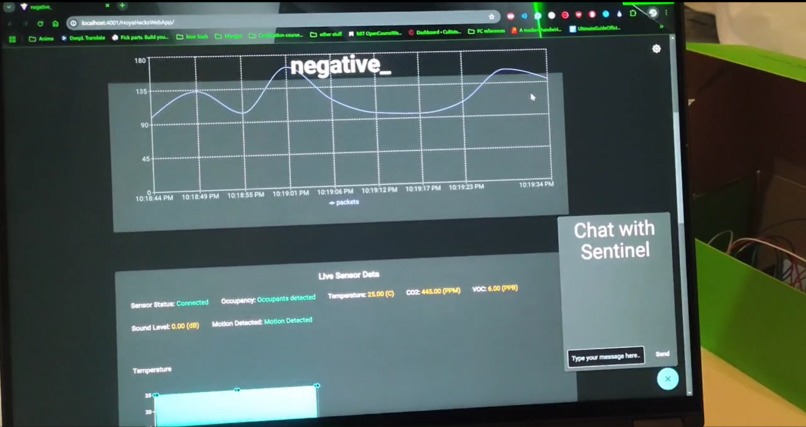
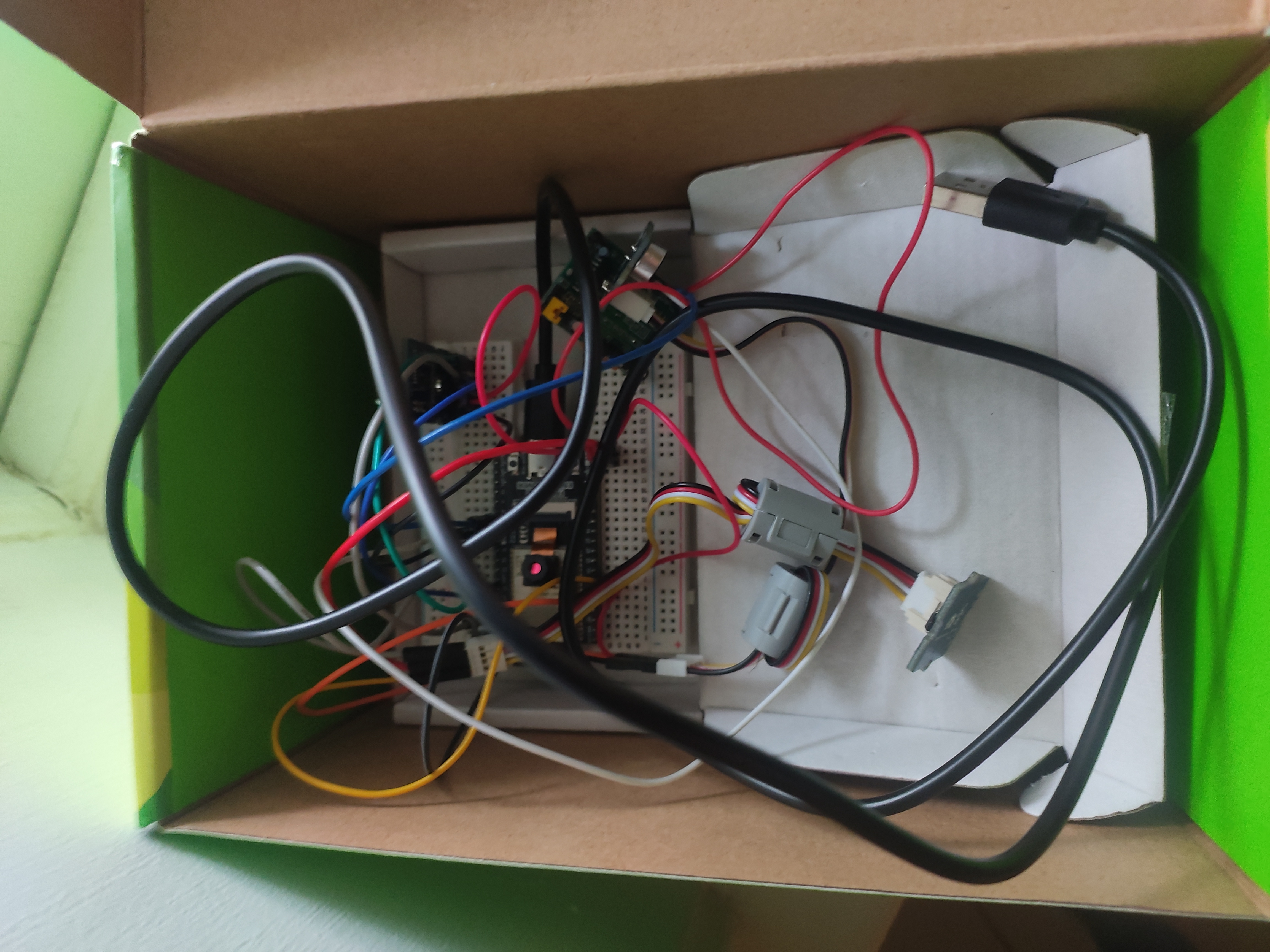
True setup
-
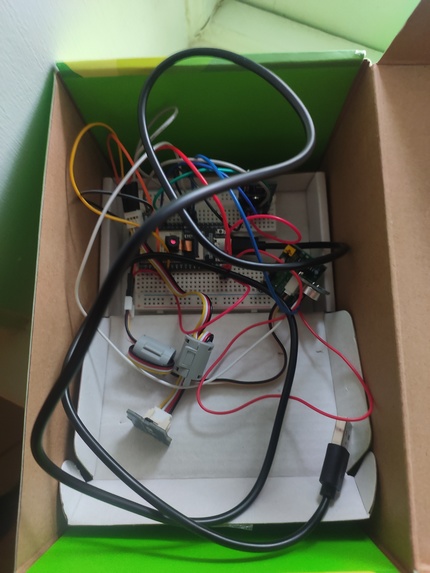
Compact Hardware Kit
Inspiration
Having seen the potential attack vectors that even air-gapped systems are susceptible to, we set out to create an application that can help people combat physical and network vulnerabilities simultaneously. Negative_ does exactly that. It monitors the physical environment to inform users of potential physical intrusions while also monitoring the network for potential network security flaws. Moreover, negative_ has the added benefit of providing users with information about their physical environment in benign contexts, helping users make informed decisions about their environmental decisions such as HVAC settings and more. It can also be easily tweaked to work directly with smart thermostats in the future, exacerbating the sustainability benefits of the system.
What it does
By utilizing Wireshark and a low-cost microcontroller, negative_ corroborates data from both data streams to help users better understand both their network and physical environment. Additionally, it is connected to an LLM to provide more insights into what the data provided means for the end user. By default, the LLM also reads Wireshark data to create alerts about potential network or physical intrusions.
How we built it
Negative _ is extremely efficient and low-cost, using vite for the front end, Python for the back end, and a hardware module powered by an ESP32. It only requires an MQTT broker of some sort to link the ESP32 to the server the application runs on.
Challenges we ran into
The biggest challenge we ran into was time. There simply wasn't enough! We tried our best in the given time and we're happy with what we put together.
Accomplishments that we're proud of
We finished the project! It was honestly a large undertaking and we're extremely proud to have made a functioning project in this short amount of time!
What we learned
Web development and design are hard... Especially under time pressure, but as time goes on, we're sure that we will get immensely better!
What's next for negative_
We think that there is a way forward for smart thermostat integration, but we are still exploring the implications of this, specifically with respect to security.
Built With
- esp32
- mqtt
- nextjs
- openai
- python
- typescript
- vite


Log in or sign up for Devpost to join the conversation.