Inspiration
In modern motorsport, teams drown in data but starve for insight. Traditional telemetry tools are reactive—they tell you where you lost time yesterday. We wanted something predictive. Inspired by “Ghost Cars” in racing games, we asked: What if we could generate a Ghost Car for a lap that hasn’t happened yet? And what if AI could simulate how a driver would perform under tomorrow’s weather and track conditions?
What it does
Negative Delta is an AI-powered telemetry platform that visualizes future performance.
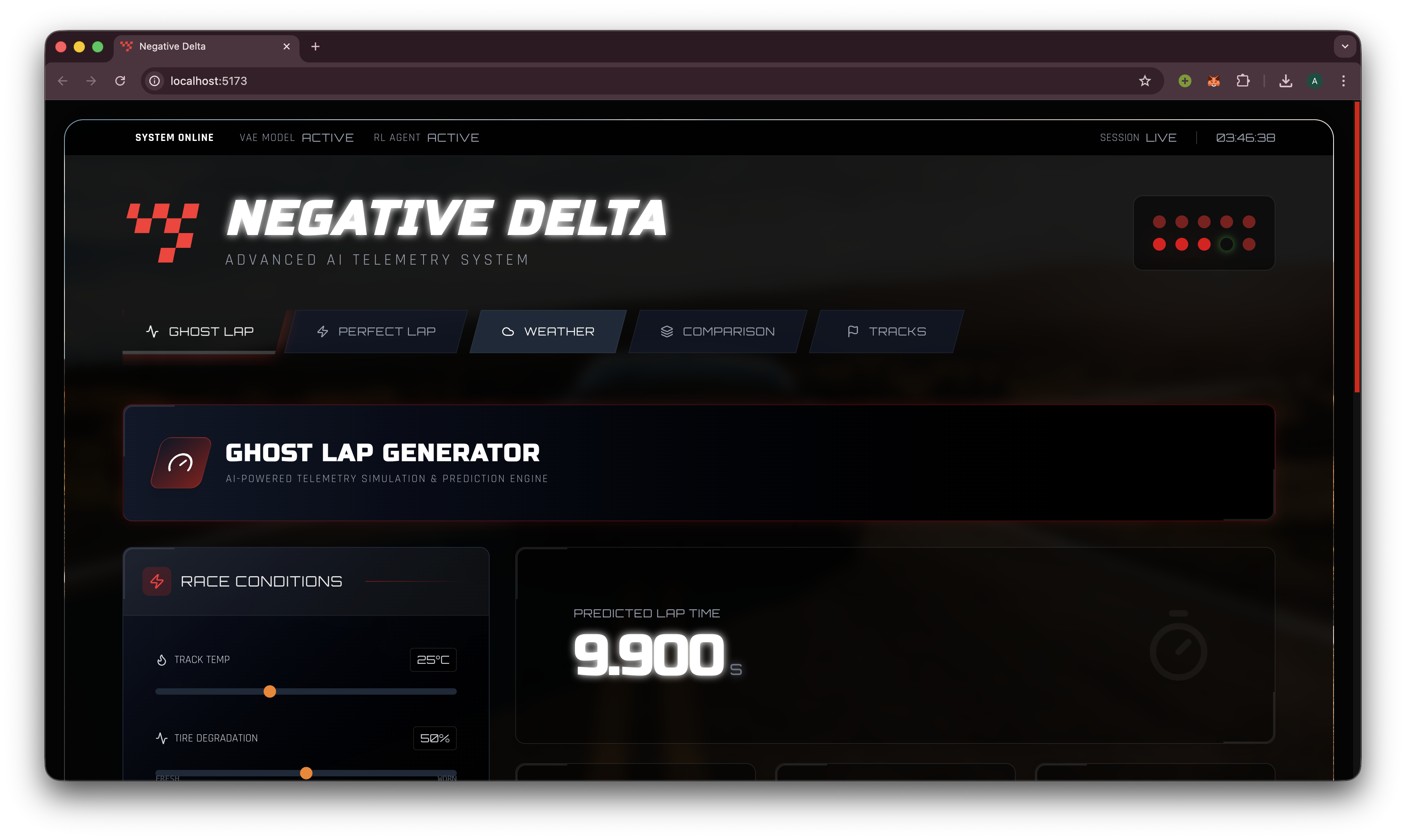
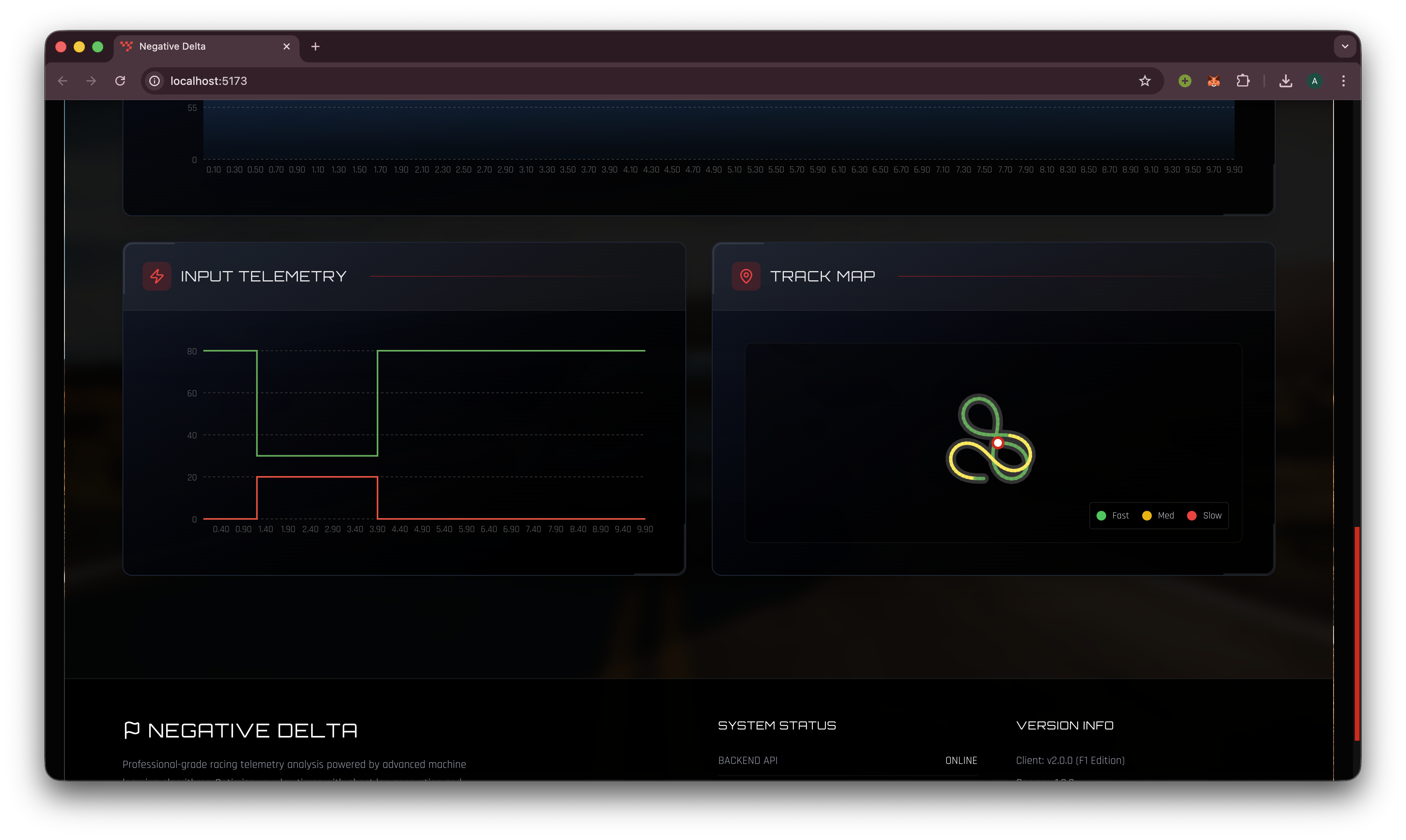
- Neural Ghost: A Variational Autoencoder (VAE) that “hallucinates” a realistic predictive lap using inputs like tire age, fuel load, and driver aggression. It outputs speed, steering, and braking profiles for every meter of the track.
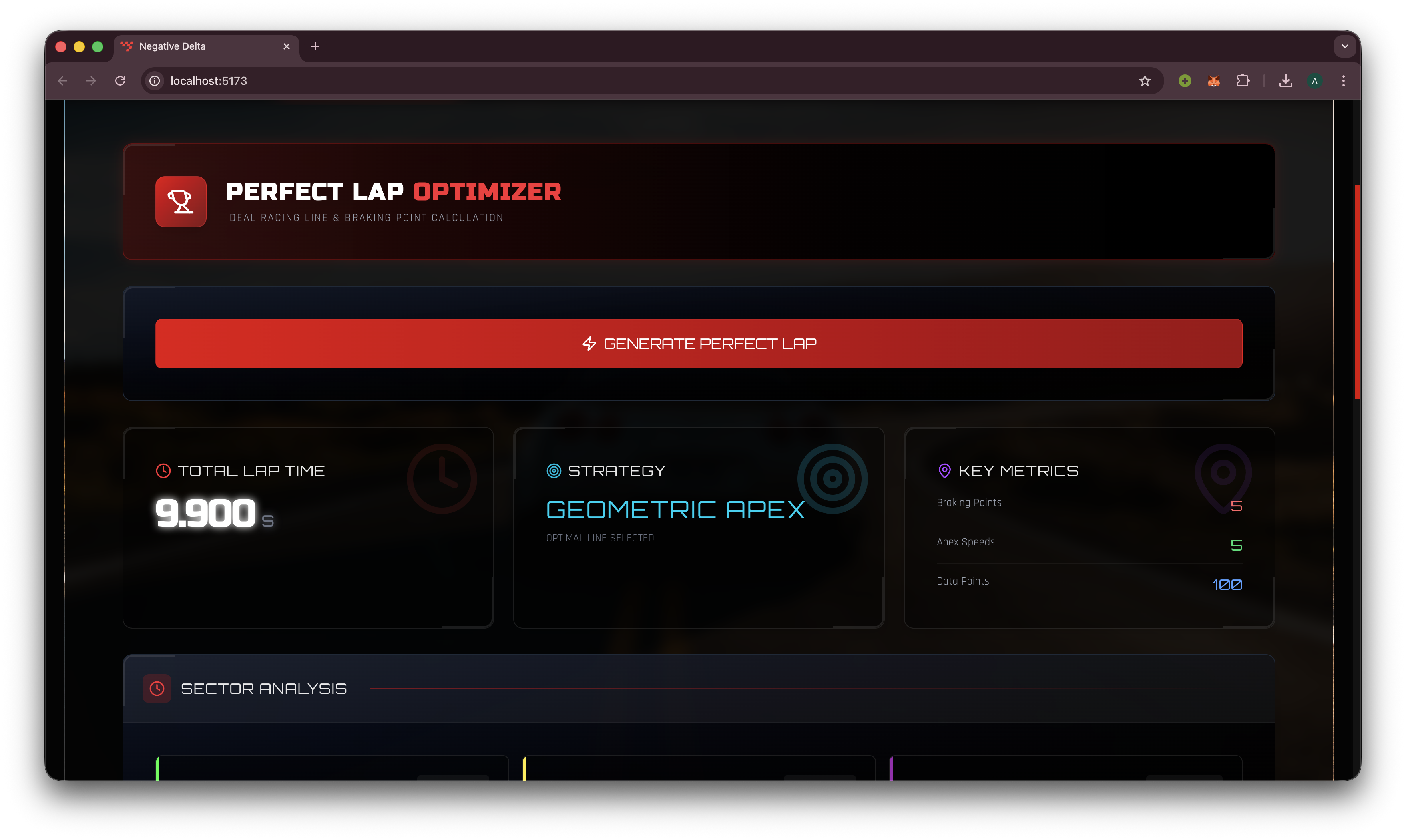
- Perfect Ghost: A PPO Reinforcement Learning agent that computes the mathematically optimal racing line—your theoretical maximum.
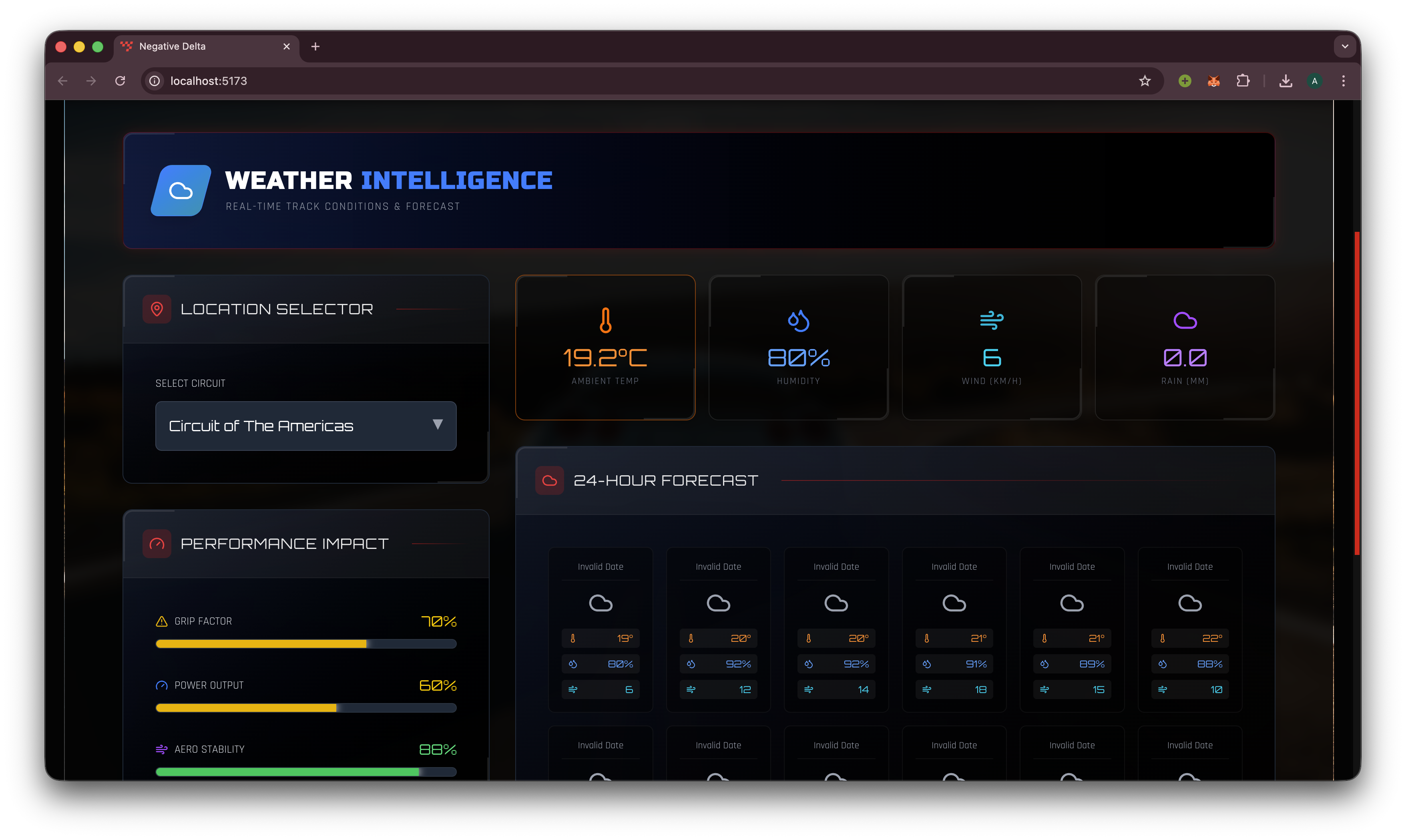
- Live Weather Intelligence: Integrates OpenMeteo data to adjust grip, drag, and air density in real-time.
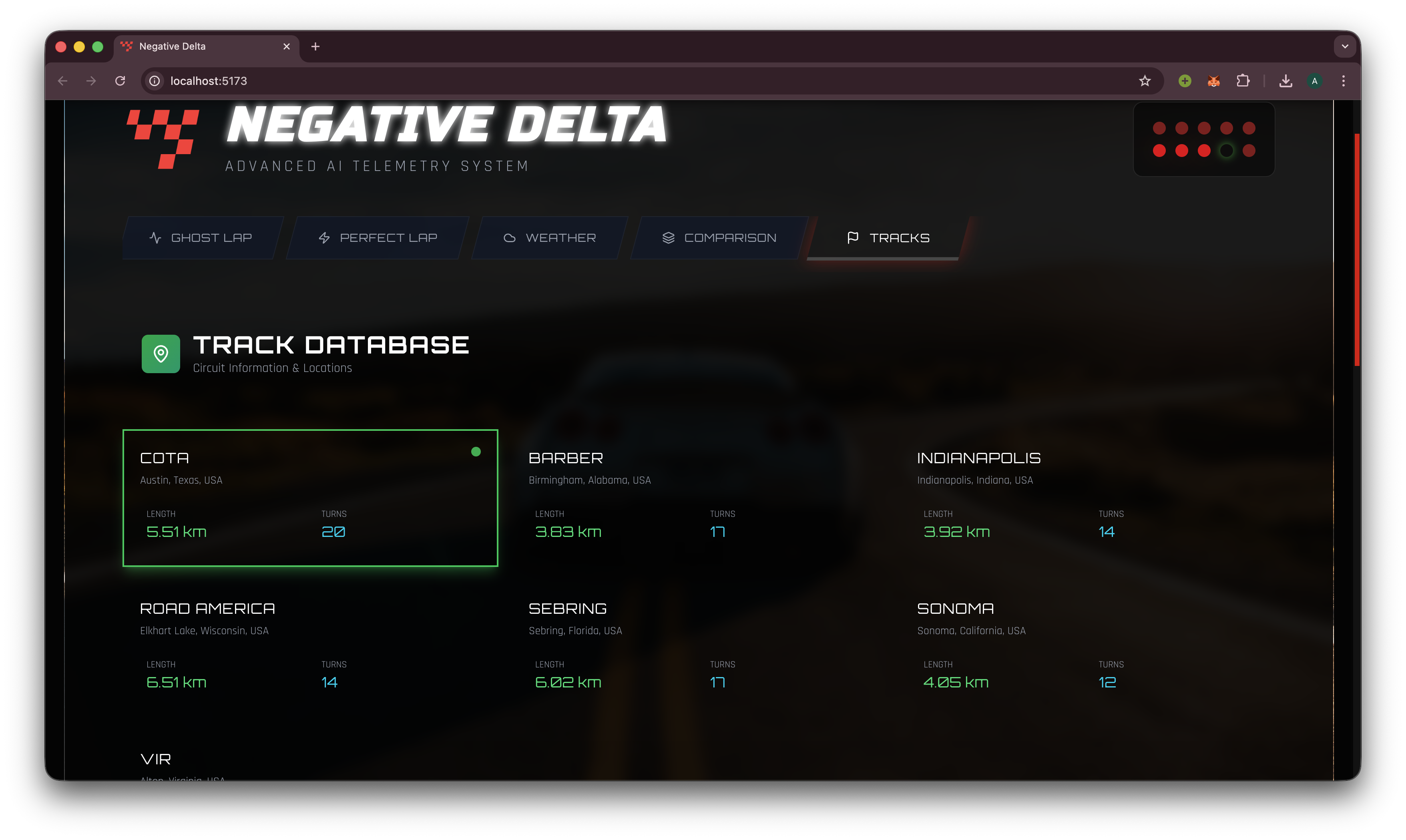
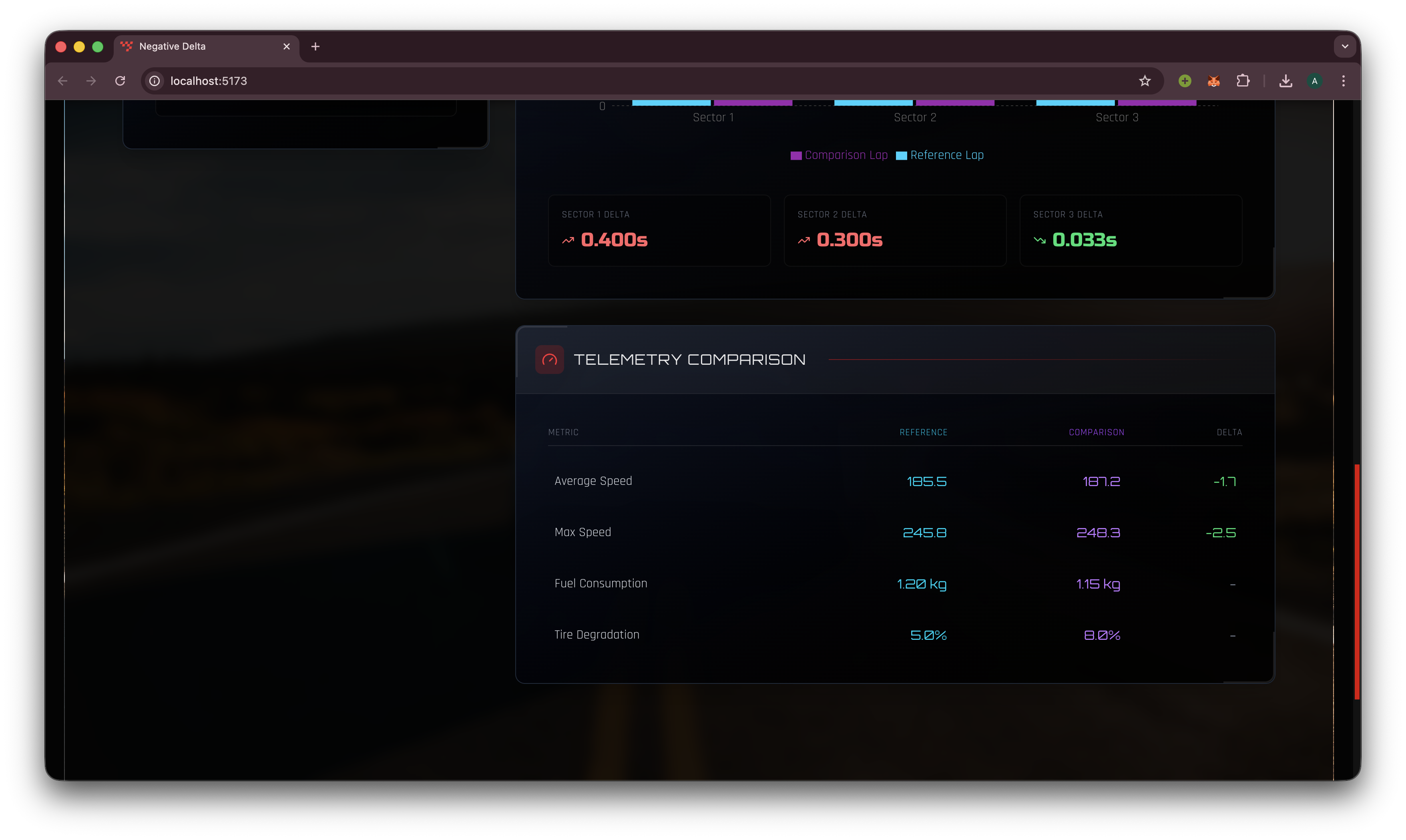
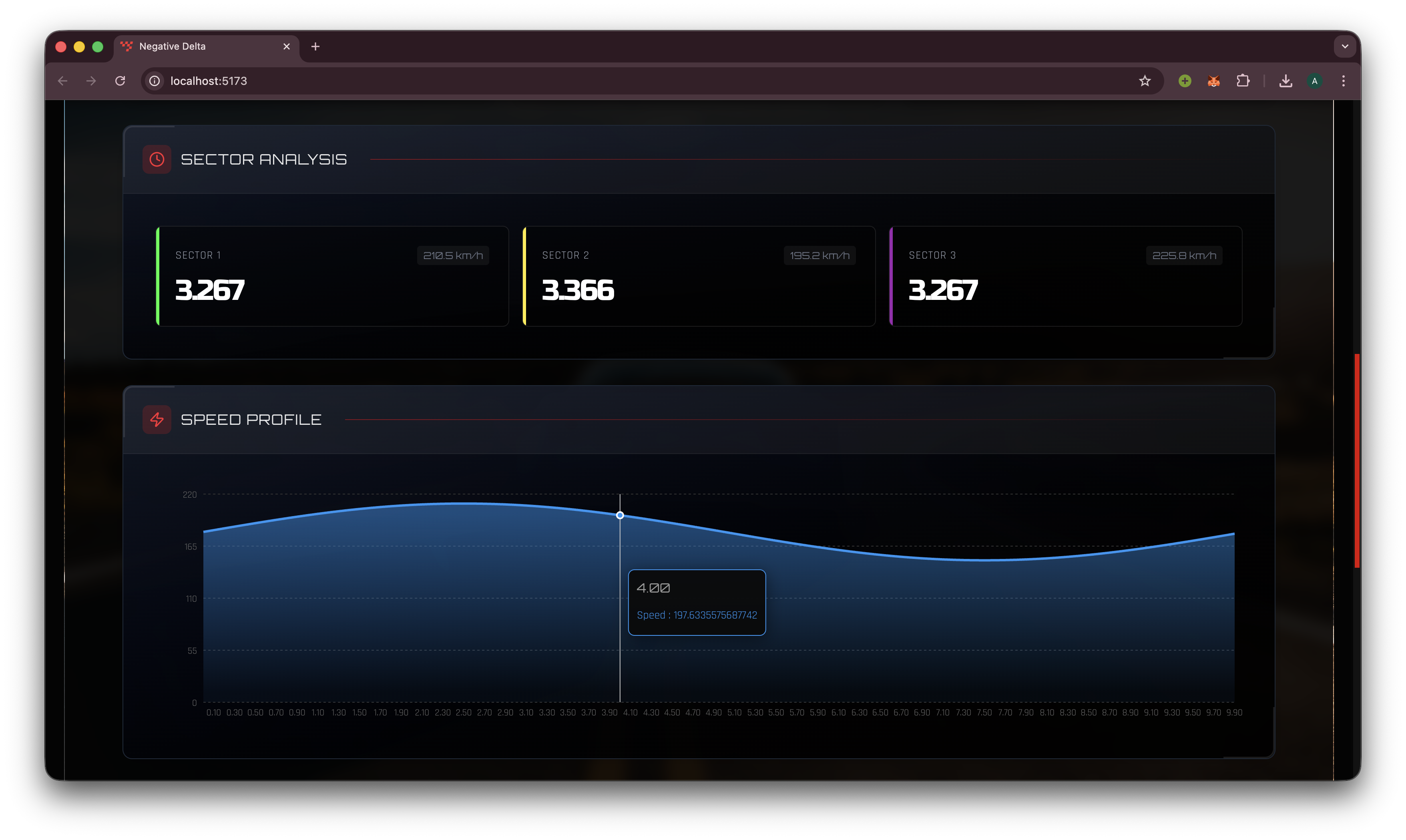
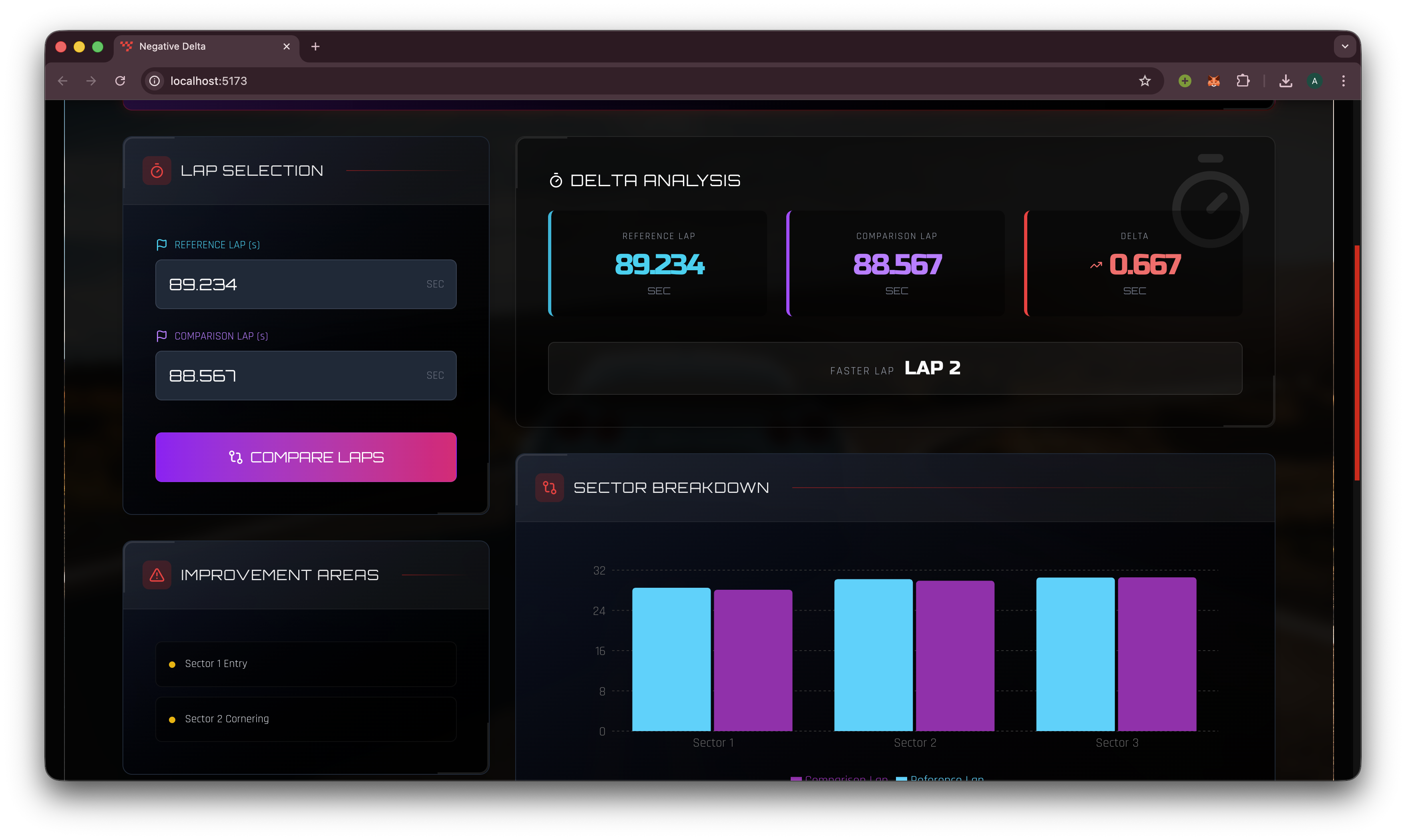
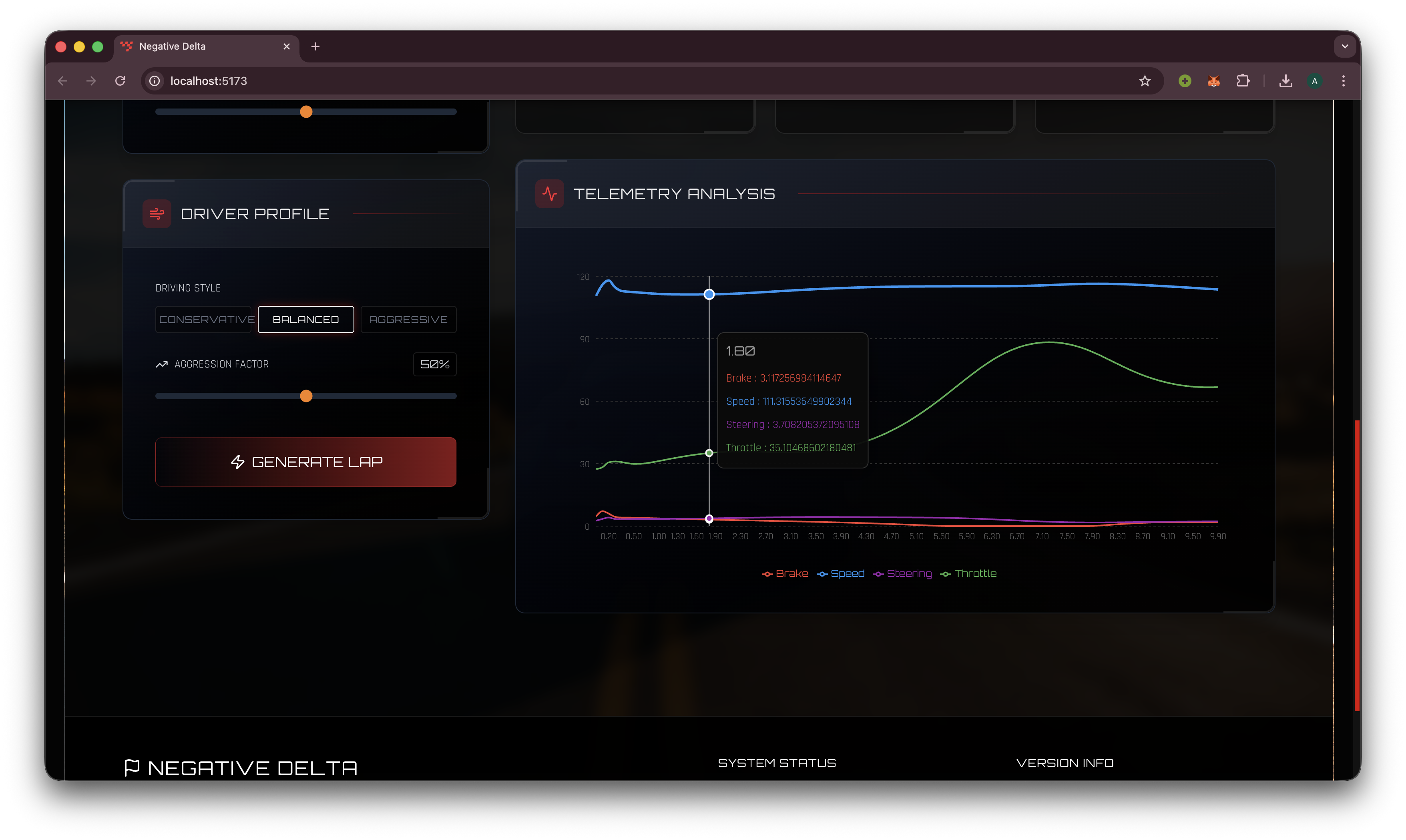
- Interactive Dashboard: A premium F1-inspired interface for comparing predicted laps against the perfect lap through dynamic charts and track visualizations.
How we built it
We built a full-stack system anchored by a custom machine learning engine.
- Machine Learning:
- A PyTorch VAE trained on 38,000+ telemetry sequences to learn human driving patterns.
- A PPO RL agent trained in a physics simulation to compute optimal racing lines.
- A PyTorch VAE trained on 38,000+ telemetry sequences to learn human driving patterns.
- Backend: FastAPI handles inference, weather integration, and data processing.
- Frontend: A high-performance React (Vite) dashboard using Tailwind CSS, Recharts for telemetry visuals, and Anime.js for smooth, broadcast-style animations.
- Data Pipeline: We processed gigabytes of Toyota GR Cup telemetry, cleaning, normalizing, and smoothing noisy real-world signals.
Challenges we ran into
- Hallucinated Physics Errors: Early VAEs generated impossible behavior (accelerating while braking). We redesigned loss functions and added physical constraints to fix this.
- Sensor Noise: GPS drift and jagged inputs corrupted early models. Kalman filtering and smoothing algorithms were essential.
- Performance vs. Aesthetics: Rendering thousands of telemetry points while maintaining an F1-grade animated UI required deep optimization in React.
Accomplishments that we're proud of
- 99.5% Model Accuracy: Our Neural Ghost predicts lap times within tenths while preserving each driver’s unique style.
- Broadcast-Level UI: A dashboard that feels like real F1 pit wall software—not a spreadsheet.
- Seamless Architecture: A tightly integrated ML → FastAPI → React pipeline with real-time weather adjustments.
What we learned
- Physics Is Brutal: Small shifts in track temperature or air density radically affect lap time.
- Generative AI for Time Series: VAEs can model complex, multi-dimensional telemetry far better than we expected.
- Clean Data Wins: The biggest gains came not from model tweaks but from better-prepared telemetry.
What’s next for Negative Delta
- Real-Time Track Mapping: Automatically generate track geometry from telemetry instead of static maps.
- Sim-Racing Integration: Plugins for iRacing, Assetto Corsa, and ACC to bring predictive ghosts into esports.
- Team Strategy Mode: Multi-car simulations predicting tire degradation, pit windows, and race strategy under dynamic conditions.
Built With
- anime.js
- python-(fastapi)
- pytorch-(vae-&-rl-models)
- react-(vite)
- recharts


Log in or sign up for Devpost to join the conversation.