Inspiration
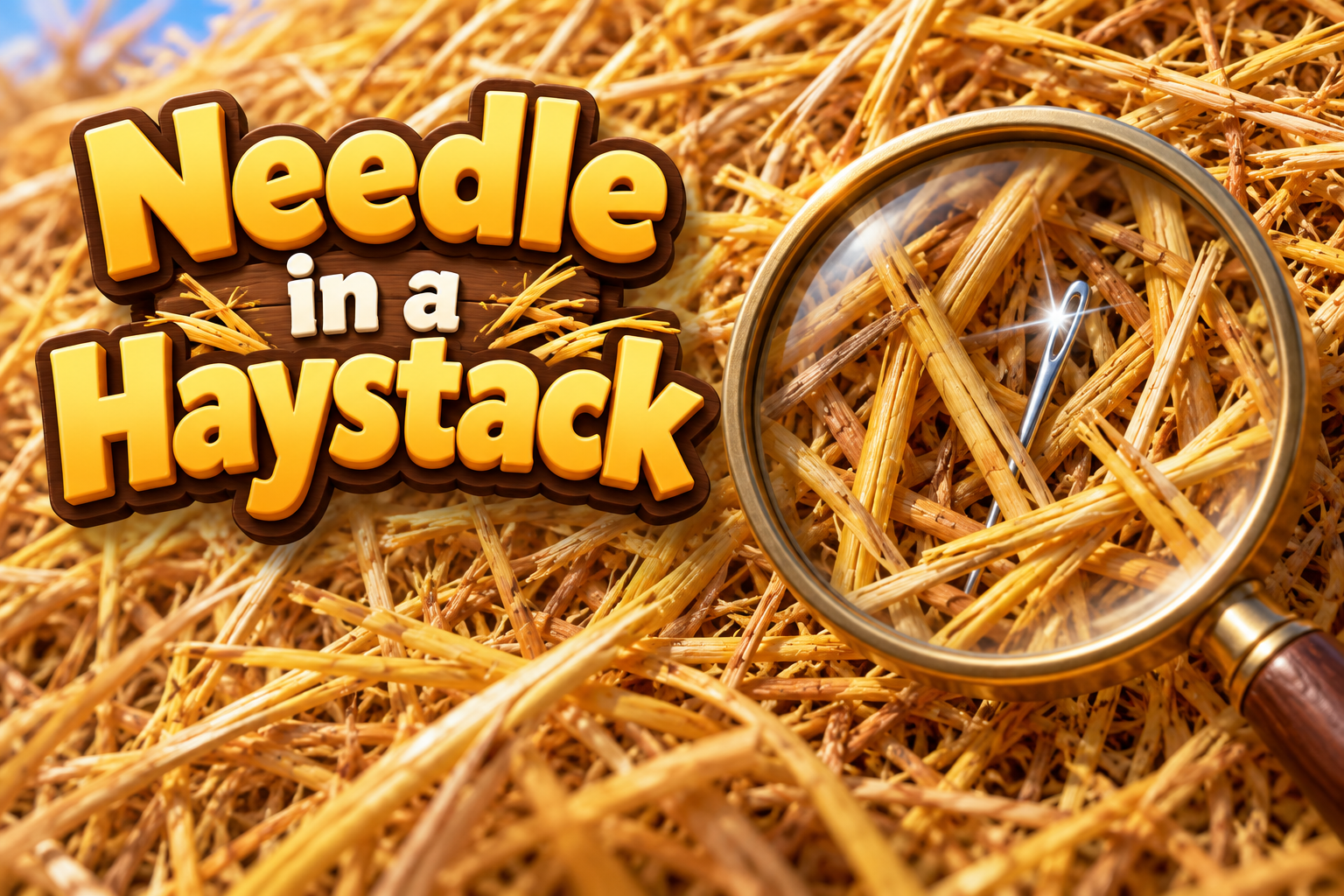
I wanted to take one of the oldest clichés for an impossible task—finding a needle in a haystack—and actually make it fun.
The idea started with a simple question: What if the haystack was real, physical, and enormous? Instead of simply clicking a button and watching numbers go up, I wanted players to actually interact with the hay, feel the process of searching, and slowly transform that tedious task into a massive, automated operation.
I was inspired by the satisfaction of idle and incremental games, where a tiny amount of progress can eventually grow into something ridiculous. I wanted to combine that progression with the tactile satisfaction of physically moving, sorting, and uncovering things.
The result is a game built around a deceptively simple goal: find every needle.
What it does
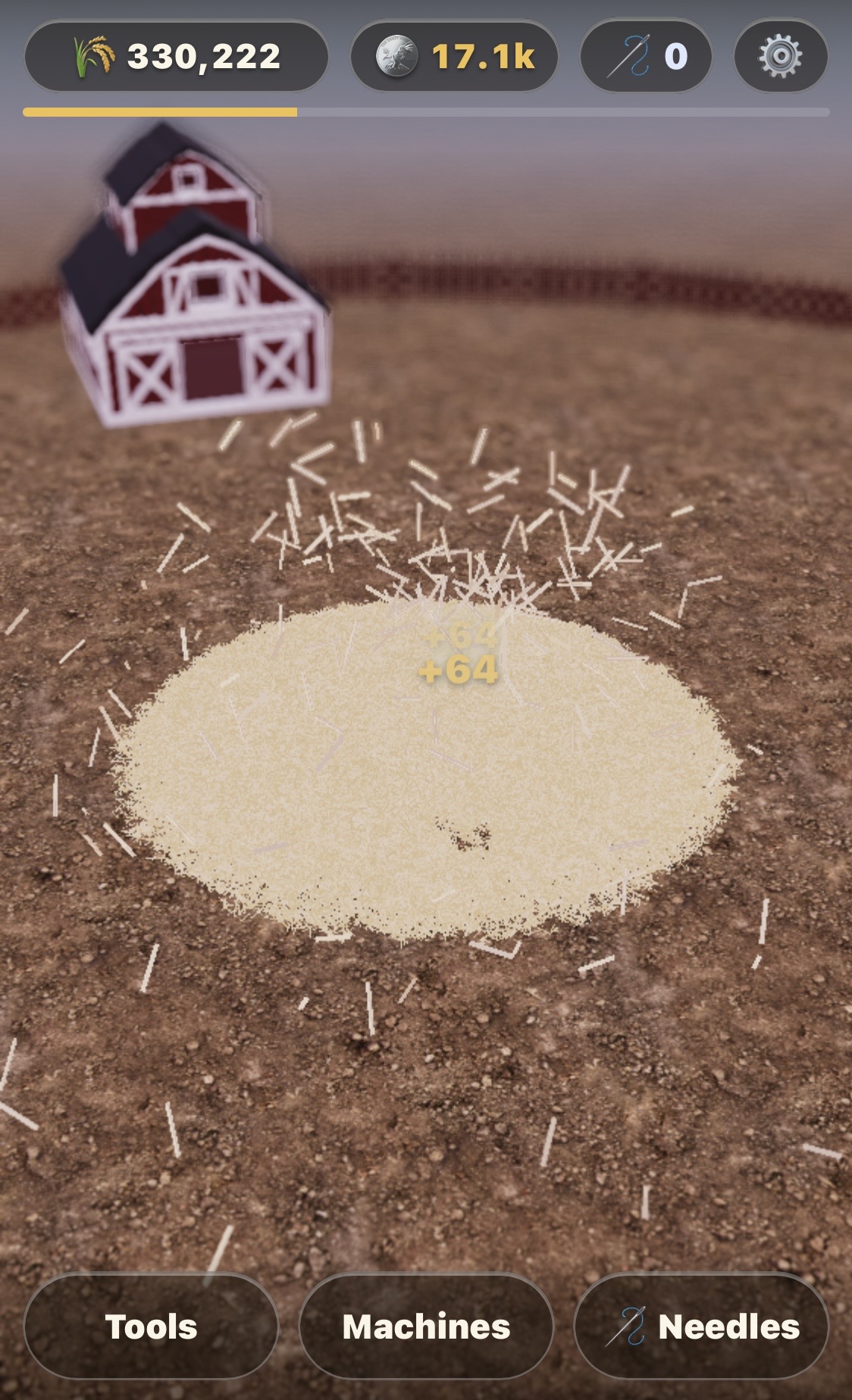
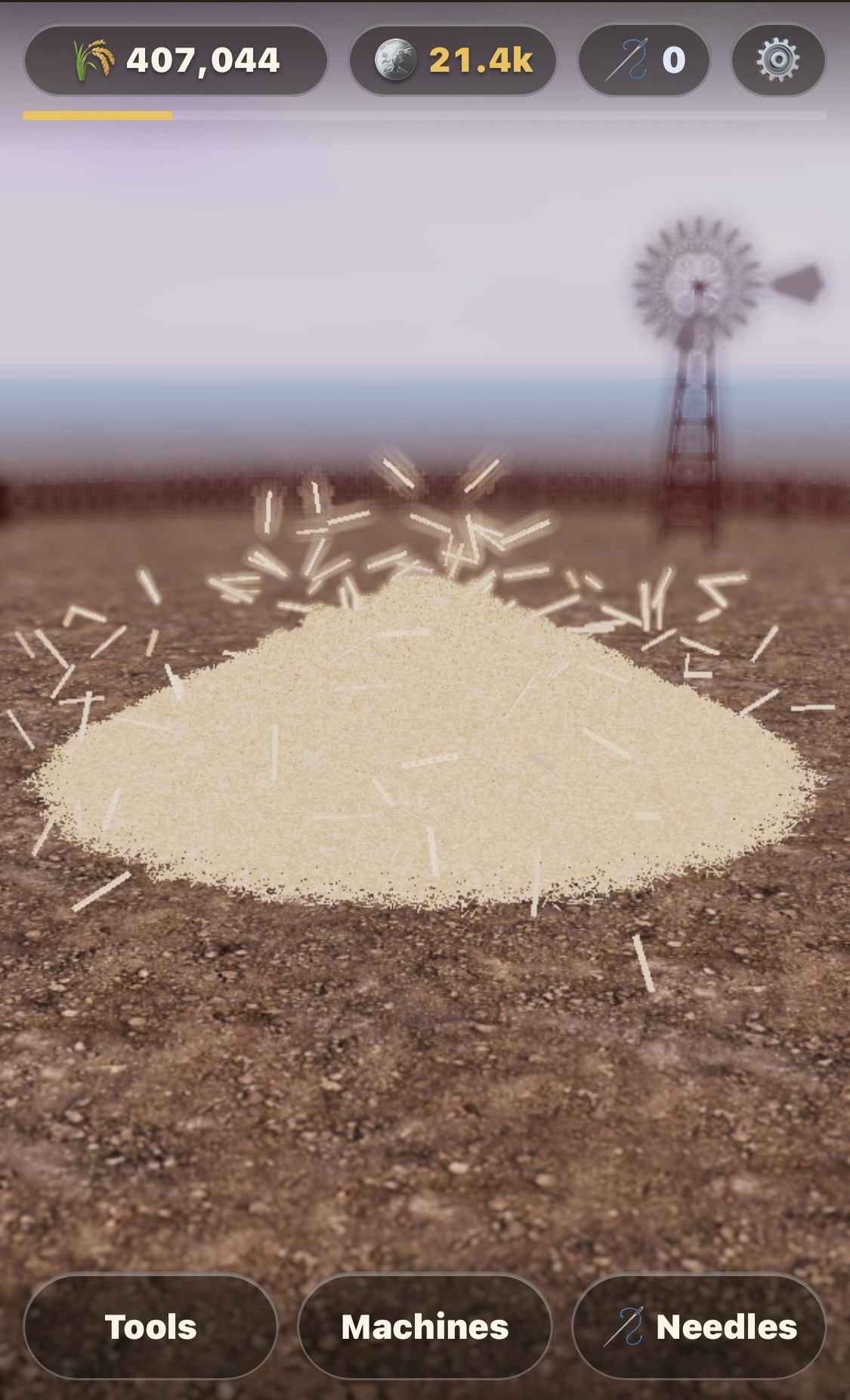
Needle in a Haystack is a tactile idle-management game where players dig through increasingly massive physical haystacks to find hidden needles.
You begin with nothing but your hands. You grab and sort handfuls of hay, earning coins as you work. Those coins let you purchase better tools, bigger and faster ways to move hay, and eventually machines and farmhands that automate the process.
As your operation grows, so does the challenge. Each new haystack becomes dramatically larger, with more needles hidden somewhere inside.
And there's an important catch: emptying the haystack isn't the goal. You simply have to find every needle.
That clear objective creates a satisfying loop of searching, upgrading, automating, and searching again—turning an impossible chore into an increasingly ambitious operation.
How I built it
I built the game around the idea that the hay itself should feel like the star of the experience. Rather than treating a haystack as a static object, I designed the gameplay around physically interacting with and removing hay.
The core progression starts with direct player interaction and gradually introduces tools, machines, and workers. This lets the player experience the entire evolution of the operation—from personally searching through hay to eventually managing a system capable of doing the work on its own.
I focused on making each upgrade feel meaningful. The goal wasn't simply to make numbers bigger; it was to make the player's operation visibly and noticeably more capable.
I also designed the game with future expansion in mind, allowing the basic haystack-and-needle concept to support larger haystacks, new equipment, collectibles, shared discoveries, seasonal content, and deeper physical interactions.
Challenges I ran into
The biggest challenge was making something as simple as moving hay feel satisfying.
The premise sounds simple, but creating an interaction that feels good, communicates progress, and remains fun as the scale increases required a lot of iteration. I had to balance the tactile experience of doing the work myself with the progression toward automation.
Another challenge was maintaining the central tension of the game: the player needs to feel like they're making constant progress while still having that nagging thought that there could be one more needle hiding somewhere.
I also had to think carefully about scale. A haystack that feels enormous should create excitement rather than frustration. The progression therefore needs to make players feel increasingly powerful while continuing to give them a reason to tackle an even bigger stack.
Accomplishments that I'm proud of
I'm proud that I was able to take such a familiar phrase and turn it into a gameplay loop that feels surprisingly compelling.
“Find every needle” is immediately understandable, but the combination of tactile interaction, incremental upgrades, automation, and increasingly massive haystacks gives that simple idea a lot of room to grow.
I'm especially proud of the progression from doing the work yourself to building the operation that does it for you. Starting with your hands and eventually watching machines and workers take over creates a strong sense of ownership and accomplishment.
Most importantly, I've created a game where the player can look at an enormous pile of hay and genuinely think:
“I need to find every single one.”
What I learned
I learned that a strong game mechanic doesn't necessarily need to be complicated. Sometimes a very simple goal can become compelling when the interaction, progression, and feedback around it are satisfying.
I also learned how important it is for upgrades to change the way the player experiences the game, rather than simply increasing a number. Moving from hands to tools to machines makes the player's progress feel tangible.
Most of all, I learned that scale can be a mechanic. Watching a tiny task grow into an enormous operation gives players a reason to keep going. The haystack getting bigger isn't just a difficulty increase—it's part of the fantasy.
What's next for Needle in a Haystack
The prototype is just the beginning.
My next step is to expand the progression system and make the operation feel increasingly alive. I'd like to introduce more specialized tools and machines, different types of haystacks, deeper automation, and more interesting ways for players to locate those elusive needles.
I'm also excited about the possibility of seasonal discoveries, rare collectibles, and unusual needles worth hunting down.
Ultimately, I want to take the original joke—“finding a needle in a haystack”—and turn it into a game players genuinely can't stop playing.
Start with your hands.
Build the operation.
Find every needle.
Built With
- chatgpt
- claude


Log in or sign up for Devpost to join the conversation.