-
-
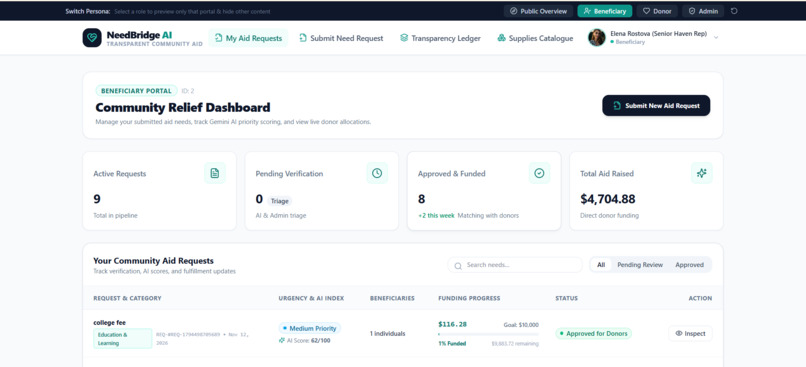
beneficiary page
-
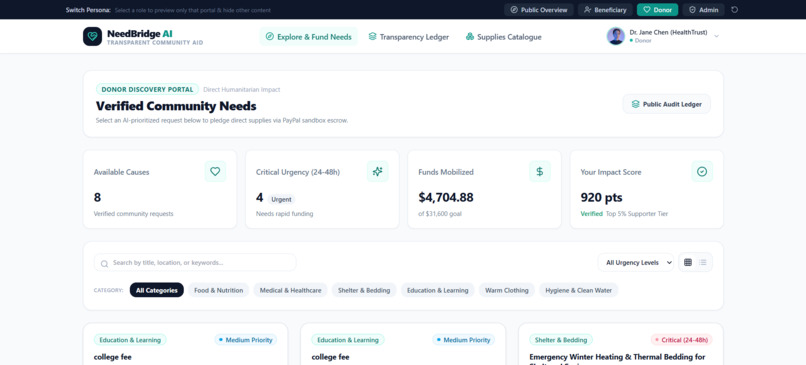
donor page
-
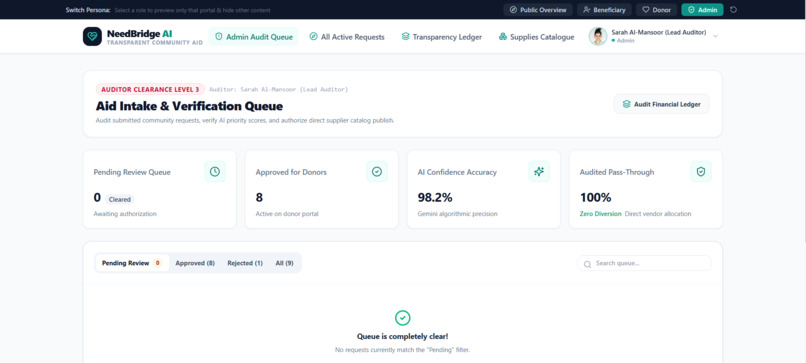
admin page
-
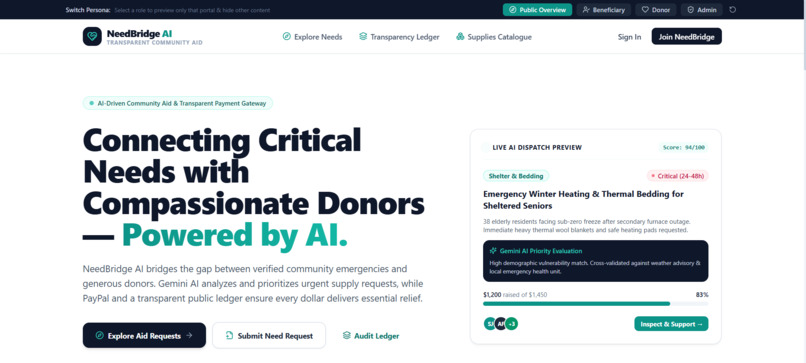
public overview page
-
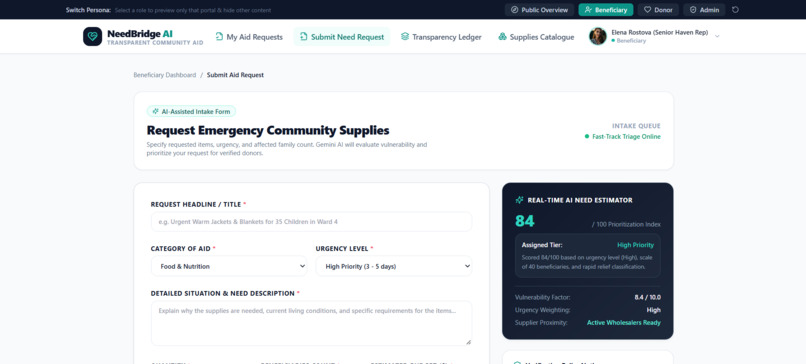
submit need request page
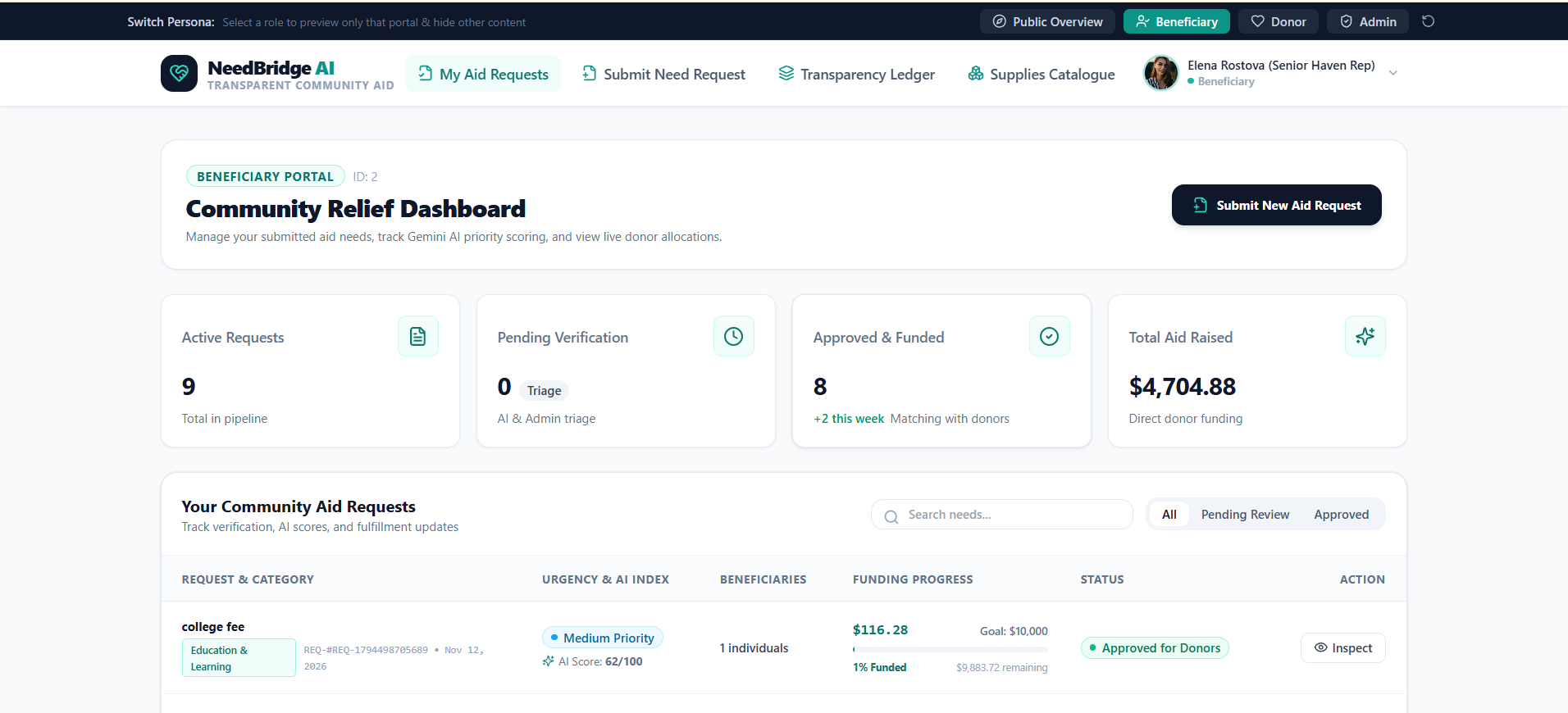
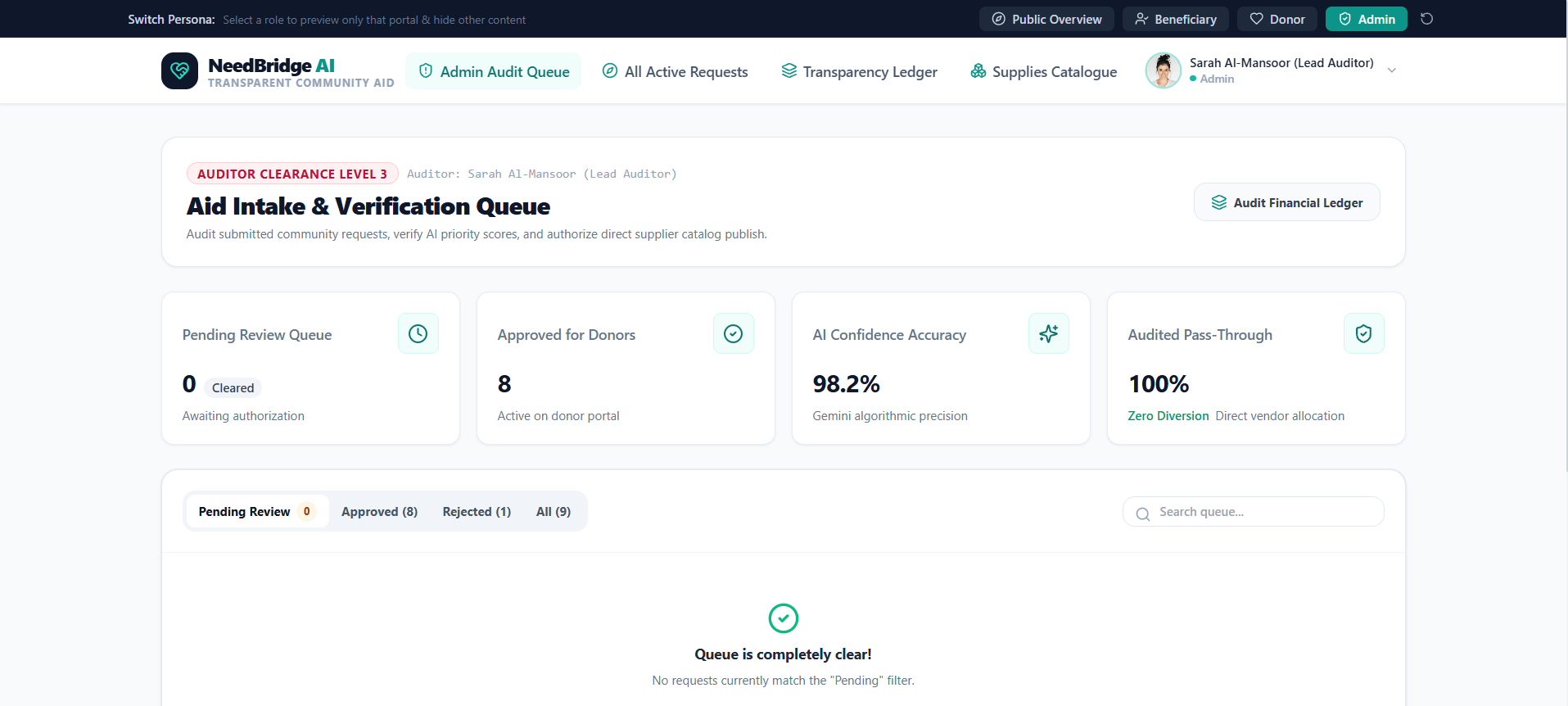
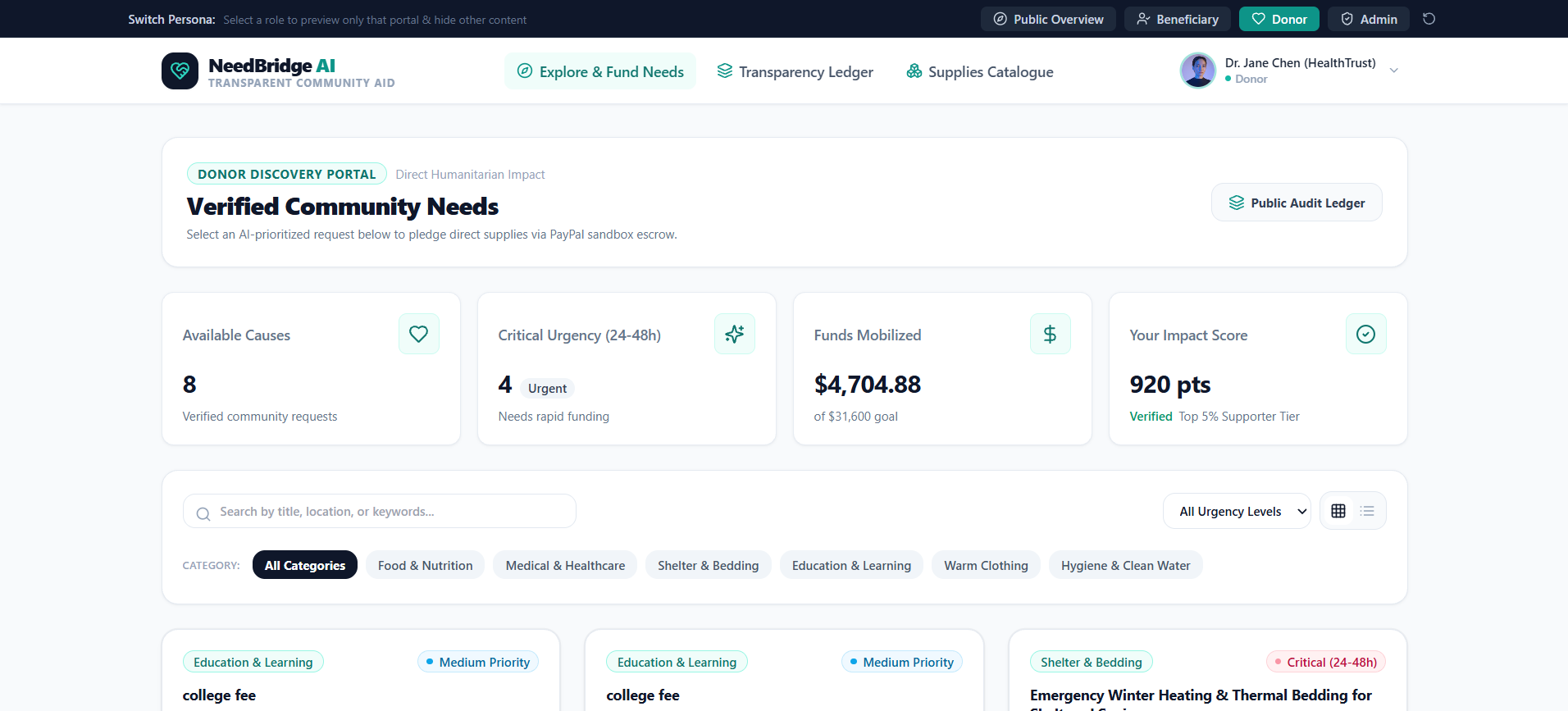
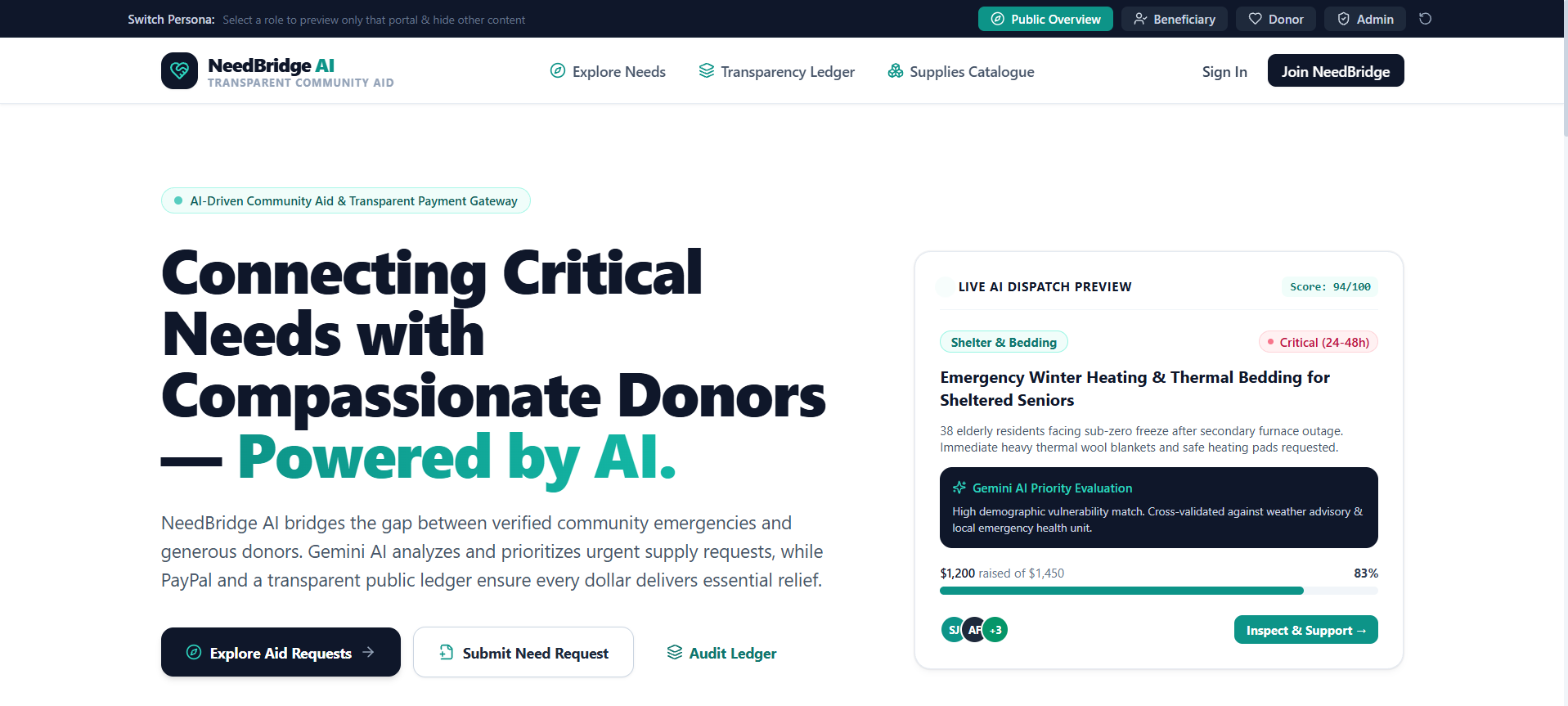
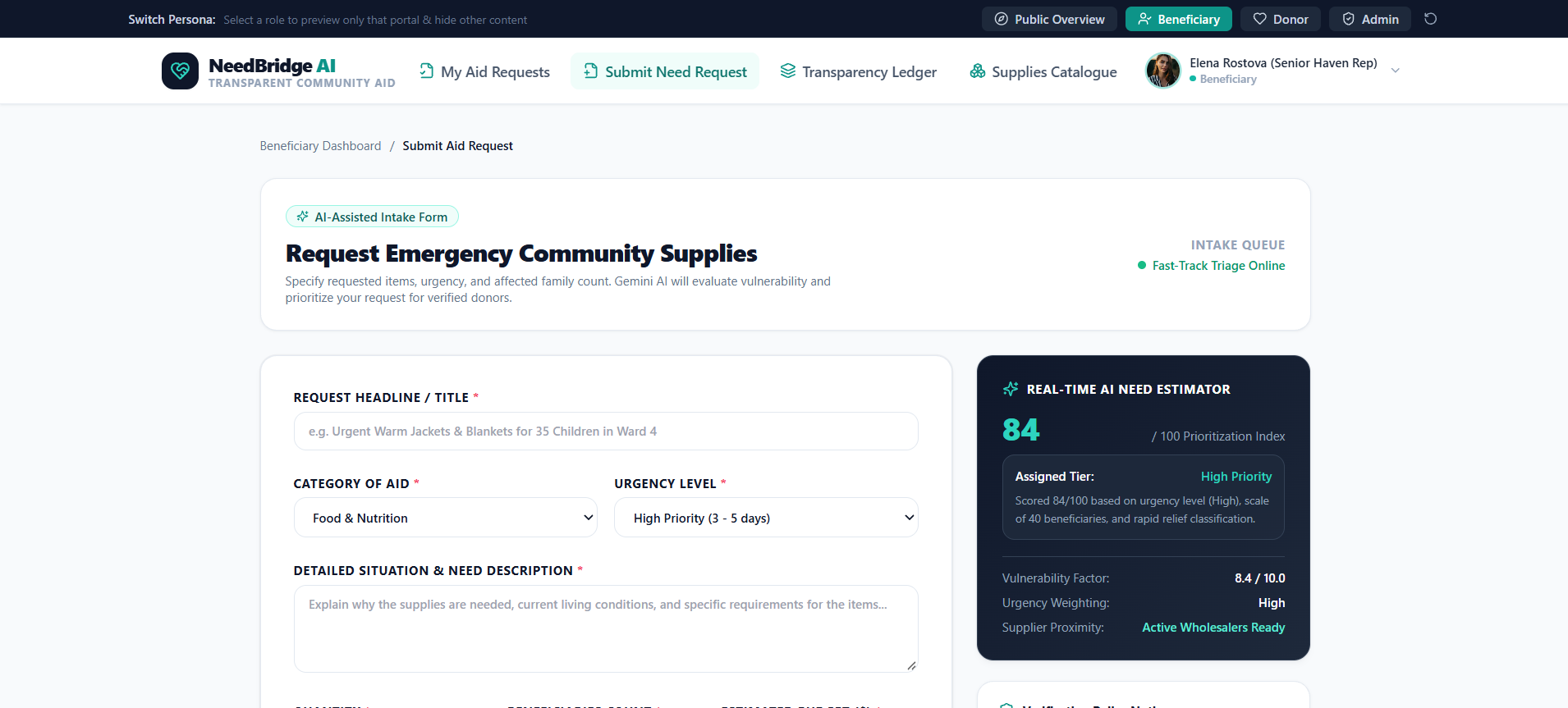
About the Project : NeedBridge AI is an intelligent humanitarian logistics and crisis-relief orchestration platform designed to eliminate aid diversion, bureaucratic bottlenecks, and opaque financial pipelines in emergency relief. Traditional charity models often struggle with slow manual triage and untraceable cash grants. NeedBridge AI bridges this trust deficit through a tripartite ecosystem: Beneficiaries & Field Coordinators submit structured crisis aid requests with intake documentation. Gemini 2.5 Flash AI Engine analyzes situational urgency, verifies vulnerability metrics, and deterministically prices supplies against certified wholesale supplier catalogs. Donors & Auditors pledge direct escrow funding via PayPal Sandbox, tracking every dollar in real time through an immutable, cryptographically chained public ledger.
What Inspired Us : During humanitarian emergencies—from extreme winter freezes in refugee shelters to localized flash floods—the difference between prompt relief and tragic loss is measured in hours, not weeks. We observed two recurring breakdowns in existing relief operations: The Information Chasm: Grassroots organizers lack direct channels to global donors and spend days filling out fragmented paperwork. The Donor Trust Deficit: Donors hesitate to give because they cannot verify whether their funds reach legitimate procurement channels or get consumed by administrative overhead. We asked ourselves: What if an AI could instantaneously triage emergency intake manifests, match them with verified suppliers at wholesale rates, and guarantee 100% pass-through transparency using an auditable cryptographic ledger? That vision became NeedBridge AI.
How We Built It : We engineered NeedBridge AI with a full-stack, enterprise-grade architecture: Frontend: React 18 with Vite, Tailwind CSS, Lucide icons, and an accessible role-switching interface (Beneficiary, Donor, Admin Auditor). AI Prioritization & Triage Engine: Powered by Google's Gemini 2.5 Flash, the system computes a multi-factor vulnerability score.
Challenges We Faced : Deterministic Pricing vs. Generative LLMs: LLMs can hallucinate pricing. We solved this by providing Gemini with strict database inventory schemas via system prompts, forcing the model to output deterministic catalog references rather than arbitrary financial estimates. CORS Preflight & Hybrid Authentication: Supporting offline hackathon judge reviews alongside real PostgreSQL backends triggered CORS preflight challenges with custom headers (x-user-role, x-user-email). We resolved this by encoding role context within standard HTTP Authorization: Bearer payloads and configuring explicit Express preflight allowlists. Resilient Dual-Tier State Synchronization: If a backend or database instance is unreachable, users should never face blocked interfaces. We developed a synchronization layer in RequestContext that pairs PostgreSQL REST endpoints with atomic localStorage fallbacks, ensuring donor contributions and admin status changes persist seamlessly through browser refreshes. What We Learned
Building NeedBridge AI demonstrated that the greatest value of AI in humanitarian work is not replacing human judgment, but accelerating human-in-the-loop decision-making. By transforming chaotic, desperate crisis descriptions into structured, catalog-matched relief packages, we can cut triage times from days to seconds while restoring complete transparency to donor philanthropy.
Built With
- artificial-intelligence
- axios
- cryptography
- escrow
- express-validator
- express.js
- fintech
- gemini-2.5-flash
- gemini-api
- humanitarian-tech
- javascript
- jwt
- lucide-react
- node.js
- paypal
- playwright
- postgresql
- react
- rest-api
- sha-256
- supply-chain
- tailwindcss
- transparency-ledger
- vite
