-
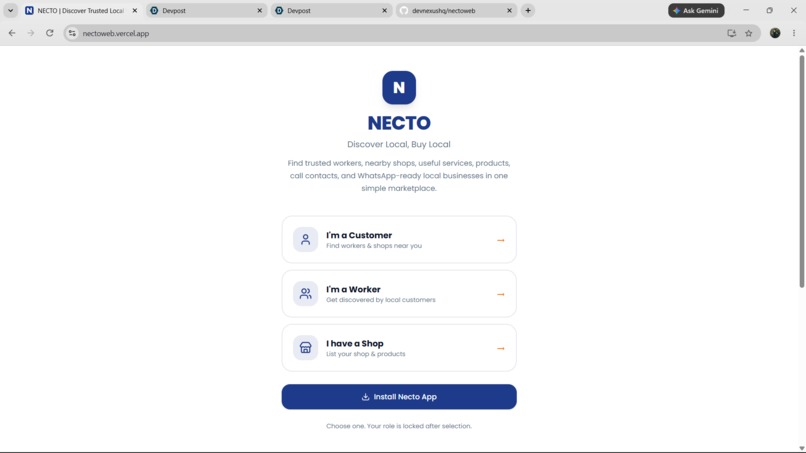
Home Page
-
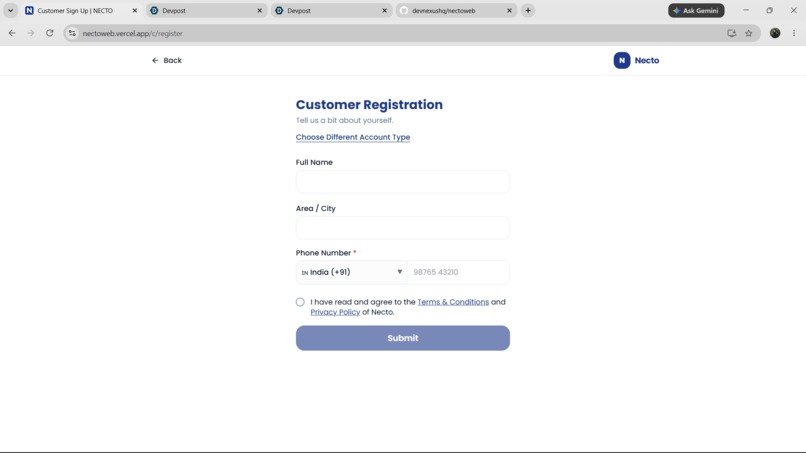
Customer Registration Page
-
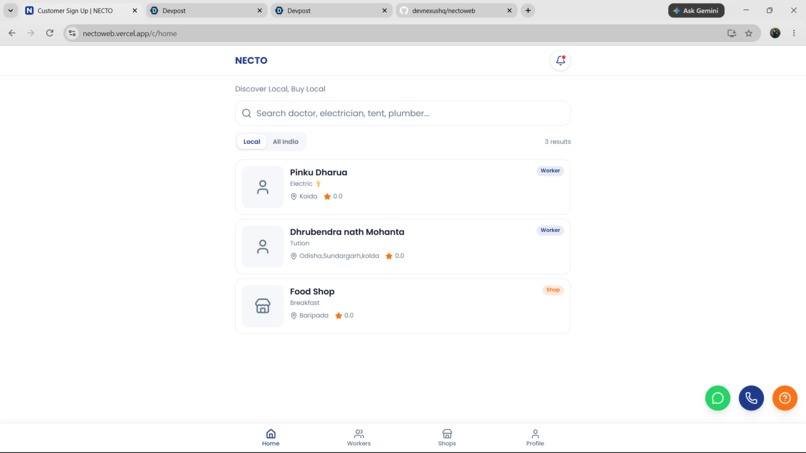
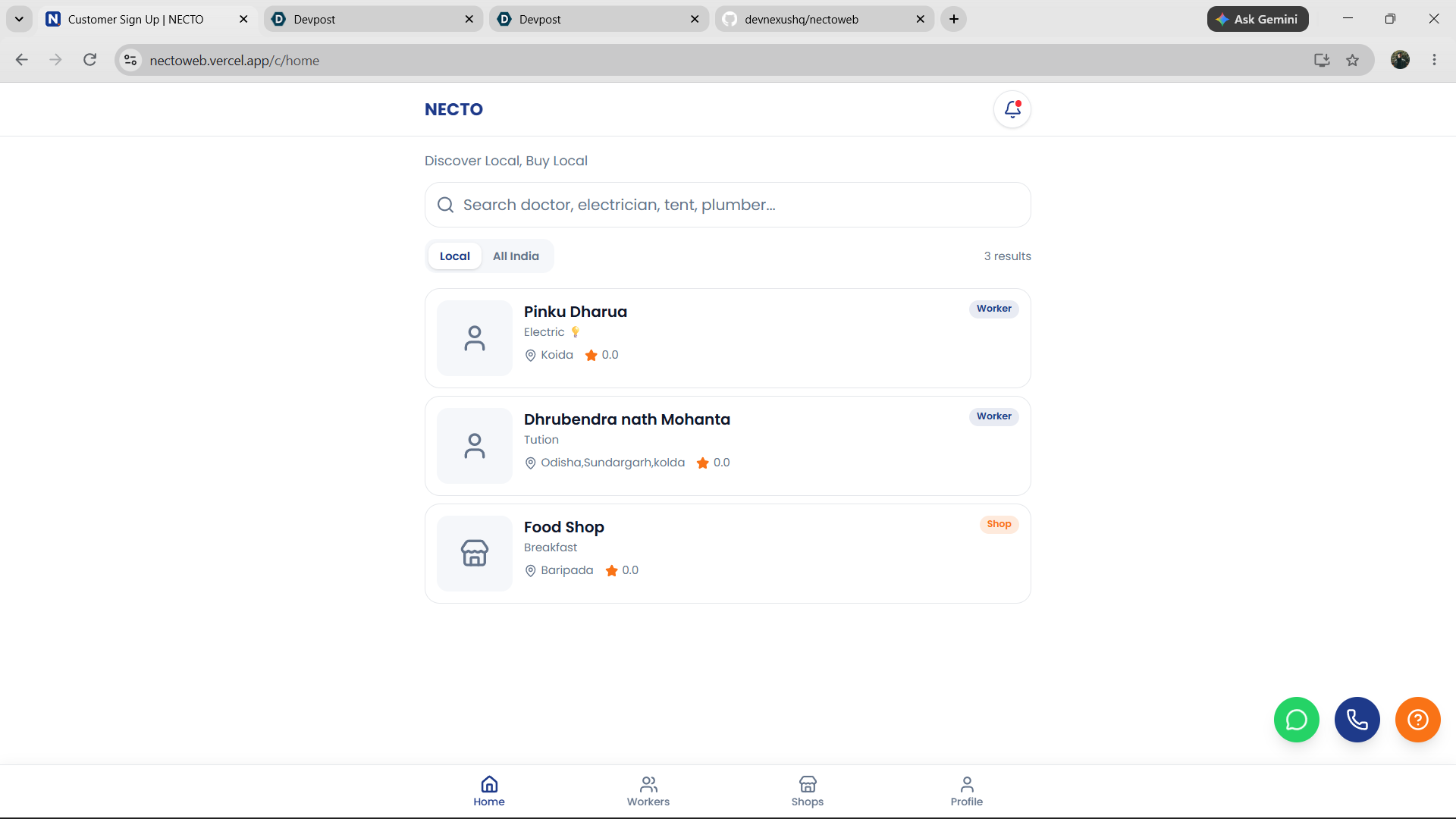
Customer Home Page/Dashboard
-
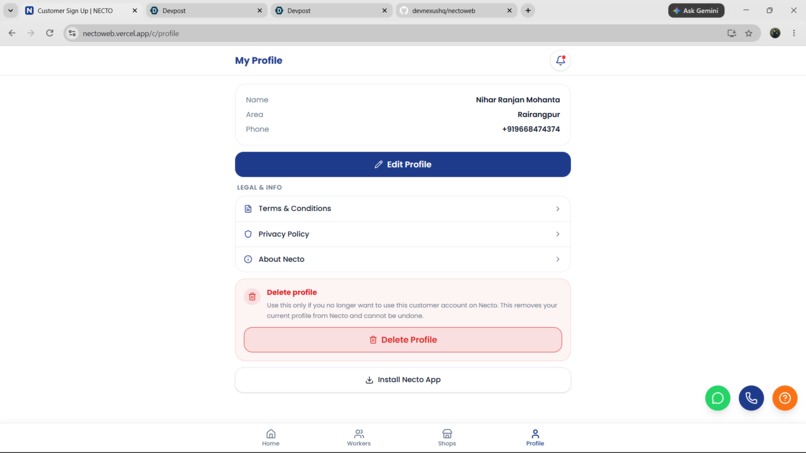
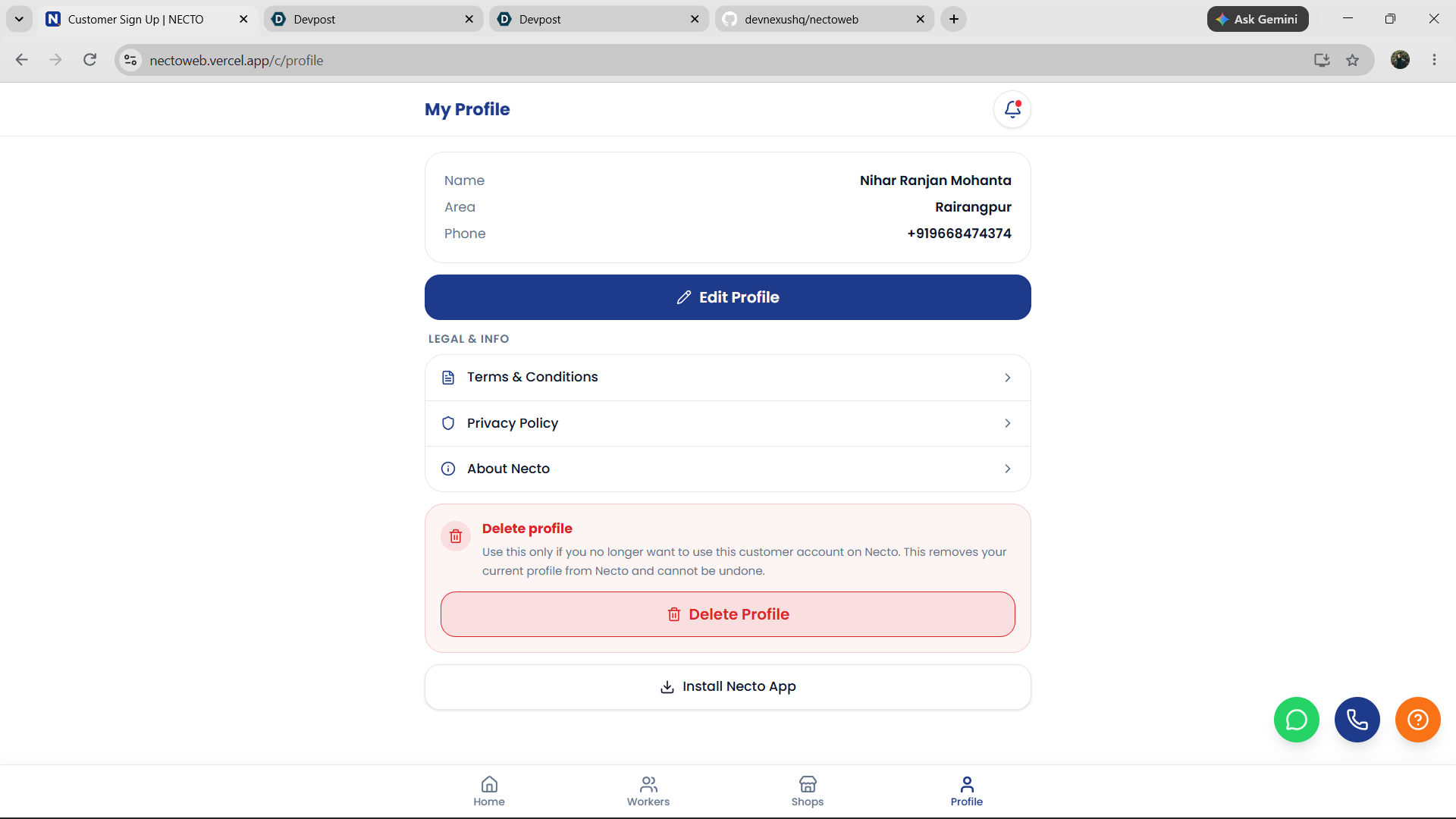
Customer Profile Page
-
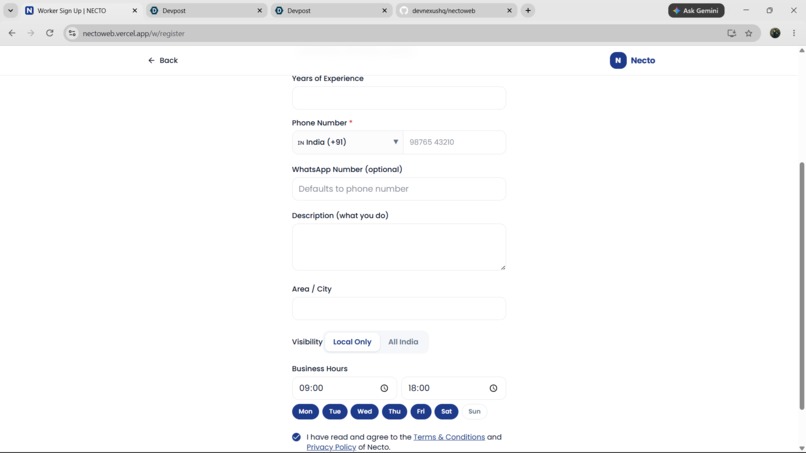
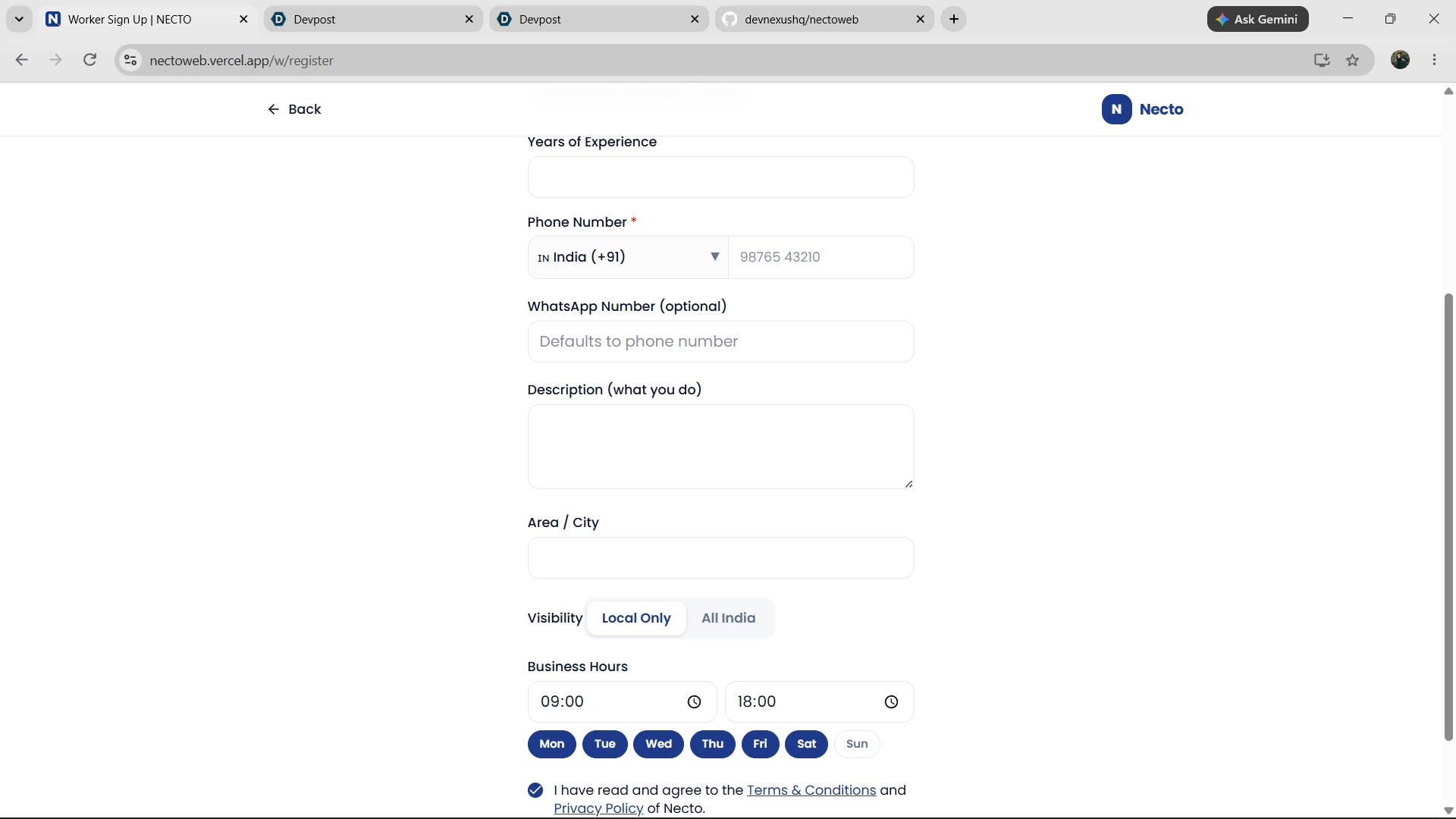
Worker Registration Page
-
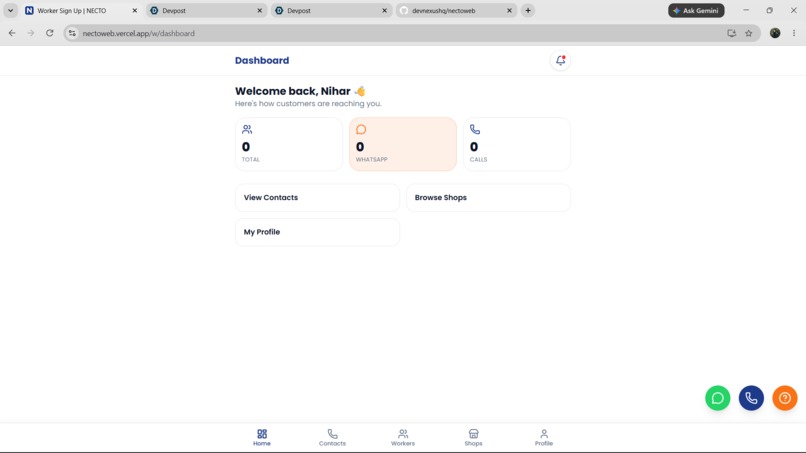
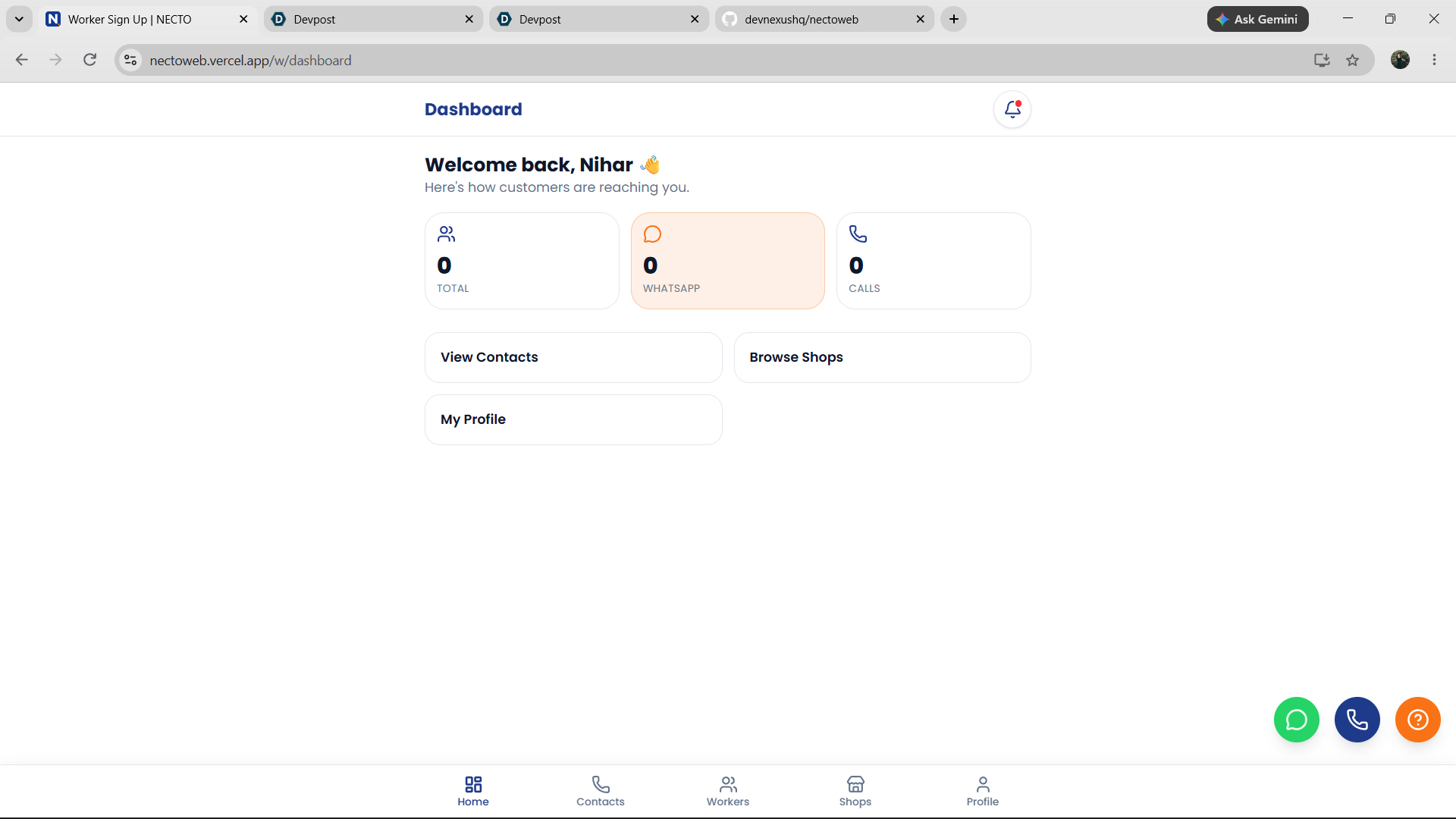
Worker Home Page/Dashboard
-
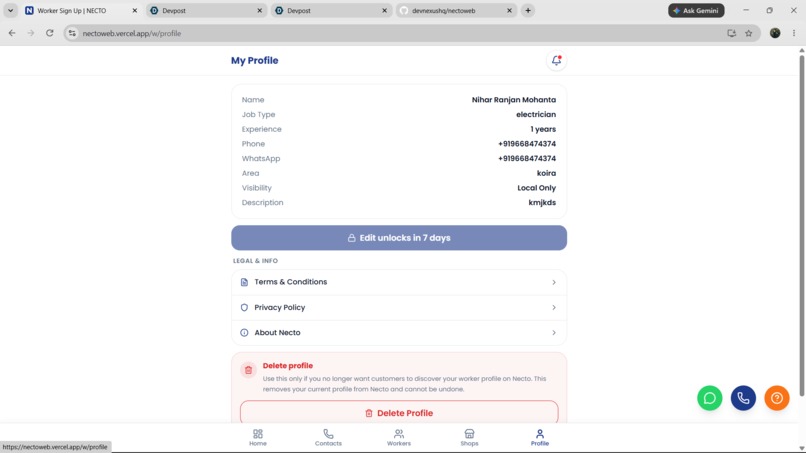
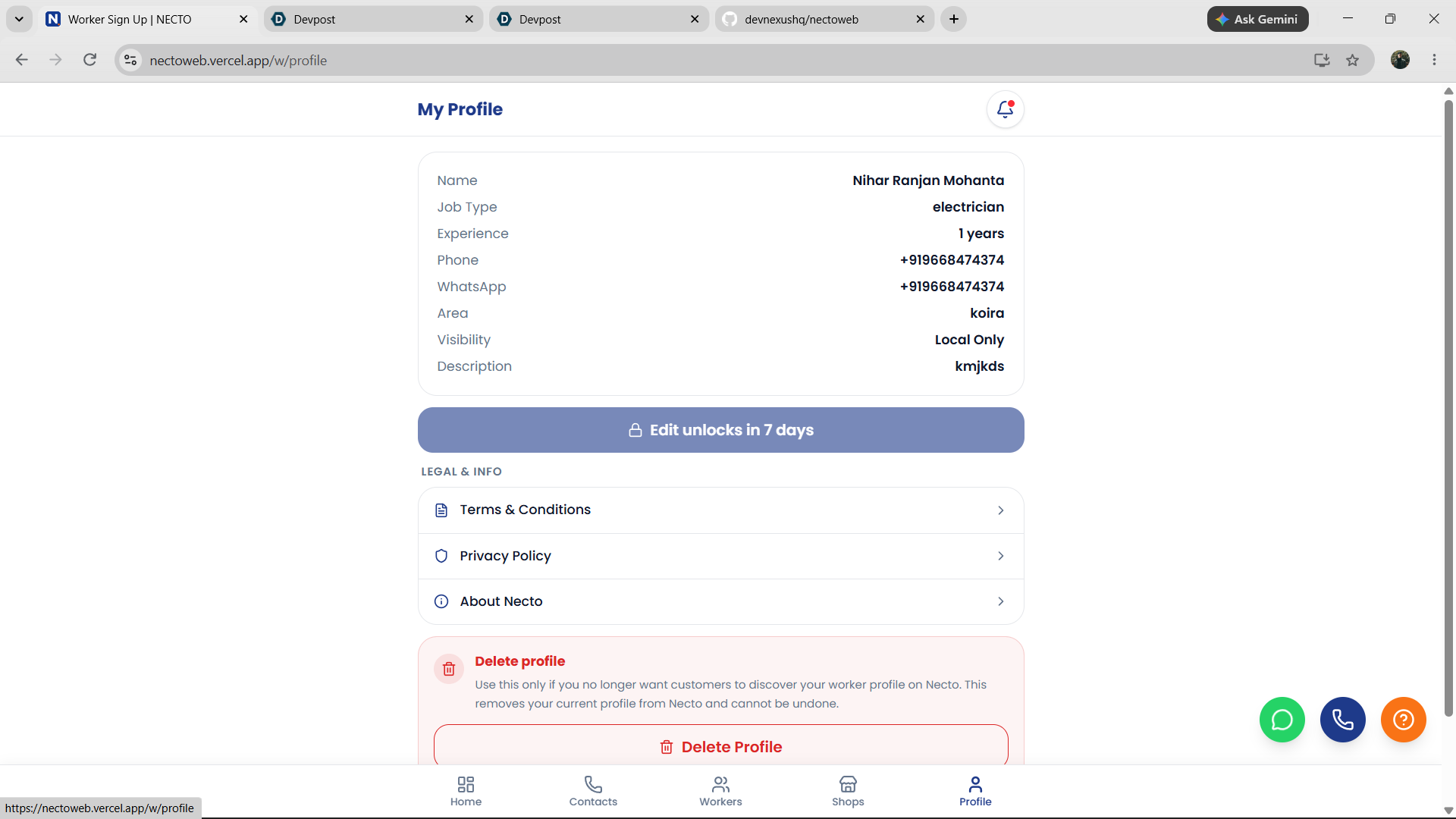
Worker Profile Page
-
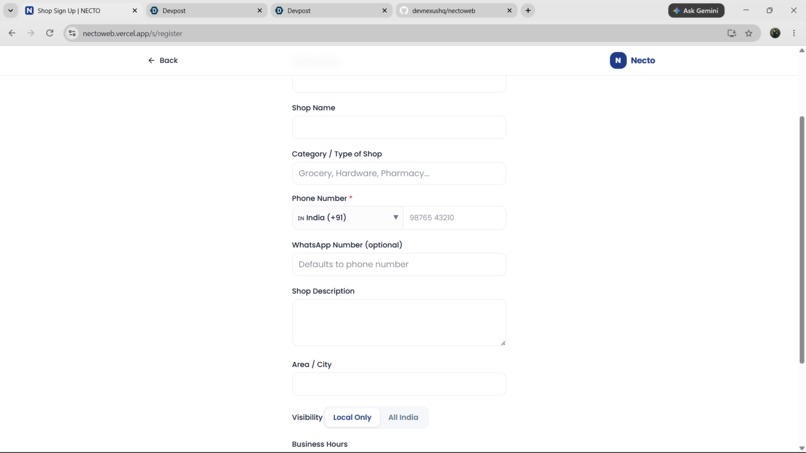
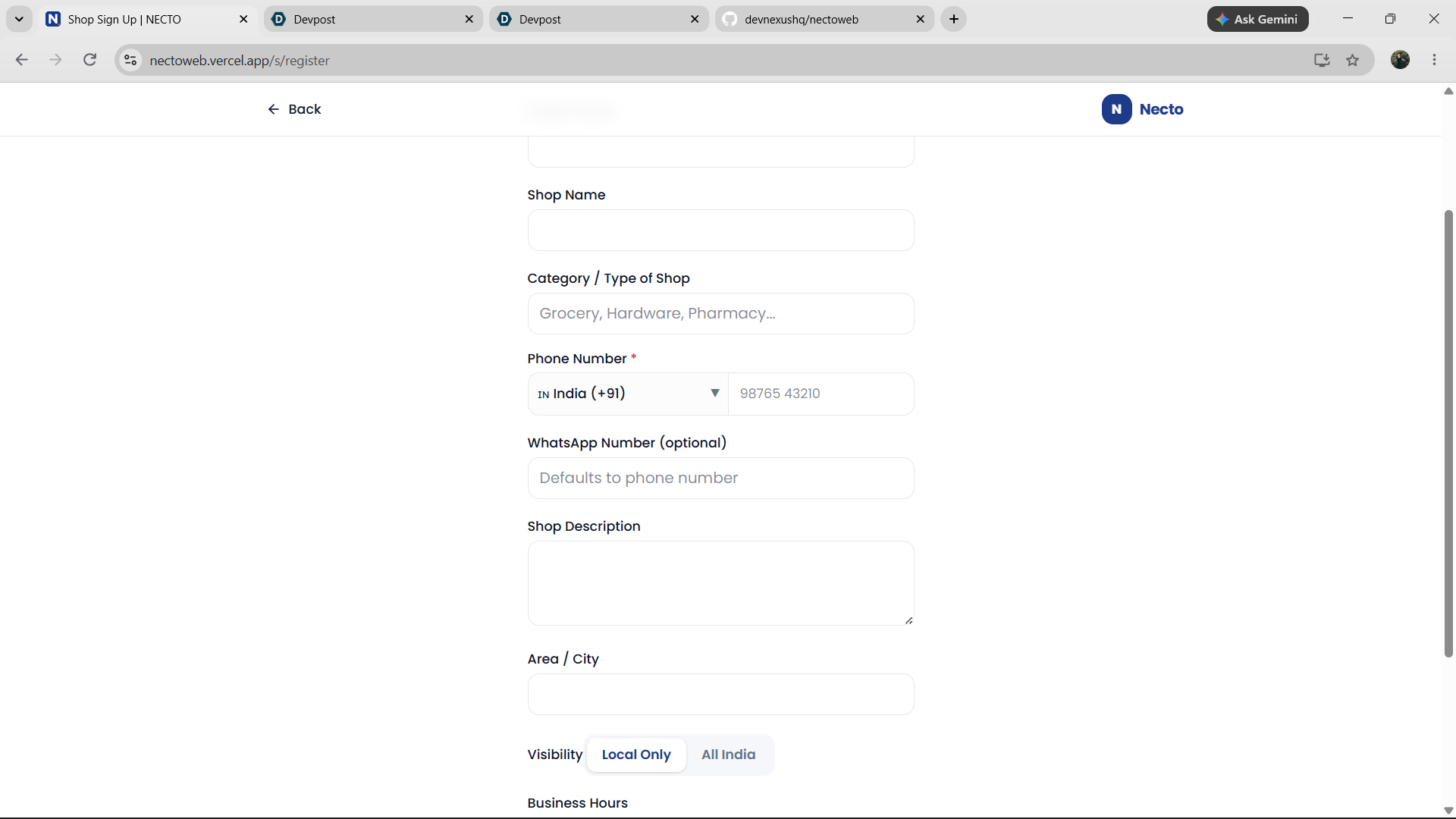
Shop's Registration Page
-
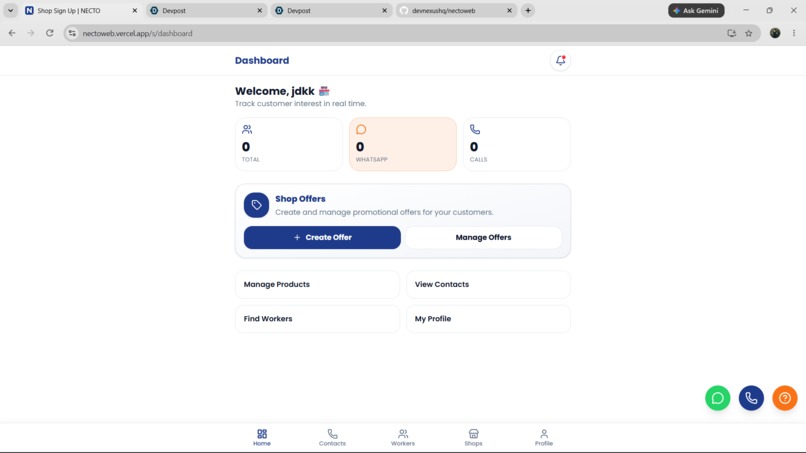
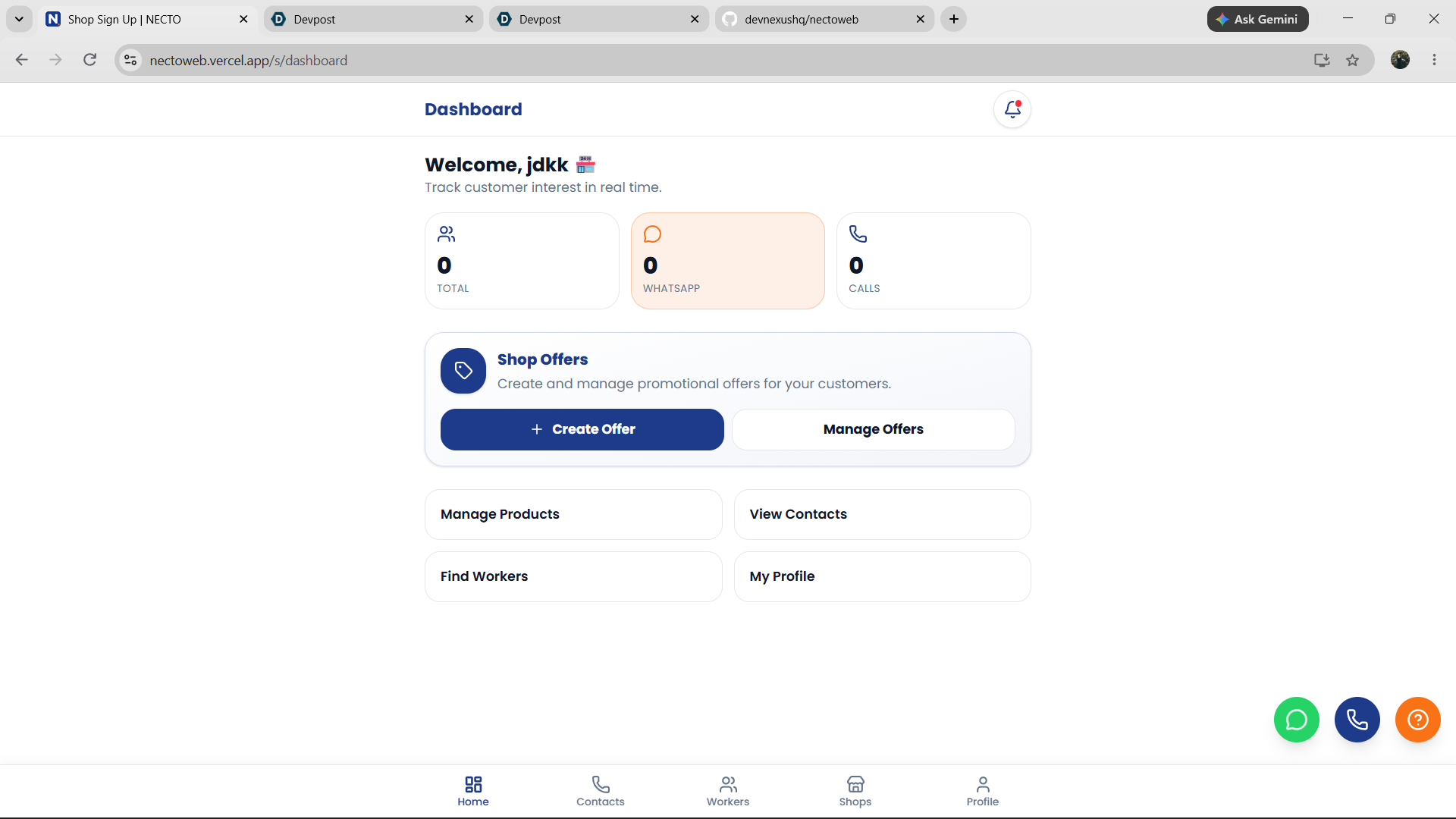
Shop Home Page/Dashboard
-
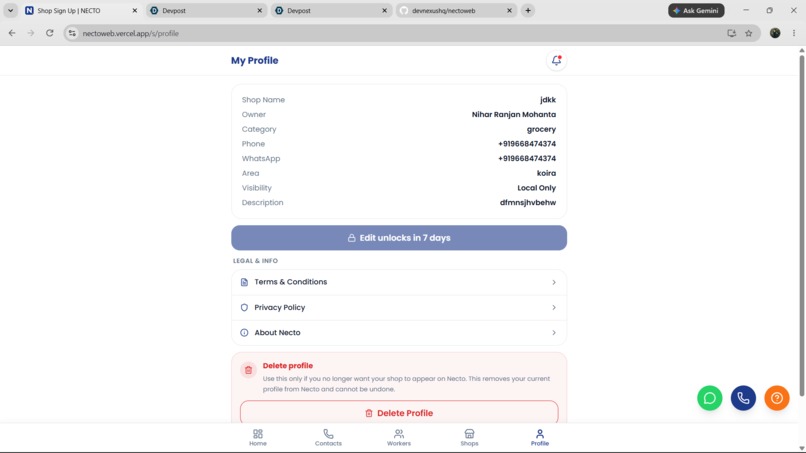
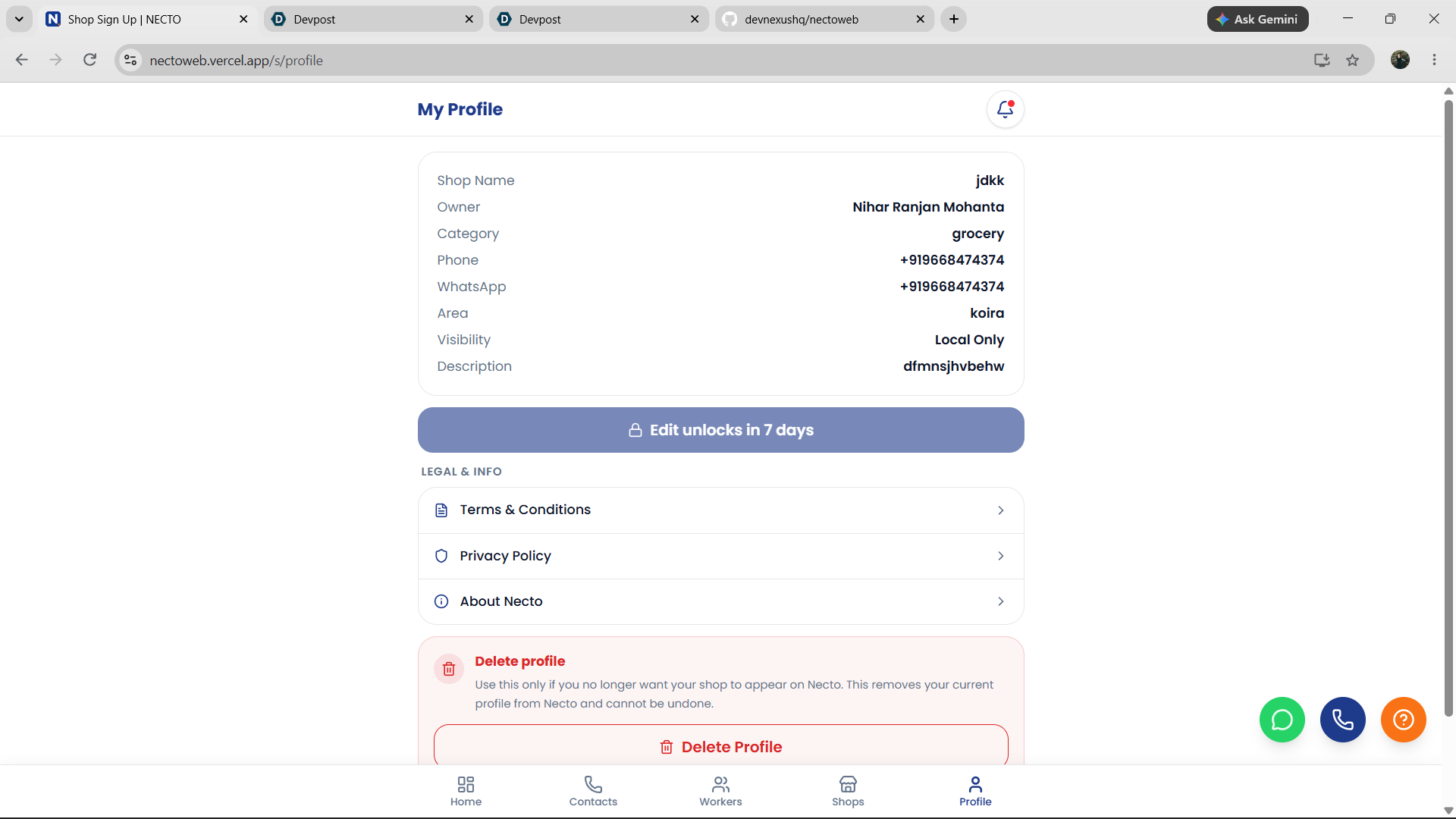
Shop Profile Page
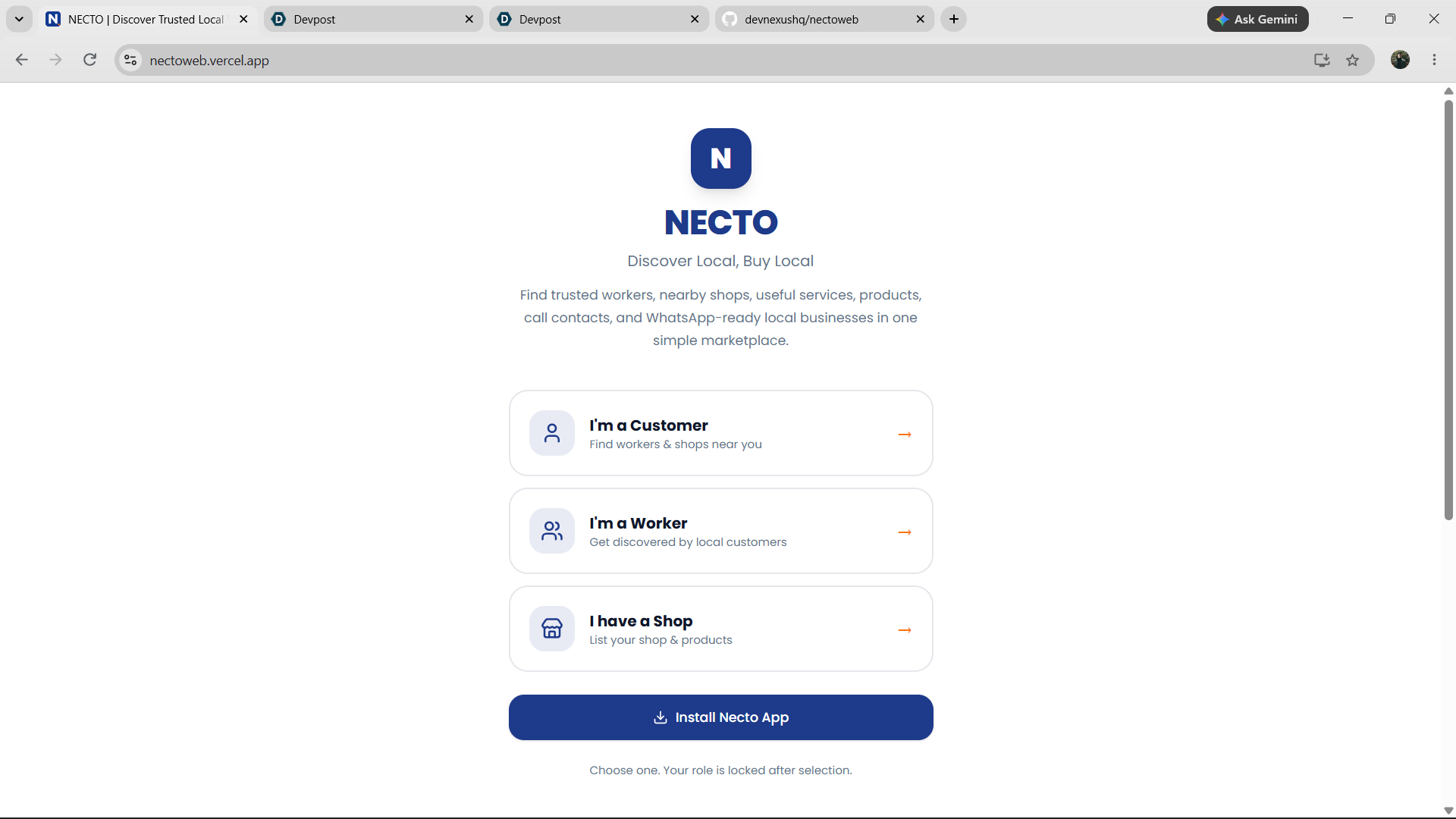
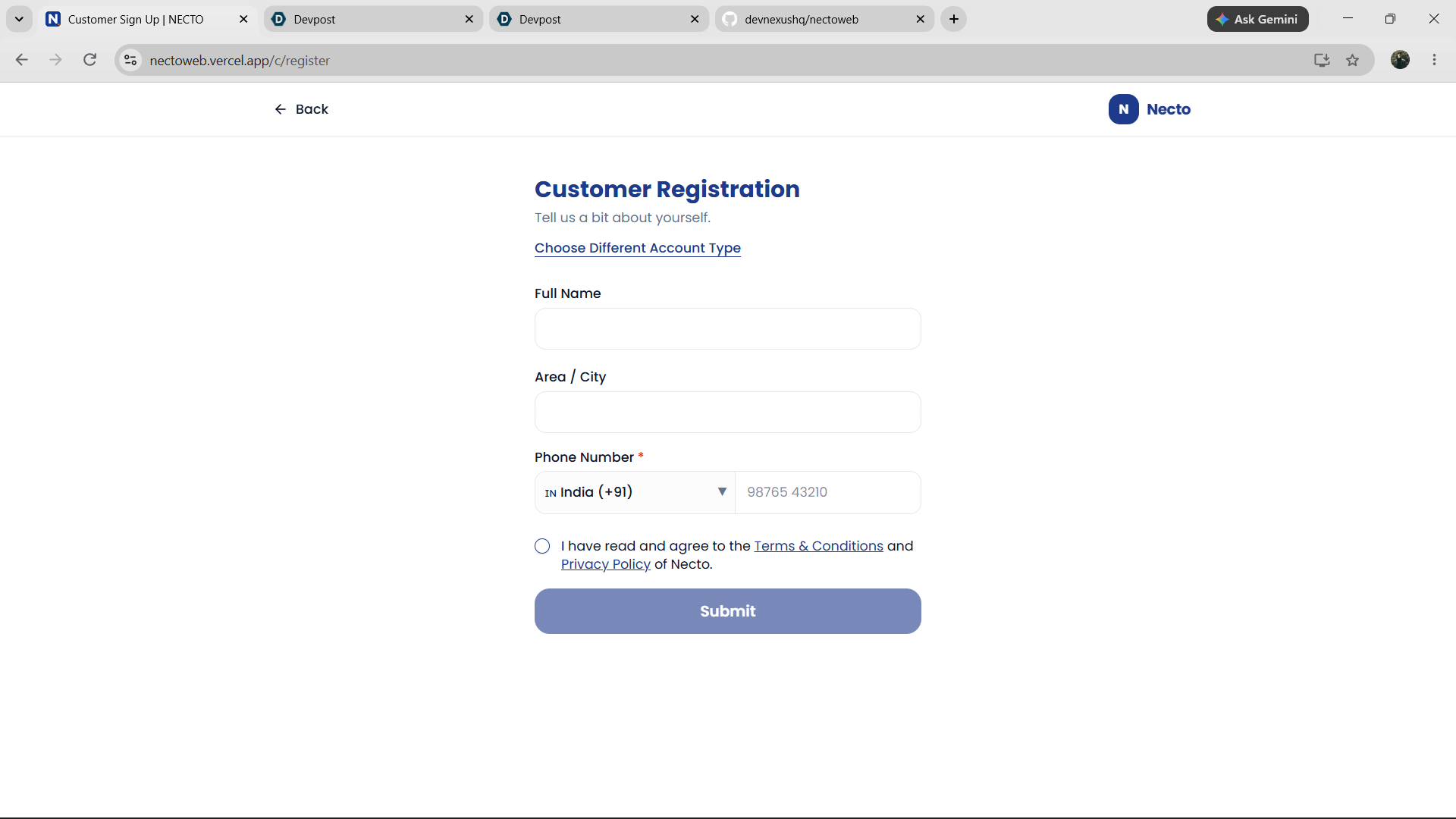
Inspiration
I'm from a small town called Koira in Sundargarh, Odisha. If you've ever needed an electrician there at 9 PM, you know the drill — you call three neighbours, someone gives you a number scribbled on paper, and you just hope the guy picks up. Meanwhile every "hyperlocal" app I opened only had listings for Bangalore or Mumbai. Tier-2 and tier-3 towns just don't exist on these platforms. That annoyed me enough to build NECTO.
What it does
NECTO connects three kinds of people — customers, local workers (electricians, plumbers, tutors, etc.), and small shop owners — in one place, built specifically for smaller Indian cities that big apps ignore.
Instead of making people scroll through categories they don't understand (is a "handyman" what I need, or a "technician"?), you just type your problem the way you'd say it to a friend — "my fan isn't working" — and NECTO figures out who nearby can actually help.
How I built it
- React + Vite + Tailwind for the frontend
- Supabase for auth, database, and edge functions
- Deployed on Vercel
- For the matching, I send the user's problem description to an LLM, get back the right service category, then query Supabase for workers/shops in that category near the user
Most of this was built solo, teaching myself as I went — I'm a first-year CS student, so a lot of this project doubled as my actual coursework.
Challenges I ran into
The messiest part wasn't the AI — it was basic data hygiene. I had three separate signup forms (customer, worker, shop) and at one point realized literally any 5-digit number was getting accepted as a valid phone number during registration. Fixing that properly meant rebuilding validation, E.164 formatting, and duplicate checks across all three tables without breaking existing data. Not glamorous, but it taught me more about real production bugs than any tutorial has.
What I'm proud of
Getting this live and actually usable — not a mockup, a real deployed app where a worker in a small Odisha town could genuinely list themselves and get found. As a first-time founder with no CS background before college, just shipping something real feels like the win.
What I learned
That "AI feature" is easy to say and hard to make actually useful — the matching only works if the underlying data (categories, locations) is clean, which took way more effort than the AI call itself. Also learned the hard way why proper input validation matters from day one.
What's next
Rolling this out properly across more towns in Odisha, adding trust/rating signals for workers and shops, and improving the matching so it accounts for distance and availability, not just category.
Built With
- ai
- css
- nocode
- postgresql
- react
- supabase
- tailwind
- typescript
- vercel
- vite

