
Inspiration
Every developer has a graveyard.
Not a literal one. A folder of half-finished ideas, the repo you swore you'd come back to, the side project that died the week work got busy. We kept finding ours. And every time we opened one, we had the same thought: what happened here?
GitHub will tell you a repo is archived. It won't tell you why it died, or what it would take to bring it back. It gives you a headstone with no inscription.
So we built a coroner's office for code, and put the bodies in a museum.
What it does
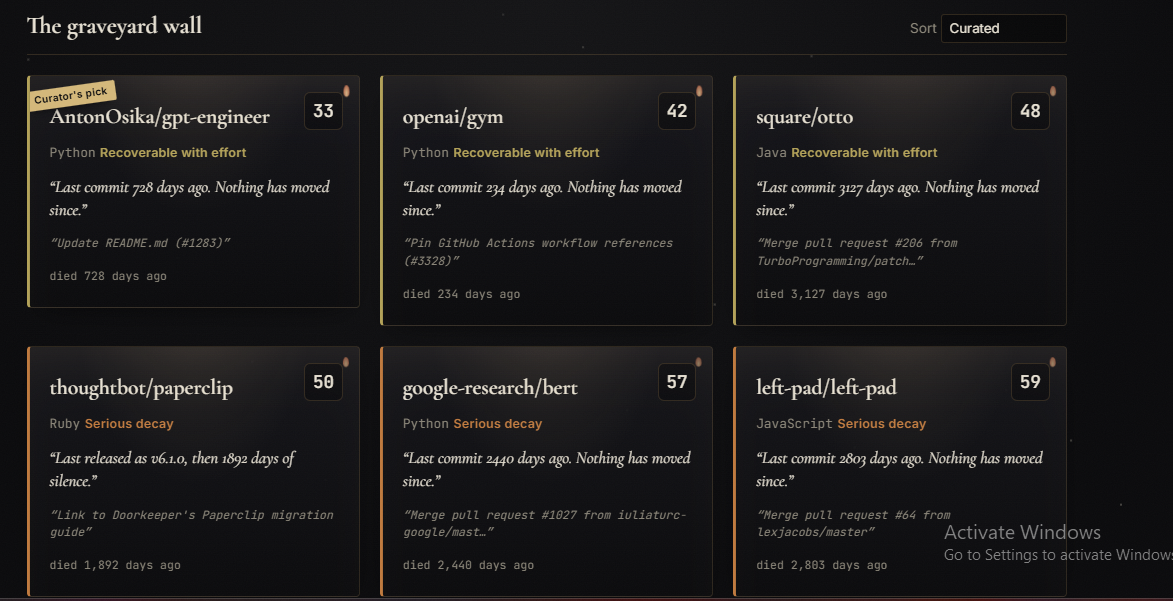
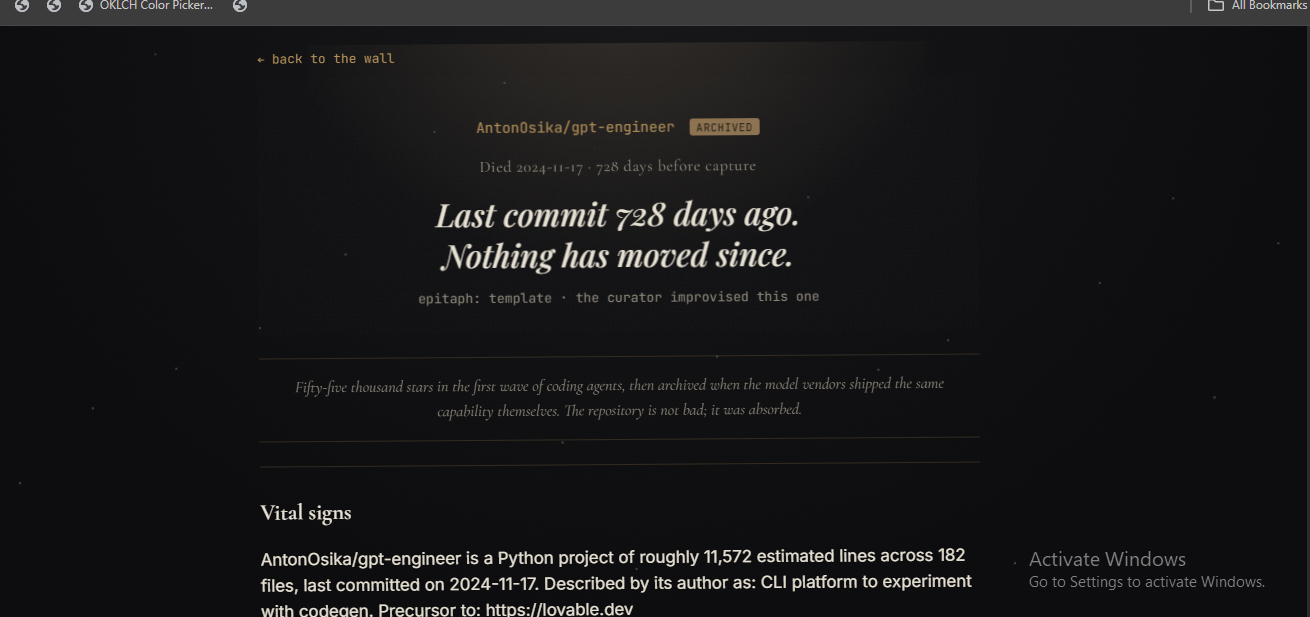
Paste a public GitHub URL. NECROPSY performs a post-mortem using only public information from GitHub. It never downloads the code, never runs it, and never changes anything. The repo becomes a spotlit exhibit in a dark gallery:
- Cause of death. Every claim points to the exact fact it came from. No guesses. Receipts.
- A revival-difficulty score from 0 to 100. Eight factors, like missing tests or outdated dependencies, each with a fixed weight. Every number is shown on the plaque, so you can add it up yourself.
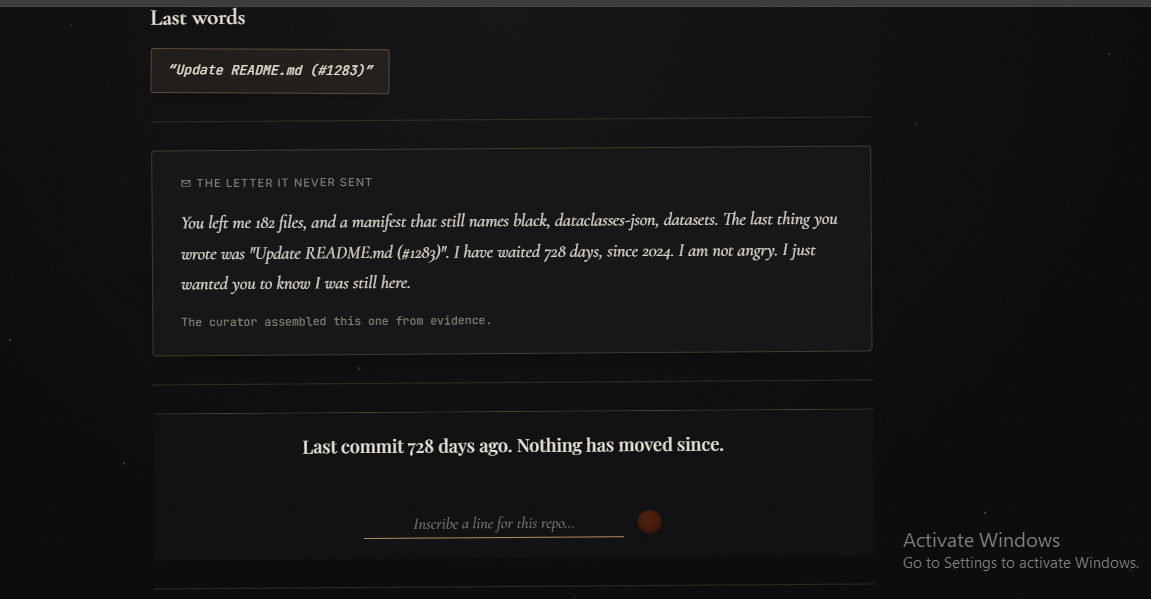
- An epitaph based on a real detail from the repo. left-pad's last words were "Fixes typo in readme."
- The letter the repository never sent its creator. What it would say, if it could.
- A three-step resurrection plan. Concrete enough to start this afternoon.
The gallery has eight real archived repositories in Python, Ruby, Java and JavaScript. Each has a "verify on GitHub" link to the exact version we analyzed. The whole gallery works offline, with no login and no API keys.
NECROPSY also connects to Kiro through MCP, so Kiro itself can examine a dead repo and write a plan to revive it.
How we built it
We built NECROPSY in Kiro, planning first and coding second. Everything is in the .kiro/ folder:
- Spec: 21 requirements with clear pass/fail checks, a full design document, and 34 tasks in order.
- Steering: 10 product principles and 15 engineering rules that Kiro reads in every session. For example: never use more than 10 GitHub requests per analysis, never call the AI if the answer is already saved, and never download a repo's code.
- Hooks: one runs all our tests every time we save a core file. One rebuilds the demo gallery to prove it works offline. One checks every command before Kiro runs it and blocks anything that would download a repo.
- MCP: four tools (
analyze_repo,get_exhibit,list_graveyard,write_revival_spec) that let Kiro use NECROPSY directly.
Why it's a Frankenstein
NECROPSY stitches together parts that don't usually share a body:
- A detective that reads GitHub data and is limited to 10 requests per analysis
- A strict calculator that always gives the same score for the same repo, checked by automated tests that try thousands of random cases
- A storyteller (AI) that may explain the evidence but is never allowed to invent or change a number
- A memory, a museum and a connection to Kiro: saved results, the web gallery, and the MCP server
All four parts run through the same pipeline, so the website and Kiro always get the same results.
Keeping the AI honest
The AI is called once per analysis, and its answer is checked before anyone sees it. Every fact it mentions must exist in the repo's data and match exactly. If the epitaph fails that check, we throw it out and show a simple, clearly labelled template epitaph instead. It's duller, but it's still true.
Challenges we ran into
- Making the AI tell the truth. Spooky writing is easy. Facts are hard. We built the fact-checker before we let the AI write a single word.
- Keeping the score consistent. A repo's score shouldn't change just because a day passed. We had to fix the analysis date at the moment it's captured, so the same repo always gets the same result.
- Real bodies, not mannequins. We started with made-up test repos, then replaced the gallery with eight real archived ones. Their data is saved in the project, so the demo still works if a repo disappears from GitHub.
- Not everything is dead. Active projects were getting autopsies. Now any repo with recent activity gets a "check-up" instead.
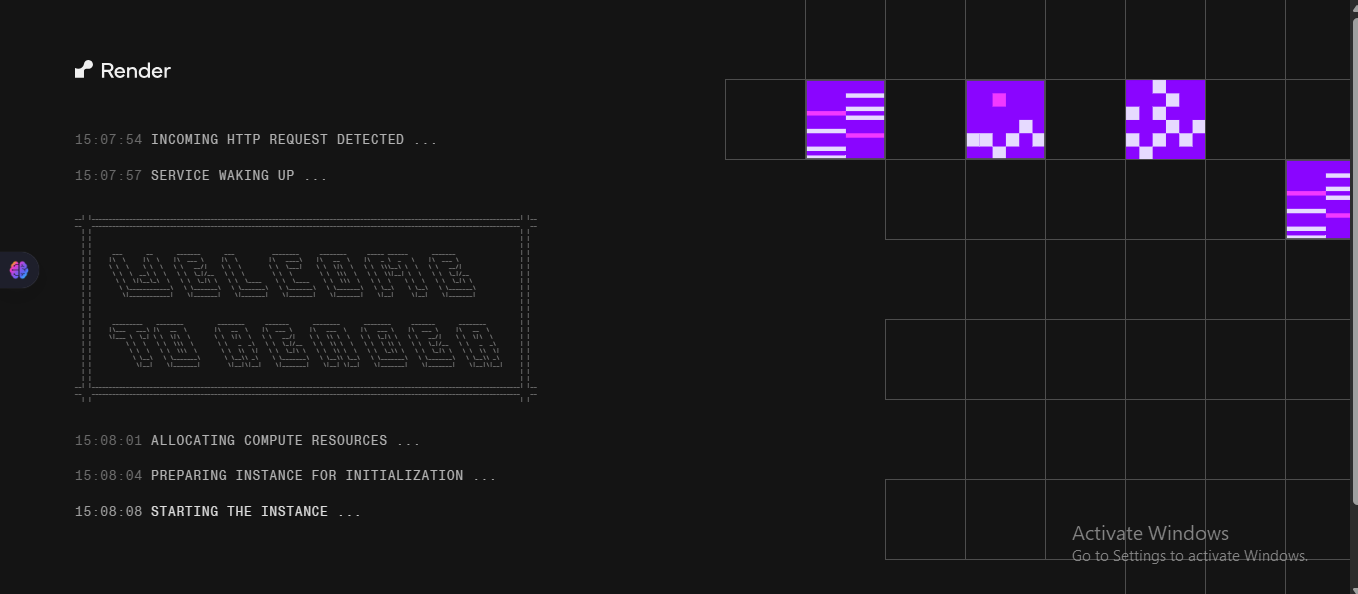
- Free hosting falls asleep. Our free server shuts down after 15 minutes without visitors, and a slow wake-up looks like a dead site, which is a bad look for a museum of dead things. We added a small welcome page that wakes the gallery and brings visitors in.
What we learned
- Kiro follows clear rules better than general advice. "Be careful with API calls" did nothing. "Never more than 10" worked, and Kiro wrote code that respected it without reminders.
- Some bugs only show up under testing. A small mistake in the scoring still produces a believable number. Automated tests that try thousands of cases caught what reading the code never would.
- Honesty makes the show more believable. Labels like "Not enough data for this factor" and "Line count is an estimate" are what let people trust the museum.
What's next
Completing the full revival loop: Kiro reads a NECROPSY exhibit, writes the revival plan, and starts on step one.
The graveyard is full. It's time to start digging.


