-
-
Cover
-
01_Home
-
02
-
03a
-
03b
-
04
-
05
-
06
-
07a
-
07b


Narrative
This project is intentionally presented as an evolving product built across two hackathons, where each stage adds a complementary capability:
- Phase 1 (Kiroween – Resurrection): analyze "dead" codebases and generate structured upgrade rituals.
- Phase 2 (FIBO Hackathon): apply the same "ritual + lint + diff" workflow to deterministic JSON-native image generation, adding visual A/B preview.
The result is a consistent philosophy:
- take messy, risky inputs (legacy repos / unreviewable prompts)
- turn them into structured specs
- provide reviewable, explainable patches
Project Story (Phase 1 — Kiroween)
Inspiration
Every developer has inherited a "dead" repository – outdated dependencies, deprecated tooling, and no clear path forward. The typical response is either ignore it and hope nothing breaks, or rewrite everything from scratch.
For Kiroween's Resurrection category, we asked: What if we could summon a necromancer to analyze the decay and plan a structured revival?
Repo Necromancer was born from this spooky idea – combining the Halloween theme with a genuinely useful developer tool.
What it does
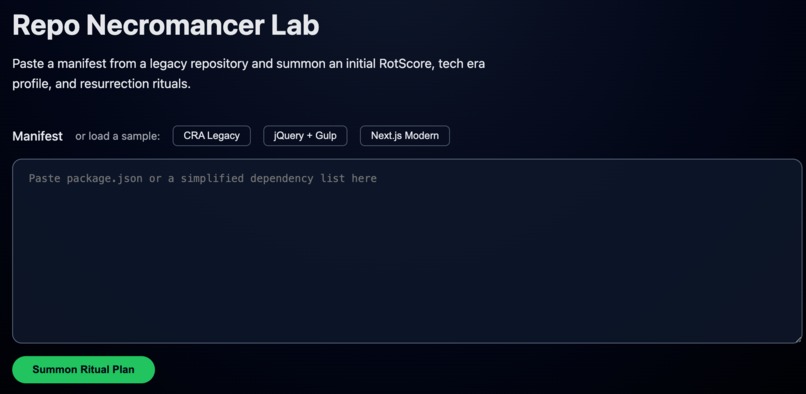
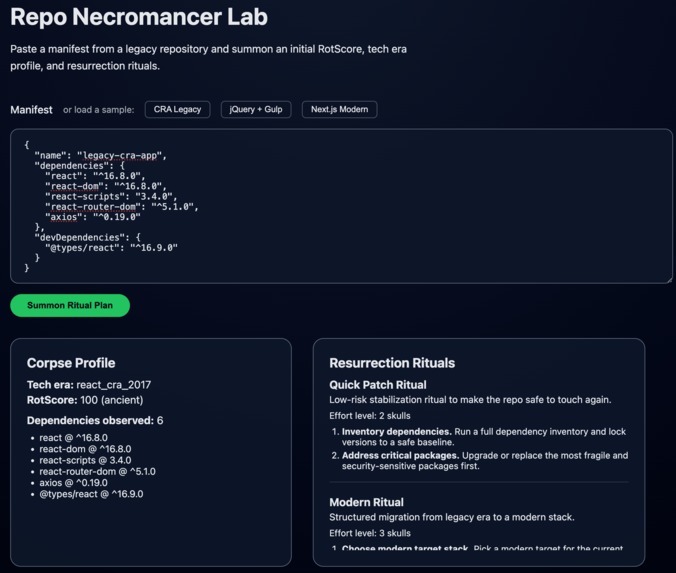
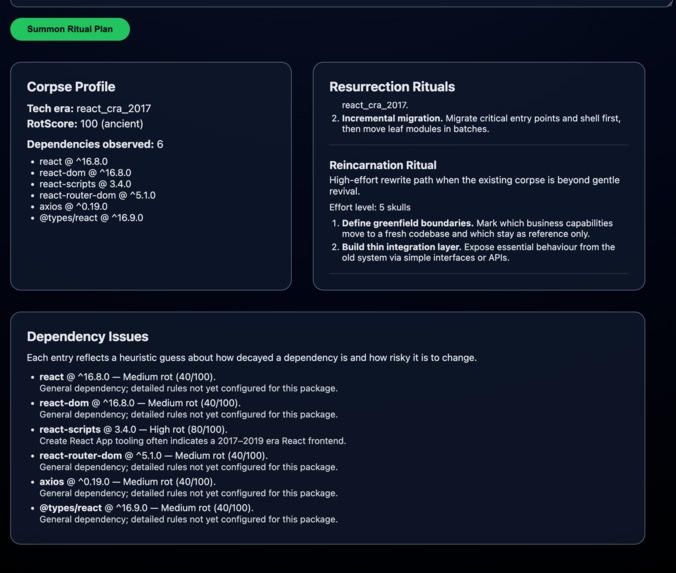
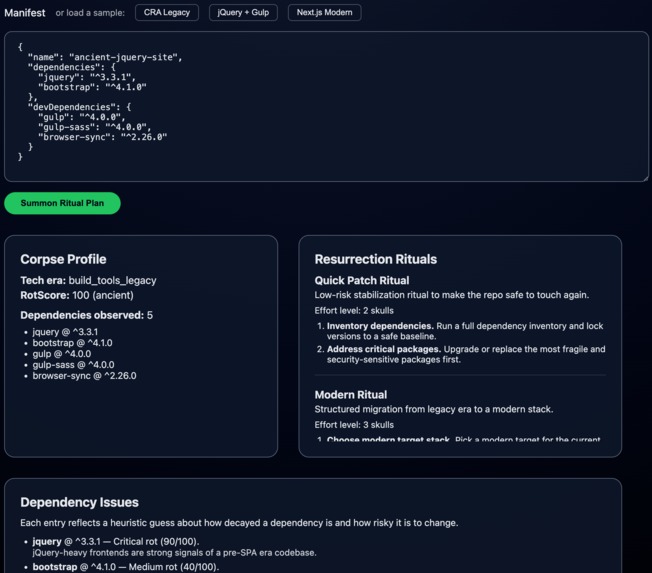
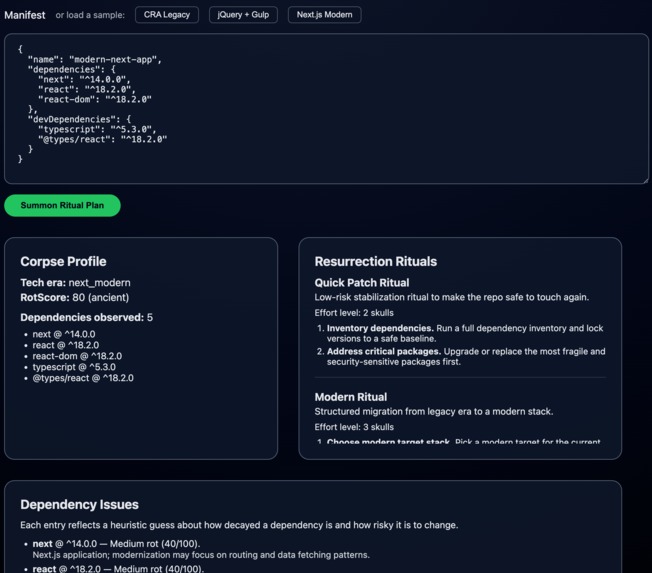
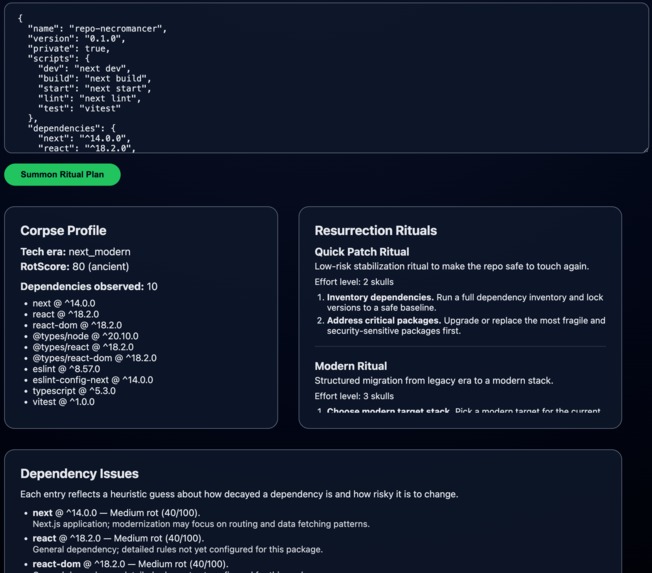
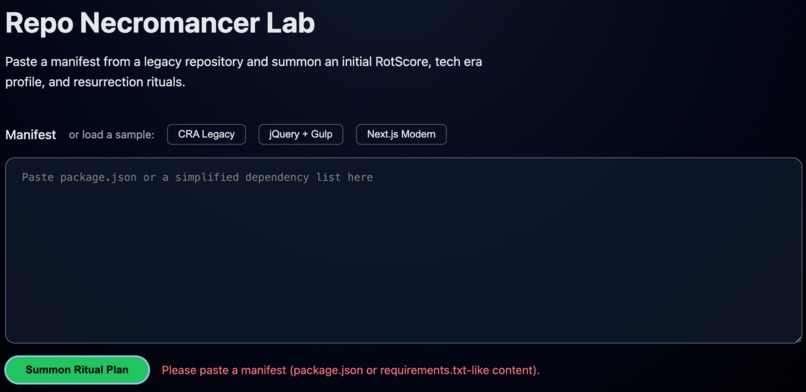
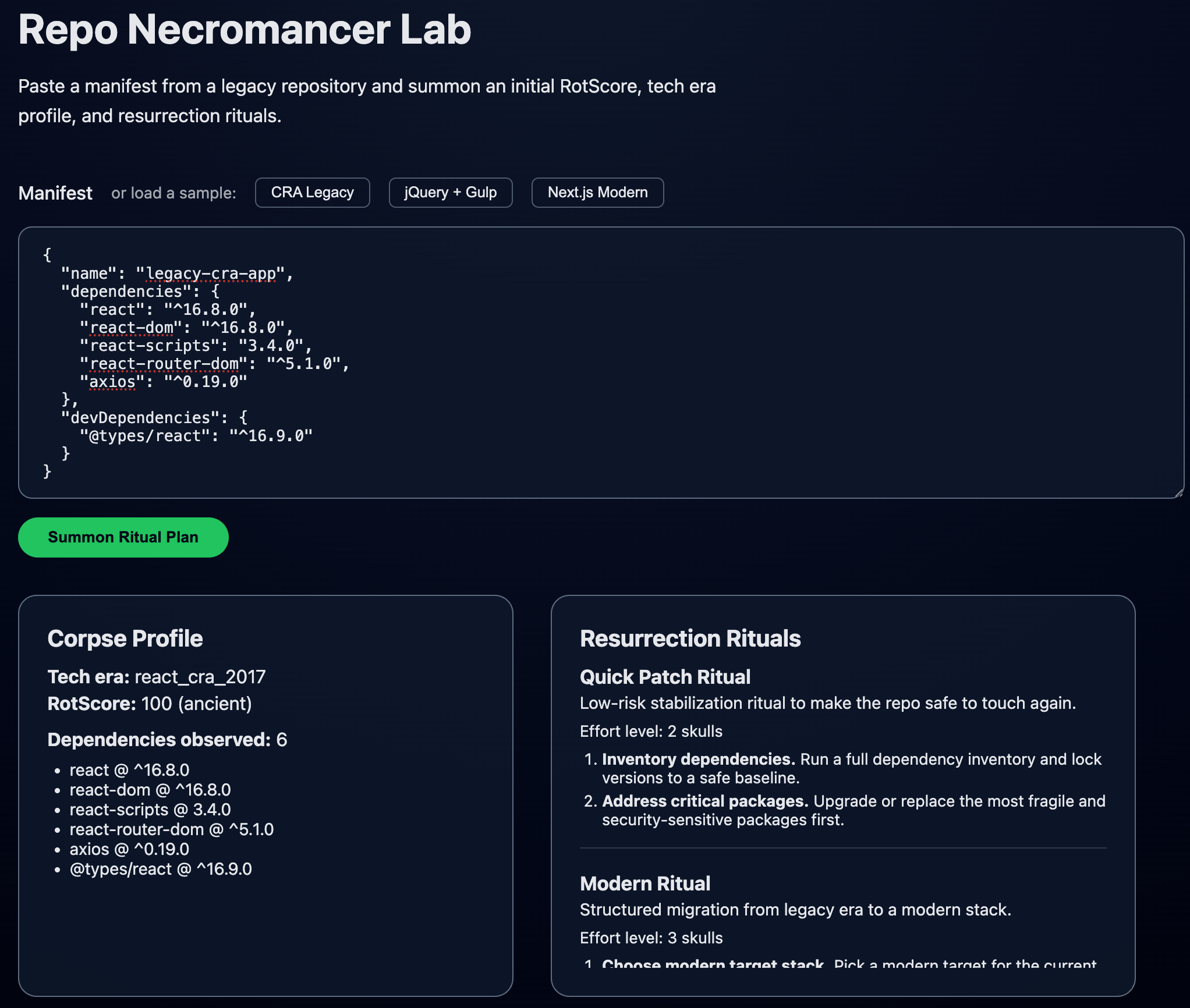
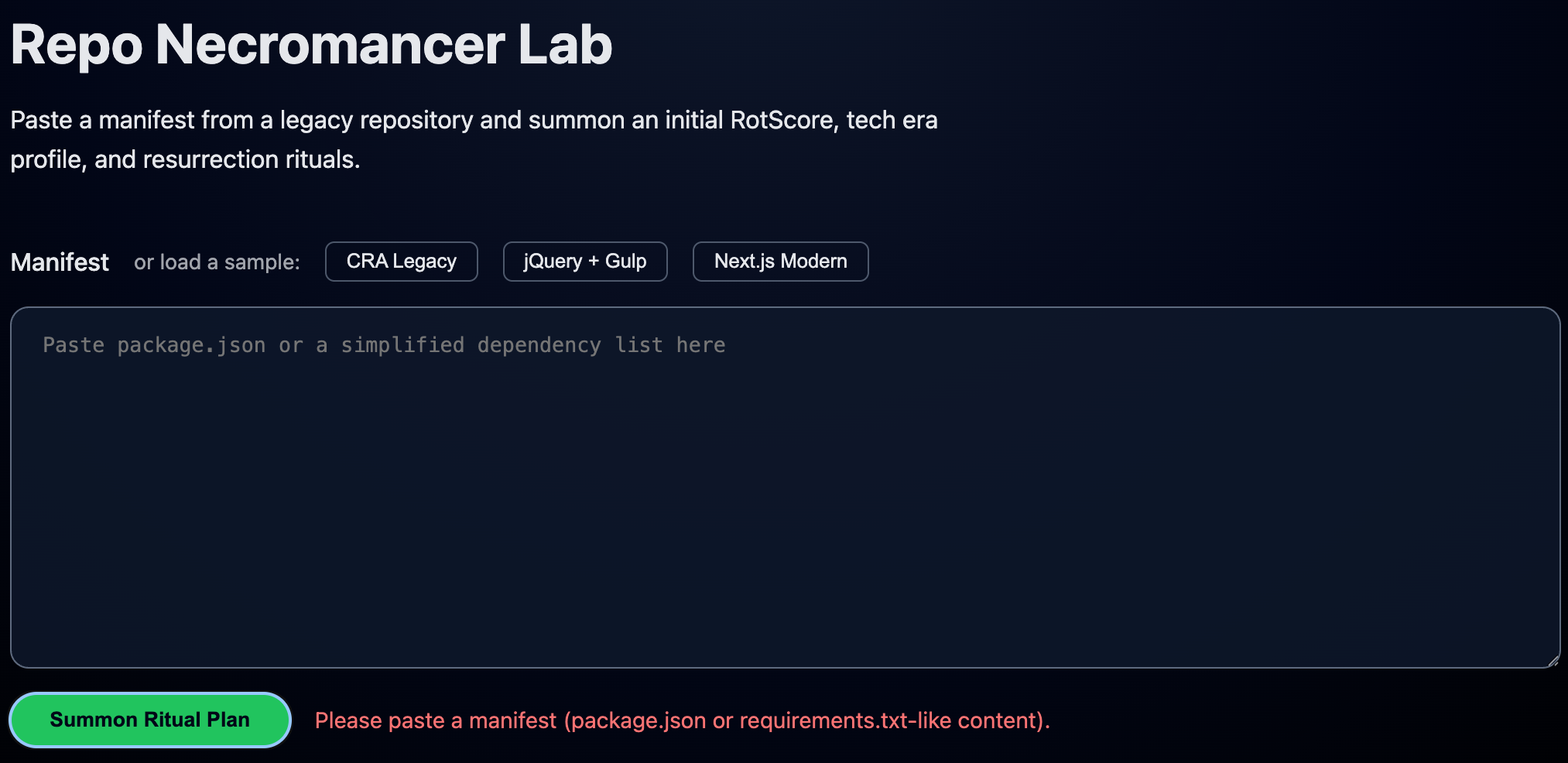
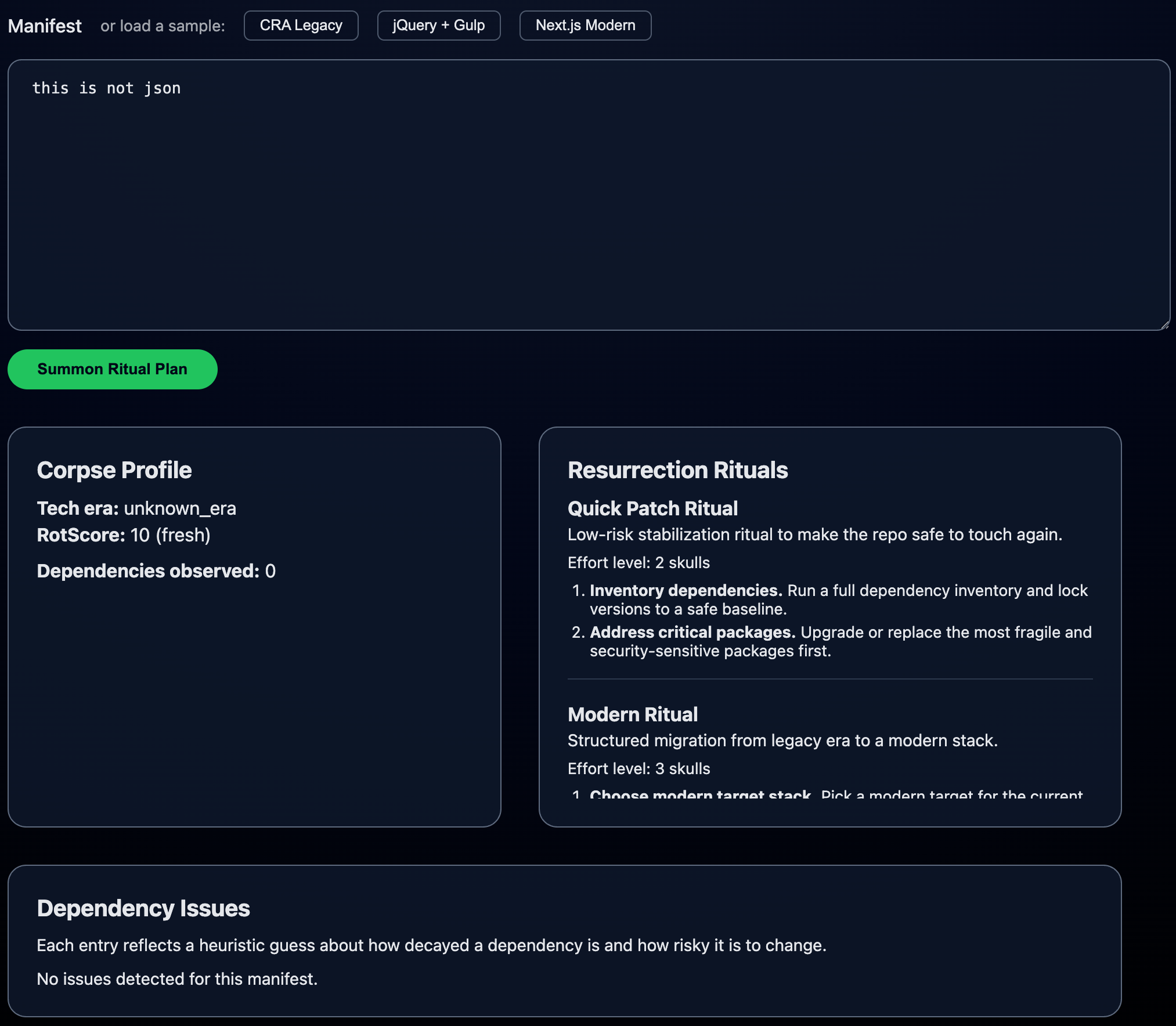
Repo Necromancer analyzes legacy repository manifests ([package.json]) and provides:
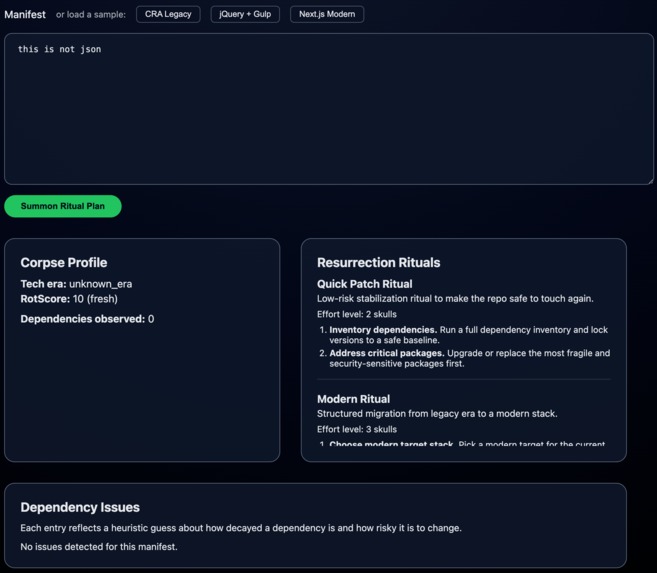
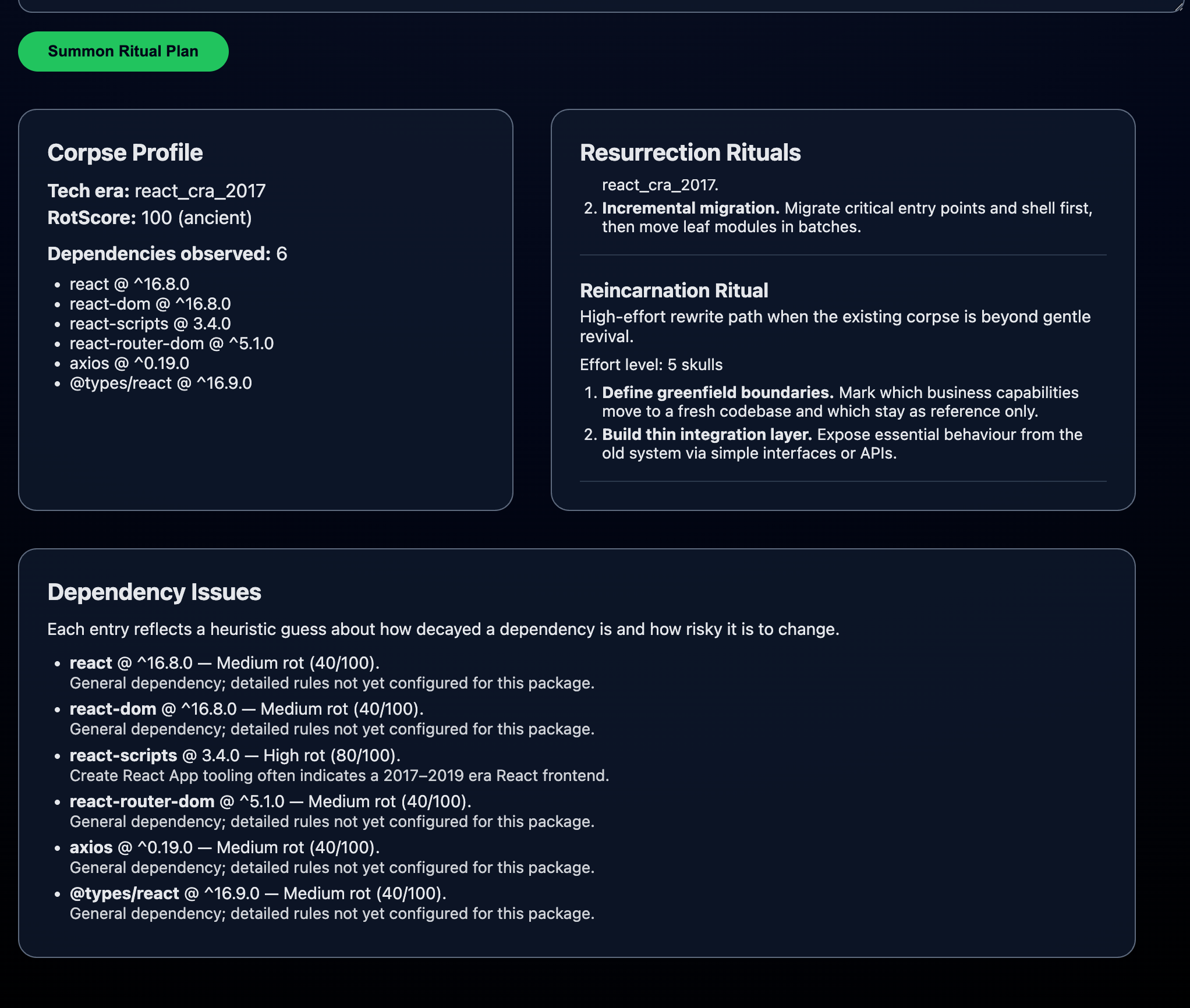
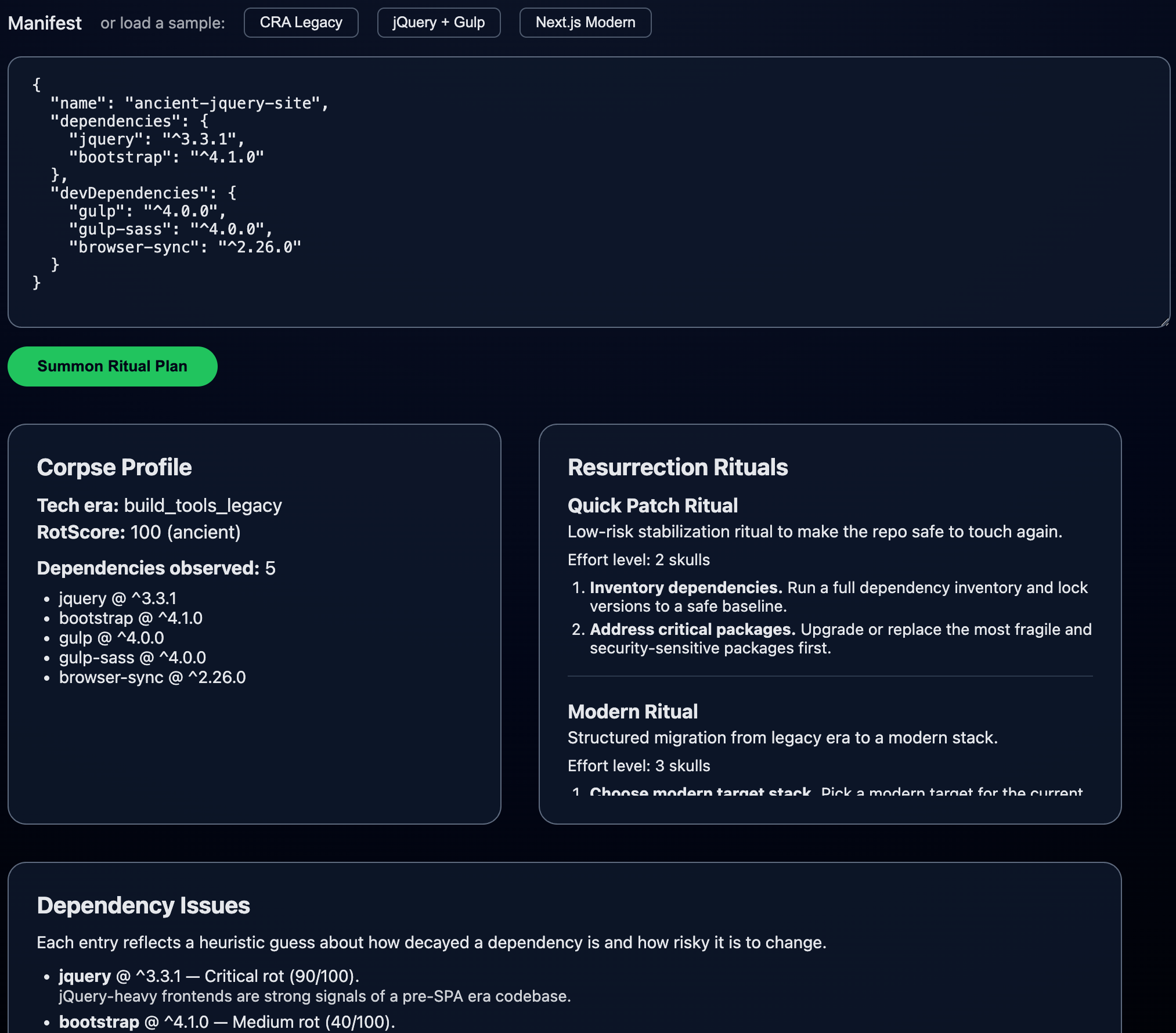
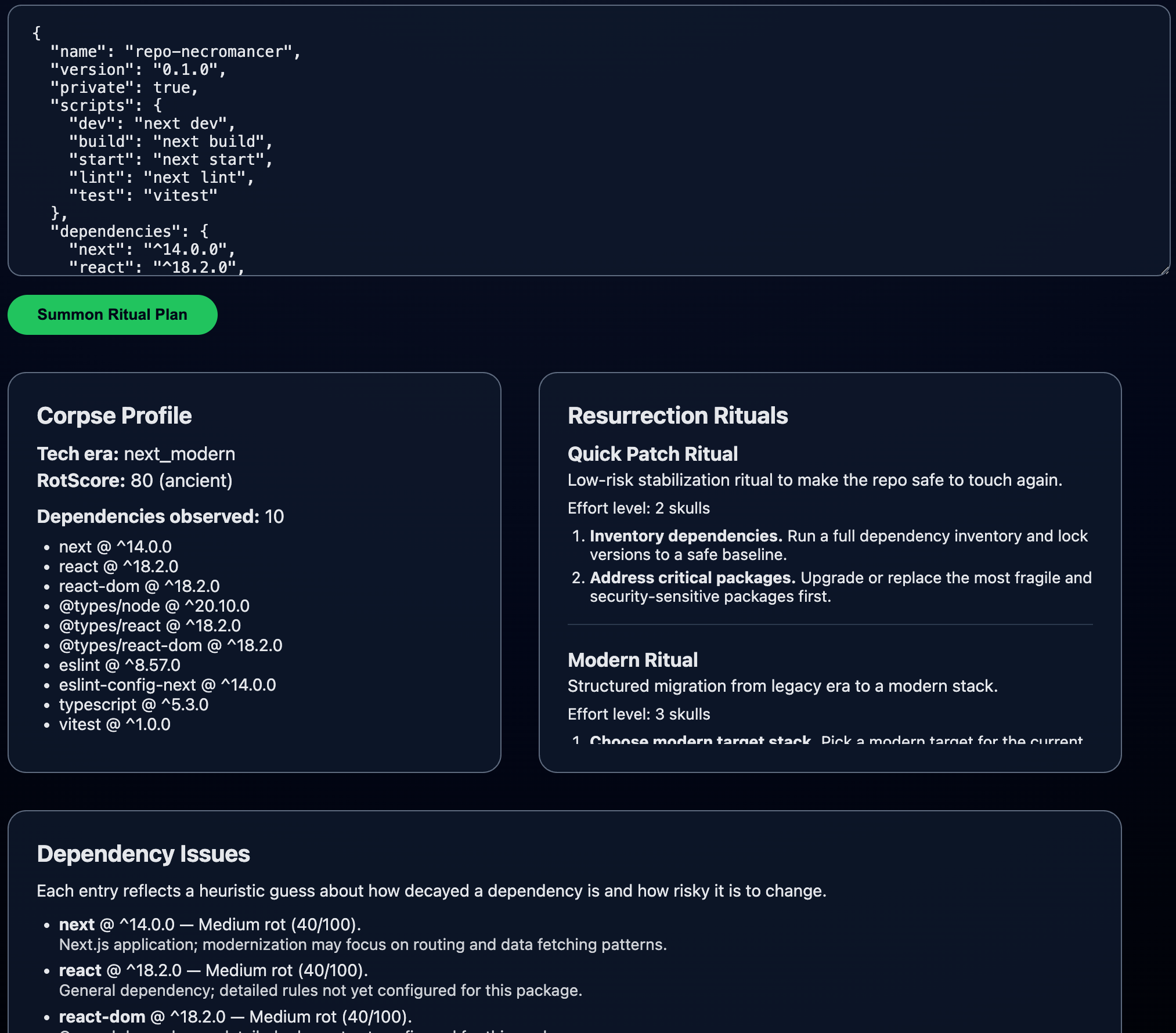
- RotScore (0–100) – A decay rating based on dependency age and risk
- Tech Era Detection – Identifies if your repo is from the CRA 2017 era, jQuery legacy, Next.js modern, etc.
- Dependency Issues – Per-package analysis with severity levels and explanations
- 3 Resurrection Rituals:
- 🩹 Quick Patch (2 skulls) – Minimal stabilization
- ⚡ Modern Ritual (3 skulls) – Structured migration
- 🔮 Reincarnation (5 skulls) – Full rewrite guidance
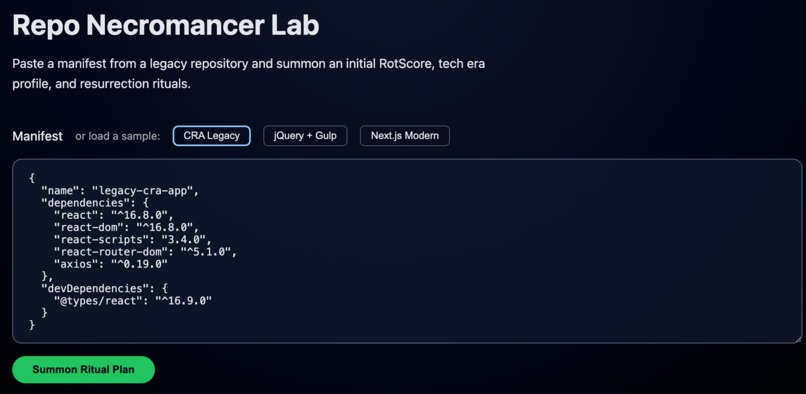
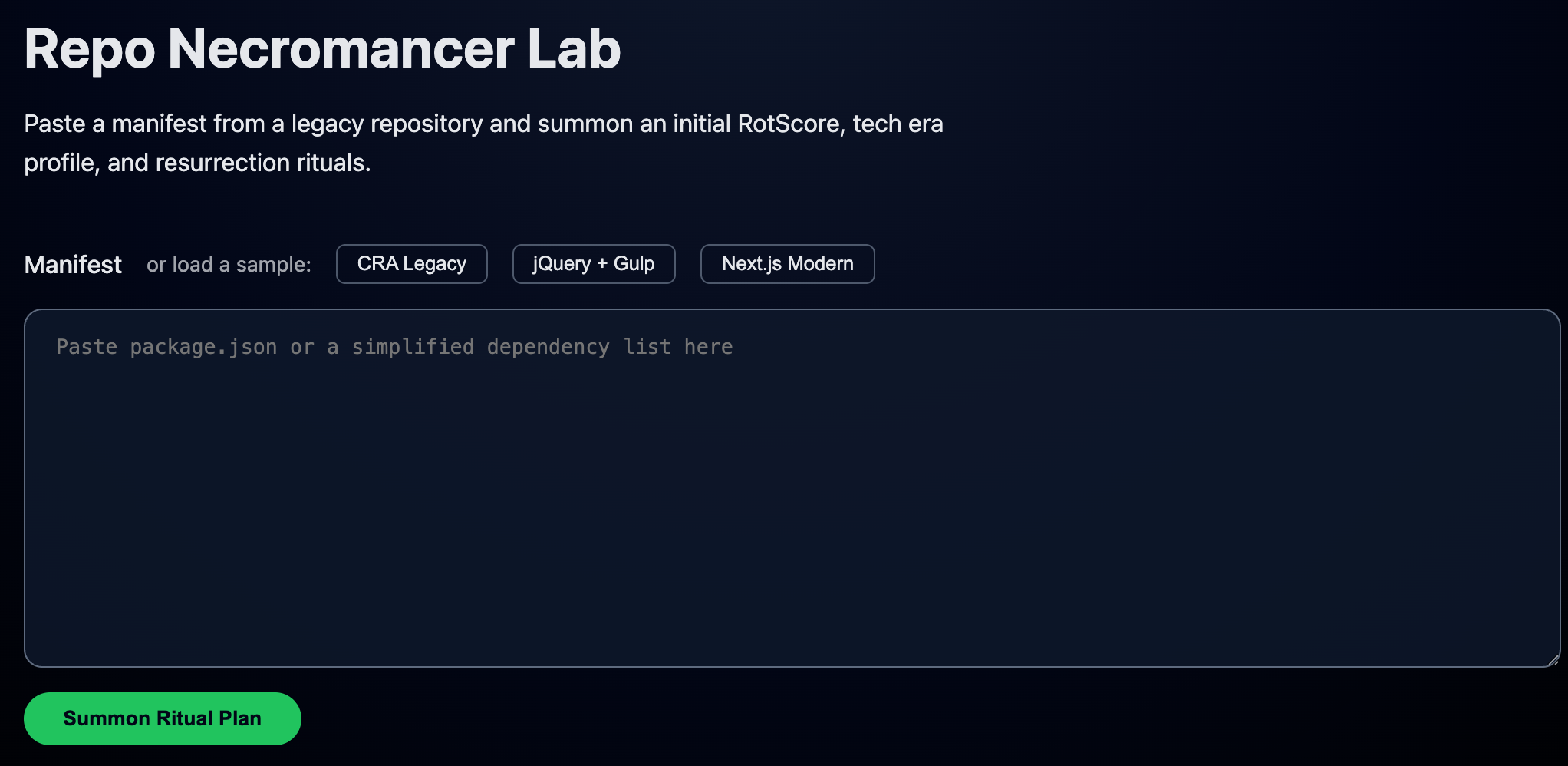
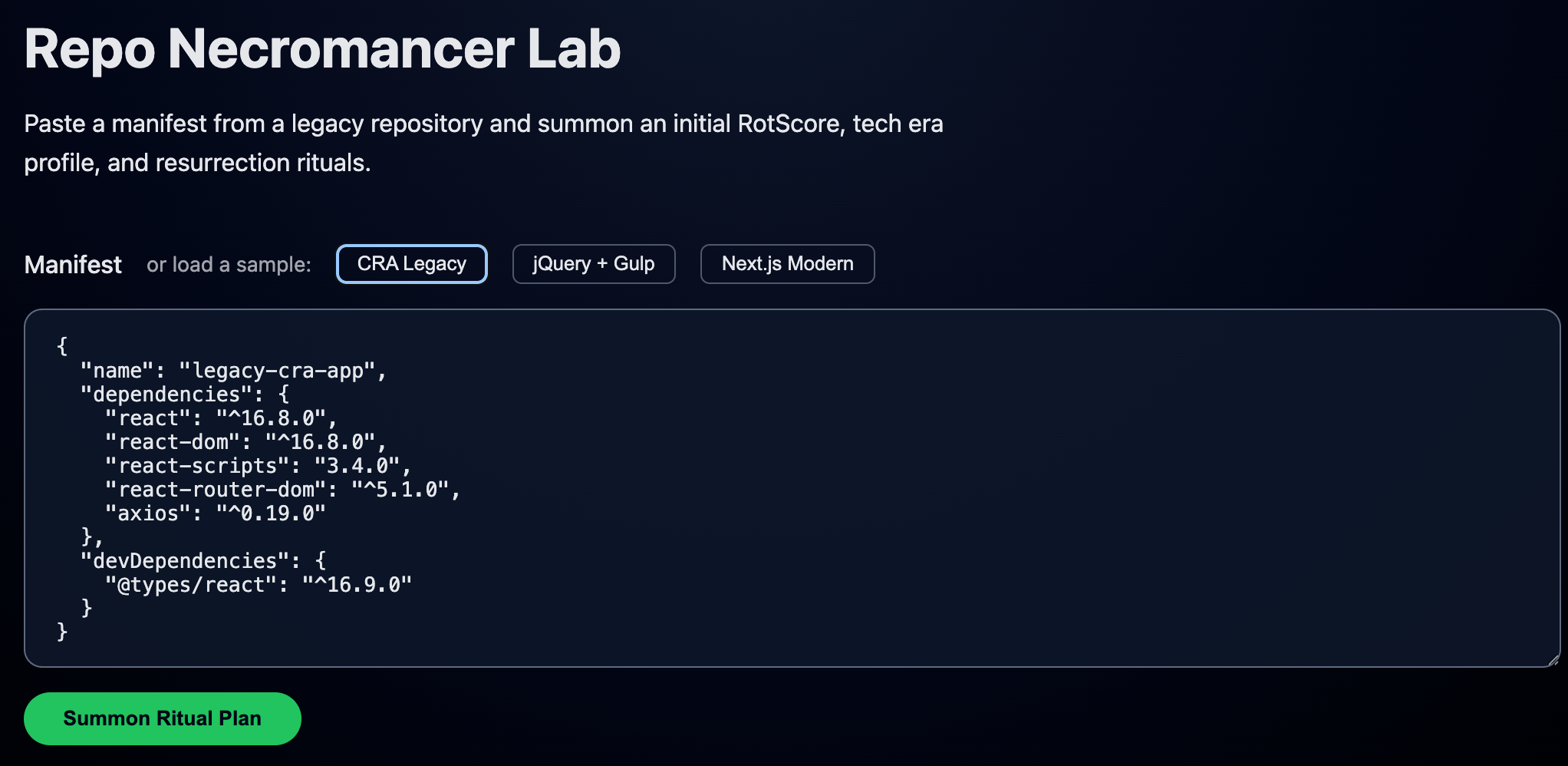
Just paste your manifest, click "Summon Ritual Plan", and get actionable insights in seconds.
How we built it
- Framework: Next.js 14 with App Router
- Language: TypeScript (strict mode)
- Architecture: Layered design – UI → API → Domain (Analyzer + Planner)
- Kiro Integration:
/.kiro/specs/– YAML schemas for analyzer and planner modules/.kiro/steering/– Architecture and tone guidelines
- Styling: Custom dark theme with necromancer aesthetic
The entire project was built using Kiro IDE, leveraging:
- Vibe coding for rapid prototyping
- Spec-driven development for consistent data models
- Steering docs to maintain architectural integrity
Challenges we ran into
- Balancing theme vs usability – The necromancer aesthetic needed to be spooky but not obscure functionality
- Heuristic accuracy – Creating meaningful RotScore calculations without access to live registry data
- Time constraints – Building a complete tool in limited hackathon time while maintaining code quality
- Kiro learning curve – Understanding how to best leverage specs and steering for maximum productivity
Accomplishments that we're proud of
- End-to-end flow works – Paste manifest → Get analysis → See rituals
- Meaningful heuristics – Tech era detection identifies CRA, Next, Angular, Vue, jQuery, Gulp/Grunt
- Clean architecture – Pure functions in domain layer, easy to extend
- Full Kiro integration – Specs and steering docs that guide development
- Preset samples – One-click demos for judges to try instantly
What we learned
- Kiro's spec-driven approach accelerates development when you define schemas upfront
- Steering docs help maintain consistency across AI-assisted coding sessions
- Theme can enhance UX – The necromancer metaphor makes the tool memorable and fun to use
- MVP scope discipline matters (ship core first, expand later)
What's next for Necromancer
- GitHub Integration
- Python support ([requirements.txt])
- Export rituals as Markdown
- Historical tracking
- VS Code extension
- Community heuristics
Project Story (Phase 2 — FIBO Hackathon extension)
Inspiration
Prompt engineering is powerful but unreliable: small wording changes can produce unpredictable results, and it is difficult to review or reproduce creative intent at scale.
FIBO flips that model by making image generation JSON-native — camera, lighting, palette, composition become deterministic parameters. We asked: What if we could treat visual generation like software engineering — with validation, diffs, versioning, and reviewable “patches”?
What it does
This is a FIBO JSON Linter + Diff Studio that turns FIBO specs into a production workflow:
- Spec Linting – Validate structure and flag risky / inconsistent parameters
- Ritual Patches – Apply curated “fix packs”:
- 🩹 Quick Fix – Minimal corrections
- ⚡ Cinematic – Camera + lighting + composition presets
- 🔮 HDR / 16-bit Look – Best-effort look profile (provider dependent)
- JSON Diff + Explain – Compare Spec A vs Spec B and summarize changes in plain language
- A/B Render Preview – Generate side-by-side images via a provider API to prove the spec diffs are meaningful
How we built it
- Foundation: The architecture and UX pattern were carried over from Phase 1 (Next.js 14 + layered domain modules)
- Framework: Next.js 14 App Router
- Language: TypeScript
- Architecture: UI → API → Domain (Linter + RitualPatcher + Diff + Provider)
- Provider integration: One initial provider (fal.ai / replicate / bria), configured via env vars
Challenges we expect / need to manage
- Provider differences – FIBO endpoints and JSON fields may differ by provider
- Schema ambiguity – Public docs may not cover every parameter; we need a safe minimal schema + best-effort lint rules
- Keeping it deterministic – Ritual patches must be predictable and explainable
- Demo clarity – Show value in <3 minutes: lint → patch → diff → A/B preview
Accomplishments we want to demonstrate in the demo
- End-to-end workflow works: paste spec → lint → apply ritual → diff → A/B preview
- Diffs are explainable and map to visible changes
- The tool makes FIBO controllability understandable for non-experts
What we want to learn
- Which lint rules matter most for real creative workflows
- How to design “ritual patches” that are both professional and easy to understand
What's next
- Provider adapters for multiple endpoints
- Preset library + shareable spec URLs
- CI mode: lint specs in a repo and block risky changes
- Spec history + review workflow (approvals)
Built With
- css
- kiro-ide
- nextjs
- node.js
- react
- typescript
- vercel


Log in or sign up for Devpost to join the conversation.