Inspiration
Most projects die quietly. A package stops getting releases, a repository gets archived, CI stays red for months, and nobody notices until something breaks. We wanted a tool that says plainly what is dying, shows the proof, and says what to do next.
What it does
NecroKit is a small TypeScript core plus two apps built on it.
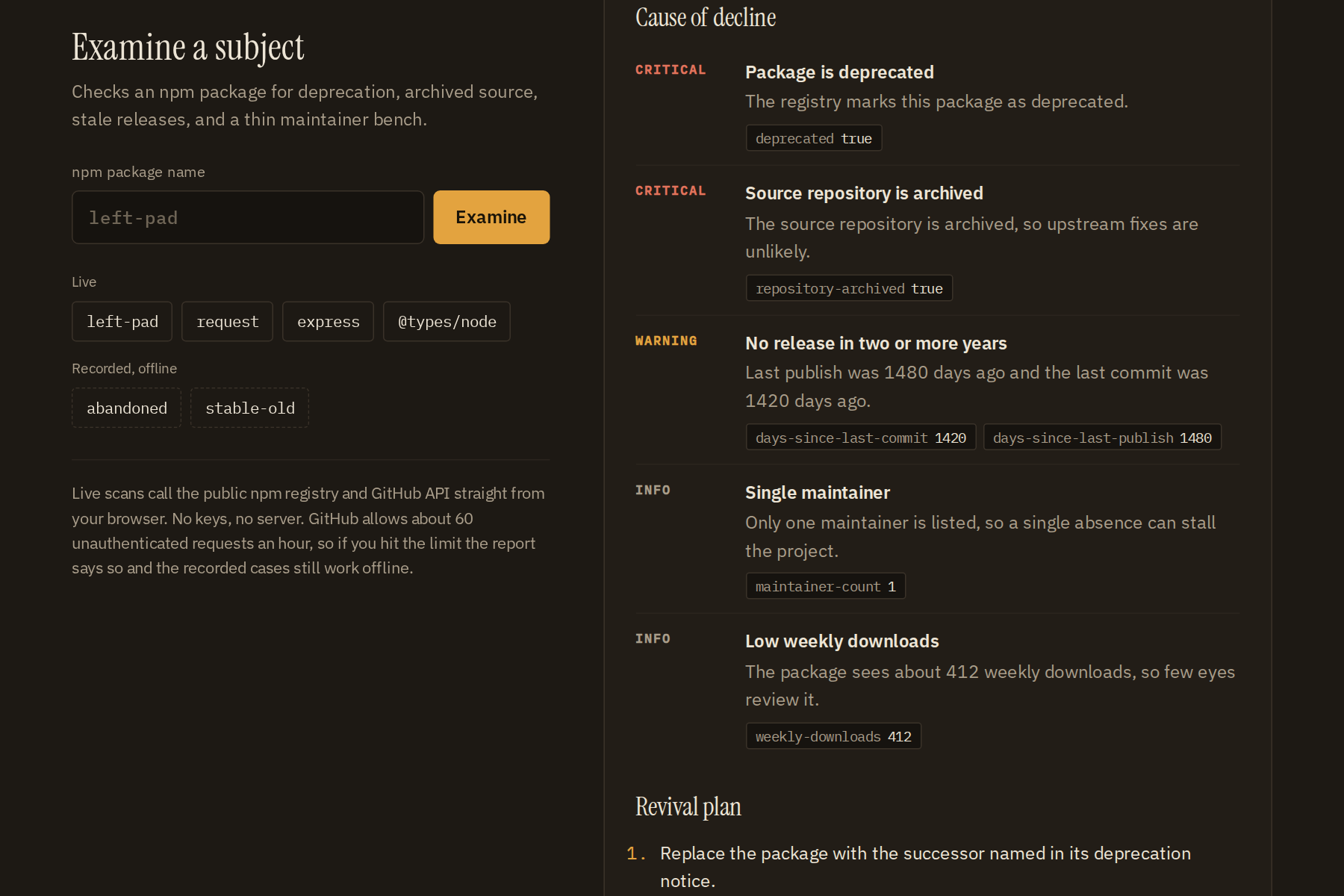
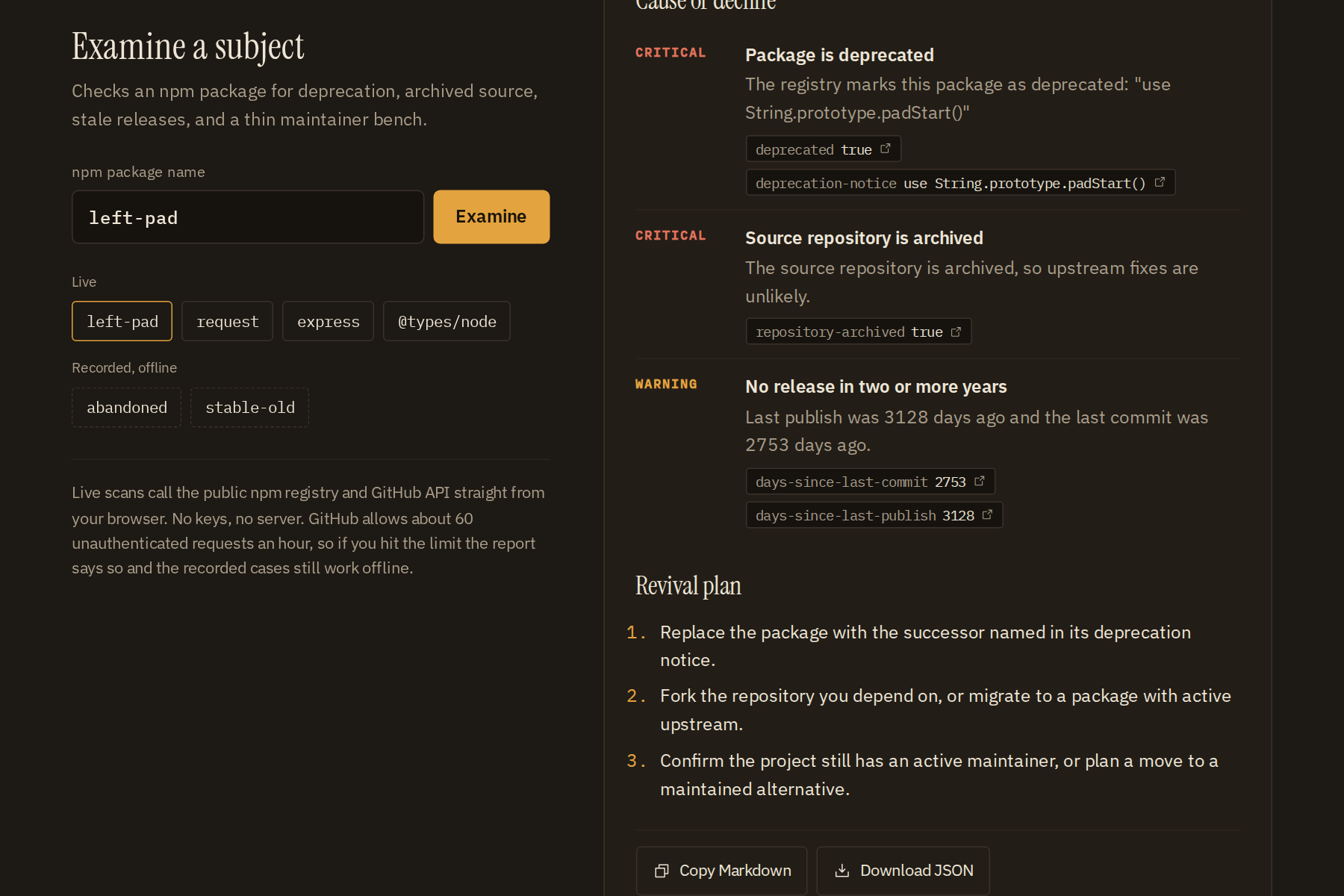
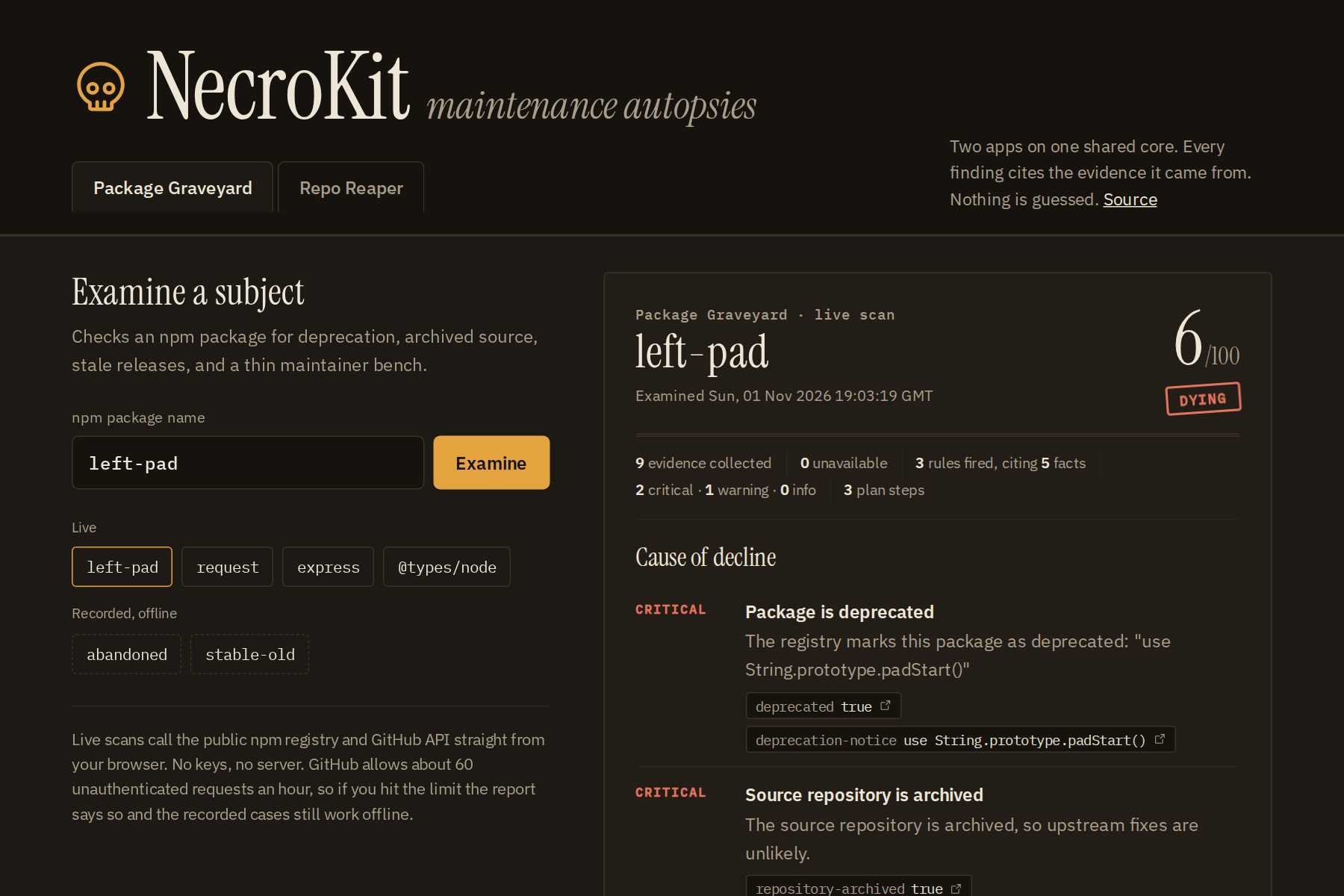
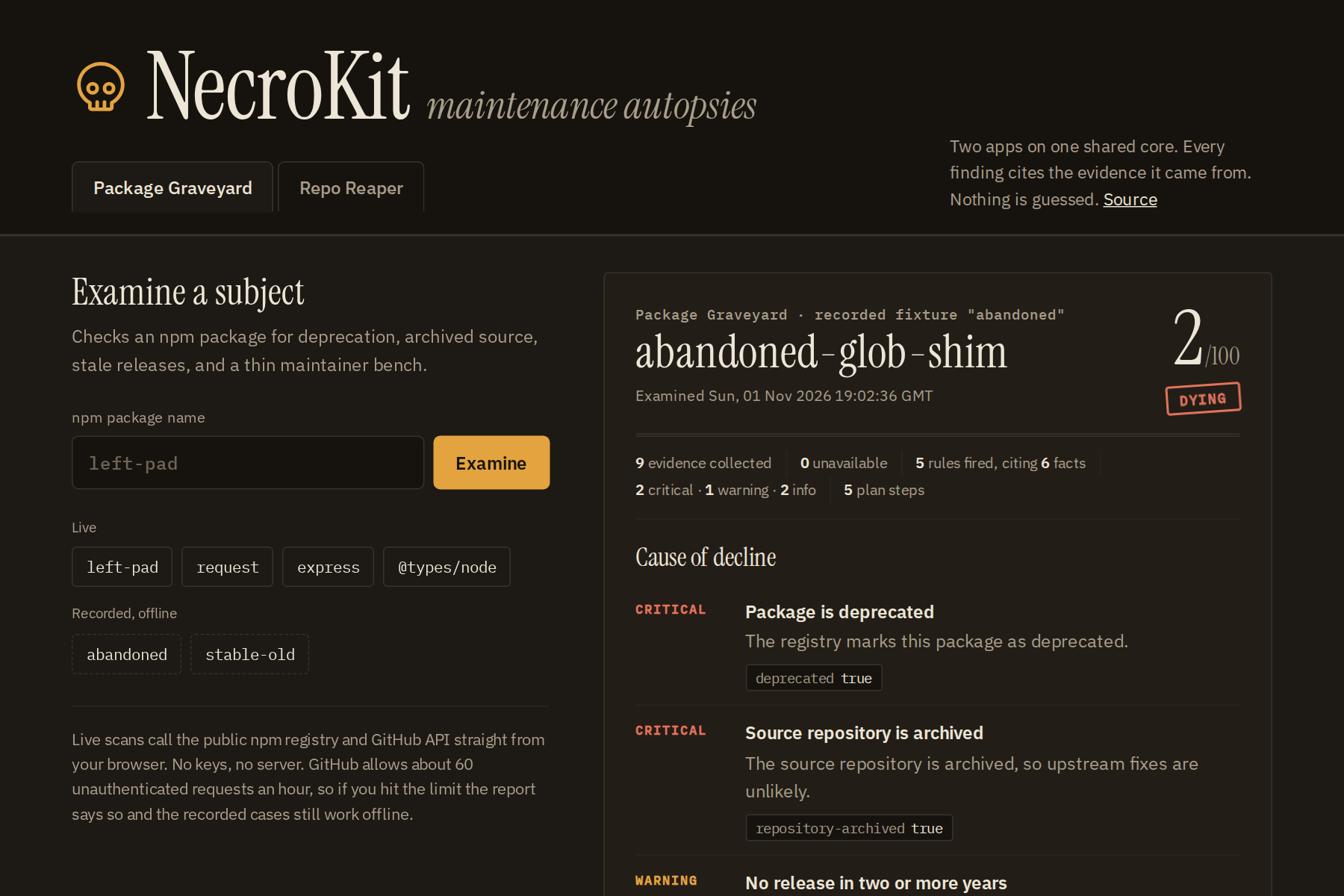
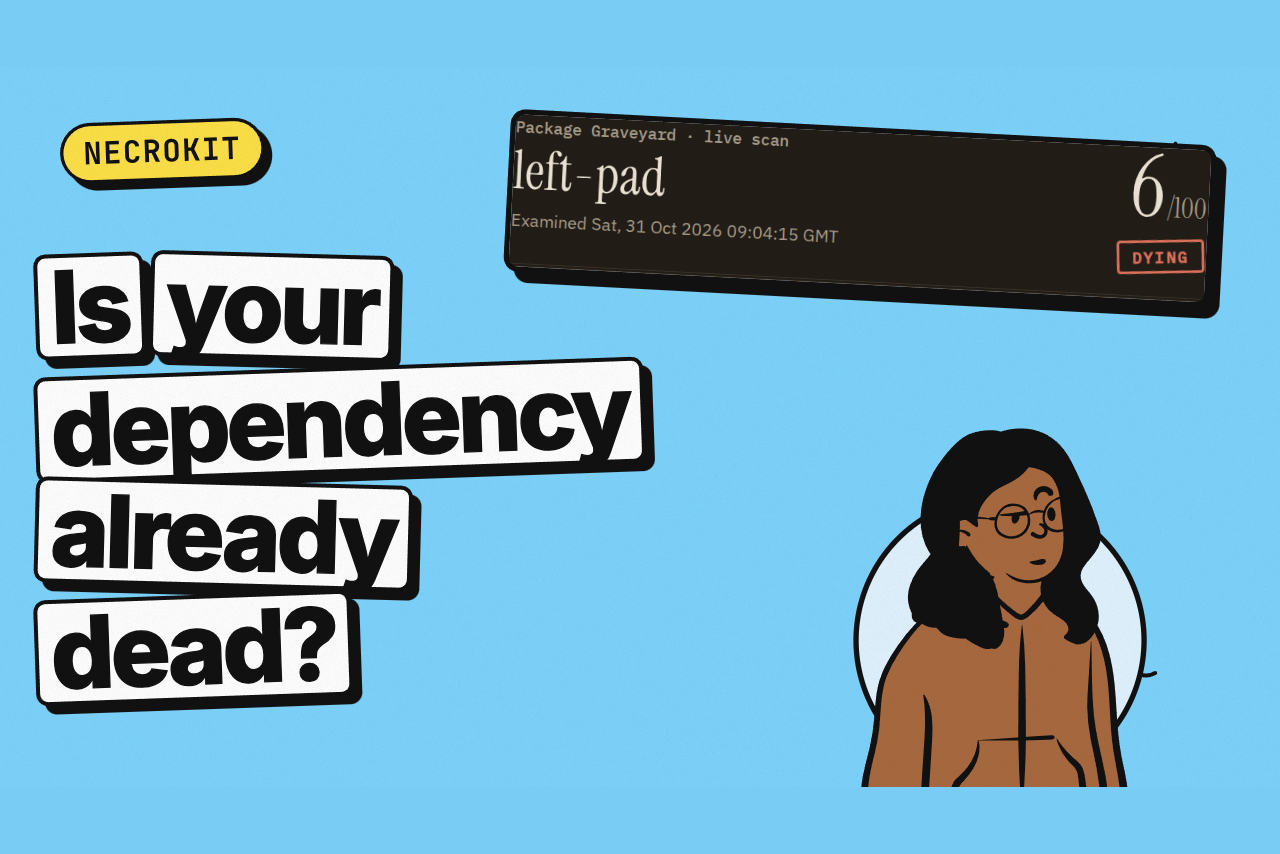
- Package Graveyard checks an npm package: deprecation (with the notice quoted), archived source, years without a release, a single maintainer, and low downloads.
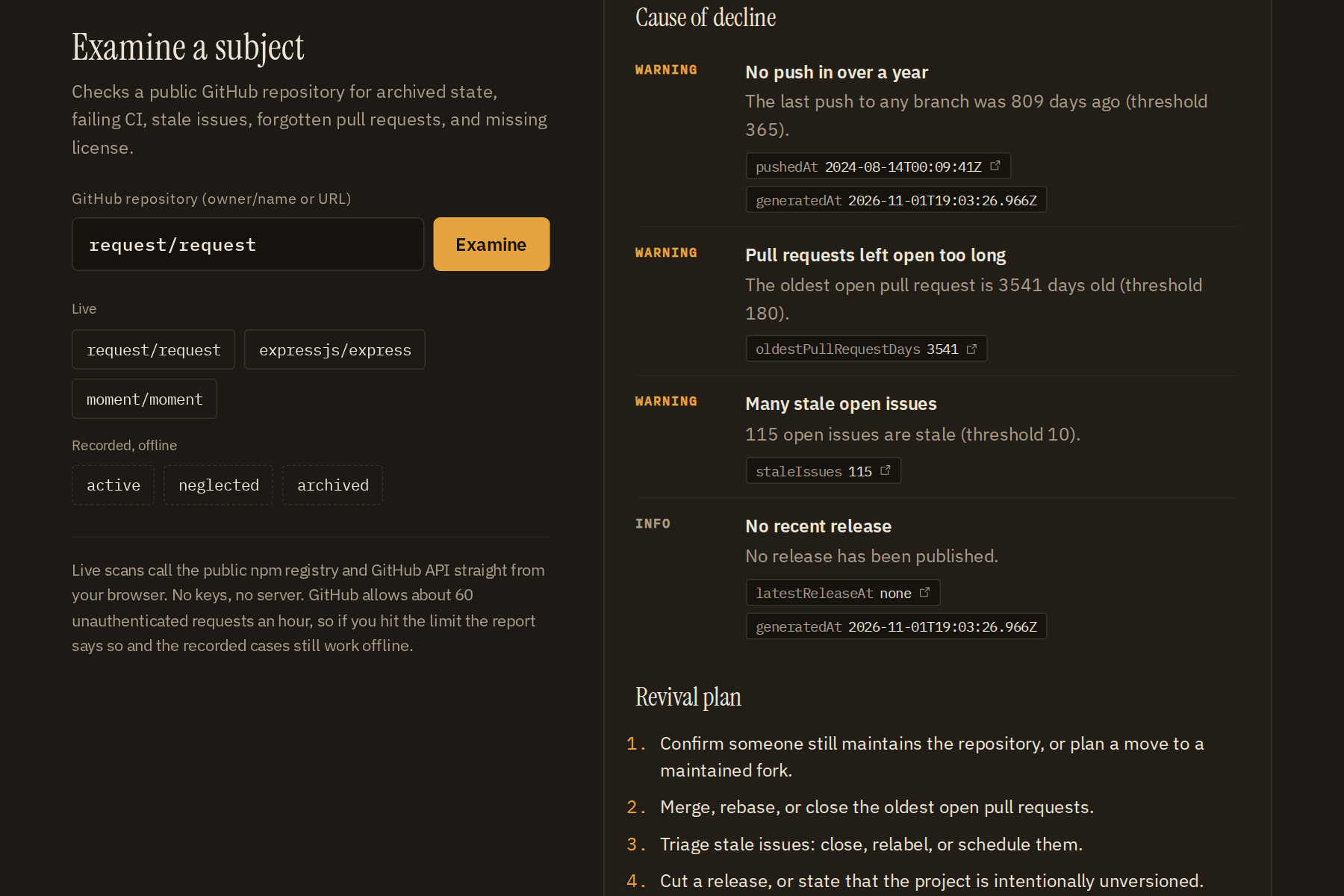
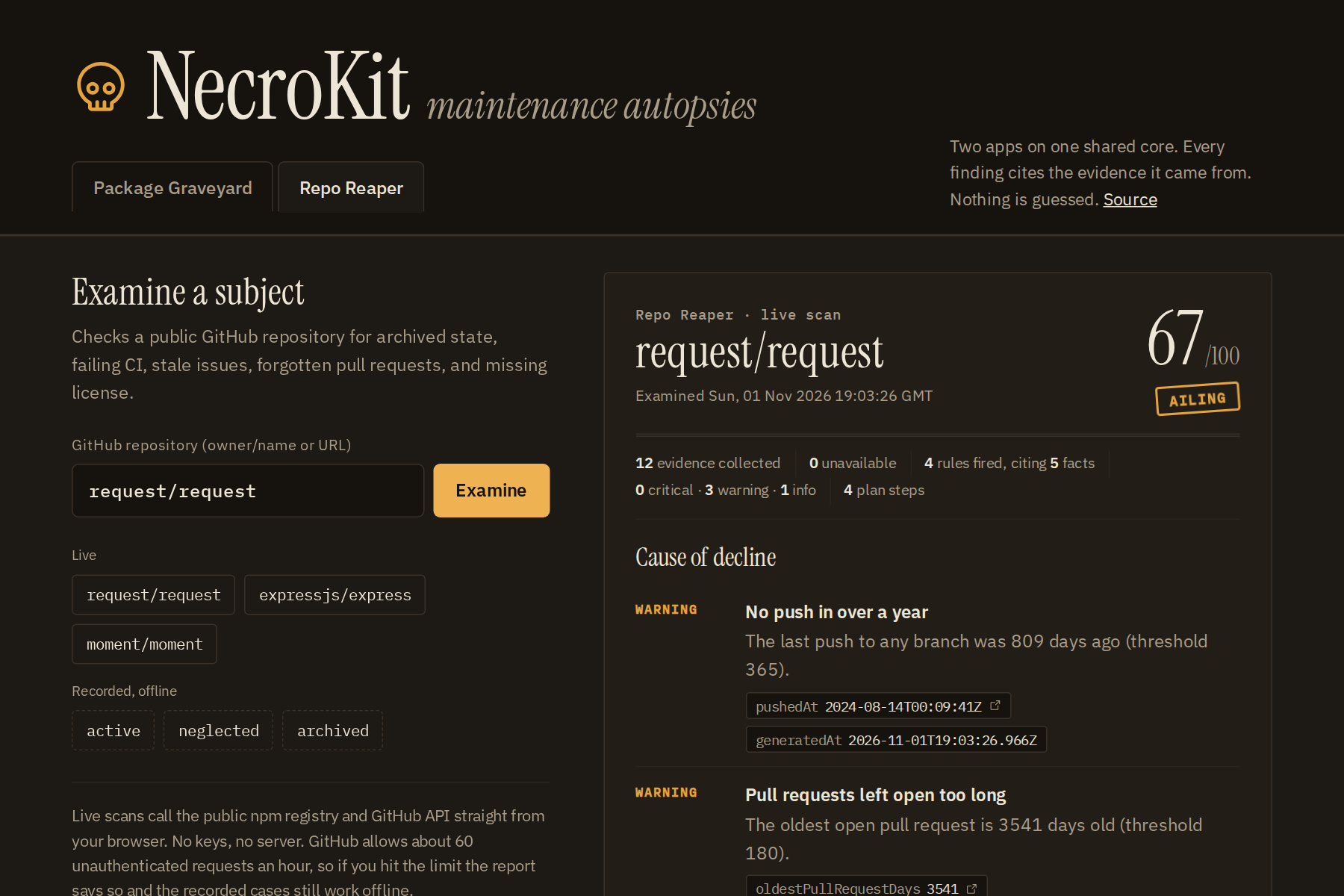
- Repo Reaper checks a public GitHub repository: archived state, missing license, failing CI, stale issues, forgotten pull requests, no push in over a year, missing releases, and a missing README.
Each scan gives a score out of 100, a verdict (Alive, Ailing, Dying), the findings with links to the exact facts behind them, the sources that could not be checked, and a revival plan. Reports can be copied as Markdown or downloaded as JSON. The demo needs no account and no key, and recorded scans work offline.
How we built it
The core holds the contracts (zod), the rule runner, scoring, the revival plan, the report writer, and a fetch helper that times out, never throws, and explains rate limits. It knows nothing about npm or GitHub. Each app adds only an adapter, a live collector, and its own rules. The demo site is plain TypeScript bundled with esbuild.
How we used Kiro
- Specs: one spec each for the core, Package Graveyard, and Repo Reaper, with requirements, design, and tasks. The core spec came first so both apps had to fit one contract.
- Steering: project rules every change had to follow, such as every finding must cite evidence, every network call needs a timeout, nothing on the judging path needs a secret, and tests are never weakened to pass.
- Hooks: editing a core file asks the agent to typecheck and test the core and both apps; editing an app's rules asks it to run that app's tests and explain any snapshot change.
- Property-based tests (fast-check) prove the score stays between 0 and 100, never rises when a finding is added, and does not depend on finding order.
Challenges
- An unknown package first scored 100 and was called healthy, because no rule fired. We added an unscored report so "no evidence" never looks like "healthy".
- GitHub's search API allows 10 unauthenticated calls a minute. We cut each repository scan to one search call by counting pull requests from a list call.
What we learned
Showing the evidence matters more than the score. People trust a verdict when they can click through to the registry page or the CI run that caused it.
What's next
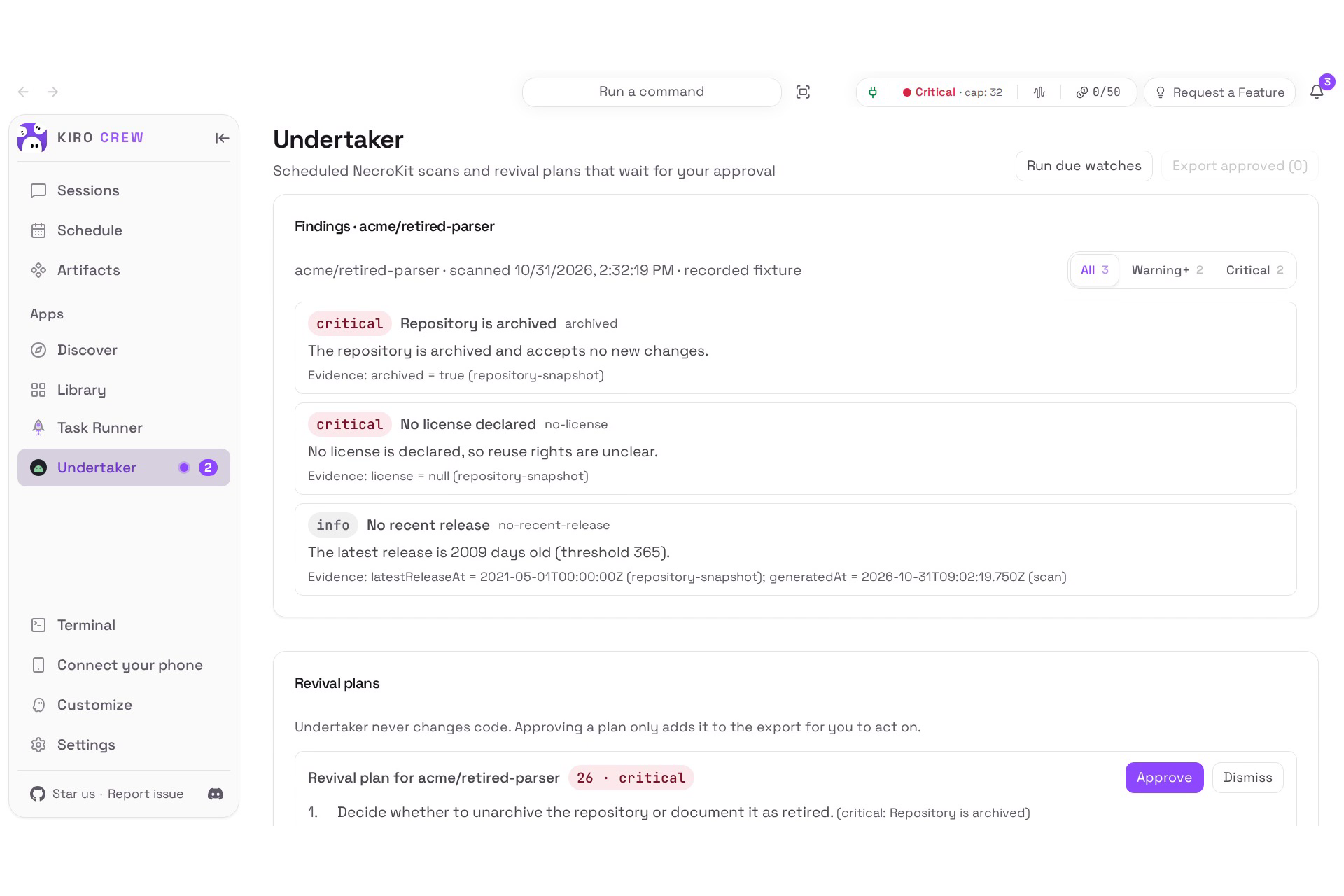
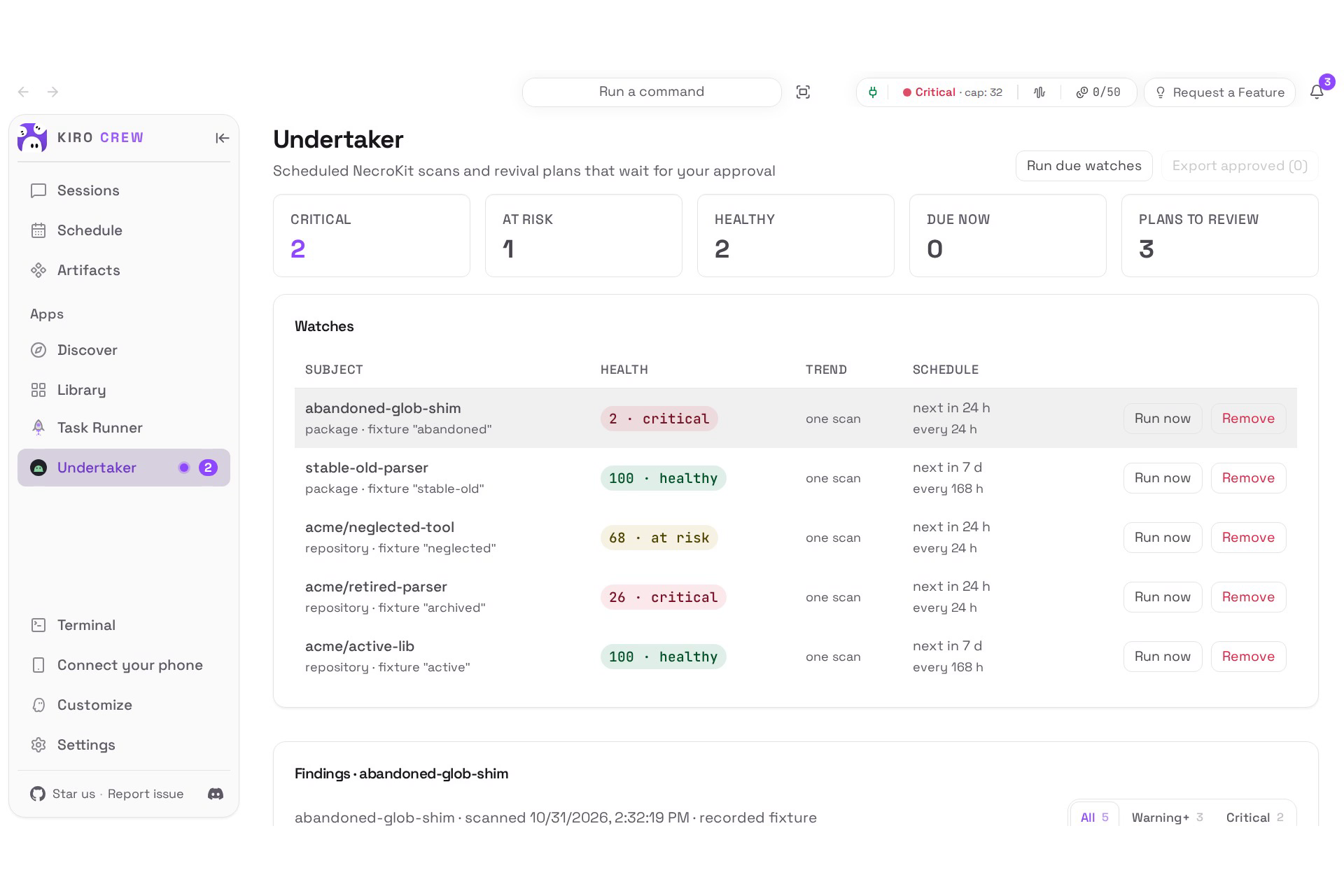
Scanning a whole package.json at once, and a scheduled watch list (started in the Undertaker Crew app).
Links
- Repository: https://github.com/Sarcastic-Soul/necrokit
- Demo: https://necrokit-demo.vercel.app
- Crew app repository: https://github.com/Sarcastic-Soul/necrokit-crew
- Video: https://youtu.be/ASyYI7fxNnE
- Blog post: https://dev.to/anishisbusy/necrokit-finding-the-dead-code-you-depend-on-built-with-kiro-for-kiroween-2026-50oc
- Social post: https://x.com/Anish_Is_Busy/status/2116967317284471076
Test instructions
Open the demo. Click any "Recorded, offline" chip for a scan that needs no network, or a live chip for a real scan. If GitHub's rate limit is reached, the report says so and still scores the rest. Locally: pnpm install && pnpm test && pnpm dev.

Log in or sign up for Devpost to join the conversation.