Inspiration
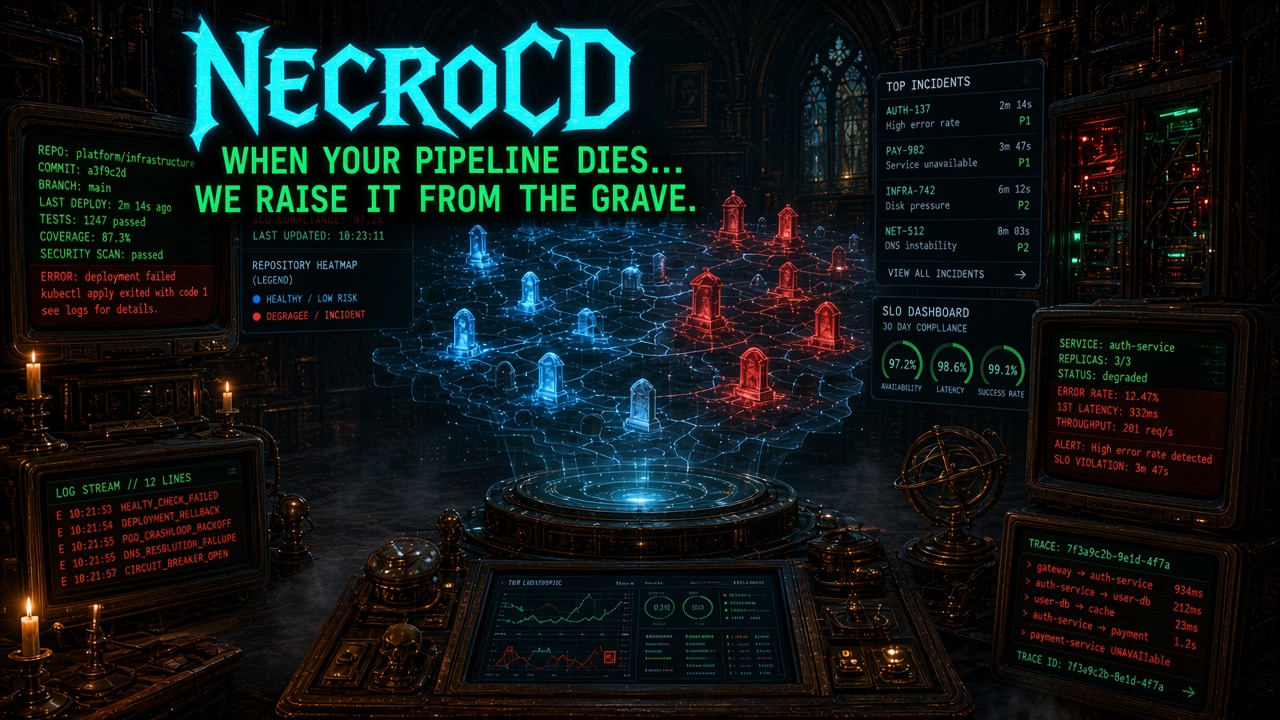
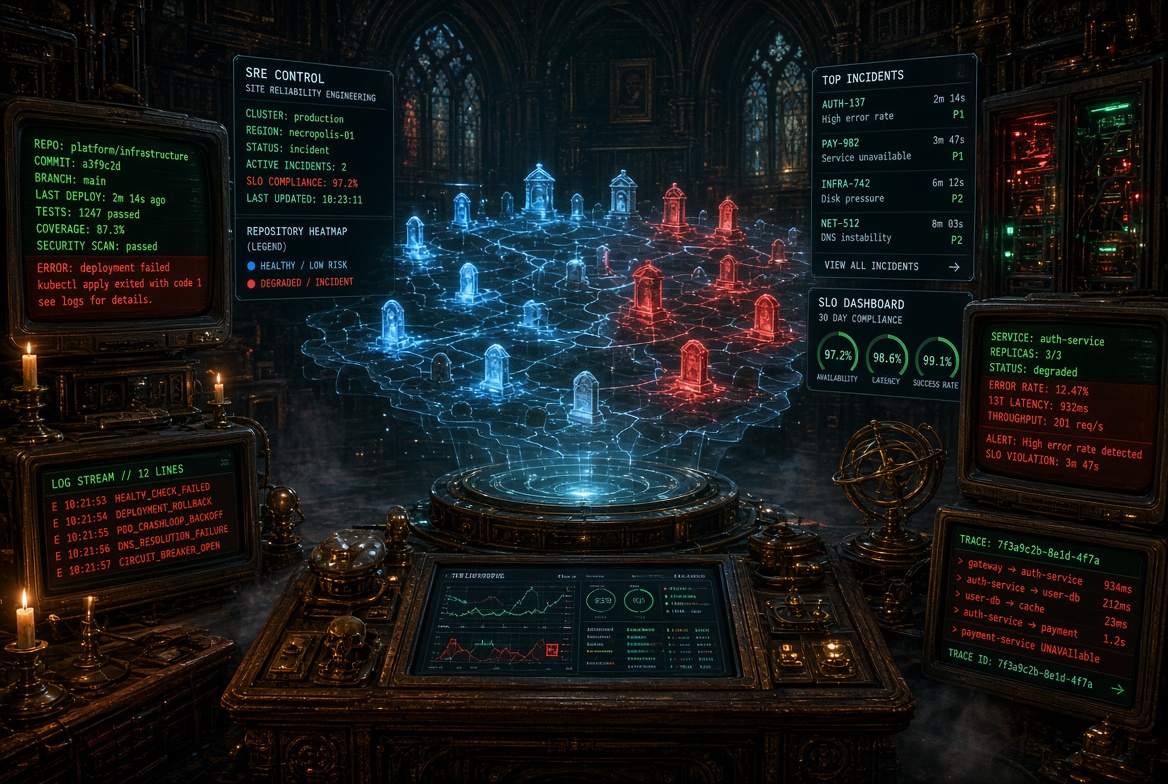
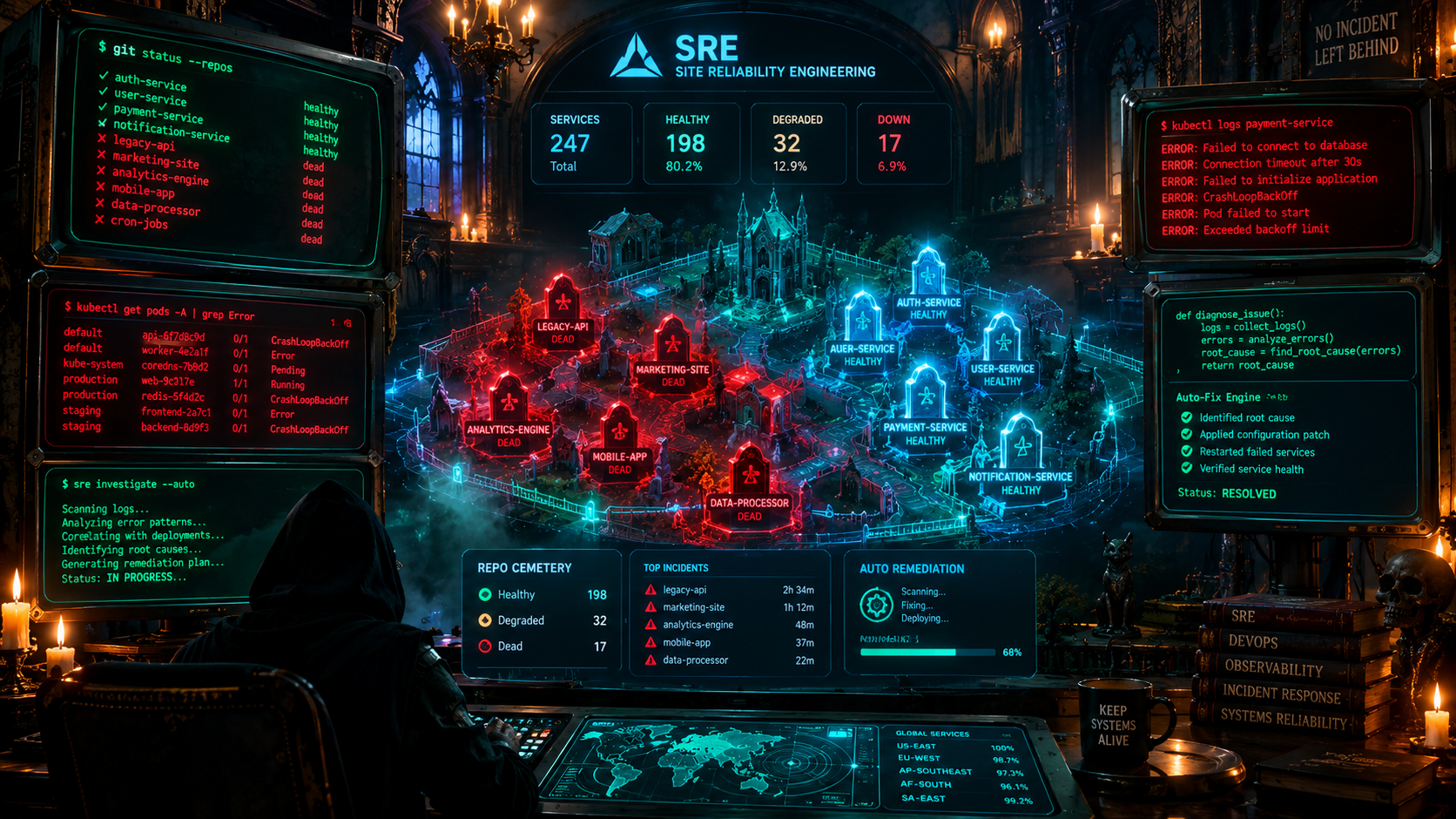
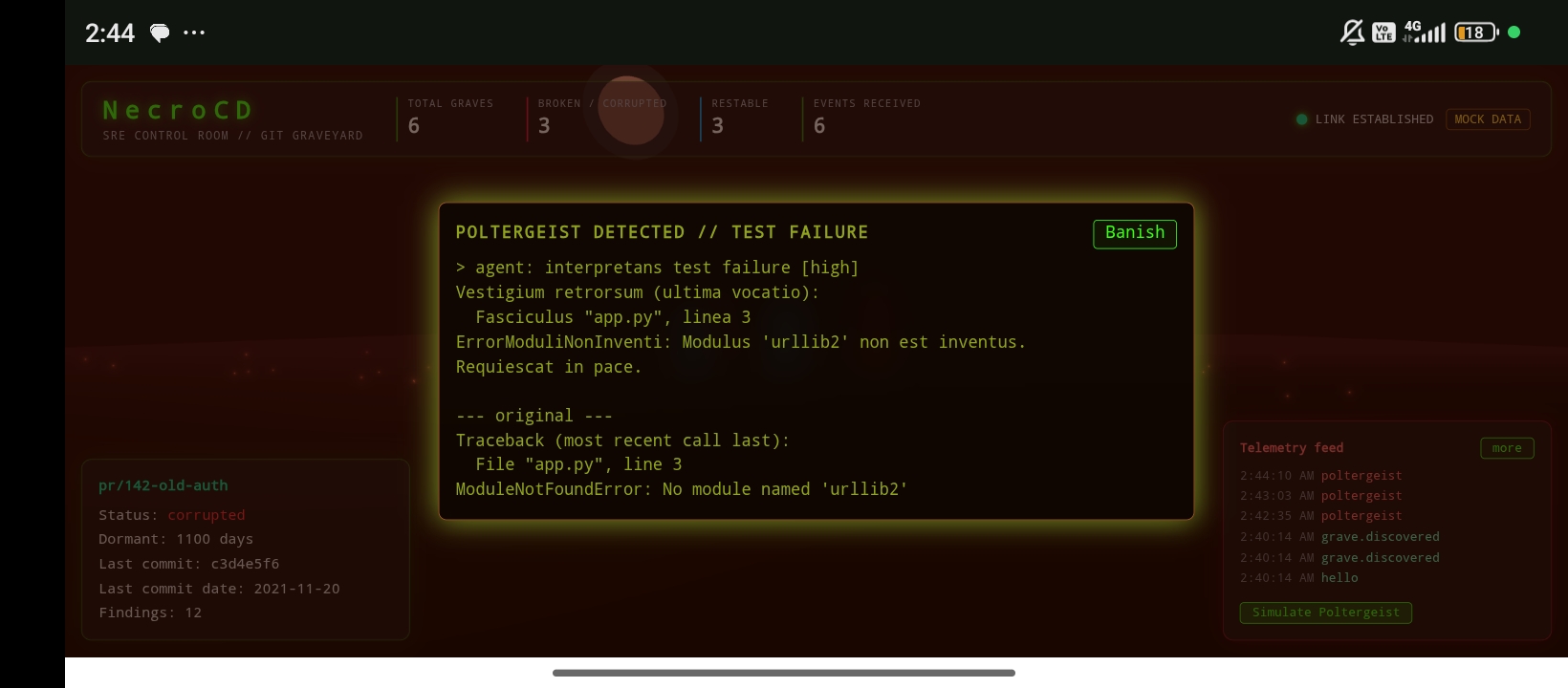
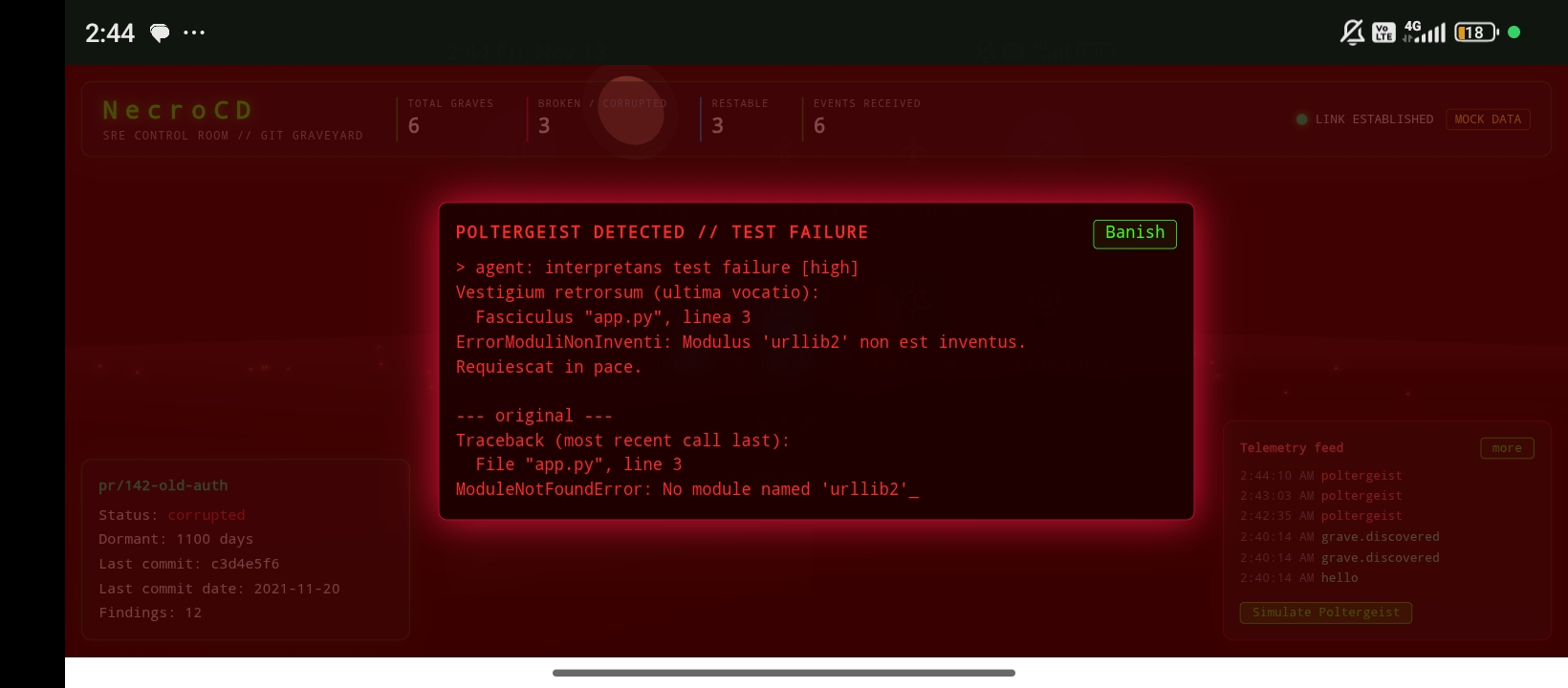
Traditional CI/CD pipelines are brittle. A single flaky test, a transient network timeout, or a minor dependency glitch can break a deployment, halting development and forcing engineers into tedious manual triage. We were inspired to build NecroCD to create a truly autonomous, self-healing continuous deployment engine—one that doesn't just report failures, but actively diagnoses and resurrects broken pipelines with zero human drag.
What it does
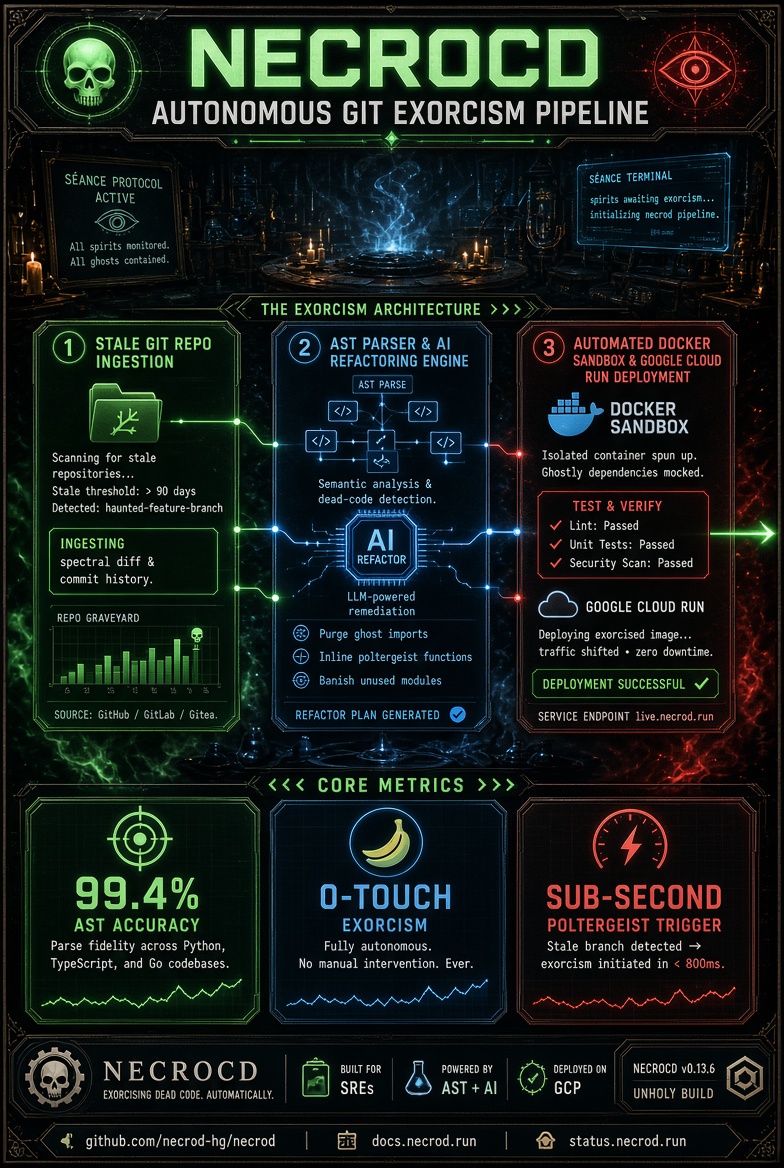
NecroCD acts as an intelligent sentinel sitting between your version control and deployment infrastructure. When a build or deployment fails, NecroCD:
- Automatically captures, parses, and categorizes build logs and error traces.
- Determines whether the failure is transient (network/flaky test) or deterministic (syntax/dependency conflict).
- Executes automated self-healing routines, safe rollbacks, or hotfix patches.
- Resurrects the pipeline, re-runs tests in an isolated sandbox, and deploys successfully without manual developer intervention.
How we built it
NecroCD is engineered with a lightweight, zero-dependency microservices architecture:
- Backend & Core Engine: Python, FastAPI, and asynchronous webhook handlers for real-time event processing.
- Data & State Management: Supabase & PostgreSQL for tracking pipeline health, error signatures, and recovery audit trails.
- Execution Sandbox: Containerized Docker environments and GitHub webhooks for secure, isolated build test-runs.
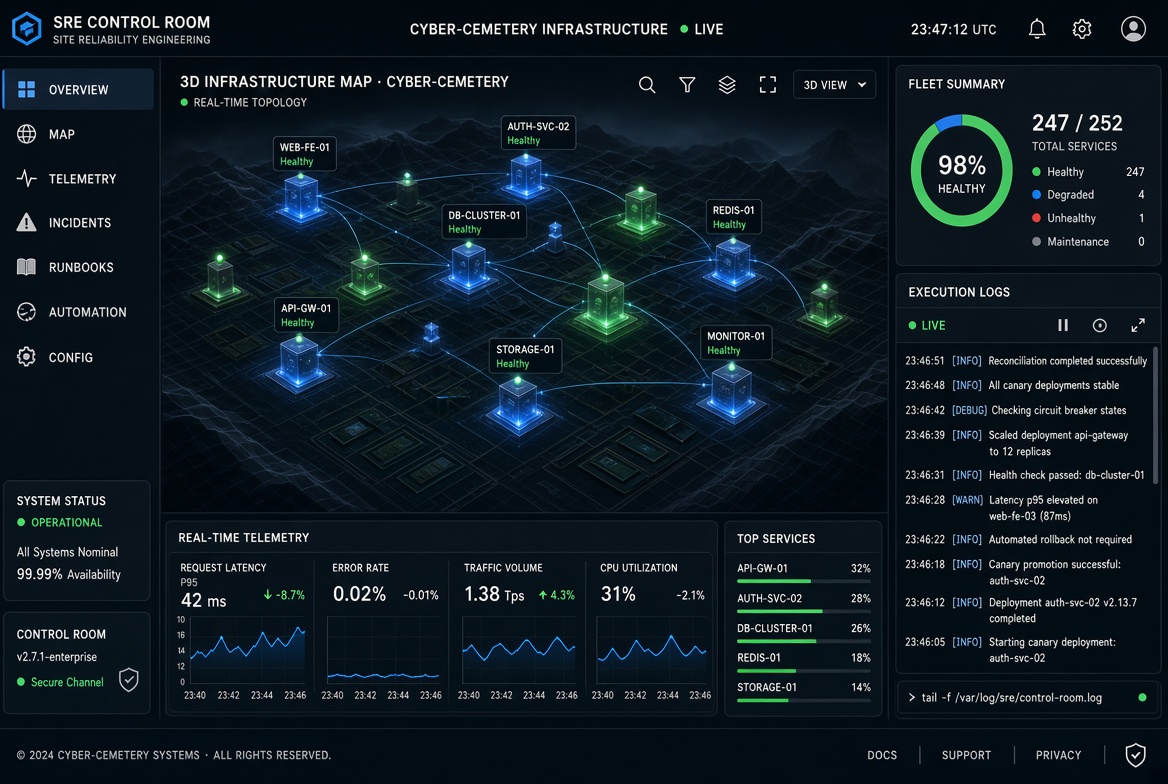
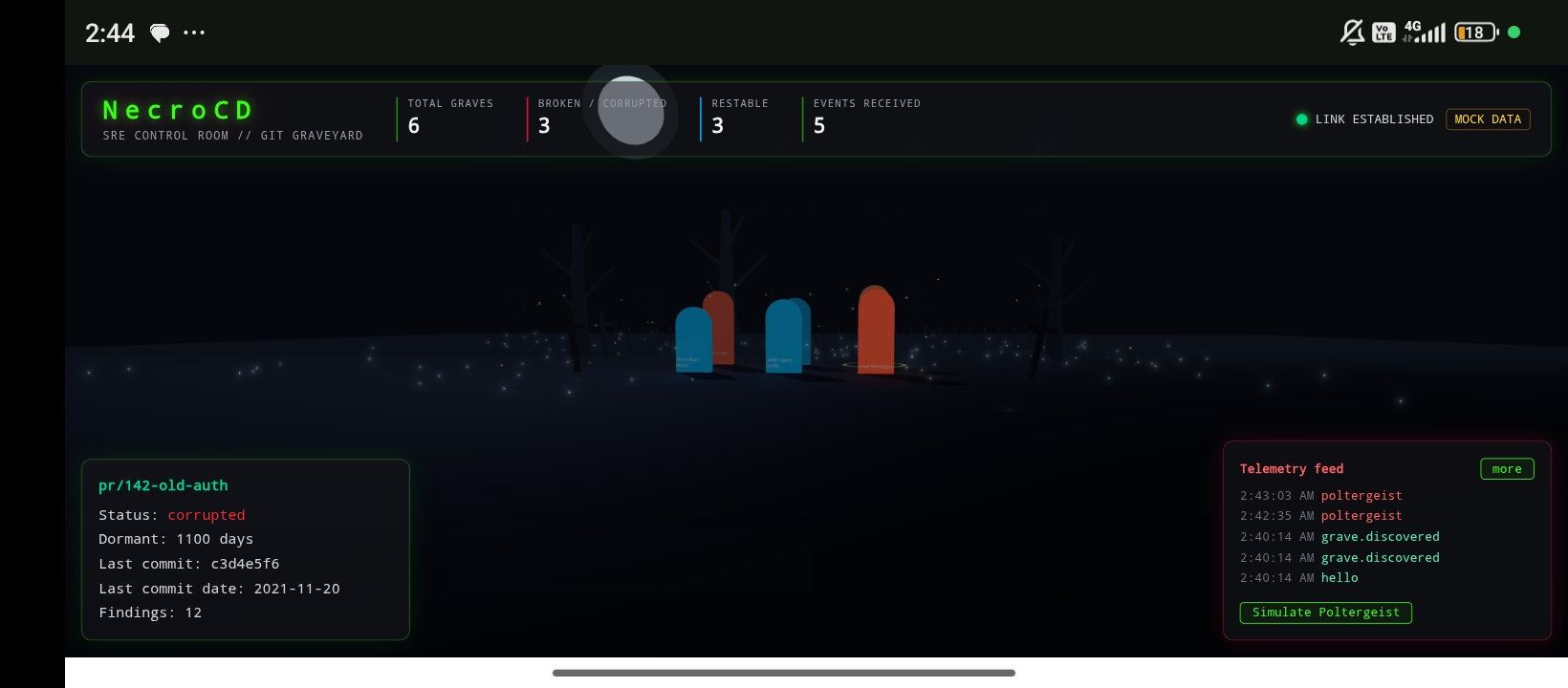
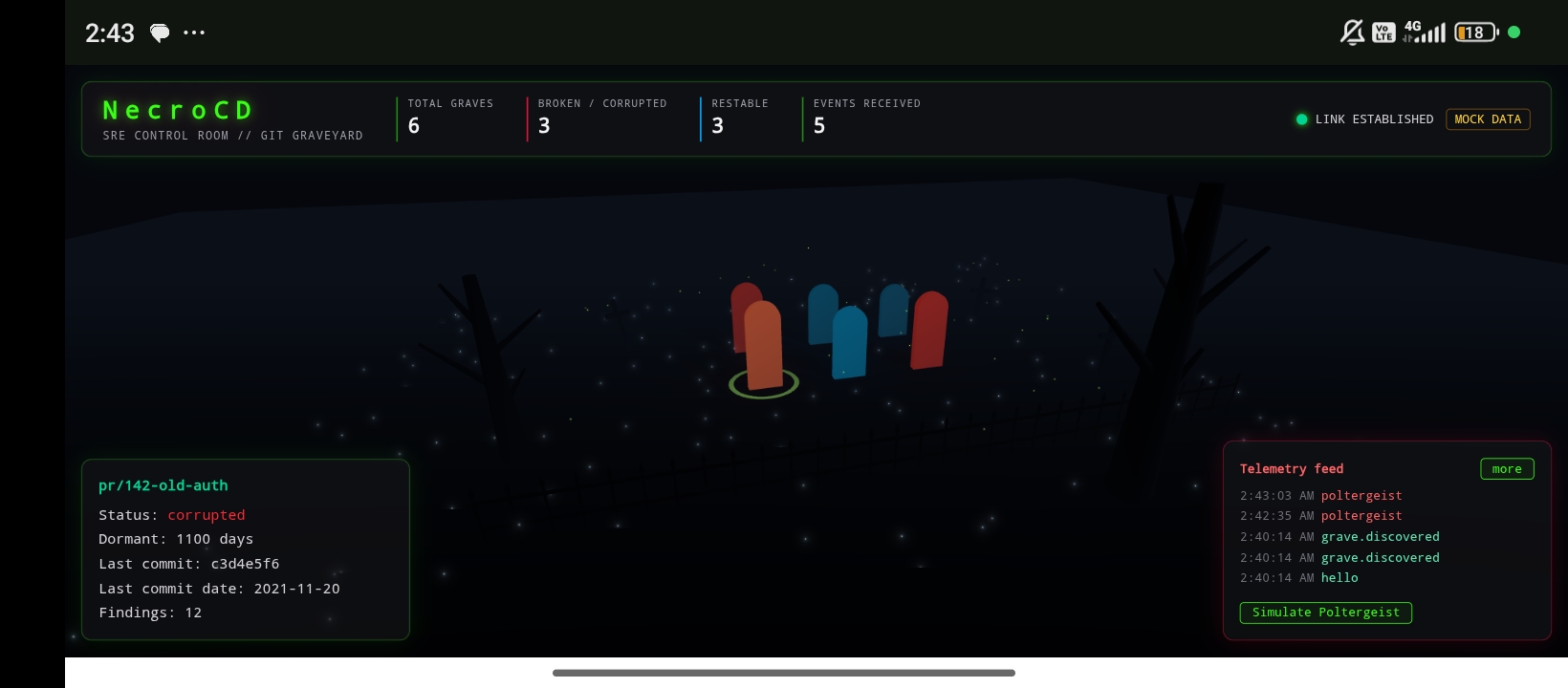
- Frontend Interface: Next.js and Tailwind CSS for a sleek real-time monitoring dashboard.
Challenges we ran into
One of our biggest hurdles was parsing messy, unstructured build logs from diverse compilers and test runners without triggering false-positive auto-fixes. We solved this by designing a strict state machine combined with weighted signature matching to classify root causes accurately and prevent infinite auto-fix loops on genuine code errors.
Accomplishments that we're proud of
- Successfully achieving fully autonomous build resurrection and zero-downtime rollbacks on complex multi-service workflows.
- Designing a zero-trust execution sandbox that ensures automated patches never compromise production security or introduce vulnerabilities.
What we learned
We learned that autonomous infrastructure requires a strict foundation of deterministic logic gates paired with smart diagnostics—pure probabilistic models are not enough when dealing with rigid system compilers and production deployment gates.
Built With
- docker
- fastapi
- github-actions
- next.js
- postgresql
- python
- supabase
- tailwind-css
- webhooks
