-
-
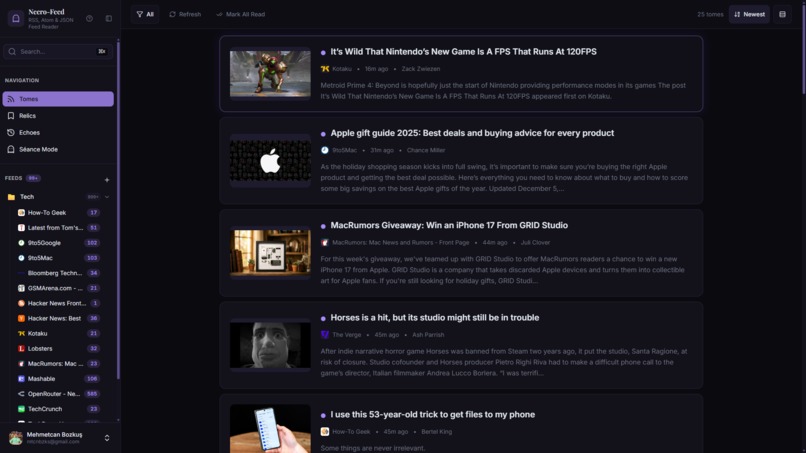
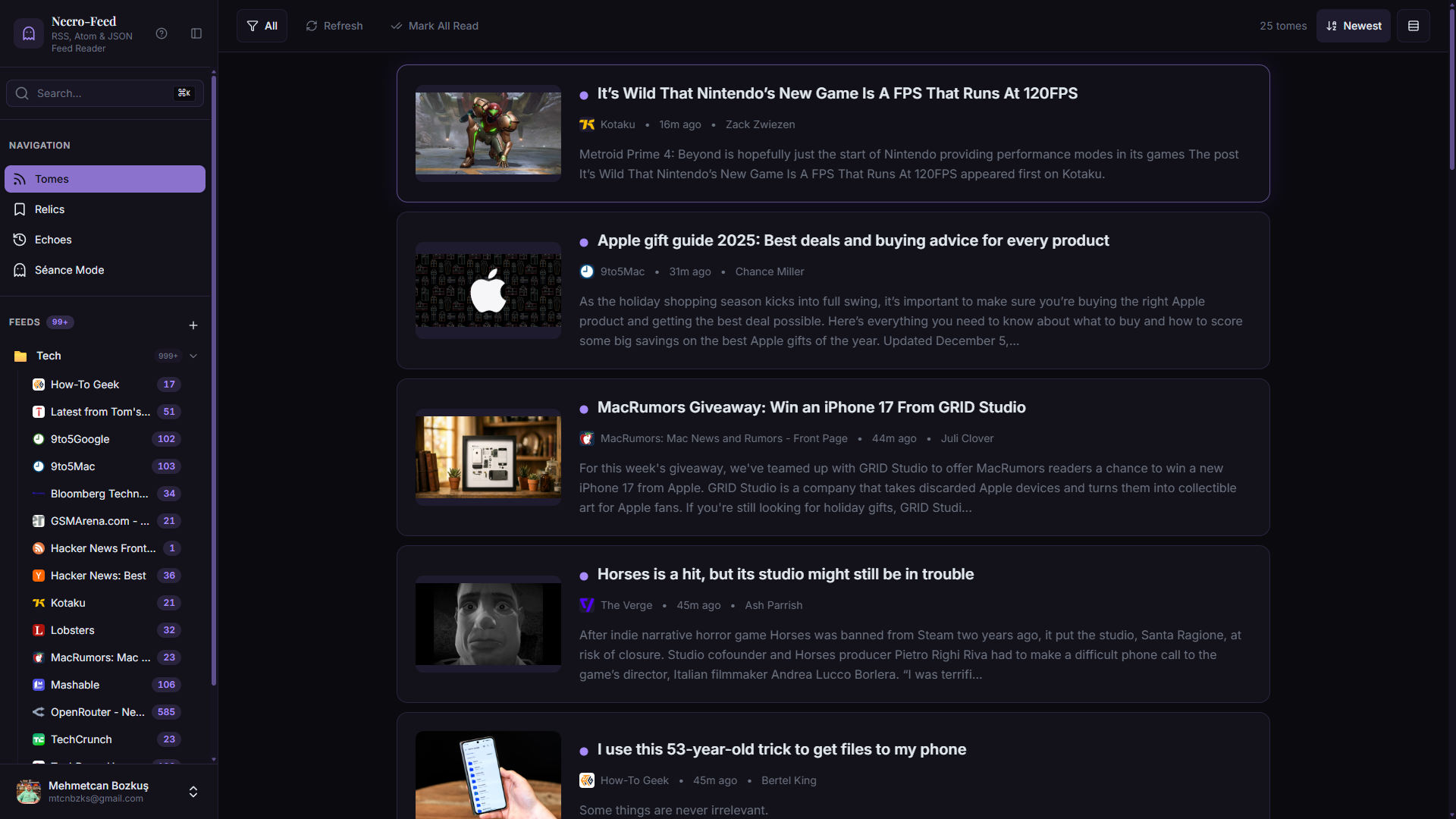
Main Page
-
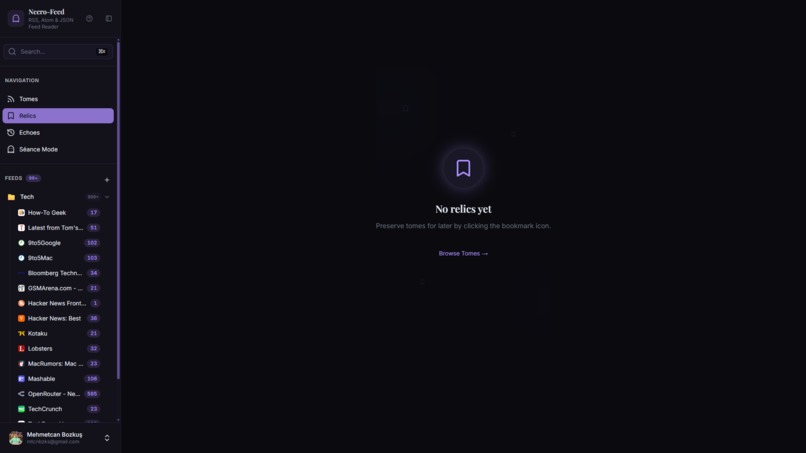
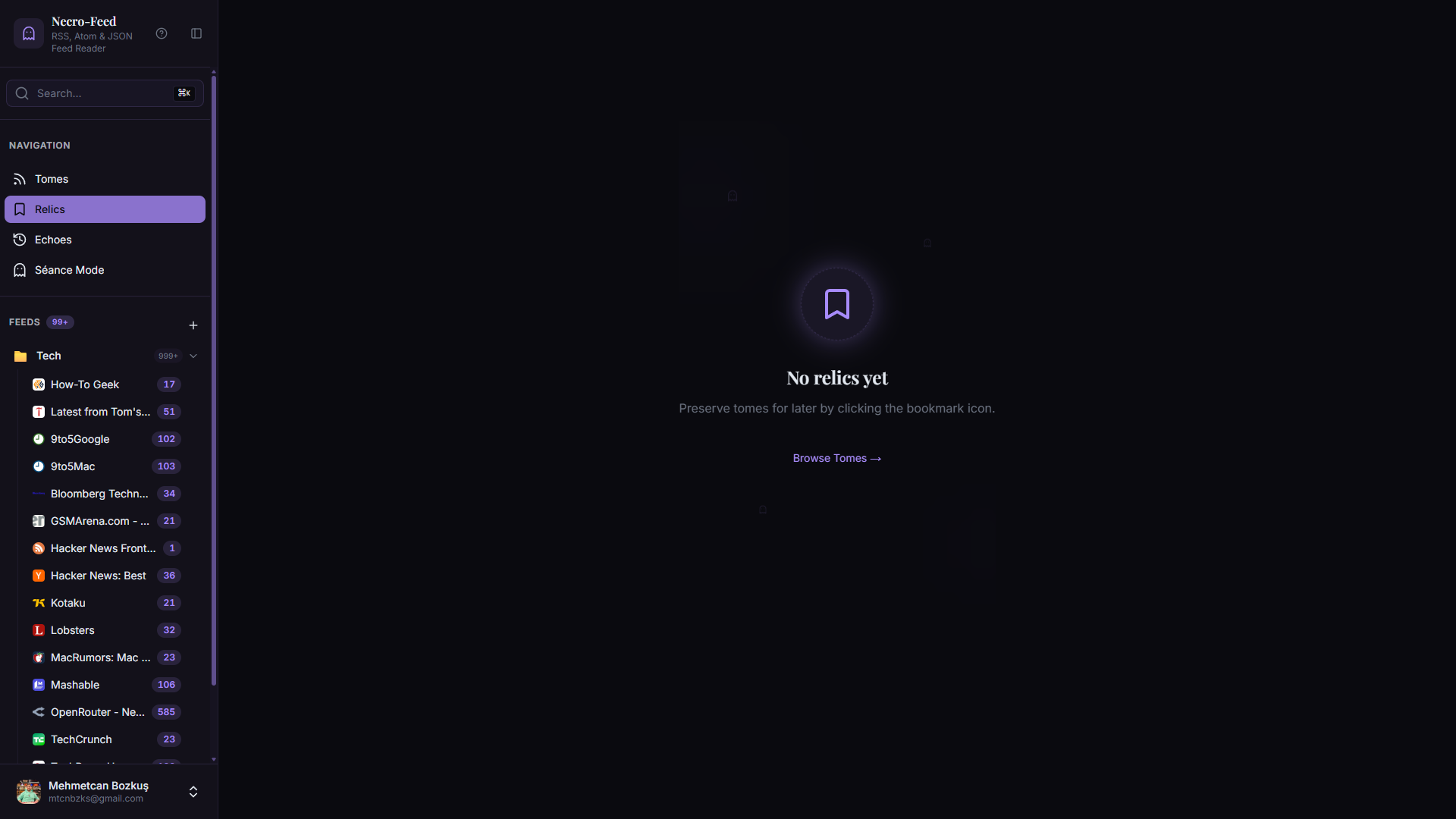
No Relics
-
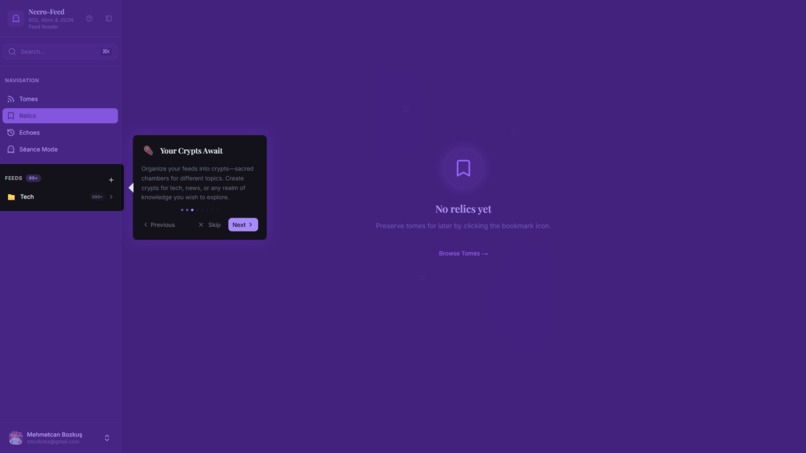
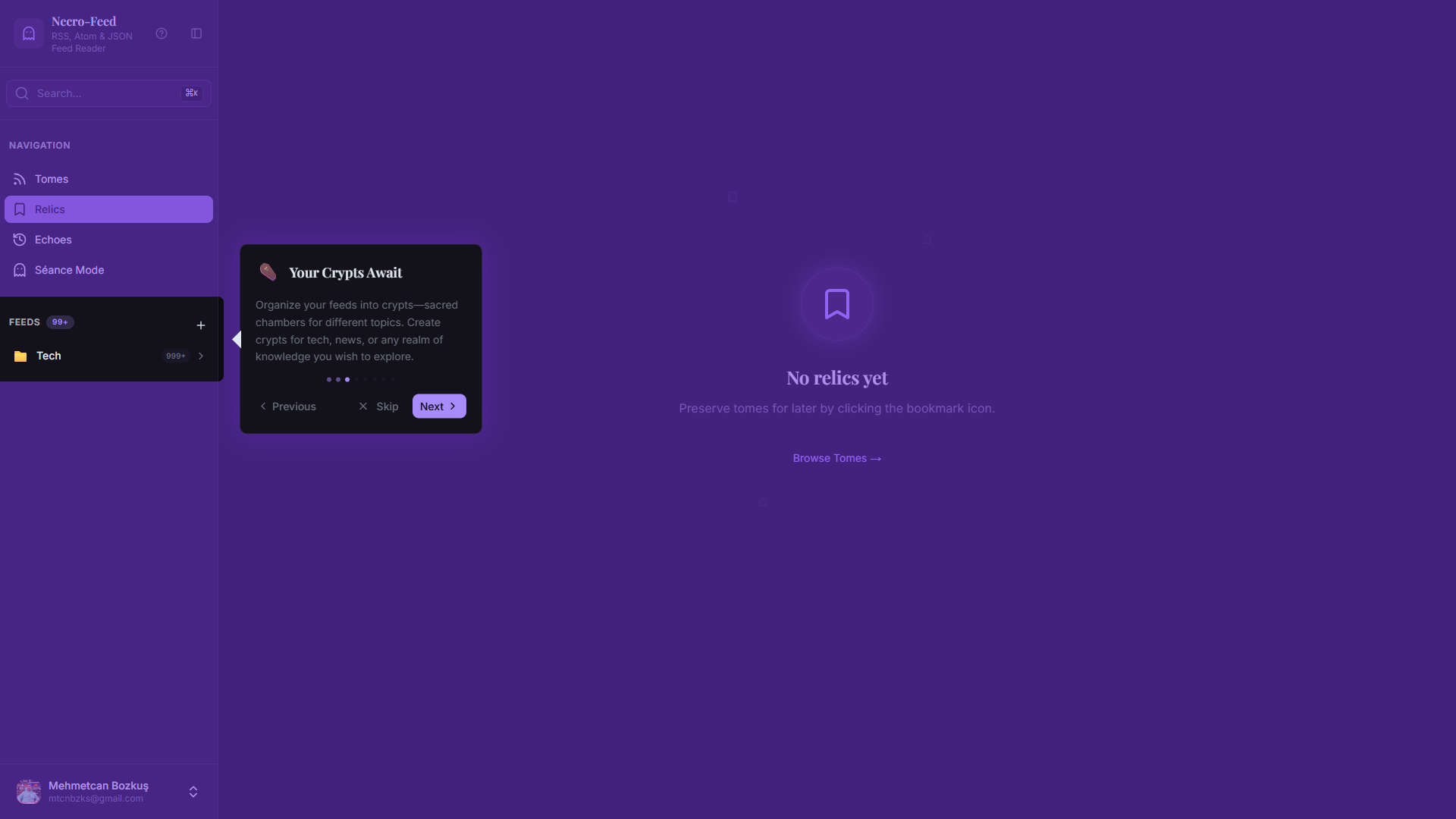
Onboarding
-
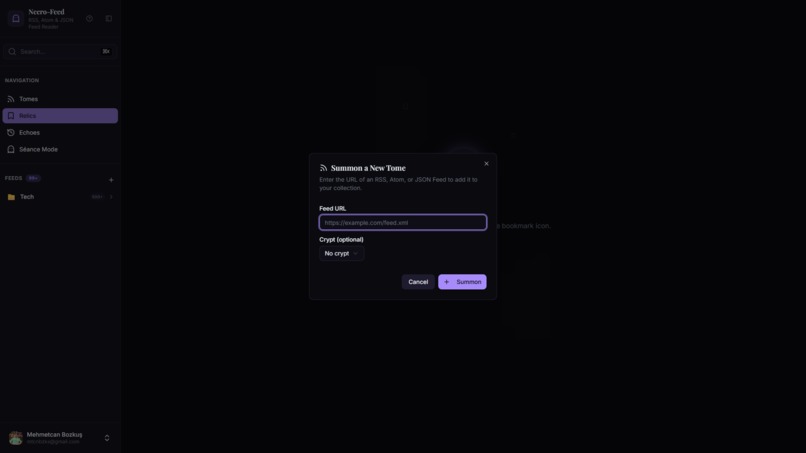
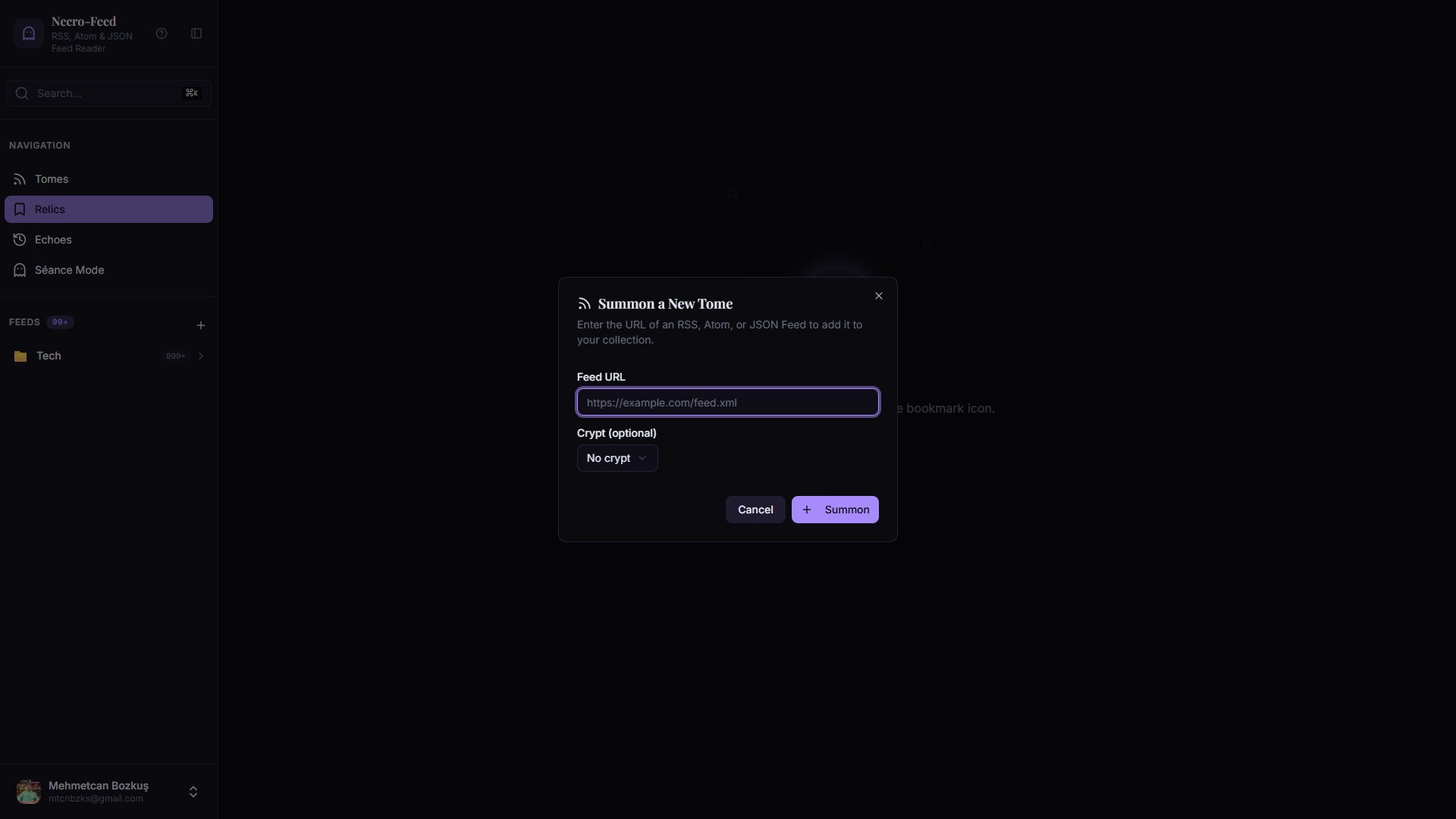
Add Feed
-
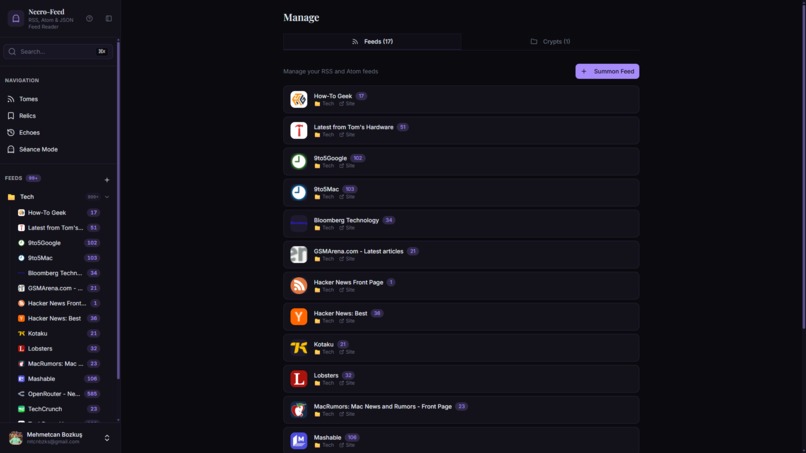
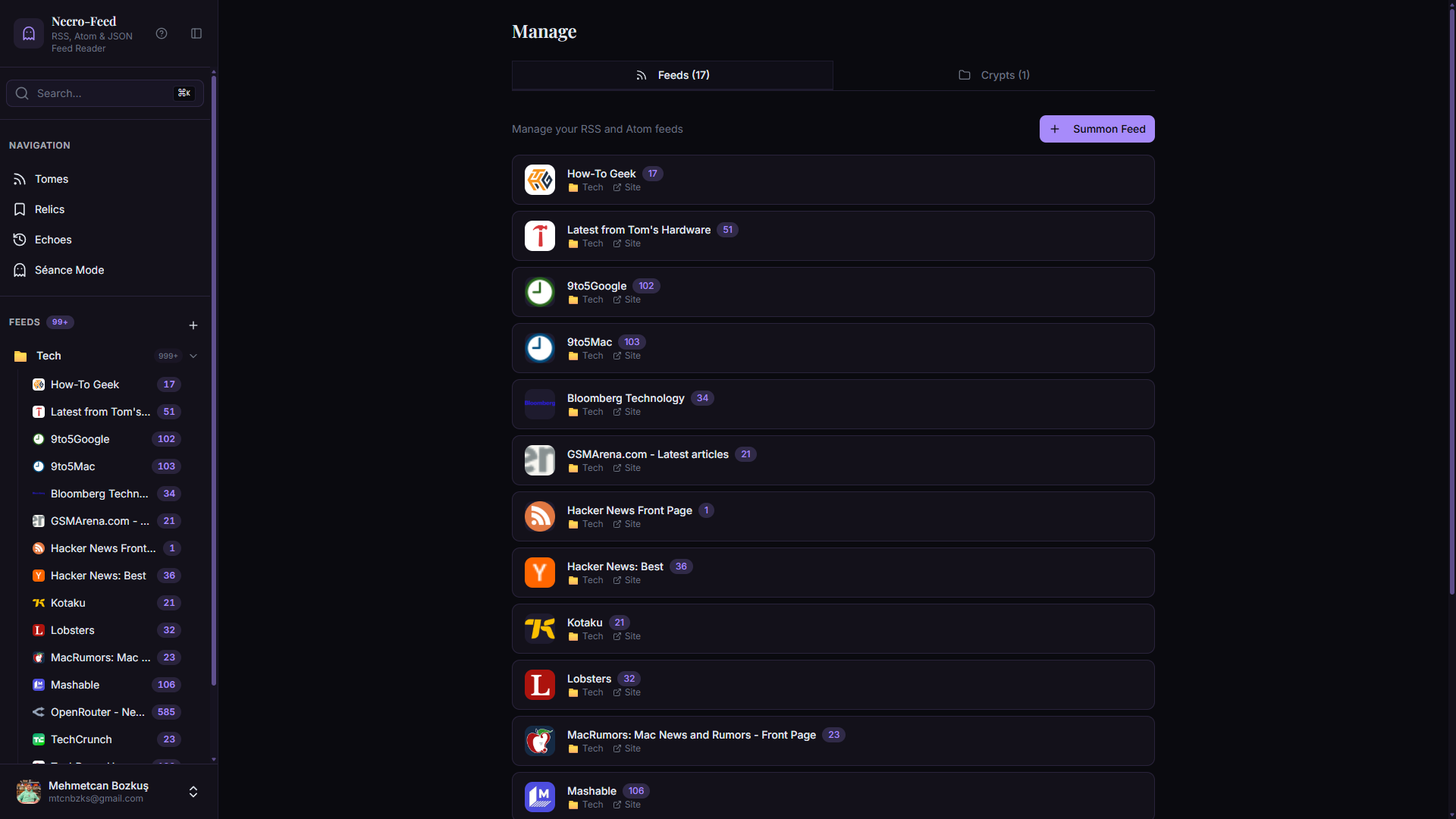
Manage Page
-
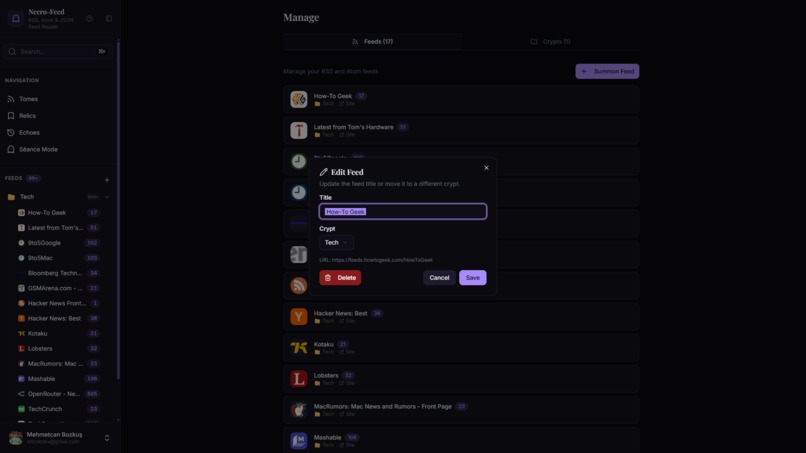
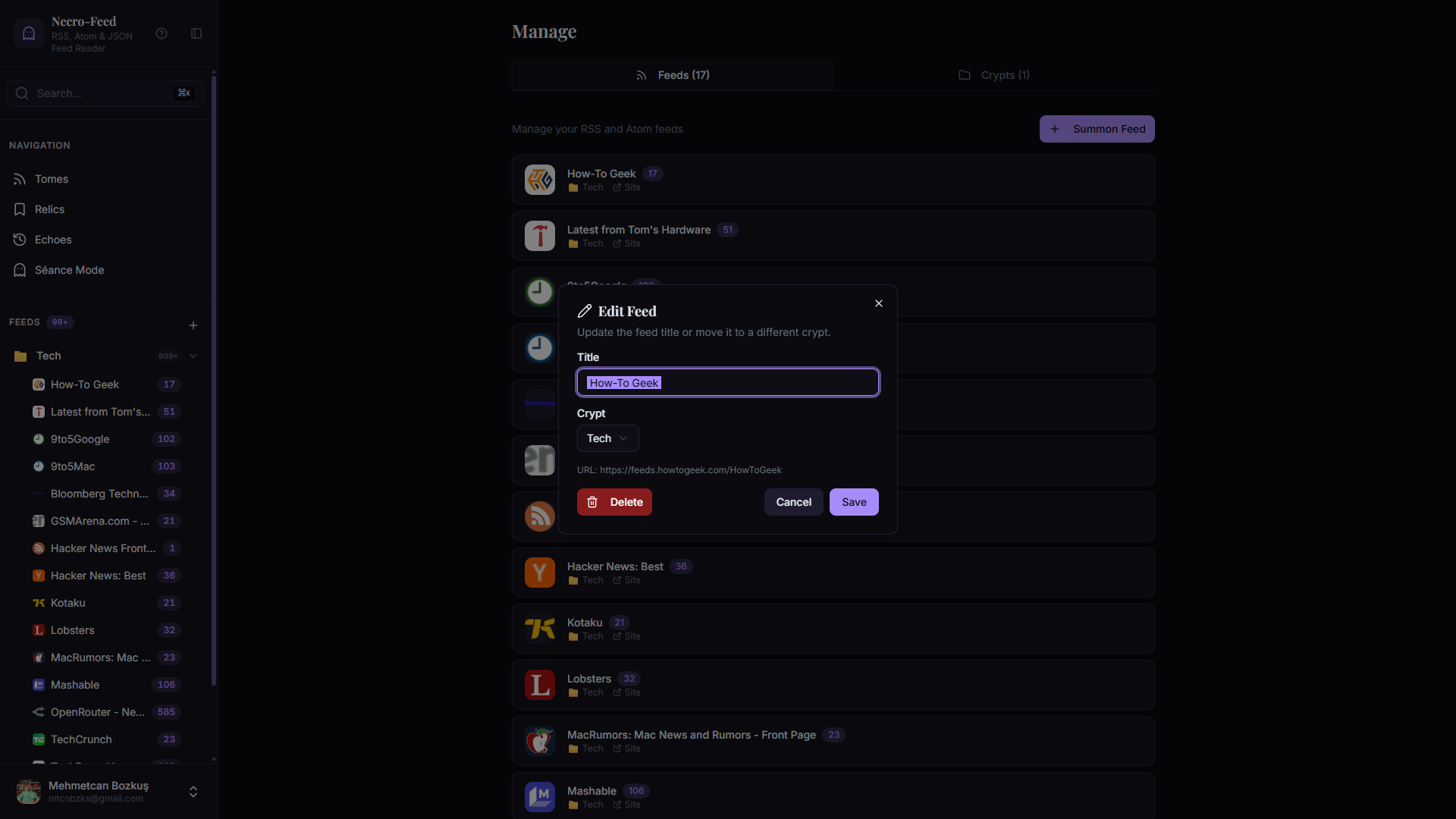
Edit Feed
-
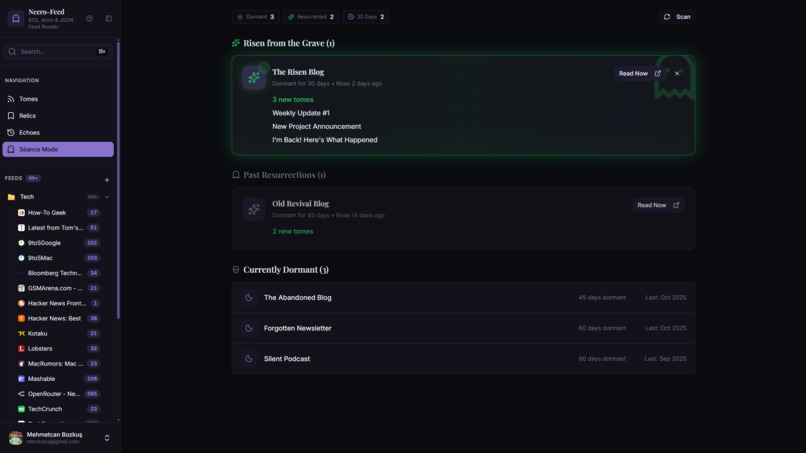
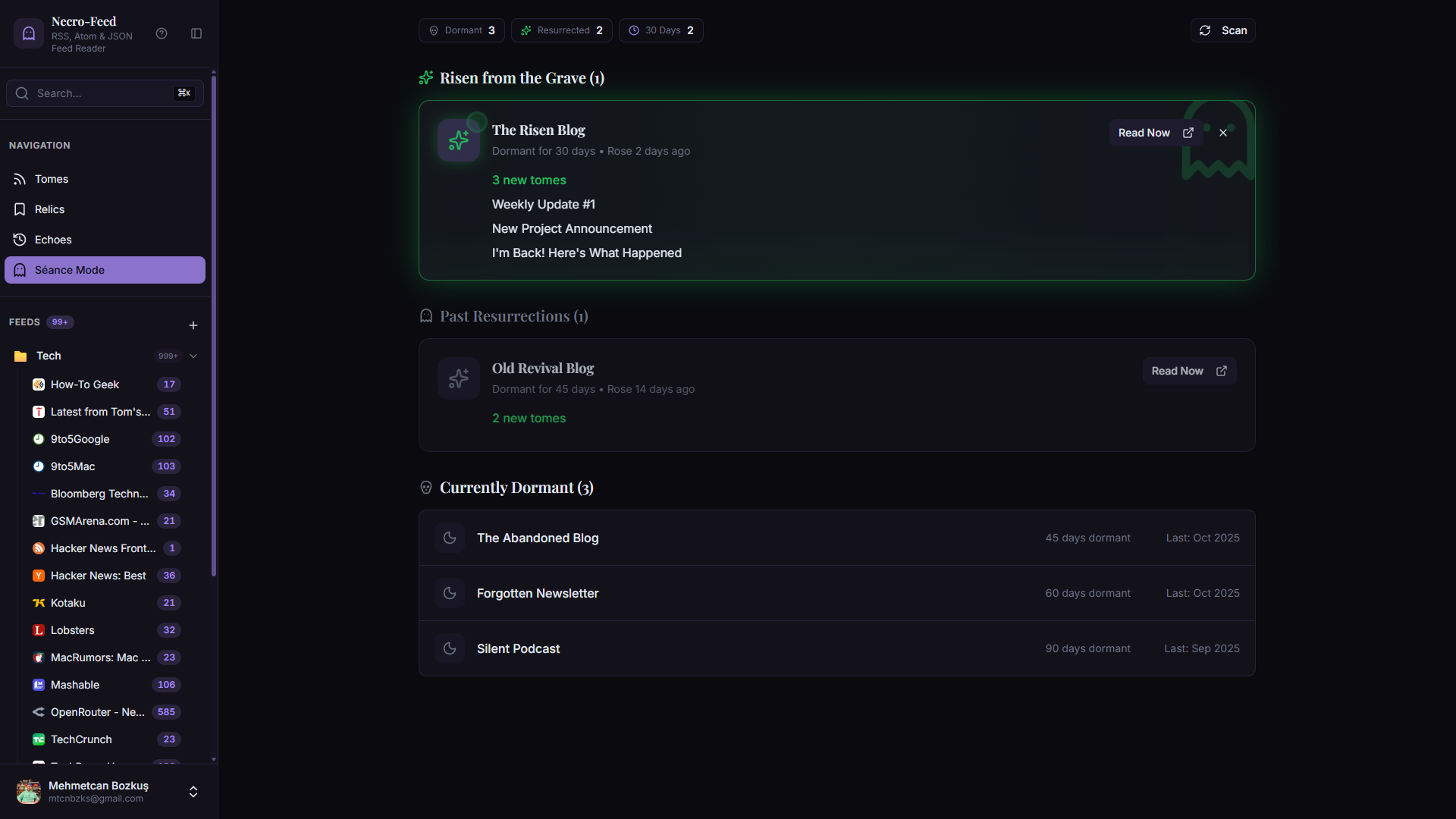
Séance Mode
-
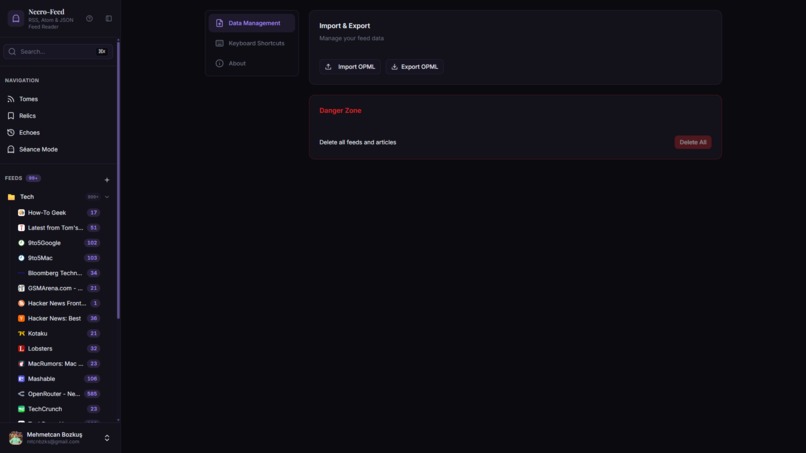
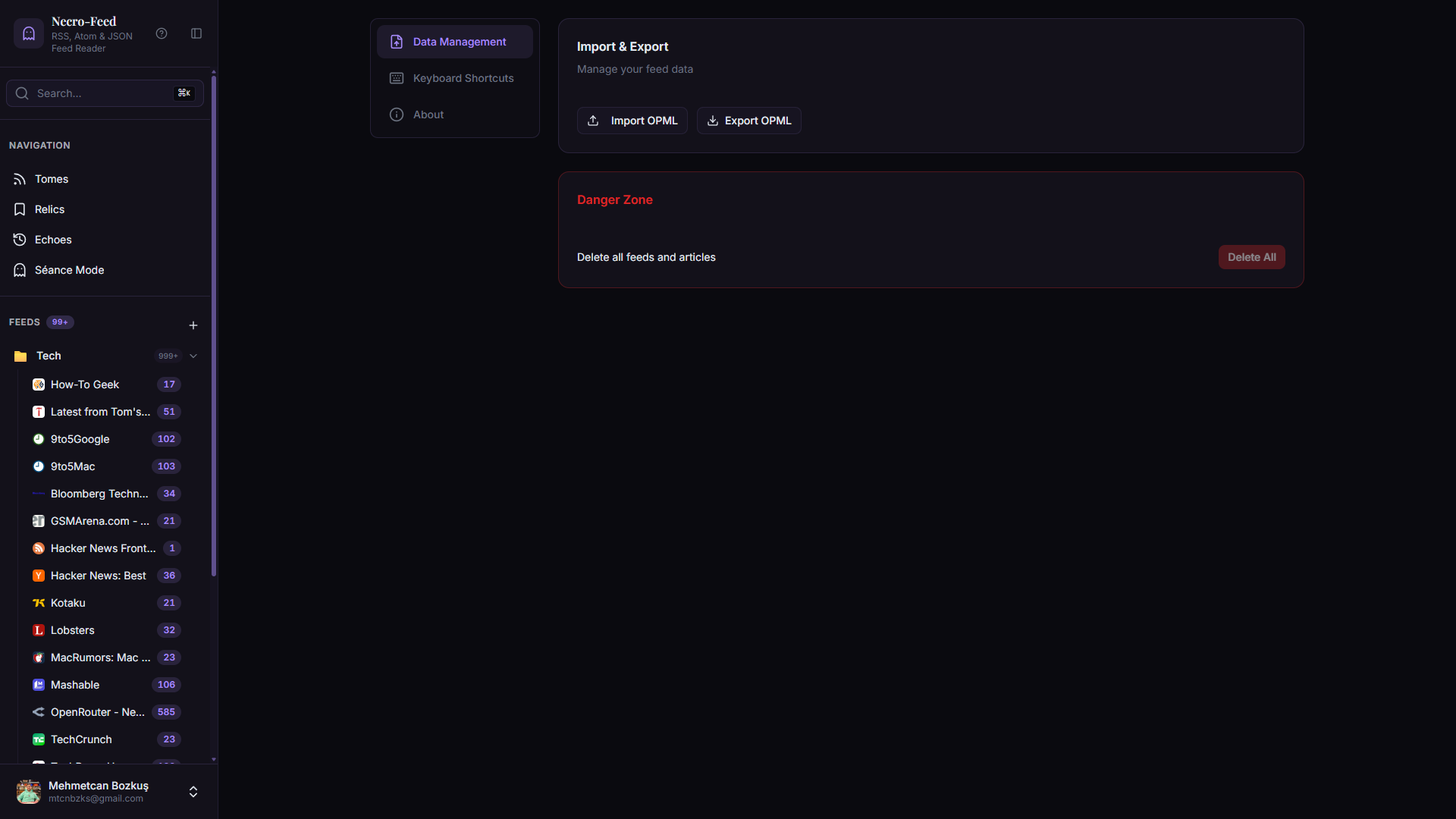
Settings Data Management
-
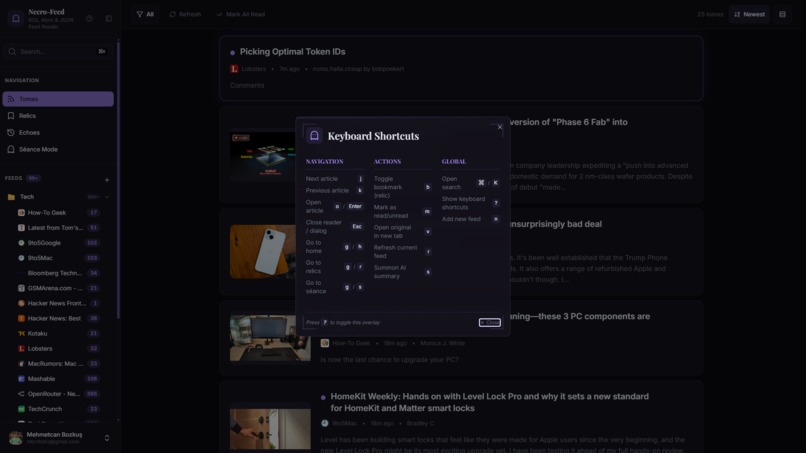
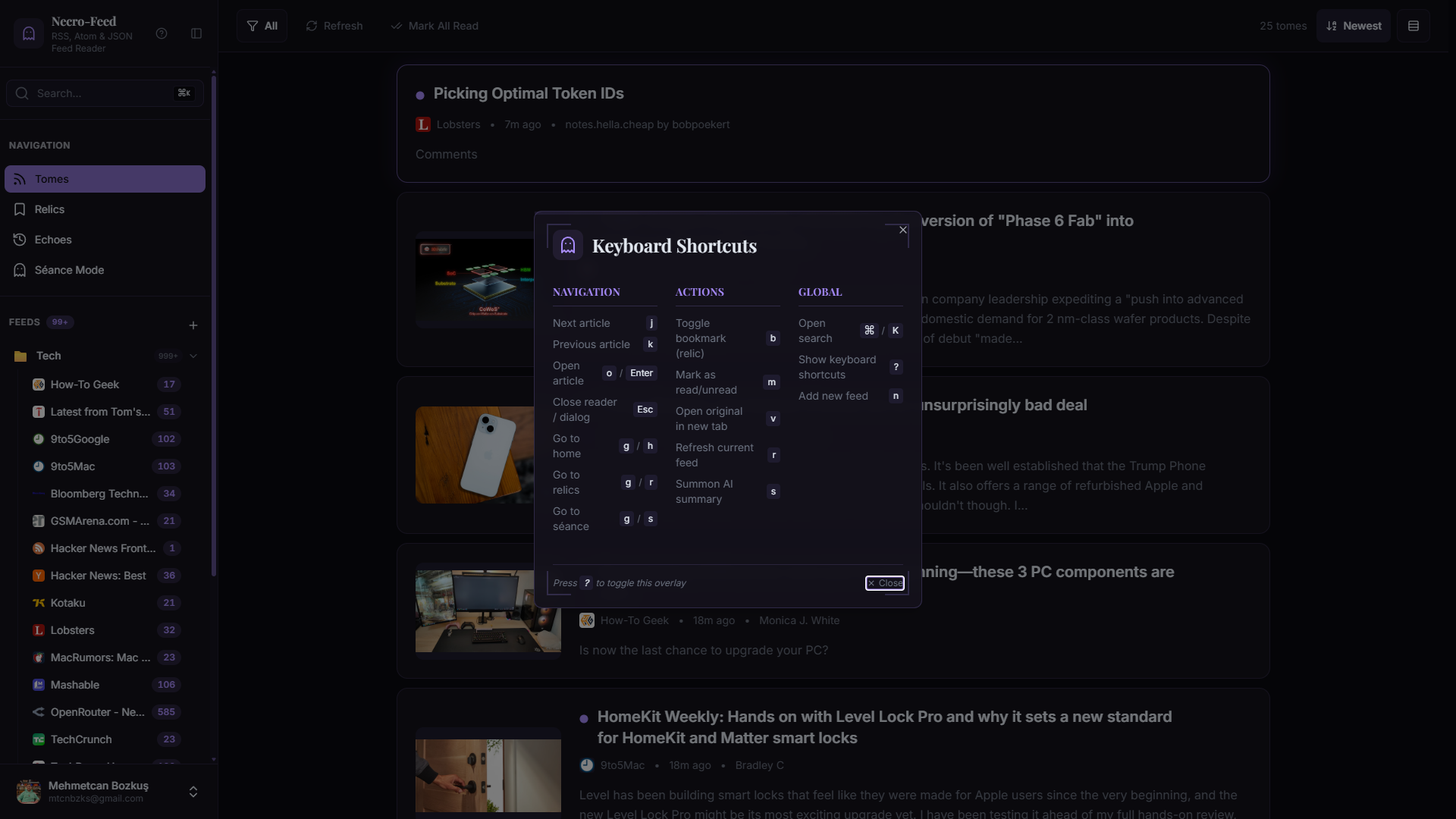
Keyboard Shortcuts
Inspiration
I first met Kiro on its launch day in July 2025. Back then, I wasn't familiar with concepts like spec-driven development, so I'll be honest — I uninstalled it pretty quickly without giving it a real chance. 😅
Shortly after, I saw that the AWS Turkey office was hosting a Kiro workshop. Both the instructors and the content caught my attention, so I decided to attend. That workshop was a turning point. It introduced me to agentic IDEs and showed me how to integrate spec-driven development into my daily workflow. Thanks to the AWS Turkey team, I didn't just learn a new tool — I completely transformed my coding efficiency and experience.
When I discovered Kiroween and its generous credit offering, I knew it was time to dive in. I already use RSS readers daily, but the apps I rely on charge for features like AI summarization and advanced search. I thought: "If I build this for the hackathon, I win regardless of the outcome — because I'll have an app I actually use every day."
What I Learned
This project and hackathon made me deeply familiar with spec-driven development. Writing specs before coding forced me to think through features completely, and the results were remarkable.
I also learned how powerful steering documents are for guiding context. By defining coding conventions and UI patterns upfront, I could maintain consistency across the entire codebase without constantly repeating instructions.
The most surprising lesson? Features that companies charge money for can be built with a single spec. Watching Kiro one-shot complex features like AI summarization and global search — things I'd normally pay for — was genuinely mind-blowing.
How I Built It
- Spec-Driven Development: Every major feature started as a spec in
.kiro/specs/. I'd define requirements, design decisions, and implementation tasks before writing any code. - Steering Documents:
coding-conventions.mdenforced Bun, Next.js 16, and Drizzle patterns.ui-patterns.mdmaintained the gothic aesthetic across all components. - Agent Hooks: Automated tasks like database migrations, build verification, and security scanning.
- Tech Stack: Bun + Next.js 16 (App Router) + Drizzle ORM + Better Auth + Tailwind CSS v4 + shadcn/ui
Challenges I Faced
Even with a detailed UI spec, I sometimes didn't get the best results on the first try. The gothic theme required specific attention to colors, animations, and atmosphere that occasionally needed extra prompting to get right.
However, these challenges were minor — a few additional prompts always got me where I needed to be. The spec-driven approach meant I was iterating on refinements rather than starting from scratch.
What's Next
Necro-Feed is now my daily RSS reader. I plan to continue developing it beyond the hackathon, adding more resurrection detection algorithms and expanding the AI capabilities. This isn't just a hackathon project — it's a tool I'll use every day.
Built With
- better-auth
- bun
- drizzle-orm
- kiro
- lucide-react
- neon-serverless
- next.js-16
- nextstep.js
- openrouter-api
- postgresql
- radix-ui
- react-19
- sonner
- swr
- tailwind-css-v4
- typescript
- vercel-ai-sdk
- zod

Log in or sign up for Devpost to join the conversation.