-
-
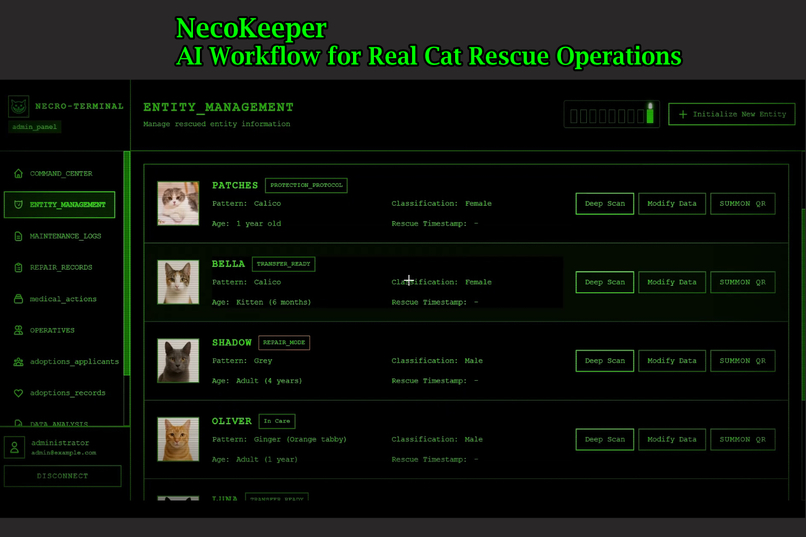
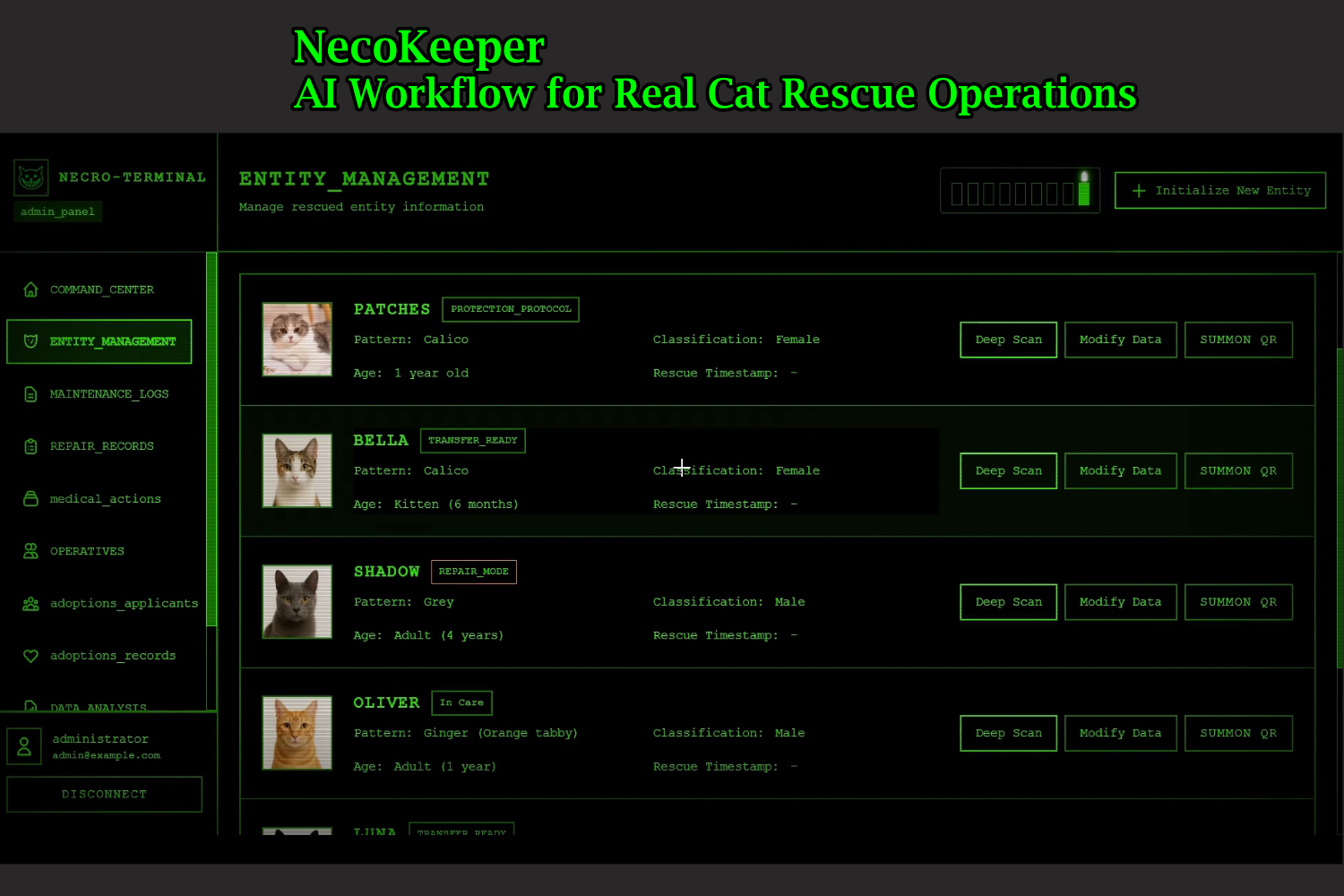
kiroween mode
-
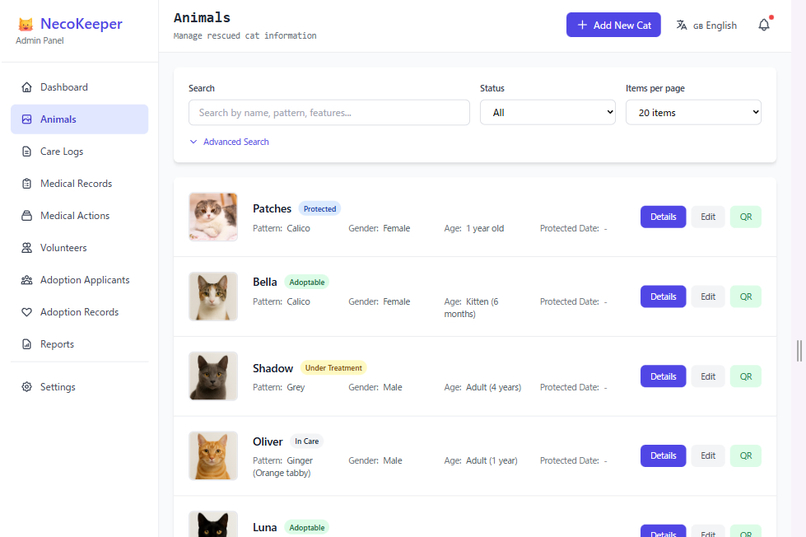
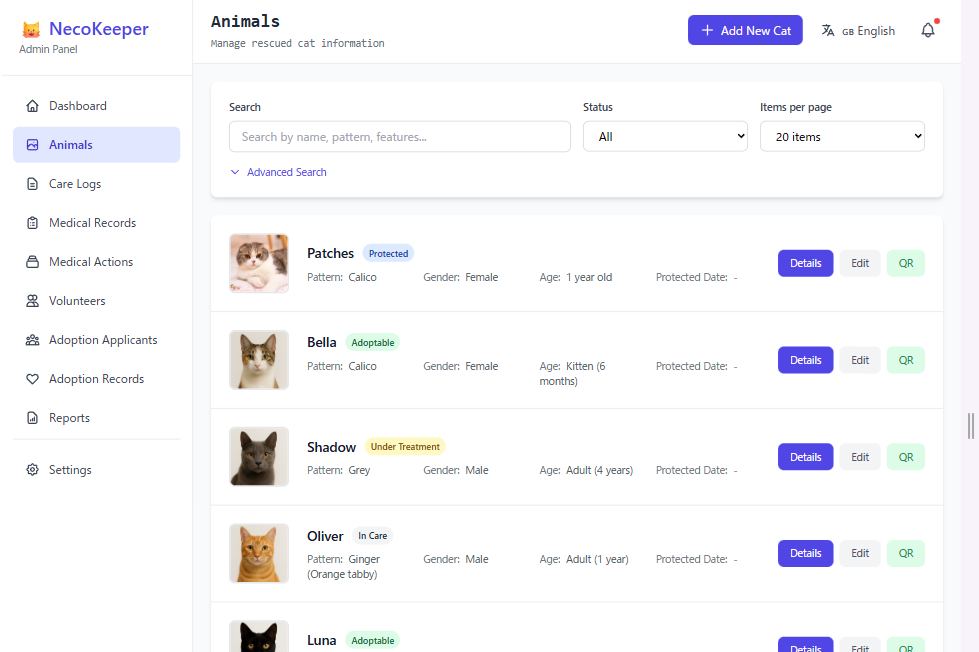
nomal ui
-
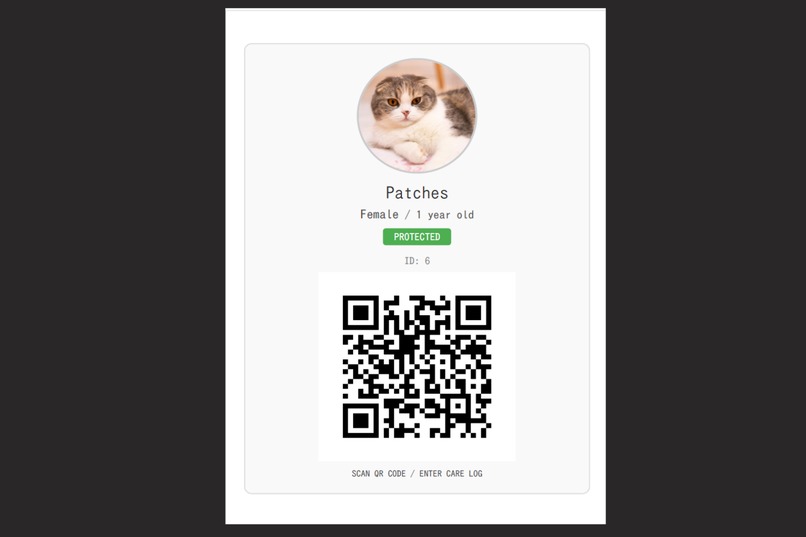
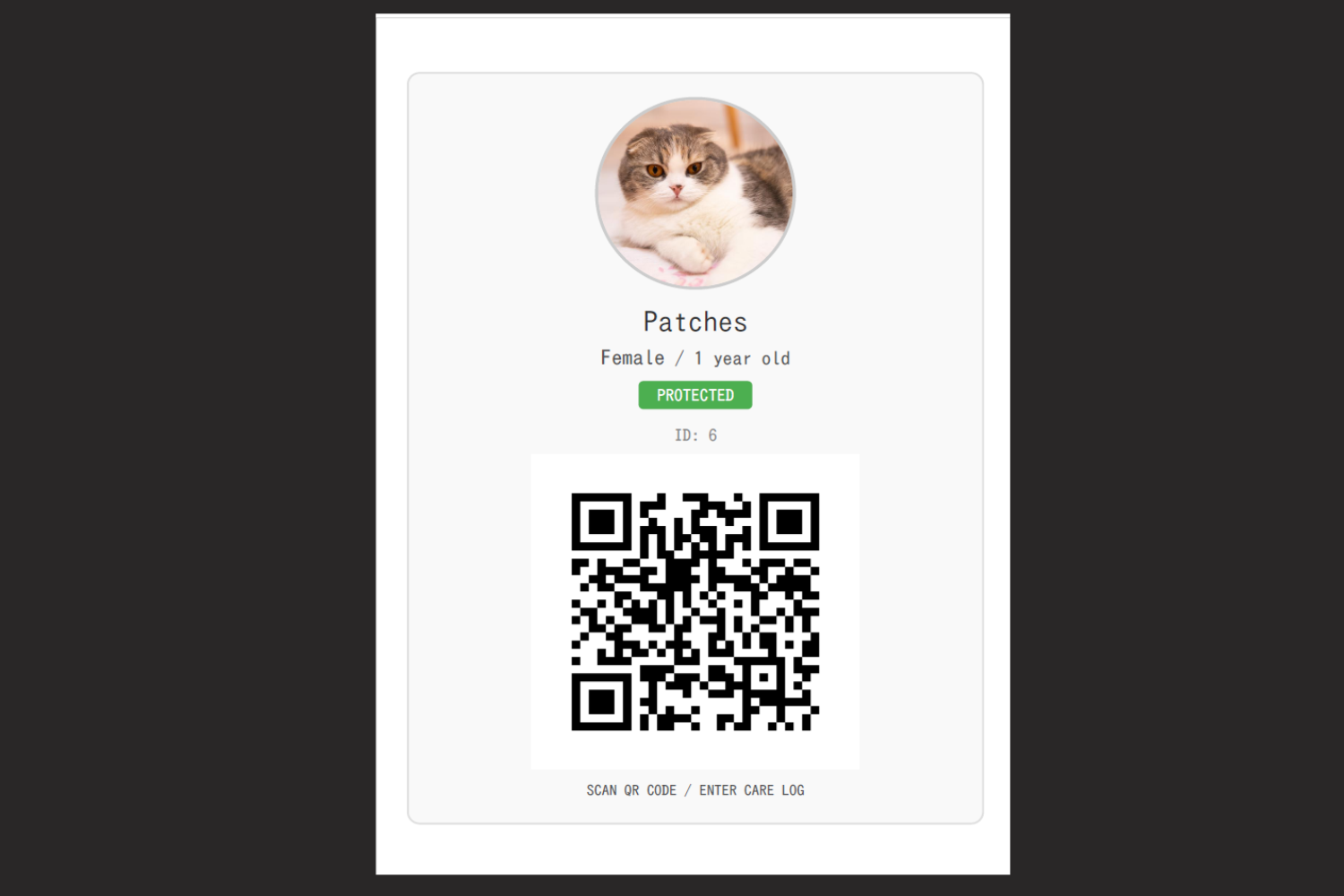
QR card pdf
-
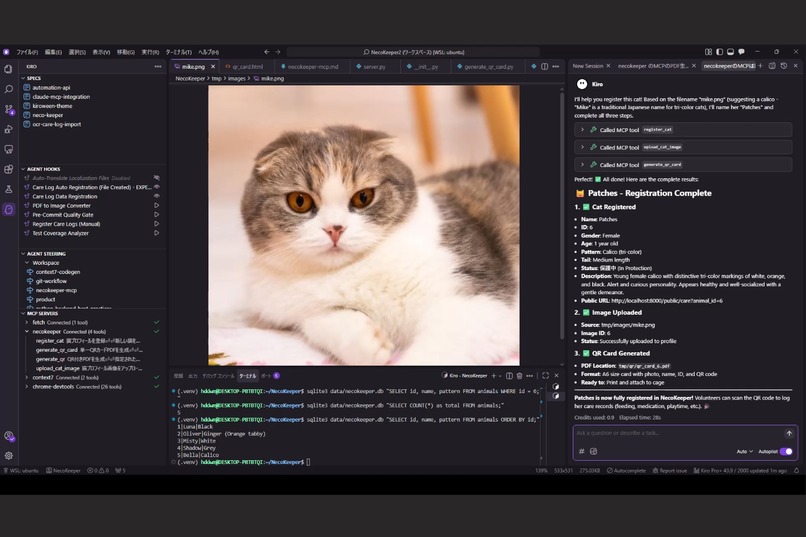
MCP
-
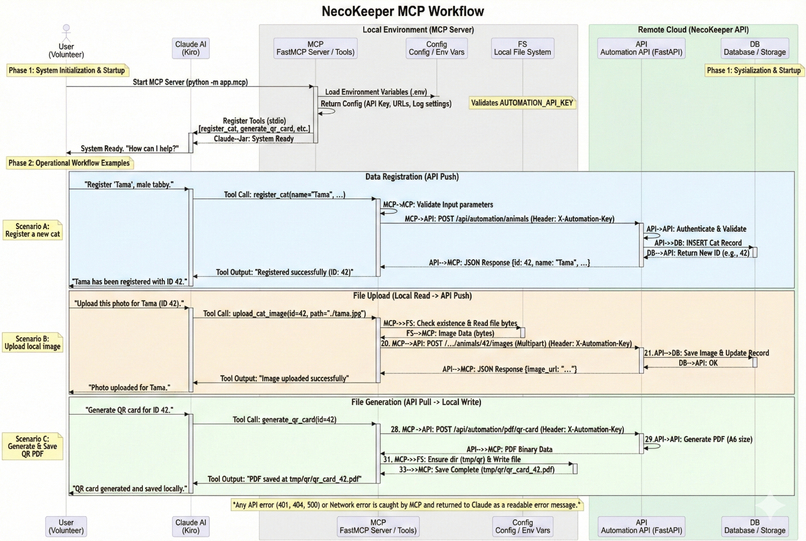
mcp workflow
Inspiration
Many cat rescue organizations in Japan operate with volunteers of all ages and very different levels of IT literacy. Their budgets are extremely limited, making it nearly impossible to commission or maintain custom software.
Existing shelter management systems used by government animal centers do not fit the daily workflow of small, volunteer-run rescue groups. As a result, they continue relying on handwritten care logs, veterinary notes on paper, and duplicated spreadsheet work spread across multiple tools.
This gap created a strong need for a simple, low-cost system that truly matches on-site operations.
Using Kiro, I was able to rapidly prototype, refine, and ship a production-ready system as a solo developer. Kiro enabled fast iteration and made it possible to build a tool that reduces daily workload and supports volunteers who may not be comfortable with technology.
What it does
NecoKeeper is an AI-powered workflow system for real cat rescue organizations. It provides:
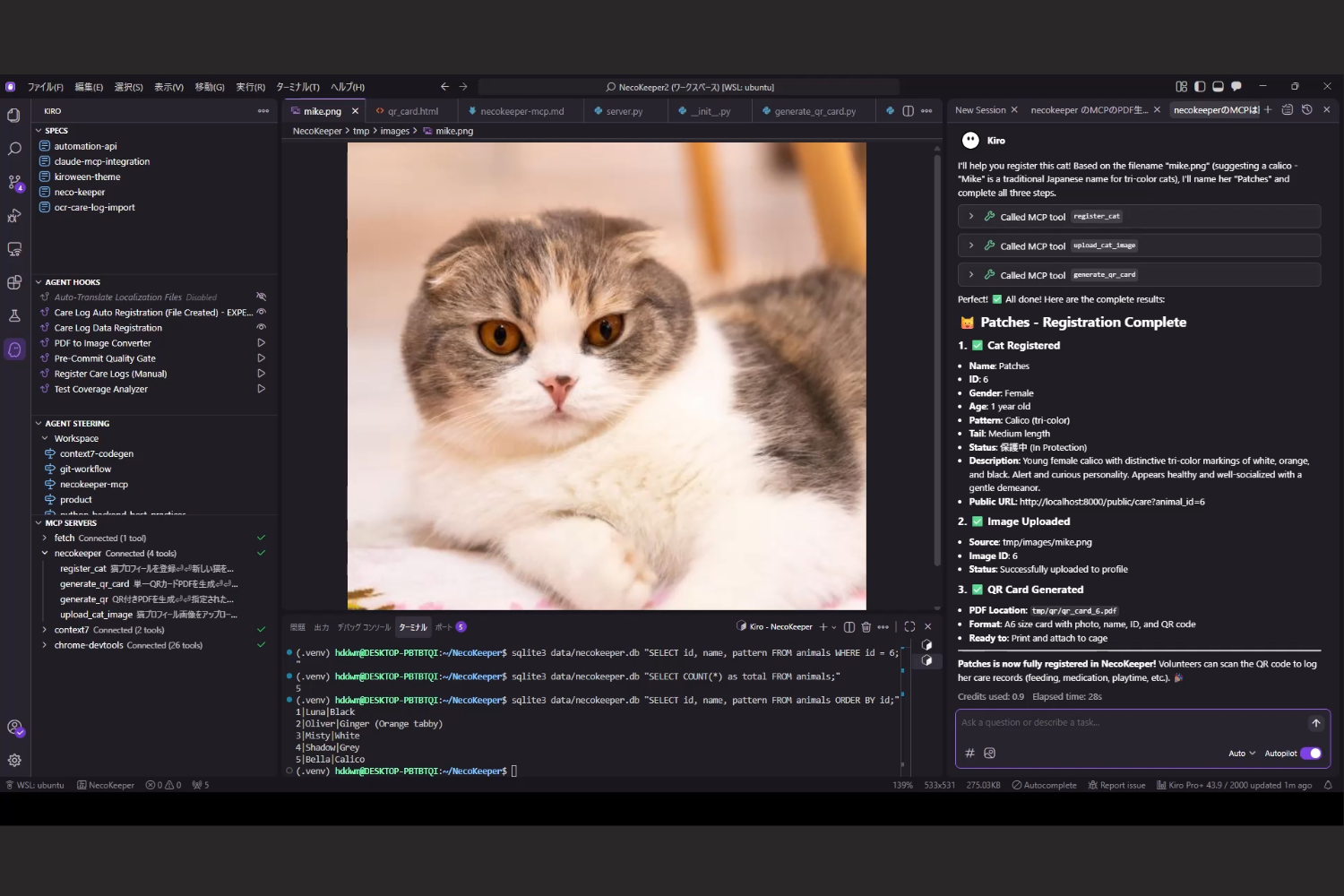
- AI-based cat registration using MCP + natural language prompts
- Image-to-record workflows using a vision model
- QR-based care logging that volunteers can use on any device
- Medical & adoption management in one unified profile
- Automatic PDF generation (QR cards, care sheets, medical reports
- A seasonal “Necro-Terminal Mode” for Kiroween
- Public APIs that allow volunteers to submit care logs without logging in
The entire workflow — intake, care, medical updates, adoption, reporting — can be managed digitally.
How we built it
Kiro was essential for both development and automation:
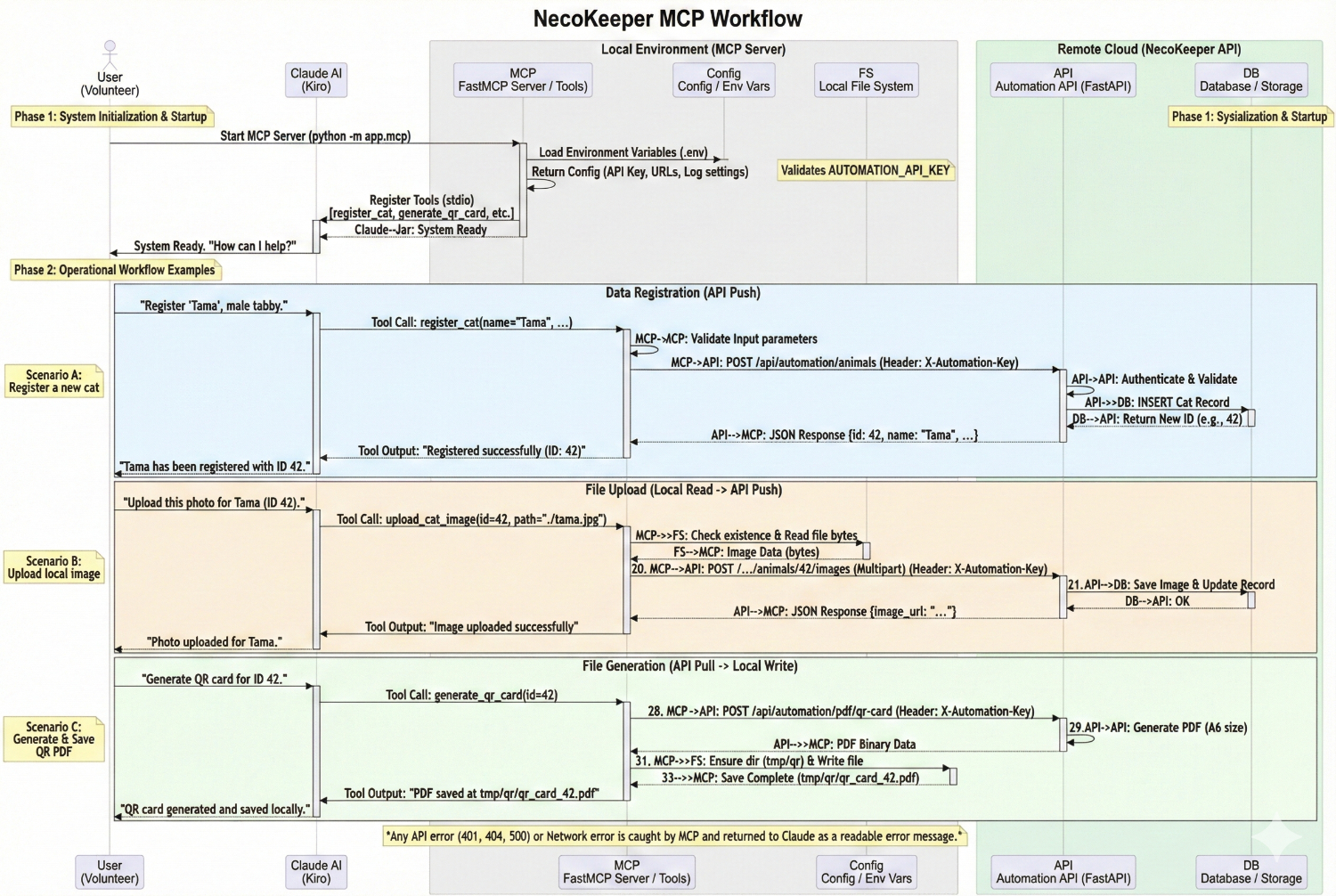
- Defined MCP tools so Claude could directly operate the system
- Enabled complete AI-driven workflows such as:
- “Register this cat from the attached photo” → MCP → API → DB → QR card
- Maintained consistent API behavior using spec-driven development
- Experimented with hooks to process handwritten sheets via a vision model
Another major strength of Kiro was safe iteration. While exploring MCP workflows, I frequently redesigned or discarded features. Each time, updating the SPEC allowed Kiro to regenerate or modify the implementation while maintaining consistency. This made it possible to experiment quickly and add new features with confidence — something extremely difficult in solo development without a structured AI-assisted environment.
Challenges we ran into
Designing AI workflows that connect Claude (via MCP) with NecoKeeper Creating a safe end-to-end pipeline where Claude could register a cat, upload images, and generate QR cards required many iterations.
Building a safe dual-authentication architecture Separating JWT user authentication from API Key automation authentication demanded careful boundary design.
Integrating Claude’s vision output into NecoKeeper through a hook pipeline The challenge was converting Claude’s JSON into valid care-log JSON and automating the PDF → image → JSON → DB flow.
Implementing Kiroween’s “Necro-Terminal Mode” A theme switchable by a single environment variable required UI/business-logic separation and technically challenging animations.
Providing a frictionless Public API for QR workflows Allowing login-free submissions while keeping the system secure required a carefully scoped, traceable public interface.
Generating many types of PDFs Layouts for QR cards, imposition sheets, reports, and medical summaries all needed consistent rendering.
Multi-language support in UI and PDF Supporting Japanese, English, and “Necro English” required managing three localization layers.
Accomplishments that we're proud of
- Built a fully working AI-driven intake workflow using MCP and vision models
- Designed a hook pipeline that converts Claude’s vision output into valid care-log JSON
- Created a complete end-to-end rescue workflow
- Reduced volunteer workload with QR-based logging under 5 seconds
- Implemented a PWA for instant access from the home screen
- Built a dual-authentication architecture (JWT + API Key)
- Generated production-grade PDFs (QR cards, care forms, medical summaries)
- Developed the Kiroween-only “Necro-Terminal Mode” with CRT & glitch animations
- Achieved production-level functionality as a solo developer using Kiro's rapid iteration
What we learned
MCP can serve as a practical bridge between AI agents and real operational systems.
Instead of generating text, Claude was able to perform meaningful actions through well-designed tools.
• Spec-driven development in Kiro makes iteration safer and more reliable.
Updating the SPEC allowed me to redesign features, discard ideas, and regenerate implementations without losing consistency.
• Vision models dramatically reduce manual work when paired with structured automation.
The “paper → JSON → care-log” pipeline showed how AI can augment real rescue workflows.
• Simplicity matters more than complexity in real field environments.
SSR + minimal JavaScript + PWA provided a faster, more stable experience than a heavy frontend framework.
• Designing for volunteers with different levels of IT literacy requires clarity and predictability.
QR-based logging and a consistent UI were more valuable than adding advanced features.
• Building safe automation requires clear separation of responsibilities.
The dual-authentication architecture made it easier to reason about security boundaries between human users and AI agents.
• Storytelling can enhance user experience when combined with technical functionality.
Kiroween’s “Necro-Terminal Mode” taught me how a theme can motivate design choices without compromising the core workflow.
• Most importantly, I learned that AI-assisted development enables a solo developer
to deliver a production-quality system in a very short time.
By using Kiro to regenerate implementations safely and iterate quickly,
I was able to build the entire project in roughly three weeks — something impossible with a traditional workflow.
What's next for NecoKeeper
• Add support for multi-page document ingestion
allowing shelters to upload a full PDF of handwritten care sheets,
automatically split pages into images, and process each page through the vision pipeline.
• Conduct a real-world PoC with an actual cat rescue café
in collaboration with Ishiyama Production Medicine Inc.,
to validate the workflow with real volunteers and real daily operations.
• Improve the vision pipeline for practical field use
focusing on stability, error handling, and mixed-format inputs rather than symbolic handwriting accuracy.
• Expand MCP tools to automate more administrative work
including preparing weekly reports, summarizing care logs, and assisting staff with repetitive tasks.
• Enhance analytics for shelters
providing charts for weight changes, care frequency, medical history timelines, and volunteer activity.
• Strengthen the public QR workflow
adding optional per-cat QR tokens and rate limiting for shelters that require tighter control.
• Explore open-source release and invite shelters to participate
enabling low-budget rescue groups to adopt and improve the system together.
• Continue iterating rapidly using Kiro
applying the same high-speed development cycle that allowed the initial system to be built in roughly three weeks.
Built With
- alembic
- apscheduler
- argon2
- docker
- docker-compose
- fastapi
- jinja
- mcp
- mypy
- pillow
- pwa
- pydantic
- pyjwt
- pytest
- python
- qrcode
- ruff
- service-worker
- sqlalchemy
- sqlite
- uvicorn
- vanilla-js
- weasyprint


Log in or sign up for Devpost to join the conversation.