Inspiration
Students often spend many hours studying, coding, writing reports, preparing for exams, or working on hackathon projects while sitting in front of a laptop. During these long sessions, neck and shoulder muscles can stay slightly tense without the student noticing it.
Most productivity tools only measure time or remind users to take breaks. They do not know whether the body actually recovered. NeckQuest was inspired by this gap: we wanted to build a practical HealthTech and productivity prototype that uses real muscle data, not just timers.
What it does
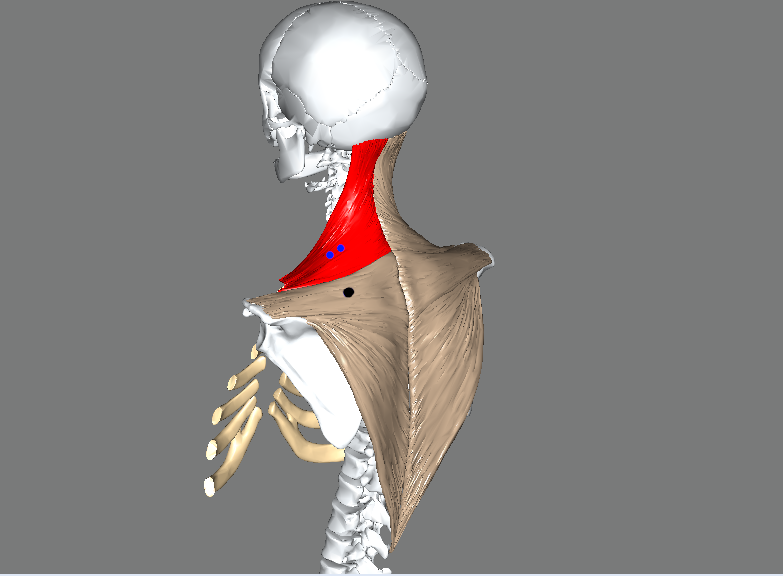
NeckQuest is a wearable EMG-based system for students. It measures electrical muscle activity from the upper trapezius, classifies the muscle state as relaxed or tense, and shows whether the student had enough muscle rest gaps during a study or coding session.
The project includes:
- live EMG signal visualization
- guided relaxed / tense calibration
- machine-learning muscle-state classification
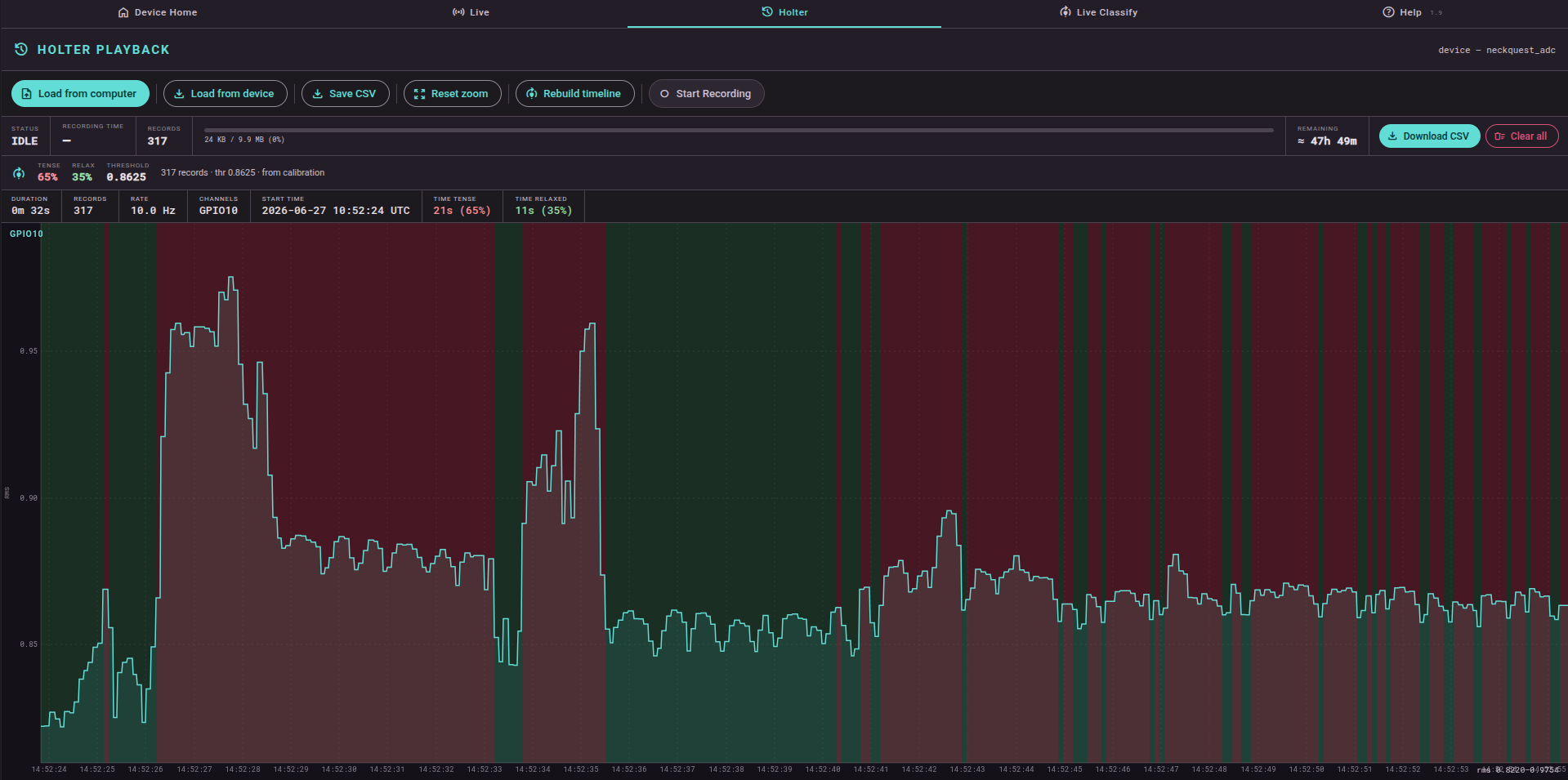
- Holter-style recording of study sessions
- local session storage
- playback of recorded muscle-activity timelines
- an interactive browser demo that works without hardware
The goal is to help students notice hidden physical overload before it becomes pain, fatigue, or loss of focus.
How we built it
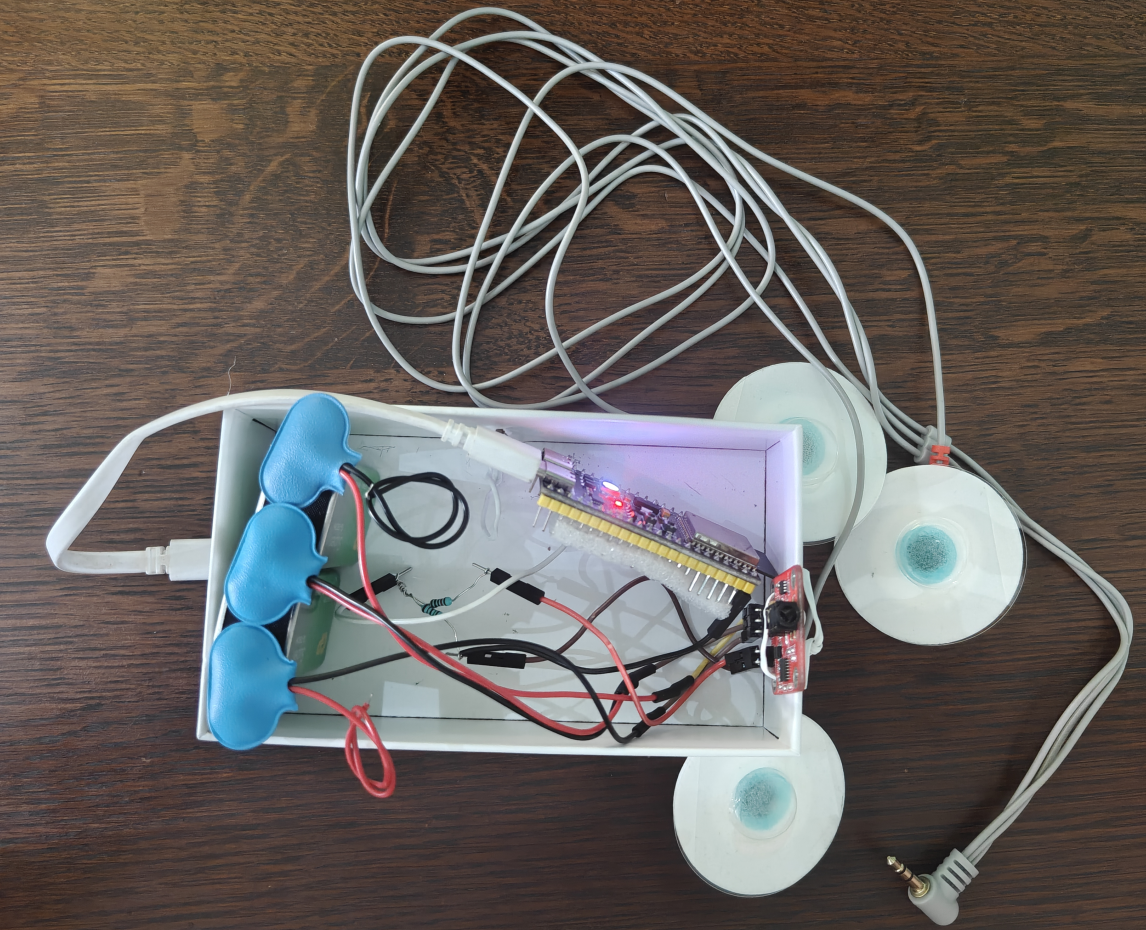
We built the prototype using an ESP32-S3 board connected to an analog EMG sensor. The firmware samples the EMG signal and supports live streaming and local recording.
A local Python server handles the web interface, device communication, signal processing, calibration, and machine-learning classification. During calibration, the student records relaxed and tense examples. The server extracts EMG features and trains a personal classifier using scikit-learn.
The frontend is built with HTML, CSS, JavaScript, and Canvas. It shows the live signal, calibration state, device status, classification output, and recorded Holter sessions. We also created a hosted GitHub Pages demo so the project can be reviewed online without the physical hardware.
Challenges we ran into
The biggest challenge was working with real EMG data. EMG signals are sensitive to electrode placement, skin contact, cable movement, ADC noise, WiFi noise, and calibration quality.
Another challenge was turning raw biosignal data into something useful. A graph alone is not enough. Students need simple feedback: whether the muscle is relaxed, tense, and whether the study session had enough recovery gaps.
We also had to make the project understandable as an online submission. That is why we added screenshots, playback, documentation, a video walkthrough, and an interactive browser demo.
Accomplishments that we're proud of
We are proud that NeckQuest is more than a mockup. It connects wearable hardware, embedded firmware, EMG signal processing, personal machine-learning calibration, live visualization, Holter-style recording, session playback, documentation, and a hosted demo.
We are also proud that the project fits several real-world technology tracks: HealthTech, AI/ML, productivity, and education technology. It is a small prototype, but it shows how wearable biosignals can become practical feedback for everyday student life.
What we learned
We learned that building useful HealthTech is not only about collecting sensor data. The full pipeline matters: sensor placement, signal quality, preprocessing, calibration, model training, interface design, and user trust.
We also learned that student productivity is not only about focus and time management. Physical fatigue matters too. A student can keep working while their neck muscles stay tense for too long, so detecting missing rest gaps can be valuable.
What's next for NeckQuest
Next, we want to add a second EMG channel for the other side of the neck and shoulders. This would allow NeckQuest to compare left and right muscle activity and detect asymmetric tension during laptop use.
We also want to improve the analytics layer with longer-session reports, better feature extraction, personalized baselines, and AI-assisted recommendations for healthier study and coding sessions.
Long term, NeckQuest could become a student wellness and productivity companion for exam preparation, online learning, coding marathons, and hackathons.

Log in or sign up for Devpost to join the conversation.