-
-
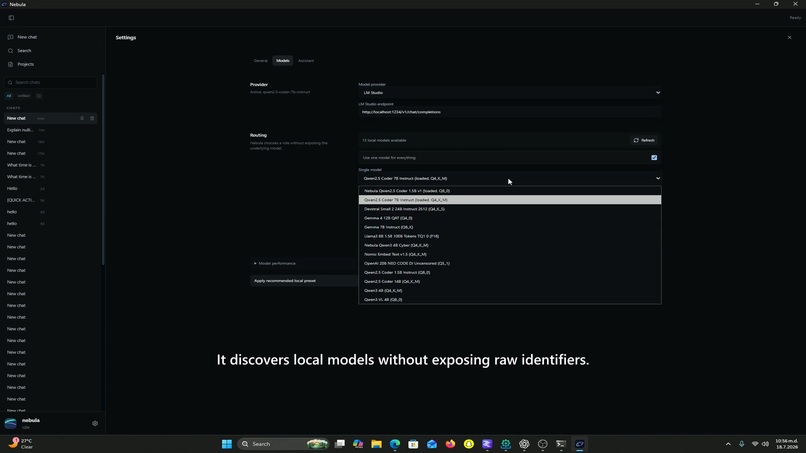
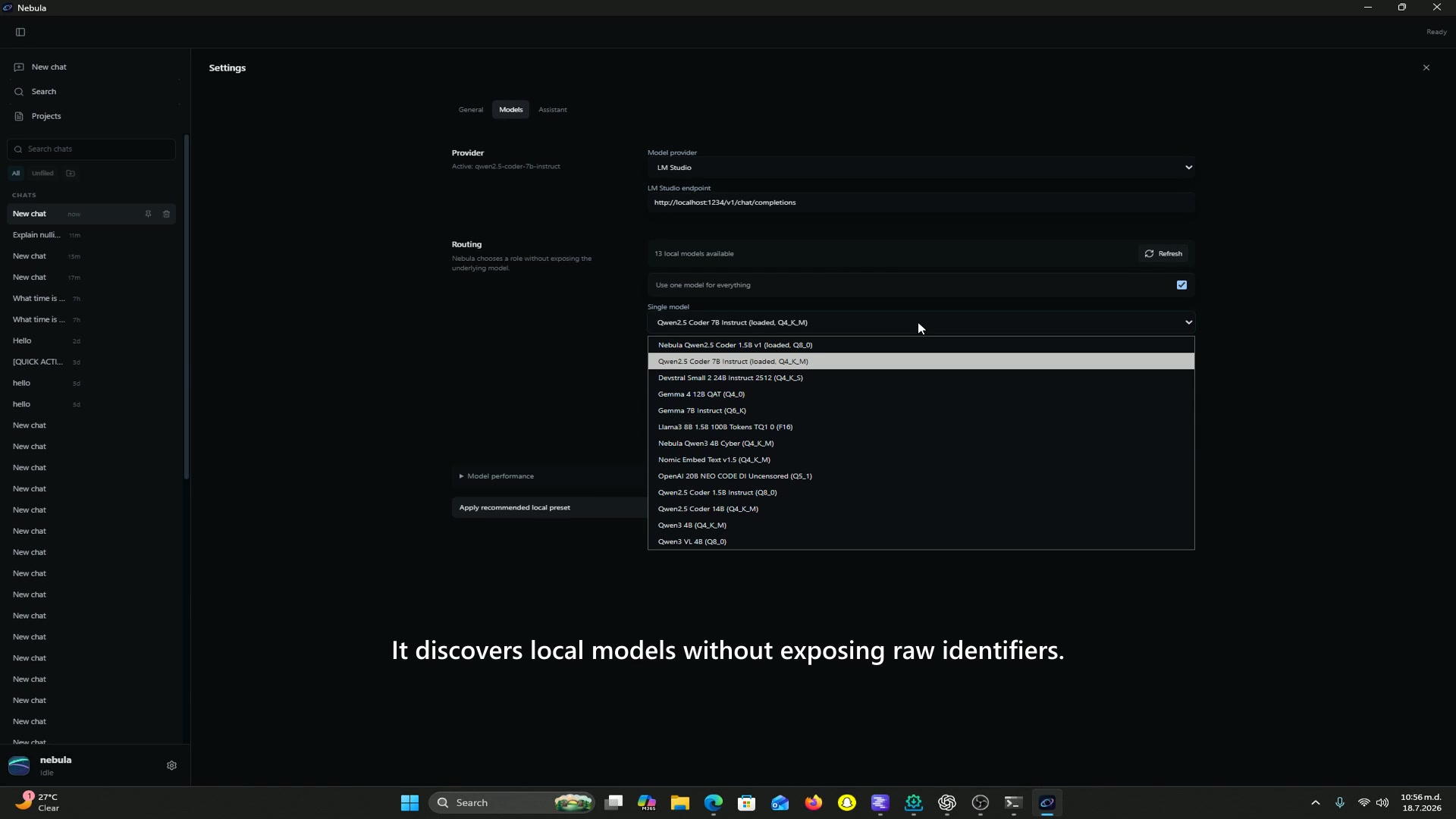
Nebula discovers local LM Studio models and provides simple model selection and routing.
-
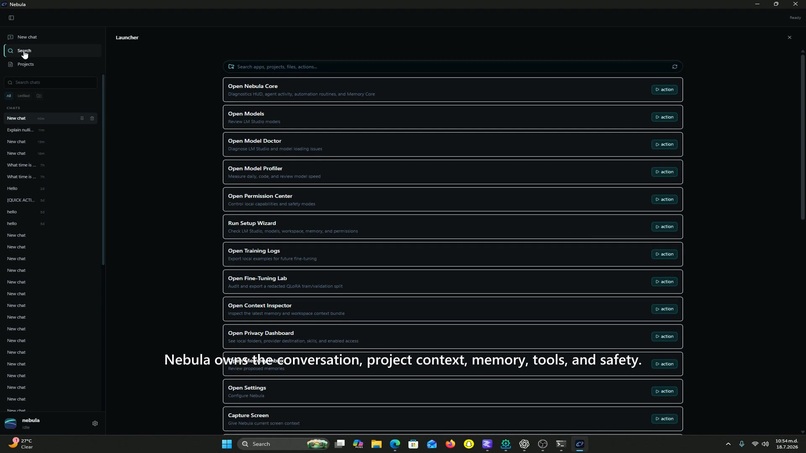
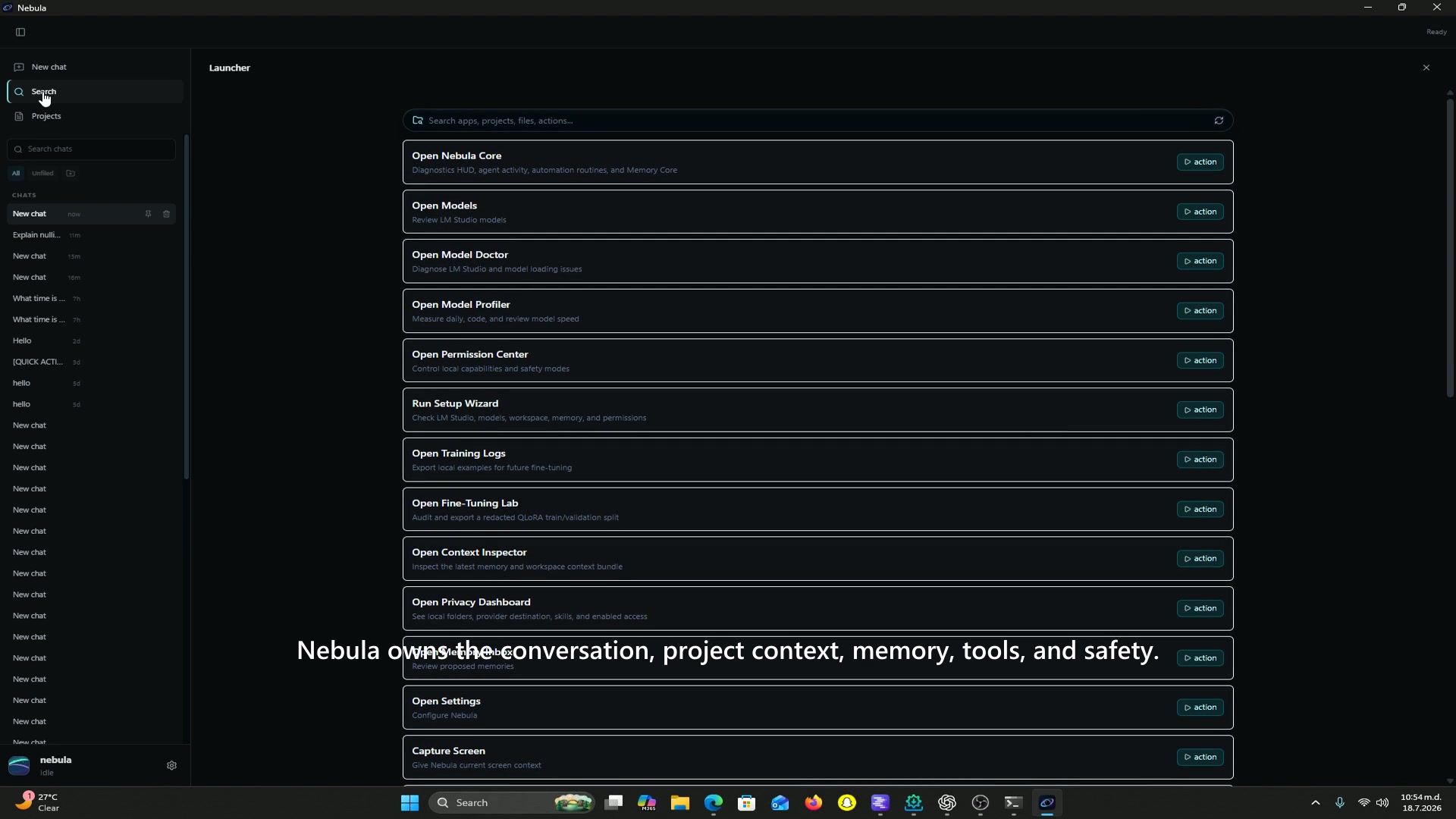
Nebula’s desktop command center unifies projects, memory, tools, diagnostics, and safety.
-
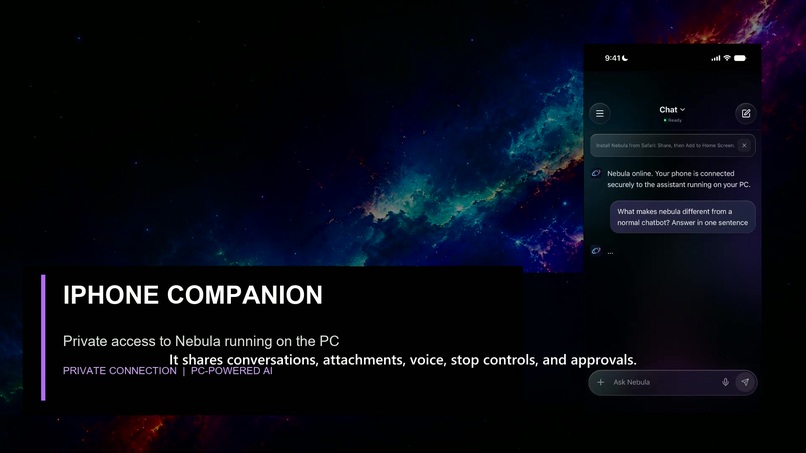
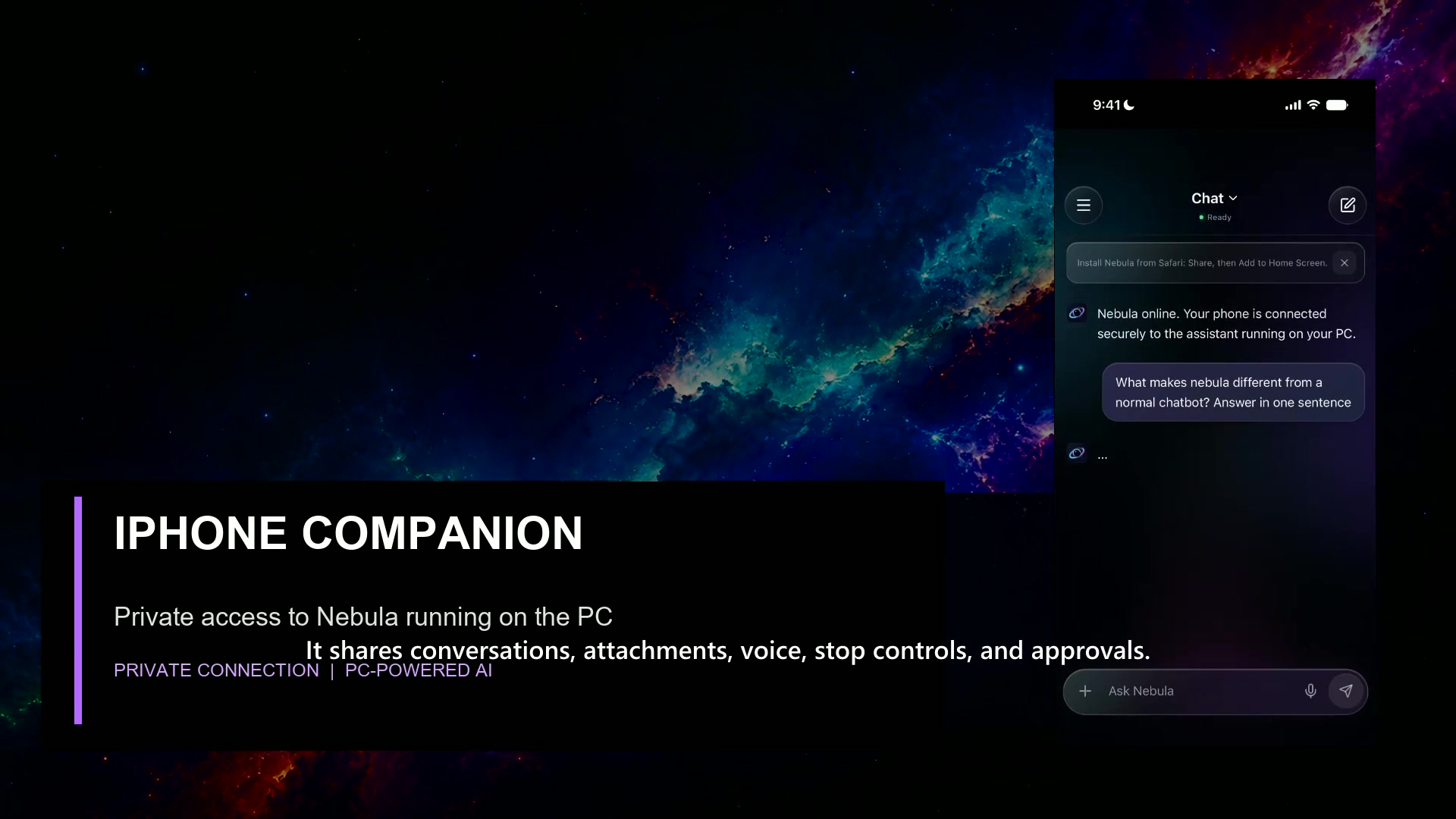
The private iPhone companion securely streams conversations and controls from the PC.
Inspiration
What it does## Inspiration
I wanted an AI assistant that felt like a real part of my computer rather than another website. Most assistants depend heavily on cloud services, forget project context, and cannot safely interact with local tools. Nebula began as my attempt to build a private, local-first AI operating layer with one consistent identity across Windows and iPhone.
Nebula was independently created by Jonard, a 14-year-old developer from Albania, with parental support for this submission.
What it does
Nebula connects local AI models, persistent memory, project context, research, voice, and computer tools through one assistant.
Its current capabilities include:
- Chat with locally hosted models through LM Studio
- Automatic model routing for conversation, coding, and review
- Persistent conversations, folders, search, memory, and project context
- File inspection, terminal commands, app launching, and execution receipts
- Approval, Safe, and session-only Full Access execution modes
- Web search and research with source cards
- Voice interaction and a desktop ambient overlay
- A private iPhone companion connected to the PC
- Diagnostics, timelines, skills, task history, and model health information
- Cancellation and Stop Agent behavior across model and tool operations
The PC remains the source of truth. Models, private memory, tools, and project files stay on the user’s computer.
How we built it
Nebula uses React and TypeScript for its interfaces, Tauri and Rust for native Windows capabilities, SQLite for durable local data, and LM Studio’s OpenAI-compatible API for local inference.
A central orchestrator selects models, builds relevant context, loads memory, invokes registered skills, executes approved tools, and returns one unified Nebula response. The mobile client uses Capacitor and communicates with the desktop through a private authenticated bridge with server-sent events for streaming.
During Build Week, I used GPT-5.6 through Codex to inspect Nebula’s architecture, implement and debug features, review changes, run builds, and turn failures into targeted fixes. I made the product, architecture, interface, and safety decisions while Codex accelerated implementation and verification.
Challenges we ran into
The hardest challenge was reliability across many connected systems. Model loading could be slow or fail, streamed responses could arrive after cancellation, mobile keyboards could cover the composer, and tool calls needed to remain useful without becoming unsafe.
We addressed these problems with normalized errors, explicit model states, cancellable agent runs, late-result suppression, durable SQLite storage, safer command classification, private mobile pairing, responsive layouts, and extensive runtime diagnostics.
Another challenge was supporting limited consumer hardware. Nebula therefore works with configurable local models instead of requiring one enormous model.
Accomplishments that we're proud of
- Built a working local AI platform rather than a static demonstration
- Connected Windows and iPhone through a private streaming bridge
- Created durable conversations, memory, project awareness, and diagnostics
- Implemented model routing and local tool execution
- Added transparent safety modes and permanent catastrophic-action blocks
- Fine-tuned and evaluated experimental Nebula-focused local models
- Shipped a public Windows build while keeping models and private data separate
- Built the project independently at age 14 while learning across frontend, Rust, AI orchestration, mobile development, and deployment
What we learned
I learned that building an AI product is not only about prompting a model. The surrounding systems—context selection, persistence, cancellation, permissions, error recovery, model management, and interface design—determine whether the assistant is genuinely dependable.
I also learned to test model behavior instead of assuming that a larger or fine-tuned model is automatically better. Evaluation results helped expose weaknesses in tool use, coding, safety, and review behavior.
What's next for Nebula
Next, Nebula will gain a built-in model manager, hardware-aware model recommendations, resumable GGUF downloads, broader runtime support, improved offline voice, stronger automated evaluations, and a more polished mobile release.
The long-term goal is a personal local AI operating layer where people can choose their own models while keeping Nebula’s memory, projects, tools, permissions, and identity.

Log in or sign up for Devpost to join the conversation.